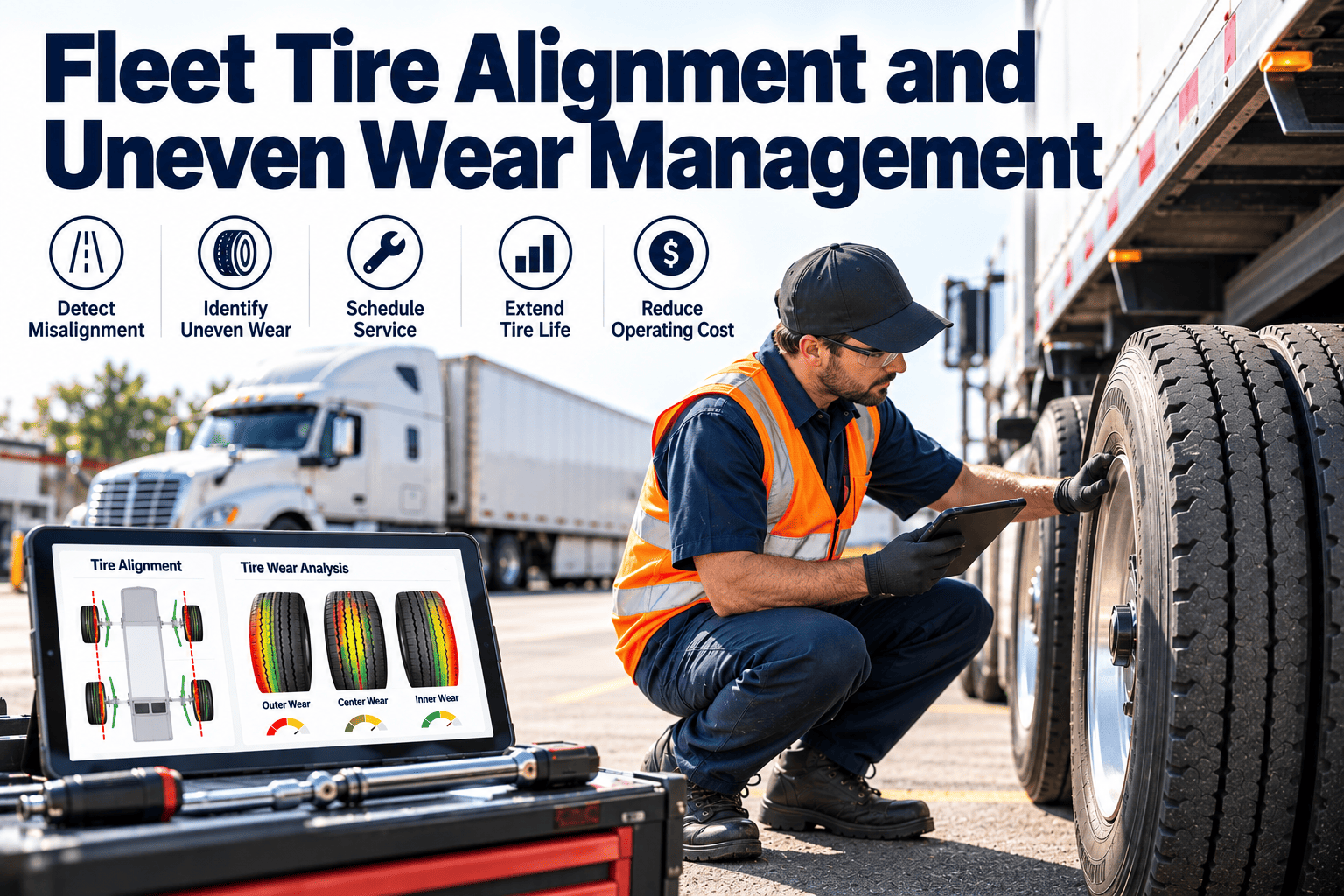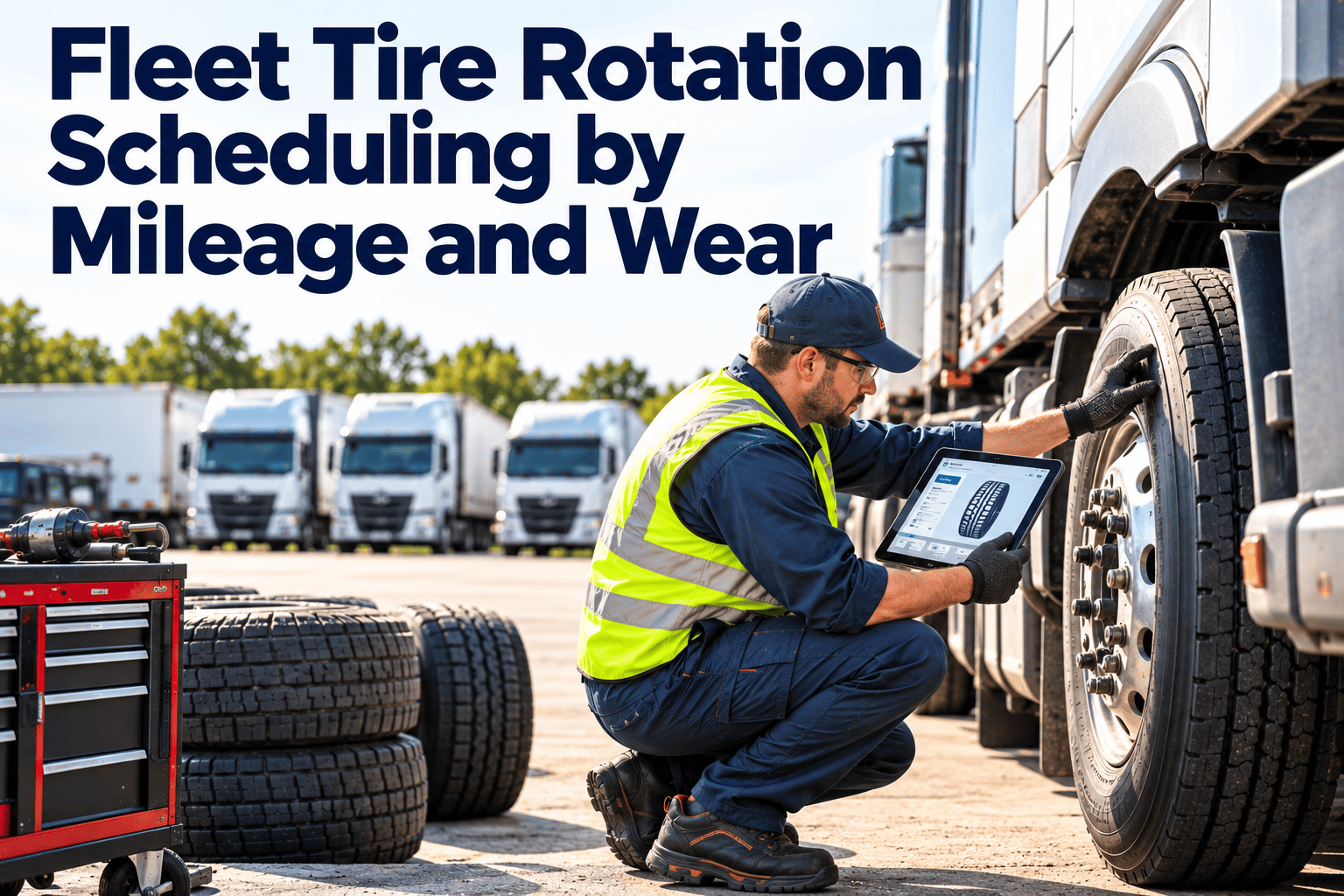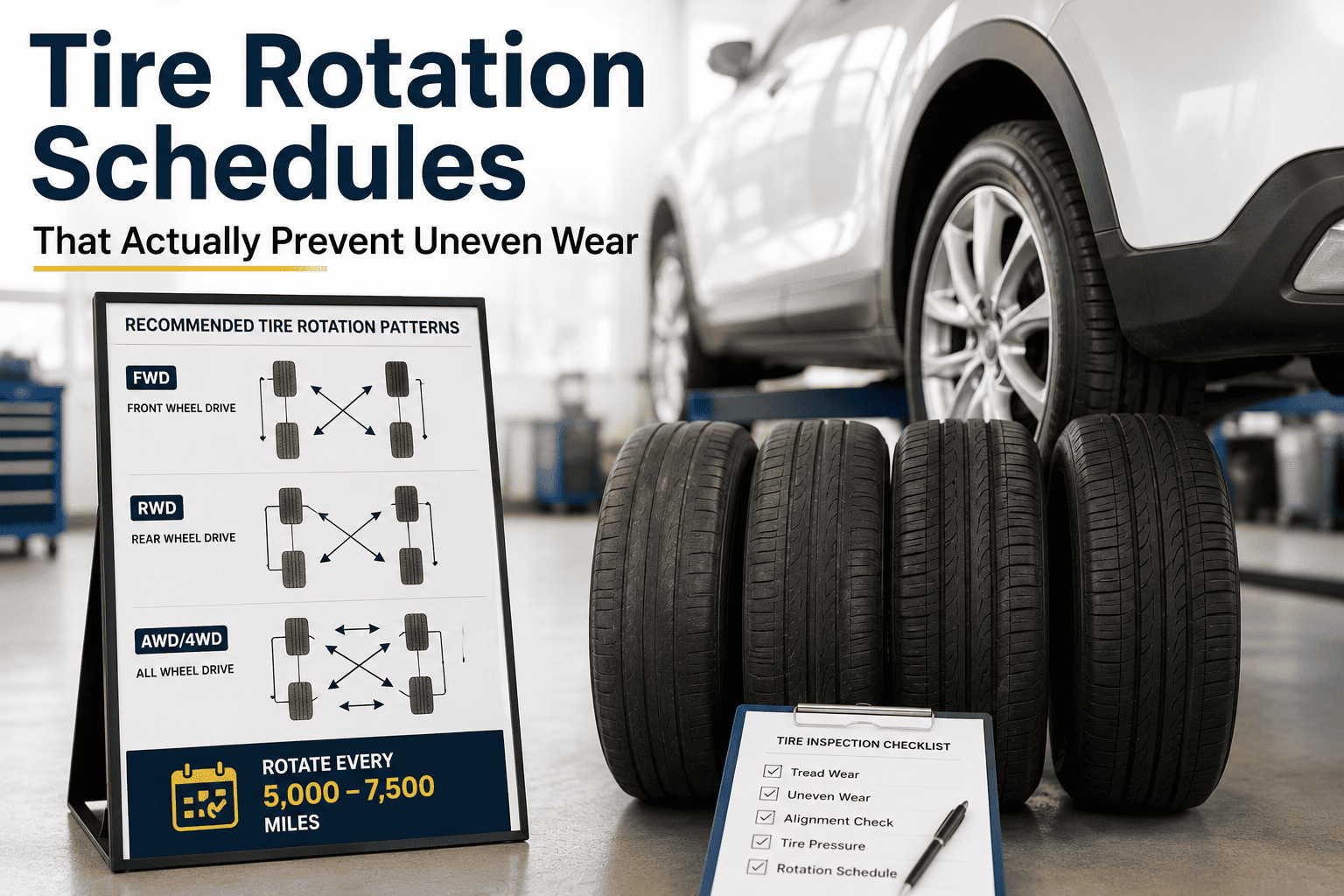
Commercial fleet tires are among the highest per-unit consumable costs in any fleet budget — and the gap between what those tires should cost and what most fleets actually spend on them is driven almost entirely by the consistency of the rotation and alignment program. Industry data shows that skipping tire rotation in a commercial fleet results in premature tire replacement costs that run 3x higher than the cost of scheduled rotation service. A set of commercial truck tires that should deliver 150,000 km of useful life might produce 50,000–70,000 km of service life when rotation intervals are irregular and alignment is not checked at defined intervals. For a fleet of 50 vehicles, the compounding tire replacement cost from poor rotation discipline easily reaches six figures annually — against a scheduled rotation and alignment program cost that is a fraction of that number. The business case for systematic tire PM is not complex, but executing it consistently across a mixed fleet without CMMS automation is where most programs break down. Oxmaint gives fleet managers the scheduling infrastructure, digital service records, and condition tracking to ensure every tire rotation and alignment check happens at the right interval and generates the documentation that proves program compliance. If your fleet's tire program is running on memory and manual logs, start a free trial or book a demo to see how automated tire service scheduling works for your fleet.
Fleet Tire Rotation and Alignment: The Complete Cost vs. Benefit Analysis for Commercial Fleets
Skipping tire rotation costs 3x more in premature tire replacement. Systematic rotation and alignment programs, tracked through CMMS, are the single highest-ROI consumable maintenance investment in commercial fleet operations.
The Fleet Tire Program That Pays for Itself — If It Actually Runs on Schedule
Every fleet manager knows tire rotation matters. The execution gap is in tracking 50, 100, or 200 vehicles across multiple service bays, multiple technicians, and irregular mileage patterns — and ensuring every rotation and alignment check happens at the right interval without relying on anyone's memory. Oxmaint automates the scheduling, assigns the work orders, captures the tire condition data, and flags overdue rotations before the wear damage is done. Start a free trial or book a demo to see how tire program automation works in practice.
The Real Tire Cost Numbers for Commercial Fleets
Before evaluating whether a tire program is worth the investment, fleet managers need to understand the true cost of unmanaged tire wear. The numbers below apply to a typical 50-vehicle Class 6–8 commercial fleet operating 150,000 km per vehicle per year.
Optimal Tire Rotation Intervals by Commercial Vehicle Class
Rotation intervals are not one-size-fits-all. Vehicle class, axle configuration, load profile, and operating surface all affect the appropriate interval. The table below reflects industry best practice for North American commercial fleets.
| Vehicle Class | Configuration | Rotation Interval | Alignment Check | Tread Depth Inspection | CMMS Trigger |
|---|---|---|---|---|---|
| Class 3–4 Light Commercial | 2-axle, 6-tire | Every 12,000–15,000 km | Every 24,000 km or annually | Monthly visual, quarterly measurement | Mileage trigger, auto work order |
| Class 5–6 Medium Duty | 2-axle, 6–8 tire | Every 15,000–20,000 km | Every 30,000 km or bi-annually | Monthly inspection, tread gauge | Mileage or calendar trigger |
| Class 7–8 Heavy Duty | 3-axle, 10–18 tire | Every 20,000–30,000 km | Every 40,000 km or annually | Pre-trip daily, monthly detailed | Mileage trigger with spread tracking |
| Tandem Axle Trailer | Dual rear axle, 8 tire | Every 30,000–40,000 km | Every 50,000 km — axle alignment | Pre-trip, monthly depth measurement | Calendar trigger, asset-linked WO |
| Urban Delivery Van | 2-axle, 4-tire, high cycle | Every 10,000–12,000 km | Every 20,000 km — frequent curb contact | Weekly visual, monthly depth | Short mileage cycle, frequent WO |
| Off-Road / Construction | Variable, specialty tires | Every 5,000–8,000 km or per OEM | After significant terrain impact events | Pre-use inspection, daily | Hours-based trigger, terrain flag |
What Misalignment Actually Costs Your Fleet — Beyond Tire Wear
Alignment is frequently treated as an afterthought in fleet tire programs — checked only when obvious tire wear is visible. The true cost of misalignment extends well beyond tire replacement.
A misalignment of just 0.3 degrees of toe reduces tire life by approximately 25%. On a 10-tire Class 8 truck, this translates to $1,500–$2,250 in additional tire costs per replacement cycle — from a problem correctable in 30 minutes on an alignment rack.
Misaligned tires increase rolling resistance, requiring more fuel to maintain speed. A 3–5% fuel economy loss on a Class 8 truck consuming 150,000 litres per year adds $6,000–$10,000 in annual fuel cost per vehicle. For a 50-truck fleet, this is $300,000–$500,000 in preventable fuel spend.
Steer axle misalignment creates uneven contact patch loading, reducing braking effectiveness and increasing stopping distance — a safety issue that creates both accident risk and regulatory compliance exposure. DOT inspectors can place vehicles with severe steer tire wear out of service immediately.
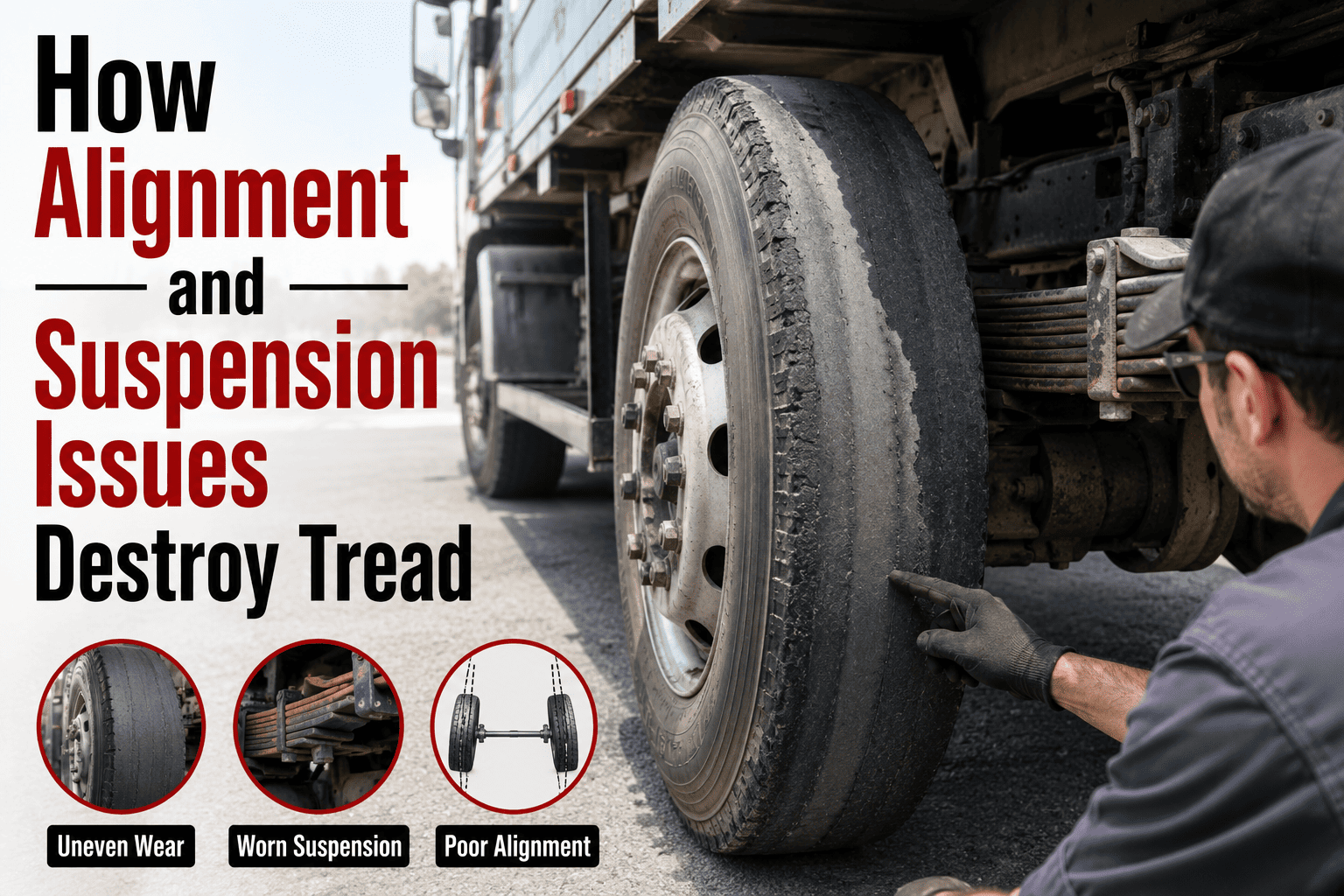
Vehicles operating with persistent misalignment impose asymmetric loads on tie rods, king pins, ball joints, and wheel bearings. The resulting accelerated suspension wear adds repair costs beyond the tire replacement budget — and often goes unattributed to the alignment problem that caused it.
How Oxmaint Automates Fleet Tire Rotation and Alignment Tracking
Oxmaint replaces manual tire program tracking with mileage-triggered work orders, digital tread depth records, and alignment history tied to each vehicle's asset record — ensuring consistent program execution across every vehicle in the fleet. Fleet managers ready to close the tire program execution gap can start a free trial or book a demo to see the full tire management workflow.
Configure rotation intervals by vehicle class. When odometer data triggers the interval threshold, Oxmaint generates the rotation work order, assigns it to the service bay, and escalates to the fleet manager if not completed within the grace window. No manual tracking, no missed rotations.
Technicians record tread depth by position (steer, drive, trailer) on mobile during each rotation service. Oxmaint trends tread depth over time, flags positions approaching the 4/32" regulatory limit, and generates replacement work orders automatically when threshold is reached.
Every alignment check is recorded as a work order event on the vehicle asset record — with before/after measurements, corrective action taken, and technician sign-off. Oxmaint correlates alignment history with tread depth progression, surfacing vehicles where persistent misalignment is accelerating wear.
Track spare tire inventory by size, type, and condition. Oxmaint alerts when spare stock falls below the minimum for fleet size and links procurement to upcoming replacement forecasts — so the right tires are available when scheduled replacements are due, without emergency procurement premiums.
Oxmaint compiles tire cost data — rotation service, alignment, replacement parts, labor — at the vehicle level and fleet level. Run cost-per-km tire analysis to identify high-cost vehicles, validate program savings, and present ROI data to fleet leadership with exportable reports.
Tread depth records, rotation history, and alignment checks form a complete maintenance trail that demonstrates systematic tire management during DOT roadside inspections and fleet safety audits. Every record is timestamped, technician-signed, and linked to the vehicle — exportable in minutes for any review.
Ad-Hoc Tire Management vs. CMMS-Structured Tire Program
Measurable Outcomes from Systematic Fleet Tire Programs
Systematic rotation extends commercial tire life from 50,000–70,000 km to 140,000–160,000 km — the single largest tire cost reduction available without changing tire brand
Proper alignment and tire inflation eliminate rolling resistance losses — measurable as improved km/litre on vehicles with documented alignment compliance
Fleets with CMMS-managed tire programs report significant reduction in roadside blowouts and emergency tire callouts compared to reactive programs
The difference between reactive and systematic tire management on a 50-vehicle commercial fleet — validated through Oxmaint cost-per-vehicle reporting
Frequently Asked Questions
What is the correct tire rotation pattern for a Class 8 commercial truck?+
How much does misalignment really cost a commercial fleet annually?+
Can Oxmaint track tread depth and flag tires approaching DOT limits automatically?+
How do we handle tire rotation tracking for a fleet with multiple service locations?+
Your Fleet's Tire Budget Is Telling You Whether Your PM Program Is Working
If your commercial tire spend is above $5,000 per vehicle per year, your rotation and alignment program has execution gaps. The math is straightforward — the only variable is whether your fleet has the scheduling infrastructure to close those gaps consistently. Oxmaint automates every tire rotation trigger, captures every tread depth reading, and gives fleet leadership the cost-per-vehicle data to see exactly where the program is working and where it is not. No heavy setup. First rotation work orders scheduled in week one.