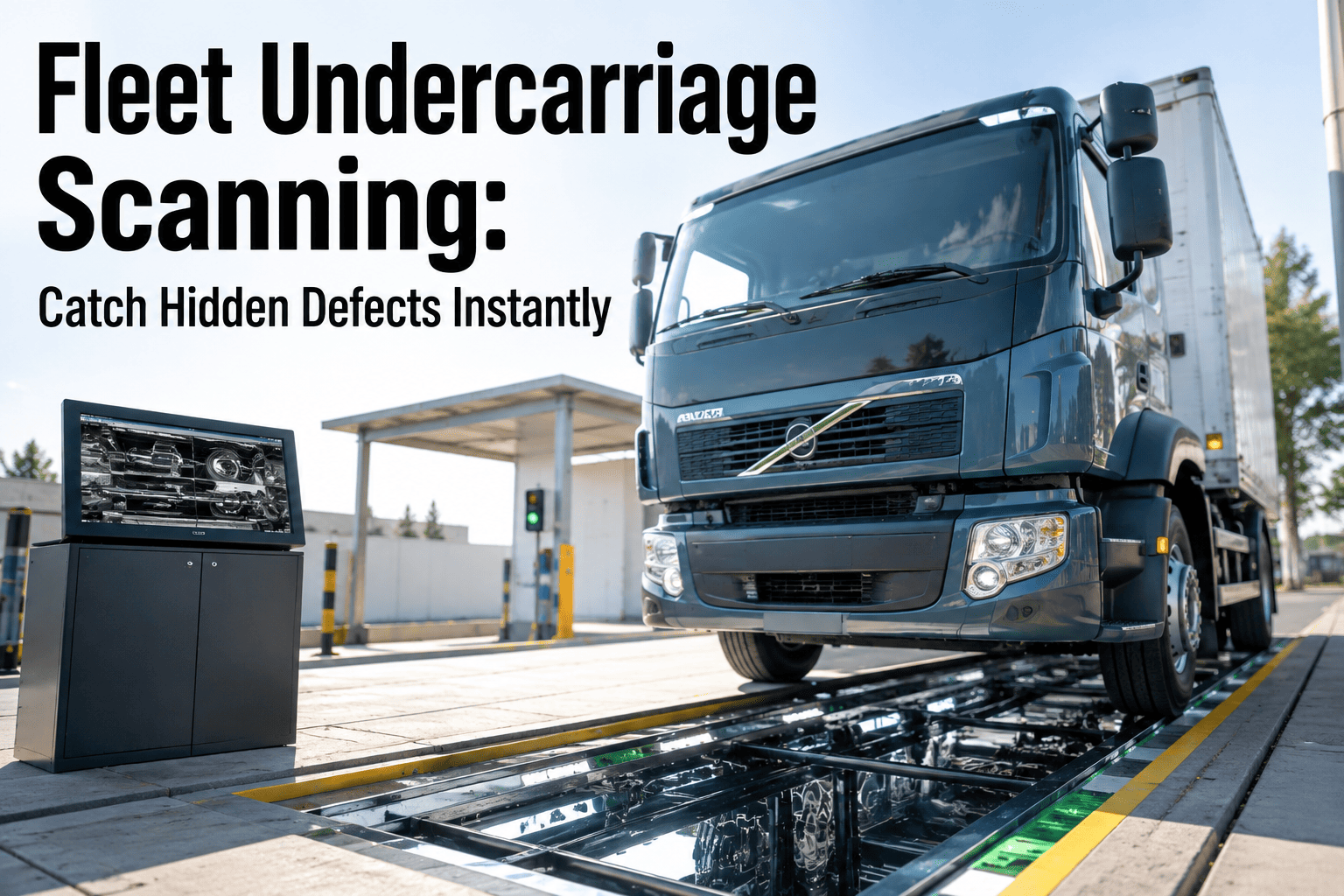
Fleet undercarriage damage — frame corrosion, crossmember fatigue, suspension mount deterioration, and brake line rust-through — accounts for an estimated $820 million in annual commercial vehicle repairs across North America, with the highest concentration in salt-belt states where road treatment chemicals accelerate structural corrosion by 300-400% compared to southern operating environments. The undercarriage is the most structurally critical and least inspected area of any commercial vehicle. Frame rail integrity, crossmember attachment, spring hanger condition, and brake line routing are all load-bearing or safety-critical elements that degrade invisibly beneath road spray, accumulated debris, and underbody grime. By the time corrosion becomes visible during a standard walk-around inspection, the structural damage is often months or years past the optimal intervention point. This guide covers undercarriage inspection methodology, anti-corrosion treatment protocols, and how CMMS-tracked chassis integrity programs extend frame life and prevent the catastrophic structural failures that result from deferred underbody maintenance. Fleet operations that need to implement structured undercarriage inspection programs can start a free trial or book a demo to see how Oxmaint tracks undercarriage condition at the component level.
Fleet Undercarriage Inspection and Rust Protection: Annual Maintenance Protocol
Frame corrosion is invisible until it is catastrophic. Learn undercarriage inspection methods, anti-corrosion treatment schedules, and how CMMS-tracked chassis integrity programs prevent the $820M annual cost of undercarriage failures across North American fleets.
The Undercarriage Is the Last Place You Look and the First Place Corrosion Attacks
Road spray carries salt, sand, calcium chloride, and magnesium chloride directly into frame rail channels, crossmember joints, spring hangers, and brake line routing clips — areas that retain moisture and accelerate galvanic corrosion. A vehicle that looks clean from the outside can have frame rails losing 0.5mm of wall thickness per year beneath accumulated underbody contamination. Oxmaint schedules undercarriage inspections as dedicated PM events — not items buried at the bottom of a general inspection checklist — with condition scoring, photo documentation, and corrosion trending that makes structural degradation visible before it becomes a safety event. Ready to see how undercarriage tracking works in practice? Start a free trial or book a demo to walk through the chassis integrity inspection workflow.
The Six Critical Undercarriage Inspection Zones
Effective undercarriage inspection divides the underbody into six distinct zones, each with different corrosion exposure patterns, different structural consequences, and different inspection techniques. Treating the undercarriage as a single inspection item — "check undercarriage: pass/fail" — misses the zone-specific degradation patterns that predict structural failure.
Primary structural members carrying all vehicle and payload loads. Frame rail corrosion reduces wall thickness and load capacity — a 20% reduction in wall thickness reduces bending strength by 36%. Inspect both inner and outer flanges, web faces, and rivet/bolt holes where moisture accumulates. Ultrasonic thickness testing at annual intervals provides quantified degradation data.
Lateral structural members connecting frame rails. Crossmember corrosion at the frame attachment points is the most common structural failure mode in salt-belt fleets — the joint area traps moisture and road chemicals between dissimilar metals. Inspect attachment hardware, gusset plates, and weld areas for cracking, scaling, and section loss. 74% of crossmember failures originate at attachment joints.
Spring hangers transfer suspension loads to the frame — corroded hangers can crack under load, causing sudden spring release and loss of vehicle control. Inspect hanger brackets, mounting bolts, bushing retention, and the frame attachment area. Spring hanger corrosion failures account for 18% of commercial vehicle structural out-of-service orders.
Steel brake lines and air line fittings corrode from the outside in — road spray deposits salt on line surfaces, and vibration creates micro-cracks in the corrosion layer that accelerate penetration. A corroded brake line failure at highway speed is a catastrophic safety event. Inspect line routing, clip retention, surface condition, and fitting integrity. Replace lines showing surface pitting deeper than 30% of wall thickness.
Exhaust components operate at high temperatures that accelerate corrosion from both thermal cycling and chemical exposure. DPF and SCR components on modern diesel trucks cost $3,200-$6,800 to replace — corrosion at mounting brackets and clamp points is the primary premature failure mode. Inspect hangers, clamps, heat shield retention, and flex coupling condition.
Fuel tank mounting strap corrosion is a DOT inspection point — corroded straps can fail under vibration, allowing tank movement or release. Aluminum tanks resist corrosion but their steel mounting straps do not. Inspect strap condition, rubber isolation pads, and mounting bracket integrity. Strap replacement cost: $85-$140. Strap failure consequence: fuel spill, fire risk, immediate OOS.
Anti-Corrosion Treatment Protocols for Commercial Fleets
Corrosion prevention is dramatically less expensive than corrosion repair — the cost ratio is typically 40-50x in favor of prevention. These four treatment categories form a comprehensive anti-corrosion program that CMMS scheduling makes consistent across the fleet.
High-pressure underbody washing after every salt exposure period removes the road chemical deposits that initiate corrosion. Industry data shows that vehicles washed within 48 hours of salt exposure experience 60% less undercarriage corrosion than vehicles washed weekly regardless of exposure. Schedule wash events based on route exposure, not calendar — CMMS route-based triggers outperform fixed schedules.
Lanolin-based anti-corrosion sprays (fluid film type) penetrate existing rust, displace moisture, and create a self-healing barrier that re-flows to fill micro-cracks. Applied annually before salt season, lanolin coatings extend frame life by an average of 8-12 years in salt-belt environments. Unlike rubberized undercoating, lanolin products do not trap moisture beneath the coating layer.
Closed frame sections, box crossmembers, and door sills trap moisture that cannot be removed by external washing. Cavity wax injection fills these enclosed spaces with corrosion-inhibiting wax that prevents moisture contact with steel surfaces. Applied at vehicle commissioning and refreshed every 3-5 years, cavity wax reduces internal corrosion progression by 85%.
Exposed brake lines, air line fittings, and structural fasteners benefit from targeted anti-corrosion spray application during every PM service. A 30-second spray treatment per line section during routine PM extends brake line life by 40-60% in salt-belt operation. The marginal cost per PM event is under $8 in materials — the cost of one corroded brake line replacement is $180-$350 in parts and labor.
How Oxmaint Tracks Undercarriage Condition and Corrosion Progression
Undercarriage integrity management requires more than periodic inspection — it requires trending. A single inspection tells you current condition; a series of inspections documented in CMMS tells you the rate of degradation, which zones are deteriorating fastest, and which vehicles need intervention before the next scheduled assessment. Oxmaint provides the component-level tracking that makes corrosion progression visible and actionable. Fleet operations ready to implement structured undercarriage programs can start a free trial or book a demo to see the chassis integrity dashboard.
Each inspection zone — frame rails, crossmembers, spring hangers, brake lines, exhaust, fuel tank mounts — is tracked as a separate component under the vehicle asset record. Condition scores, inspection photos, and thickness measurements are recorded per zone, enabling targeted intervention at the zone showing fastest degradation.
Standardized corrosion severity rating — from 1 (surface oxidation, cosmetic) to 5 (structural section loss, immediate repair required) — applied per zone per inspection. Photo documentation at each inspection creates a visual degradation timeline that supports both maintenance planning and vehicle disposition decisions.
Schedule undercoating, cavity wax, and underbody wash treatments based on calendar triggers (pre-salt-season), route exposure triggers (post-salt-route), or condition triggers (when inspection score drops below threshold). Oxmaint generates the treatment work order automatically and tracks completion by vehicle.
Compare condition scores across inspection cycles to calculate degradation rate per zone per vehicle. Vehicles degrading faster than fleet average are flagged for investigation — route assignment, treatment compliance, or vehicle-specific factors contributing to accelerated corrosion. This trending converts reactive "it is rusted, fix it" into predictive "at this rate, intervention is needed by Q3."
Frame condition data feeds directly into vehicle lifecycle and replacement planning. A vehicle with excellent mechanical condition but frame rail thickness below 70% of original specification is approaching structural end-of-life regardless of mileage. Oxmaint integrates undercarriage condition into the overall asset condition score that drives replacement timing decisions.
49 CFR Part 393.201 requires frame members to be free of cracks, loose or missing fasteners, and excessive corrosion that reduces structural integrity. Oxmaint's inspection records document compliance at every assessment cycle with dated results, technician identification, and photo evidence — exportable instantly for DOT audit review.
Prevention vs. Repair: Undercarriage Cost Comparison
Undercarriage Program ROI with CMMS Tracking
Fleets with CMMS-tracked undercarriage inspection and treatment programs report 73% fewer frame and structural repair events within 24 months
Systematic anti-corrosion treatment extends commercial vehicle frame structural life by 6-8 years in salt-belt environments compared to untreated vehicles
Net savings after deducting treatment and inspection costs from avoided repair costs — for salt-belt fleets the savings are 2-3x higher
Annual undercoating at $180 vs frame rail repair at $8,500 — the most extreme prevention-to-repair cost ratio in commercial vehicle maintenance
Frequently Asked Questions
How often should commercial vehicle undercarriages be inspected?+
Is rubberized undercoating recommended for commercial vehicles?+
What DOT frame inspection requirements apply to commercial vehicles?+
Can Oxmaint track ultrasonic thickness measurements for frame rails?+
Frame Corrosion Is Preventable — But Only If You Are Measuring It
An $8,500 frame rail repair started as $180 worth of prevention that was never scheduled. A spring hanger failure started as surface corrosion that was never documented. A brake line rust-through started as surface pitting that was never measured. Every catastrophic undercarriage failure has a prevention cost that is a fraction of the repair cost — but only if the inspection is scheduled, the condition is documented, and the treatment is tracked. Oxmaint makes undercarriage integrity management systematic, measurable, and budget-justifiable. No implementation project. First undercarriage inspection work orders in week one.