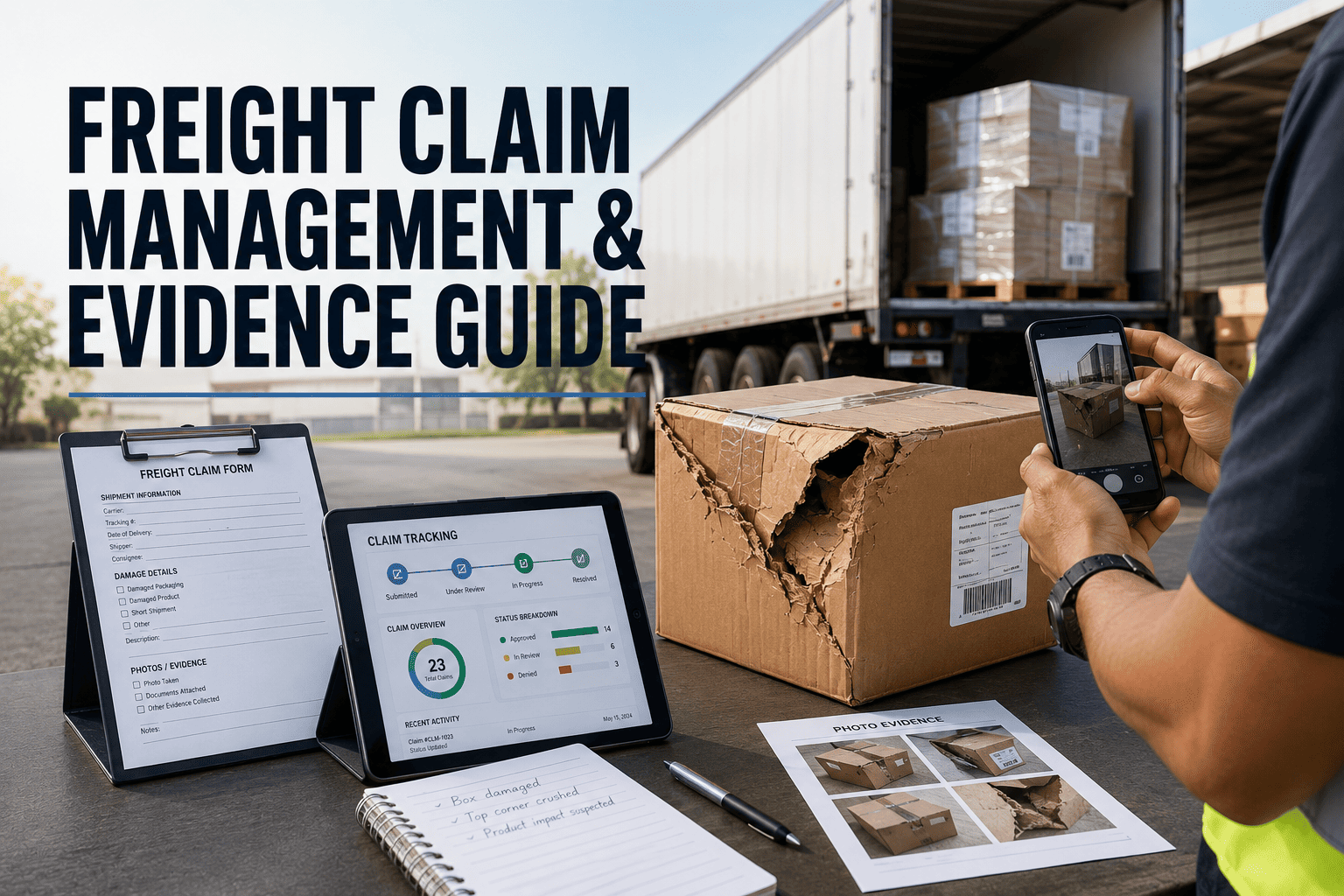
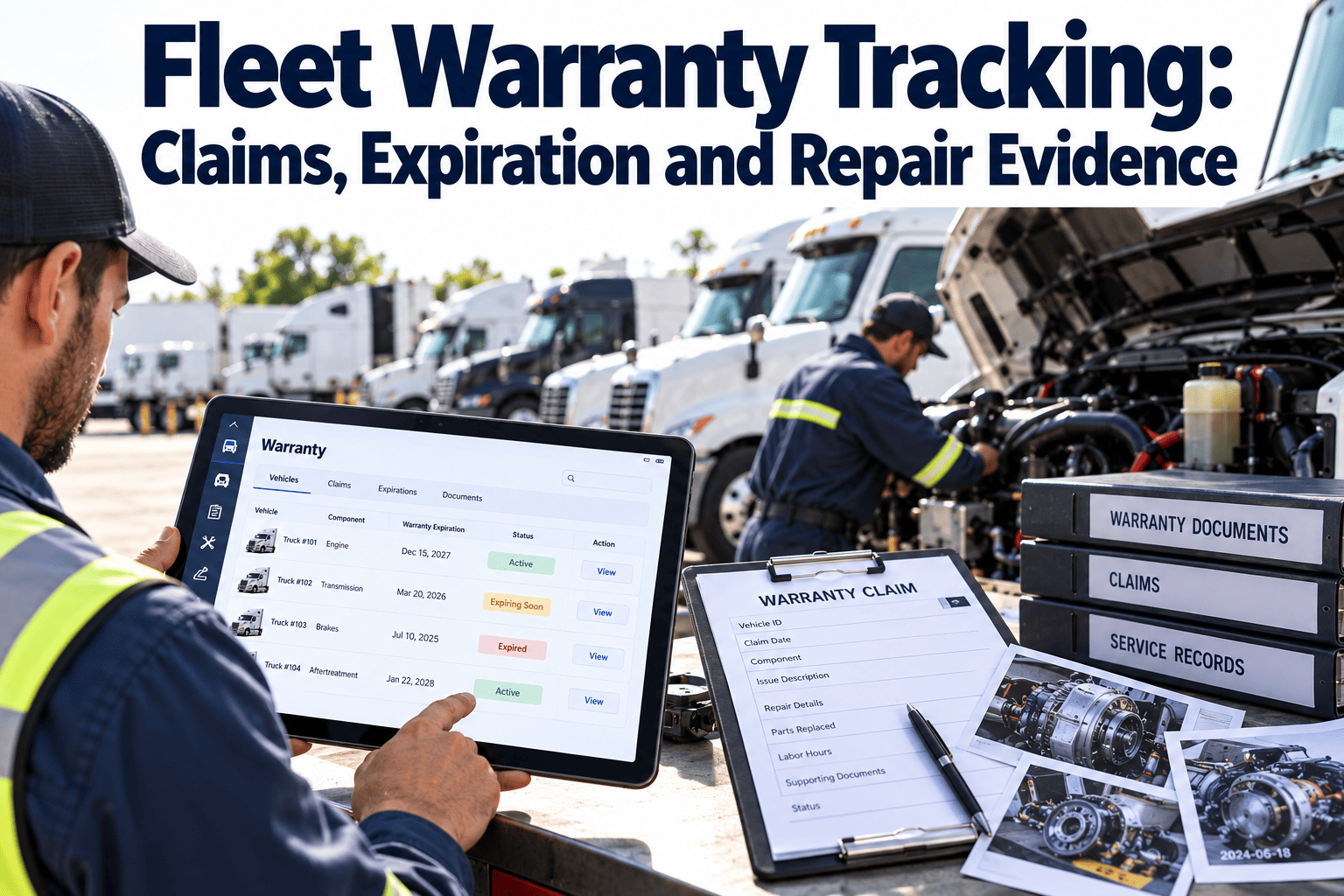
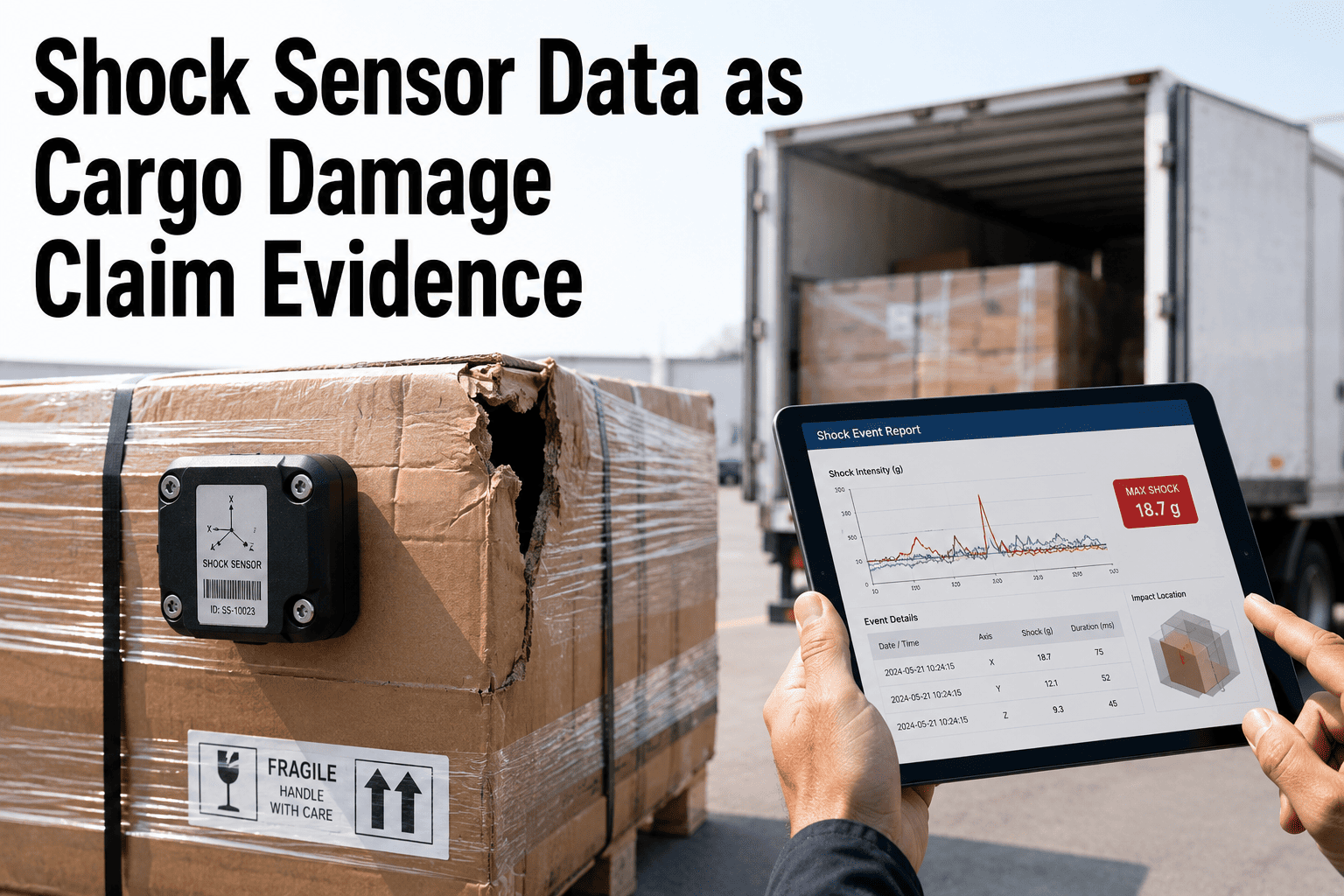
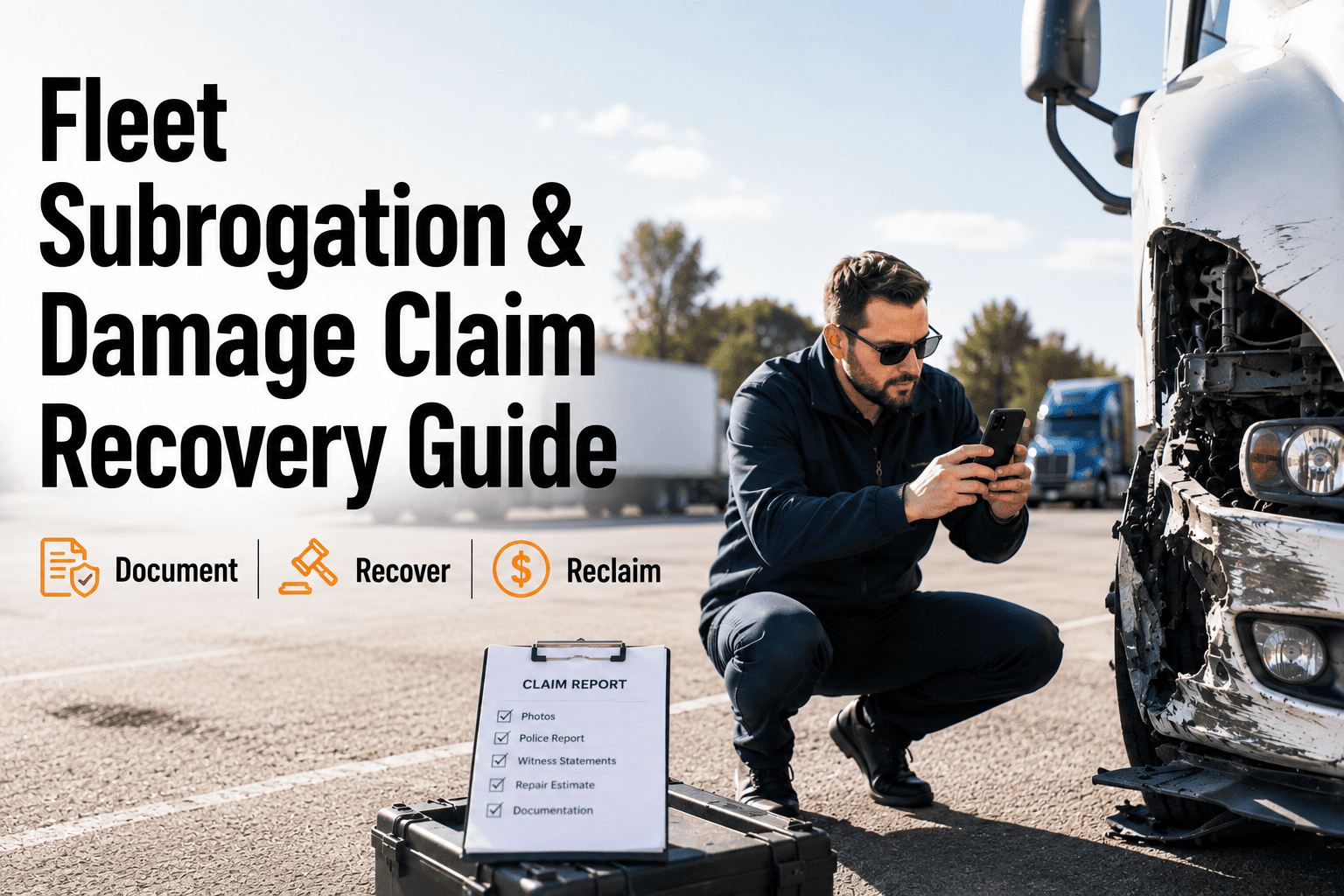
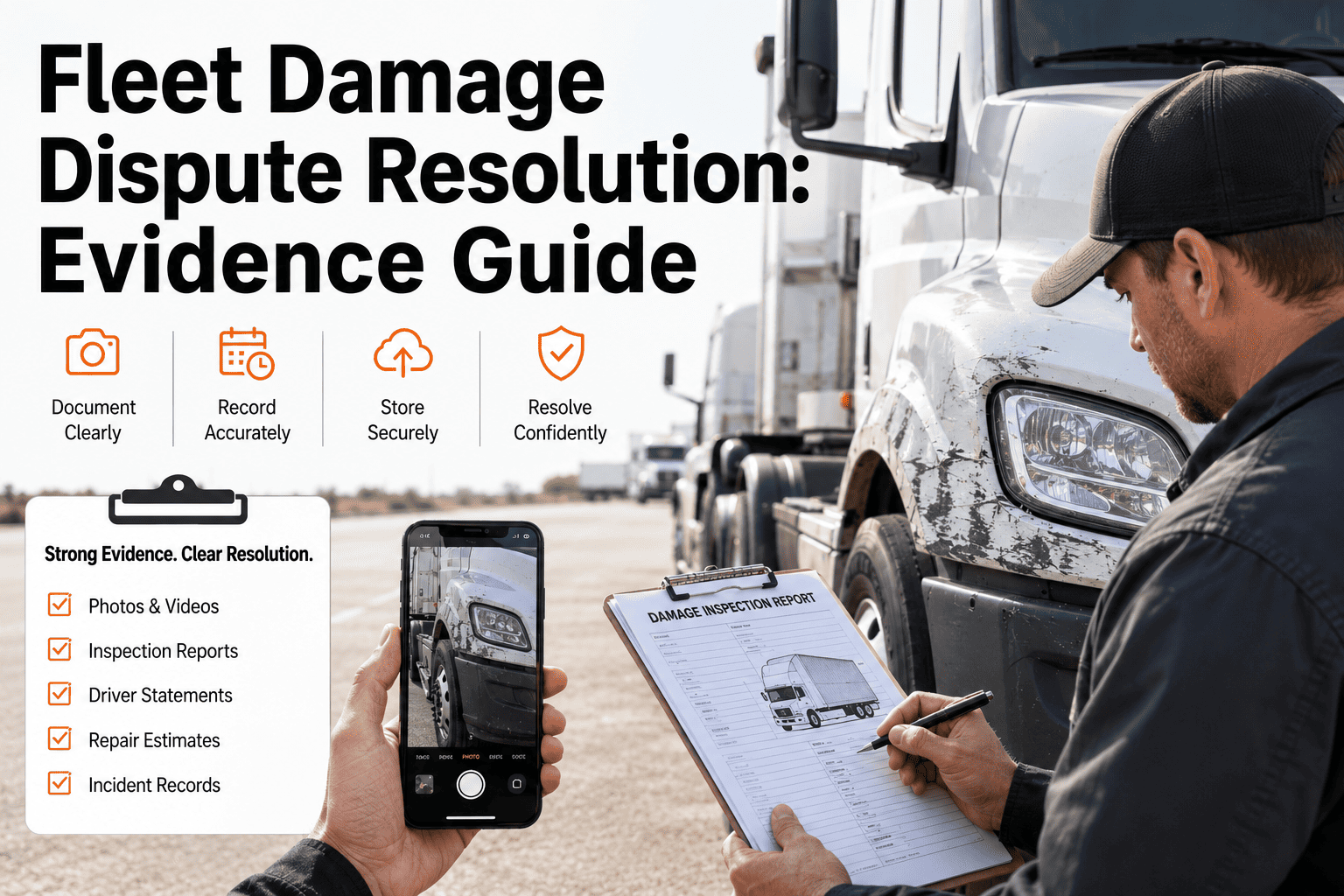
A freight claim without evidence is not a claim — it is a loss you quietly absorb. Roughly 35 to 40 percent of denied freight claims fail not because the damage was fake, but because the bill of lading, the delivery receipt, or the photo that would have proven it was missing, late, or incomplete. Carriers do not deny claims out of spite; they deny claims that cannot be proven within their evidence standards and filing windows. The fleets and shippers who recover the most are not the ones with the fewest damaged shipments — they are the ones with a documentation habit that survives every single delivery. See how OxMaint builds a defensible evidence package on every delivery.
Freight Claim Management
Stop Losing Valid Claims to Missing Evidence
OxMaint captures timestamped photos, e-signatures, GPS location, and delivery condition automatically at every stop — building the evidence chain a claim needs before a dispute ever starts.
$50B+
Freight claims cost U.S. shippers and carriers every year
35–40%
Of denied claims fail purely on missing or late documentation
1–3%
Of total freight spend lost to claims for the average shipper
Why Legitimate Freight Claims Get Denied
Denial patterns are remarkably consistent across LTL, full truckload, parcel, and air freight. Almost every trigger traces back to a gap in documentation or timing rather than a genuine dispute over what happened to the shipment. Knowing the six most common failure points is the first step to closing them before they cost you a payout.
01
Missing Documentation
The single largest cause of denial
A missing invoice, delivery receipt, or inspection report makes it nearly impossible to prove responsibility or value, and carriers deny by default rather than assume liability.
02
Damage Not Noted at Delivery
The clean-signature trap
If damage is not written on the delivery receipt before the driver leaves, the carrier can argue the goods arrived in good condition — regardless of what happened in transit.
03
Missed Filing Deadline
The most common denial reason overall
Carriers are not obligated to pay a claim filed after the statutory or tariff period expires, and they typically will not, even when the damage itself is undisputed.
04
Concealed Damage
Discovered after unpacking
Because the exterior packaging looked intact at delivery, the burden of proof shifts entirely to the shipper — and the filing window drops from months to just five business days.
05
The Shipper's-Fault Defense
Carrier argues packaging failed
Carriers routinely argue that packaging, not handling, caused the damage. Countering it requires packaging certification and photo evidence of freight condition at origin.
06
Discarded Evidence
Cargo destroyed before inspection
Damaged freight can be requested for carrier inspection at any point before resolution. Discarding it early removes the physical evidence a claim may ultimately depend on.
Visible vs Concealed Damage: The Evidence Standard Changes
Not all freight claims are judged by the same clock or the same proof standard. A visible claim, noted at delivery, gives a shipper months to file. A concealed claim, discovered after the truck has gone, gives a shipper days — and demands a far heavier evidence burden to overcome the carrier's default assumption that the damage happened after handoff.
Visible Damage Claim
Filing windowUp to 9 months
Evidence neededPOD notation, photos, BOL
Burden of proofLower — noted at handoff
Typical outcomeHigher success rate
Concealed Damage Claim
Filing window5 business days
Evidence neededIntact packaging + content photos
Burden of proofHigh — shipper must prove timing
Typical outcomeSignificantly higher denial rate
The Evidence Package That Actually Gets Claims Paid
Every carrier's claims desk is looking for the same core documents before it approves a payout. Missing even one weakens the claim, and missing two or more is usually enough for an automatic denial regardless of how real the damage was.
Evidence Checklist — What OxMaint Captures Automatically
✓
Original Bill of Lading
Establishes what was tendered to the carrier and in what condition, forming the baseline every later dispute gets measured against.
✓
Proof of Delivery With Notation
A signed POD with damage written at the time of delivery is the single most important document in any freight claim.
✓
Timestamped Damage Photos
Photos of the damage in original packaging, geotagged and timestamped, remove the ambiguity that fuels most carrier disputes.
✓
Commercial Invoice
Establishes declared value, the figure every settlement calculation is ultimately based on.
✓
GPS-Verified Delivery Record
Location and time data tied to the delivery event proves exactly when and where the freight condition was recorded.
✓
Repair or Replacement Estimate
A written repair quote or replacement cost supports the dollar amount claimed and speeds carrier adjuster review.
From Damage to Settlement: The Claim Timeline
A freight claim moves through five distinct stages, and the evidence gathered in the first two determines almost everything that happens in the last three. Waiting until the filing stage to assemble proof is the single most common — and most avoidable — mistake.
Claim Lifecycle — Evidence Captured at Each Stage
1
Delivery & Inspection
Damage noted on POD before driver departs — the moment that decides everything downstream
→
2
Evidence Capture
Photos, GPS location, and signature logged automatically within minutes of delivery
→
3
Claim Filed
Full evidence package submitted within the carrier's required window
→
4
Carrier Response
Typically 30 days once documentation is complete — incomplete files stall indefinitely
→
5
Settlement
Full, partial, or denied — partial settlement of 60–80% is the most common outcome
We used to lose claims we knew were legitimate because nobody could find the delivery photo six weeks later. Now every delivery is timestamped, geotagged, and signed automatically. Our recovery rate on filed claims nearly doubled in one quarter.
Claims Manager — Regional LTL carrier network, 210 vehicles
Evidence Automation
Build a Defensible Claim Before the Dispute Even Starts
OxMaint logs the bill of lading, POD notation, timestamped photos, GPS location, and signature at every delivery — so when a claim is needed, the evidence package is already complete.
~50%
Lower denial rate for automated, documented claim submissions vs manual paper filings
60–80%
Typical partial settlement range when documentation is clean and complete
30–90
Days from complete documentation submission to settlement, on average
20–35%
Standard carrier denial rate — nearly all driven by process, not real disputes
Frequently Asked Questions
What documents does a freight claim need at minimum?
How is a concealed damage claim different from a visible one?
Visible damage is noted on the delivery receipt at handoff and carries a filing window of up to nine months. Concealed damage, discovered after unpacking, must be filed within five business days and carries a much heavier burden of proof.
Why do carriers deny claims even when the damage is real?
How does OxMaint capture evidence without adding steps for drivers?
OxMaint logs the timestamped photo, e-signature, and GPS location as a normal part of the delivery workflow drivers already follow, so evidence capture happens automatically rather than as a separate task.
Can OxMaint help with claims that are already filed and pending?
Yes. OxMaint's delivery archive can be searched by date, driver, or shipment to pull the original evidence package for any past delivery, supporting appeals on claims already in dispute.
Start free and search your delivery archive.
Every Delivery Should Defend Itself
OxMaint captures the bill of lading, signed POD, timestamped photos, and GPS-verified delivery record automatically — so the next freight claim you file is backed by evidence instead of memory.