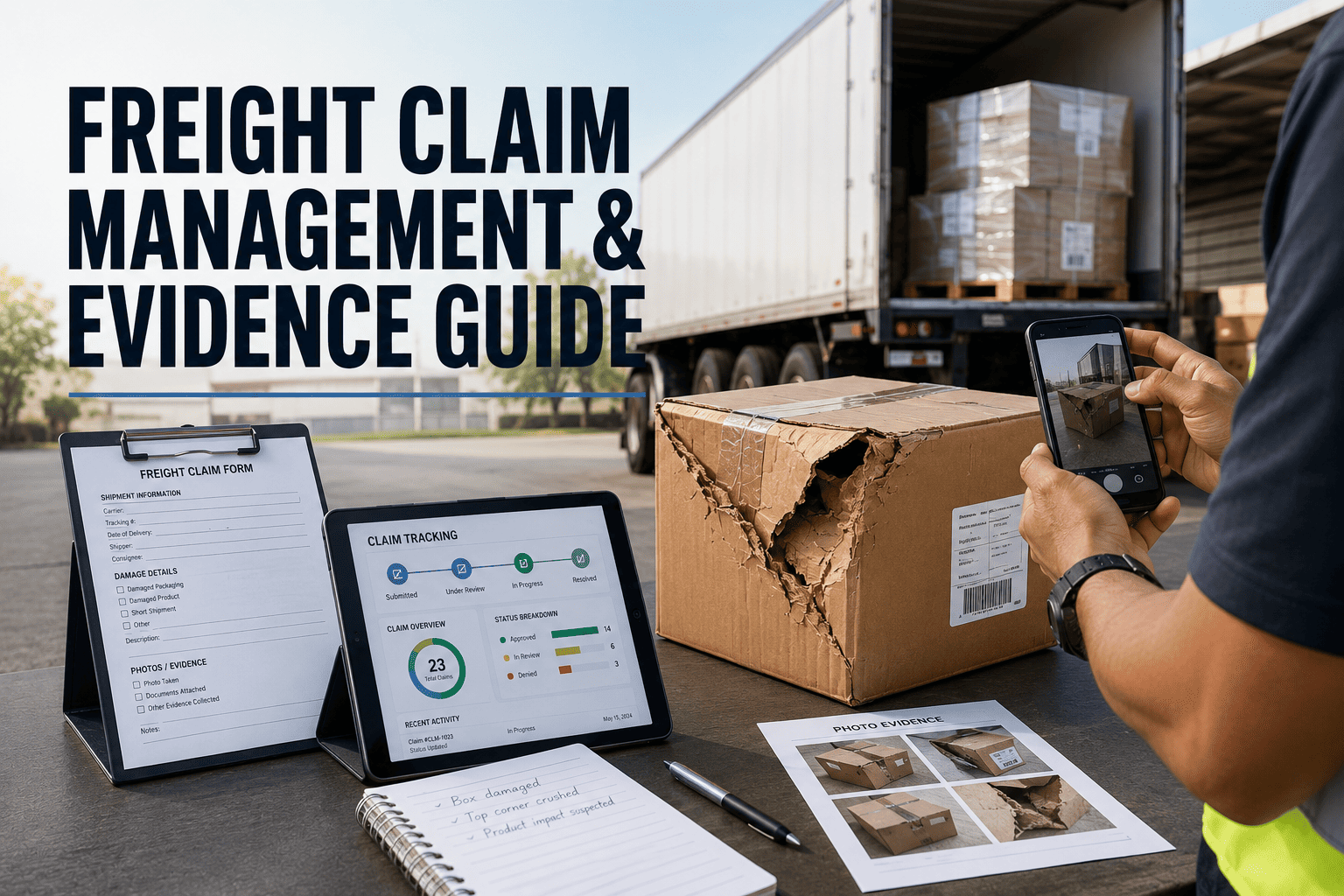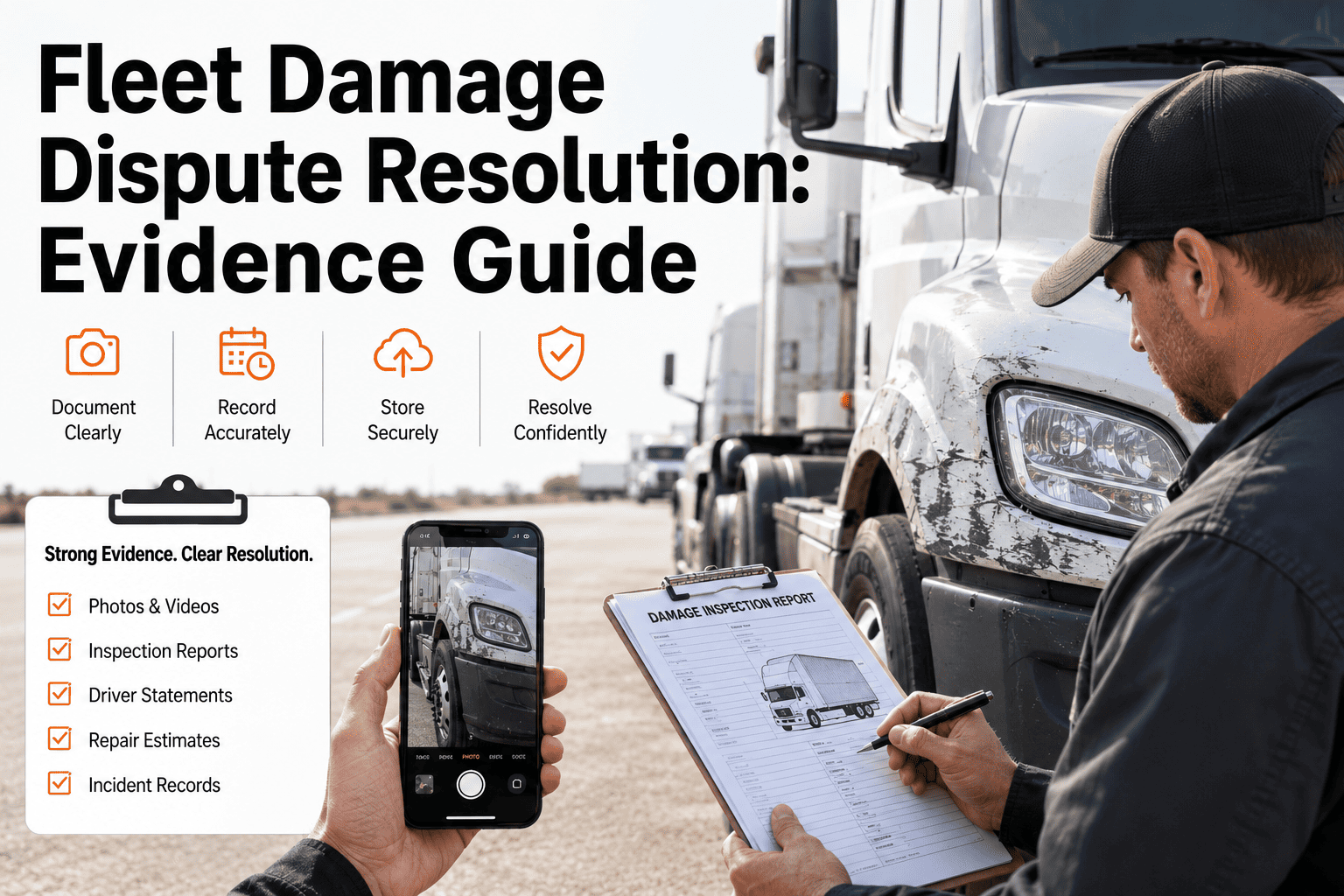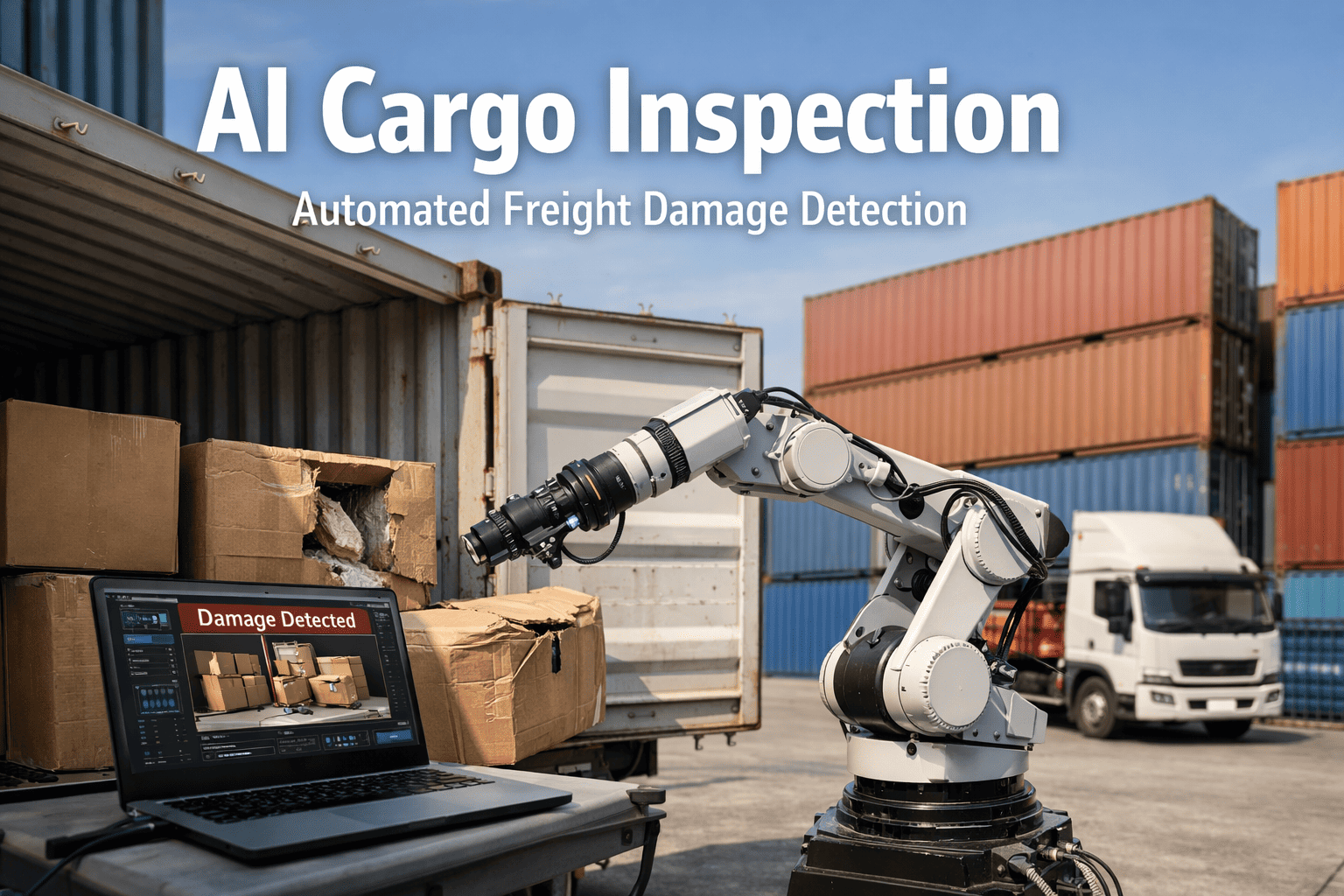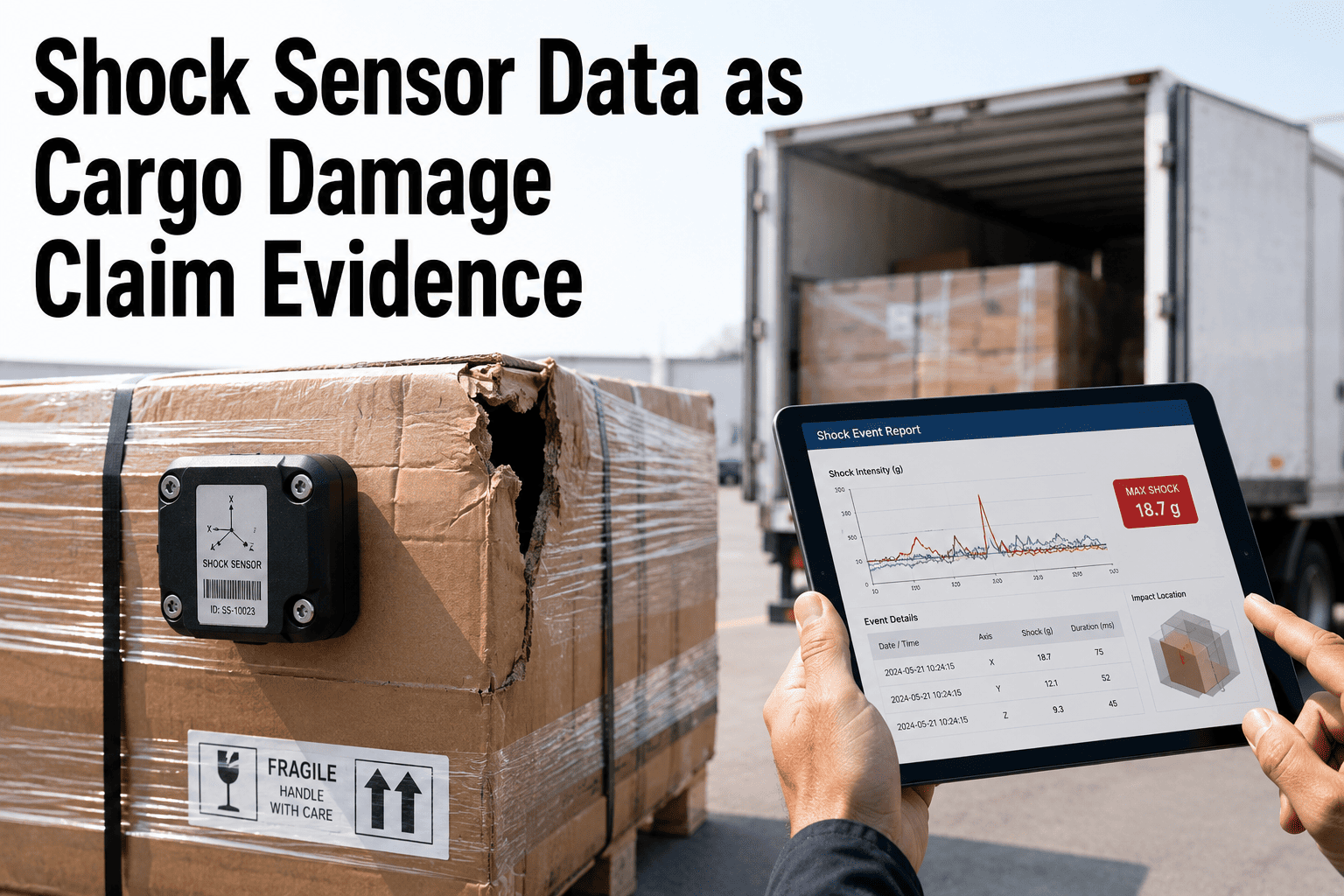
A pallet of machinery arrives with a cracked housing, and three parties immediately start pointing at each other. The shipper blames the carrier for rough handling. The carrier blames the terminal for a bad crane drop. The terminal blames loose blocking at origin. Without a record of exactly when, where, and how hard the cargo was hit, that argument has no referee — it just runs until someone gives up or a lawyer gets involved. A shock sensor removes the guesswork by logging every impact with a timestamp and a G-force reading, turning a shouting match into a settled fact. Here's how to pick the right sensor and threshold, and how Oxmaint turns that data into evidence you can actually use.
Shock Sensor Data as Cargo Damage Claim Evidence
A timestamped G-force reading settles a damage dispute that a phone call never will. See how shock sensors work, how to set the right threshold, and how the data holds up in a claim.
Why Cargo Damage Claims Turn Into a Blame Loop
Cargo changes hands multiple times between origin and delivery — loaded onto a trailer, transferred at a terminal, craned onto a rail car, moved again at the destination yard. Damage discovered at delivery could have happened at any one of those points, and every party involved has an incentive to say it wasn't them. Without a record tied to a specific moment in the journey, a damage claim becomes a negotiation based on who has the most leverage, not who actually caused the problem.
The most common damage points are also the least visible ones: a crane setting a container down a few inches too fast, a rail car coupling violently during yard shunting, or a forklift catching a pallet corner during a transfer. None of these get witnessed by anyone with a reason to report them. A shock sensor doesn't need a witness — it records the event itself.
Visual Indicators vs. Data-Logging Sensors
Not all impact protection works the same way. A simple indicator label tells you a threshold was crossed at some point. A data-logging sensor tells you exactly when, where, how hard, and from which direction — the difference that matters when a claim gets disputed.
Turn Every Shock Event Into a Claim-Ready Record
Oxmaint logs sensor data against the shipment and vehicle automatically, so a disputed damage claim comes with a timestamped, location-tagged answer instead of a guess.
Setting the Right G-Force Threshold by Cargo Type
A threshold set too low buries the useful alerts in noise from ordinary road vibration. Set too high, and a genuinely damaging impact never triggers a record. The right number depends entirely on how fragile the cargo actually is — a drop test on the specific product is the most reliable way to confirm it.
| Cargo Type | Typical Threshold | Primary Risk Point |
|---|---|---|
| Fragile Electronics / Instruments | 5-10 G | Handling transfers, drop during loading |
| Palletized General Freight | 15-25 G | Rail coupling, forklift transfers |
| Heavy Machinery / Equipment | 25-40 G | Crane lifts, terminal crane drops |
| Industrial / Bulk Cargo | 40 G+ | Rough intermodal transfer, vessel handling |
The Four Data Points That Make an Impact Record Useful
The exact magnitude of the impact, recorded the instant the configured threshold is crossed.
The precise moment the impact occurred, down to the second, tied to the shipment record.
Which direction the force came from — a drop reads differently than a side collision.
Where the shipment was when the impact happened, pinpointing which handler or leg of the route was responsible.
How Sensor Data Moves a Claim to Settlement
Frequently Asked Questions
How do I know what G-force threshold to set?
Base it on the fragility of the specific cargo — a drop test on the actual product is the most reliable way to confirm the threshold that separates normal transit vibration from real damage risk.
Can shock sensor data really hold up in a claim dispute?
A timestamped, location-tagged G-force reading is far harder to argue with than conflicting accounts from multiple handlers, which is exactly why it functions as evidence rather than opinion. Book a demo to see how logged data attaches to a shipment record.
Is a single-use visual indicator ever enough?
For low-value or low-risk shipments it can serve as a basic deterrent, but it only confirms that some impact happened at some point — not when, where, or how severe, which limits its use in a real dispute.
Does the sensor need to be attached to every pallet?
Not necessarily. Many fleets place sensors at the trailer or container level for general freight and reserve pallet-level sensors for the most fragile or highest-value cargo.
Can this data also improve packaging and handling over time?
Yes. Recurring impact patterns at the same terminal or route segment point to a specific handling problem worth fixing upstream. Start a free trial to see impact trends across your shipments.
Stop Settling Cargo Damage Claims on Guesswork
Oxmaint connects shock sensor data to the shipment record automatically, giving every damage claim a timestamped, location-tagged answer instead of a dispute between three parties.