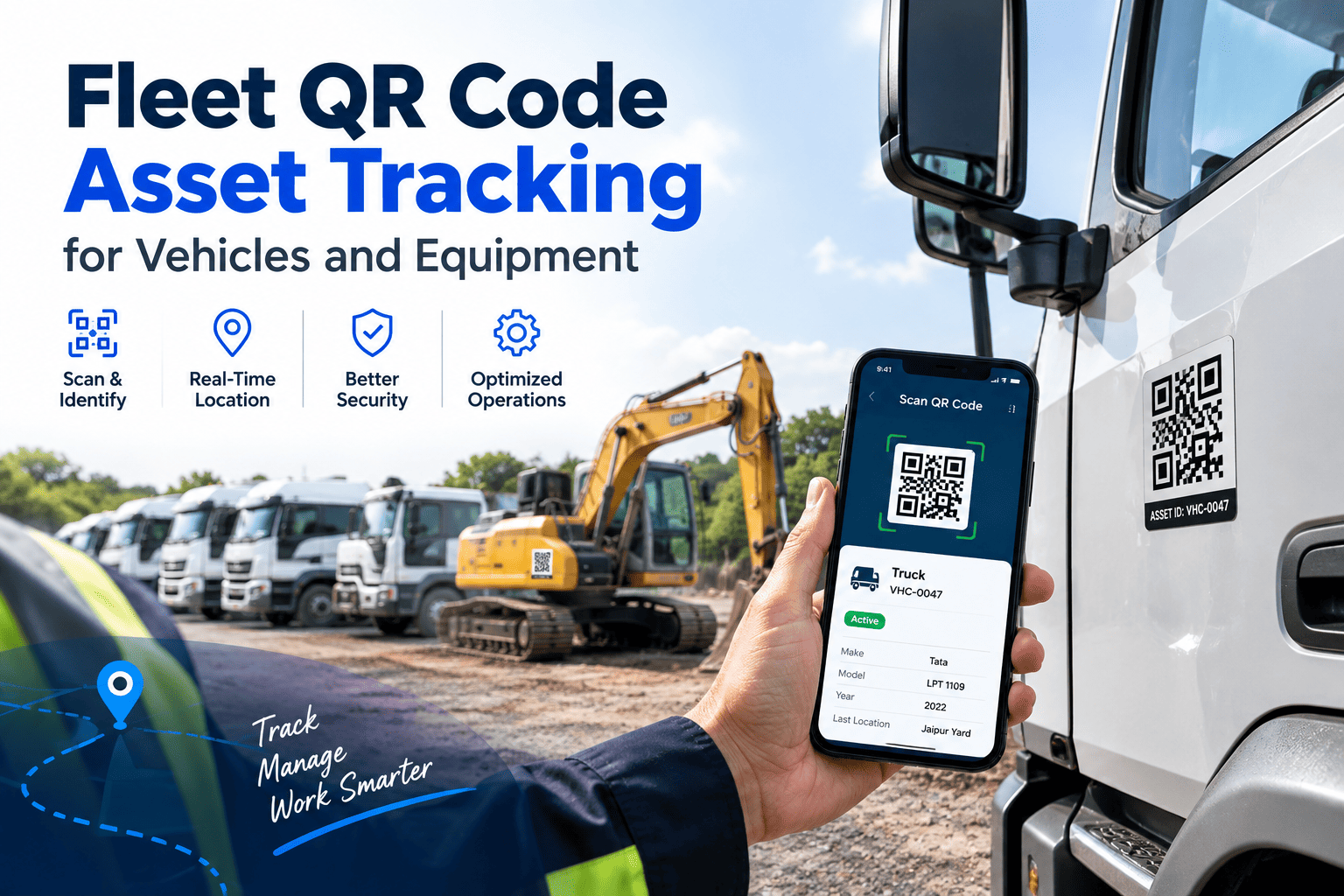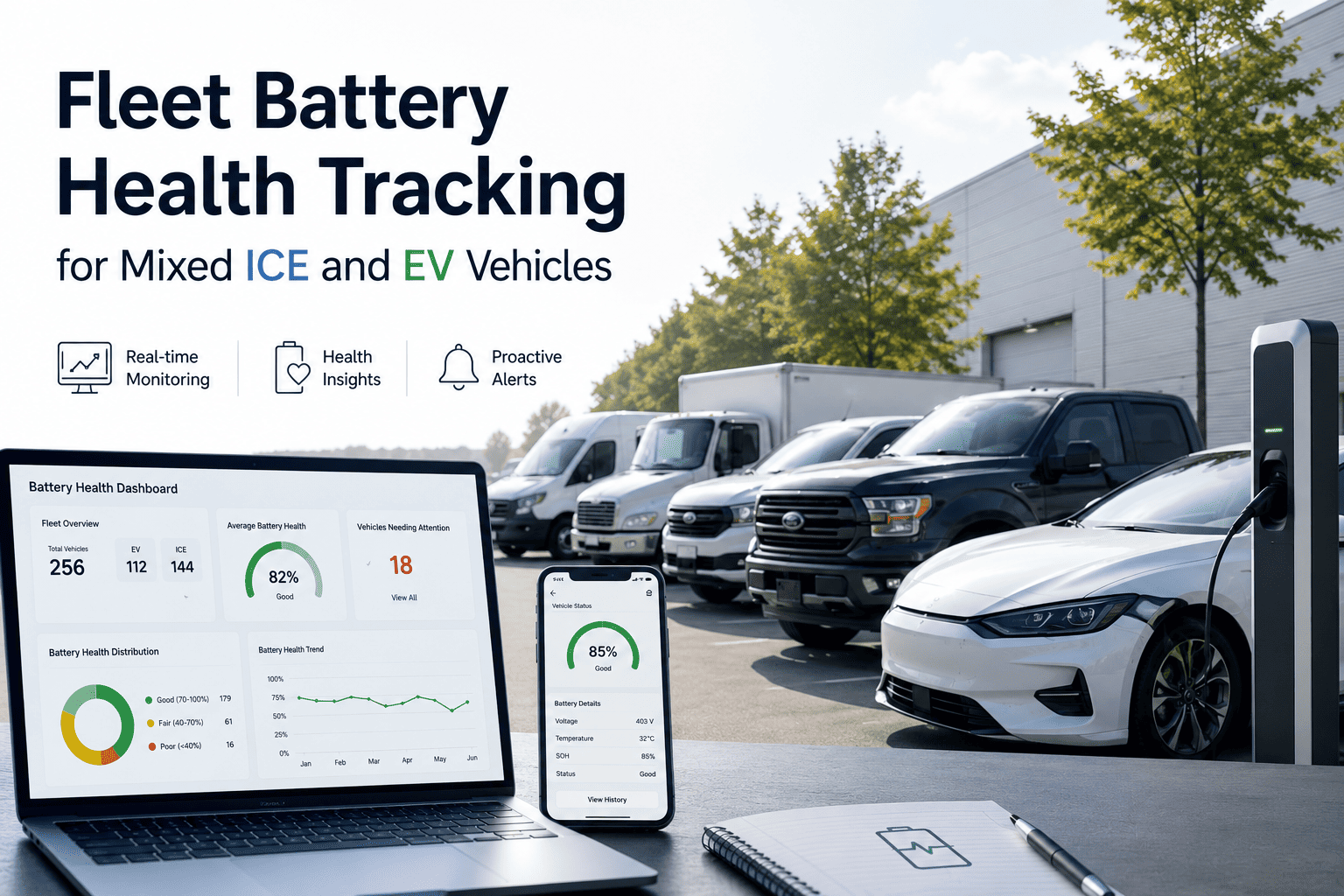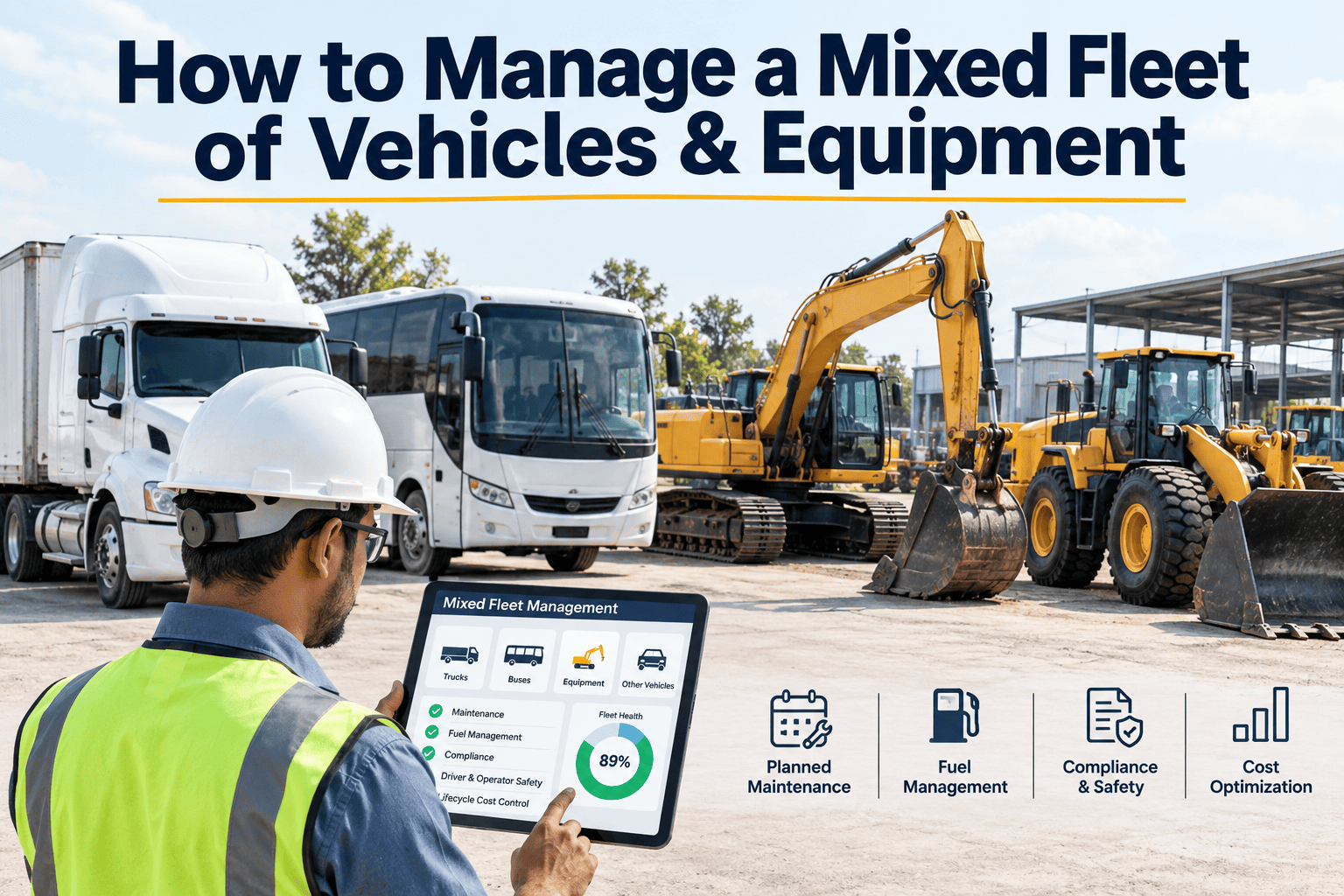
A fleet rarely stays simple for long. What starts as a handful of delivery vans grows into a mix of light-duty trucks, Class 8 tractors, trailers, forklifts, generators, and yard equipment, and each of those asset classes runs on its own service interval, its own compliance rule, and its own parts catalog. Most fleet software was built around one asset type and has the rest bolted on as an afterthought, which is why maintenance teams end up running three or four disconnected systems just to keep every machine road-ready. The real cost isn't the extra login, it's the missed PM, the compliance gap nobody caught in time, and the report that never lines up across asset classes. Oxmaint was built to bring every vehicle and every piece of equipment into one operational record, and you can start a free trial to see what a unified mixed fleet actually looks like.
One fleet, five asset classes, one dashboard — is that even possible?
Vans run on mileage. Excavators run on engine hours. Trailers run on calendar-based inspections. Most fleet platforms pick one logic and force everything else to bend around it — a mixed fleet needs a system built for all three at once.
Four numbers that explain why mixed fleets break generic software
Every asset class in a mixed fleet is measured differently, regulated differently, and priced differently. A platform designed for one class treats the rest as exceptions — and exceptions are where compliance gaps and missed services hide.
Three asset classes, three completely different maintenance logics
A single operation can run all three of these classes at once, and none of them can be scheduled, inspected, or reported on the same way. This is the divide that fragments most fleet systems.
Light-duty vehicles
Vans, pickups, and sedans scheduled on mileage and calendar time. Compliance centers on state inspection and registration cycles, and parts profiles favor fast-moving consumables.
Heavy equipment
Excavators, loaders, and generators scheduled on engine hours pulled from telematics or CANbus data. Utilization swings with project timelines, not daily routes.
Trailers and attachments
No engine to trigger a service — these run on fixed calendar inspections and DOT annual requirements regardless of how far or how often they moved.
The four-layer structure a mixed fleet CMMS actually needs
Managing mixed assets defensibly isn't about picking the software with the most features — it's about a structure that keeps every asset class on its own logic while still rolling up into one operational picture.
Unified asset hierarchy
Organize every vehicle and equipment type in one fleet register — organization, site, and asset class — instead of one register per class.
Asset-class PM libraries
Separate PM templates keyed to miles, engine hours, or calendar days, so a light-duty van and an excavator never share a schedule they shouldn't.
Unified compliance tracking
DOT inspections, DVIRs, and annual equipment checks mapped per asset class inside one audit trail — no more chasing three sets of paperwork before an audit.
Cross-class reporting
Roll up cost per mile, cost per hour, downtime, and utilization across the entire fleet in a single report, not three exports stitched together manually.
See every vehicle and every asset in one register
Oxmaint's asset hierarchy supports any combination of vehicles, trailers, and equipment in a single fleet — each with its own PM schedule, compliance rules, and cost center.
Compliance rules don't treat your fleet as one fleet either
Low-emission mandates and state-level clean fleet regulations apply differently depending on vehicle weight class, and tracking that manually across a mixed fleet is where fines and missed deadlines start.
Light and medium-duty rules
State registration cycles, emissions testing, and low-emission purchase mandates apply on a per-vehicle basis and change year over year, requiring class-level tracking rather than a single fleet-wide rule.
Heavy-duty and equipment rules
Annual DOT inspections, hours-of-service adjacent equipment logs, and state clean-fleet regulations for heavier assets follow separate timelines and separate documentation requirements entirely.
Fragmented systems versus one unified platform
The difference isn't cosmetic — it shows up in how fast a missed PM gets caught and how long an audit takes to prepare.
| Operational area | Fragmented systems | Unified Oxmaint platform |
|---|---|---|
| PM scheduling | Separate calendars per asset class, manually cross-checked | One schedule, each asset on its own mile, hour, or calendar trigger |
| Compliance tracking | Paper or spreadsheet trails per class, easy to lose | Single audit trail across every vehicle and equipment type |
| Reporting | Manual exports stitched together for leadership | Cross-class cost, downtime, and utilization in one report |
| Technician workflow | Different tools per asset class slow down work orders | One work order system for every asset the technician touches |
| Audit preparation | Days of gathering records from multiple systems | Audit-ready export generated in minutes |
Common questions about managing a mixed fleet
What counts as a mixed fleet?
Any operation running more than one asset class together — light-duty vehicles alongside heavy equipment, trailers, or specialty machines. If your PM schedules, compliance rules, or parts profiles differ across assets, you're managing a mixed fleet whether or not you've labeled it that way.
Can one CMMS really handle both mileage-based and hour-based PMs?
Yes, provided the platform supports asset-class-specific PM libraries rather than one universal schedule. Oxmaint lets each asset trigger on miles, engine hours, or calendar days independently. Start a free trial at app.oxmaint.ai to configure your first mixed asset group.
How do compliance requirements differ between vehicle classes?
Light-duty vehicles follow state registration and emissions cycles, while heavier trucks and equipment carry DOT annual inspections and separate clean-fleet mandates. Tracking these on one calendar without class separation is where most compliance gaps start.
Do we need separate software for equipment and for vehicles?
Not if the platform was built for mixed complexity from the start. A unified asset hierarchy removes the need to run parallel systems and closes the reporting gaps that come from stitching two platforms together manually.
How fast can we get a mixed fleet set up in one system?
Most teams configure their first multi-asset group within minutes once assets and PM triggers are mapped out. Book a walkthrough at calendly.com/oxmaintapp/30min and see your own asset mix built live.
Stop running your fleet in three separate systems
Bring every vehicle and every piece of equipment into one register, one PM schedule, and one compliance trail — built for the reality of a mixed fleet.
Free 14-day trial · No credit card