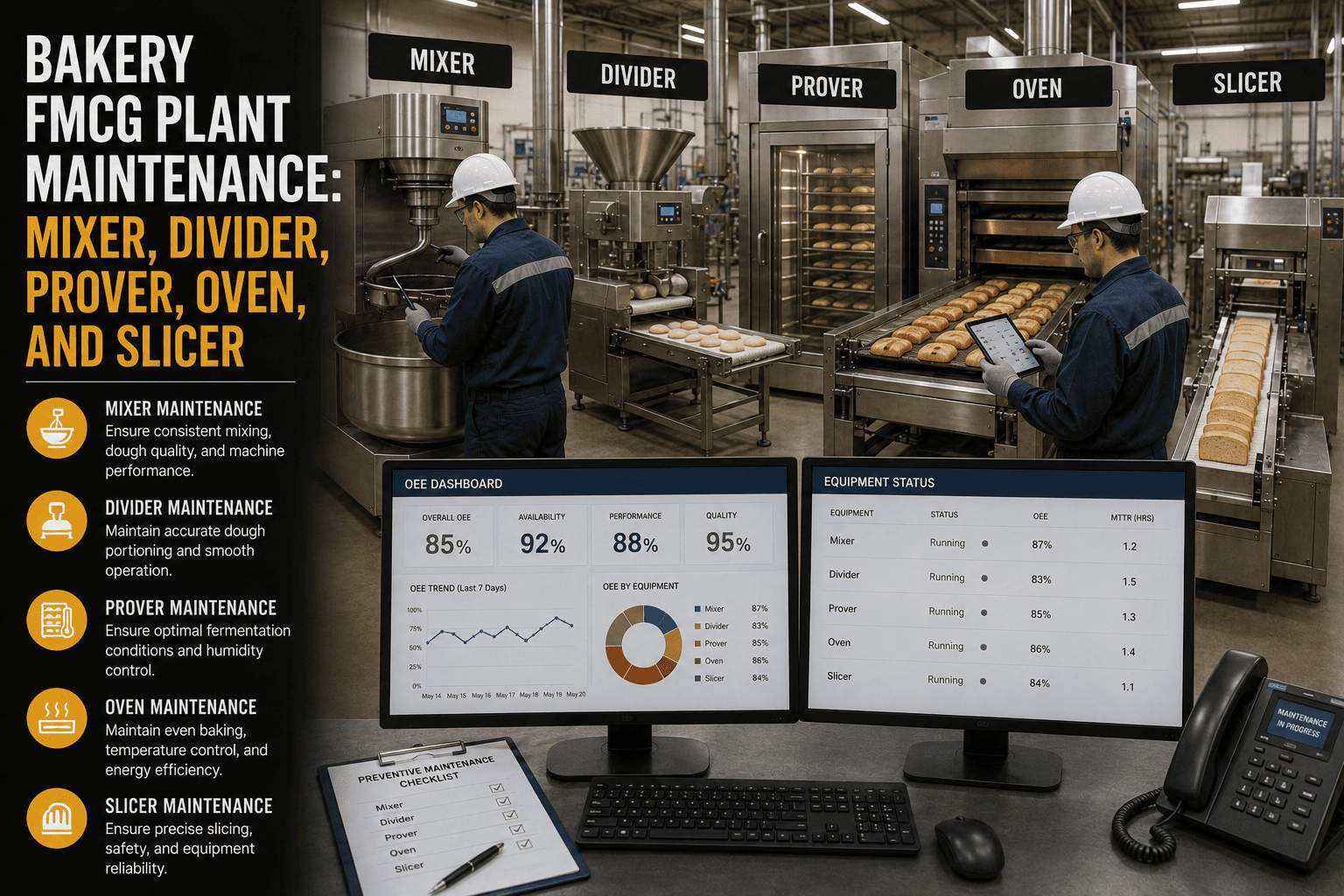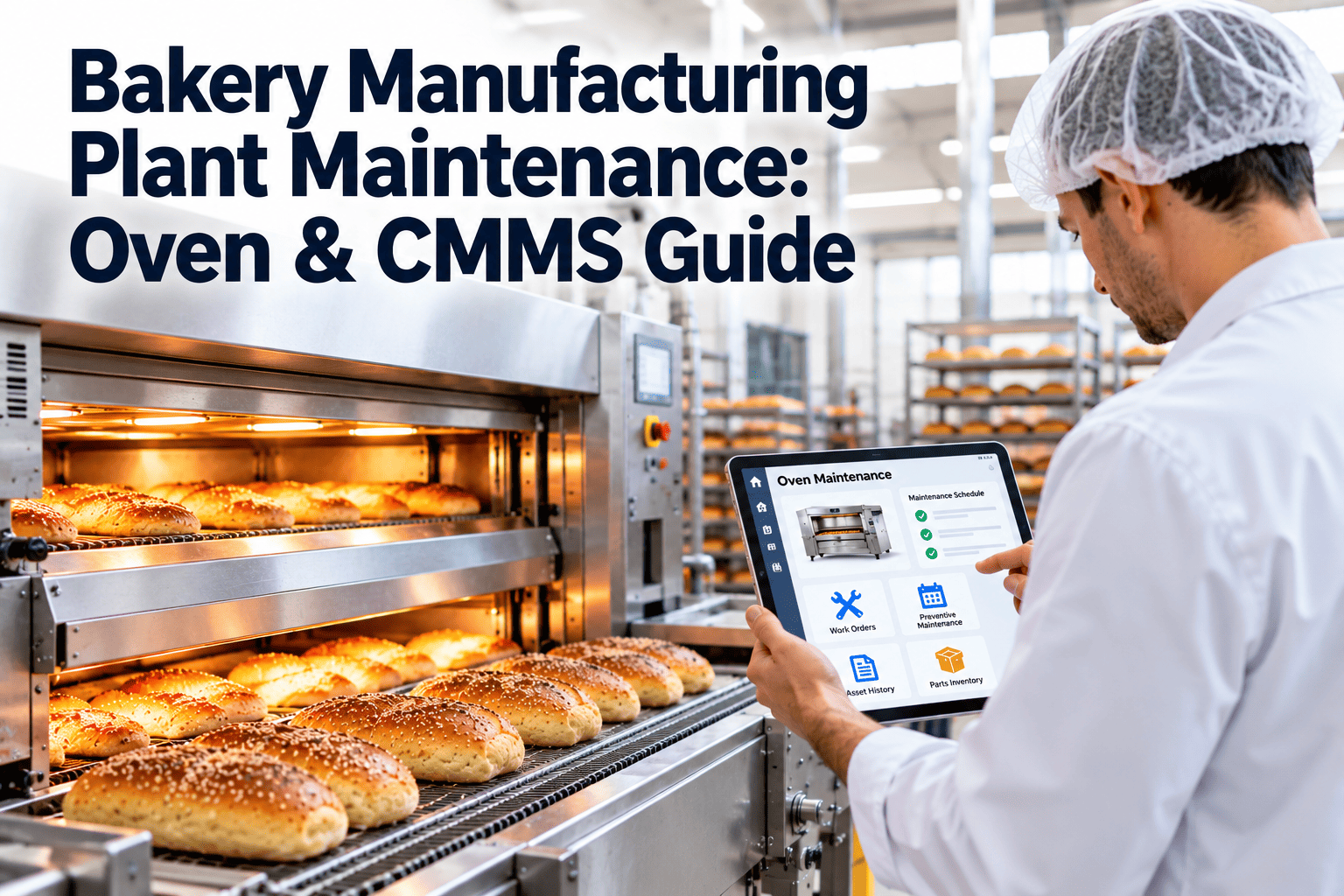
In a bakery, time does not wait for the maintenance team. Dough keeps proofing, the oven belt keeps moving, and a single stop at the wrong moment can turn a full line of product into waste. Tunnel ovens, spiral mixers, and bread slicers carry most of that risk, yet they often run on habit instead of a plan. This guide explains how bakery plants can structure oven, mixer, and slicer maintenance, and how a CMMS for bakery production lines helps teams schedule work around the production day.
Bakery Manufacturing Plant Maintenance: Oven and CMMS Guide for Mixers, Tunnel Ovens, and Slicers
What a Stop Costs at Each Stage of the Bakery Line
A breakdown is not equal everywhere on the line. The cost depends on what is in the equipment when it stops and how long the product can wait.
| Stage | Time sensitivity | What is at risk during a stop |
|---|---|---|
| Mixing | Moderate | Dough temperature and development; batch may need rework or disposal |
| Dividing and moulding | High | Dough continues to ferment and changes handling properties |
| Proofing | Very high | Over-proofed dough, collapsed structure, inconsistent volume |
| Baking | Very high | Burnt or underbaked product with oven belt full of dough |
| Cooling | Moderate | Condensation, product backing up, slicing at the wrong temperature |
| Slicing and packing | Moderate | Staling, line congestion, labour waiting, dispatch delays |
This is why bakery maintenance works best when it is scheduled against the production clock, not only the calendar.
Tunnel Oven Maintenance: Keep the Heat Even and the Belt True
A tunnel oven moves product through controlled heating zones. Small faults in burners, airflow, or the belt show up quickly as colour, volume, or moisture differences.
Heating system
- Burner condition, flame pattern, and combustion air
- Gas train components, valves, and regulators
- Flame safeguard and safety shutoff testing
- Thermocouples and zone controllers
Airflow and exhaust
- Circulation fan bearings and belts
- Exhaust fan and damper operation
- Ductwork build-up from oil and flour dust
- Steam or humidity control components
Conveying system
- Belt or band tracking and tension
- Chain wear, sprockets, and drive gearboxes
- Support rollers and bearings
- Lubrication systems rated for high temperature
Structure and efficiency
- Door seals and gasket condition
- Insulation damage and hot spots
- Cleaning of internal surfaces and drip areas
- Heat loss at entry and exit openings
Oven Symptoms and What to Check First
| Symptom | Possible cause | First maintenance check |
|---|---|---|
| Uneven bake across the belt width | Airflow imbalance or blocked nozzles | Fan operation, damper positions, nozzle cleanliness |
| Temperature overshoot or hunting | Control loop issue or sensor drift | Thermocouple accuracy, controller tuning, valve response |
| Product colour varies shift to shift | Zone temperature drift or belt speed change | Temperature logs, drive speed, door seals |
| Rising gas use for the same output | Heat loss, poor combustion, or insulation damage | Burner tuning, seals, insulation, exhaust balance |
| Belt wandering to one side | Misalignment, uneven wear, or contamination | Tracking system, rollers, tension, drive alignment |
| Burner trips or failed ignition | Safety device fault, gas pressure, or dirty flame sensor | Flame sensor, gas supply, ignition components |
Schedule Oven Checks Against the Production Clock
Dough Mixer Preventive Maintenance
Mixers set the quality baseline for everything downstream. Wear in drives and bowls changes mixing energy and dough temperature, even when the recipe is unchanged.
Drive and gearbox
Check oil level and condition, listen for gear noise, and monitor motor current for increases that signal drag.Bowl and tool
Inspect bowl bearings, spiral tool wear, and the clearance between tool and bowl.Cooling and temperature
Verify chilled water or jacket cooling and the probes that report dough temperature.Lift and tip systems
Inspect hydraulics, hoses, and mechanical linkages on bowl lifts and tippers.Guards and interlocks
Test safety interlocks and emergency stops at the scheduled interval and record the result.Mixer problems that reach quality first
- Longer mixing time to reach the same dough development
- Higher final dough temperature from friction or weak cooling
- Inconsistent batch weights from scale or dosing faults
- Oil leaks near the drive that can contaminate product
Slicing Machine Maintenance: Blades Decide the Finish
A slicer that crushes or tears loaves rarely fails suddenly. Blade condition, guides, and tension deteriorate over thousands of cuts.
- Blade sharpness and tooth condition
- Blade tension and drive wheel wear
- Guide and slot wear that causes blade wander
- Feed belts, pushers, and loaf alignment
- Crumb build-up in guides and chutes
- Slice thickness consistency
- Crust tearing and crushed loaves
- Crumb and metal fragment risk if blades break
- Bagger jams from uneven loaves
- Noise, vibration, and motor load
Track blade life by loaves sliced or run hours, and record each change so blade replacement is based on history, not habit.
A Maintenance Plan Built Around the Bakery Day
Most bakeries have natural gaps: pre-shift, between product runs, and during sanitation. Assign tasks to those windows.
Divider, Rounder, and Moulder Wear Points
Make-up equipment shapes the dough before it ever reaches the oven. Wear here shows up as weight variation and poor shape, which then looks like an oven problem.
| Machine | Wear point | Quality effect |
|---|---|---|
| Divider | Piston, pocket, and knife wear; hydraulic leaks | Dough piece weight variation |
| Rounder | Bowl surface, drive, and flour dusting system | Sticking, tears, uneven shape |
| Moulder | Rollers, belts, pressure boards, and guides | Poor sheeting, tight or loose loaves |
| Panning or depanning equipment | Suction cups, grippers, and timing sensors | Deformed product, missed pans |
Pan, Tray, and Mould Handling
Bakeware moves through the oven thousands of times. Damaged trays can cause uneven baking, sticking, and jams in handling equipment.
- Inspect pan conveyors, stackers, and depanners for wear and misalignment
- Remove warped or damaged bakeware from circulation and record the count
- Check greasing or release systems for nozzle blockage and uneven coverage
- Review pan cleaning equipment and wash systems for temperature and chemical dosing
- Track pan replacement trends by line to plan purchases
Sanitation Damage and Wash-Down Failures
Daily cleaning is necessary, but water, chemicals, and pressure take a toll on motors, sensors, and electrical enclosures.
Allergen Changeovers and Seeded Products
Products with seeds, nuts, or dairy ingredients create residue that spreads easily through conveyors and slicers. Maintenance can reduce that spread.
- Check that belts, scrapers, and guards can be fully cleaned without special tools
- Repair damaged surfaces and gaps where dough and seeds collect
- Record tools and parts used during allergen-sensitive repairs
- Plan intrusive repairs before cleaning and verification, not after
Spare Parts That Prevent Long Bakery Stops
When an oven or mixer is down, parts availability determines how long the stop lasts. Prioritize by criticality and lead time.
- Flame sensors, ignition parts, and thermocouples
- Fan belts and bearings for oven circulation
- Slicer blades and guide components
- Mixer seals and gearbox oil
- Oven belts or bands
- Gearbox assemblies
- Burner control modules
- Variable-speed drives and controllers
Shift Handover Notes That Prevent Repeat Failures
Many repeat bakery problems start with information lost between shifts. Use work orders and checklists as a shared logbook.
- Record equipment running outside normal range, even if production continued
- Note temporary fixes and the permanent repair still needed
- Flag parts ordered, expected date, and the person responsible
- List adjustments made to oven zones, belt speeds, or slicer settings
- Highlight safety issues that need attention before the next start-up
Cooling, Proofing, and Packaging Equipment
Support equipment may not be as visible as the oven, but problems here cause backups and quality complaints.
Proofers
- Humidity and temperature controls
- Water supply and steam components
- Conveyor drives and tracking
Cooling systems
- Spiral or tunnel cooler fans
- Belt and chain condition
- Refrigeration where used
Baggers and sealers
- Sealing jaws and heaters
- Film path and sensors
- Clip or tie mechanisms
Inspection equipment
- Metal detector verification
- Checkweigher calibration
- Rejection system function
Food Safety, Allergens, and Foreign Material in Maintenance
Bakery plants handle common allergens such as wheat, milk, eggs, soy, and sesame. Maintenance work should not undermine controls that production and sanitation maintain.
- Use controlled tools and parts in sensitive areas and account for them after each job
- Document lubricant type and use food-grade products where contact is possible
- Inspect belts, blades, and wire mesh for fragments or wear that could become foreign material
- Keep records of repairs near open product zones with sign-off from production or quality
- Link recurring pest or hygiene issues to structural repairs through work orders
Preventive, Corrective, and Condition-Based: Which Fits Which Asset
| Asset | Preventive approach | Condition-based signal | Corrective action trigger |
|---|---|---|---|
| Tunnel oven | Burner, fan, and safety checks on schedule | Zone temperature variation, gas usage trend | Burner trip, belt failure, zone loss |
| Spiral mixer | Gearbox oil, bearing greasing, interlock tests | Motor current and mix time creep | Drive noise, leak, tool damage |
| Bread slicer | Blade change by loaf count, guide inspection | Slice thickness variation, vibration | Blade breakage, guide failure |
| Proofer | Humidity sensor and belt checks | Humidity and temperature deviation | Control failure, water fault |
| Bagger | Jaw and sensor inspection | Bag jam rate, seal failures | Heater failure, film path damage |
Energy and Gas Use as a Maintenance Signal
Ovens are among the biggest energy users in a bakery. A rise in energy per tonne of product often shows a maintenance issue before quality does.
Seasonal Demand and Maintenance Timing
Holiday periods, summer weather, and promotions change how hard bakery equipment works. Plan around those peaks with the same care as a production plan.
- Schedule oven burner service and belt replacement before the busiest production weeks
- Check cooling and refrigeration capacity ahead of warm weather
- Review mixer and slicer wear parts when extra shifts are added
- Use last year's work order history to identify what failed during the previous peak
Bakery Maintenance KPIs Worth Reviewing
Setting Up Oxmaint for a Bakery Plant
The most effective rollouts start with the equipment that causes the most pain, then expand once the team trusts the system.
- Create the asset hierarchy by line: mixing, make-up, proofing, baking, cooling, slicing, and packing.
- Mark ovens, burners, and safety devices as critical assets.
- Build preventive schedules for oven zones, mixer drives, and slicer blades.
- Give technicians mobile work orders and checklists with photo capture.
- Connect spare parts such as belts, burner components, and blades to assets.
- Review dashboards weekly for overdue tasks, repeat failures, and downtime by line.
Bakery Maintenance FAQs
How often should a tunnel oven be inspected?
Use daily operator checks, scheduled technician inspections, and safety tests at the intervals required by your standards and manufacturer.
Can a CMMS schedule maintenance around production?
Yes. Tasks can be planned for sanitation shifts or shutdowns and tracked in Oxmaint so clashes are visible.
How do I know when to change slicer blades?
Track loaves sliced or run hours at each change, then compare with slice quality and rework data.
What is the biggest oven maintenance risk?
Combustion and safety device failure, followed by belt problems and uneven heat. Treat these tasks as critical.
Can I see a bakery demo?
Book a demo to see how oven, mixer, and slicer tasks are organized.