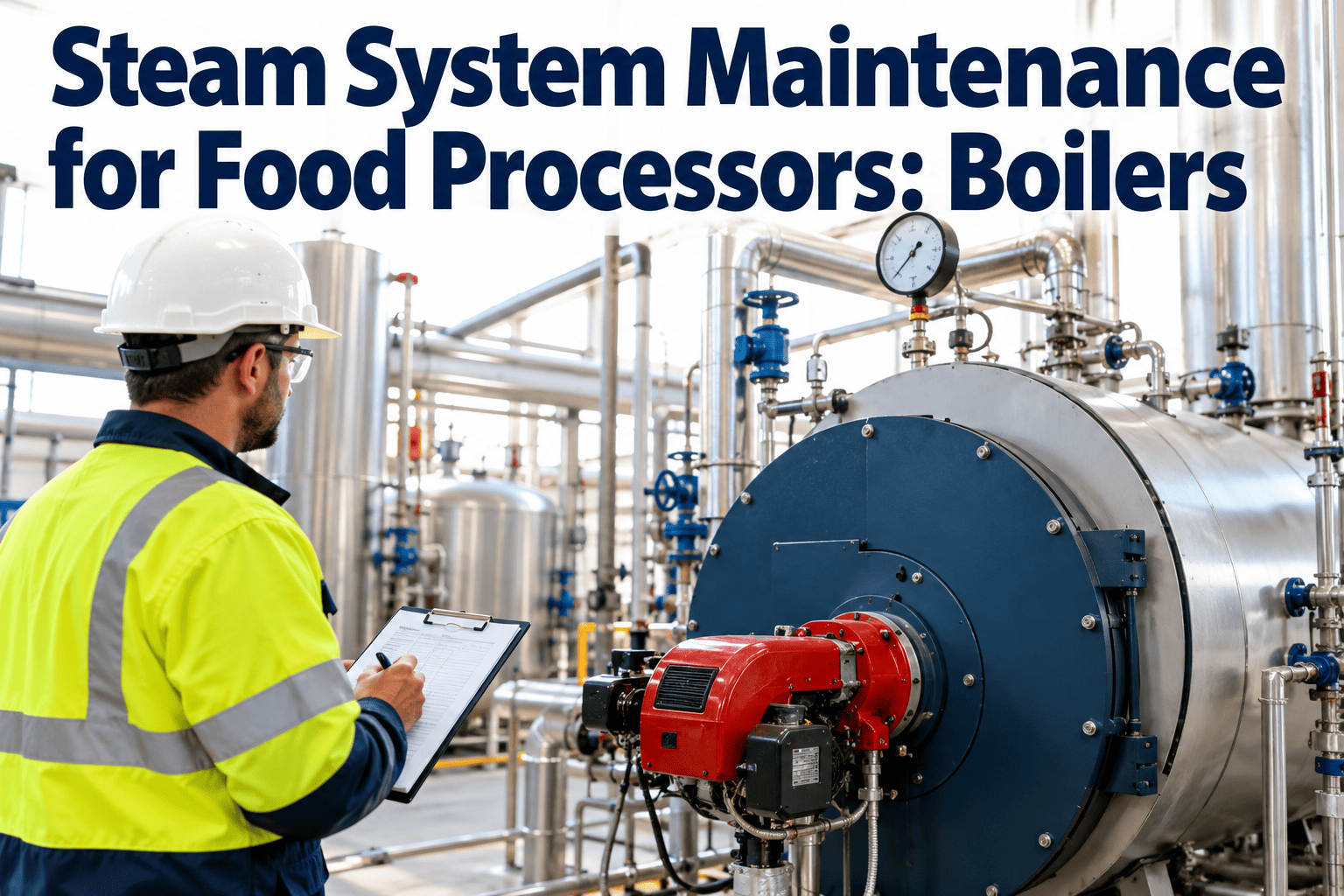
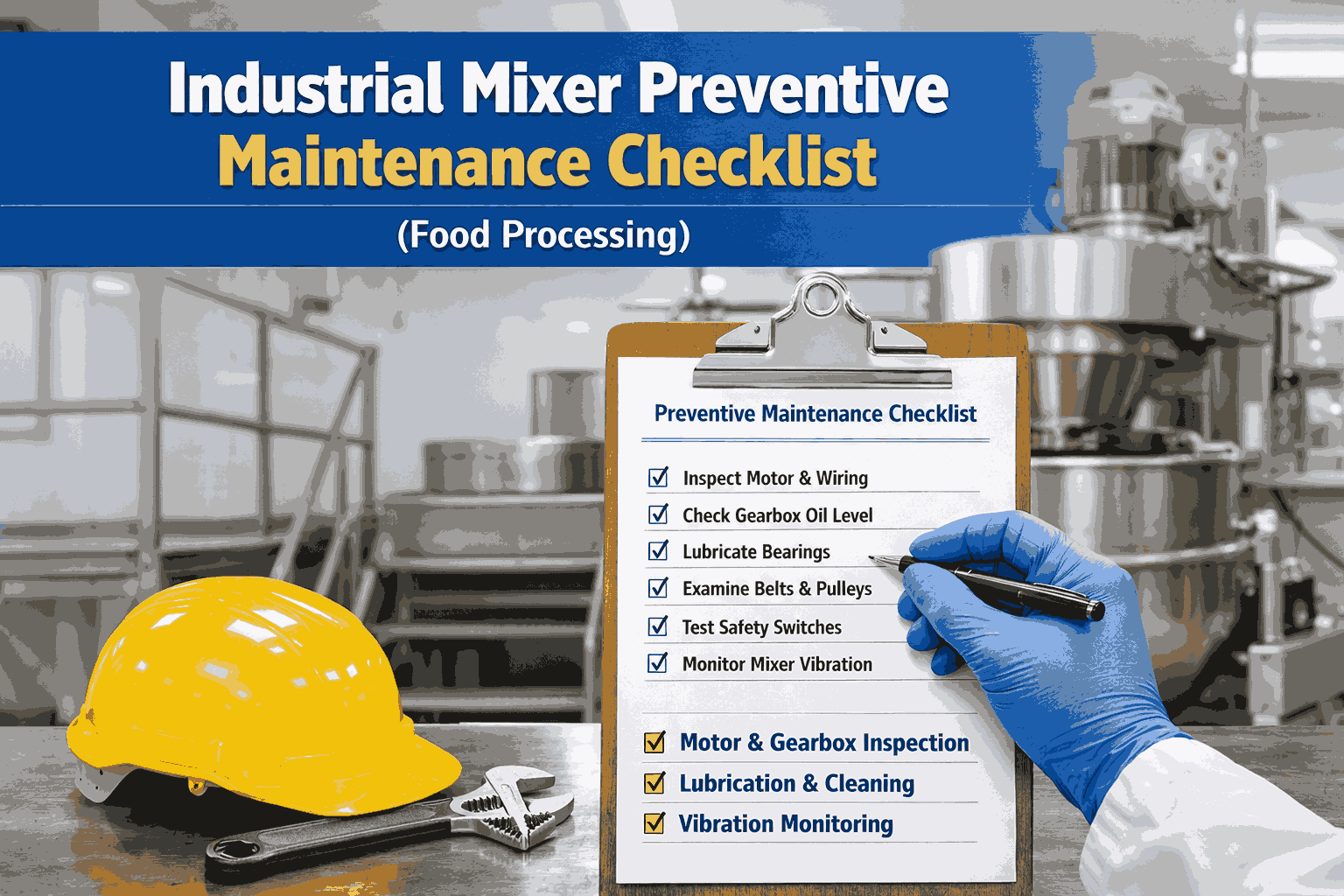
A mid-sized food processing plant in Wisconsin lost $284,000 worth of product when their main process boiler
experienced a sudden tube failure during a critical production run. The boiler had been operating for 11 months
since its last inspection, and water treatment logs showed gaps of up to three weeks without recorded testing.
Investigation revealed the failure could have been prevented—scaling indicators were visible during routine
operation, but without systematic monitoring and boiler maintenance food processing protocols, the
warning signs went unrecorded until catastrophic failure occurred. The plant now runs a structured preventive
maintenance program through their CMMS, conducting weekly water quality checks, monthly tube inspections, and
quarterly comprehensive evaluations.
Food processing operations depend on consistent steam supply for cooking vessels, retorts, sterilizers, sanitation
systems, and facility heating. Unlike manufacturing environments where steam is primarily for heating, food plants
use steam in direct product contact applications where purity, pressure consistency, and uninterrupted availability
are critical for both product quality and safety compliance. A boiler failure during production doesn't just create
downtime—it can contaminate batches, compromise sterilization cycles, and trigger extensive regulatory
documentation. Facilities implementing structured boiler and steam system maintenance reduce emergency failures by
81%, extend equipment lifespan by 40%, and maintain the consistent steam quality required for USDA and FDA
compliance.
Sign up
for Oxmaint to implement preventive maintenance schedules for your boiler systems, or book a demo to see how structured PM programs prevent costly steam system
failures.
Maintenance Guide / Utilities
Boiler and Steam System Maintenance in Food Processing Plants
Comprehensive maintenance protocols for boilers, steam distribution, and
condensate return systems supporting cooking, sterilization, and sanitation operations.
Reduction in Emergency Failures
Equipment Lifespan Extension
Regulatory Compliance Rate
$156K
annual savings
Average Cost Avoidance Per Plant
Why Boiler Maintenance Is Critical in Food Processing
Steam systems in food plants operate under conditions that create unique maintenance challenges. Direct steam
injection into products requires high purity standards. Cooking vessels demand precise pressure control.
Sterilization cycles must maintain exact temperatures for specific durations to meet kill step requirements. CIP
systems need consistent steam supply for effective sanitation. Any deviation in steam quality, pressure, or
availability can compromise product safety, violate FSMA requirements, or force production shutdowns that
cascade through the entire facility schedule.
Traditional reactive maintenance approaches—addressing boiler issues only when problems become obvious—create
unacceptable risk in food operations. By the time a steam pressure issue affects production, underlying problems
like scale buildup, tube corrosion, or water treatment failures have typically been developing for weeks or
months. Structured preventive maintenance catches these conditions early when they're easily corrected,
preventing the expensive emergency repairs and production disruptions that result from deferred maintenance.
73%
of boiler failures in food processing show detectable warning signs in water chemistry
data, operating pressure patterns, or visual inspection findings during the 30-60 days before failure
occurs. Systematic monitoring through CMMS platforms captures these early indicators before they escalate
into costly breakdowns.
Organize Your Boiler Maintenance System
Oxmaint helps you structure preventive maintenance schedules, track water chemistry, and maintain compliance
documentation for all boiler and steam system components.
Critical Monitoring Parameters
Effective boiler maintenance requires systematic monitoring of key operating and water quality parameters that
indicate equipment condition and performance trends.
Steam pressure consistency indicates burner control performance, load matching, and potential
distribution system issues. Pressure fluctuations can signal control problems, fouled tubes reducing
heat transfer, or steam demand variations requiring capacity adjustment.
Monitoring Points
Main steam header pressure (continuous)
Individual boiler discharge pressure
Critical use point pressures (retorts, sterilizers)
Detects
Control system degradation requiring calibration
Tube fouling reducing heat transfer efficiency
Distribution system restrictions or trap failures
Flue gas temperature trends reveal combustion efficiency and heat transfer effectiveness. Rising
stack temperatures indicate fireside fouling, tube scaling, or burner issues reducing heat transfer
from combustion gases to water.
Monitoring Points
Stack temperature at boiler outlet
Economizer inlet/outlet differential
Combustion air temperature
Detects
Tube fouling reducing efficiency
Burner degradation affecting combustion
Need for fireside cleaning
Boiler water and feedwater chemistry directly impacts equipment life and steam quality. pH,
alkalinity, hardness, and conductivity measurements reveal treatment effectiveness and identify
conditions that cause corrosion or scaling before damage occurs.
Monitoring Points
Feedwater hardness (daily minimum)
Boiler water pH and alkalinity (daily)
Conductivity and TDS levels (daily)
Condensate return quality (weekly)
Detects
Water treatment system failures
Corrosion or scaling risk conditions
Contamination in condensate return
Fuel usage per unit of steam produced reveals overall system efficiency. Increasing fuel consumption
with steady steam production indicates declining efficiency from fouling, poor combustion, or steam
leaks in the distribution system.
Monitoring Points
Daily/weekly fuel consumption totals
Fuel-to-steam ratio calculations
Combustion efficiency from O2/CO2 analysis
Detects
Efficiency degradation requiring service
Burner tuning needs
Distribution system steam losses
TRP
Steam Trap Performance
Failed steam traps waste energy, reduce steam quality, cause water hammer, and can compromise
sterilization effectiveness. Temperature surveys and ultrasonic testing identify failed traps before
they significantly impact operations or energy costs.
Monitoring Points
Downstream temperature at each trap
Condensate return temperature
Ultrasonic surveys for trap operation
Detects
Traps blown through (live steam loss)
Traps plugged (condensate backup)
Water hammer conditions
Pumps, blowers, and burners generate vibration signatures that change as bearings wear, alignments
drift, or balance degrades. Monitoring these patterns enables predictive replacement before failures
disrupt production.
Monitoring Points
Feedwater pump vibration and bearing temps
Forced draft fan operation
Induced draft fan performance
Detects
Bearing wear requiring replacement
Alignment or balance issues
Motor degradation
Track Critical Parameters Systematically
Oxmaint enables digital tracking of water chemistry, operating parameters, and inspection findings with trend
analysis and automatic alert generation when readings move outside acceptable ranges.
Common Failure Modes and Early Detection
Understanding typical boiler failure patterns and their early warning signs enables intervention before minor
issues escalate into forced outages or safety events.
Tube Scaling and Failure
4-12 weeks
Early Warning Signs
Gradual increase in stack temperature over weeks
Rising fuel consumption for same steam output
Water chemistry trending harder despite treatment
Increased blowdown frequency to control conductivity
Failure Impact
Tube rupture causing immediate shutdown, potential safety event,
3-7 day repair, and requirement for pressure vessel inspection before restart
Low Water Cutoff Malfunction
Immediate Risk
Early Warning Signs
Slow or erratic response during daily testing
Sediment visible in water column during blowdown
Probe corrosion or buildup during inspection
Inconsistent operation requiring multiple test cycles
Failure Impact
Loss of low water protection creates catastrophic failure risk if
water level drops, potentially causing vessel rupture and serious facility damage or injury
Burner Control Degradation
2-8 weeks
Early Warning Signs
Flame instability or irregular patterns during operation
Increasing frequency of flame safety lockouts
Pressure swings wider than normal operating band
Combustion analysis showing excess air increasing
Failure Impact
Complete burner failure during production requiring emergency
contractor service, production shutdown until repaired, potential for backdraft or unsafe combustion
conditions
Feedwater Pump Failure
1-6 weeks
Early Warning Signs
Increasing vibration levels or changes in sound
Motor bearing temperatures trending upward
Discharge pressure fluctuations or hunting
Seal leakage becoming more frequent
Failure Impact
Loss of feedwater supply forcing immediate boiler shutdown,
plant-wide production stoppage, expedited pump replacement at premium cost, potential water damage
from seal failure
Steam Trap Field Failures
Ongoing
Early Warning Signs
Temperature surveys showing traps too hot or too cold
Water hammer sounds in steam distribution lines
Wet steam quality complaints from production equipment
Condensate return temperature abnormally high
Failure Impact
Energy waste from live steam loss, wet steam reducing
sterilization effectiveness, water hammer damaging piping and equipment, gradual efficiency
degradation facility-wide
Refractory Deterioration
6-18 months
Early Warning Signs
Hot spots on boiler casing during operation
Cracks visible during inspection shutdowns
Pieces of refractory in ash during cleanout
Declining combustion efficiency despite burner tuning
Failure Impact
Major heat loss reducing efficiency, potential for steel casing
damage from high temperatures, extensive repair requiring several-day shutdown for complete
refractory replacement
Maintenance Team Roles and Responsibilities
Effective boiler system maintenance requires clear assignment of responsibilities across different skill levels
and certifications.
CHF
Chief Engineer / Boiler Operator
Certifications Required
State boiler operator license (where jurisdictional)
High pressure steam certification
Primary Responsibilities
Daily boiler operation and monitoring
Water chemistry testing and treatment adjustment
Log reviews and trend analysis
First response to boiler alarms and issues
Coordinate with state inspectors for compliance
MTN
Maintenance Technician
Certifications Required
Basic boiler operations knowledge
Lockout/tagout qualified
Primary Responsibilities
Conduct scheduled PM tasks under supervision
Steam trap inspections and replacement
Distribution system leak repairs
Insulation maintenance and repair
Document all maintenance activities in CMMS
CTR
Authorized Service Contractor
Certifications Required
National Board Commission
Manufacturer-specific training credentials
Primary Responsibilities
Annual internal inspections and cleaning
Pressure vessel repairs and welding
Burner rebuilds and control upgrades
Tube replacement and refractory work
Provide documentation for inspector approval
WTR
Water Treatment Specialist
Certifications Required
Water treatment certification (AWT or equivalent)
Chemical handling training
Primary Responsibilities
Quarterly comprehensive water analysis
Treatment program adjustment and optimization
Internal inspection for scale and corrosion
Chemical feed system service
Train facility staff on testing procedures
Emergency Response Protocols
Boiler emergencies require immediate, coordinated response following established procedures that prioritize
personnel safety while minimizing production impact and equipment damage.
Immediate
Alarm Response and Operator Action
Respond to boiler alarm within 2 minutes. Verify actual condition
matches alarm indication. For critical alarms (low water, flame failure, high pressure), initiate
emergency shutdown if condition confirmed. Alert maintenance supervisor and facility management.
0-15 min
Production Coordination
Notify production immediately if steam will be interrupted.
Production determines whether to continue with reduced capacity using backup boiler, shut down
affected lines, or implement full facility shutdown. Estimate steam restoration timeframe based on
initial assessment.
15-30 min
Damage Assessment
Chief engineer or qualified technician conducts safety inspection
once equipment has cooled sufficiently. Determine if issue is repairable by facility staff or
requires contractor. For tube failures, leaks, or pressure vessel damage, contact authorized service
contractor and state inspector immediately.
30-60 min
Repair Plan Development
Develop repair timeline and resource requirements. Arrange
contractor response if needed. Determine parts availability—order expedited if critical. Coordinate
shutdown duration with production schedule. Establish interim operating plan using backup equipment
if available.
Post-Repair
Documentation and Root Cause Analysis
Complete incident report documenting timeline, root cause
determination, repair actions, and inspector approval (if required). Enter all details in CMMS.
Conduct team review to identify any PM schedule adjustments or monitoring improvements to prevent
recurrence.
Frequently Asked Questions
How often must boilers be inspected by state authorities?
Inspection frequency varies by jurisdiction and boiler type. Most states require
annual inspection for high-pressure steam boilers (over 15 psi), while low-pressure boilers and hot water
boilers may qualify for biennial inspection. Some jurisdictions allow extended intervals for boilers with
good maintenance records. Check your specific state requirements—operating without current inspection is a
serious violation that can result in shutdown orders and fines.
What water chemistry parameters must be tracked for boiler maintenance food
processing operations?
At minimum, test boiler water pH (target typically 10.5-12.0), alkalinity,
conductivity, and phosphate levels daily. Test feedwater for hardness daily to verify softener operation.
Weekly testing should include dissolved oxygen, chlorides, and silica. For food safety compliance where
steam contacts product, additional purity testing may be required. Consistent testing prevents the corrosion
and scaling that cause most tube failures.
Can we extend time between internal boiler inspections if our logs look good?
Never skip internal inspections based on operating data alone. Tube scaling,
corrosion, and refractory damage develop internally where they're invisible during operation. Good water
chemistry reduces risk but doesn't eliminate it. Annual internal inspection by qualified contractors
identifies problems early when repair is straightforward. The cost of inspection is minimal compared to
emergency tube replacement or forced outage during peak production.
Sign up for Oxmaint to
schedule and document these critical inspections systematically.
What's the typical lifespan of boiler tubes in food processing applications?
With proper water treatment and maintenance, fire tubes typically last 15-25
years, while water tubes may last 20-30 years. However, poor water chemistry can destroy tubes in 2-3 years.
Heavy cycling (frequent startups and shutdowns) reduces lifespan. Ultrasonic thickness testing during annual
inspections measures remaining tube life accurately, allowing planned replacement before failure rather than
emergency repair during production.
How do we maintain steam quality for direct food contact applications?
Culinary steam requires potable feedwater, FDA-approved boiler treatment
chemicals, and proper steam separation to prevent carryover. Install steam separators close to use points.
Test steam condensate periodically to verify no contamination. Maintain boiler water chemistry to prevent
foaming that causes carryover. Document your entire steam generation process including water source,
treatment chemicals used, and quality testing—FDA auditors will require this during facility inspections.
Implement Systematic Boiler Maintenance Today
Oxmaint provides the tools to schedule preventive maintenance, track water chemistry, document inspections,
and maintain regulatory compliance for all your boiler and steam system assets.