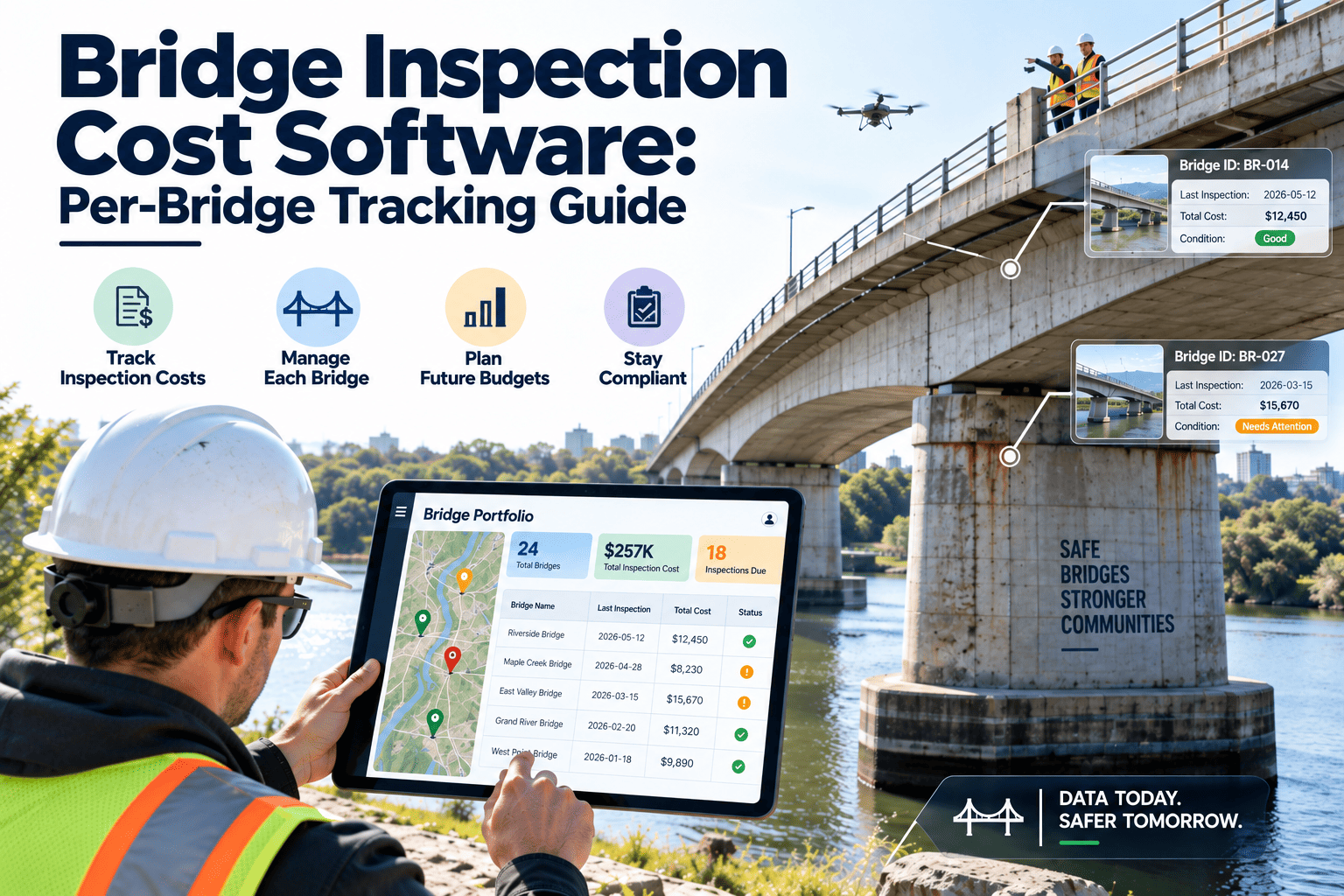
A bridge rarely fails because nobody was watching it. It fails because the one inspection type that would have caught the problem never happened on schedule. The National Bridge Inspection Standards under 23 CFR 650 define six distinct ways a bridge gets inspected, from the baseline check on opening day to a diver working the piers below the waterline, and each one carries its own trigger, interval, and qualified inspector requirement. Agencies tracking all six in a shared spreadsheet tend to lose track of which structure is due for what, and the mix-up usually surfaces during a federal or state compliance review, not before. A CMMS built around the NBIS inspection calendar keeps every type, interval, and inspector qualification tied to the exact bridge it belongs to, which is what we built at oxmaint.ai.
NBIS Compliance — 2026 Bridge Inspection Guide
Bridge Inspection Types: Routine, Damage, In-Depth, and Beyond
Six inspection types, six sets of rules, one federal standard. This guide breaks down what each NBIS inspection type actually checks, how often it is required, who can perform it, and how a CMMS keeps a growing bridge inventory from missing a single cycle.
6Distinct inspection types defined under 23 CFR 650
24 mo.Default maximum interval for a routine inspection
60 mo.Default maximum interval for a standard underwater inspection
12 mo.Deadline for a bridge's first underwater inspection after opening
The Six NBIS Inspection Types at a Glance
Every bridge in the National Bridge Inventory is subject to some combination of these six inspection types, depending on its structure, its history, and what a previous inspection has already flagged. Knowing which type applies when is the foundation of a compliant program.
Baseline
Initial Inspection
The first inspection of a new, replaced, or rehabilitated bridge. It records inventory data, sets the baseline condition, and establishes the intervals every later inspection type will follow.
Scheduled
Routine Inspection
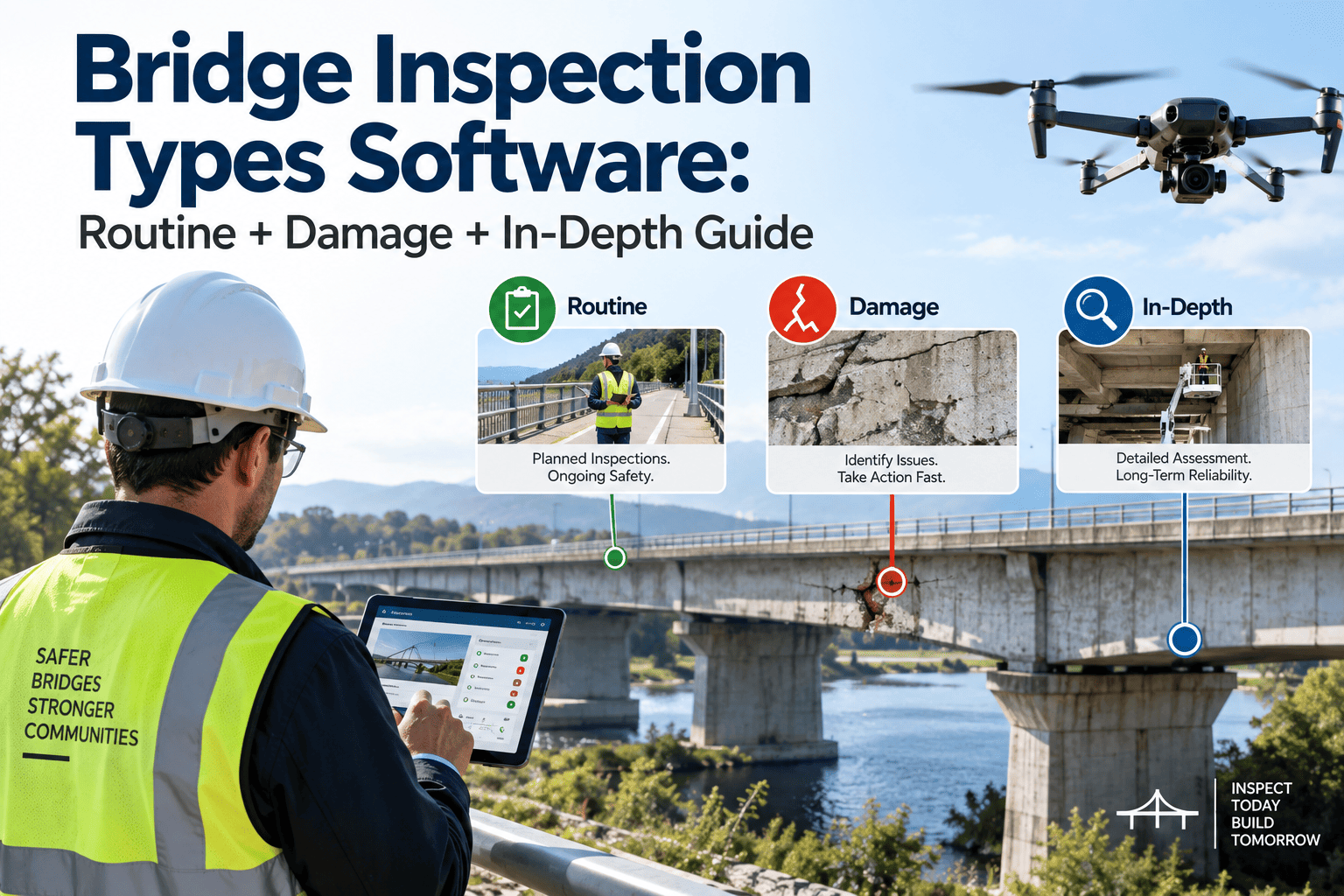
A regularly scheduled visual check of the entire structure, performed at intervals not to exceed 24 months by default, extendable only once risk-based eligibility criteria are met.
Close-Up
In-Depth Inspection
A close-up, hands-on or nondestructive evaluation of specific members identified in the bridge file, catching deficiencies a routine visual check from a distance cannot detect.
Submerged
Underwater Inspection
A diver or imaging-based inspection of any bridge portion that cannot be checked by wading and probing, required within 60 months for most structures.
Targeted
Special Inspection
A focused check used to monitor a known, localized deficiency, sometimes substituting for a full routine or underwater cycle until the next regular interval comes due.
Unscheduled
Damage Inspection
An unscheduled inspection triggered by a collision, flood, fire, seismic event, or other incident, performed to assess extent of damage and load-carrying impact immediately.
Never Miss an Inspection Window Again
Oxmaint tracks every bridge's inspection type, due date, and qualified inspector requirement automatically, so nothing falls through during a busy construction season.
Scheduled Inspections vs. Event-Triggered Inspections
Four of the six inspection types run on a predictable calendar. Two exist specifically because bridges do not always wait for their scheduled turn to develop a problem. Separating the two groups makes it easier to see where a bridge program needs a calendar and where it needs a response plan instead.
Scheduled on a Fixed Calendar
Opening DayInitial inspection sets the baseline
Every 24 mo. maxRoutine inspection checks the full structure
Per bridge fileIn-depth inspection reviews flagged members
Every 60 mo. maxUnderwater inspection checks submerged elements
Triggered by an Event or Finding
After incidentDamage inspection assesses a collision, flood, fire, or seismic event
Known deficiencySpecial inspection monitors a specific low-rated condition
Findings loggedResults feed back into the bridge file and next interval decision
Full cycle resumesRoutine and underwater inspections still occur at their regular interval
Inspection Type Requirements Side by Side
Each inspection type carries its own trigger, standard interval, and minimum qualification for who can lead it. A single missed field in any row is enough to put a bridge out of NBIS compliance.
| Inspection Type | Trigger | Standard Interval | Team Leader Required |
| Initial |
New, replaced, or rehabilitated bridge opens |
Before or at opening |
Yes |
| Routine |
Ongoing scheduled program |
Not to exceed 24 months |
Yes |
| In-Depth |
Members flagged in bridge file |
Set per bridge-specific procedure |
Yes |
| Underwater |
Submerged elements not wadable |
Not to exceed 60 months |
Yes |
| Special |
Known localized deficiency |
Set by agency for that deficiency |
Yes |
| Damage |
Collision, flood, fire, seismic event |
As soon as practical after event |
Yes |
Before we moved our bridge program onto one system, we tracked initial, routine, in-depth, underwater, and special inspections on five different calendars maintained by three different people. A special inspection on a fracture-critical girder was the kind of thing that could get lost between spreadsheets. Now every inspection type for every structure lives against the same asset record, and our team gets a flag well before any interval comes due, not after.
— Bridge Program Manager, state department of transportation
Where Bridge Inspection Programs Fall Out of Compliance
Most compliance findings do not come from an inspection that was skipped outright. They come from small tracking failures that compound across a growing bridge inventory.
Mixed-Up Intervals
A routine interval gets confused with an underwater or in-depth interval on the same structure, pushing a required inspection past its due date.
Special Inspections Left Open-Ended
A special inspection meant to monitor a deficiency continues indefinitely instead of feeding back into the next full routine or underwater cycle.
Damage Reports Never Closed Out
A post-event damage inspection gets documented but never formally ties back into the bridge file's load rating and future interval decisions.
Inspector Qualifications Untracked
Team leader credentials expire or change without a system flagging that a scheduled inspection no longer has a qualified lead assigned.
Put Every Bridge on One Compliant Calendar
Oxmaint links each inspection type to the right interval, the right qualified inspector, and the right bridge file entry, from initial inspection through every underwater and special cycle after it.
Frequently Asked Questions
What is the difference between a routine and an in-depth bridge inspection?
A routine inspection is a scheduled visual check of the whole structure, while an in-depth inspection is a closer, hands-on or nondestructive review of specific members already flagged in the bridge file. See how both are tracked together at
oxmaint.ai.
When is a damage inspection required instead of waiting for the routine cycle?
A damage inspection is triggered immediately after an event such as a collision, flood, fire, or seismic incident, regardless of where the bridge sits in its routine or underwater inspection interval.
Can a special inspection replace a routine or underwater inspection?
A special inspection can substitute for a routine or underwater cycle only when monitoring a specific low-rated, localized deficiency, but the full inspection of the entire bridge is still required at the next regular interval.
Book a demo to see how this logic runs automatically.
How often must underwater bridge inspections be performed?
Most bridges require an underwater inspection at intervals not exceeding 60 months, with the first underwater inspection required within 12 months of the bridge opening or being rehabilitated.
Does a CMMS help manage all six NBIS inspection types in one place?
Yes. A CMMS built for bridge programs assigns the correct interval, inspector qualification, and documentation requirement to each inspection type per structure, replacing scattered spreadsheets with one compliance-ready record.
Keep Every Bridge Inspection on Schedule
Move your entire bridge inventory onto one system that tracks initial, routine, in-depth, underwater, special, and damage inspections automatically.