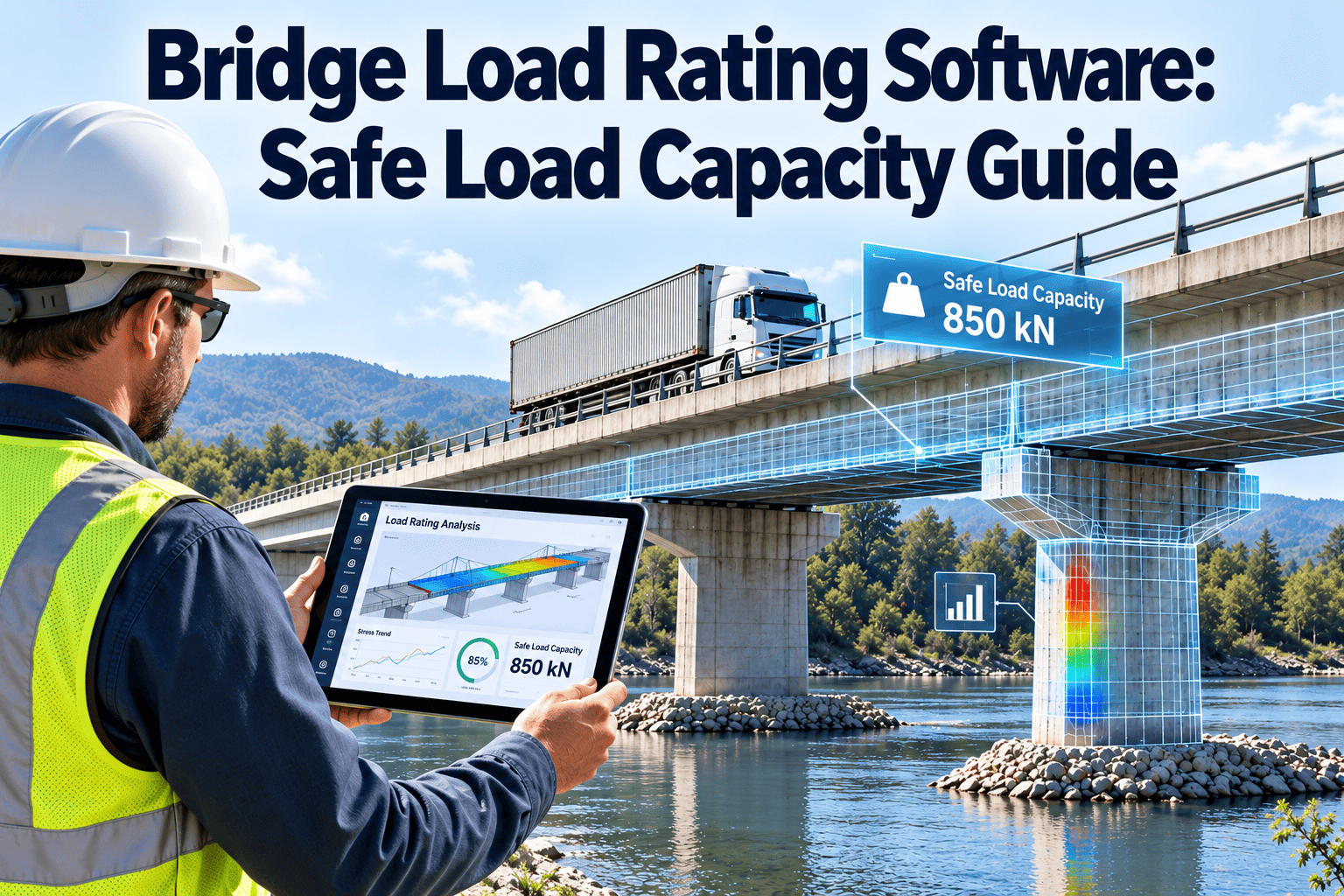
A bridge load rating is a calculation, and a calculation goes stale the moment the structure changes. Section loss, a new overlay, a damaged girder or a scour finding can all move the safe load capacity, yet the posted sign on the approach may still reflect the last analysis. Bridge owners who keep ratings, inspections and posting decisions in separate files struggle to prove that the number on the sign matches the structure in the field. A shared maintenance management platform can keep those records connected.
Bridge Load Rating Software and Safe Load Capacity Management
Connect inspection findings, load rating recalculation, posted load decisions and NBI reporting so every bridge carries a rating that reflects its current condition.
Why Load Ratings Fall Out of Step With the Structure
- Inspection teams find the change, but the rating engineer hears about it weeks later or not at all.
- Rating files live in consultant folders, while the inspection database sits somewhere else.
- Repairs and rehabilitation change capacity, yet no one is assigned to confirm the rating afterward.
- Posting signs are installed by maintenance crews who rarely see the underlying calculation.
- Annual reporting pulls numbers from several sources, so inconsistencies surface late.
The risk is not only structural
An outdated rating can lead to an unposted bridge carrying loads it should not, or to an overly restrictive posting that disrupts freight and emergency routes without justification.
Load Rating Terms Every Maintenance Team Should Share
| Term | Plain meaning | Why the record matters |
|---|---|---|
| Rating factor | Ratio of available capacity to the live load demand for a given vehicle | A value below one for a legal load type triggers a posting review |
| Inventory level | Capacity for routine, long-term use of the bridge | Stored with the structure and revised when condition changes |
| Operating level | Maximum permissible load for the bridge | Used for overweight permit decisions, so accuracy matters |
| Load rating method | Load factor, allowable stress or load and resistance factor approaches | The method used should be identified on every rating |
| Legal and special vehicles | Standard legal trucks, specialized hauling vehicles and emergency vehicles | Ratings may be required for several vehicle groups |
| Posted load | The weight limit shown on the bridge sign | Must match the current rating and be physically verified |
Events That Should Trigger a Rating Recalculation
| Trigger | Example | Workflow action |
|---|---|---|
| Deterioration found at inspection | Corrosion section loss on a steel beam end | Open a rating review request tied to the inspection record |
| Vehicle or environmental damage | Truck strike to a girder, flood scour at a pier | Emergency rating check and interim restriction decision |
| Rehabilitation or repair | Deck replacement, strengthening, overlay added | Close the work order only after the rating is confirmed |
| Change in legal load definitions | New vehicle class added to the rating requirement | Batch review across affected structures |
| Updated analysis method | Move from an older method to a newer standard | Track by structure, with status and revision date |
Keep Every Rating Tied to the Latest Inspection
Create rating review work orders directly from inspection findings and track them until the engineer signs off.
The Load Rating Lifecycle in Five Stages
Detect
Field inspection or an incident report records a change in condition.
Request
A rating review is opened and linked to the structure and finding.
Analyze
The engineer recalculates using current section properties and loads.
Decide
Rating factors drive the posting, restriction or no-action decision.
Publish
Signs, permit systems and NBI data are updated and verified.
Managing Posted Load From Decision to Sign
- A posting decision should create a work order for sign fabrication and installation with a due date.
- Crews should record sign location, photos and the installation date as proof that the posting is in place.
- Permit offices should receive the updated rating so overweight routing reflects current capacity.
- Follow-up inspections should confirm that signs are visible, legible and have not been removed or damaged.
- Closure or restriction decisions should link to detour planning and public notices.
Why signs and calculations drift apart
Sign installation is typically a maintenance task, while the rating is an engineering task. When each is tracked in a different system, no one sees the gap between them. A single record exposes it.
Before and After: Fragmented Records Versus One Bridge Record
Fragmented
- Ratings stored as PDF files in consultant folders
- Posting status updated by email
- Rating revisions found by searching for the latest file name
- NBI submission built manually before the deadline
- No view of bridges awaiting rating review
Connected
- Rating attached to the structure with revision history
- Posting status tied to a verified work order
- Latest approved rating visible to every user
- Reporting fields maintained throughout the year
- Dashboard of open and overdue rating reviews
Supporting National Bridge Inventory Reporting
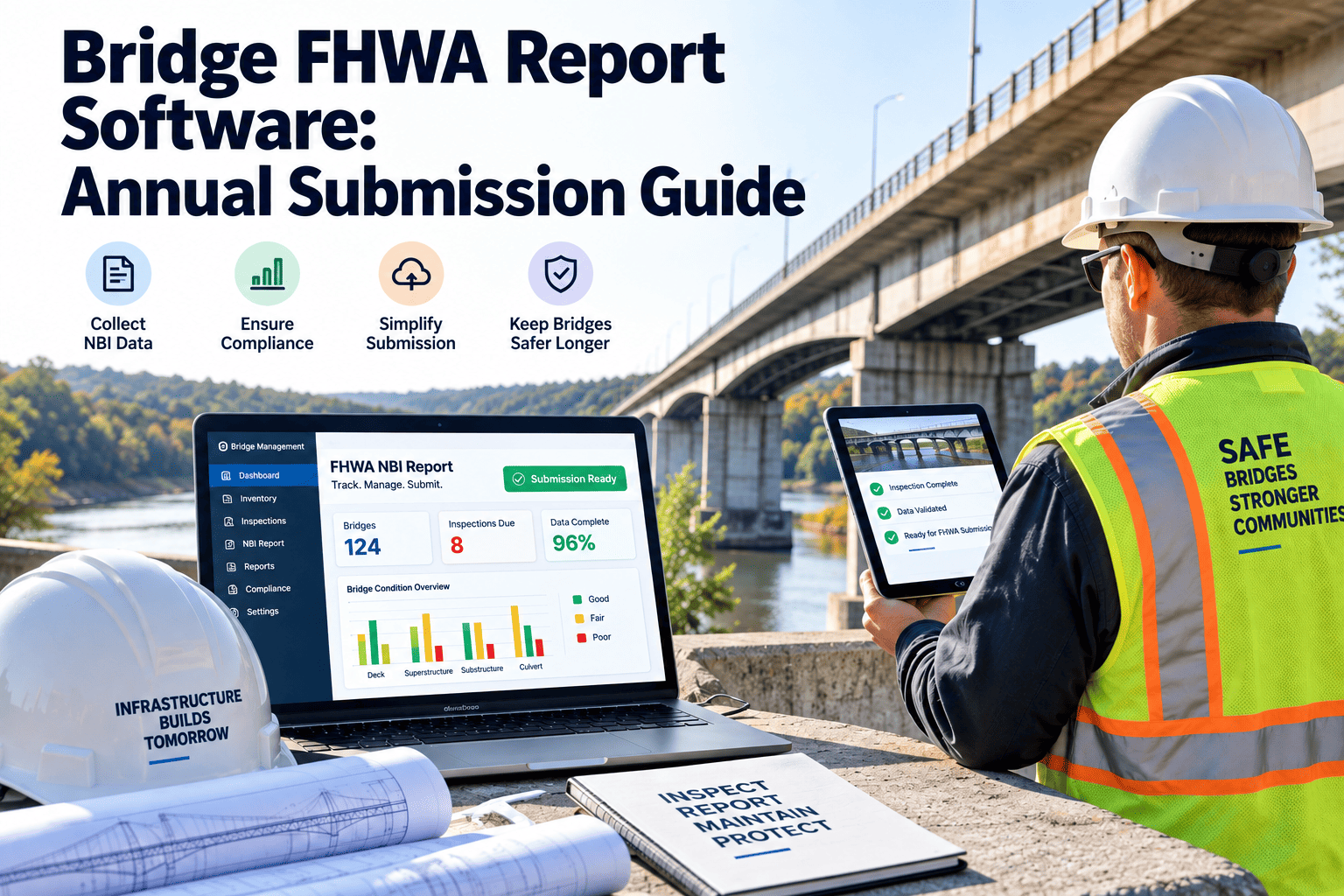
- States submit bridge inventory and inspection data to FHWA each year, and rating and posting fields are part of that submission.
- FHWA is moving the program to the Specifications for the National Bridge Inventory, so data definitions are changing for many agencies.
- Consistent records reduce the effort needed to reconcile rating values, posting status and inspection dates before submission.
- Maintaining fields through the year lets quality checks catch missing or conflicting entries early.
Metrics for a Healthy Load Rating Program
Rollout Checklist for Bridge Owners
- Import the bridge inventory with structure IDs, route and owner.
- Attach the current approved rating and the method used to each structure.
- Define which inspection findings automatically open a rating review.
- Assign an engineer of record or review team to each structure group.
- Set posting work order templates, including sign type, location and photo requirements.
- Map rating and posting fields to your NBI reporting process.
- Pilot on one district, then extend to the full network.
Bridge Load Rating FAQs
How often should a load rating be revisited?
Does software perform the rating calculation?
What if a rating factor falls below one?
Can we track ratings for culverts and local bridges?
How does this help with NBI submissions?
Make Every Posted Load Match the Bridge in the Field
Start a bridge safety workflow that links inspection, rating and posting from the first finding to the final sign.