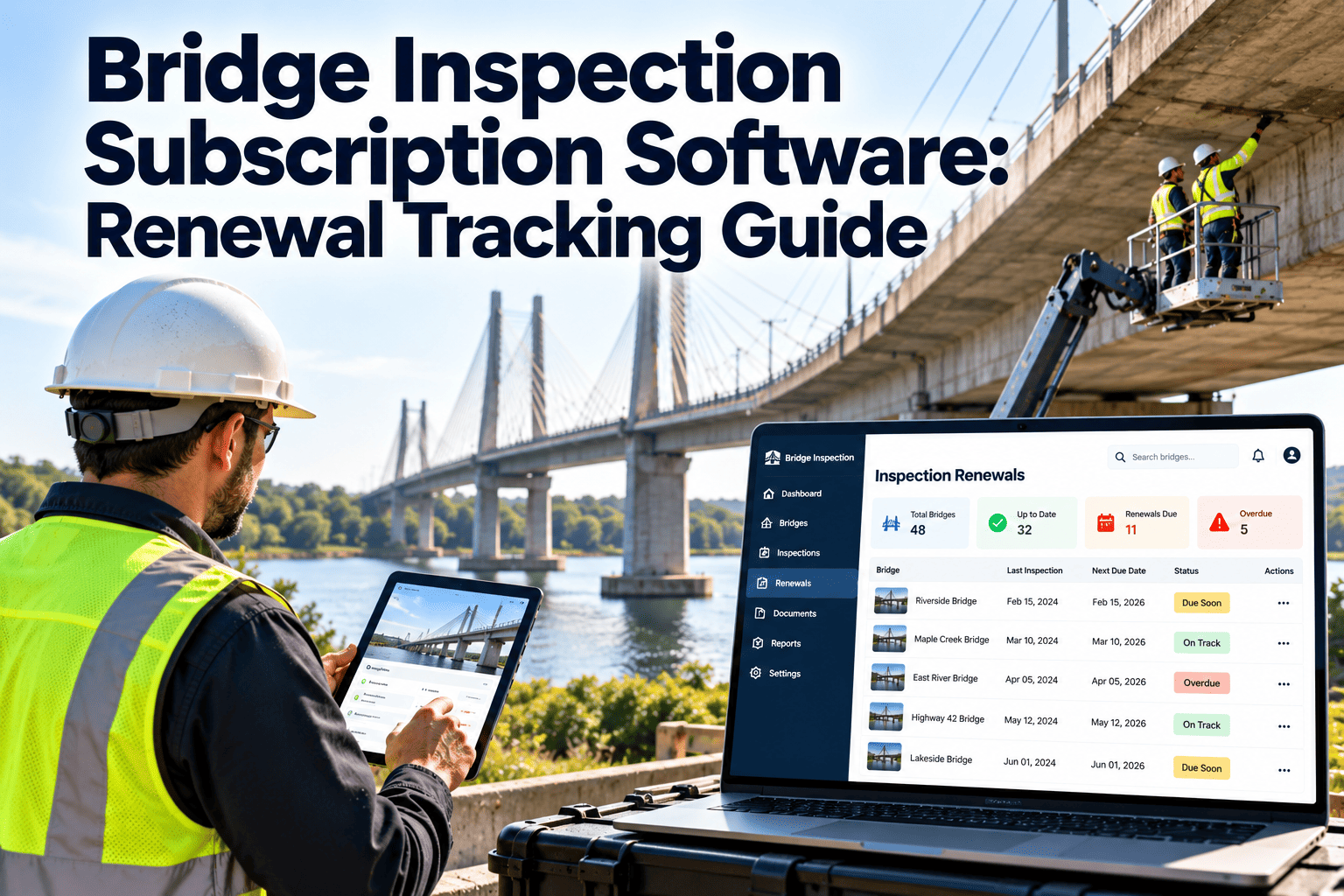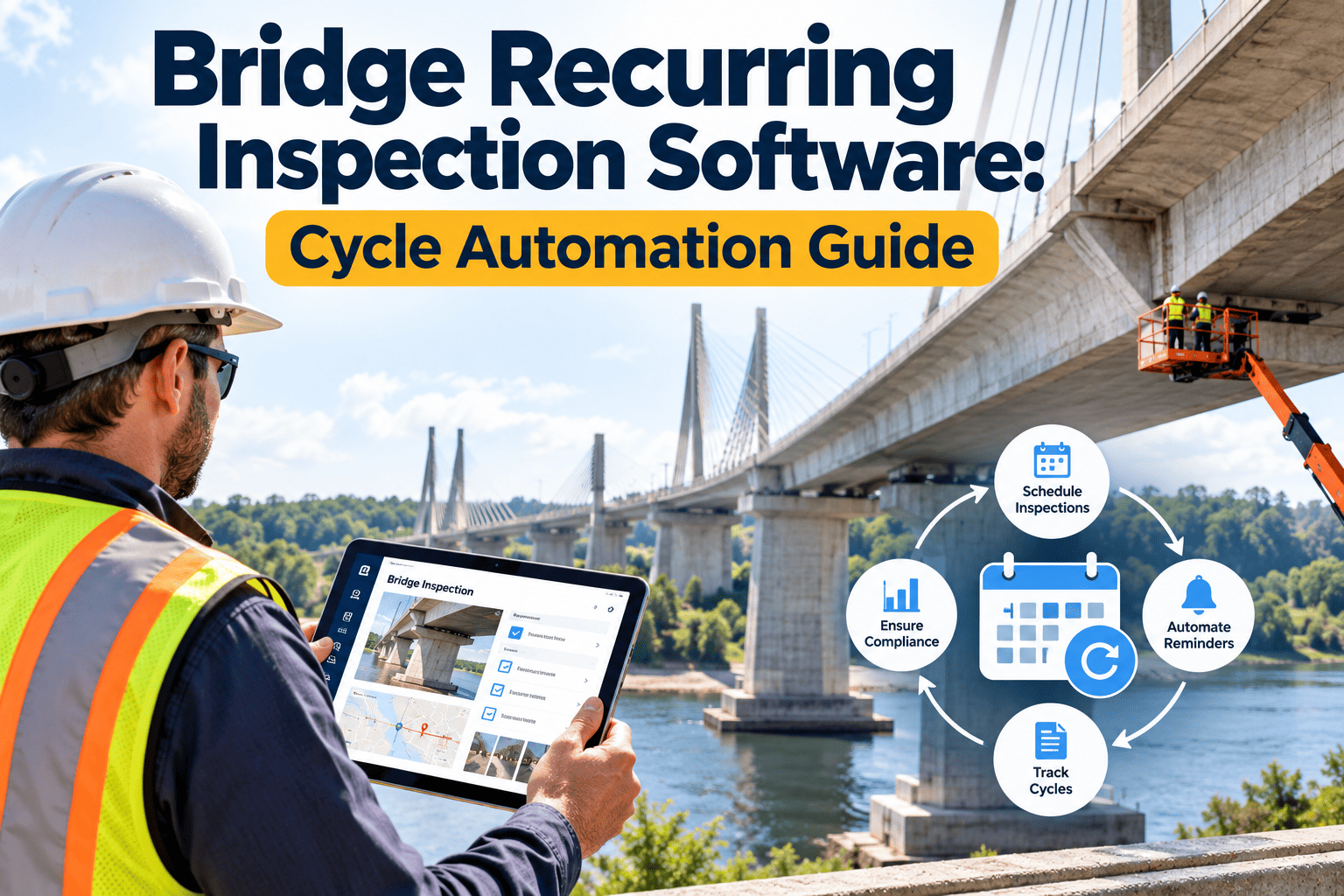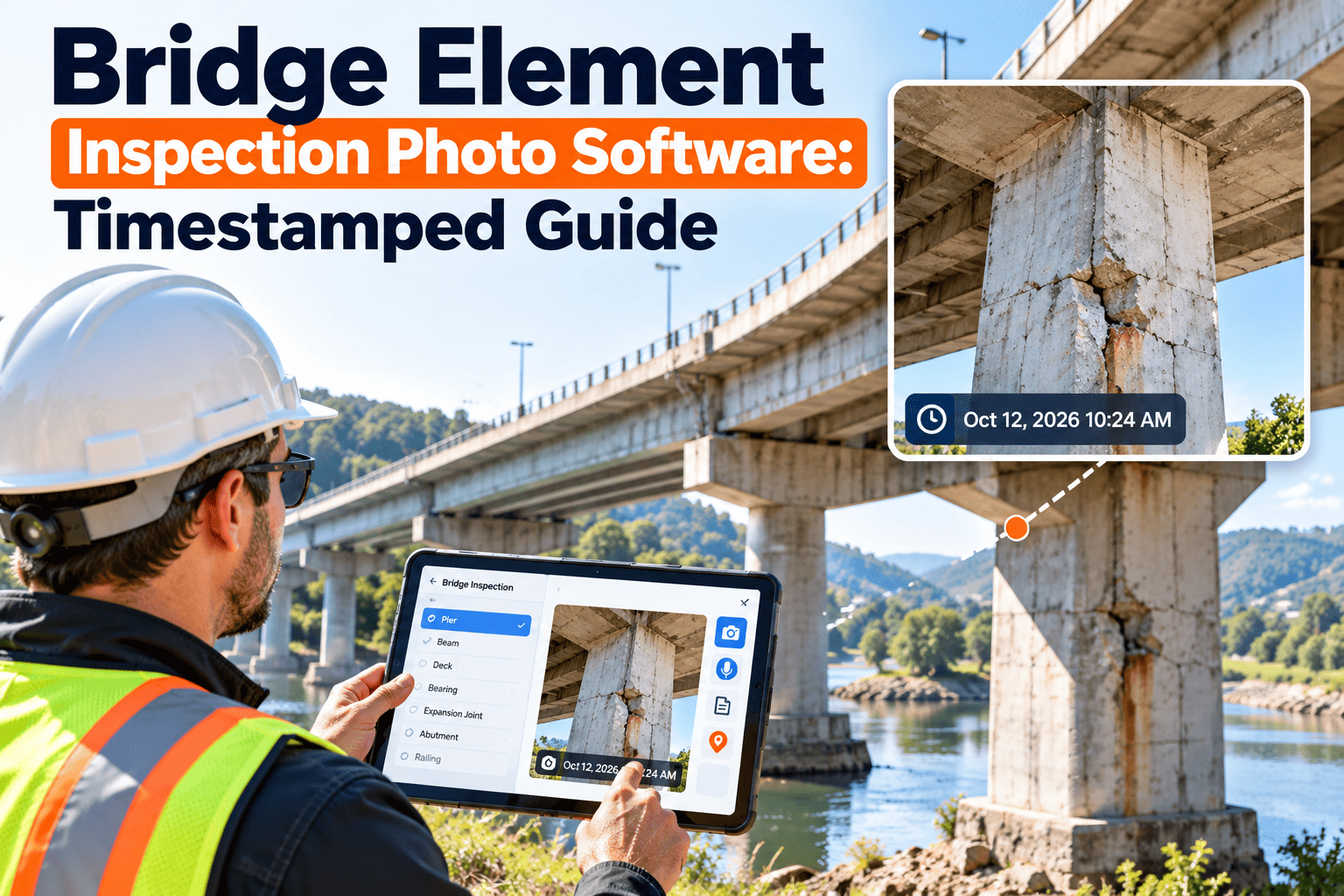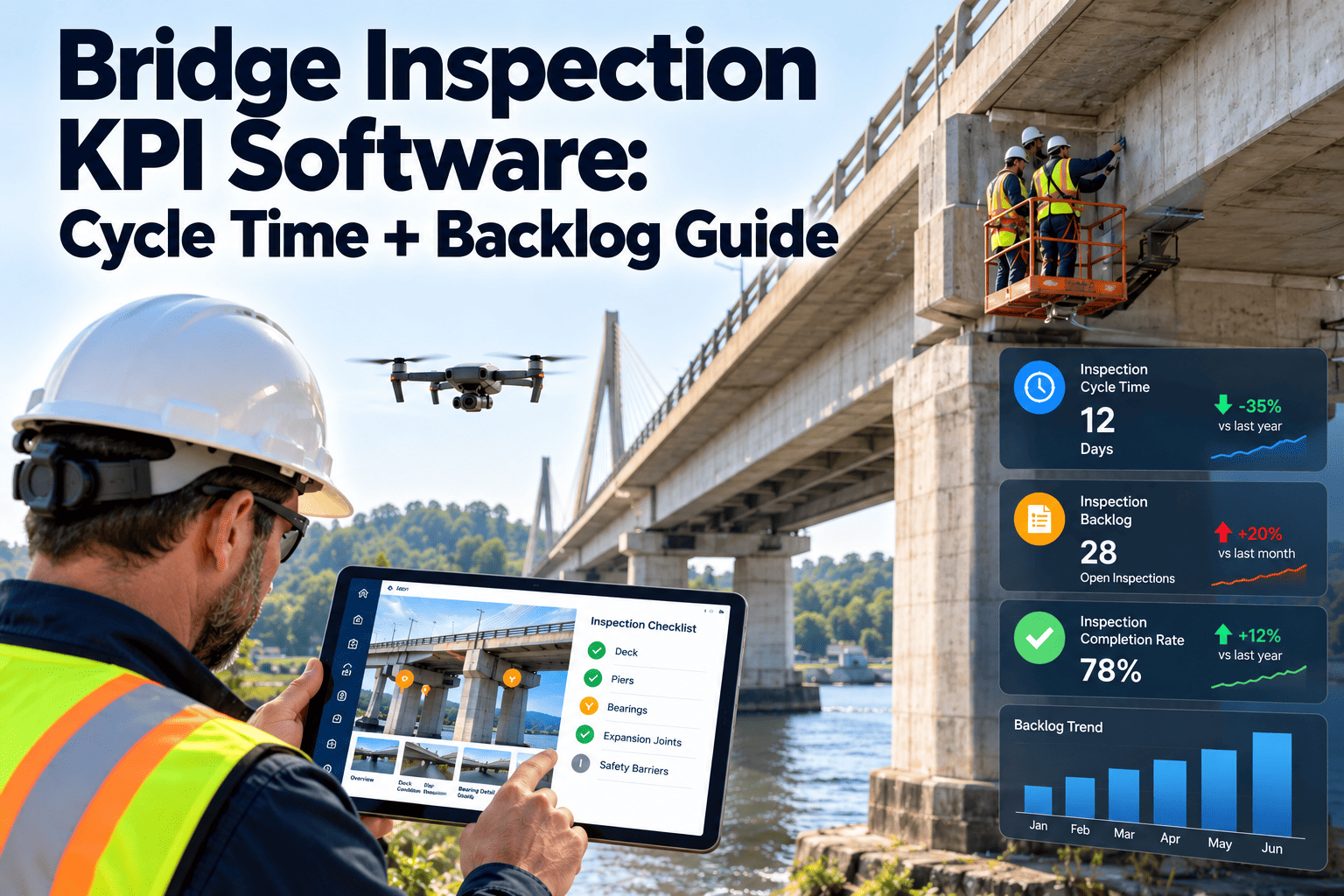
An inspection report that lists a spalled deck, a leaking joint and a corroded bearing has done only half its job. The other half is making sure each finding reaches a crew, gets fixed and is verified before the next inspection. Bridge maintenance follow-up software tracks that path for every bridge in a portfolio. Learn how a CMMS for bridge finding-to-fix tracking closes the loop.
Bridge Preservation Follow-Up
Close the Loop Between What Inspectors Find and What Crews Fix
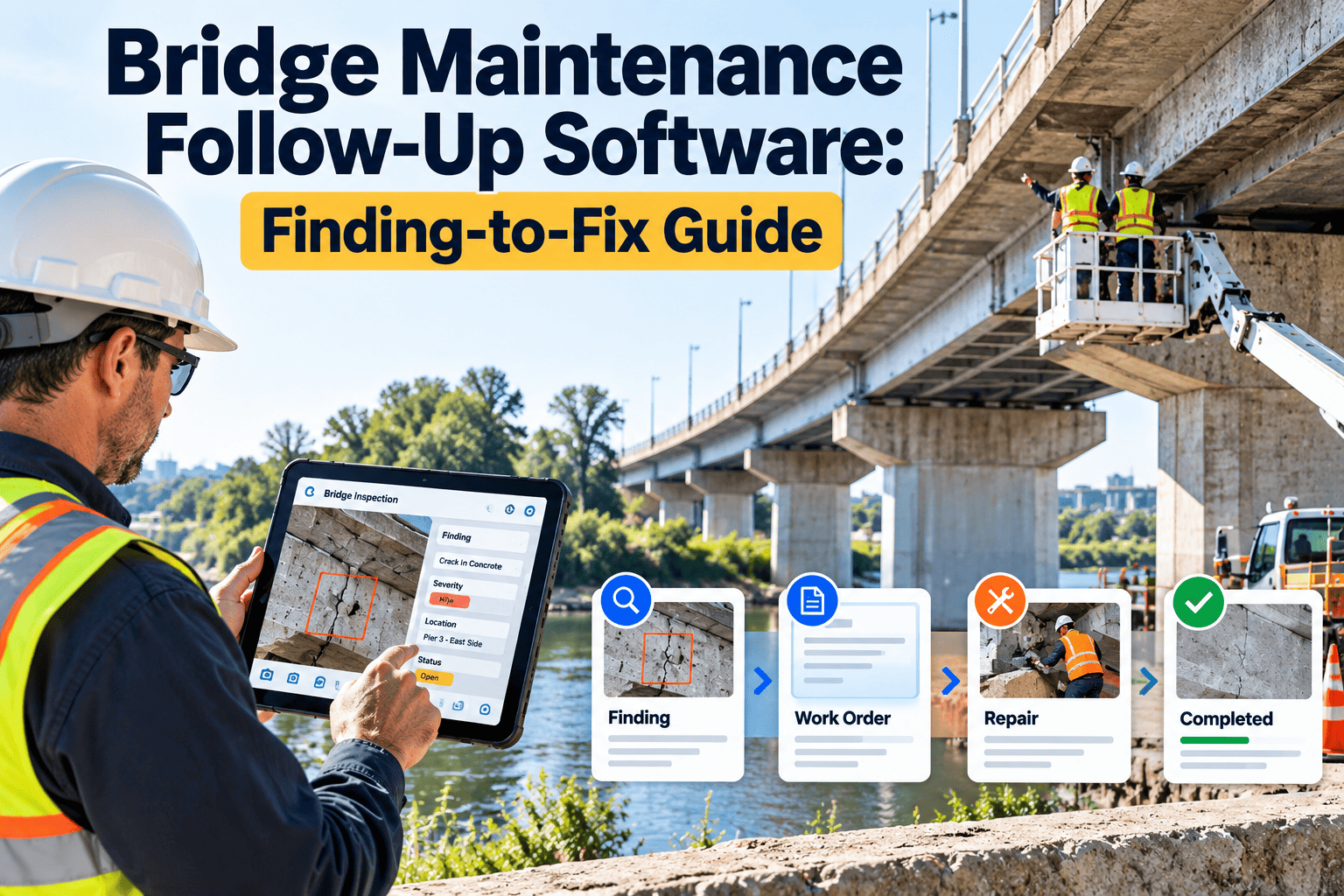
Track every bridge inspection finding through review, prioritisation, work order, repair and verification, so state DOT and local agency preservation programmes act on what inspections reveal.
Finding
Review
Prioritise
Work order
Verify
The Follow-Up Gap in Bridge Programmes
Inspection produces knowledge. Preservation produces results. The space between them is where many programmes lose ground.
Report
Findings are written into a document filed by bridge and date.
Hand-off
Someone must read it, decide what matters and pass items to maintenance.
Backlog
Items compete with other work and slip without an owner or a date.
Rediscovery
The next inspection records the same defect, often worse and more expensive.
Follow-up software replaces that informal hand-off with a tracked one.
Why Findings Stall Before They Are Fixed
| Root cause | What happens | Effect on the bridge |
|---|---|---|
| No owner assigned | Recommendations remain in the report | Defects progress unaddressed |
| Unclear priority | Every item looks equally urgent, or equally routine | Critical work waits behind minor work |
| Separate systems | Inspection and maintenance data are not linked | Crews lack location, photos or scope |
| Funding uncertainty | Repairs are deferred without a record of the decision | Deferred needs are forgotten or repeated |
| Weak verification | Work is completed but not checked against the finding | Repairs may not fix the original problem |
| Staff turnover | Knowledge of open items leaves with people | Follow-up depends on memory |
The Finding-to-Fix Lifecycle
1
Log the finding
Each defect is recorded against a specific bridge and element, with location, description, photos and severity.
2
Engineering review
A reviewer confirms the finding, decides whether it needs immediate action, and recommends a repair approach.
3
Prioritise and plan
Items are ranked by safety, condition, traffic and cost, then grouped by bridge or route to reduce mobilisation.
4
Issue the work order
Scope, materials, traffic control and target dates are attached, and the job is assigned to an in-house crew or contractor.
5
Complete and document
Crews record work performed, labour, materials and before and after photographs from the site.
6
Verify and close
An inspector or supervisor confirms the repair addressed the finding, and the next inspection sees the result.
A Practical Priority Matrix
Agencies set their own criteria. The matrix below shows one common way to combine severity and consequence, and should be adapted to your policy.
| Level | Typical trigger | Expected response |
|---|---|---|
| Critical | Immediate risk to public safety or structural integrity | Notify and act at once, with restrictions if needed |
| High | Serious deterioration likely to progress or affect capacity | Repair scheduled within a short, defined window |
| Medium | Notable defect affecting service life or maintenance cost | Planned into the next work programme |
| Routine | Minor wear or housekeeping item | Bundled with scheduled preventive work |
| Monitor | Condition to watch without repair yet | Rechecked at a set interval with recorded results |
Make Every Inspection Finding Someone's Job with a Due Date
See how findings become tracked work orders with owners, evidence and verification for each bridge.
Common Bridge Preservation Work That Follow-Up Should Track
Many of the most cost-effective actions are routine, and easy to defer without a tracking system.
Deck and joints
Deck sealing, crack sealing, joint cleaning and seal or joint repair to keep water away from beams and bearings.
Bearings and seats
Cleaning debris, checking movement, lubricating or replacing bearings and clearing bridge seats.
Steel protection
Spot painting, coating repair and washing to slow corrosion, especially below leaking joints.
Drainage
Clearing scuppers, downspouts and drains so runoff does not attack structural members.
Waterway and scour
Debris removal, channel checks and countermeasure repair, especially after high flows.
Approaches and barriers
Approach slab settlement, guardrail and railing damage, and drainage at the bridge ends.
Reactive Repair vs Planned Preservation
Without follow-up tracking
- Small defects wait until they become large repairs
- Crews are dispatched to emergencies
- Deferred items are not visible to planners
- Funding requests lack evidence
- Repeat findings appear cycle after cycle
With tracked follow-up
- Minor defects are bundled into planned work
- Emergency response becomes less frequent
- Deferred items carry a recorded decision and review date
- Budget cases cite open findings and their age
- Completed repairs are verified at the next inspection
Preservation guidance from FHWA and AASHTO emphasises timely, low-cost actions that extend service life. Tracking is what makes timeliness possible at portfolio scale.
Handling Critical Findings
Critical findings need a faster path than the routine queue. Agree the path in advance and record every step.
Immediate notification
The inspector alerts the designated contact, and the system records who was told, when and how.
Interim protection
Restrictions, closures, posting changes or monitoring are decided and logged with dates.
Engineering response
A tracked task covers assessment, load rating review if needed, and repair design.
Repair and release
Work is completed and verified, and restrictions are lifted only with recorded approval.
Follow your agency's own critical finding procedure and NBIS requirements. Software supports the record, not the engineering judgement.
Metrics That Show Whether Findings Are Getting Fixed
| Metric | What it shows | Watch for |
|---|---|---|
| Open findings by age | How long items wait before action | A growing tail of items older than a year |
| Time from finding to work order | Speed of hand-off from inspection to maintenance | Long delays between report approval and dispatch |
| Completion rate by priority | Whether high-priority work is done first | Low-priority work finishing before high-priority |
| Repeat findings | Defects recorded again after repair | Repairs that fail or were never done |
| Deferred items | Known needs awaiting funding or scope | Deferrals without a review date |
| Preventive vs corrective share | Balance of planned and reactive bridge work | A rising corrective share |
Oxmaint Capabilities for Bridge Maintenance Follow-Up
- Work orders that carry finding details, photographs, location and scope to the crew
- Preventive maintenance schedules for washing, joint cleaning, drainage and other recurring bridge tasks
- Asset management records that keep inspection history and repair history together for each bridge
- Mobile workflows for crews to record completed work and evidence at the site
- Inventory tracking for sealants, bearing pads, coatings and other repair materials
- Dashboards for open findings by age, priority, district and owner
- Compliance records showing when critical findings were reported and closed
Configure priority levels and response targets to match your agency's policy.
Deferred Maintenance Without Losing the Trail
Not every finding can be funded immediately. What matters is that a deferral is a decision on record, not an item that quietly disappears.
i
Record the reason
Note whether the delay is due to funding, access, design, permits or a planned larger project.
ii
Estimate the cost of waiting
Add an estimate for the repair now and a note on how the defect may progress, so leaders see the trade-off.
iii
Set a review date
Every deferred item returns to a review list on a fixed date, and is re-approved or scheduled.
iv
Monitor if needed
Where safe to wait, schedule interim checks and record measurements so change is visible.
Bundling Work to Reduce Cost and Traffic Impact
Tracked findings make it easier to group related repairs. Fewer mobilisations mean less traffic disruption and lower cost per repair.
| Bundling approach | How it works | Benefit |
|---|---|---|
| By bridge | Combine all open items on one structure into one visit | One traffic control setup for several repairs |
| By route or corridor | Group nearby bridges with similar needs | Shared crew travel and equipment |
| By work type | Batch joint, drainage or coating work across districts | Specialised crews and bulk materials |
| By season | Schedule waterway and painting work in suitable weather | Better quality and fewer weather delays |
| With capital projects | Match small findings to planned rehabilitation | Avoids repairs that will soon be replaced |
Working with Contractors and Multiple Owners
Bridge repair is often shared between in-house crews, term contractors and local agencies. Follow-up needs one record across all of them.
Clear scope
Each work order states the finding, location, expected repair and acceptance criteria.
Evidence on completion
Contractors submit photos, quantities and dates that link to the original finding.
Owner visibility
Counties, cities and state offices see status for bridges within their responsibility.
Sharing one status view reduces phone calls and email chains between offices.
Turning Follow-Up Data into Budget Evidence
Decision makers respond to concrete numbers. Tracked findings provide them without a special data project.
- Show open findings by priority and age, to make the size and urgency of the backlog visible
- Compare cost of completed preventive work with cost of corrective repairs on similar bridges
- List deferred items with estimates and reasons, to show what unfunded needs remain
- Report completion rates by district, to identify where crews or contractors are constrained
- Track repeat findings to show where earlier repairs did not last
Use your agency's own figures rather than outside benchmarks. Local data carries more weight in budget discussions.
Follow-Up Programme Checklist
Every finding is linked to a bridge and element
Priority definitions are written and shared
A reviewer confirms each finding before action
Work orders carry scope, photos and target dates
Contractor and in-house work use the same records
Deferred items have a reason and review date
Repairs are verified against the original finding
Open findings are reviewed monthly by district
Critical finding steps are documented and tested
Bringing Inspection and Maintenance Teams Together
Inspectors
Record findings in a form that maintenance can use, with location, severity and a suggested action.
Engineers
Confirm significant findings, set priority and define repair scope without re-keying data.
Maintenance crews
Receive complete work orders and report back with photos, hours and materials.
Programme managers
See open work, ageing and funding needs across every bridge from one view.
When each group works from the same record, handoffs become steps in a process rather than gaps between departments.
Rolling Out Finding-to-Fix Tracking
Step 1: Import open items
Load unresolved findings from recent reports so the system starts with a real backlog.
Step 2: Agree priority rules
Confirm levels, response targets and who can assign or change priority.
Step 3: Connect to work orders
Configure templates for common bridge repairs so scope and materials are consistent.
Step 4: Train crews and reviewers
Show field teams how to record completion evidence and reviewers how to close findings.
Step 5: Review monthly
Meet by district to clear ageing items, confirm deferrals and adjust programmes.
Bridge Follow-Up Trends
- Agencies are shifting from worst-first repair toward preservation, using timely low-cost work to slow deterioration
- Asset management plans require evidence linking condition data to work performed and funds spent
- Inspection tools such as drones and sensors add images and data that must connect to repair decisions
- Extreme weather and flooding make post-event checks and scour follow-up part of routine planning
Post-Event Follow-Up: Floods, Impacts and Extreme Weather
Unscheduled events create a sudden burst of findings. A prepared workflow keeps them from overwhelming the normal programme.
Triage list
Generate a list of bridges in the affected area, ranked by scour risk, traffic and known condition.
Rapid checks
Assign damage inspections, record results on site and create actions for any unsafe condition.
Recovery tracking
Follow repairs, closures and reopening decisions in one place, with dates and approvals attached.
Lessons learned
Compare pre-event and post-event condition to inform future countermeasures and priorities.
Keeping event work in the same system as routine follow-up means recovery records are complete when funding reimbursement is requested.
Data Quality: Making Findings Actionable
A vague finding is hard to schedule. The quality of the entry decides how quickly a crew can act on it.
Hard to act on
- Deck deteriorated, needs repair
- No span, bay or element reference
- No photograph or measurement
- No suggested treatment or urgency
Ready for a work order
- Span 2, bay 3: spalling with exposed rebar on deck soffit
- Element, location and approximate quantity recorded
- Dated photographs and measurements attached
- Recommended repair and priority stated
Standard forms with required fields at the inspection stage save time for every person who handles the finding later.
Questions to Ask Before Choosing a Follow-Up Tool
- Can each finding be linked to a specific bridge, element and inspection date?
- Do work orders carry the finding photos and scope to the field crew?
- Can contractors and local owners see and update only their own work?
- Does the system show open findings by age, priority and district without manual reports?
- Is there a clear record of deferrals, critical finding notifications and verification?
The best fit is the tool your crews will actually use in the field, not the one with the longest feature list.
Bridge Maintenance Follow-Up FAQs
Does follow-up replace our bridge management system?
Not necessarily. It can complement it by handling work orders, assignments and closure records.
Can findings from past reports be imported?
Open items can be loaded as tracked findings. Book a demo to discuss your data.
How do we track work done by contractors?
Assign work orders to contractors and require completion evidence before closing the finding.
Can we schedule recurring bridge preservation?
Yes. Set intervals for washing, drainage and joint tasks. Start a trial to try it.
How do we show funding gaps?
Record deferred findings with cost estimates and reasons, then report them by age and priority.
Turn Bridge Inspection Findings into Completed Repairs
Give every finding an owner, a due date and a verified result, across every bridge in your portfolio.