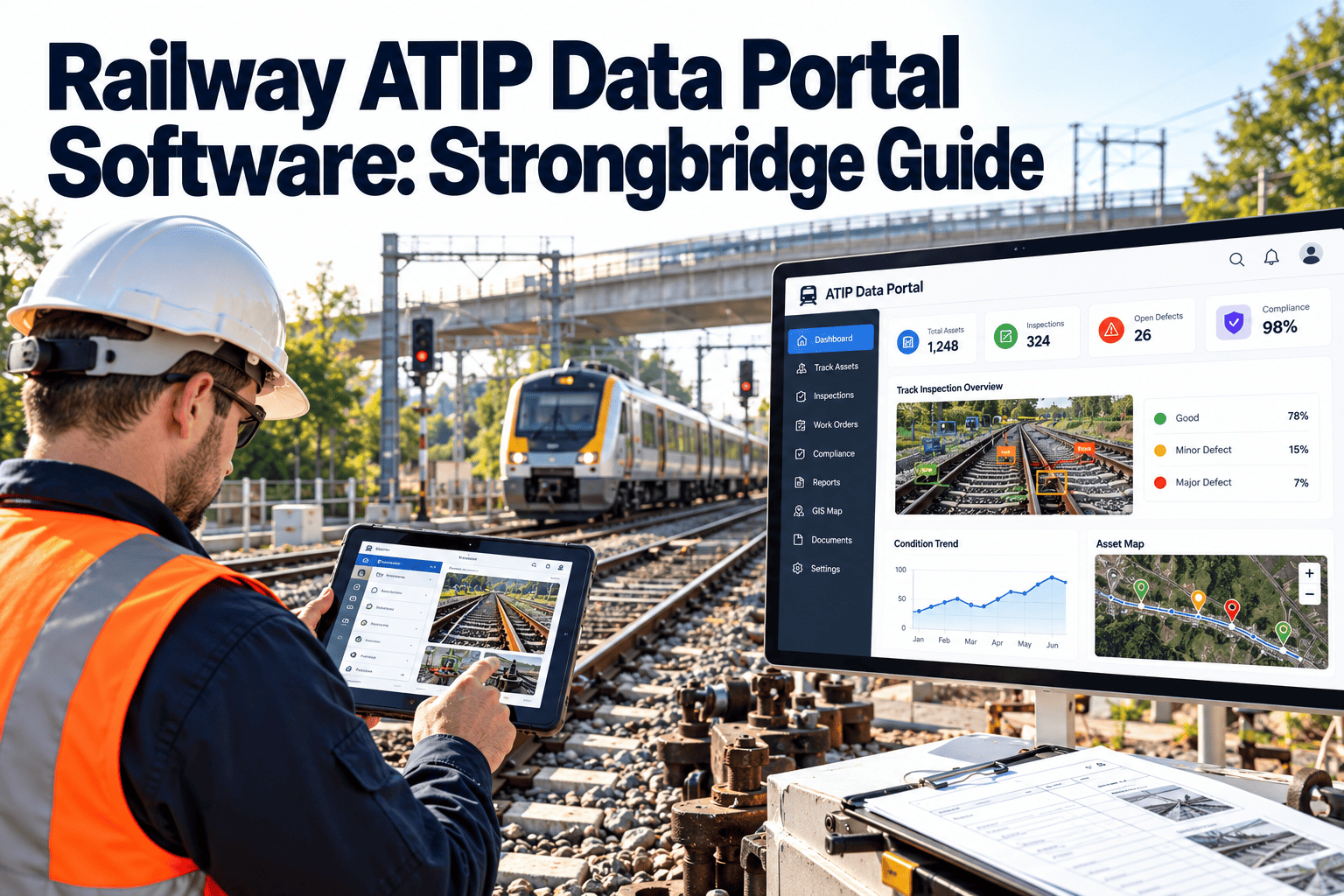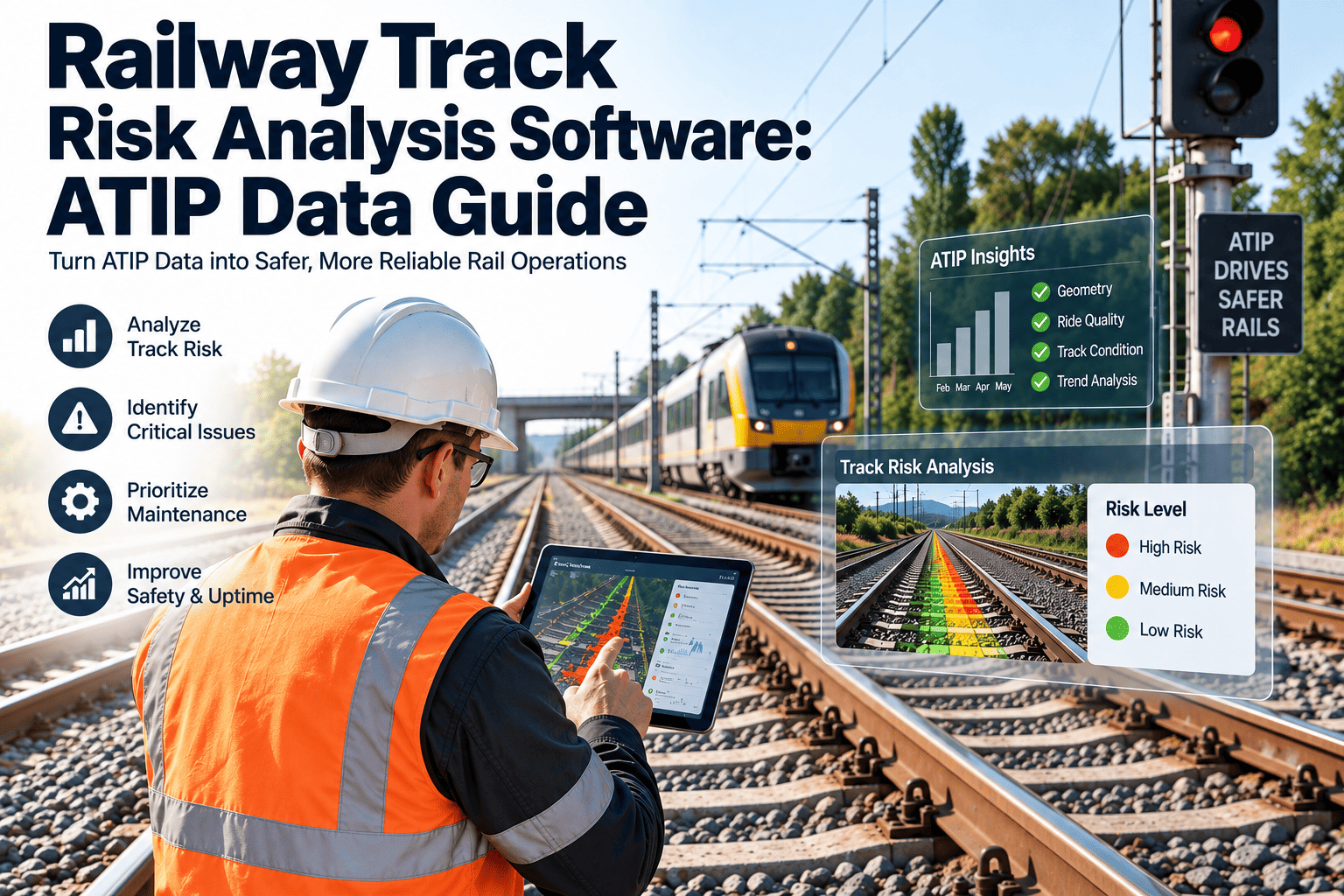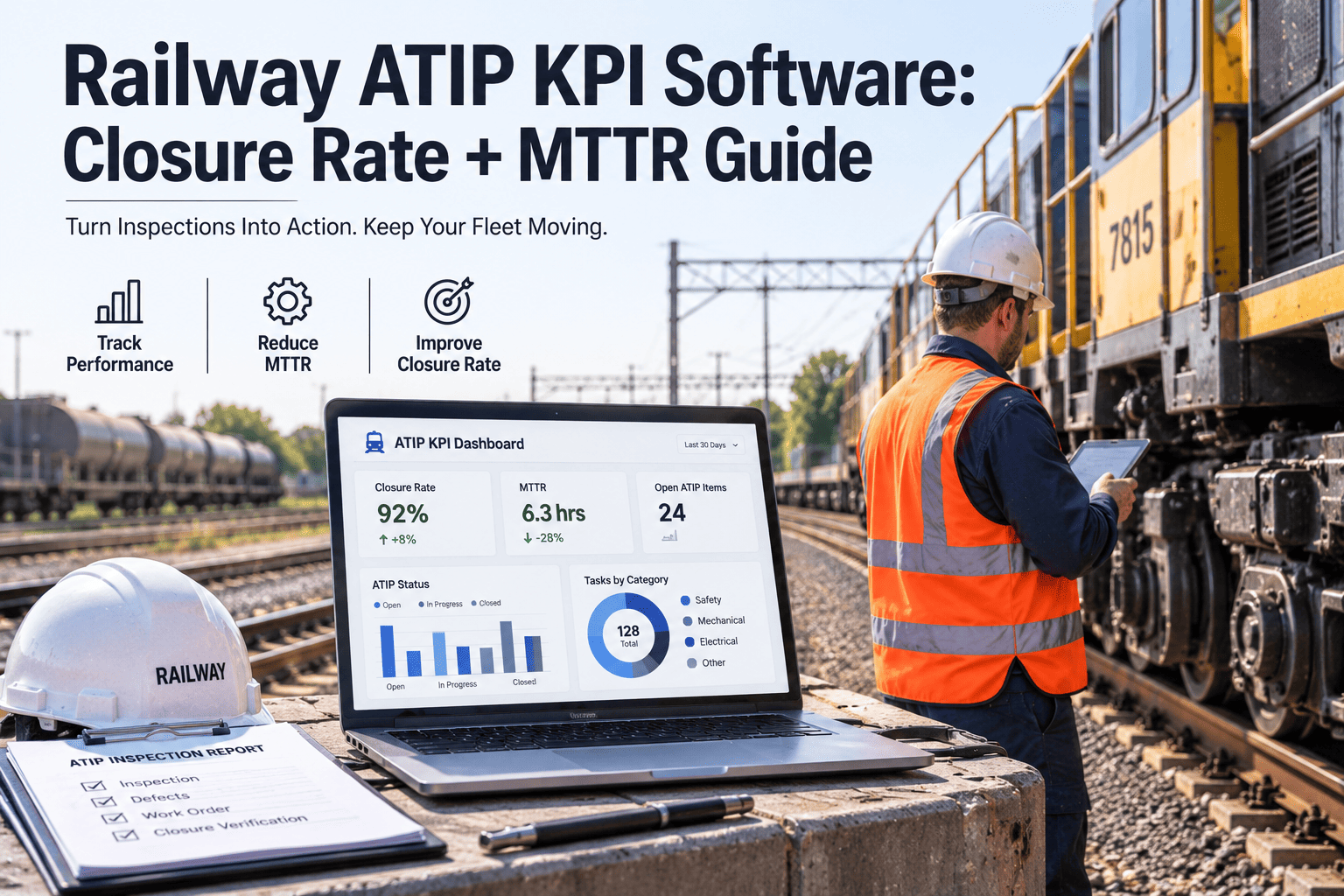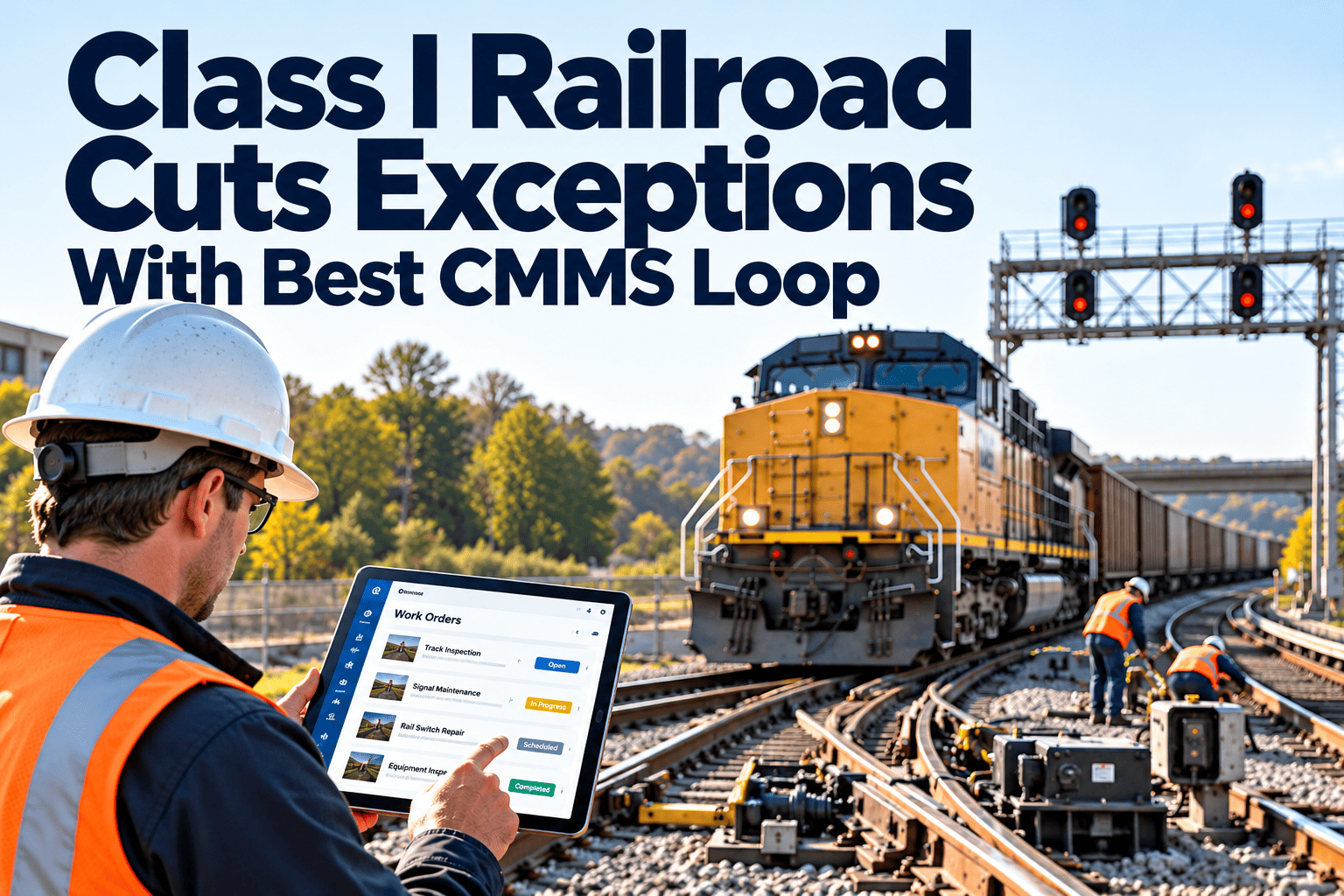
Automated track inspection finds geometry defects far faster than a walking inspector can, but every finding still has to be reviewed, assigned, repaired, and verified. A Class I US railroad that connected its ATIP results to a CMMS work order loop reduced track exceptions by 41%. This case study explains the loop, the rollout logic, and the lessons any railway maintenance team can apply with maintenance management software.
Case Study: Class I Railroad Cuts Track Exceptions With a CMMS Loop
How closing the loop between automated track inspection and maintenance execution drove a 41% reduction in track exceptions.
The Situation: Inspection Data Ahead of Repair Capacity
Automated Track Inspection Program vehicles measure geometry conditions such as gauge, alignment, profile, cross-level, and warp. Their output can outrun the ability of maintenance teams to triage and respond.
Before the Loop
- Exceptions arrived as reports and exports
- Assignment depended on local practice
- Repeat locations were hard to spot
- Closure was confirmed by email or memory
After the Loop
- Exceptions became tracked work items
- Ownership and due dates were explicit
- Repeat defects were visible by location
- Closure required field confirmation
The Loop That Produced the Result
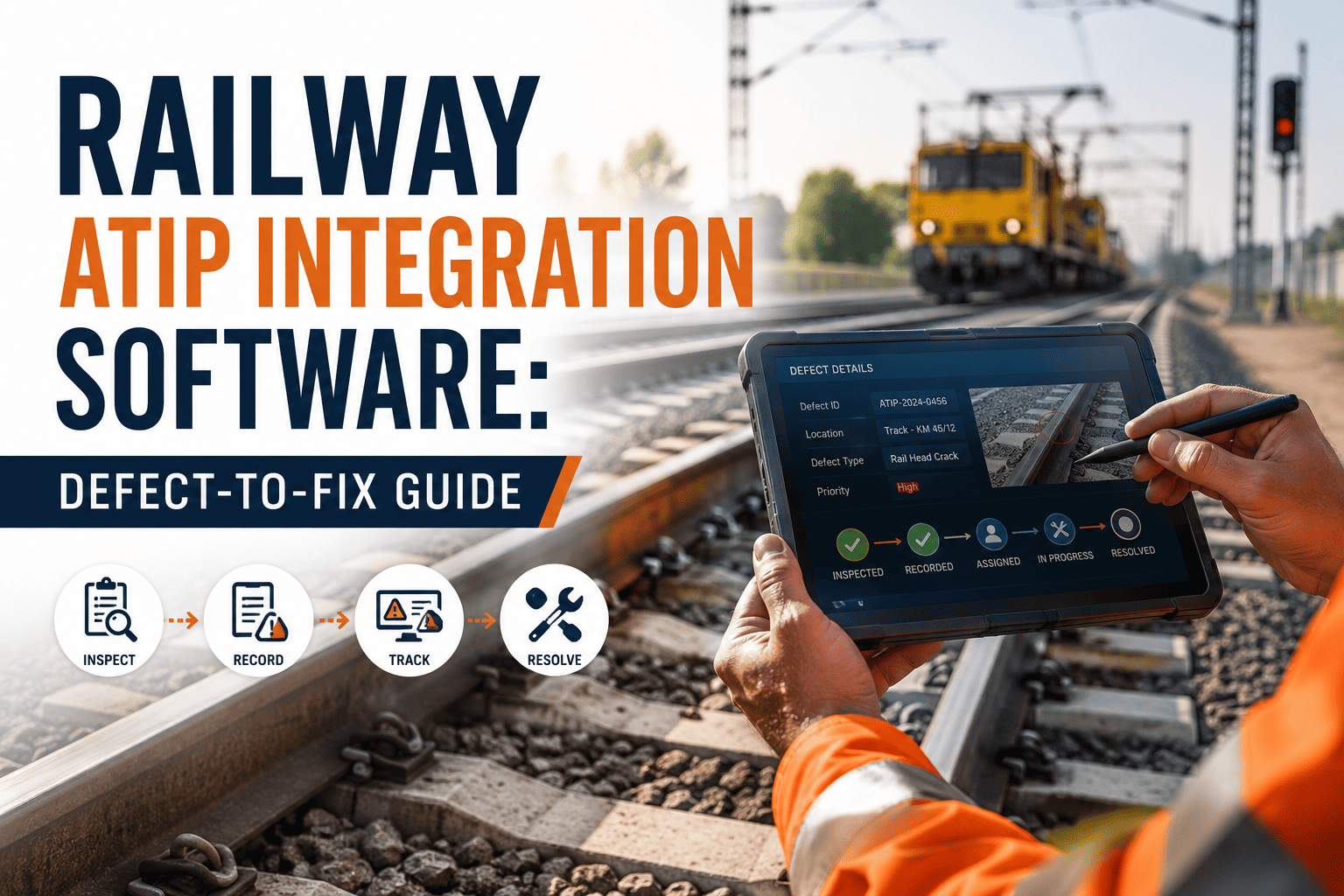
Detect
Automated inspection identifies geometry and condition exceptions along the line.
Triage
Exceptions are ranked by severity, track class, and required response time.
Assign
Each item becomes a work order with a location, owner, and due date.
Repair
Crews correct the defect and record work done, materials, and track condition.
Verify
A later inspection pass confirms the exception is gone, or reopens the item.
The important part is step five. Without verification, a closed work order only proves that someone said the job was done.
Rollout Logic: Phased, Not All at Once
Define the data
Agree on location references, exception types, severity levels, and closure rules.
Pilot on selected territory
Test the work order flow with a limited group of supervisors and crews.
Scale across divisions
Standardize templates, reports, and escalation rules as more territory joins.
Tune from the results
Use repeat-defect and closure reports to adjust surfacing, tamping, and tie programs.
What Changed in Daily Maintenance
| Area | Typical Prior Practice | CMMS Loop Practice |
|---|---|---|
| Exception handling | Review lists, then dispatch informally | Create tracked work orders with priority and due date |
| Accountability | Unclear who owns follow-up | Named supervisor and crew on each item |
| Repeat defects | Noticed by experienced staff only | Found through location and defect history |
| Closure proof | Verbal or email confirmation | Completion record and re-inspection result |
| Planning | Reactive to the latest run | Backlog and trend data inform work programs |
Build Your Own Inspection-to-Repair Loop
See how automated inspection findings can become assigned, tracked, and verified track maintenance work.
Why Closing the Loop Reduces Exceptions
- Faster response. Defects with a due date and owner are less likely to age in a queue.
- Better root cause work. Repeat locations point to drainage, ballast, subgrade, or tie problems, not just geometry.
- Cleaner priorities. Crews work the highest-risk defects first.
- Verified repairs. Reopened items expose work that did not hold.
- Planning confidence. Managers see where programmed work is preventing future exceptions.
Three-Year View: How Defect Closure Matured
Lessons for Other Railways
Standardize location first
If an exception cannot be placed precisely, it cannot be tracked or verified.
Keep triage simple
A small set of severity rules works better than a long scoring model crews ignore.
Make closure meaningful
Require completion notes and a verification path before an item leaves the backlog.
Review repeats monthly
Recurring locations are where capital and root cause work pay back most.
Where Oxmaint Fits in a Railway Loop
Oxmaint supports the maintenance half of this loop. Your inspection vehicles and analysis tools stay in place, and Oxmaint organizes the response.
Frequently Asked Questions
What does ATIP stand for?
It refers to the Automated Track Inspection Program, which uses instrumented vehicles to measure track geometry.
Does Oxmaint replace inspection equipment?
No. It manages the work that follows. Book a demo to see the flow.
What is a track exception?
It is a measured condition that exceeds a defined limit and needs review or correction.
Can smaller railways use this approach?
Yes. The loop works at any scale. You can sign up and start with one subdivision.
What matters most to start?
Consistent location references and clear closure rules.
Start Closing the Loop on Track Exceptions
Connect inspection findings to assigned work, verified repairs, and reports your maintenance leaders can act on.