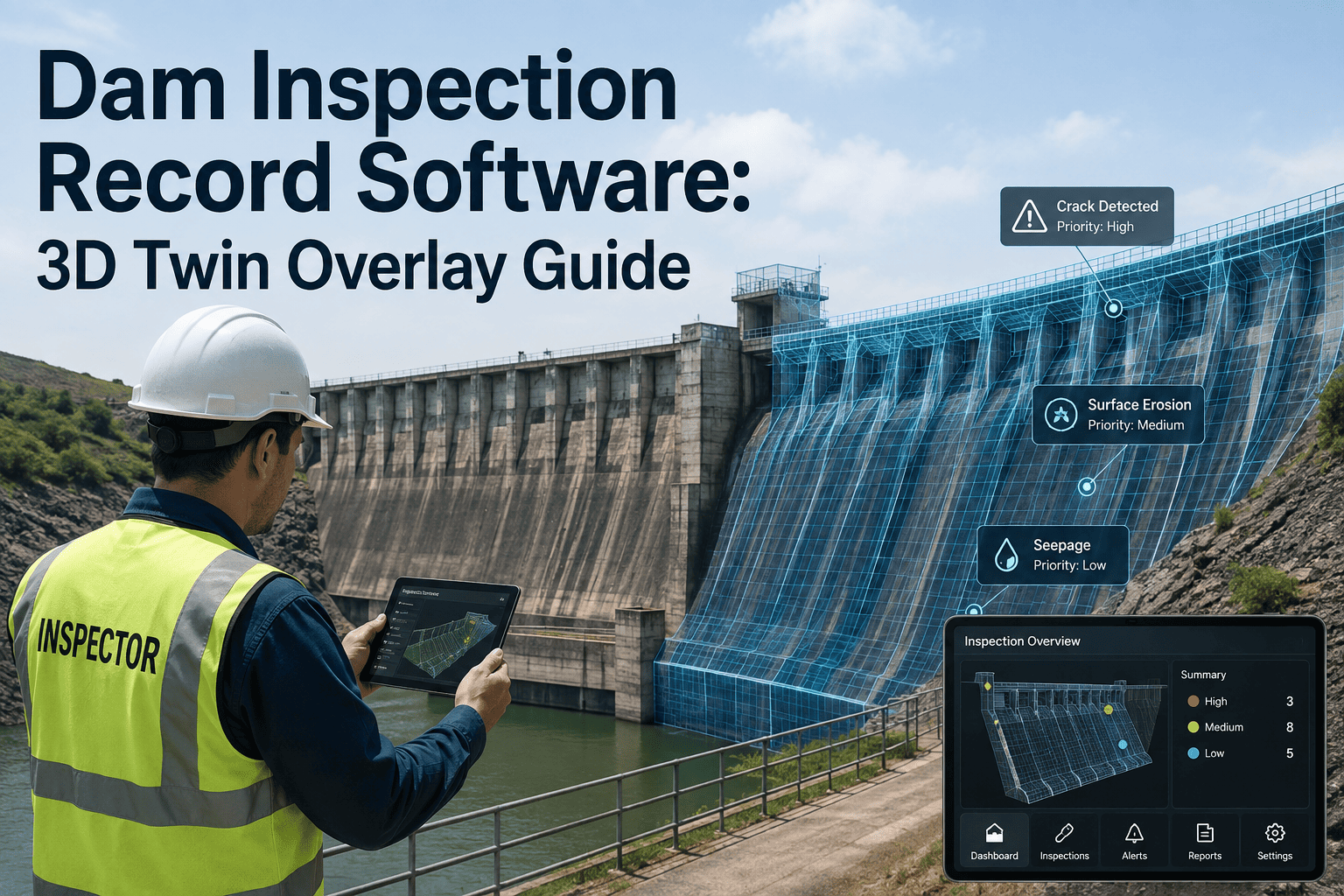
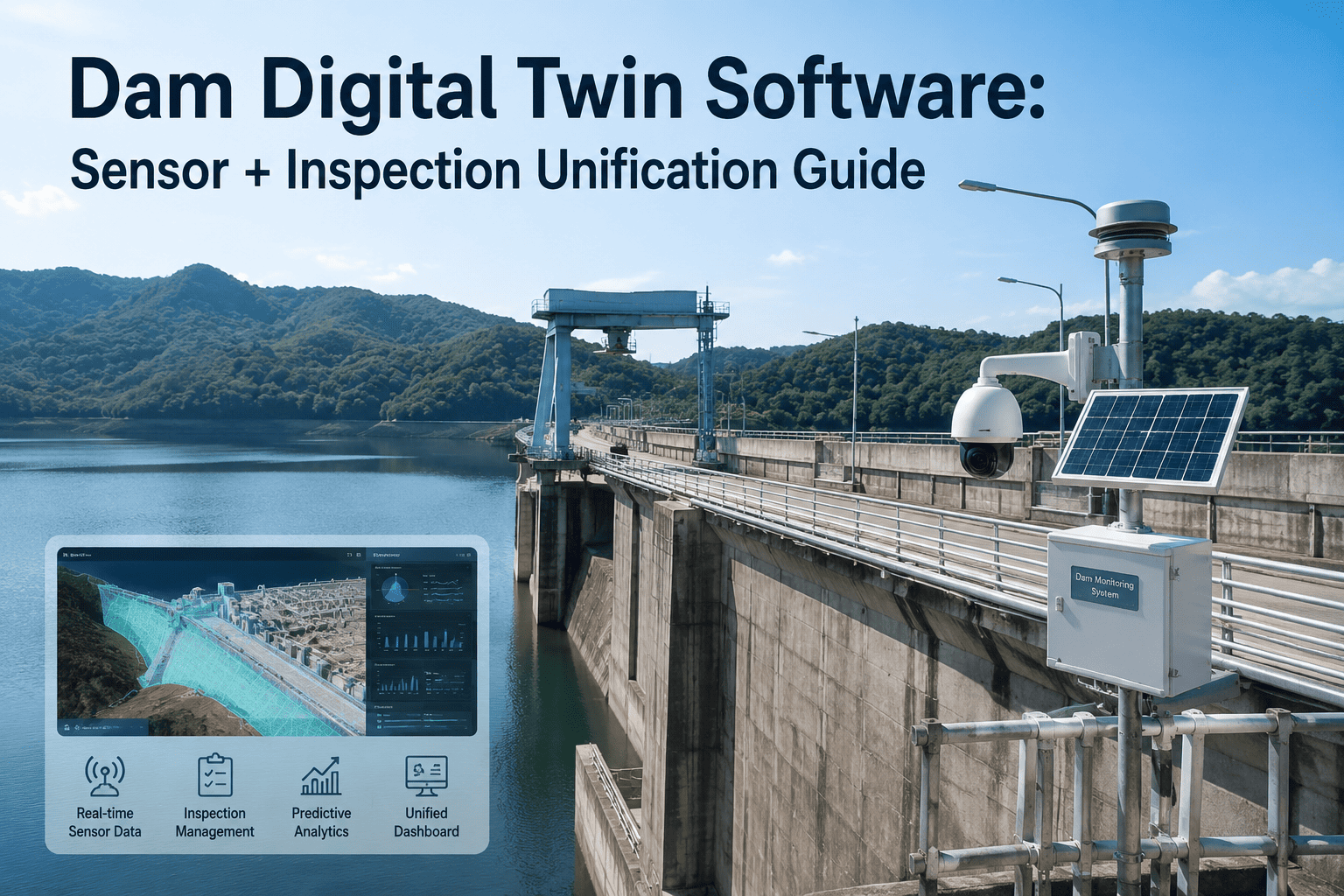
During a five-year periodic inspection of an earthen dam, a USACE engineering team documented eleven seepage points, four hairline cracks along the spillway wall, and two areas of erosion near the outlet works. Every finding was recorded exactly the way it had been for decades — a photo, a GPS coordinate, and a paragraph in a PDF. Three years later, when a follow-up inspection found the same seepage area larger and closer to the toe, nobody could say with certainty whether it had grown two inches or twelve, because the two records were never overlaid on the same geometry. That comparison gap is what a 3D twin overlay is built to close, and OxMaint's dam inspection module attaches every defect directly to twin geometry so degradation can be measured, not guessed.
Stop Comparing Dam Defects Across Disconnected PDFs
Every crack, seep, and defect pinned to twin geometry — measurable cycle over cycle
60,000+
Earth and rockfill dams in the United States, most averaging over 50 years old and still tracked on paper inspection records
5-Year
Standard USACE periodic inspection cycle, with continuing evaluation inspections conducted annually between cycles
1/8 in.
Defect resolution achievable when field capture is validated against twin geometry rather than photo memory alone
Why Overlay Discipline Changes What a Dam Inspection Record Can Prove
A periodic inspection report full of photos and narrative descriptions tells a reviewer what an inspector saw once. It does not tell them whether a crack is stable or propagating, whether a seep is new or long-standing, or whether an eroded area is accelerating toward the conduit. That comparison only becomes possible when every defect is pinned to a fixed point on a 3D model of the structure, so the next inspection cycle measures against the same geometry instead of a new set of photographs taken from a different angle by a different engineer.
Defect Types Mapped to Twin Geometry
Different dam defects require different overlay treatment. A crack needs a length and orientation vector. A seep needs a flow-rate trend. OxMaint's overlay engine handles each defect type according to the measurement that actually matters for dam safety review.
Cracking
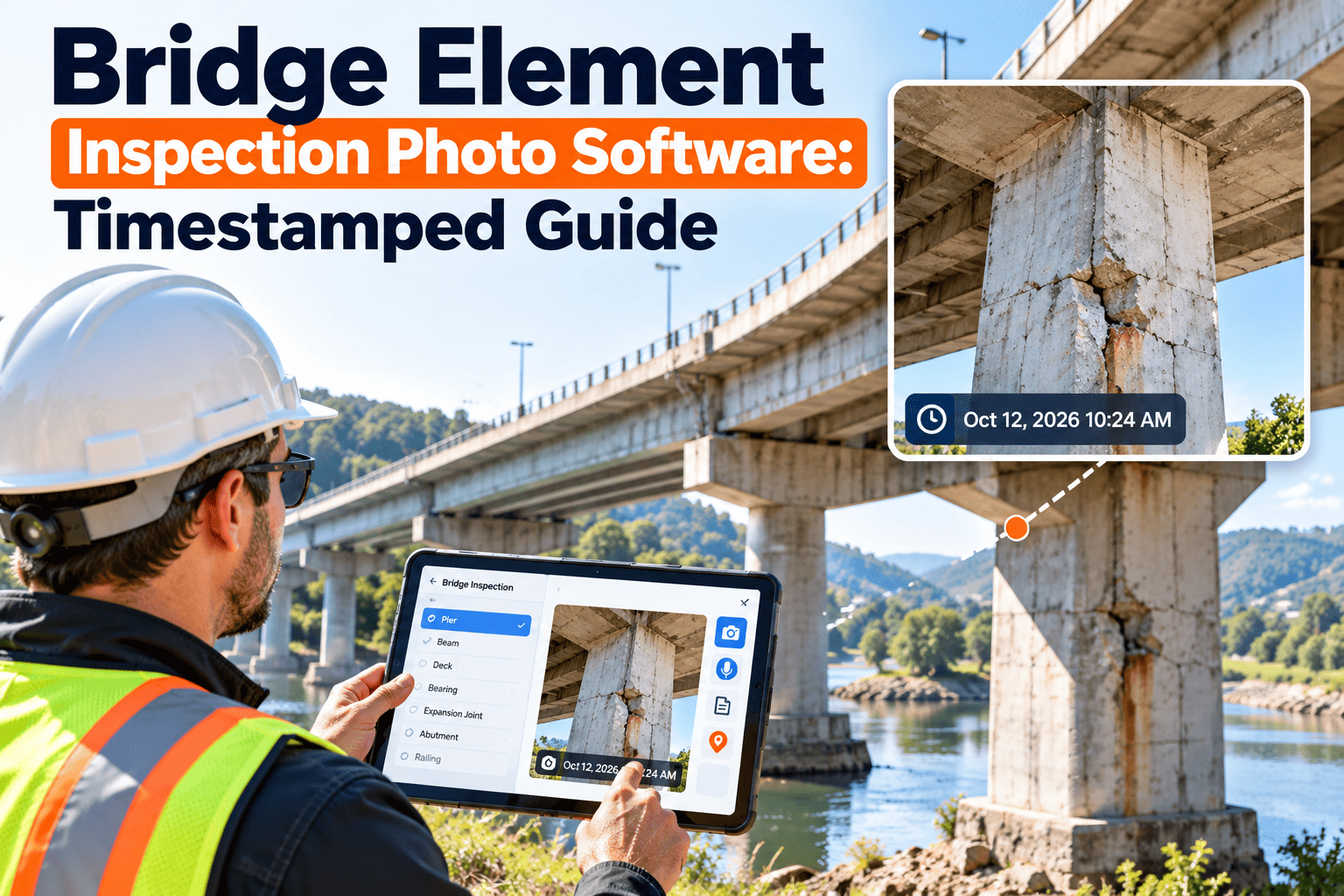
Pinned as a vector on the twin surface with length, width, and orientation logged at each inspection, so propagation over successive cycles is a measurable trend line rather than a subjective comparison of two photographs.
Seepage & Wet Areas
Located on the downstream face or toe with estimated flow and turbidity noted per cycle, allowing reviewers to see whether a seep is stable, growing, or clearing — the single most safety-critical trend in embankment monitoring.
Spalling & Surface Deterioration
Mapped as a bounded region on concrete surfaces with depth estimates, letting engineers track whether exposed rebar or expanding deterioration zones are widening between inspection cycles.
Erosion & Vegetation Encroachment
Traced against the embankment slope model so encroaching root systems or scour channels near the toe are flagged before they compromise the structure's stability or obscure future inspections.
Traditional Paper Records vs Twin-Overlaid Inspection Records
Dam Inspection Records — OxMaint
A Defect You Can't Measure Against Last Cycle Is a Defect You're Guessing About
See how OxMaint pins every crack, seep, and deterioration zone to twin geometry so your next periodic inspection compares against real measurements.
The Twin Overlay Workflow — From Pre-Inspection to Review Board
A structured overlay process turns a single-day field inspection into a repeatable measurement discipline that holds up across engineers, districts, and decades of dam ownership.
Pre-Inspection
Load prior cycle's twin model and flagged defect points for reference
Confirm inspection scope against ER 1110-2-1156 requirements
Assign inspection zones to field teams by structure area
Field Capture
Photo, video, and LiDAR capture geo-referenced to the twin model
Field teams log defects directly against twin coordinates on tablets
Conduit and outlet works inspected on the applicable interval
Overlay & Annotation
New defects merged onto the twin alongside prior-cycle annotations
Automatic diff highlights growth in seeps, cracks, and erosion zones
Severity grades applied using standardized defect thresholds
Report & Review
Formatted periodic inspection report generated from twin data
Findings routed to the dam safety review board for evaluation
Remediation items auto-generate work orders by priority
For years, comparing this cycle's seepage findings to the last cycle meant pulling out old binders and eyeballing photographs taken from a slightly different angle five years earlier. Once the defects lived on the twin instead of in a folder, our review board could finally see a measured growth rate instead of two engineers' competing impressions.
— Dam Safety Program Manager, Regional District
Standards and Cycles Every Dam Owner Has to Track
5 Yrs
Periodic inspection interval for USACE-owned and operated dams, taking a deeper structural and operational look than annual inspections
1 Yr
Continuing evaluation inspection cycle conducted between periodic inspections to catch emerging conditions early
5 Yrs
Minimum interval for conduit inspections under Engineer Manual 1110-2-2902, graded against standardized defect coding
72 Hrs
Realistic target turnaround for packaging an audit-ready inspection record once findings are pinned to the twin
Overlay Priorities by Dam Structure Type
Every dam owner manages several structure types under one project, and each one has a different defect pattern that the overlay model needs to prioritize.
Earth & Embankment
Overlay priority is slope stability, seepage location, and vegetation encroachment near the toe, since these are the leading indicators of internal erosion in earthen structures.
Concrete & Gravity Structures
Overlay priority is crack propagation, spalling extent, and joint deterioration, tracked as bounded regions that can be measured for width and depth change across cycles.
Conduit & Outlet Works
Overlay priority is internal defect coding along the conduit length, captured through confined-space or robotic inspection and graded against standardized pipe condition scoring.
Spillway & Auxiliary Structures
Overlay priority is erosion at energy dissipation zones and gate mechanism condition, since these components see the most stress during high-flow events.
Technology Behind the Overlay — How Field Data Becomes a Defensible Record
OxMaint's inspection platform is built to accept the field data collection methods dam owners already use, rather than requiring a new capture standard.
Robotic and UAV Field Capture
Photo, video, and point-cloud data from drones, amphibious robots, or handheld LiDAR units imports directly into the twin, geo-referenced to the exact structure coordinates rather than requiring manual placement afterward by an analyst reconstructing the scene from memory.
National Inventory of Dams Linkage
Structure records, hazard classification, and prior inspection history connect to the twin model so a reviewer opening a single record sees the complete regulatory and structural context in one place instead of cross-referencing separate databases.
Emergency Action Plan Documentation
Defect findings that affect risk classification feed directly into Emergency Action Plan updates, keeping downstream hazard documentation aligned with the actual current condition of the structure rather than the condition at the last major revision.
Work Order Generation From Findings
Any defect requiring remediation automatically generates a prioritized work order grouped by structure area, so field crews are dispatched efficiently and every inspection finding has a documented resolution path instead of disappearing into a filed report.
Frequently Asked Questions
Dam Inspection Records — OxMaint
Your Next Periodic Inspection Should Measure Growth, Not Guess at It.
1/8 in.
defect resolution
5 Yrs
cycle tracked on twin