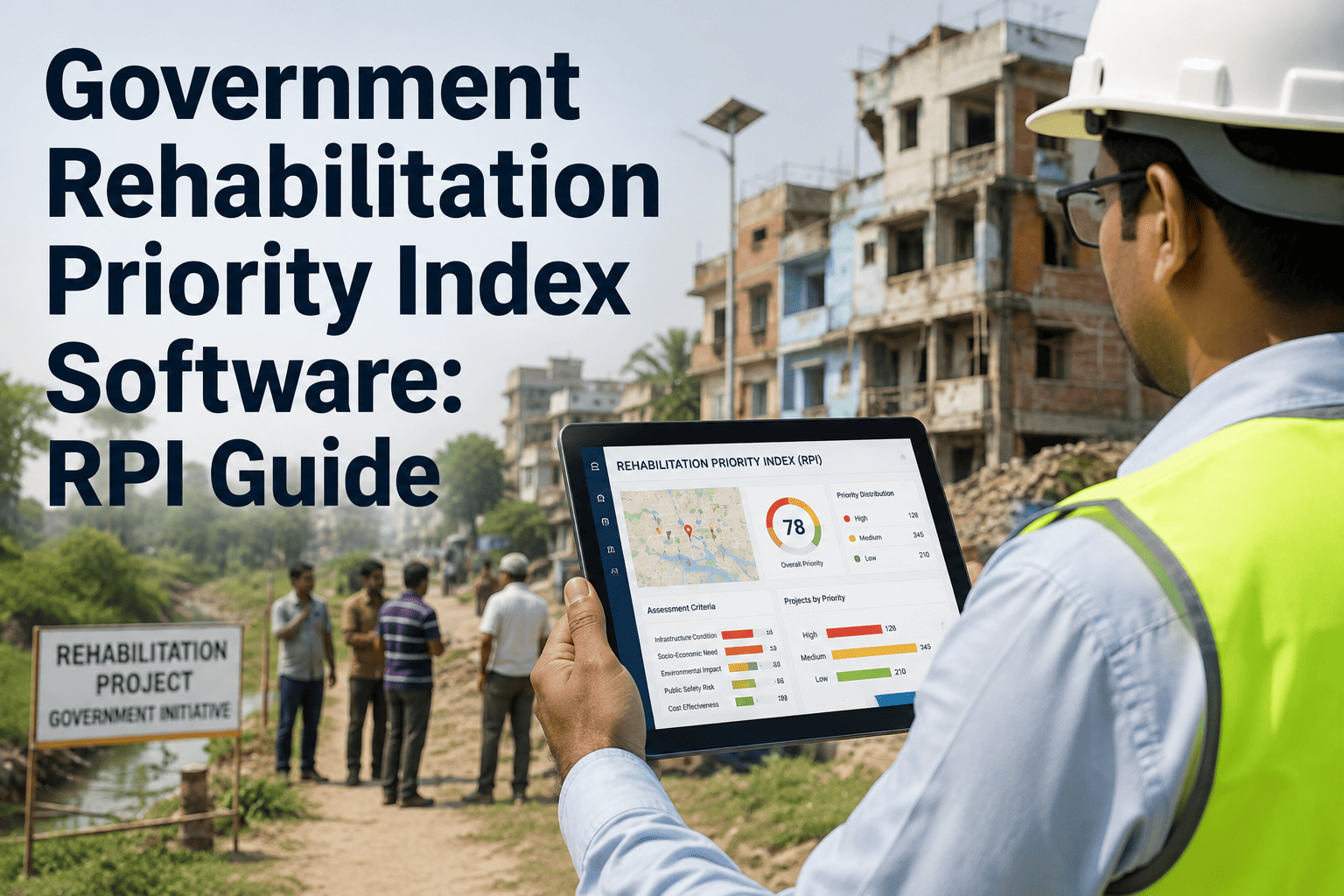
Every public works department, school district, and transportation authority manages thousands of assets — bridges, HVAC systems, fleet vehicles, lift stations, generators — on a maintenance budget that can never cover them all. When funding gets tight, most agencies default to fixing whatever failed most recently or whichever complaint reached a council member's desk, not what actually threatens public safety or mission continuity. An Asset Priority Index replaces that guesswork with a documented score built from mission dependency, failure risk, and cost of inaction, so every capital request survives audit review instead of relying on who asked loudest. See how agencies build a defensible API inside Oxmaint — free trial, live in under 60 minutes.
Government Asset Priority Index by the Numbers
61%
Of public agencies still rank work orders by complaint volume rather than documented mission risk
3x
Higher lifecycle cost when mission-critical assets are replaced reactively instead of on a risk-ranked schedule
30%
Of capital improvement budgets get reallocated once a department adopts a documented API scoring model
92%
Council and grant approval rate for capital requests backed by a transparent priority index versus ad-hoc justification
The Problem: Why Government Asset Management Runs on Guesswork
Roads, water, fleet, facilities, and IT each keep their own spreadsheet, and each department scores "critical" differently — a fire station generator and a park irrigation pump both get labeled "high priority" with no shared logic connecting the two. Auditors and grant reviewers increasingly expect a documented methodology behind capital plans, not a narrative written after the budget was already set. Meanwhile, elected officials and the public see potholes and outages, not the failure probability sitting quietly in a report nobody opened. Without a single weighted scoring model applied consistently across every asset class, agencies end up spending on visibility instead of risk, and the assets that matter most — the ones tied to public safety, service continuity, or regulatory exposure — sit unscored until they fail. Book a demo to see a cross-department scoring model built for your agency.
A Capital Plan Built on "Whoever Complained Last" Will Not Survive Its Next Audit.
Oxmaint scores every asset in your inventory against a single weighted model — mission dependency, failure risk, and cost of inaction — so your next budget request is backed by data, not opinion. Free to start. Live in under 60 minutes.
How Oxmaint Builds a Defensible Asset Priority Index
Oxmaint gives every department the same scoring language, so a bridge, a boiler, and a squad car can all be ranked against one another honestly.
Core Capability
Weighted API Scoring Engine
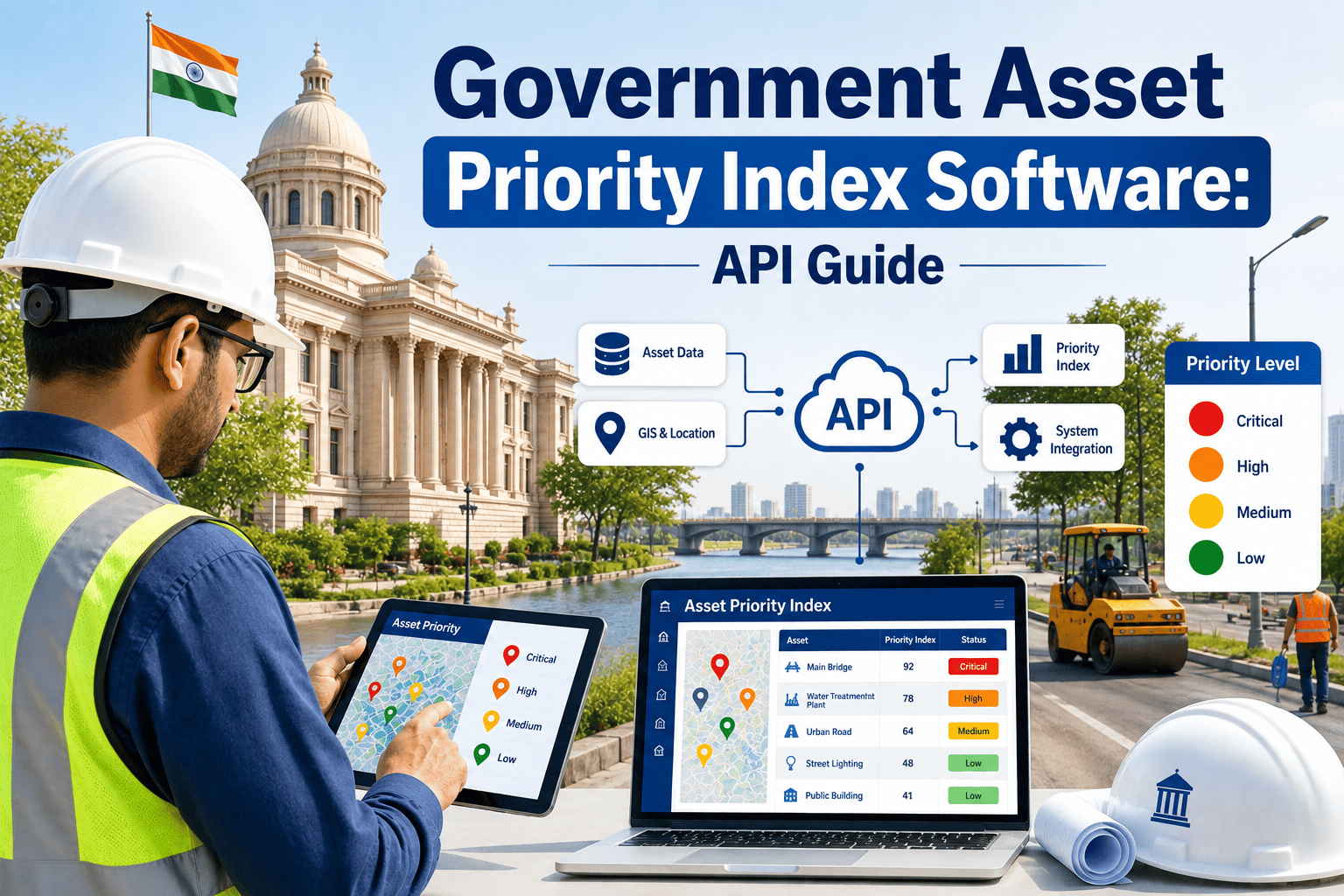
Configure your own weighting across mission dependency, safety and regulatory exposure, failure probability, replacement cost, and population served. Oxmaint calculates a composite score for every asset automatically and sorts them into Critical, High, Moderate, and Low tiers that drive work order priority in real time — no manual re-ranking after every inspection.
Core Capability
Mission-Dependency & Budget Justification Mapping
Every score links directly to a plain-language justification: what fails, who is affected, and what it costs to wait. Export capital plans, council presentations, and grant narratives straight from the scoring dashboard, with historical trend lines showing whether an asset's risk is climbing or holding steady.
Implementation Roadmap
Agencies with mixed asset portfolios go from spreadsheet to scored inventory in three weeks, with no service interruption.
Week 1
Asset Registry & Criteria Workshop
Import assets from GIS, spreadsheets, or legacy CMMS. Facilitate a cross-department workshop to agree on shared scoring criteria and weightings.
Week 2
Scoring Model Configuration
Build the weighted model in Oxmaint, run it against a sample of assets from every department, and adjust weightings until rankings match real-world judgment.
Week 3
CMMS & Work Order Integration
Tie priority tiers to work order routing and PM schedules, so Critical-tier assets automatically receive faster response and stricter inspection intervals.
Ongoing
Rescoring & Budget Cycles
Scores update as condition data and work order history accumulate. Capital plans regenerate each budget cycle from live data, not last year's memory.
One Department's "Critical" Should Not Outrank Another Department's Emergency.
Oxmaint's weighted scoring model puts roads, water, fleet, and facilities on the same scale — so budget goes to actual risk, not whichever department wrote the loudest memo.
Jurisdictional Alignment
Oxmaint's scoring exports map to the asset management frameworks your auditors and grant reviewers already expect.
USA
GASB 34 capital asset reporting. FHWA Transportation Asset Management Plans. EPA capacity assurance for utilities. ISO 55000 alignment for enterprise asset management programmes.
Canada
PSAB 3150 tangible capital asset accounting. Asset Management BC and FCM municipal frameworks. Provincial infrastructure grant reporting requirements.
Australia
ISO 55001 certification pathways. IPWEA National Asset Management Strategy (NAMS) guidance. State local-government asset management policy compliance.
UK
Well-Managed Highway Infrastructure code of practice. Cabinet Office government functional standard GovS 002 for project and asset delivery. Local authority best-value reporting.
Germany
DIN ISO 55000 asset management standard. Kommunale Vermögensbewertung municipal asset valuation rules. Länder-level infrastructure reporting obligations.
Saudi Arabia
Vision 2030 municipal asset management frameworks. MOMRA infrastructure planning requirements. National Transformation Programme reporting standards.
Oxmaint vs Competitors
Swipe to view full comparison table
| Capability |
Oxmaint |
IBM Maximo |
eMaint (Fluke) |
Brightly (Dude Solutions) |
UpKeep |
MaintainX |
Limble CMMS |
| Weighted API Scoring Engine |
Built-in, configurable weights |
Custom build required |
Basic scoring only |
Limited to facilities |
Not available |
Not available |
Basic scoring only |
| Cross-Department Standardization |
Single model, all asset classes |
Configurable (complex) |
Per-module only |
Facilities-centric |
Per-site only |
Per-site only |
Per-site only |
| Mission-Dependency Mapping |
Built-in narrative export |
Custom build required |
Not available |
Not available |
Not available |
Not available |
Not available |
| Capital Budget Justification Export |
One-click, council-ready |
Reporting module extra |
Reporting add-on |
Standard reports only |
Standard reports only |
Standard reports only |
Standard reports only |
| GIS / Asset Registry Import |
Native bulk import |
Full GIS (enterprise tier) |
Basic import |
Basic import |
Basic import |
Basic location |
Basic import |
| Audit-Ready Documentation |
GASB 34, PSAB, ISO 55000 mapped |
Configurable |
General compliance |
General compliance |
General compliance |
General compliance |
General compliance |
| Deploy Time |
3 weeks |
6–18 months |
4–8 weeks |
4–10 weeks |
2–4 weeks |
2–3 weeks |
1–2 weeks |
Proven Results
Capital requests approved without revision after adopting scored justification88%
Reduction in reactive emergency repairs on Critical-tier assets70%
Faster audit and grant reporting cycle time55%
Departments reporting consistent priority ranking across asset classes81%
3 Weeks
Full scoring model live across departments
$0
Implementation fees — free to start
100%
Asset classes scored on one shared model
99.9%
Platform uptime SLA
Data Security
AES-256
Encryption
Every asset score, weighting model, and budget export encrypted at rest and in transit.
SOC 2 Type II
Certified Security
Independently audited annually to satisfy public-sector procurement and vendor security review.
RBAC
Access Control
Role-based access from field technician to department head, with a full audit log on every score change.
GDPR
Global Compliance
GDPR, UK GDPR, and PIPEDA aligned data handling, with regional data residency available.
Frequently Asked Questions
What is an Asset Priority Index and how is it different from a criticality score?
An API is a composite score combining mission dependency, risk, and cost of inaction into one ranking usable across every department. It goes beyond a single criticality rating by tying the score directly to budget justification.
Sign up free to build your first scoring model.
Can departments use different criteria while still comparing scores fairly?
Does the scoring model satisfy GASB 34 or PSAB 3150 reporting requirements?
Oxmaint's export templates map directly to GASB 34 and PSAB 3150 capital asset categories, along with ISO 55000 documentation formats used in most audit and grant reviews.
Start free and preview a compliance export.
How does Oxmaint handle assets that already have scores in a legacy CMMS?
Existing scores, condition ratings, and asset registries import directly through bulk upload or GIS integration, and Oxmaint recalculates them against your new weighted model without losing history.
Book a demo to walk through a migration.
How long does it take to score an entire multi-department asset inventory?
Your Next Budget Hearing Deserves a Number, Not a Guess.
Weighted scoring. Mission-dependency mapping. Council-ready budget exports. Audit documentation built in. All on one platform, live in three weeks, free to start.