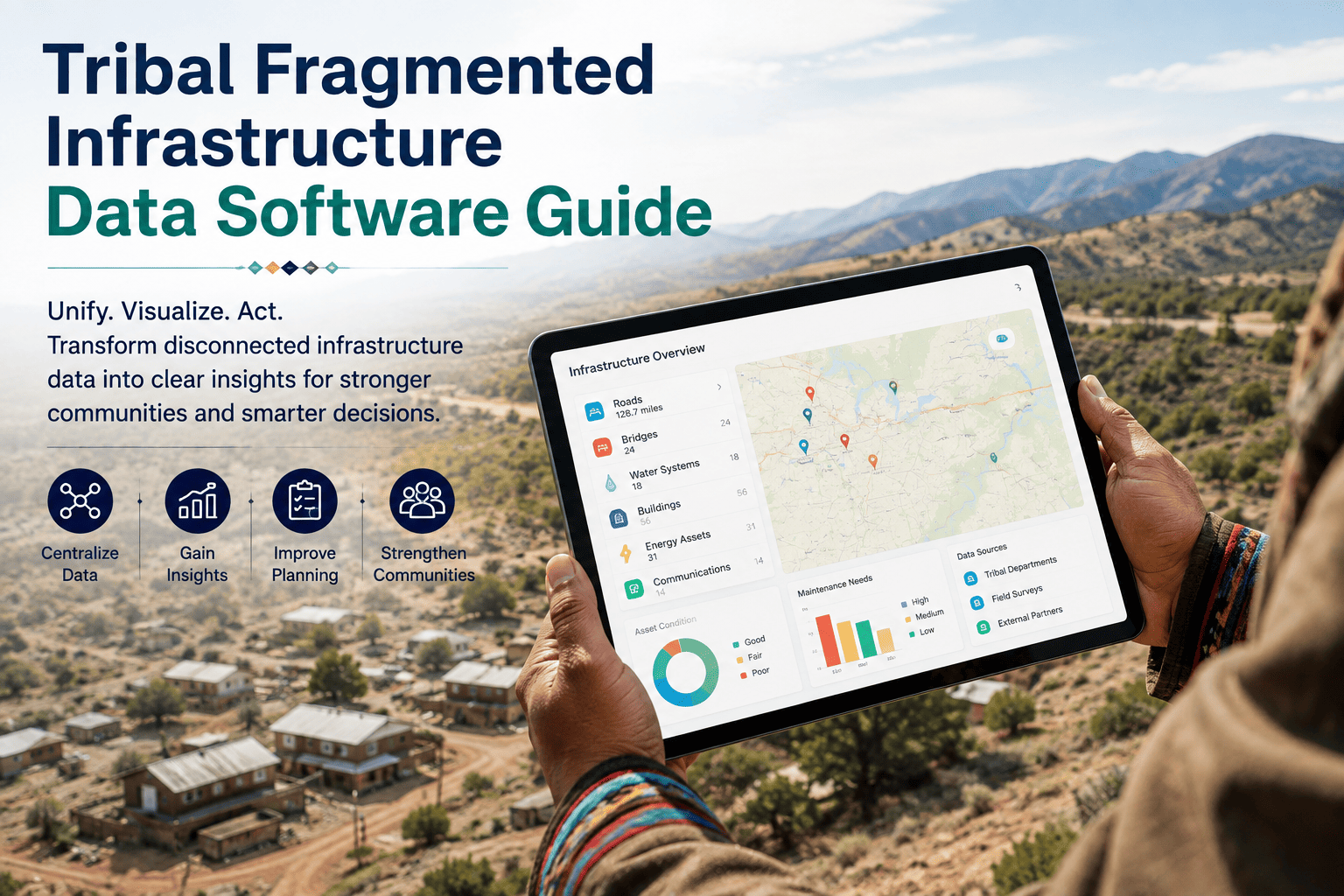
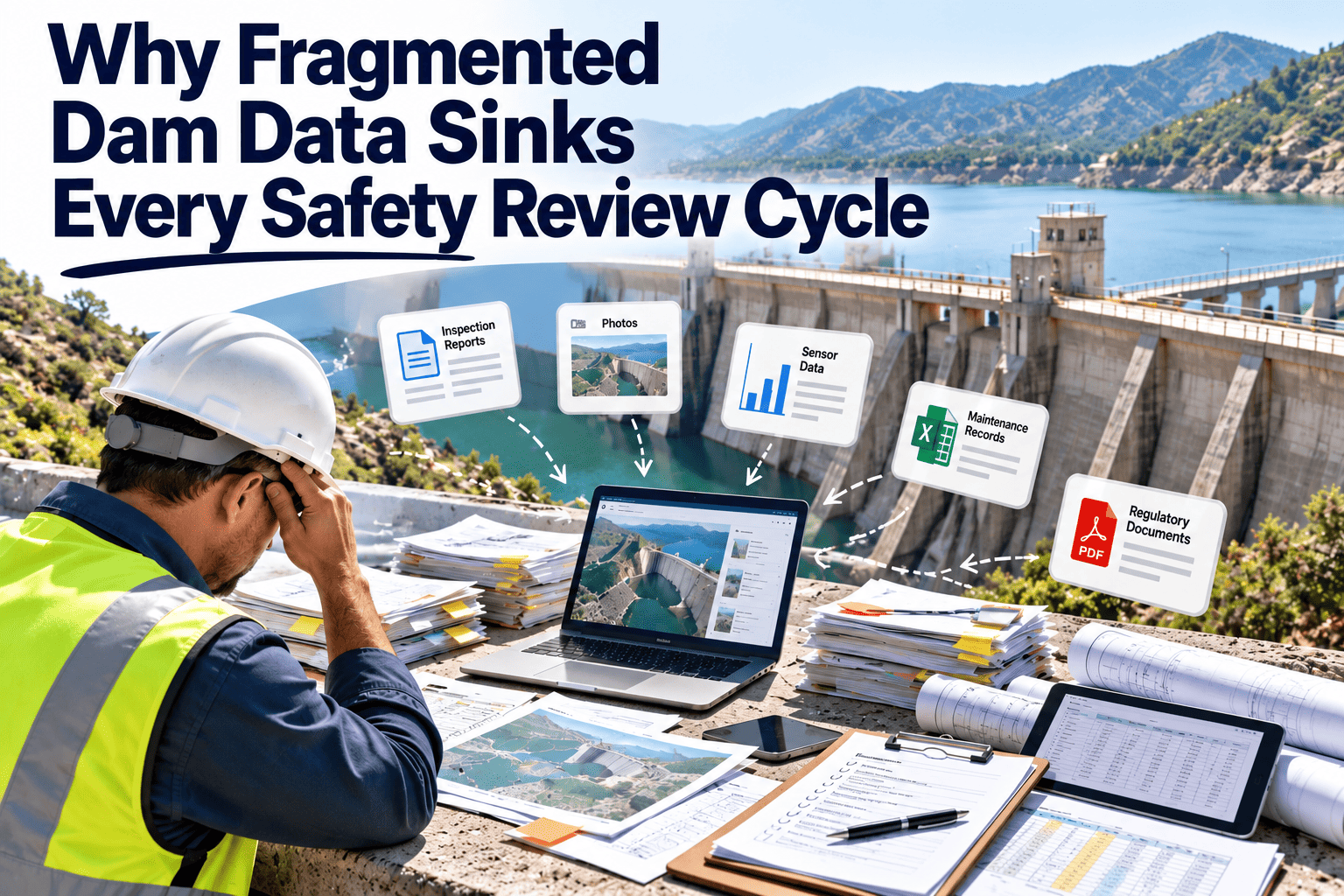
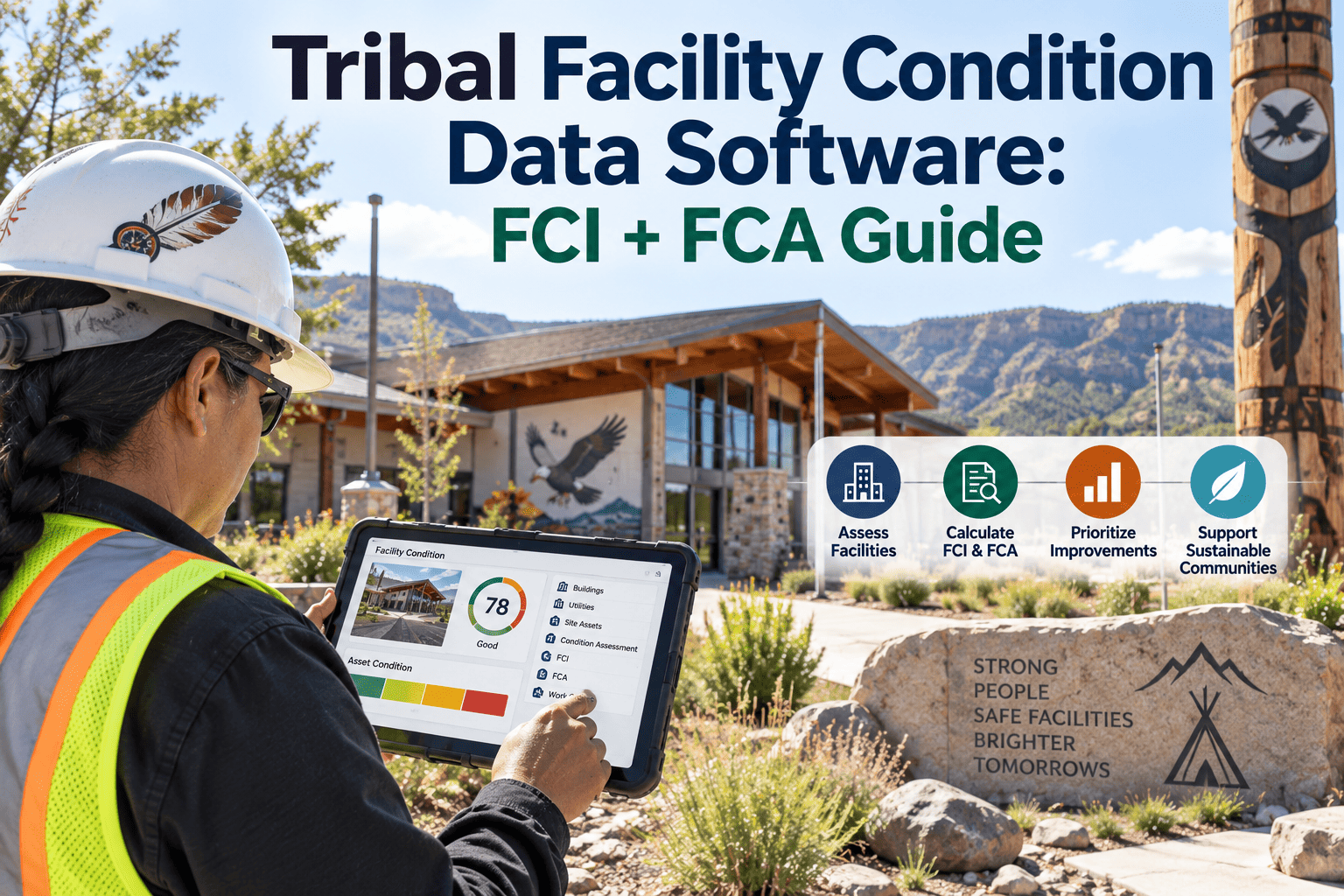
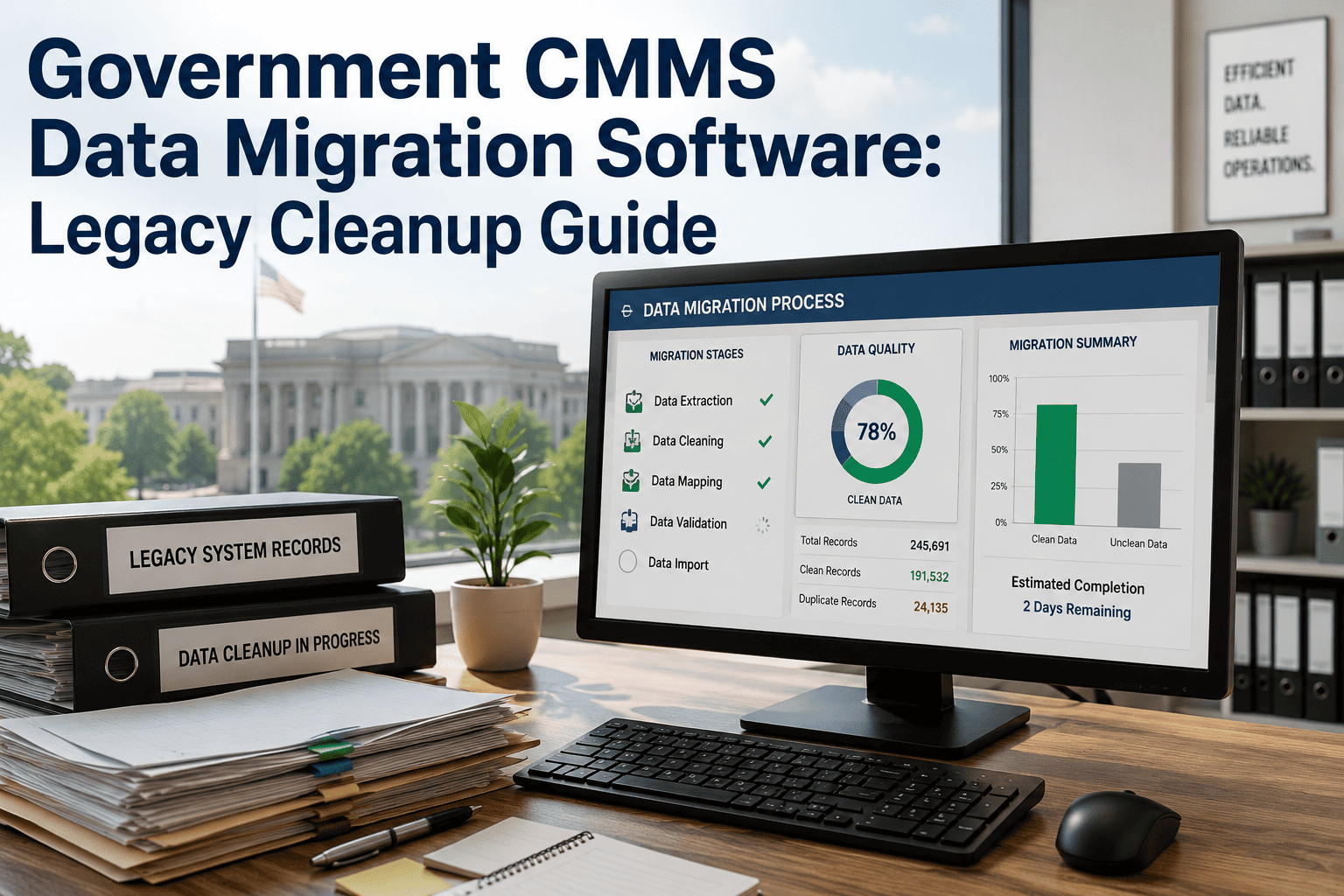
Tribal infrastructure does not sit under one roof, and neither does the data that describes it. A single tribal nation might have its roads and bridges tracked in a Bureau of Indian Affairs inventory, its school buildings assessed through the Bureau of Indian Education's separate condition system, its clinic and hospital assets logged inside Indian Health Service records, and its water system, housing stock, and tribal-owned facilities kept on a spreadsheet nobody outside the public works office has ever seen. Each system was built for its own federal reporting cycle, not for the tribe that actually has to manage all of it together. The result is a nation that owns and operates real, physical infrastructure without ever seeing the full asset picture in one place — and a unified system built to pull that picture together is often the missing piece.
Tribal Infrastructure · Data Unification · BIA · BIE · IHS
Tribal Fragmented Infrastructure Data — One Asset Record, Not Four Agency Silos
BIA roads, BIE school facilities, IHS health infrastructure, and tribal-owned assets each live in a different system built for a different federal audience. Here is what it takes to see your nation's full infrastructure picture in one place.
4+
Separate systems most tribal nations juggle across BIA, BIE, IHS, and tribally-owned assets
$1.4B+
Estimated combined deferred maintenance backlog across tribal road, school, and health facilities nationally
38%
Of capital funding requests delayed due to incomplete or conflicting asset condition data
1 record
What a unified system produces per asset, regardless of which agency originally reported it
Where the Data Actually Lives
Five Places a Tribal Nation's Infrastructure Data Is Scattered Today
Fragmentation is not a filing problem — it is a structural one. Each federal agency that touches tribal infrastructure built its own system for its own reporting requirements, decades apart from the others, with no shared asset identifier connecting them.
Roads and Bridges
BIA Road Inventory Field Data
Tribal transportation networks are tracked through the BIA's road and bridge inventory system, built for federal transportation funding formulas rather than day-to-day maintenance planning.
School Facilities
BIE Facility Condition Assessments
Tribal school buildings funded or operated through the Bureau of Indian Education are assessed on a separate condition-rating cycle disconnected from the tribe's own facilities team.
Health Infrastructure
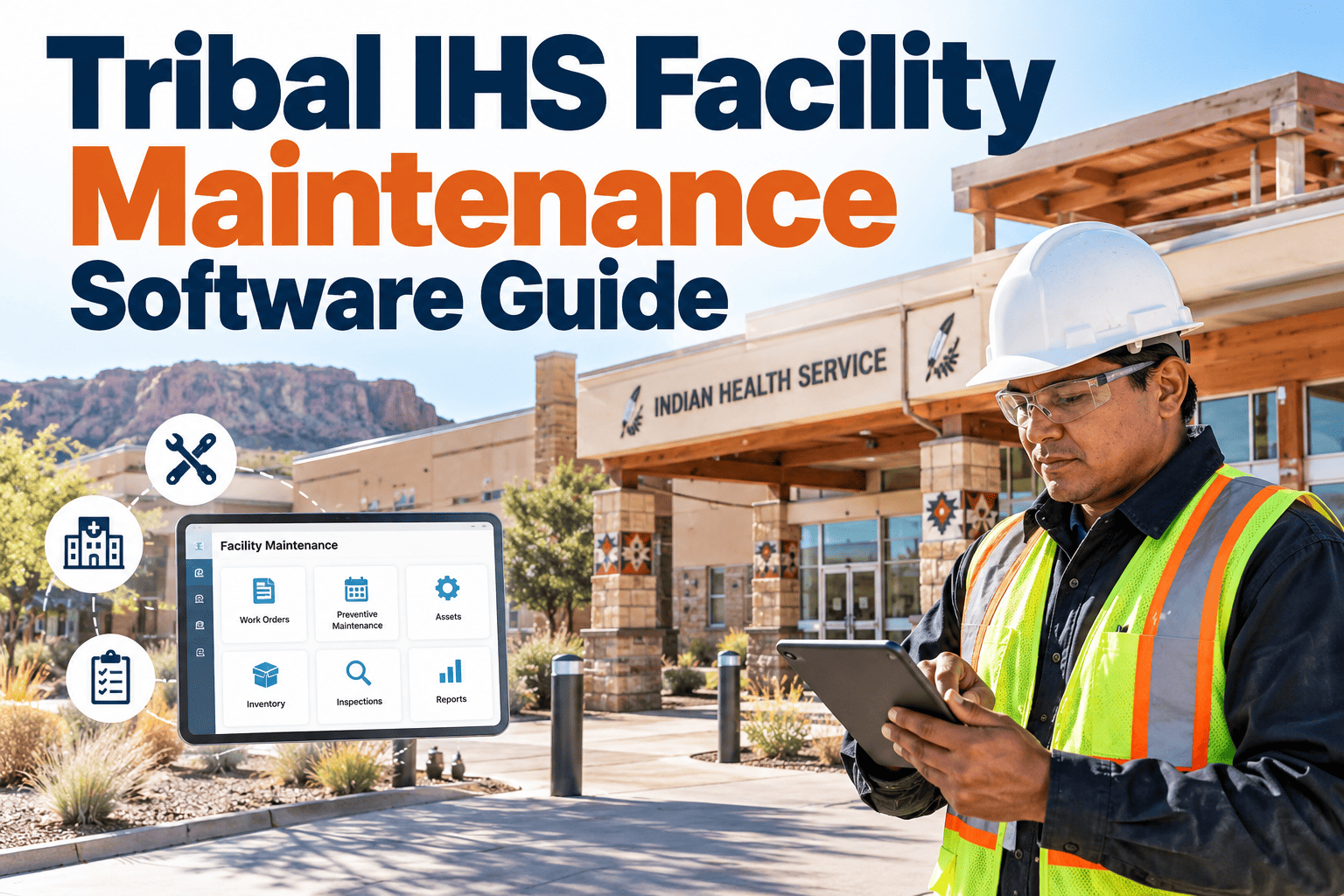
IHS Healthcare Facility Records
Clinics and hospitals under Indian Health Service oversight are tracked in facility management systems built around federal health infrastructure funding, not tribal maintenance scheduling.
Water and Utilities
Tribal Utility Authority Records
Water, wastewater, and power systems owned outright by the tribe are typically tracked independently, often in spreadsheets with no link back to federal asset inventories at all.
Housing Stock
Tribal Housing Authority Files
Housing units managed under tribal housing authorities keep their own condition and maintenance records, separate from both federal agency systems and tribal public works.
The Real Cost
What Fragmented Data Actually Costs a Tribal Nation
The cost of fragmentation rarely shows up as a single dramatic failure. It shows up as a capital funding application that gets flagged because the condition data submitted does not match what the agency has on file. It shows up as a public works director who cannot answer a council member's question about total deferred maintenance without calling four different offices. It shows up as duplicate inspections, because nobody realized the BIE and the tribe's own facilities team both assessed the same school roof six months apart. None of these are agency failures on their own — they are the predictable result of four systems that were never asked to talk to each other. Ready to see what one unified asset record looks like for your nation's infrastructure? Start a free trial or book a demo built around your specific asset mix.
Data Source Comparison
How Each Agency's Data Compares Before Unification
OxMaint · Tribal Infrastructure · Unified Records
Four Agencies, One Nation's Infrastructure — It Should Be One Record.
OxMaint brings BIA road data, BIE facility assessments, IHS health infrastructure records, and tribally-owned assets into a single system, so your public works team sees the whole picture instead of four incomplete ones.
The Unification Approach
Four Pillars of a Unified Tribal Asset Record
One Asset, One ID
Every road segment, school building, clinic, and utility asset gets a single identifier inside OxMaint, regardless of which federal system originally reported it, so records from different agencies stop existing as unrelated entries.
Condition Data in One View
BIA road ratings, BIE facility scores, and IHS health infrastructure conditions are visible side by side, giving leadership a true fleet-wide picture instead of four separate reports to reconcile manually.
Grant-Ready Reporting
Deferred maintenance totals, condition histories, and capital need summaries export in the format federal capital improvement and infrastructure grant applications actually require, cutting preparation time significantly.
Local Control, Shared Visibility
Tribal public works retains full ownership and control of the unified record, while still being able to share exactly the data each federal agency needs, on the tribe's own terms and timeline.
What Unification Delivers
What Tribal Nations Report After Consolidating Infrastructure Data
1 view
Full Asset Visibility
Roads, schools, clinics, water systems, and housing stock visible together instead of across four disconnected logins.
Fewer
Duplicate Inspections
Shared condition records mean fewer instances of two agencies independently assessing the same asset months apart.
Faster
Grant Application Prep
Condition and deferred maintenance data exports in the structure capital funding applications require, ready on demand.
Clearer
Council Reporting
Leadership gets a single infrastructure summary instead of asking four offices for four different partial answers.
Tribal Leaders Ask
Fragmented Infrastructure Data — Common Questions
Does OxMaint replace our reporting relationship with BIA, BIE, or IHS?
+
No. OxMaint organizes your own copy of that data alongside tribally-owned assets. Federal reporting obligations to each agency stay exactly as they are.
Book a demo to see how the two coexist.
Can we start with just one asset category instead of everything at once?
+
Yes. Many nations start with roads or utility infrastructure and add school and health facility records once the first category is running.
Start a free trial to map out a phased rollout for your assets.
Who controls access to the unified infrastructure record?
+
Your tribal public works or facilities team retains full administrative control, including exactly what data, if any, is shared externally and with whom.
Does this help with capital improvement or infrastructure grant applications?
+
Yes. Consolidated condition histories and deferred maintenance totals export directly into the format most federal infrastructure grant applications request, cutting preparation time.
Start a free trial to preview a sample export.
What if our current asset data is incomplete or years out of date?
+
Unification starts with whatever exists today, even partial spreadsheets, and builds forward from there. Gaps become visible immediately instead of staying hidden across separate systems.
OxMaint · Tribal Infrastructure Data · Unified
Your Nation's Infrastructure Is Whole. Your Data Should Be Too.
OxMaint brings BIA, BIE, IHS, and tribally-owned infrastructure data into one system your team actually controls, so every road, school, clinic, and utility asset is visible in a single place, ready for the next council meeting or the next grant deadline.