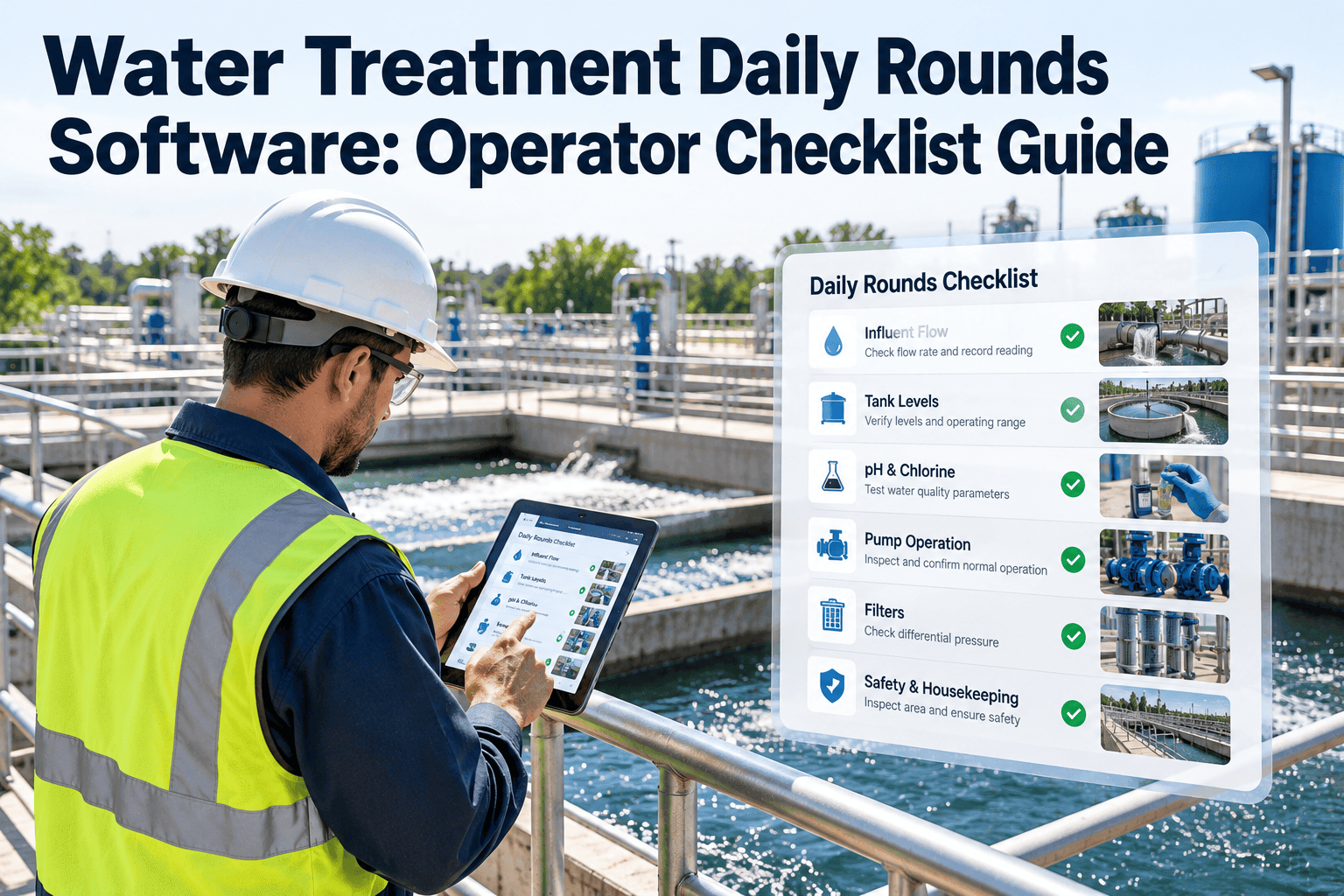
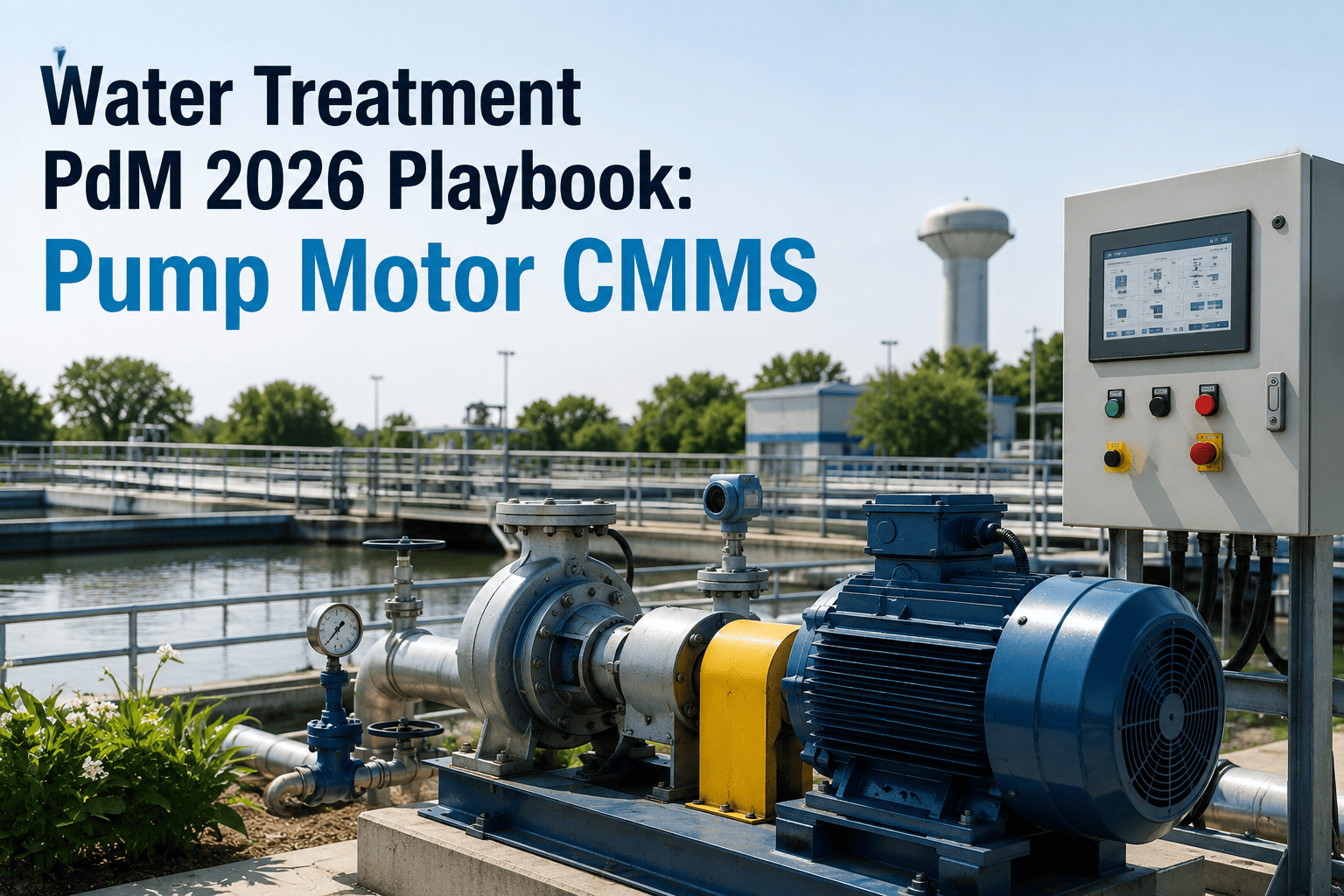
A high-service pump motor at a water treatment plant does not fail on a schedule — it fails at 2 a.m. during a storm event, when the plant needs every pump running and the on-call technician has no warning it was coming. Motor current signature analysis reads the electrical signature a motor draws while running and finds broken rotor bars, bearing wear, and winding faults weeks before they cause a trip, without ever removing the motor from service. For a 24/7 water or wastewater facility, that lead time is the difference between a scheduled repair on day shift and an emergency callout during a compliance-critical event. This guide walks through what MCSA actually detects, how it fits into a plant's existing preventive maintenance program, and how OxMaint's motor PdM module turns raw signature data into a work order before the motor ever trips.
3–6 wks
Typical early-warning lead time MCSA provides before a bearing or rotor fault causes failure
$40K+
Average emergency replacement cost for a large high-service pump motor
Zero
Downtime required to collect MCSA data — readings taken while the motor runs
70%
Of motor failures trace back to bearing or rotor bar faults detectable by MCSA
Reactive vs Predictive
What an Unplanned Motor Failure Actually Costs a Water Plant
Every motor at a treatment plant eventually needs service. The difference between a planned repair and an emergency failure is not the motor — it is whether anyone saw the fault developing in time to schedule around it.
Reactive
Motor Trips Without Warning
Emergency callout, expedited parts freight, overtime labor, and a pump or blower offline during whatever demand event happens to be occurring at the time.
Predictive
Fault Flagged Three to Six Weeks Out
Repair scheduled during a low-demand window, parts ordered at standard freight rates, and the motor swapped during planned downtime instead of a crisis.
Motor PdM for Water Plants
Catch the Fault Before It Becomes a 2 A.M. Callout
OxMaint pairs MCSA readings with automatic work order generation, so a flagged motor fault turns into a scheduled repair task without a technician having to interpret a spectrum chart.
The Diagnostic
What Motor Current Signature Analysis Actually Detects
MCSA analyzes the frequency spectrum of current drawn by a running motor. Specific sidebands and frequency patterns correspond to specific mechanical faults, long before those faults are audible, visible, or thermally detectable.
Getting Started
Deploying an MCSA Program at Your Plant in Four Steps
01
Prioritize Critical Assets First
Start with high-service pumps, blowers, and mixers that run continuously and whose failure directly affects plant output or compliance — not every motor on site needs monitoring on day one.
02
Establish a Baseline Signature
A healthy-motor baseline reading gives every future scan something to compare against, which is what turns raw spectrum data into an actual trend rather than a single snapshot.
03
Set Scan Intervals by Criticality
Continuous-duty pumps at lift stations typically warrant monthly scans, while less critical motors can run on a quarterly cycle without losing meaningful lead time.
04
Route Flagged Faults Into Work Orders Automatically
A flagged reading is only useful if it turns into a scheduled task. OxMaint converts a threshold breach directly into a work order assigned to the right technician, with the trend data attached.
See the Workflow
Watch a Flagged Motor Fault Turn Into a Scheduled Work Order
A short walkthrough of baseline setup, scan scheduling, and the automatic work order routing that closes the loop between diagnostic data and an actual repair.
ROI in Numbers
What Plants Running MCSA Report After One Year
55%
Fewer Unplanned Motor Failures
Plants with a monthly MCSA cycle on critical motors report significantly fewer unscheduled trips year over year.
3–6 wks
Average Repair Lead Time Gained
Enough advance notice to order parts at standard freight rates and schedule the swap during planned downtime.
$40K+
Avoided Cost Per Prevented Emergency Failure
Based on typical expedited parts, overtime labor, and emergency service costs for a large high-service pump motor.
0 hrs
Downtime Required to Collect Readings
MCSA readings are taken while the motor runs — no production interruption to gather diagnostic data.
Common Questions
Motor PdM for Water Treatment — What Plant Managers Ask
Does MCSA require taking the motor offline to collect readings?+
No. Readings are taken at the motor control center or panel while the motor runs normally, so there is no production interruption.
Start a free trial to see how readings connect to your asset records.
Which motors at a water plant benefit most from MCSA monitoring?+
Continuous-duty motors on high-service pumps, blowers, and mixers see the highest return, since their failure directly affects plant output and compliance obligations.
How often should critical motors be scanned?+
Monthly scans are standard for continuous-duty motors at lift stations and treatment trains, while less critical equipment can run on a quarterly cycle without losing meaningful early-warning time.
What happens after a fault signature is flagged?+
A flagged threshold breach should generate a work order automatically, with the trend data attached, so the diagnostic finding turns into a scheduled repair instead of sitting in a report.
Book a demo to see this workflow.
Can MCSA replace vibration analysis entirely?+
The two are complementary rather than interchangeable. MCSA excels at electrical and rotor-related faults, while vibration analysis remains stronger for certain mechanical misalignment cases — most mature programs run both.
OxMaint · Water Treatment Motor PdM
Give Your Critical Motors the Warning Window They Deserve
OxMaint connects MCSA readings to your asset registry and turns flagged faults into scheduled work orders automatically — so the next motor fault becomes a planned repair, not a 2 a.m. callout.