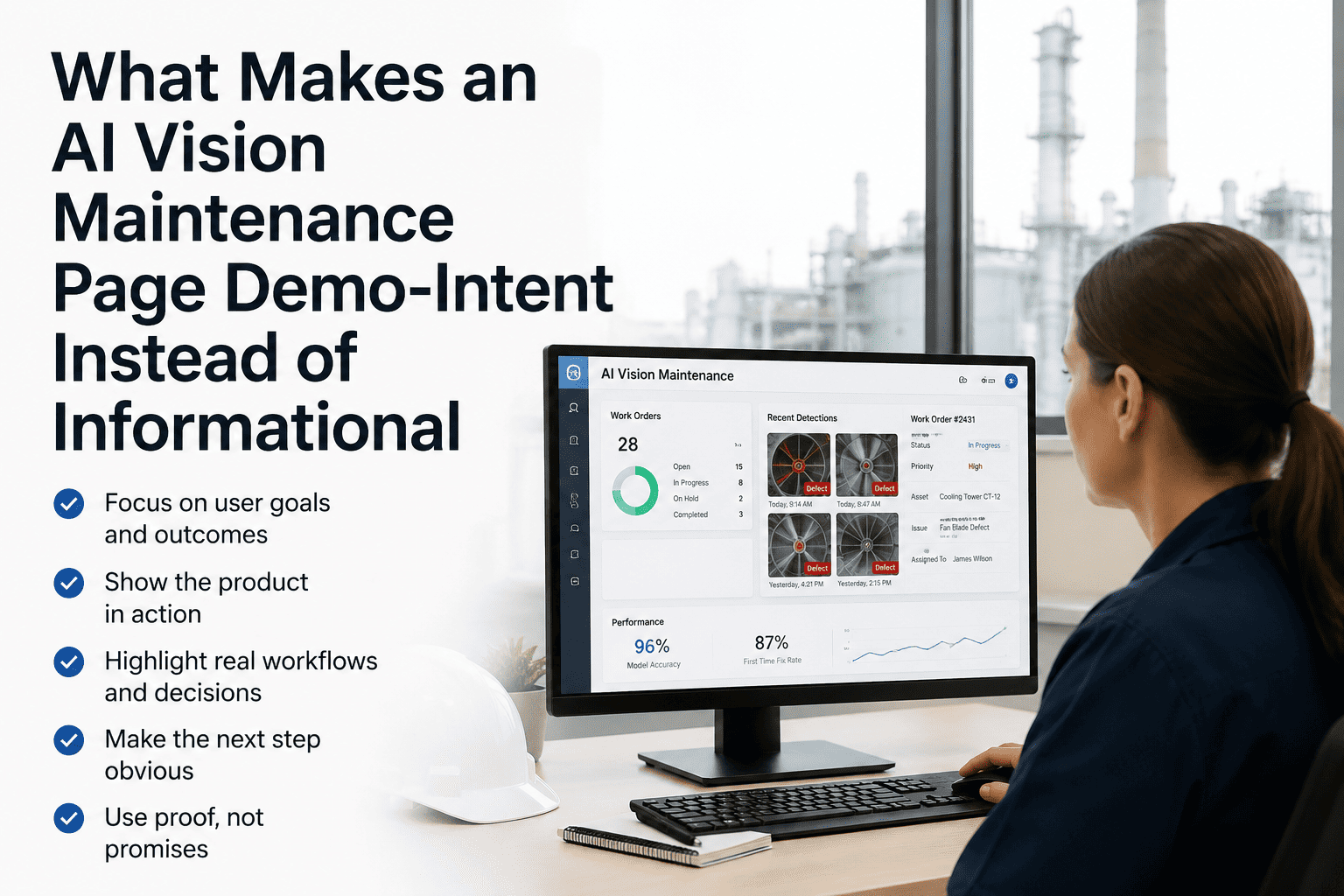
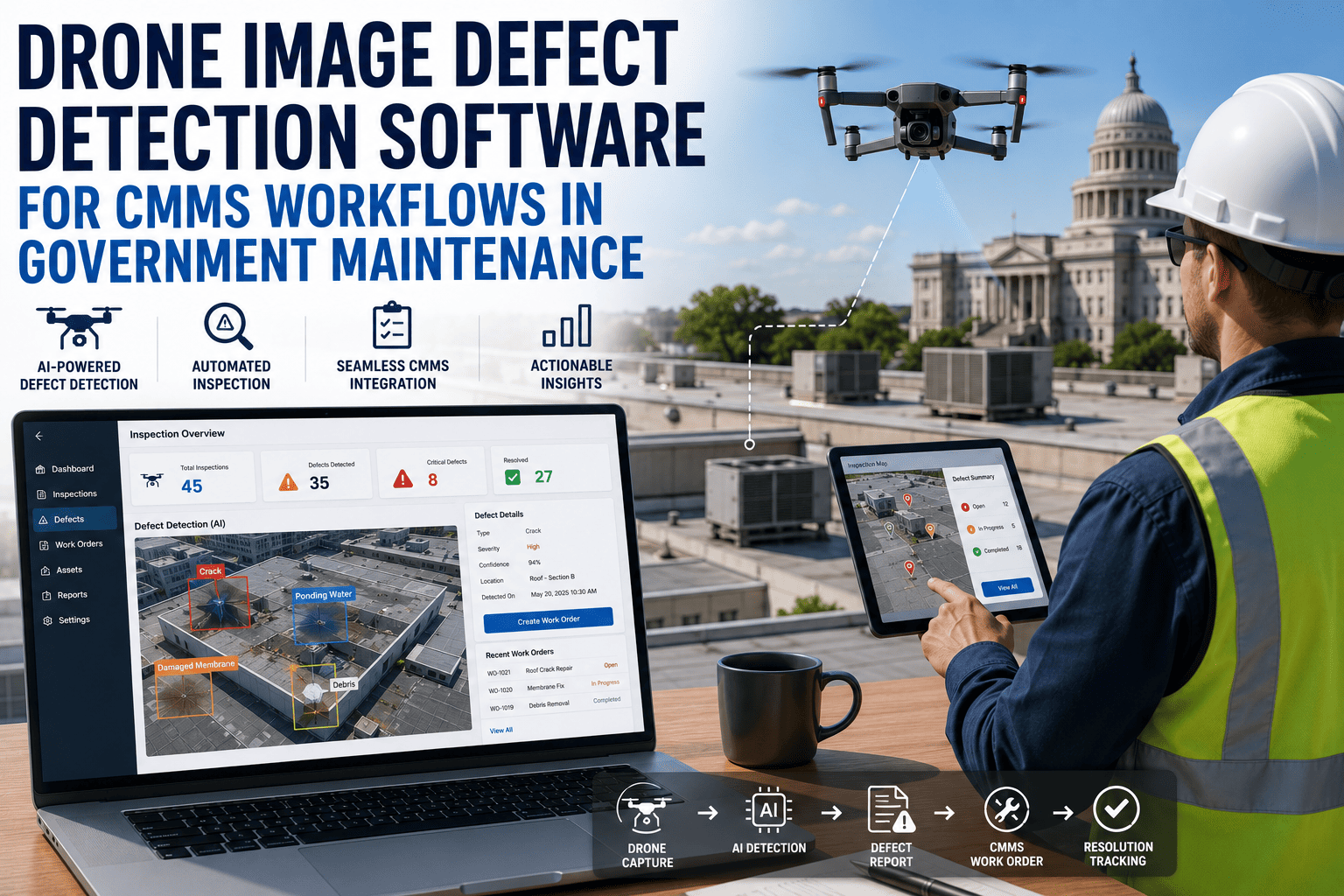
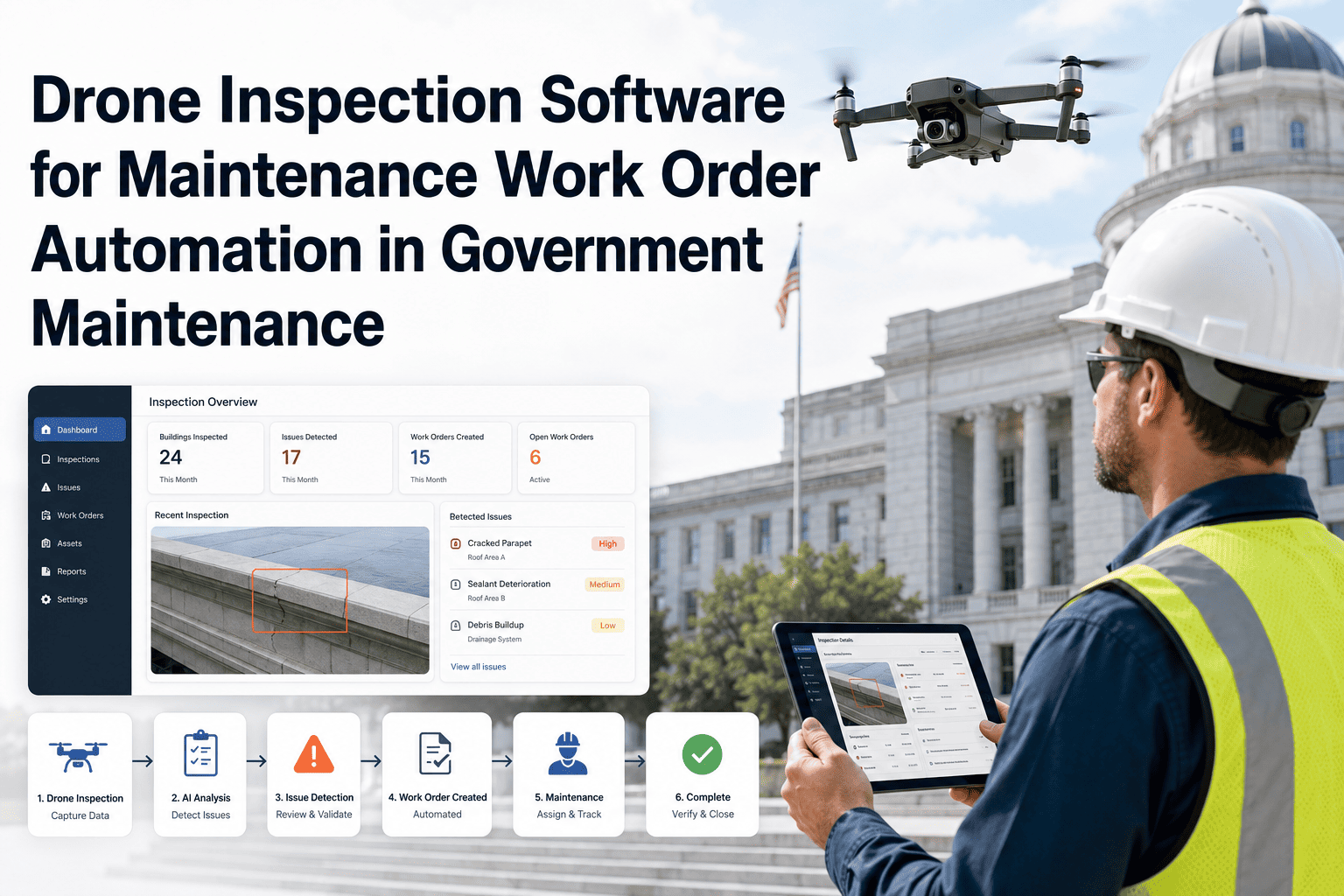
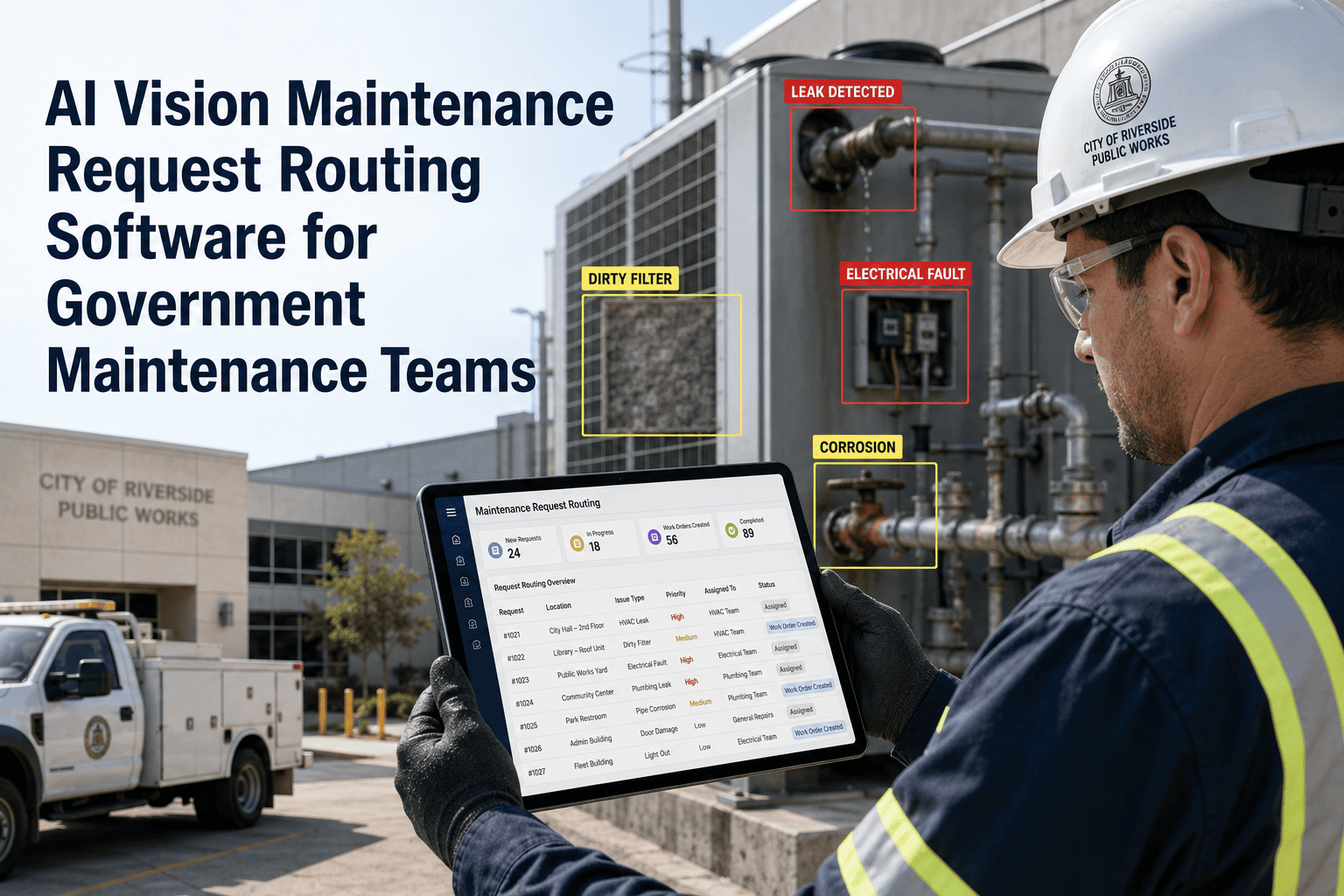
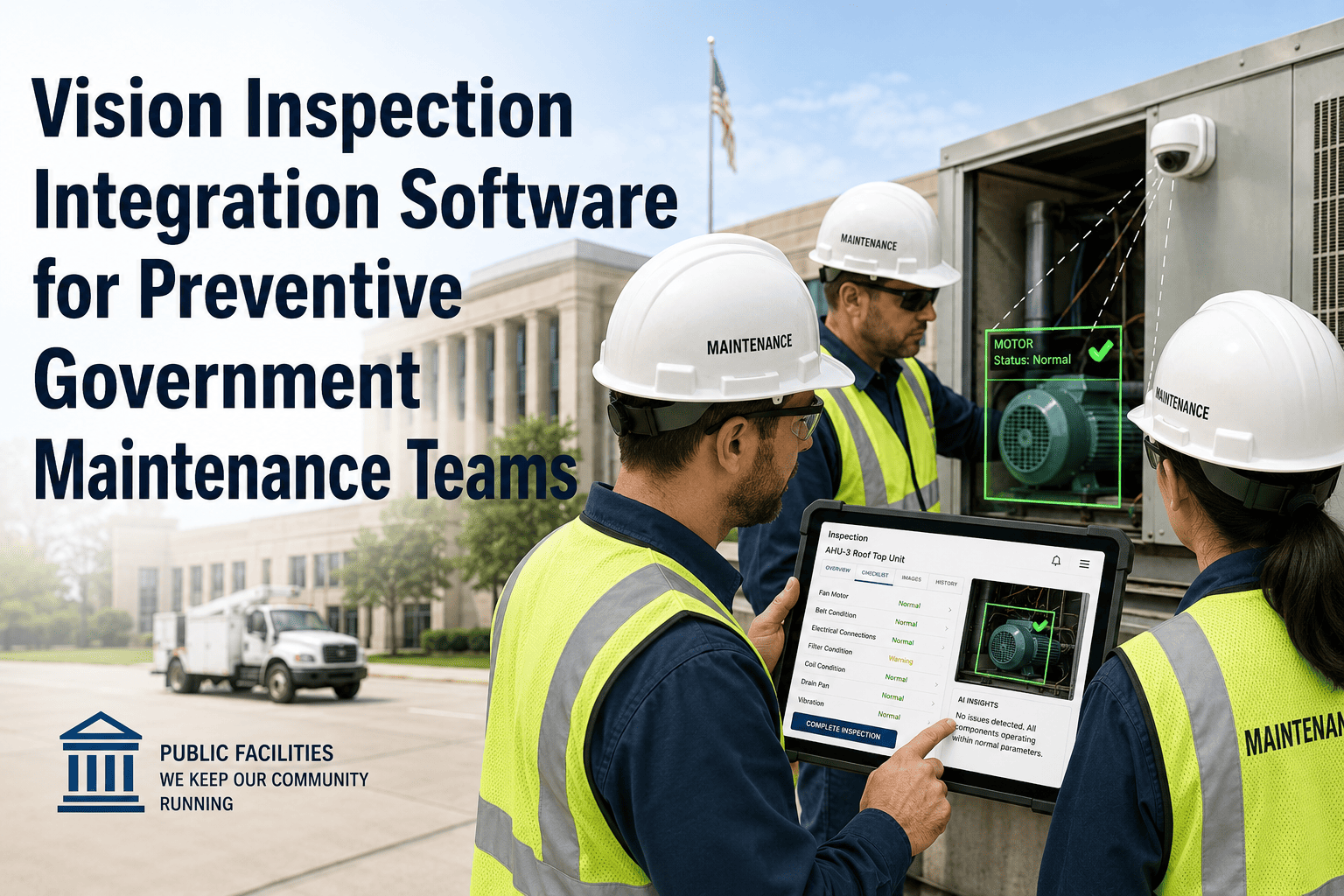
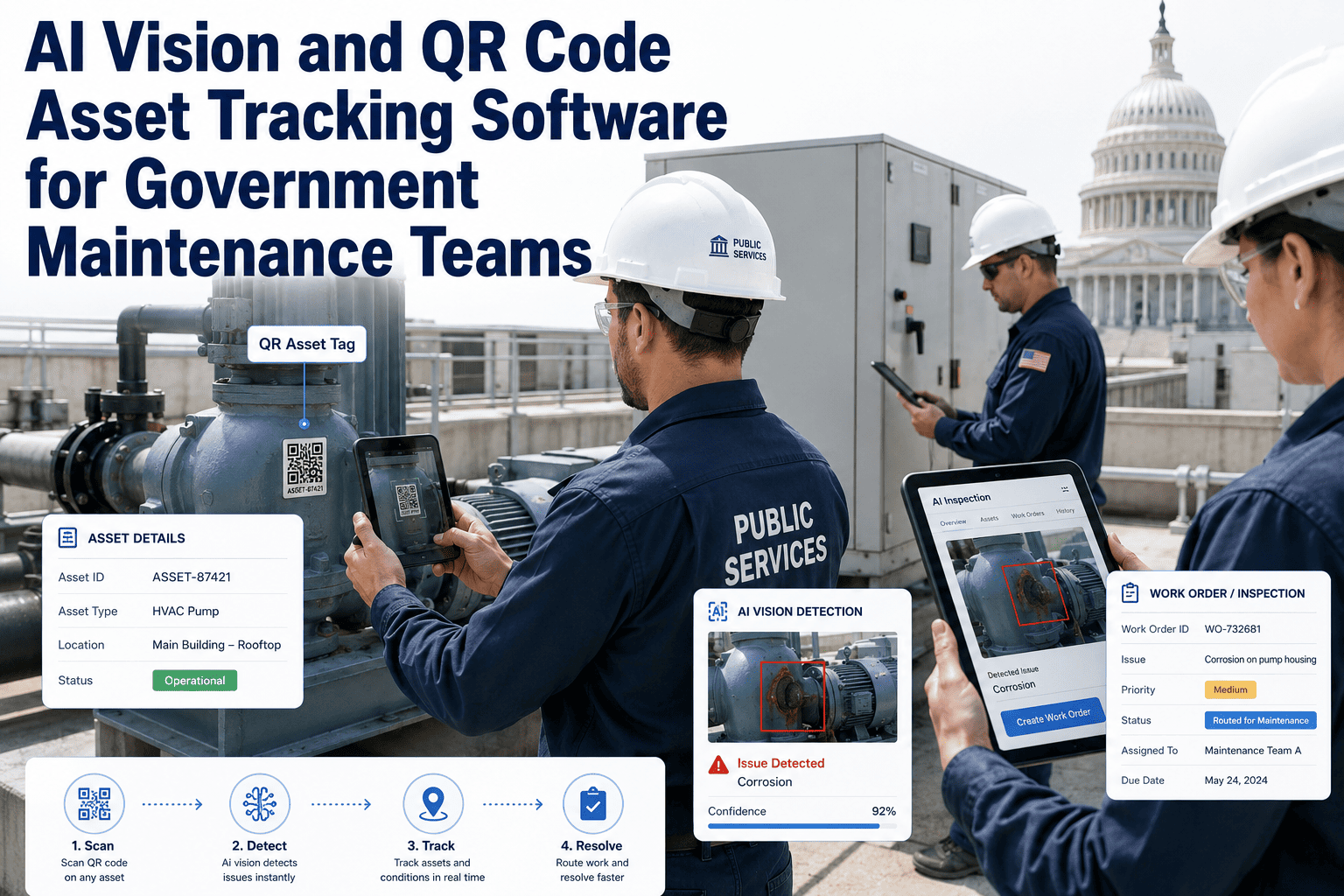
Most AI vision maintenance content on the web is informational — it explains what AI cameras can detect, how machine learning models work, or what predictive maintenance means in theory. That content serves researchers, not buyers. When a public-sector maintenance director or a government procurement officer types an AI vision maintenance query into a search engine, they are not looking for a textbook definition. They are evaluating whether a solution exists that will solve a specific operational problem, whether that solution is trusted by teams like theirs, and whether they should get on a call. Book a demo with OxMaint to see what AI vision looks like when it is fully integrated with a government CMMS, or start your free trial and explore the platform before your first conversation.
Content Strategy · AI Vision · Government Maintenance Buyers
Demo-Intent vs. Informational: Why the Difference Determines Whether Buyers Act
Understanding what signals a maintenance buyer is ready to evaluate a solution — not just learn about one — is the difference between content that generates trials and demos and content that generates pageviews and exits.
Informational Intent
"What is AI vision in maintenance?"
Researcher mode. The person wants to understand a concept. They are not comparing vendors or evaluating solutions. Content goal: educate and build awareness.
Outcome: Reads and leaves. No conversion signal.
Demo Intent
"AI vision CMMS integration government maintenance work orders"
Evaluator mode. The person is matching a solution to a problem they already understand. They want to know if a specific workflow works in their context.
Outcome: Reads, evaluates fit, books a demo or starts a trial.
The Four Signals
What Makes an AI Vision Maintenance Page Register as Demo-Intent
1
Workflow Specificity
Demo-intent pages describe exactly how something works: camera alert fires, CMMS reads asset ID, work order generated with Priority 1, technician notified within 2 minutes. Informational pages describe what something is: AI vision detects anomalies and sends alerts to maintenance teams.
Test: Can a maintenance director picture their team doing this tomorrow?
2
Role-Specific Language
Demo-intent pages speak to the person who will book the demo: the maintenance director, operations manager, or public works director. They address the operational pressures, compliance requirements, and budget realities that person faces — not generic industry trends.
Test: Would the reader feel this was written for someone in their role?
3
Outcome Data, Not Feature Lists
Demo-intent pages show what happened after implementation: 52% reduction in unplanned failures, 39% lower PM labour cost, 97% audit record completeness. Informational pages list features: real-time monitoring, automated alerts, CMMS integration.
Test: Can the reader justify a demo booking to their CFO based on what they read?
4
Friction-Free CTA Placement
Demo-intent pages put booking prompts where the reader's momentum is highest — after the workflow description, after the outcome data, and at the end. The CTA links to a specific action: a 30-minute demo or a free trial, not a generic contact form or a whitepaper download.
Test: Is the CTA the obvious next step after reading the most compelling section?
Side-by-Side Analysis
The Same Topic Written Two Ways — Spot the Difference
| Element |
Informational Version |
Demo-Intent Version |
| Opening paragraph |
AI vision is transforming industrial maintenance by enabling real-time anomaly detection across complex asset environments. |
When a camera at your water intake pump detects a bearing temperature rise, that alert should create a Priority 1 work order in your CMMS — not sit in an inbox until morning. |
| Metric example |
Organizations using AI vision report significant improvements in maintenance efficiency. |
Government teams using AI vision with CMMS integration reduced unplanned failures by 52% and PM labour cost by 39% in year one. |
| Workflow description |
AI cameras detect anomalies and send alerts to the maintenance management system for follow-up action. |
Camera detects fluid accumulation at pump casing — alert carries asset ID — CMMS matches asset criticality tier — Priority 1 work order generated — on-call technician notified via SMS in under 2 minutes. |
| CTA placement |
Contact us to learn more about our AI vision solutions. |
Book a 30-minute demo to see this workflow running live on a government maintenance asset portfolio. |
| Reader outcome |
Reader understands AI vision exists. Leaves page. |
Reader recognises their own problem. Books demo or starts trial. |
Government Buyer Specifics
What Government Maintenance Buyers Need to See Before They Book
Public-sector asset examples, not generic industrial references
Government buyers do not see themselves in oil refinery or manufacturing case studies. Water utilities, road maintenance, public buildings, and municipal fleet are the reference contexts that build trust and recognition.
Compliance and audit trail documentation
Government maintenance decisions are auditable. Buyers need to know that AI vision records are stored in a format that satisfies regulatory inspection requirements — not just that the system captures data.
Integration compatibility with existing government CMMS infrastructure
Public-sector IT environments are complex and often constrained. Buyers need confirmation that the AI vision platform connects to their existing CMMS without a full system replacement — not a feature list of integrations.
ROI framing that works in a public budget justification
Government buyers justify technology spend through cost reduction, service continuity, and risk mitigation — not revenue growth. Demo-intent content frames outcomes in the language of budget savings, avoided emergency repair costs, and extended asset life.
OxMaint · AI Vision CMMS for Government Maintenance
See What Demo-Intent AI Vision Looks Like When You Are the Buyer
A 30-minute demo with OxMaint is the fastest way to see whether AI vision integrated with a government CMMS solves your specific maintenance workflow problems. Bring your current pain points — we will show you exactly where OxMaint addresses them.
Expert Review
What Procurement and Maintenance Leaders Say About AI Vision Evaluation Content
When I am evaluating maintenance technology, I need to see the actual workflow — not a conceptual diagram. Show me what happens from the moment the camera fires an alert to the moment a technician closes the work order. If a vendor's content cannot describe that sequence in one paragraph, their product probably cannot do it either.
Procurement Director, Regional Transit Authority · 16 years in public infrastructure technology
The best AI vision content I have read was specific enough that I could show it to my CFO to justify the demo booking. Real numbers from comparable public-sector teams, a clear description of the integration path, and a CTA that went directly to a calendar — not a form that would sit in someone's inbox for a week.
Director of Public Works, Municipal Government · 19 years in government asset management
Frequently Asked Questions
AI Vision Maintenance Content — Buyer Questions Answered
How do we know if a vendor's AI vision content is describing a real product or just marketing concepts?
Ask the vendor to show you the exact screen where a camera alert becomes a CMMS work order. If they cannot demonstrate that in a 10-minute walkthrough, the integration is either not built or not functioning as described. Demo-intent content that describes a real product will use the same specific workflow language in the demo that it uses on the page.
Book an OxMaint demo and we will show you the alert-to-work-order workflow in the first five minutes — including live camera alert simulation on a government asset type of your choice.
What questions should a government maintenance team ask in a first AI vision demo?
Ask: How does a camera alert identify the specific asset it is monitoring in the CMMS? What happens to camera alerts when the CMMS is offline? How are false positive alerts managed without creating unnecessary work orders? Can alert thresholds be adjusted per asset type? How does the system handle cameras from multiple vendors? These questions separate platforms that have built real integrations from those with conceptual architectures.
OxMaint answers all five in the standard product demo.
Is there a difference between how private-sector and government maintenance teams evaluate AI vision?
Yes — significantly. Government teams weight compliance documentation, audit trail completeness, and procurement policy compatibility much more heavily than private-sector teams. They also typically have longer decision cycles and require evidence from comparable public-sector deployments rather than commercial case studies. Demo-intent content for government buyers must address these differences explicitly — which is why government-specific AI vision content performs substantially better with public-sector audiences than general industrial maintenance content.
Our demos are structured specifically for government procurement contexts.
OxMaint · Government AI Vision Maintenance Software
Stop Reading About AI Vision. See It Running on Government Assets.
OxMaint is purpose-built for government maintenance teams — with AI vision integration, asset criticality rules, compliance documentation, and work order automation designed for public-sector workflows. The demo takes 30 minutes. Book one today.