Batch release decisions are only as reliable as the equipment readiness data behind them. When a batch record review reaches sign-off and the reviewer cannot confirm whether the fill line received its last scheduled PM, whether the balance used during in-process testing is within calibration, or whether a breakdown event occurred during the batch window, the release process stalls — or worse, a non-compliant batch is released because maintenance evidence was not connected to the review workflow. OxMaint connects equipment maintenance status directly to electronic batch record workflows, giving QA the equipment readiness confirmation they need before batch release decisions are made.
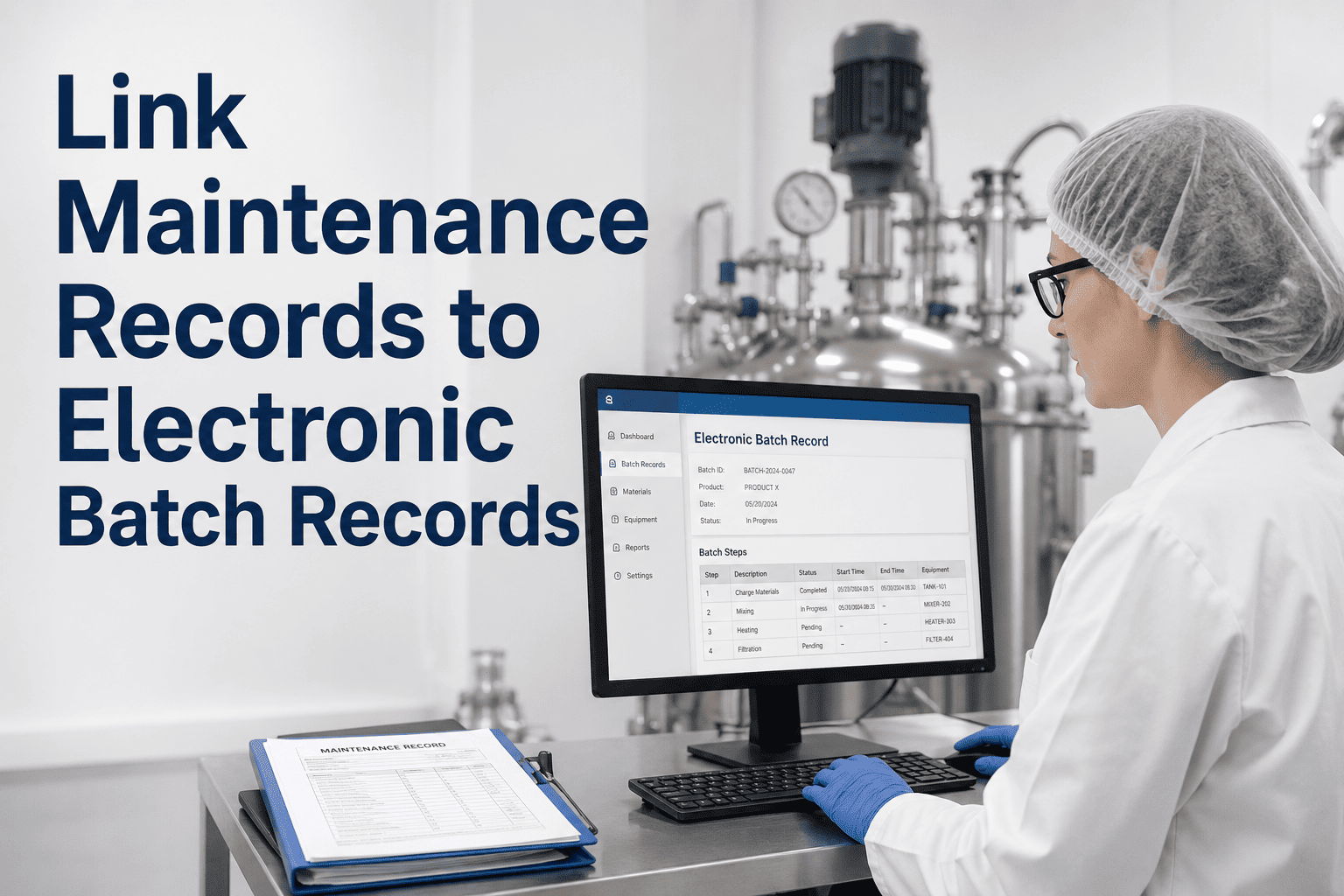
Link Maintenance Records to Electronic Batch Records
Equipment breakdowns, overdue PMs, and out-of-calibration instruments during a batch window are quality events — not just maintenance issues. OxMaint surfaces them before the batch reviewer signs off.
Why Maintenance and Batch Records Must Be Connected
- QA reviewers manually call maintenance to check PM status before batch sign-off
- Breakdown events during the batch window are discovered in post-release investigations
- Out-of-calibration instruments used during the batch are not flagged at review stage
- Equipment use logs and batch records are in separate systems — linkage is manual and error-prone
- Batch release delays when records cannot be located quickly during audit
- Equipment readiness summary auto-populates in the batch record review workflow
- Breakdown events logged during the batch window auto-flag in the release checklist
- Calibration status of all instruments used in the batch is confirmed before sign-off
- Complete maintenance history for every equipment line used in the batch is one click from the batch record
- Batch release is faster — QA reviewers have all equipment evidence without making calls
How Maintenance Status Flows Into Batch Release Decision
Maintenance-Batch Record Link: What Regulations Require
| Regulatory Requirement | Applicable Standard | Maintenance Evidence Required | OxMaint Evidence Generated |
|---|---|---|---|
| Equipment used must be in a qualified, maintained state | 21 CFR 211.67 / EU GMP 3.34 | PM completion record linked to batch | PM work order with close timestamp linked to batch window |
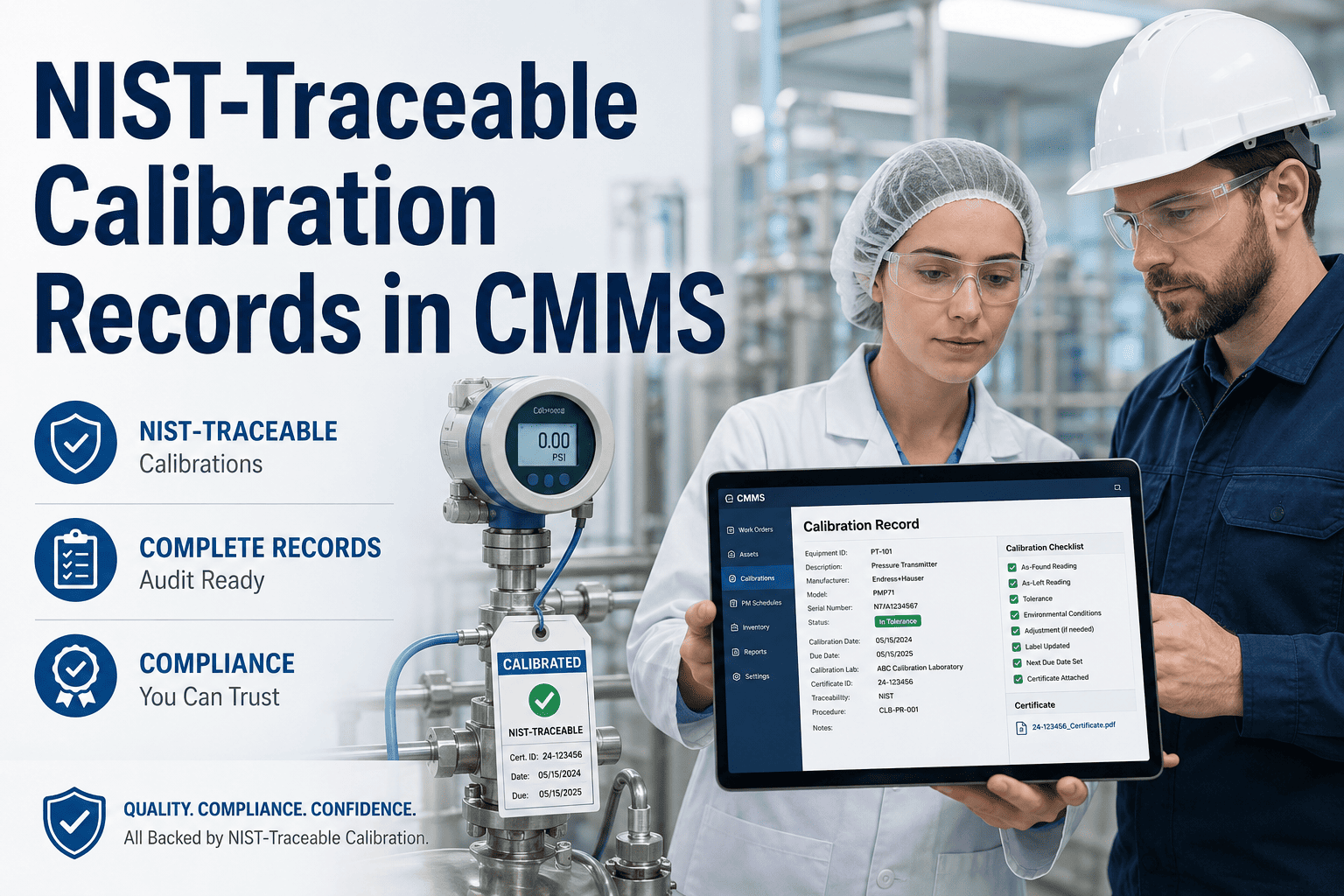
| Measuring instruments must be calibrated at time of use | 21 CFR 211.68 / ISO 17025 | Current calibration certificate for each instrument | Calibration record with expiry date confirmed against batch date |
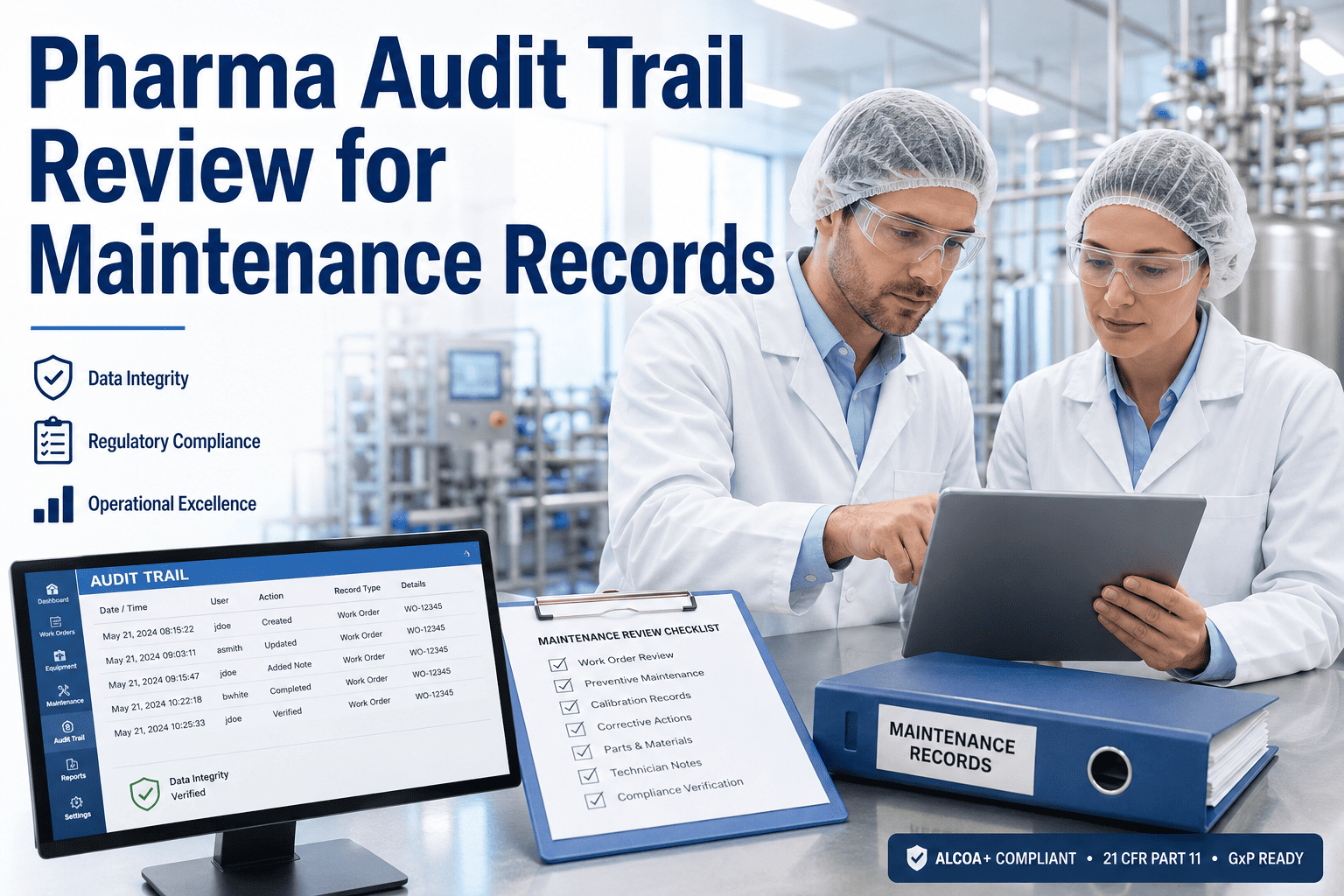
| Equipment malfunctions during batch must be investigated | 21 CFR 211.100 / ICH Q10 | Breakdown record, investigation, impact assessment | Corrective WO with batch-window flag, linked CAPA if required |
| Batch record must document equipment cleaning/maintenance status | 21 CFR 211.186(b) | Pre-production maintenance confirmation | Equipment readiness summary embedded in batch review checklist |
| Investigation of out-of-spec results must include equipment review | 21 CFR 211.192 | Maintenance history for relevant equipment within investigation scope | Equipment history report exportable by date range, batch, and equipment ID |
Batch review should not start with a phone call to the maintenance team. The evidence should already be there.
OxMaint connects equipment PM status, calibration records, and breakdown events to batch records — so QA reviewers have complete equipment readiness evidence at the point of release sign-off.
What Batch Release QA Leaders Observe
The most common root cause of batch release delays we see in quality system audits is not a production problem or a laboratory problem — it is an equipment documentation gap. The QA reviewer cannot confirm that the homogenizer received its PM, cannot access the calibration certificate for the in-process scale, or discovers a breakdown event that was never connected to the batch record. Every one of these gaps could have been prevented by a CMMS with direct batch-record integration.
Under ICH Q10 and 21 CFR 211.192, any out-of-specification investigation must include an equipment review. If the CMMS and the batch record system are not connected, that review requires manual record pulls across two systems — a process that takes days and introduces transcription errors. Integration is not optional for facilities aiming for investigation cycle times under 30 days.
Maintenance-to-Batch Record Integration — Key Questions
What maintenance events should be connected to an electronic batch record?
How does OxMaint handle a breakdown that occurs during a batch window?
Does OxMaint integrate with MES or ERP batch record systems?
Can maintenance records be retrieved quickly during a batch failure investigation?
Equipment readiness evidence should confirm itself in the batch record — not be chased down after release delays start.
Connect OxMaint to your batch release workflow and give QA reviewers complete equipment maintenance confirmation at the point of sign-off — every batch, every time.