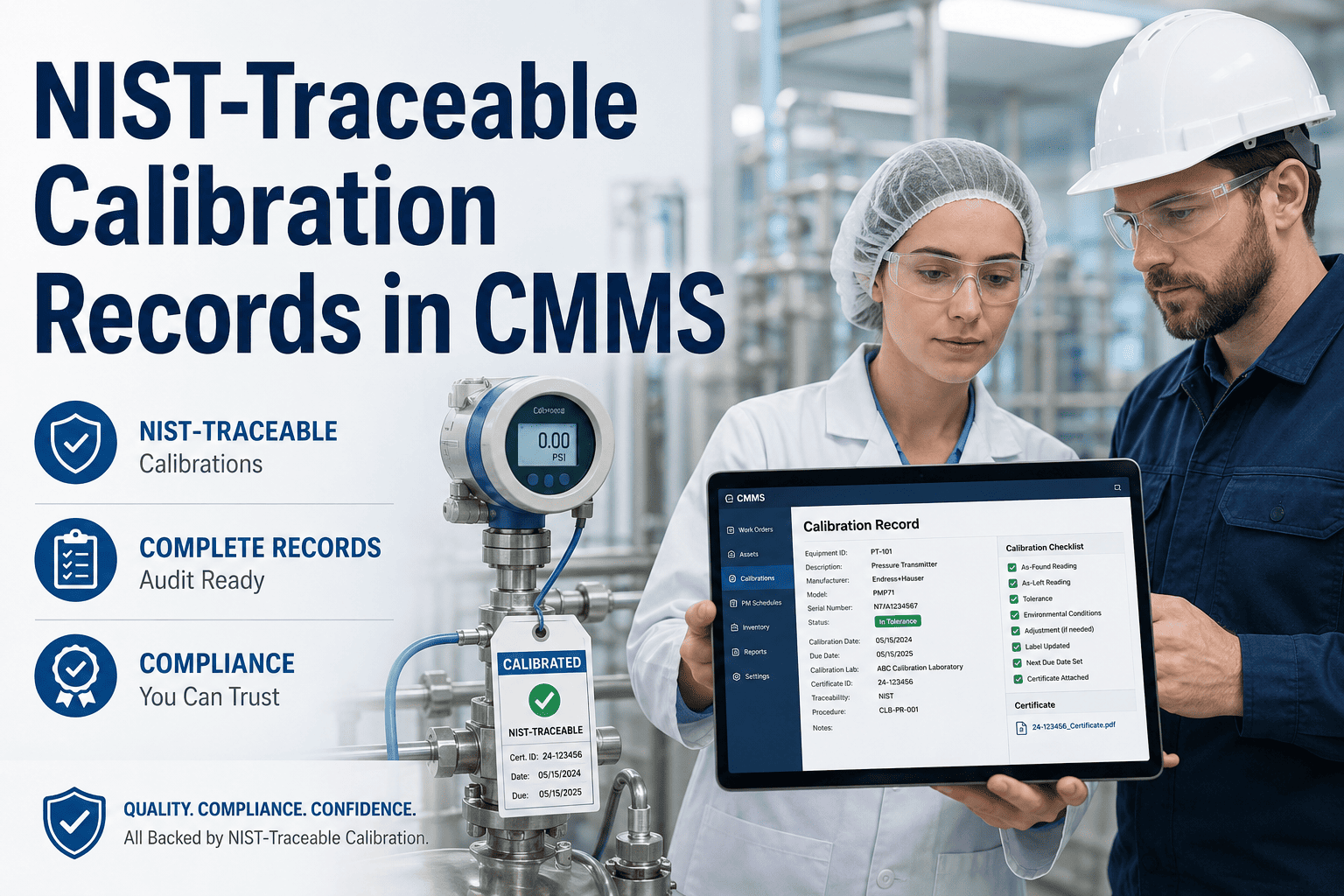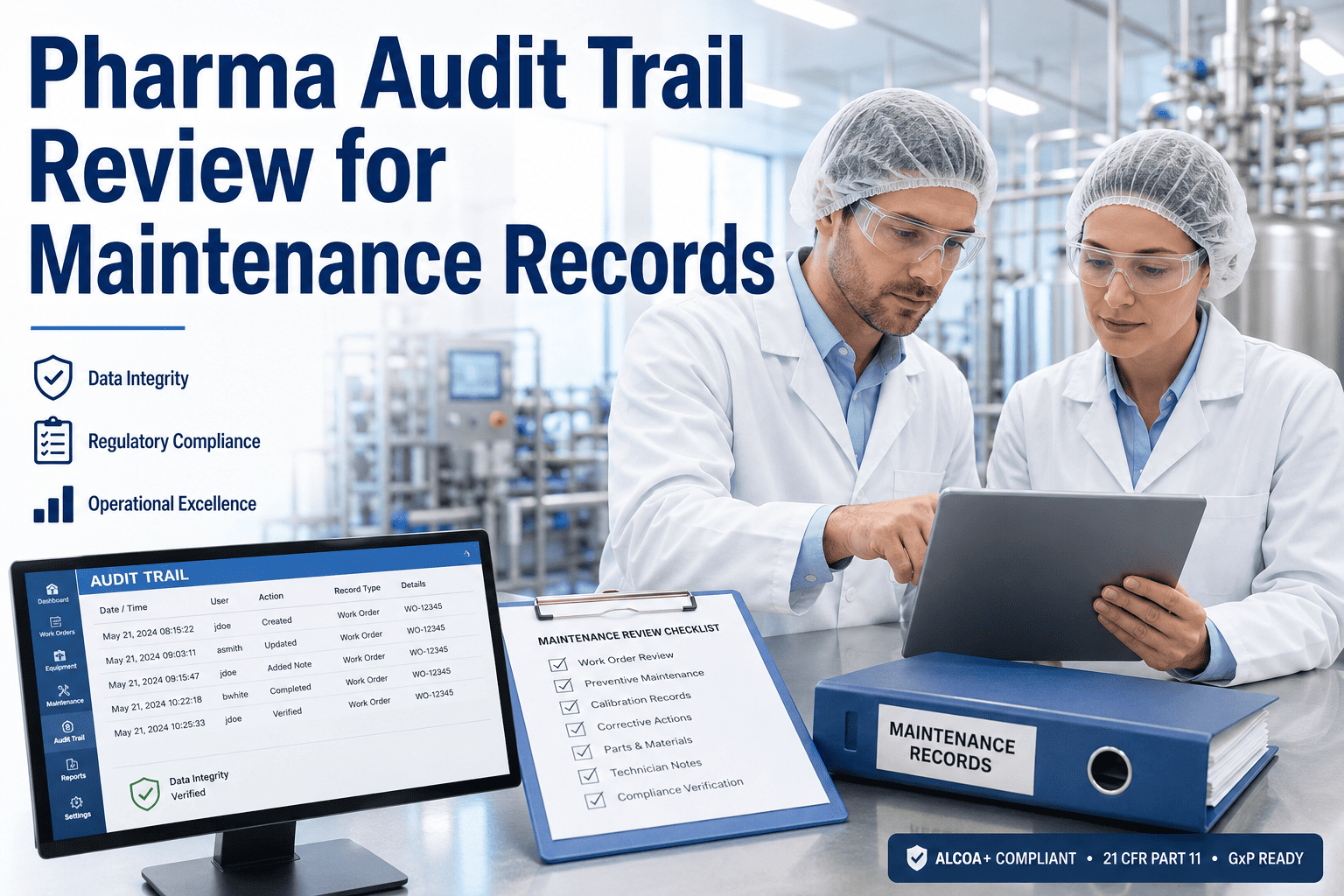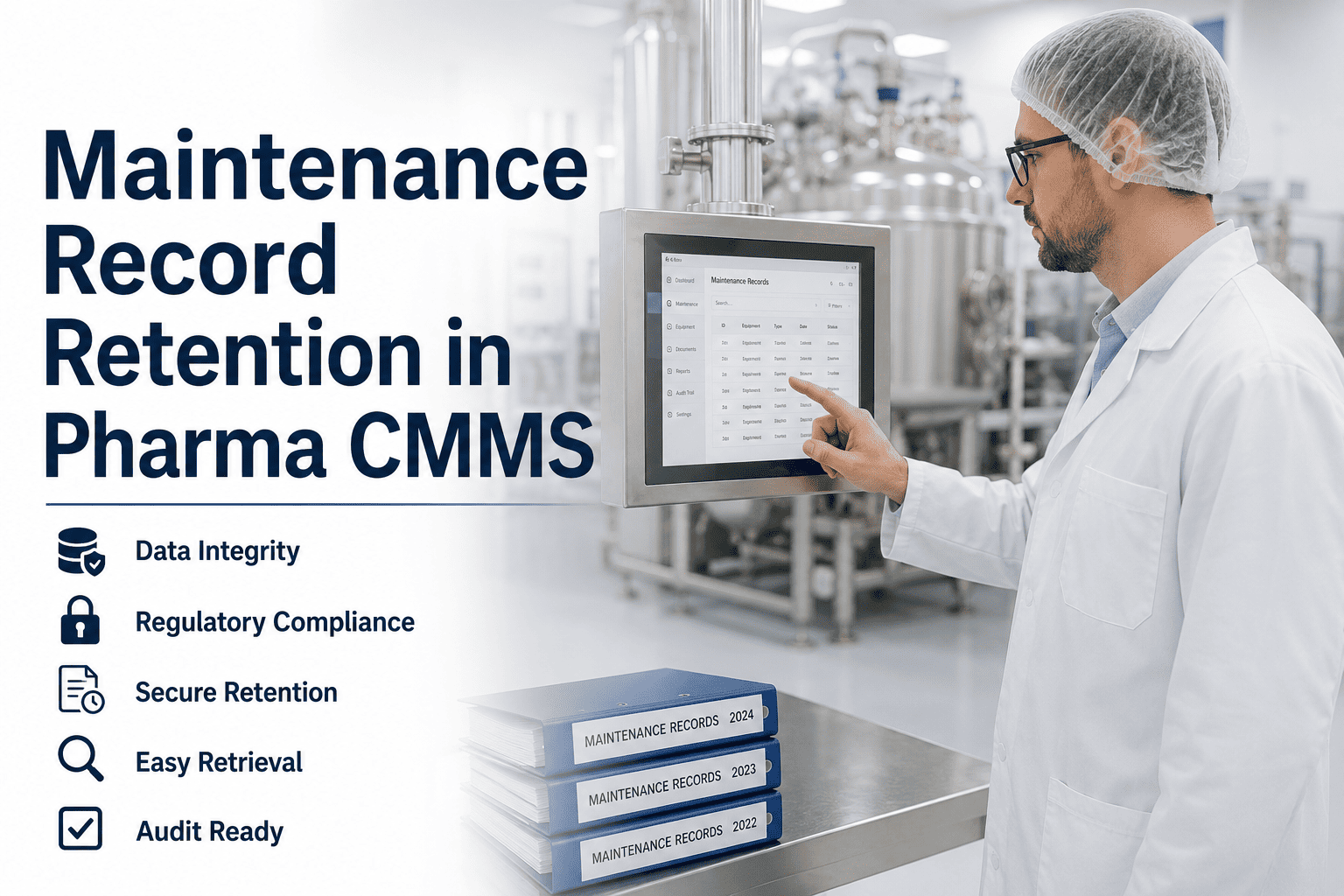
Pharmaceutical maintenance records are regulatory evidence — not operational history. FDA, EMA, and WHO GMP standards set minimum retention periods for work orders, calibration certificates, PM logs, and electronic signatures, and the penalties for missing records escalate quickly from warning observations to consent decrees. OxMaint's pharma CMMS enforces record retention rules automatically, ensuring every maintenance log, attachment, and audit trail entry is preserved for the required period across every site and equipment category.
Maintenance Record Retention in Pharma CMMS
Missing maintenance records are not just an operational inconvenience — they are a direct regulatory liability. Learn what must be kept, for how long, and how to enforce retention rules without manual effort.
The Four Ways Pharma Sites Lose Maintenance Records
When sites upgrade or switch CMMS platforms, historical records are frequently not migrated completely. Work orders, attachments, and audit trails from the legacy system disappear — leaving compliance gaps for records that may still be within their retention window.
In CMMS systems without enforced retention rules, administrators delete old records to manage storage costs or system performance — often without checking whether those records are still within their required retention period under FDA or EU GMP rules.
PDF calibration certificates, equipment photos, and pressure test results stored on shared drives or email are not governed by the CMMS retention policy. When the drive is reorganized or an employee leaves, these attachments are frequently lost — creating unrecoverable documentation gaps.
Batch-linked maintenance records — equipment used in a specific batch production window — have retention periods tied to the batch's expiry date, not a fixed calendar period. Without automated batch linkage, sites cannot apply the correct retention rule and frequently delete records too early.
How OxMaint Enforces Retention Rules Across Every Record Type
| Record Type | Retention Trigger | Minimum Period | OxMaint Enforcement | Deletion Control |
|---|---|---|---|---|
| Preventive maintenance work orders | Work order close date | 3 years | Auto-lock at closure; deletion blocked until retention expiry | QA approval required to delete |
| Calibration certificates & test data | Linked drug product expiry date | 1 year post-expiry | Batch expiry linkage propagated to calibration record retention date | Permanently locked until trigger date passes |
| Equipment qualification documents | Equipment decommission + 1 year | Life of equipment + 1 yr | Qualification records locked to equipment master record lifecycle | Only deletable post-decommission sign-off |
| Electronic audit trails | Same as source record | Matches source record retention | Audit trails are immutable; retention inherits from linked work order | Cannot be deleted independently of source record |
| Photographs & multimedia attachments | Work order close date | Matches work order | All attachments stored within OxMaint record — not on external drives | Attachment deletion triggers QA notification |
Records deleted too early become the audit findings that derail inspections.
OxMaint enforces GMP retention rules at the record level — preventing deletion, flagging approaching expiry windows, and generating retention compliance reports for QA review.
What Pharma Record Management Specialists Say
The regulatory question during an inspection is not simply 'do these records exist?' — it is 'can you produce them in the format in which they were created, with their original audit trail, within the required timeframe?' Pharma sites that rely on file servers, email archives, or legacy CMMS exports consistently fail this test because the metadata and audit trail are stripped in the transfer. Embedded, policy-enforced CMMS retention is the only architecture that survives a regulatory challenge.
Batch-linked retention is the most underestimated risk in pharma CMMS implementations. Sites typically configure a flat 3-year retention on all maintenance records and consider themselves compliant. But calibration records for equipment used in long-shelf-life injectable products may require 7 or more years of retention. Flat-rate rules miss this entirely.
Pharma Maintenance Record Retention — Common Questions
What is the minimum retention period for PM work orders at an FDA-regulated pharma site?
Are electronic audit trails subject to the same retention rules as the work order records they document?
How does OxMaint handle record retention across multi-site pharma organizations?
What happens when a CMMS is decommissioned — how are retention-period records preserved?
Every maintenance record your regulator might request should be retrievable in under 10 minutes.
OxMaint enforces GMP retention rules at the record level — so your team spends inspection day demonstrating compliance, not reconstructing records.