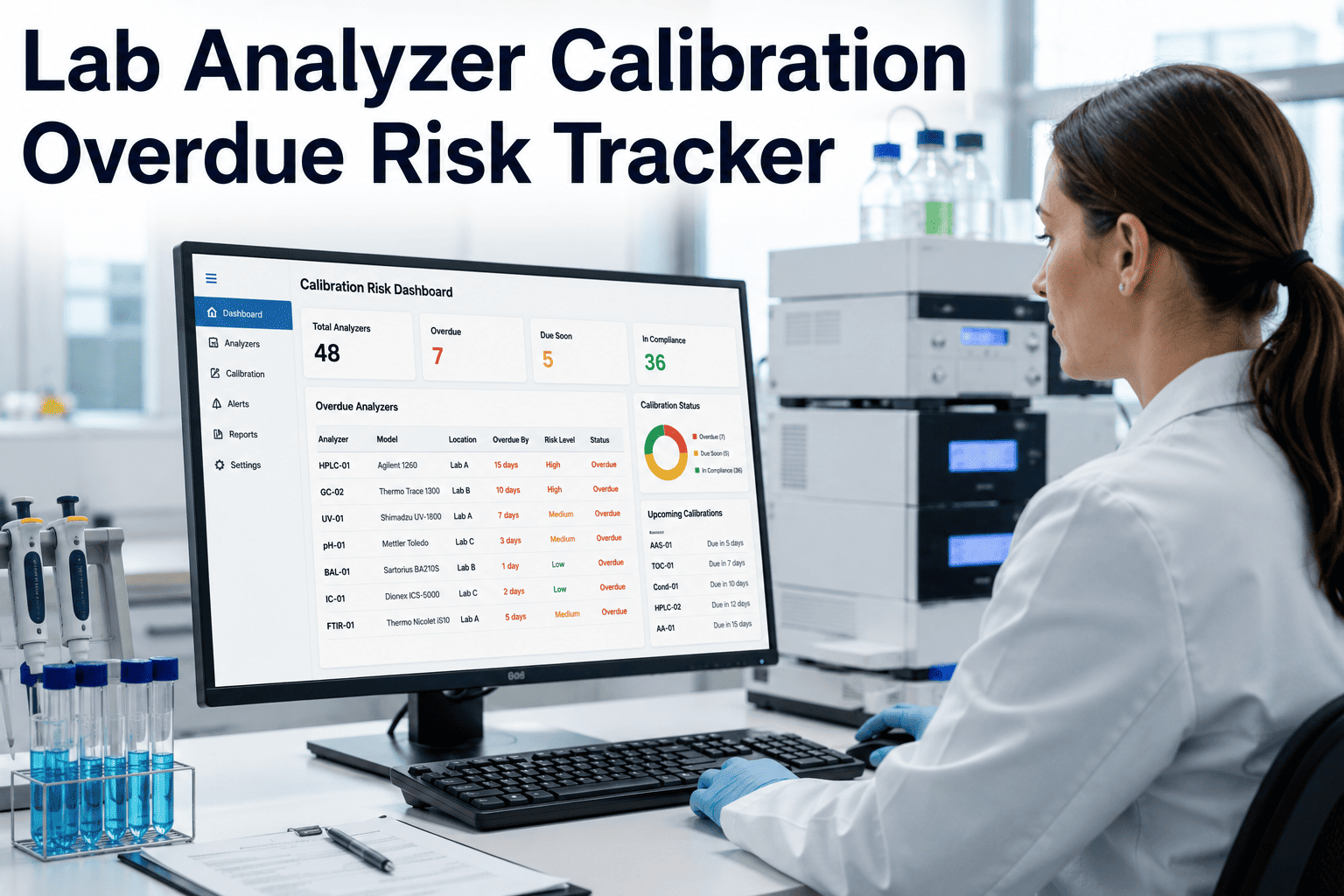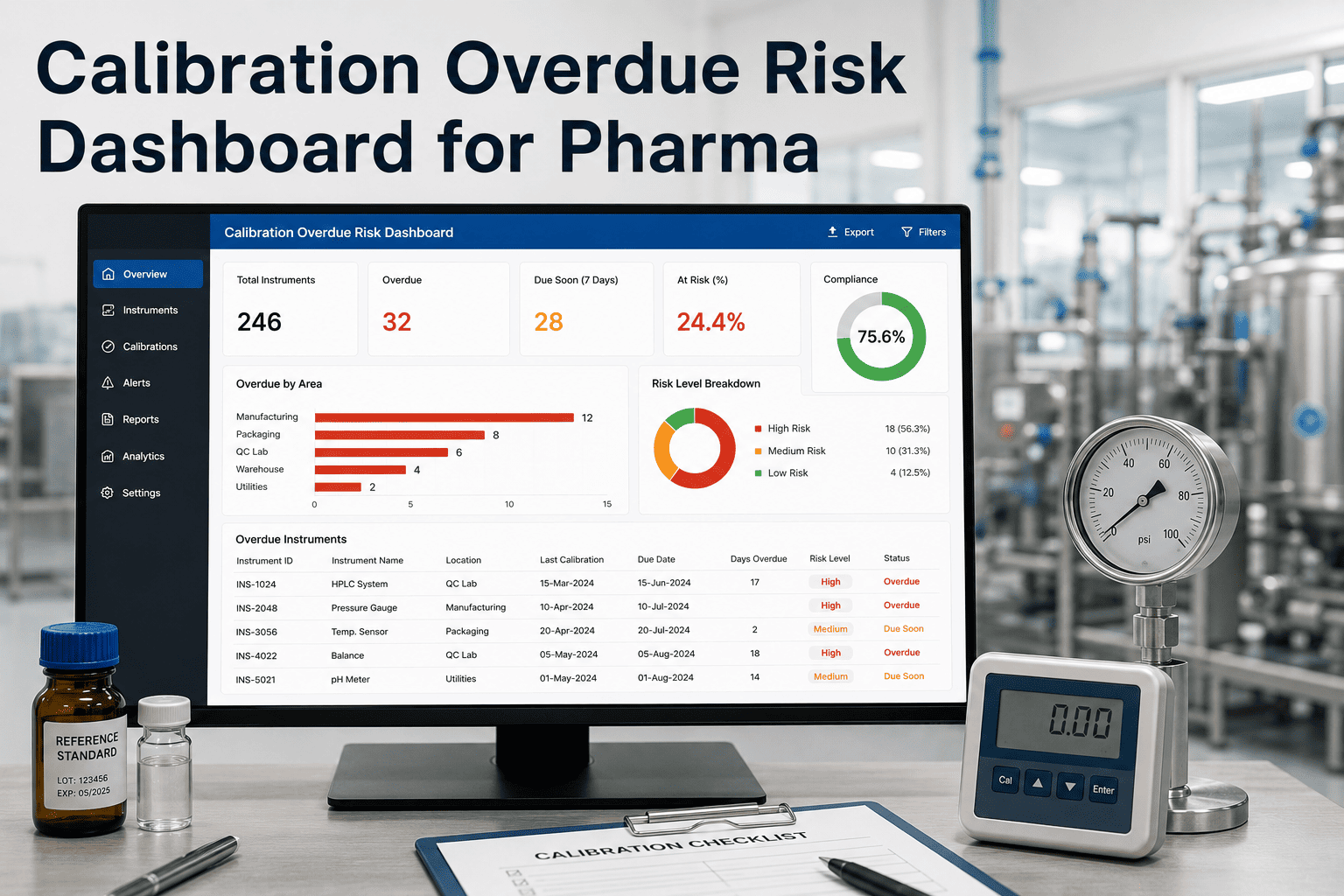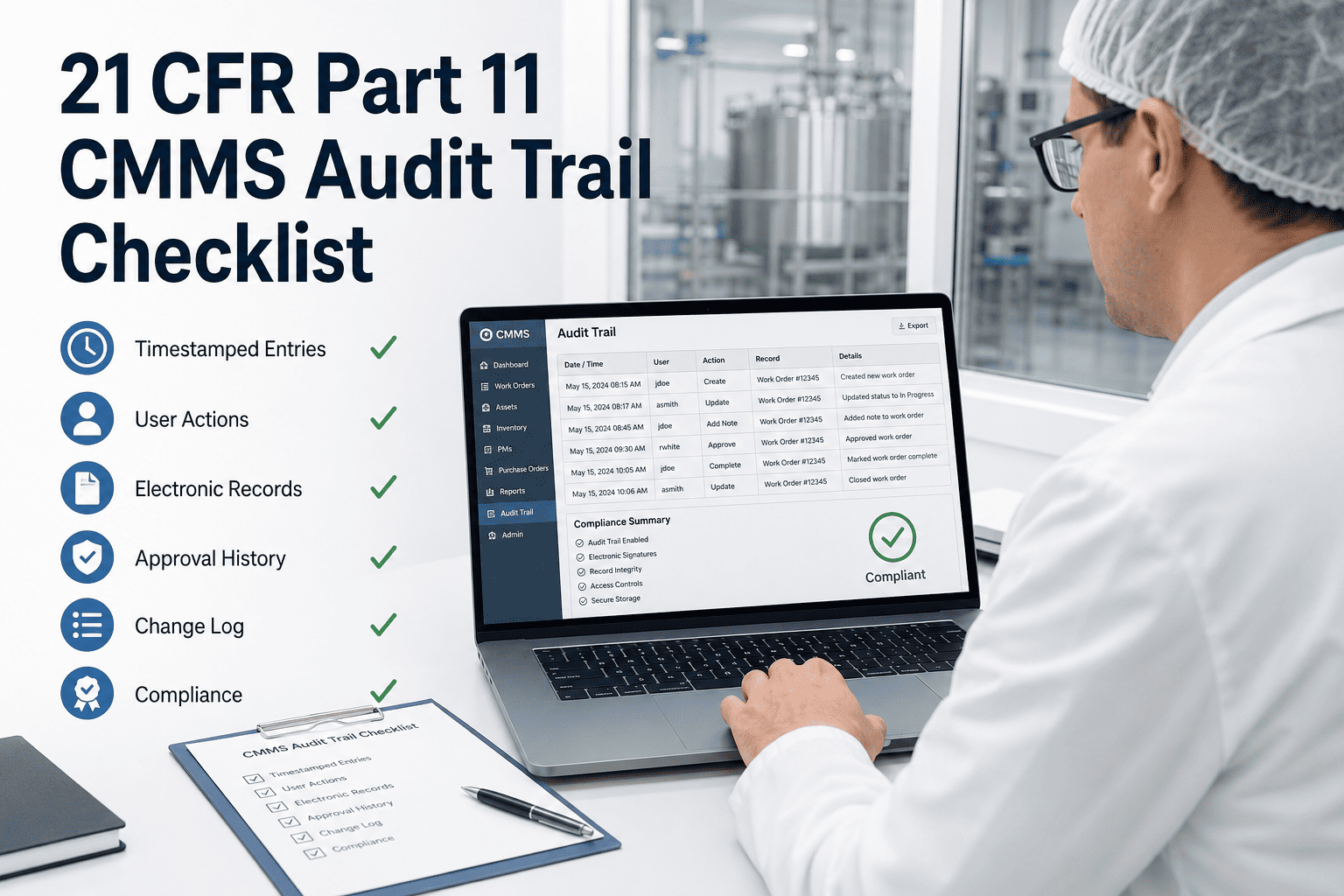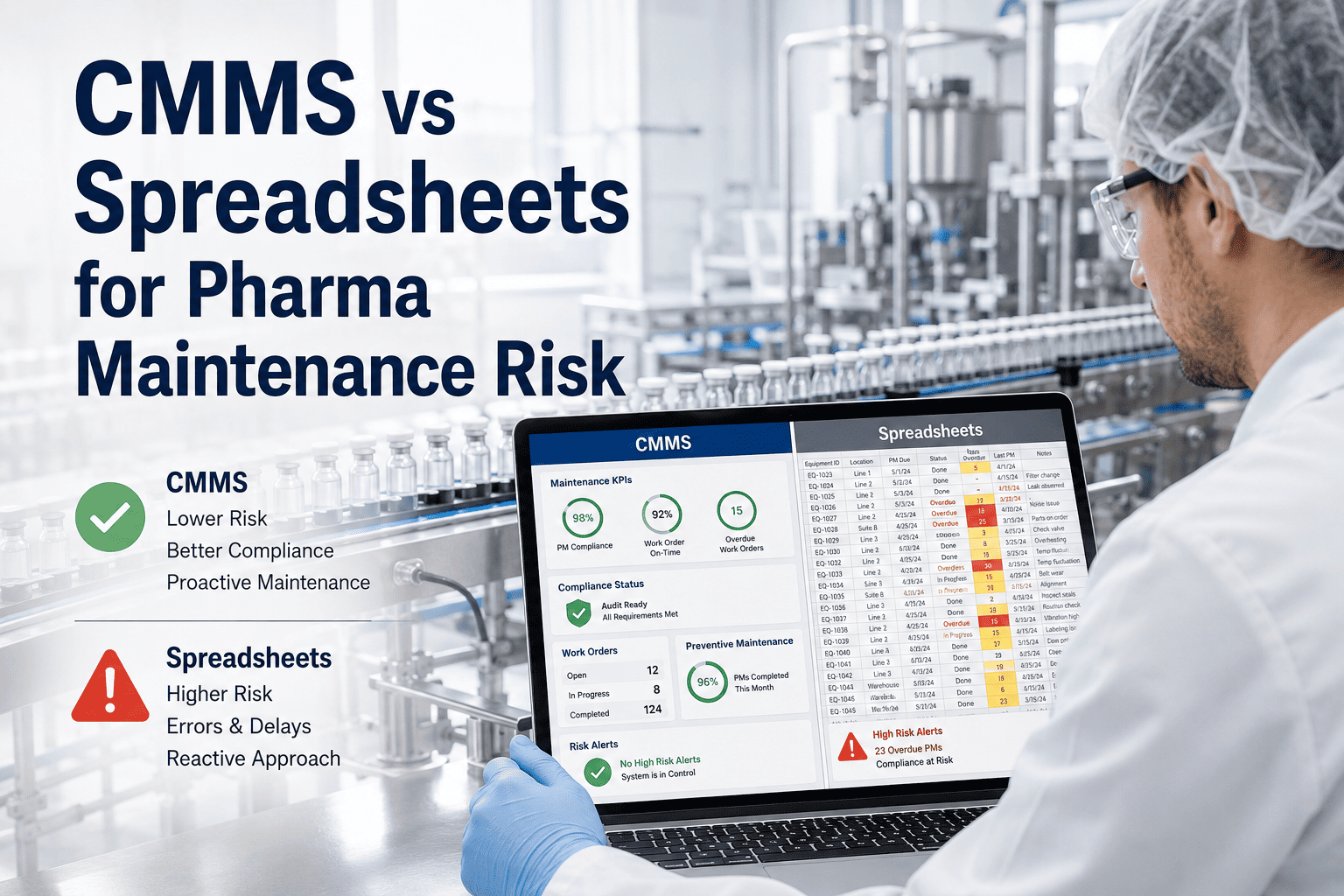
Maintenance gaps in pharmaceutical manufacturing rarely announce themselves — they accumulate silently until an FDA inspector or internal QA audit surfaces them as observations. OxMaint's pharma CMMS gives QA teams a live exception dashboard that flags overdue PMs, missed calibrations, unsigned checklists, and compliance gaps before they become Form 483 citations or warning letter findings.
Maintenance Exception Reporting for Pharma QA
67% of FDA inspections at pharmaceutical facilities cite incomplete electronic maintenance records. The fix is not more paperwork — it is a real-time exception engine that surfaces compliance gaps before the inspector does.
The Five Exception Types That Drive Audit Citations
QA teams spend weeks reconstructing what should be a 10-minute CMMS export. Each exception category below maps directly to the FDA's most-cited maintenance deficiency patterns from 2022–2024 inspections.
PM overdue by even one day creates a compliance gap. When equipment is used beyond its maintenance window without QA acknowledgment and documented deviation, it is a potential GMP failure — regardless of whether the equipment performed correctly.
A completed maintenance task without a verifiable electronic signature is an unsigned record under 21 CFR Part 11. OxMaint blocks work order closure until all checklist steps are signed by the assigned role — enforcing compliance at the point of action.
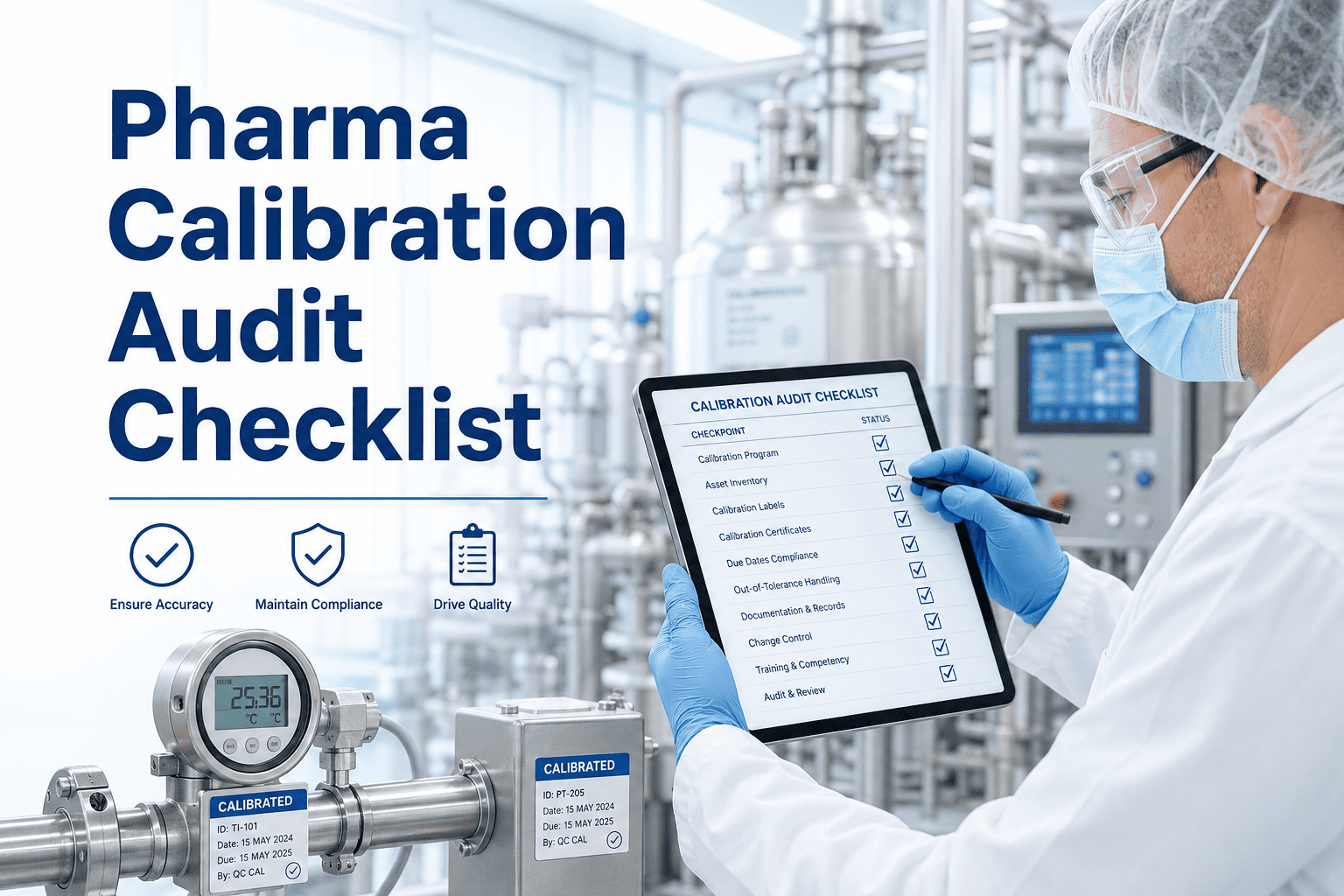
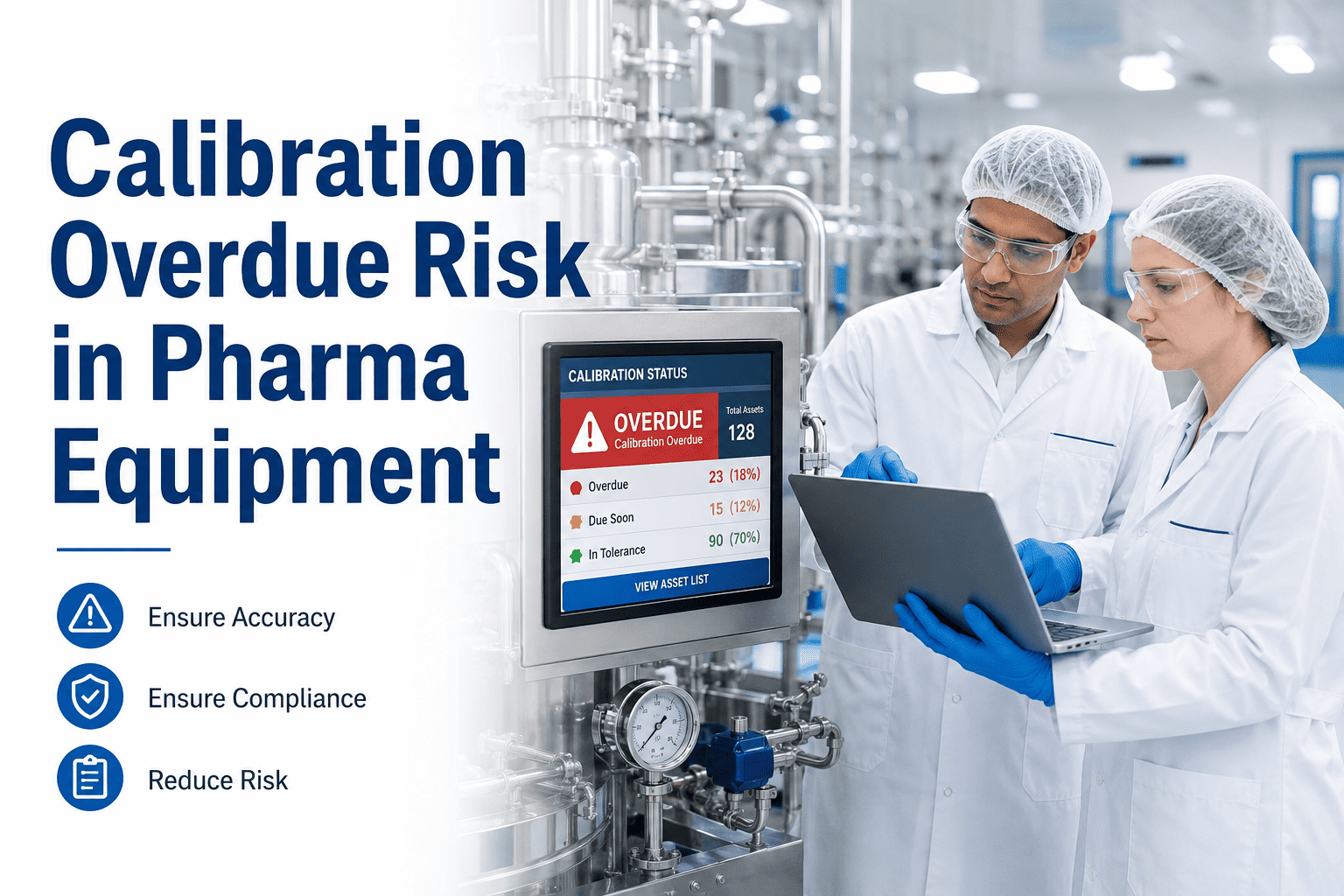
Instruments operating outside their calibration window contaminate batch data. Exception reporting must flag not just overdue calibration, but out-of-tolerance findings that require backward impact assessment on batches produced during the gap period.
When a field technician marks a checklist step as failed and immediately reattempts without a formal deviation, the first failure disappears from most CMMS systems. OxMaint retains all attempt history in an immutable audit trail, surfacing every failed step for QA review.
Work orders closed by the technician who performed the work — without a second-person QA review — violate the four-eyes principle required for GMP-regulated maintenance. OxMaint enforces role-separated approval for every critical maintenance closure.
What an Exception Dashboard Actually Shows QA
Line 4 Tablet Press has 3 overdue PMs and an unsigned calibration certificate. Equipment has been in production for 6 days beyond maintenance window. QA review required before next batch release.
Area C cleanroom has 4 consecutive unsigned cleaning checklists across 2 technicians. Pattern indicates training gap — not individual error. Escalation recommended to QA Manager.
All Packaging Line PMs are current. Zero open calibration exceptions in QC laboratory. Area A and B fully signed off through end of week.
Exception Severity, Escalation, and Required QA Action
| Exception Type | Severity | Regulatory Risk | Required QA Action | OxMaint Auto-Trigger |
|---|---|---|---|---|
| PM overdue >7 days on critical equipment | Critical | 483 observation · batch hold risk | Equipment use deviation + QA hold review | Auto-escalation to QA Manager |
| Calibration overdue on measuring instrument | Critical | Batch data integrity challenge | Backward impact assessment on open batches | Instrument status locked · batch flag raised |
| Unsigned work order checklist >24 hrs | Major | 21 CFR Part 11 documentation gap | Sign-off required before area release | Reminder to technician + supervisor alert |
| Failed checklist step without deviation | Major | Unrecorded GMP event | Deviation raised, investigation initiated | Failed step logged immutably; QA notification sent |
| PM overdue 1–6 days, non-critical equipment | Minor | Compliance trend indicator | Reschedule + document reason for delay | Supervisor alert; rescheduling prompt |
| Work order closed without QA dual-sign | Critical | Four-eyes principle violation | Retroactive QA review; CAPA if pattern | Closure blocked until second sign-off received |
Stop reconstructing exceptions after the audit starts. Surface them before the inspector arrives.
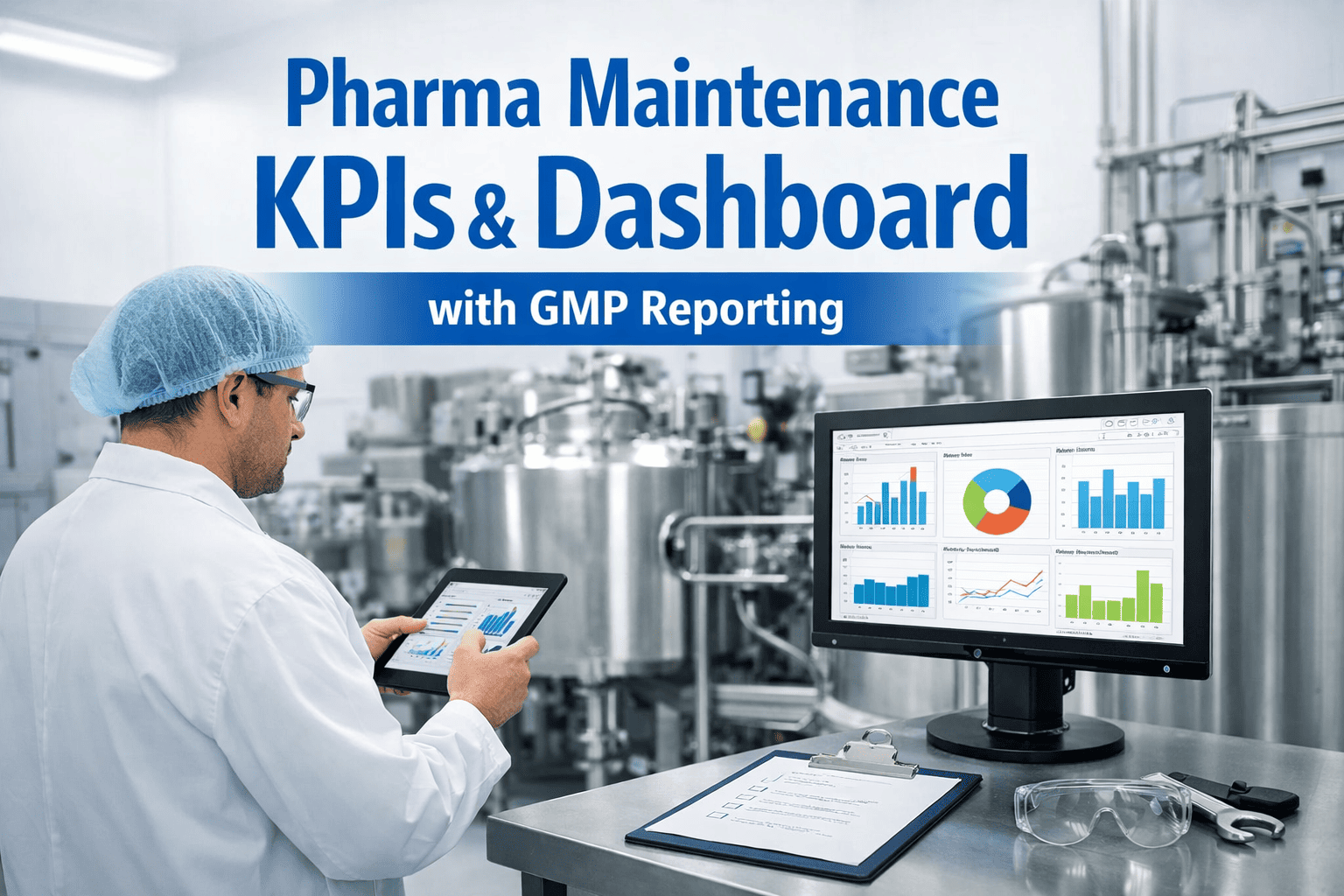
OxMaint's exception reporting dashboard gives pharma QA teams a live view of every open compliance gap — by equipment, area, line, and exception type — updated in real time.
What Pharma QA Leaders Say About Exception Reporting
The most common reason pharmaceutical maintenance teams receive FDA 483 observations is not that they failed to do the work — it is that they cannot prove they did it on time, with the right sign-offs, and without unreported deviations. Exception reporting is not a QA nicety; it is the mechanism that converts daily maintenance activity into defensible regulatory evidence. A CMMS that surfaces gaps in real time is the difference between a smooth inspection and a corrective action plan.
Repeat minor exceptions are the pattern that regulators watch most carefully. A single overdue PM is an operational issue. Three overdue PMs on the same asset line over six months is a systemic quality failure. Exception trend reporting is what separates proactive QA programs from reactive ones.
Questions Pharma QA Teams Ask About Exception Reporting
What counts as a maintenance exception under GMP?
How does OxMaint surface exceptions before they reach QA audit stage?
Can exception reports be exported for FDA or internal audit submissions?
Does exception reporting integrate with CAPA workflows?
Your next FDA inspection will not wait for your exception reporting to catch up.
Give your QA team a live exception dashboard — overdue PMs, unsigned checklists, calibration gaps, and failed steps visible in real time, every day.