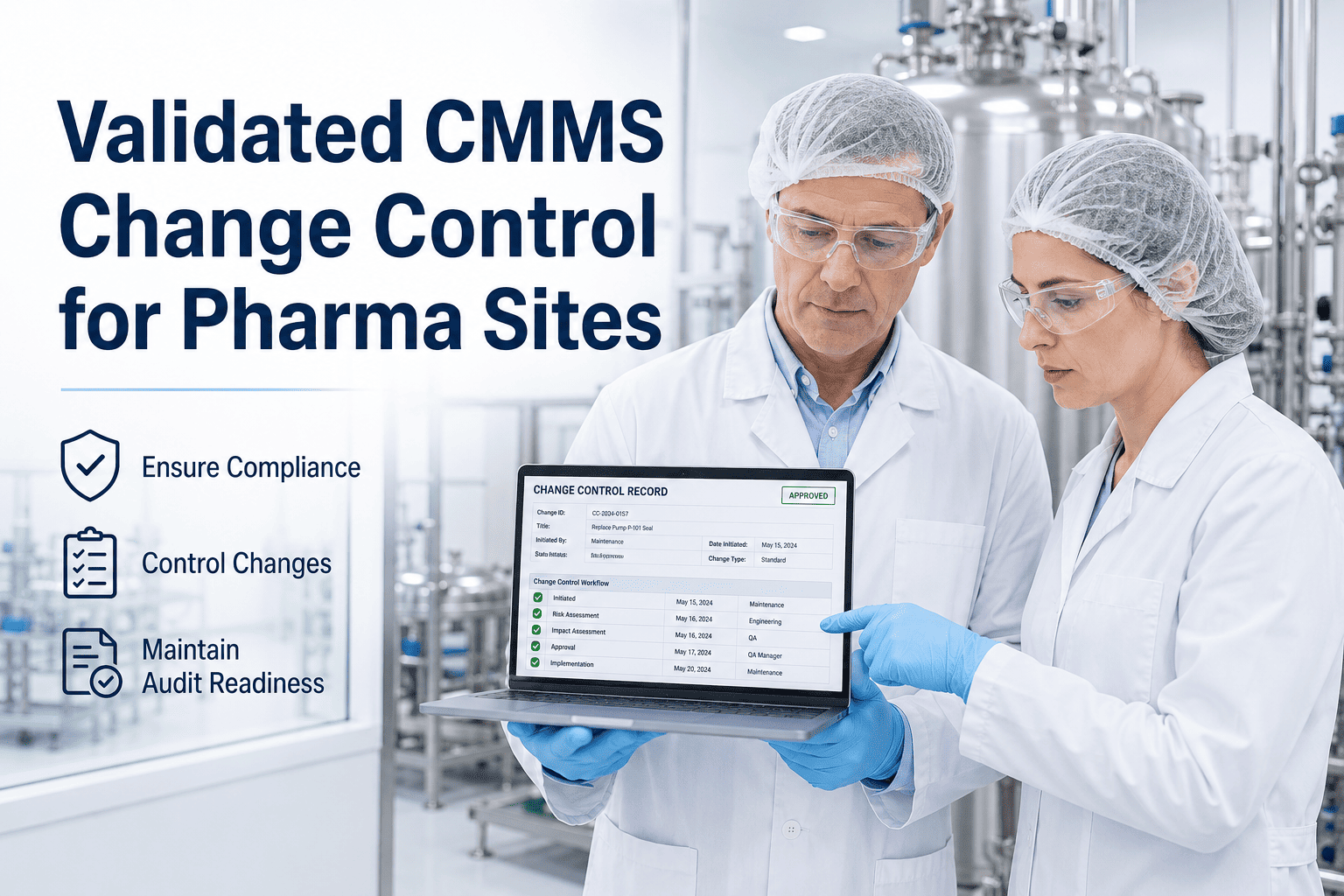
In pharmaceutical manufacturing, a single out-of-calibration instrument can invalidate entire production batches, trigger FDA 483 observations, and delay product releases by weeks. Calibration audit readiness is not just a compliance checkbox — it is the backbone of data integrity, patient safety, and GMP credibility. Quality teams that audit calibration status by asset, due date, tolerance, certificate validity, technician, and QA approval consistently pass regulatory inspections and avoid costly deviations. This checklist gives pharma QA managers, metrology specialists, and facilities teams a structured, audit-ready framework to verify every critical calibration dimension across their facility. OxMaint automates calibration scheduling, certificate tracking, and QA approval workflows — so your team is always inspection-ready without last-minute scrambling. Start free on OxMaint or book a live demo to see how leading pharma teams stay perpetually audit-ready.
Calibration & Metrology · GMP Compliance · QA Audit Readiness
Pharma Calibration Audit Checklist
Audit calibration readiness across every instrument by asset ID, location, due date, tolerance status, certificate validity, assigned technician, and QA approval — the complete GMP metrology framework.
68%
of FDA 483 observations involve documentation or calibration gaps
21 CFR
Part 211.68 mandates calibration of all lab instruments used in GMP testing
ISO 17025
Requires traceable calibration certificates with as-found and as-left data
100%
Of instruments must have QA-approved status before use in GMP testing
The 6-Dimension Audit Framework
What Inspectors Check in Every Calibration Audit
FDA investigators and EU GMP auditors follow a consistent pattern when reviewing calibration programs. Understanding their six core focus areas helps QA teams structure their internal audits to mirror regulatory expectations exactly.
01
Asset Identification
Every instrument must have a unique equipment ID, location tag, and entry in the calibration master list — no orphaned assets.
02
Due Date Compliance
Calibration intervals must be defined, tracked, and respected — instruments used past due date represent a critical GMP violation.
03
Tolerance Verification
As-found and as-left measurements must be documented against defined acceptance criteria with any OOT conditions formally investigated.
04
Certificate Management
Calibration certificates must include traceability to national standards (NIST/NPL), uncertainty values, and be filed with the equipment record.
05
Technician Qualification
Only qualified, trained personnel or approved external vendors may perform calibrations — with credentials documented and current.
06
QA Approval Status
QA must review, verify, and formally approve calibration records before an instrument is returned to GMP service — no informal sign-offs.
Asset & Location Audit
Instrument Identification and Master List Verification
The calibration master list is the foundation of every GMP metrology program. Auditors begin here — if an instrument is missing from the list or has inconsistent IDs across records, it flags systemic documentation weakness.
All instruments with GMP impact are included in the calibration master list — no working instruments absent from the register regardless of age, frequency of use, or perceived criticality
Audit Dimension: Asset Identification · Standard: 21 CFR 211.68 / EU GMP Annex 11 · Reviewer: QA Manager
Each instrument assigned a unique equipment ID that matches physical labels, calibration certificates, maintenance logs, and QC usage records — no ID mismatches across systems
Audit Dimension: Asset Identification · Standard: ISO 10012 · Reviewer: Metrology / QA
Physical location of each instrument documented and current — relocated instruments updated in master list within 48 hours, change control initiated if location affects calibration validity
Audit Dimension: Asset Tracking · Standard: WHO GMP / ICHQ9 · Reviewer: Facilities / QA
Instrument criticality classification documented — instruments used for batch release, in-process testing, or environmental monitoring classified as critical with enhanced calibration frequency
Audit Dimension: Risk-Based Approach · Standard: ICH Q9(R1) · Reviewer: QA Director
Calibration status label affixed to every instrument — label includes equipment ID, last calibration date, next due date, and calibration status — no instrument in service without current label
Audit Dimension: Due Date Visibility · Standard: 21 CFR 211.68 · Reviewer: QC / Metrology
Out-of-service or out-of-calibration instruments visibly segregated and labeled — orange or red "DO NOT USE" tags affixed, instrument physically quarantined from the GMP area
Audit Dimension: Segregation · Standard: EU GMP Chapter 3 · Reviewer: QA / Lab Supervisor
Due Date Tracking
Calibration Schedule and Interval Compliance
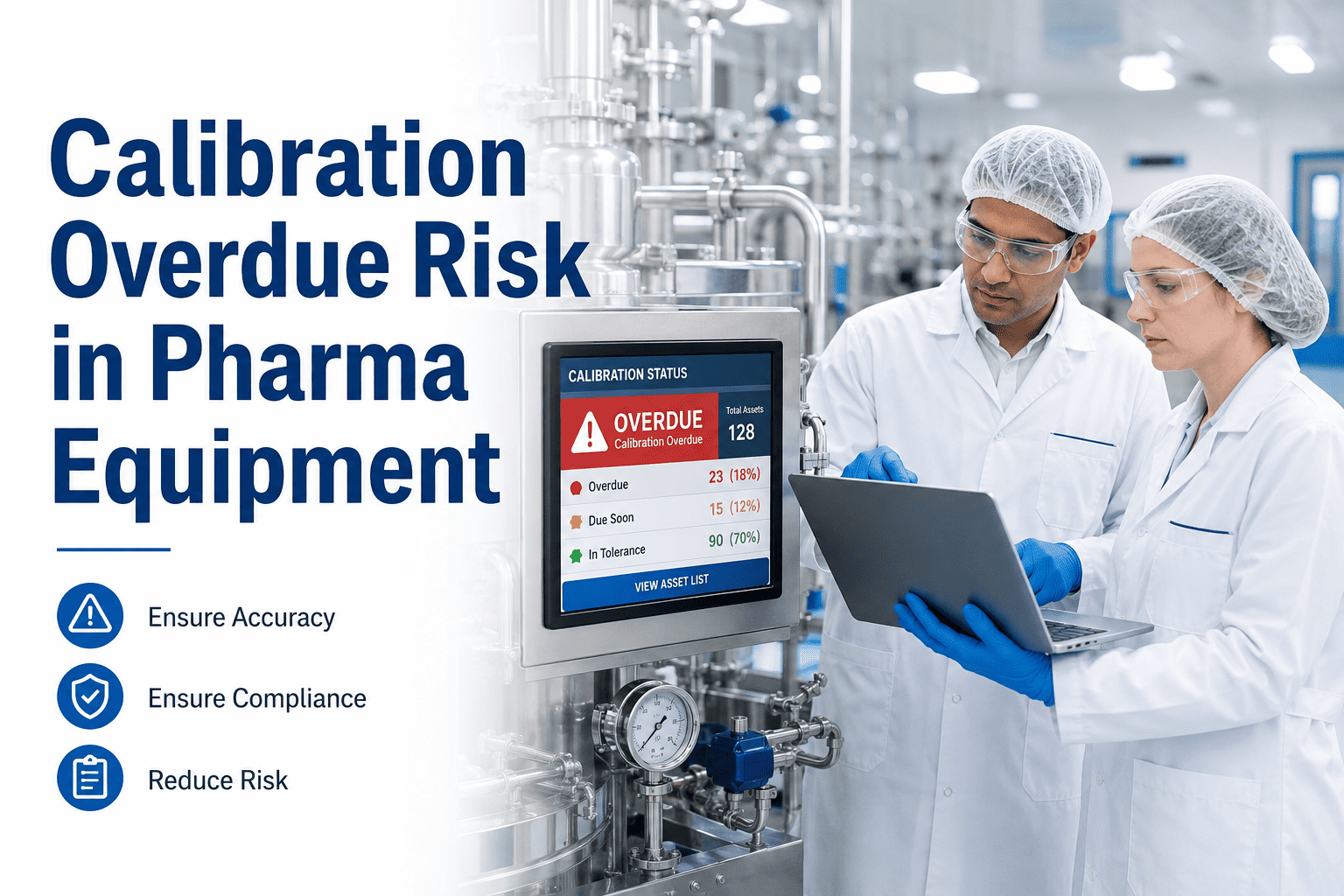
Expired calibration is one of the most frequent FDA 483 citations in pharmaceutical QC labs. A systematic due-date tracking process prevents instruments from being used outside their qualified calibration window.
Calibration intervals defined in approved SOP for each instrument type — intervals risk-based and justified by historical OOT frequency, instrument stability, and criticality of measurements
Audit Dimension: Schedule Integrity · Standard: ISO 9001:2015 Clause 7.1.5 · Reviewer: QA Manager
No instruments found in use beyond calibration due date — electronic alerts issued 30 days and 7 days before expiry, escalation to QA Director if calibration overdue by more than 24 hours
Audit Dimension: Due Date Compliance · Standard: 21 CFR Part 11 / ALCOA+ · Reviewer: QA / Lab Manager
Calibration due dates documented in a centralized, controlled system accessible to QA and lab staff — paper logs acceptable only with dual-signature control and monthly QA reconciliation
Audit Dimension: Data Integrity · Standard: MHRA Data Integrity Guidance · Reviewer: IT / QA
Interval extension or reduction changes documented through formal change control — not adjusted informally by technicians or lab supervisors, with QA approval required for any interval modification
Audit Dimension: Change Control · Standard: ICH Q10 · Reviewer: QA Director
Retrospective impact assessment performed for any batch tested with an expired or OOT instrument — batches identified, QA investigation initiated, risk to product quality documented and concluded
Audit Dimension: CAPA / Deviation · Standard: 21 CFR 211.192 · Reviewer: QA / Regulatory Affairs
Tolerance & OOT Management
Acceptance Criteria and Out-of-Tolerance Investigation
Tolerance verification is where calibration audits get technically rigorous. Auditors look for documented acceptance criteria, as-found versus as-left data, and a robust deviation process for any OOT result — not just a certificate that says "pass."
Tolerance limits defined and approved for each instrument prior to calibration — limits linked to measurement uncertainty, instrument specification, and GMP use requirement, not arbitrarily assigned
Audit Dimension: Tolerance Definition · Standard: ISO/IEC 17025:2017 · Reviewer: Metrology / QA
As-found data recorded before any adjustment — calibration record documents the condition of the instrument as received, not only after correction, to enable accurate OOT trend analysis
Audit Dimension: As-Found Data · Standard: OIML R 111 / NIST guidelines · Reviewer: Calibration Technician / QA
As-left data and final calibration result recorded after adjustment or verification — both values preserved in the calibration record with technician signature and date
Audit Dimension: As-Left Data · Standard: ISO 9001:2015 / ISO 10012 · Reviewer: QA
Out-of-tolerance findings trigger immediate deviation — instrument removed from service, deviation number assigned, root cause investigation initiated within 24 hours of OOT discovery
Audit Dimension: OOT Response · Standard: 21 CFR 211.68 / EU GMP Chapter 6 · Reviewer: QA Manager
OOT investigation includes documented root cause (sensor drift, contamination, handling damage, environmental exposure), batch impact assessment, and CAPA — closed with QA Director approval
Audit Dimension: Investigation Depth · Standard: ICH Q9(R1) / FDA Guidance · Reviewer: QA Director
OOT frequency tracked as a KPI — instruments with repeat OOT findings flagged for interval shortening, replacement evaluation, or environmental investigation rather than repeated repair cycles
Audit Dimension: Trend Analysis · Standard: ISO 10012 / ICH Q10 · Reviewer: Quality Director / Metrology
Certificate Management
Calibration Certificate Verification and Filing
A calibration certificate is only valid if it contains specific mandatory elements. Auditors cross-check certificates against instruments and records — incomplete or incorrectly filed certificates are treated as missing documentation.
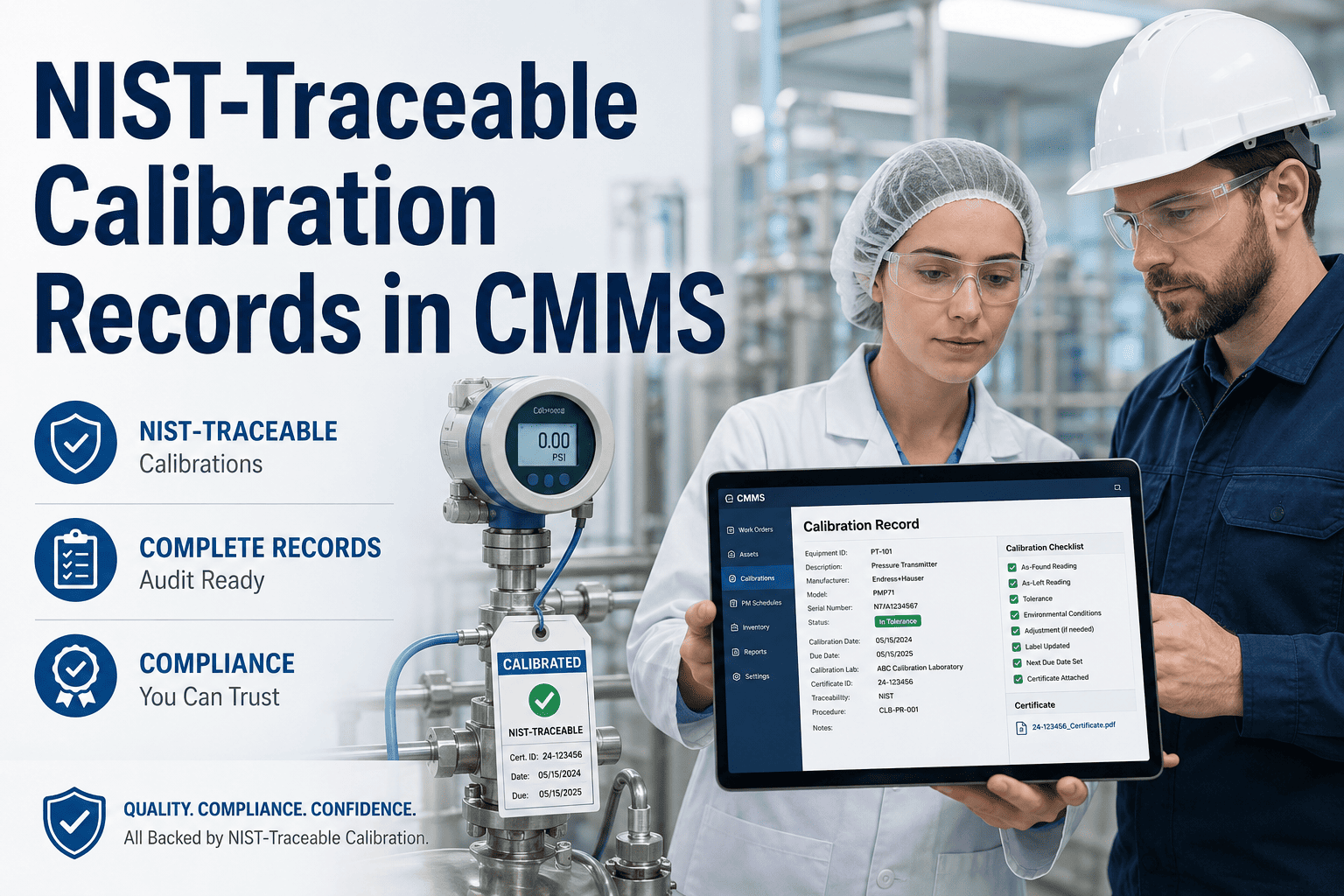
Certificate identifies calibration laboratory name, accreditation number, and scope — external labs must hold current ISO/IEC 17025 accreditation covering the measurement range of the instrument calibrated
Audit Dimension: Lab Accreditation · Standard: ISO/IEC 17025:2017 · Reviewer: QA / Vendor Management
Traceability chain to national or international standards documented — certificate states reference standards used with their own calibration certificate numbers and expiry dates (NIST, NPL, PTB, or equivalent)
Audit Dimension: Metrological Traceability · Standard: ISO/IEC 17025 Clause 6.6 · Reviewer: Metrology
Measurement uncertainty stated on certificate — expanded uncertainty at coverage factor k=2 (95% confidence) documented; certificates without uncertainty values rejected and reissuance requested from the vendor
Audit Dimension: Uncertainty Statement · Standard: GUM (JCGM 100:2008) / ISO 17025 · Reviewer: Metrology / QA
Certificate includes calibration date, next due date, equipment serial number, and condition on receipt — all fields populated, no blank or "N/A" entries that could be challenged during inspection
Audit Dimension: Certificate Completeness · Standard: MHRA Data Integrity / 21 CFR Part 11 · Reviewer: QA
Certificates filed in controlled repository linked to the asset record — retrievable by equipment ID within 5 minutes during an unannounced audit, historical certificates retained per GMP data retention policy (minimum 1 year beyond product shelf life)
Audit Dimension: Retrieval Readiness · Standard: 21 CFR 211.180 / EU GMP Chapter 4 · Reviewer: QA / Document Control
Technician Qualification
Personnel Competency and Vendor Qualification
Who performs the calibration matters as much as what was calibrated. Auditors check that both internal technicians and external vendors are formally qualified, their credentials current, and their scope of work clearly defined.
All internal calibration personnel hold documented training records — training covers relevant calibration SOPs, measurement uncertainty, GMP documentation requirements, and instrument-specific procedures
Audit Dimension: Training Records · Standard: 21 CFR 211.68 / EU GMP Chapter 2 · Reviewer: QA / Training
Technician qualification assessments completed and current — practical competency demonstrated, not only SOP reading acknowledgment, with requalification triggered by prolonged absence or procedure change
Audit Dimension: Competency Verification · Standard: ICH Q10 / WHO TRS 1019 · Reviewer: QA Manager
External calibration vendors on approved vendor list with current qualification audit on file — vendor audit includes review of accreditation scope, reference standard records, personnel qualifications, and quality system
Audit Dimension: Vendor Qualification · Standard: 21 CFR 211.68 / ISO 10012 · Reviewer: QA / Procurement
Quality agreement with external vendor in place — agreement specifies certificate format, mandatory content, turnaround time, OOT notification procedure, and audit rights for the pharmaceutical company
Audit Dimension: Vendor Agreement · Standard: EU GMP Chapter 7 / ICH Q10 · Reviewer: QA Director
QA Approval Workflow
Quality Assurance Review and Instrument Release
QA approval is the final gate before any instrument returns to GMP service. This step is non-negotiable — instruments returned to use based on verbal confirmation or informal approval are a data integrity violation waiting to be discovered.
QA review checklist completed for every calibration event — reviewer verifies certificate completeness, as-found and as-left data against tolerance, technician qualification, and traceability before approving instrument for GMP use
Audit Dimension: QA Review · Standard: 21 CFR 211.68 / EU GMP Chapter 6 · Reviewer: QA Manager
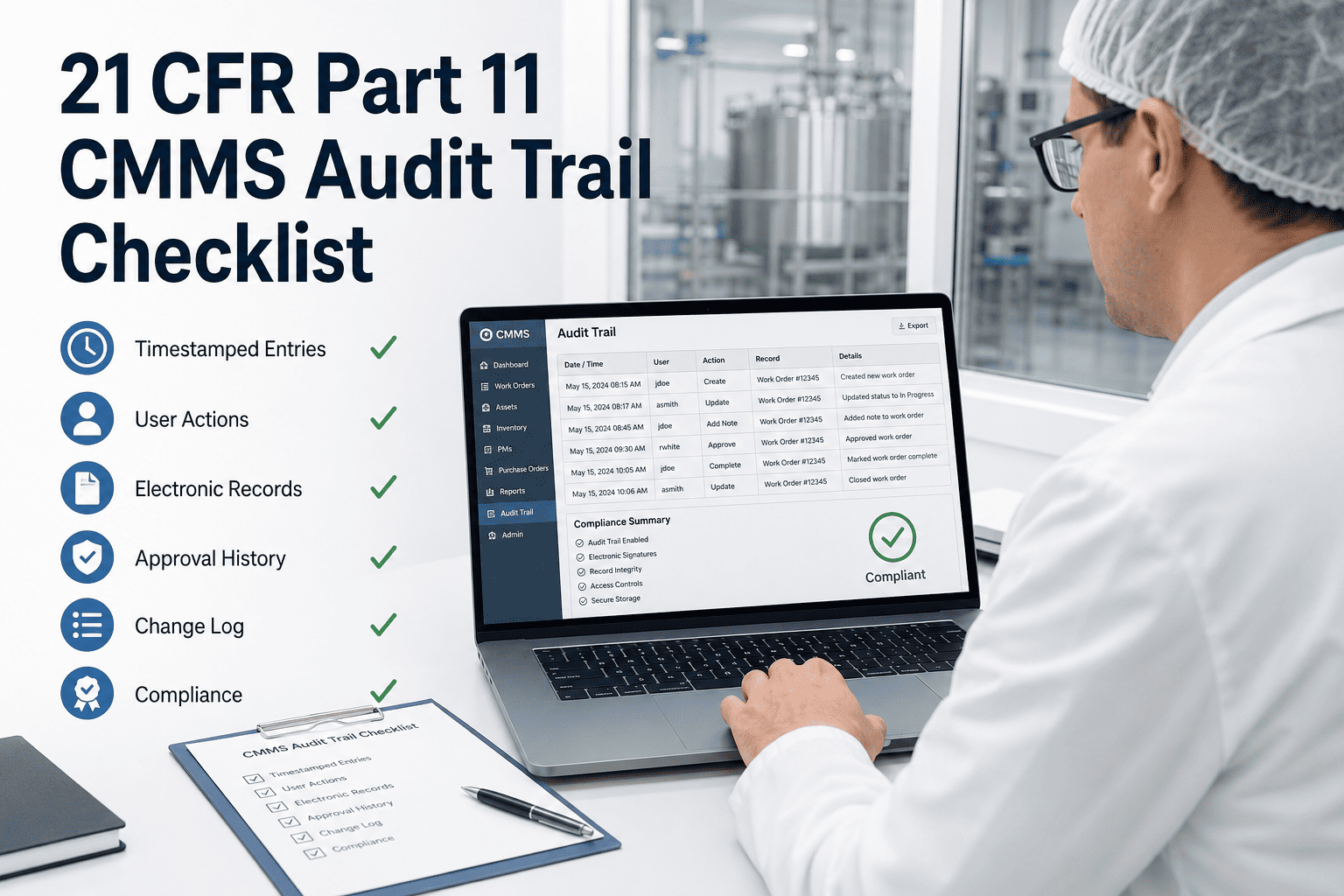
QA approval electronically signed with date, time, and reviewer ID in 21 CFR Part 11-compliant system — no paper signatures without controlled form number, dual witness, and document management system filing
Audit Dimension: Electronic Signature · Standard: 21 CFR Part 11 / EU GMP Annex 11 · Reviewer: IT / QA
Calibration status in instrument master list updated to "approved" only after QA sign-off — instrument availability in lab scheduling or LIMS system gated by calibration approval status to prevent unauthorized use
Audit Dimension: System Integration · Standard: GAMP 5 / MHRA Data Integrity · Reviewer: IT / QA
Complete audit trail preserved for every calibration record — system logs who created, modified, reviewed, and approved each record with timestamp; no ability to delete or overwrite entries without traceable change history
Audit Dimension: Audit Trail · Standard: ALCOA+ / 21 CFR Part 11 · Reviewer: IT / QA Director
Periodic QA review of calibration program effectiveness documented — annual management review includes OOT rate, overdue calibrations, vendor performance, and CAPA closure rate with documented QA Director sign-off
Audit Dimension: Program Review · Standard: ICH Q10 / ISO 10012 · Reviewer: QA Director / Site Head
Maintenance Intervals
Calibration Frequency and Qualification Schedule
| Instrument Type |
Typical Frequency |
Required Qualification |
Certificate Mandatory |
QA Approval Required |
| Analytical Balances |
Daily check + 6-monthly full cal |
Metrology technician, NIST traceable |
Yes — ISO 17025 |
Yes |
| pH Meters / Electrodes |
Before each use (buffer), quarterly full |
Lab technician + QA review |
Yes |
Yes |
| Temperature Monitoring (HVAC, stability) |
Annual + quarterly spot checks |
Certified calibration lab |
Yes — ISO 17025 |
Yes — critical |
| Pressure Gauges |
Annual |
Metrology technician |
Yes |
Yes |
| HPLC / Spectrophotometers |
System suitability each use, annual OQ |
Vendor or certified engineer |
Yes — with uncertainty |
Yes — QA Director |
| Pipettes / Volumetric Equipment |
6-monthly |
ISO 8655-certified lab |
Yes |
Yes |
What QA Leaders Say
Real Observations from Pharma Calibration Audits
“
The most common citation we see is instruments with current-looking labels but certificates that expired three months ago. The label got updated; the controlled record did not. That disconnect destroys data integrity arguments instantly.
QA Director, European Generic Pharma Manufacturer
“
OOT events without batch impact assessments are automatic major findings. Inspectors do not accept "the instrument was only slightly out." They want to see who investigated, what batches were affected, and what CAPA closed the gap.
Regulatory Affairs Manager, US Pharmaceutical Company
“
We moved to digital calibration tracking and went from two 483 citations per year to zero in our last three FDA inspections. The audit trail and automatic QA escalations removed the human memory dependency that was our biggest risk.
Head of Metrology, Sterile Injectables Site
Common Questions
Pharma Calibration Audit FAQs
What is the difference between calibration and qualification in pharma?
Calibration verifies that an instrument measures within defined tolerance and adjusts it if needed, producing a traceable certificate. Qualification (IQ/OQ/PQ) confirms that equipment is installed correctly, operates as designed, and performs consistently under GMP conditions. Both are required for critical instruments — calibration is recurring; qualification is milestone-based. Platforms like
OxMaint track both in a unified asset record.
How often should calibration records be reviewed by QA?
QA should review and approve every calibration record before the instrument returns to GMP service. In addition, a periodic QA program review — typically annual — should analyze OOT trends, overdue rates, and CAPA effectiveness. Digital CMMS systems like
OxMaint can automate both event-level and periodic reviews with timestamped audit trails.
What happens if an instrument is found out of tolerance during an audit?
The instrument must be immediately removed from GMP service, a formal deviation opened, and a retrospective batch impact assessment performed for all products tested since the last in-tolerance calibration. Root cause and CAPA are required. Failure to perform this assessment is itself a serious GMP violation under 21 CFR 211.192 and EU GMP Chapter 6.
Does an external calibration vendor need ISO 17025 accreditation?
Yes. ISO 17025 accreditation is the accepted standard for demonstrating technical competence of calibration laboratories. The accreditation scope must cover the specific measurement type and range of your instrument. Certificates from non-accredited vendors are routinely challenged by FDA and EU GMP inspectors.
Book a demo to see how OxMaint manages vendor qualification records.
How can a CMMS help with calibration audit readiness?
A CMMS like OxMaint automates calibration scheduling, sends escalating alerts before due dates, stores certificates linked to asset IDs, enforces QA approval workflows, and generates audit-ready reports in minutes. This eliminates the manual spreadsheet tracking that fails inspections and replaces it with a 21 CFR Part 11-compliant digital record system.
Start free to explore the platform.
Always Audit-Ready with OxMaint Calibration Management
OxMaint digitizes your entire calibration program — from asset master list and due date alerts to certificate filing, OOT deviation tracking, and QA approval workflows — so your next FDA or EU GMP inspection finds zero calibration gaps.