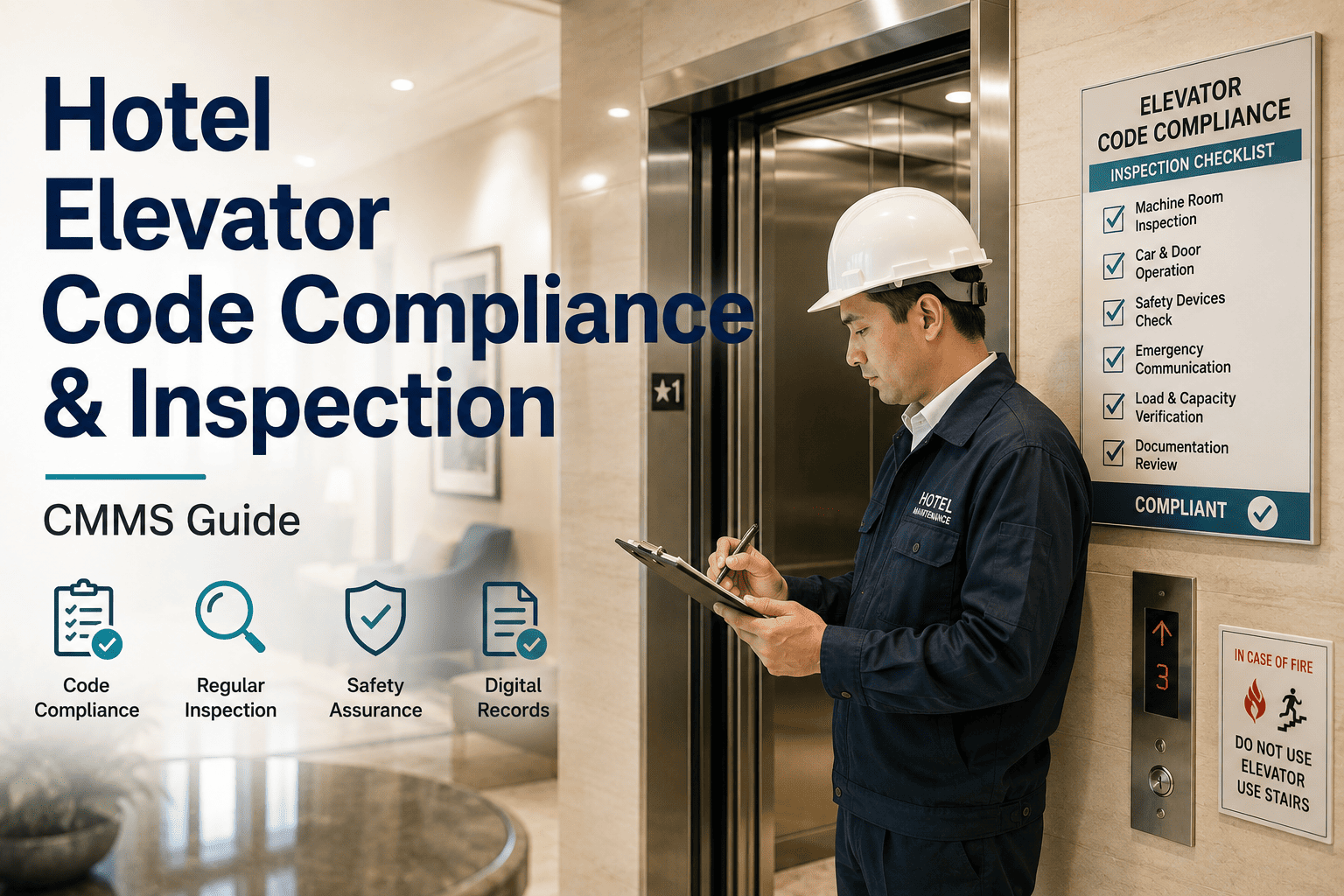
Your elevator inspector arrives at the building with a clipboard and decades of experience. But when he needs the service history for Unit #3, he's calling the office, flipping through filing cabinets, and wasting 20 minutes just to confirm the last time the governor was tested. Meanwhile, building occupants wait, maintenance costs climb, and compliance deadlines loom. One QR code scan changes everything—instant access to complete inspection history, manufacturer specs, ASME requirements, and digital checklists. No paper forms. No delays. Complete compliance confidence.
Industry Standards 2026
Why Facility Managers Are Switching to Digital Elevator Inspections
18,000elevator injuries annually
$4.2Belevator maintenance market
What Is a Digital Elevator Inspection Workflow
A digital elevator inspection workflow connects physical elevator equipment to a centralized maintenance management system. When an inspector scans the QR code on an elevator car, they instantly access everything needed: installation date, capacity rating, last annual inspection, complete service history, ASME A17.1 compliance requirements, manufacturer specifications, and standardized inspection checklists. No more searching for paper records. No more incomplete documentation. Facility managers using digital asset tracking with Oxmaint report dramatically improved compliance rates and faster inspection completion times.
How It Works
From Scan to Completed Report in 4 Steps
01
Scan QR
Inspector scans elevator tag with any smartphone
02
View History
Complete inspection records load instantly
03
Complete Checklist
ASME A17.1 standardized procedures
04
Generate Report
PDF report creates automatically
The Real Cost of Paper-Based Elevator Inspections
When elevator inspections rely on paper forms and manual documentation, the risks compound quickly. Missing inspection records lead to compliance violations. Incomplete checklists result in overlooked safety issues. And handwritten notes become illegible over time. Facility managers who want to see how digital workflows prevent these scenarios can book a quick demo and watch the system in action.
The Compliance Risk
One Missing Inspection Record Creates a Liability Chain
Paper Lost
65%
records incomplete
Inspection Missed
45%
skip critical items
Violation Issued
78%
during audits
Fines & Liability
$8,500+
average violation cost
Before & After Digital Inspection Implementation
Paper-Based Inspections
45+ min per inspection searching records
Paper forms lost or damaged
Handwritten notes illegible
Inconsistent inspection procedures
No compliance audit trail
VS
Digital QR Workflow
Instant asset identification via scan
Complete history on inspector's phone
Reports generate automatically
ASME A17.1 standardized checklists
Real-time compliance dashboard
See Digital Inspections Transform Your Compliance
Watch how one scan gives inspectors everything they need. Our 30-minute demo shows the complete workflow from QR tagging to automated compliance reporting.
Rolling out QR-based elevator inspections doesn't require overhauling your entire operation. Start with your most critical elevators—passenger elevators in high-traffic buildings—where compliance matters most. Then expand as your team adapts. Ready to start Create your free Oxmaint account and generate your first QR elevator tags in minutes.
Implementation Plan
Your 3-Week Path to Digital Inspections
Week 1
Asset Inventory
Document all elevatorsAssign unique asset IDsCollect existing records
Week 2
Checklist Setup
Configure ASME A17.1 formsGenerate QR codesPrint durable tags
Week 3
Field Deployment
Affix tags to elevatorsTest scan functionalityTrain inspectors
Week 4
Go Live!
First digital inspectionMonitor adoptionRefine workflows
Expert Insights: The Compliance Case
Digital inspection platforms contribute to 42% faster inspection completion rates and 68% improvement in compliance documentation accuracy. When an inspector scans a QR code, that single action loads the complete inspection checklist, auto-populates asset details, and timestamps every test result. The compliance benefits are transformative.
68%
Better Documentation
with digital forms
42%
Faster Inspections
with mobile checklists
35%
Fewer Violations
with consistent standards
99%
Audit Pass Rate
with complete records
Facility managers investing in digital inspection workflows typically see positive ROI within 8-14 months. A single prevented elevator shutdown—which can cost $15,000-$25,000 in emergency repairs plus liability exposure—often justifies the first year's investment. Explore our facility management solutions and inspection management features to see how it fits your portfolio.
Transform Your Elevator Compliance Today
Join facility managers using Oxmaint to connect every elevator to a digital inspection workflow. Faster compliance. Complete audit trails. Zero paper.
What should every elevator inspection checklist include
Every comprehensive elevator inspection must include safety device testing (governor, safety gear, buffers), door operation verification, load capacity confirmation, emergency systems checks (alarm, lighting, communication), electrical system inspection, rope and cable examination, brake testing, leveling accuracy, and ride quality assessment. Digital checklists in CMMS platforms ensure inspectors never miss critical items and automatically document results for compliance audits.
How often do elevators require inspection
ASME A17.1 standards require annual inspections for most commercial elevators, with additional requirements for high-use installations. Some jurisdictions mandate more frequent inspections—semi-annual or quarterly—for passenger elevators in hospitals, schools, or high-rise buildings. Monthly maintenance visits should include basic safety checks, while comprehensive annual inspections cover all systems. Digital workflows automatically schedule these inspections and send reminders to ensure compliance.
Can inspectors use their existing smartphones for QR scanning
Yes. Any smartphone with a camera can scan QR codes—inspectors use the device they already carry. Modern CMMS mobile apps include built-in scanning functionality, eliminating the need for separate hardware or apps. This removes equipment costs and ensures every inspector can access the system immediately without special training or devices.
How do digital inspection reports improve compliance
Digital reports provide timestamped, unalterable documentation of every inspection finding. When regulators audit your elevator maintenance records, you can instantly produce complete inspection histories with photo evidence, test results, and corrective actions taken. This creates an ironclad compliance trail that paper forms can never match. Plus, automated report generation eliminates transcription errors and ensures consistent formatting across all inspections.
What's the typical ROI for digital elevator inspections
Most facility managers see positive ROI within 8-14 months. Returns come from reduced inspection time (40-45% savings), elimination of paper processing costs, avoided compliance violations ($5,000-$25,000 per citation), improved inspector efficiency, and prevention of elevator downtime through better maintenance tracking. A single prevented major failure often justifies the entire first year's software investment.