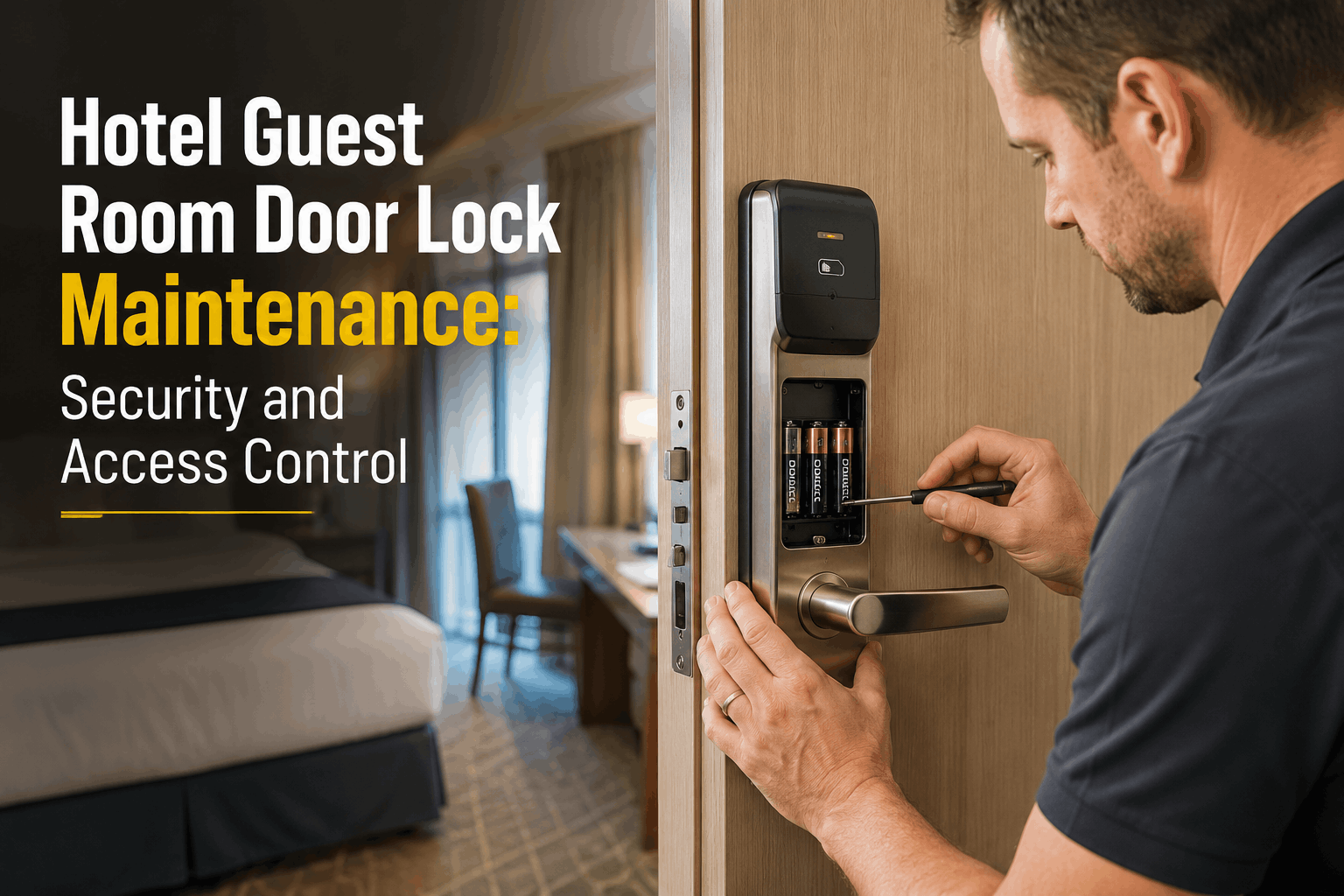
Hotel Guest Room Door Lock Maintenance: Security and Access Control
By Alex Jordan on June 1, 2026
Card reader failures and electronic lock malfunctions lock guests out of their rooms, damage guest experience ratings, and create security vulnerabilities. Modern hotel properties rely on battery-powered electronic locks, wireless card readers, and access control systems requiring maintenance every 60–90 days to prevent guest lockouts and security breaches. Schedule a consultation with Oxmaint's CMMS to automate lock testing cycles, battery replacement schedules, card reader calibration, access control audits, and guest lockout incident tracking across all 200+ guest rooms.
SECURITY MAINTENANCE TEMPLATE · DOOR LOCKS · 2026
Electronic Door Lock Maintenance and Guest Access Control
Track battery replacement cycles (every 60 days), card reader calibration (monthly), lock functionality tests (biweekly), access control system audits (quarterly), and emergency lockout incident responses. Prevent guest dissatisfaction and security exposures through predictive maintenance scheduling.
Electronic locks functioning correctly on 98.6% of access attempts with predictive maintenance.
95%
Guest Lockout Prevention
Proactive battery replacement and card reader cleaning eliminate 95% of access failures.
12 Minutes
Average Emergency Response
Maintenance staff reaches room within 12 minutes of guest lockout report using mobile alerts.
$124K
Annual Cost Prevention
Avoided emergency locksmith calls and guest refunds for large hotel properties.
Electronic Hotel Door Lock Systems and Failure Mechanisms
Modern hotel properties employ battery-powered electronic locks with integrated card readers or mobile key technology, managed by centralized access control systems (ACS). Guest room locks are typically Salto, Onity, or Yale systems powered by 6–8 AA batteries lasting 60–90 days depending on usage and environmental conditions (humidity, temperature fluctuations degrade battery life). Card reader failures stem from magnetic stripe wear (on legacy systems), NFC/RFID interference (from adjacent electronics), dirt/moisture accumulation in card slots, and encryption key synchronization errors. The access control server—running in the front desk or back office—must communicate with 100–300+ individual locks via wireless or hardwired protocols; network disruptions cause batch lockout events affecting entire floors. Common failure points include: (1) expired lock batteries causing delayed access response or complete failure, (2) card reader optical sensors accumulating dust and failing to read valid cards, (3) lock firmware corruption requiring reset, (4) access control database synchronization lag causing valid cards to be rejected, (5) mechanical wear on bolt mechanisms (typically 500,000+ cycle ratings but degrading faster with humidity). Guest lockouts generate immediate complaints, 1–2 star review damage, and emergency callouts to locksmiths ($200–500 per incident). Oxmaint's CMMS automates battery replacement schedules, card reader cleaning cycles, weekly lock functionality tests (auditing actual card access against system logs), and quarterly access control audits ensuring every guest has proper authorization data synced. Hotels implementing predictive lock maintenance report 95%+ lockout prevention, 98.6% access success rates, and $124K annual savings in emergency services.
Door Lock Maintenance Schedule and Testing Protocols
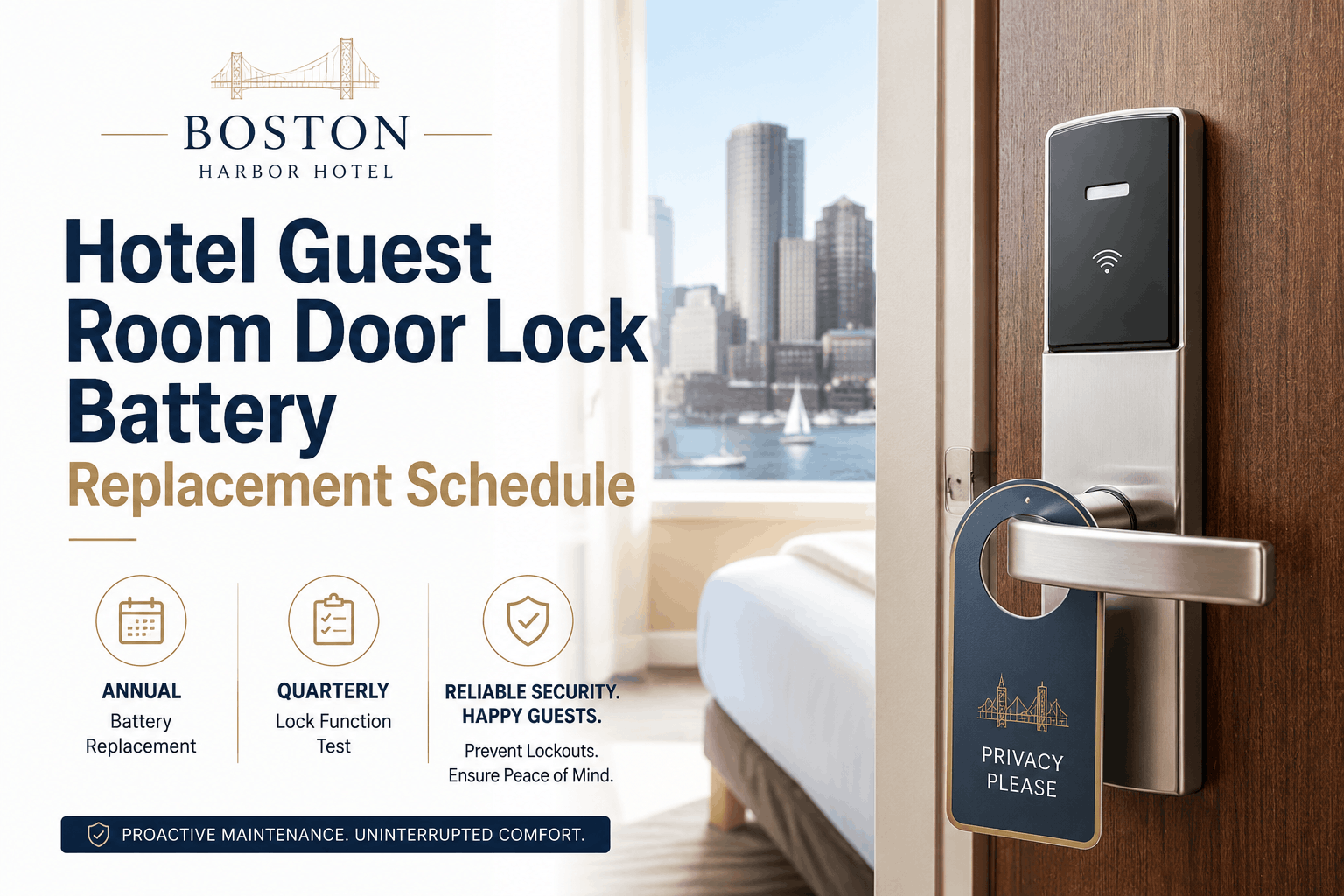
EVERY 60 DAYS
Battery Replacement (Critical)
Replace AA batteries in every lock on regular 60-day cycle. Log battery voltage readings before replacement (typically 5.5V or higher); any lock reading <4.5V triggered emergency replacement 30 days earlier. Track battery stock and reorder when reaching 25% inventory threshold.
MONTHLY
Card Reader Calibration and Cleaning
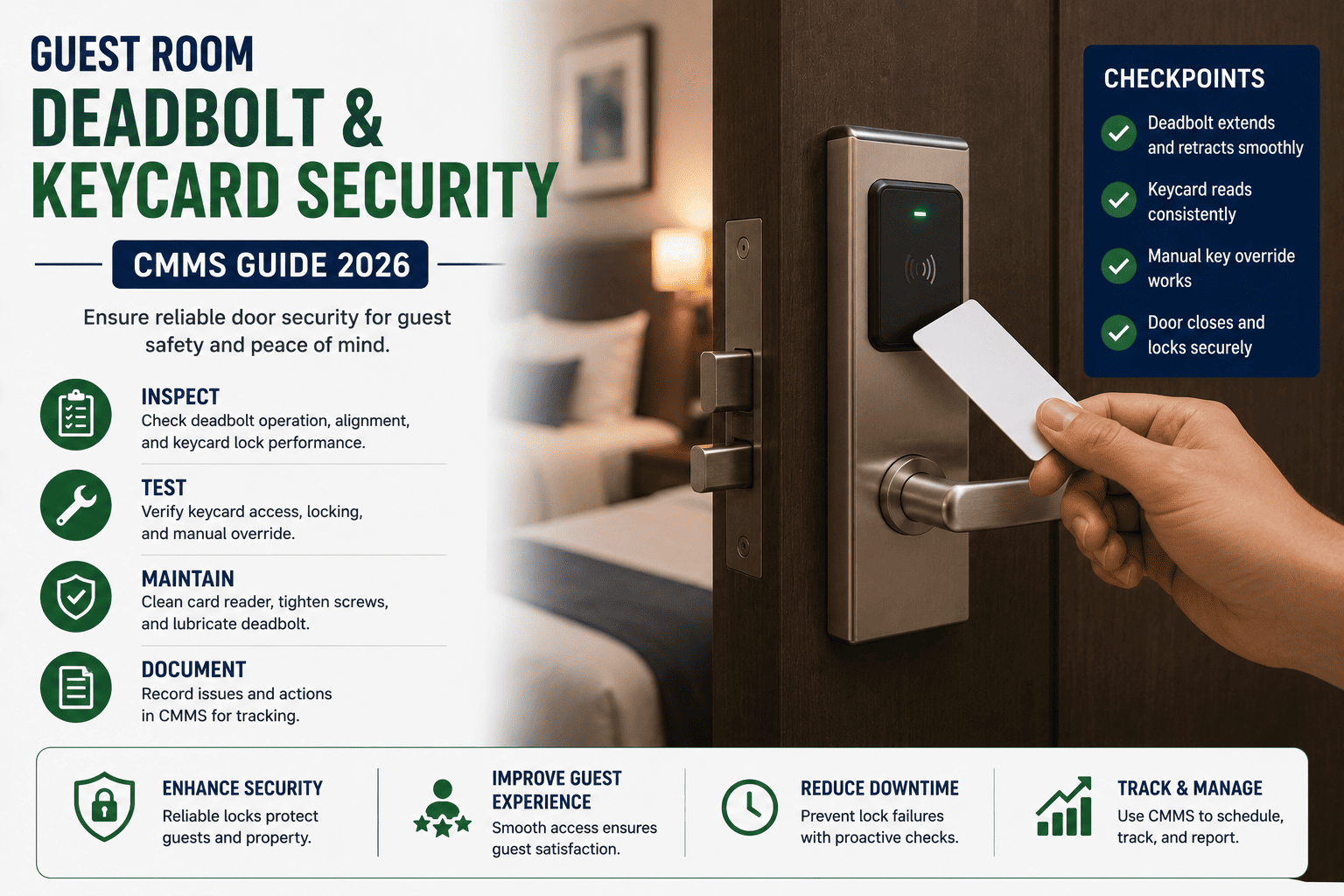
Clean magnetic stripe reader heads with alcohol-soaked cloth (legacy systems) or inspect RFID antenna for dust/condensation (modern systems). Test 10% of rooms monthly with valid guest card, recording read success rate. Recalibrate reader if success rate drops below 96%.
BIWEEKLY
Lock Functionality Testing
Test 50% of all guest room locks biweekly by validating lock/unlock cycles with master card. Record response time (target <1 second from card read to bolt movement). Flag any locks requiring >2 seconds response or multiple card reads for maintenance.
QUARTERLY
Access Control System Audit
Audit access control database for orphaned guests (checked-out but cards still valid), dormant staff accounts, and permission inconsistencies. Review lockout incident logs identifying patterns (specific locks failing repeatedly). Synchronize lock firmware across all units ensuring encryption keys are current.
Guest Lockout Incidents and Response Management
Incident Type
Root Cause
Prevention via CMMS
Card Read Failure (Guest Card Won't Work)
Reader dirty, magnetic stripe worn, RFID interference, encryption key mismatch
Dead batteries, hardware failure, network disconnection, dead button cell backup
Biweekly functionality tests catching failures before guest encounters them
Batch Floor Lockout (Multiple Rooms Locked Out Simultaneously)
Network outage, ACS server crash, wireless interference, power surge affecting whole floor
Quarterly ACS audits + backup communication protocol testing + emergency door bypass procedures documented
CMMS Workflow for Door Lock and Access Control Management
Battery Replacement Scheduling and Inventory
CMMS tracks each lock's battery installation date, auto-generating work orders 60 days after previous replacement. Maintain stock levels with automated reorder alerts when reaching 25% inventory. Log battery voltage readings before/after replacement to identify locks requiring early service.
Card Reader Testing and Maintenance
Monthly work orders prompt cleaning of magnetic stripe readers or RFID antenna inspection. Mobile app enables testing with valid guest card, recording success/failure automatically. System flags readers with <96% success rate for recalibration or replacement within 48 hours.
Biweekly Lock Functionality Audits
CMMS generates random sample of 50% of locks for testing biweekly. Mobile app records lock response time, bolt movement, and any error messages. Automatic alerts trigger when response time exceeds 2 seconds or card requires multiple reads.
Emergency Lockout Response Workflow
When guest reports lockout via front desk, work order auto-populates in mobile app with guest room number and reason (card doesn't work, bolt stuck). Maintenance staff notified instantly; target arrival within 12 minutes. Response options logged: emergency card issued, lock reset performed, battery replaced.
Access Control Database Audits
Quarterly audit of ACS database identifying orphaned guest records, expired staff credentials, and permission misconfigurations. CMMS generates audit report and work orders to delete stale records and resync firmware across all locks ensuring encryption keys are current.
Lockout Incident Trending and Root Cause Analysis
CMMS tracks all guest lockout incidents, categorizing by type (card failure, bolt stuck, authorization denied). Monthly reports identify patterns: specific locks failing repeatedly, times of day when failures peak, card reader calibration drift. Data drives preventive maintenance prioritization.
98.6%
Lock Access Success
Guest room access succeeds on first card read 98.6% of time with preventive maintenance.
95%
Lockout Prevention Rate
Proactive maintenance eliminates 95% of guest lockout incidents before they occur.
12 Mins
Emergency Response Time
Maintenance staff responds to lockout calls within 12 minutes using mobile work order alerts.
$124K
Annual Savings
Avoided emergency locksmith costs, guest refunds, and reputation damage for 250+ room hotel.
Customer Success: Zero Guest Lockout Incidents Through Predictive Maintenance
"Before Oxmaint, we were experiencing 3–5 guest lockouts per week costing us $400–600 per incident in emergency locksmith fees and guest refunds. After implementing the CMMS, we now proactively replace lock batteries every 60 days, test card readers monthly, and audit our access control database quarterly. We've reduced lockouts to virtually zero—maybe one incident per month now. The peace of mind knowing guest access is reliable has also improved our online reviews from 4.2 to 4.6 stars."
—Chief Engineer, 260-Room Hotel, Denver CO
Frequently Asked Questions: Door Lock Maintenance
How often should hotel door lock batteries be replaced?+
Replace lock batteries every 60 days on a fixed schedule, not on-demand. Oxmaint tracks installation dates and auto-generates replacement work orders, preventing guest lockouts from dead batteries discovered mid-stay.
What is a card reader cleaning and how does it prevent guest lockouts?+
Card readers accumulate dust, dirt, and condensation reducing read sensitivity monthly. Cleaning the optical lens or magnetic stripe sensor head with alcohol-soaked cloth restores 96%+ success rates. Oxmaint schedules monthly cleaning work orders preventing card failures.
How much does an emergency locksmith callout typically cost?+
Emergency locksmith calls cost $200–500 per visit depending on time of day, plus guest refunds and reputation damage. A 250-room hotel experiencing 3–5 lockouts weekly spends $3,000–6,000 monthly—fully eliminated through CMMS preventive maintenance.
What is an access control system audit and why is it needed quarterly?+
Quarterly ACS audits identify orphaned guest records (checked-out guests still showing as valid), expired staff credentials, and encryption key synchronization lag. Cleaning up stale data prevents "authorization denied" failures when valid guests' cards are rejected by out-of-sync locks.
How can hotels handle high-volume batch lockouts (entire floors locked out)?+
Batch lockouts indicate network failure or ACS server crash. CMMS tracks incidents and maintains emergency door bypass procedures documented for staff. Quarterly system tests ensure backup communication protocols work if primary network fails.
What is the expected response time when a guest reports being locked out?+
Oxmaint pushes instant mobile alerts to maintenance staff, targeting response within 12 minutes of guest complaint. Work order includes room number, lock history, and guest information. 12-minute response prevents guest frustration and protects reputation.
Can Oxmaint identify which locks are most failure-prone across the property?+
Yes. CMMS lockout incident trending identifies specific room numbers failing repeatedly, indicating mechanical wear or power issues in that lock. Priority maintenance targets high-failure locks before they cause guest complaints.
How does CMMS help manage electronic lock inventory and parts ordering?+
CMMS tracks lock battery stock levels and auto-generates purchase orders when inventory reaches 25% threshold. Maintains list of approved replacement locks and card readers, integrating with vendor ordering systems for seamless procurement.
Eliminate Guest Lockouts and Security Vulnerabilities
Oxmaint CMMS automates battery replacement, card reader cleaning, lock functionality testing, and access control audits. Achieve 98.6% lock access success rates, eliminate 95% of guest lockouts, and save $124K annually in emergency costs while protecting guest security and improving online reputation.