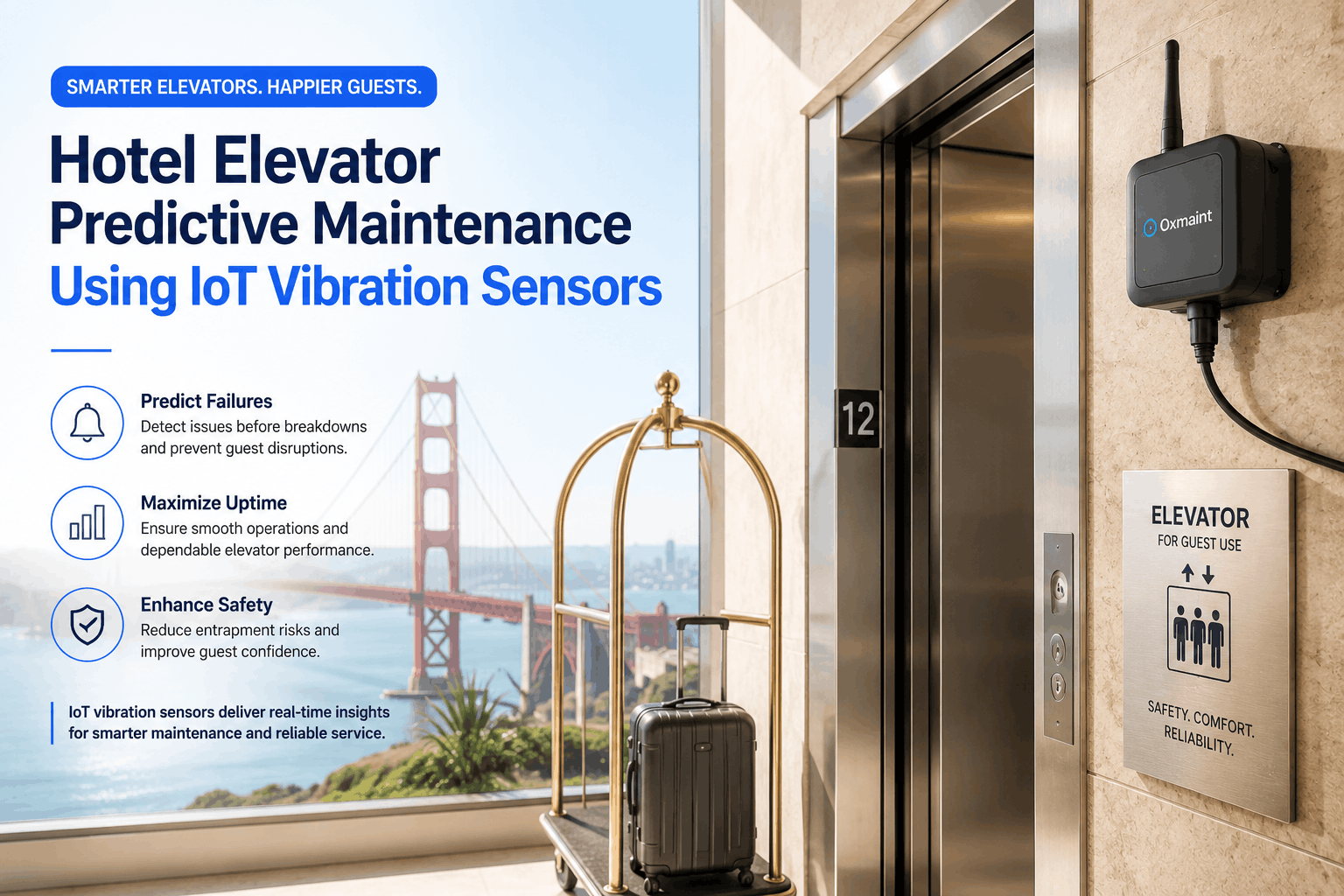
A luxury hotel's elevator system failed during a weekend conferencetrapping 180 guests across three cars and forcing property-wide evacuation to stairwells—resulting in $87,000 in emergency repairsevent refunds, and reputational damage. Post-incident analysis revealed the failure was predictable: vibration sensors would have detected bearing degradation three weeks earlierdoor cycle monitors would have flagged abnormal closing patterns, and motor current sensors would have identified the overheating compressor. IoT elevator monitoring transforms these preventable catastrophes into scheduled maintenance by continuously tracking 20+ performance indicators that predict failures before they impact guests. Start your free trial today and connect your elevator systems to intelligent monitoring within hours.
Predictive Intelligence Layer
Failure Forecasting
Traffic Optimization
Energy Analytics
Real-Time Performance Monitoring
Vibration Analysis
Door Cycles
Motor Current
Wait Times
Physical Sensor Network
Wireless Sensors
Load Cells
Position Trackers
Temperature Probes
Current Meters
IoT elevator monitoring delivers what traditional maintenance contracts cannot: continuous visibility into every mechanical, electrical, and operational parameter that affects reliability and guest experience. Properties integrating elevator sensor data with CMMS platforms achieve 75-90% reductions in unplanned downtime, 40-60% decreases in emergency repair costs, and 25-35% improvements in guest satisfaction scores related to vertical transportation. This isn't about adding technology—it's about preventing the $50,000-$150,000 annual losses hotels suffer from elevator failures, extended wait times, and capacity constraints during peak periods.
Critical Elevator Metrics IoT Sensors Monitor in Hotels
Effective elevator monitoring tracks mechanical health, operational efficiency, and guest experience simultaneously. The highest-value deployments focus on sensors that predict catastrophic failures, optimize traffic flow during peak periods, and identify energy waste. Properties that consult with elevator IoT specialists consistently prioritize these monitoring categories based on failure cost, guest impact, and implementation feasibility.
01
Vibration & Bearing Health
Measurement: FFT analysis on motor, gearbox, and sheave assemblies • Alert threshold: >15% baseline deviation
Failure Prevention:
85% of mechanical failures
Impact: Predicts bearing degradation, misalignment, and motor failures 3-5 weeks before breakdown
Cost: $150-$300 per sensor • Detection window: 21-35 days advance warning
02
Door Operation Cycles
Measurement: Opening/closing time, force applied, cycle count, obstruction events • Alert threshold: >1.2s variance
Failure Prevention:
72% of service calls
Impact: Door failures are #1 elevator complaint—sensors detect degradation before guest impact
Cost: $100-$200 per door system • Prevents 90% of door-related entrapments
03
Motor Current & Power Draw
Measurement: Real-time amperage, voltage, power factor, energy consumption • Alert threshold: >20% baseline increase
Cost Savings:
15-25% energy reduction
Impact: Identifies inefficient operation, overloaded circuits, and motor degradation patterns
Cost: $75-$150 per circuit • ROI: 8-14 months from energy savings alone
04
Average Wait Time & Response
Measurement: Call-to-arrival time by floor, time of day, and occupancy level • Target: <30s average wait
Guest Satisfaction:
Direct NPS correlation
Impact: Wait times >45s drive negative reviews—tracking enables dispatch optimization
Cost: Software analysis of existing sensors • Enables 20-35% wait time reduction
05
Load Capacity & Utilization
Measurement: Real-time load cell data, trips per day, capacity utilization % • Alert: >85% rated capacity
Optimization:
Traffic flow insights
Impact: Identifies overloading patterns, optimizes dispatch algorithms, validates capacity planning
Cost: $200-$400 per car • Prevents mechanical stress from chronic overloading
06
Cable & Rope Condition
Measurement: Electromagnetic signature analysis, elongation tracking, lubrication monitoring • Alert: >2% elongation
Safety Critical:
Zero-tolerance monitoring
Impact: Cable failure is catastrophic—continuous monitoring mandates proactive replacement
Cost: $300-$600 per system • Typical cable lifespan: 12-15 years with monitoring
07
Brake System Performance
Measurement: Activation force, response time, wear indicators, temperature • Alert: >0.5s response delay
Safety Critical:
Emergency stop reliability
Impact: Brake degradation detected months before failure—prevents emergency stops and entrapments
Cost: $150-$300 per brake system • Code-mandated testing automated
08
Machine Room Environment
Measurement: Temperature, humidity, vibration, water presence, ventilation • Alert: >85°F or >60% RH
Lifespan Extension:
30-50% equipment life increase
Impact: Environmental stress accelerates component failures—monitoring prevents premature aging
Cost: $50-$100 per room • Prevents water damage and overheating failures
IoT Elevator Monitoring Integration with CMMS Platforms
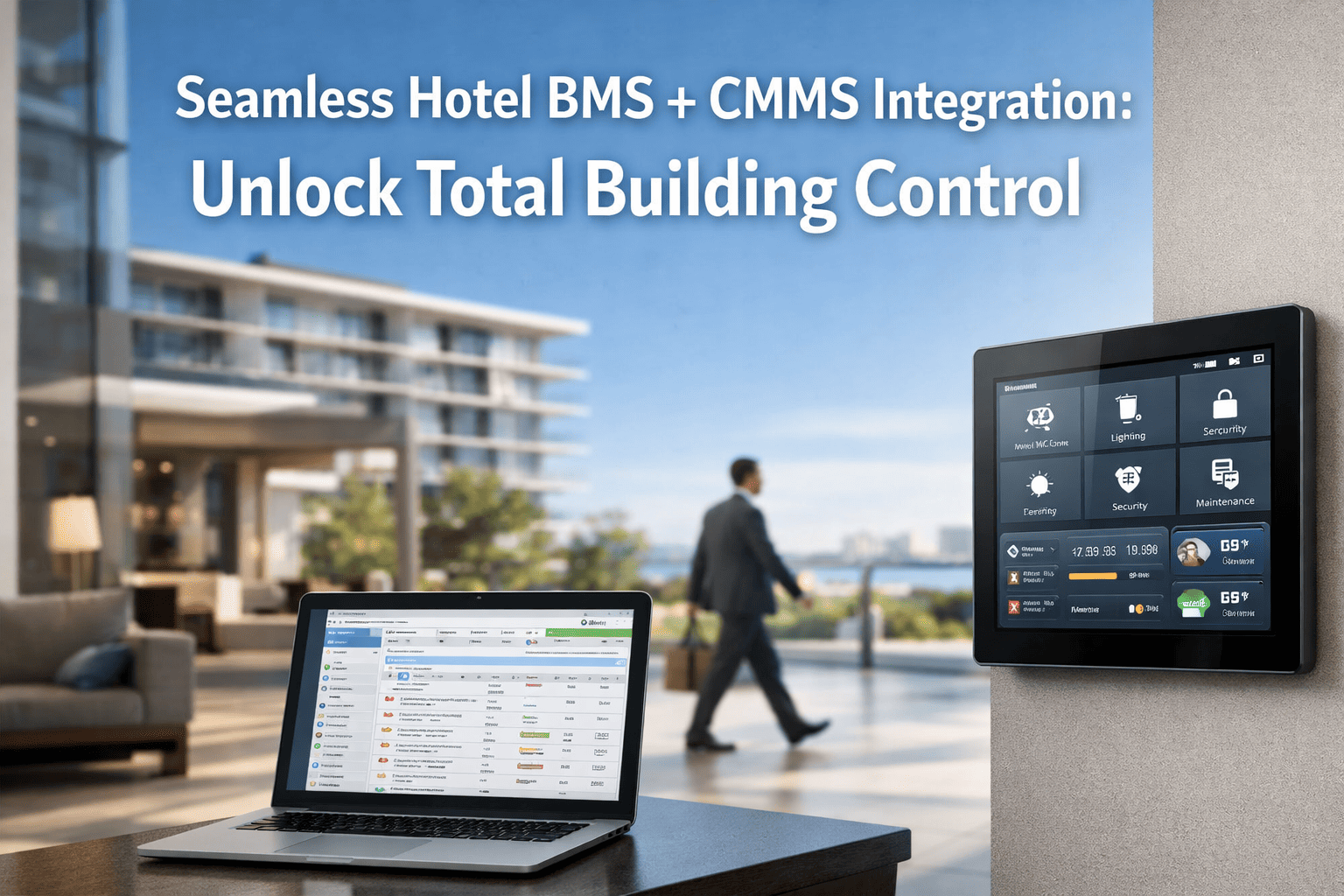
Sensor data alone creates dashboards—integration with maintenance systems creates automated action. When elevator vibration exceeds threshold, the CMMS should instantly generate a prioritized work order, assign it to the elevator technician, pull equipment history and parts inventory, and schedule the repair during low-traffic hours. This sensor-to-resolution pipeline eliminates manual monitoring, reduces response time from days to minutes, and ensures every anomaly triggers appropriate maintenance action.
Vibration Anomaly Detected
Elevator #3
↑ 22% above baseline
Motor bearing degradation pattern—predictive PM work order generated
Door Cycle Delay
Elevator #1 (Lobby)
⚠ 1.8s average closing time
Door operator degradation—high-priority service scheduled before guest complaints
Average Wait Time Spike
All Cars (Peak Hours)
↑ 58s average (target: 30s)
Dispatch algorithm optimization needed—traffic pattern analysis initiated
Motor Current Increase
Elevator #2
↑ 28% power consumption
Motor efficiency loss detected—inspection and potential relubrication required
Predictive PM Scheduled
WO #5412
Priority: High
Elevator tech assigned • Bearing replacement parts ordered • Low-traffic window selected
Door Service Work Order
WO #5413
Priority: High
Technician dispatched • Door operator adjustment scheduled within 24 hours
Dispatch Optimization Review
Task #891
Priority: Medium
Engineering team assigned • Traffic data analysis • Algorithm tuning scheduled
Motor Inspection Created
WO #5414
Priority: Medium
Motor specialist assigned • Lubrication and efficiency testing scheduled
Phased IoT Elevator Deployment Strategy for Hotels
Successful elevator monitoring implementations follow a risk-prioritized rollout that delivers immediate value while building toward comprehensive coverage. Rather than attempting full instrumentation simultaneously, top-performing properties begin with critical safety and reliability sensors and expand based on measured outcomes and guest feedback.
Phase 1: Weeks 1-2 (Safety & Reliability)
Vibration sensors — motors, gearboxes, sheaves
Door cycle monitors — all elevator entrances
Machine room environment — temp, humidity, water
Investment: $3,000-$7,000 per elevator • Expected savings: $25K-$50K/year in prevented failures
Phase 2: Weeks 3-6 (Performance & Efficiency)
Motor current monitoring — power draw and efficiency
Load sensors — capacity utilization tracking
Position sensors — speed and leveling accuracy
Investment: $2,500-$5,000 per elevator • Expected savings: $15K-$30K/year in energy + efficiency
Phase 3: Months 2-3 (Guest Experience)
Wait time analytics — call-to-arrival tracking
Traffic pattern analysis — peak hour optimization
Passenger counting — utilization insights
Investment: $4,000-$8,000 per elevator group • Expected value: Guest satisfaction +15-25%
Phase 4: Months 3-6 (Predictive Intelligence)
Cable condition monitoring — electromagnetic analysis
Brake performance sensors — response time tracking
AI failure prediction — multi-parameter analysis
Investment: $5,000-$10,000 per elevator • Expected value: 90%+ failure prevention rate
Measuring Elevator IoT ROI in Hospitality Operations
Elevator monitoring investments deliver quantifiable returns across safety, reliability, efficiency, and guest experience simultaneously. Properties tracking elevator IoT outcomes consistently report 6-12 month payback periods with annual savings exceeding deployment costs by 300-500%.
Sensor Type
Vibration Monitoring
→
Prevention
Failures detected 3-5 weeks early
→
Avoided Cost
Emergency repairs -75%
→
Annual Savings
$30K-$60K/property
Sensor Type
Door Cycle Monitoring
→
Reliability
Door issues caught proactively
→
Impact
Guest complaints -85%
→
Revenue Impact
NPS +8-12 points
Sensor Type
Energy Monitoring
→
Optimization
Inefficiency visibility
→
Reduction
Energy costs -15-25%
→
Annual Savings
$8K-$18K/property
Sensor Type
Wait Time Analytics
→
Guest Experience
Dispatch optimization
→
Improvement
Wait time -30-40%
→
Revenue Impact
Reviews +0.3-0.5★
Transform Your Elevator Reliability
Oxmaint CMMS integrates with leading elevator IoT platforms to convert sensor data into automated maintenance workflows. From predictive failure alerts to energy optimization—connect your elevators to intelligent facility management.
Expert Analysis: IoT Elevator Technology Trends in 2026
The hotels transforming elevator reliability in 2026 aren't replacing their systems—they're instrumenting existing equipment with wireless IoT sensors that cost 95% less than full modernization. A $50,000 sensor deployment on legacy elevators delivers better predictive insights than many new installations because it focuses on monitoring what actually fails: bearings, doors, motors, and cables. The competitive advantage belongs to properties integrating elevator data into their CMMS platforms for automated response—not those with the newest equipment.
Wireless Retrofit Simplicity
Modern elevator sensors install with zero wiring using battery-powered wireless connectivity (LoRaWAN, BLE mesh). A complete 4-elevator property deployment now takes 1-2 days vs. weeks for wired systems, with 5+ year battery life eliminating maintenance overhead. This enables cost-effective monitoring on legacy equipment where modernization isn't financially viable.
Predictive Failure Algorithms
Machine learning models trained on multi-year elevator performance data now predict specific component failures with 85-92% accuracy 3-5 weeks in advance. These systems analyze vibration signatures, power consumption patterns, and door cycle behavior to identify degradation invisible to threshold-based monitoring—enabling truly predictive maintenance scheduling.
Guest Experience Integration
Advanced platforms now correlate elevator performance metrics directly with guest satisfaction scores, identifying which technical parameters drive negative reviews. Properties discover that wait time variance matters more than absolute time, door sound quality affects perceived reliability, and evening performance impacts ratings disproportionately—insights impossible without continuous monitoring.
Ready to Eliminate Elevator Failures
Stop reacting to breakdowns. Oxmaint's IoT-integrated CMMS transforms elevator sensor data into automated maintenance workflows that prevent failures, optimize energy use, and improve guest satisfaction—all without replacing your existing equipment.
Frequently Asked Questions
Can IoT sensors be installed on older hotel elevators or only new systems
Modern wireless IoT sensors work exceptionally well on legacy elevator systems—often better than on newer equipment with integrated but proprietary monitoring. Retrofit sensors attach to motors, doors, cables, and control panels using adhesive mounting or clamps, requiring zero modifications to existing equipment and zero wiring. This makes IoT monitoring ideal for hotels with 15-30 year old elevators where full modernization costs $150,000-$300,000 per car but isn't justified by remaining lifespan. A $3,000-$7,000 sensor deployment provides predictive monitoring that extends legacy equipment life by 5-8 years while delivering immediate failure prevention benefits. Battery-powered wireless sensors eliminate ongoing maintenance and work with any elevator manufacturer or vintage.
What elevator problems can IoT sensors actually predict before failure
IoT sensors excel at predicting mechanical and electrical degradation that follows detectable patterns. Vibration analysis predicts bearing failures, motor imbalance, and gearbox wear 3-5 weeks before breakdown with 85-92% accuracy. Door cycle monitoring catches operator degradation, misalignment, and obstruction sensor failures before they cause entrapments or guest complaints. Motor current sensors identify efficiency loss, overheating, and electrical problems weeks in advance. Cable monitoring detects elongation and strand damage that precedes catastrophic failure. The sensors cannot predict sudden electrical component failures (circuit board failures, relay failures) or external issues (power outages, water damage from other sources), but these account for less than 15% of elevator downtime. The 85% of failures that follow mechanical degradation patterns are highly predictable with proper monitoring.
How much does a complete IoT elevator monitoring system cost for a hotel
Complete elevator IoT deployment costs $8,000-$20,000 per elevator including sensors, gateways, installation, and first-year monitoring platform subscription. Phase 1 critical sensors (vibration, door, environment) cost $3,000-$7,000 per elevator and deliver immediate ROI. For a typical hotel with 4 elevators, full deployment ranges from $32,000-$80,000 total investment. Annual platform subscriptions cost $1,200-$3,000 per elevator depending on features and sensor count. Payback period typically ranges from 6-12 months through prevented emergency repairs ($15,000-$50,000 per major failure), reduced maintenance costs (30-40% decrease in annual contracts), energy savings (15-25% reduction), and improved guest satisfaction. Properties with chronic elevator problems often recover the entire investment from the first prevented major failure.
Do elevator IoT systems require IT expertise or can property maintenance teams manage them
Modern hotel-focused elevator IoT platforms require no IT expertise and are designed for maintenance team operation. Wireless sensors self-configure when powered on and automatically connect to building gateways. Cloud dashboards provide pre-configured elevator-specific views with no programming required. CMMS integration uses plug-and-play connectors that maintenance managers configure in minutes using guided workflows. Mobile apps give technicians instant access to real-time data and historical trends. The key is choosing hotel-specific platforms rather than generic industrial IoT systems that require configuration. Most elevator sensor vendors offer installation training included with purchase, and maintenance teams typically achieve full operational proficiency within 2-3 days. Gateway devices plug into standard internet connections and require no network configuration. Ongoing management consists of responding to automated alerts and reviewing weekly performance summaries—tasks well within typical maintenance team capabilities.