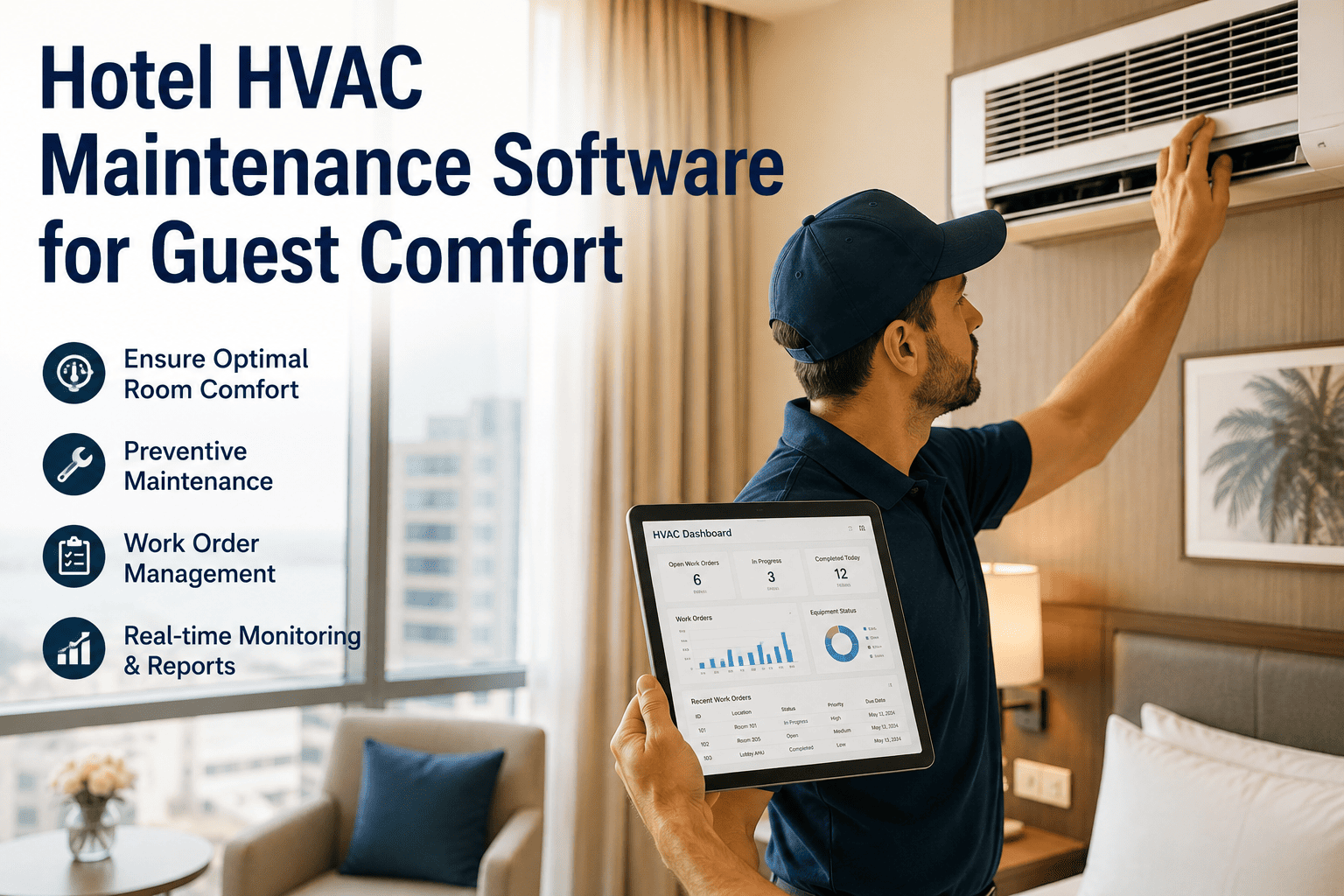
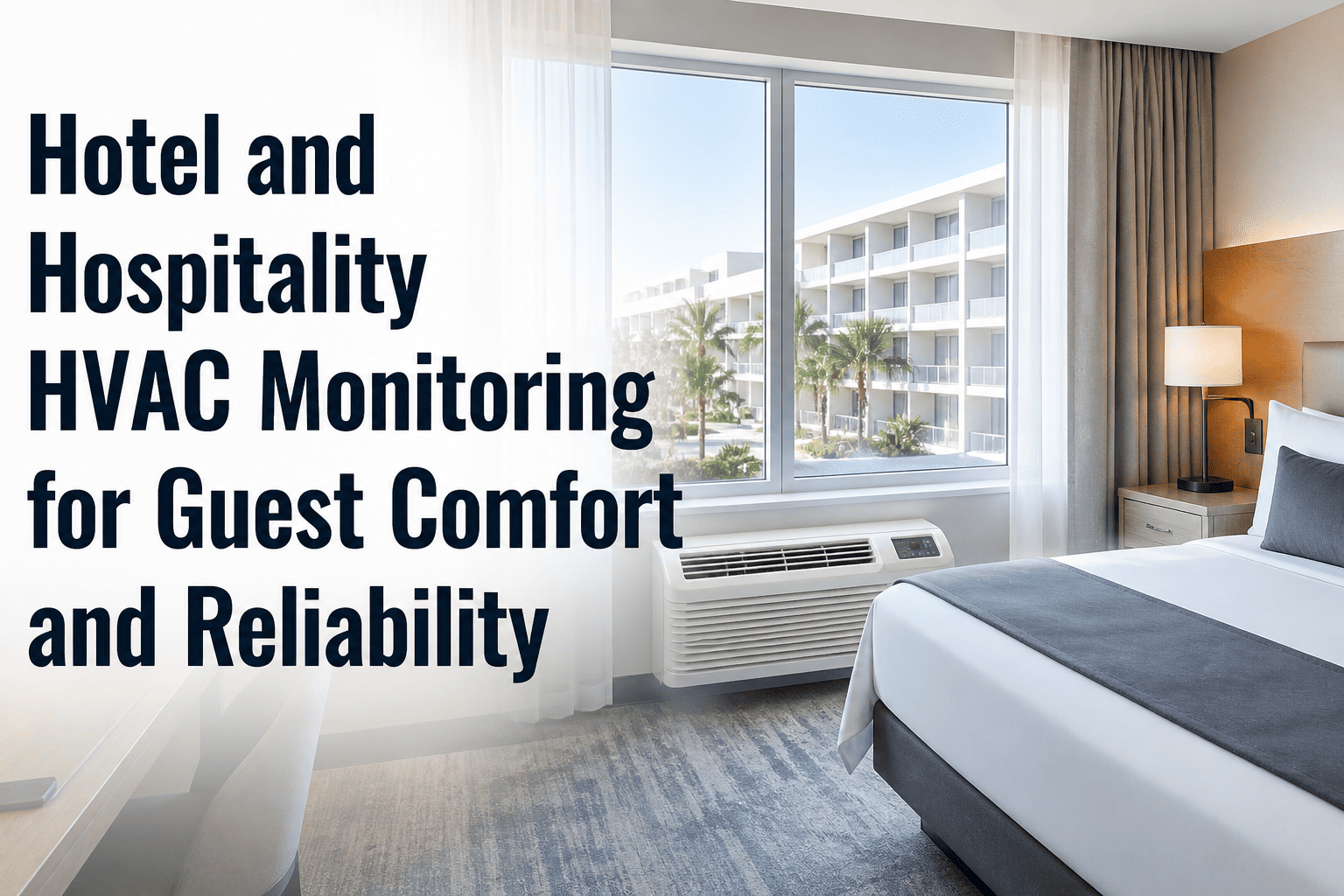
A hotel's HVAC system is the single infrastructure asset most directly connected to guest experience, online reviews, and revenue per available room. A guest who cannot control their room temperature leaves a one-star review — not a maintenance report. A property running reactive HVAC management spends 15–30% more on energy than a property with a structured preventive programme, and emergency midnight callouts routinely cost 3–4x the equivalent planned repair. The hotels consistently earning top comfort scores and lowest utility cost-per-room share one operational advantage: systematic HVAC maintenance built on asset condition data, scheduled preventive work, and energy performance tracking across every room and mechanical system. Book a demo and see how Oxmaint structures hotel HVAC maintenance across your full property.
Why Hotel HVAC Is a Revenue-Critical System
Unlike office or industrial HVAC, hotel systems operate 24 hours a day, 365 days a year, across hundreds of individually occupied spaces — each with a guest who has paid for comfort and will publicly rate their experience.
Guest Comfort Impact
Room temperature is the most frequently cited comfort complaint in hotel reviews. A single PTAC failure during a sold-out night triggers a room relocation, a compensation cost, and a public one-star review visible to thousands of future guests — far exceeding any maintenance saving from deferred PTAC servicing.
Energy Cost at Scale
HVAC accounts for 40% of total hotel energy spend. A 200-room property with dirty coils, clogged filters, and uncalibrated thermostats routinely wastes $60,000–$120,000 annually in avoidable energy costs — costs that compound every year without a structured maintenance programme.
Asset Lifespan and CapEx
PTACs and FCUs serviced on a structured schedule reach 12–15 years of service life. Units running on reactive maintenance typically fail at 7–9 years — cutting asset life nearly in half and accelerating the CapEx replacement cycle by 3–5 years across a full property's equipment fleet.
Regulatory and Brand Standards
Hotel brands and franchise agreements mandate indoor air quality standards, ventilation rates, and equipment certification requirements. Failure to meet brand standards during property inspections risks franchise agreements and star ratings — consequences that dwarf any short-term maintenance cost saving.
Hotel HVAC Equipment Types and Maintenance Requirements
Each equipment class in a hotel property carries distinct maintenance intervals, failure modes, and guest impact profiles. See how Oxmaint maps your property's full HVAC asset registry with zone-specific schedules.
| Equipment Type | Location | Key PM Interval | Guest Impact if Failed |
|---|---|---|---|
| PTAC Units | Individual guest rooms | Filter clean monthly, coil service quarterly | Direct — room temperature loss, immediate complaint and review |
| Fan Coil Units (FCU) | Rooms, corridors, lobbies | Filter quarterly, coil annual, valve bi-annual | High — zone temperature failure, multiple room complaints |
| Central Air Handlers (AHU) | Mechanical rooms | Belt monthly, filter bi-monthly, coil semi-annual | Critical — entire floor or wing comfort failure |
| Chillers | Plant room / rooftop | Monthly inspection, annual tube cleaning, 3-year overhaul | Critical — full property cooling loss in peak season |
| Cooling Towers | Rooftop / external | Weekly water treatment, quarterly basin clean, annual inspection | High — chiller efficiency loss, energy spike, Legionella risk |
| Kitchen Exhaust Systems | F&B areas | Filter weekly, duct quarterly, fan semi-annual | Operational — fire risk, health code violation, kitchen closure |
Your HVAC Is Your Biggest Energy Bill. Make It Your Biggest Saving.
Hotels running structured HVAC preventive maintenance programmes recover 15–25% of annual energy spend within the first year. Oxmaint tracks every coil clean, every filter replacement, and every chiller service against your energy consumption data — so ownership sees exactly what the maintenance programme is worth in dollars saved.
Four HVAC Problems Costing Hotels Revenue Every Season
The same reactive patterns repeat across hotel properties regardless of star rating or size. These four problems drive inflated energy bills, emergency repair costs, and the negative reviews that suppress future booking revenue.
PTAC and FCU Neglect Across Hundreds of Rooms
Monthly filter cleaning and quarterly coil servicing on PTAC units is operationally difficult at scale without a structured work order system. When deferred, dirty coils reduce efficiency by 20–30%, units draw excess energy, and failure rates spike — generating guest complaints during the highest-occupancy periods when engineering teams are already stretched.
No Energy Performance Baseline
Without tracked energy consumption per zone or system, hotels have no visibility into which equipment is degrading. A chiller running at 85% efficiency versus 95% costs tens of thousands in excess energy annually — invisible without baseline data. Properties that track energy by system identify degradation early and recover efficiency before costs compound.
Reactive Cooling Tower and Water System Management
Cooling tower water treatment and basin cleaning deferred for even one season creates Legionella risk, reduces chiller efficiency, and triggers unplanned chiller interventions during peak summer occupancy. A single peak-season chiller failure at a 300-room resort costs $25,000–$80,000 in emergency contractor fees, guest compensation, and lost revenue from distressed guests checking out early.
Paper-Based PM That Disappears at Handover
Engineering teams manage room-by-room PTAC logs, AHU service records, and chiller maintenance histories across paper binders and spreadsheets. When the chief engineer leaves, the maintenance history leaves with them. The next team repeats failures that were already diagnosed and resolved — and brand inspection auditors find no documentation during standards reviews.
Stop Losing Revenue to Reactive HVAC Failures
Oxmaint gives hotel engineering teams automated PM scheduling across every room unit, central plant asset, and ventilation system — with digital records that survive every staff handover and satisfy every brand standards audit.
Hotel HVAC Maintenance vs. Energy Efficiency: Direct Connection
Every deferred HVAC maintenance task has a direct energy cost consequence. Understanding the energy penalty of neglected maintenance makes the ROI case for structured PM programmes clear and quantifiable for finance and ownership teams.
How Oxmaint Manages Hotel HVAC Maintenance at Scale
Managing HVAC maintenance across 200–500 rooms and a full mechanical plant requires more than a calendar — it requires a system that assigns work, tracks completion, stores records, and surfaces the next required task automatically. Book a demo to see Oxmaint running on a live hotel asset register.
Hotel HVAC Maintenance Performance Benchmarks
These results represent average improvements from hotel properties that shifted from reactive HVAC management to structured CMMS-driven programmes within 18 months of deployment.
Oxmaint Platform Features for Hotel Engineering Teams
Each module addresses a specific HVAC maintenance challenge in hotel operations. Together they form a closed-loop system where every work order feeds asset history, every asset record drives PM scheduling, and every PM programme protects guest experience and energy budgets.
The ROI of Structured Hotel HVAC Maintenance
Compliance and Brand Standards: HVAC Requirements by Region
Hotel HVAC maintenance obligations extend beyond guest comfort into regulatory ventilation standards, water safety legislation, and brand franchise inspection requirements that vary by market.
| Region | Key Frameworks | Oxmaint Coverage |
|---|---|---|
| USA | ASHRAE 62.1, OSHA ventilation standards, State health codes, Legionella water management plans | Auto-scheduled ventilation PM, water treatment work orders, digital audit trail for health inspections |
| UK | HSE ACoP L8 Legionella, Building Regulations Part F, CIBSE guidance | Monthly water treatment scheduling, L8 compliance documentation, cooling tower inspection records |
| UAE | Civil Defence codes, Dubai Municipality, ESMA energy efficiency standards | Inspection scheduling aligned to Civil Defence requirements, energy performance documentation |
| Australia | AS/NZS 3666 Legionella, NCC Section J, WHS Act, State health department codes | Legionella risk management work orders, NCC compliance documentation, climate-adjusted PM intervals |
| Germany | DIN EN 13779, VDI 6022 hygiene guidelines, BetrSichV | DIN-aligned PM intervals, mandatory hygiene inspection scheduling, certification record archiving |
| Singapore / SE Asia | BCA Green Mark, NEA environmental health standards, hotel licensing requirements | Green Mark maintenance documentation, NEA water cooling system records, multi-site dashboards |
From HSE Legionella risk management in the UK to ASHRAE ventilation compliance in the US, Oxmaint auto-schedules every required HVAC inspection, generates audit-ready documentation, and tracks every compliance deadline across your full portfolio.
Frequently Asked Questions: Hotel HVAC Maintenance
QHow often should hotel PTAC units be serviced?
QWhat is the biggest HVAC energy waste in hotels?
QHow does HVAC maintenance affect online hotel reviews?
QWhat are Legionella compliance requirements for hotel cooling towers?
QHow quickly can Oxmaint be deployed across a hotel property?
Every Deferred HVAC Task Is a Guest Complaint Waiting to Happen
Oxmaint gives hotel engineering teams automated PM scheduling across every room unit and central plant system, digital work order tracking from guest complaint to close-out, energy performance visibility, and CapEx forecasting — all in one platform, live in under 60 days, with no implementation fees.