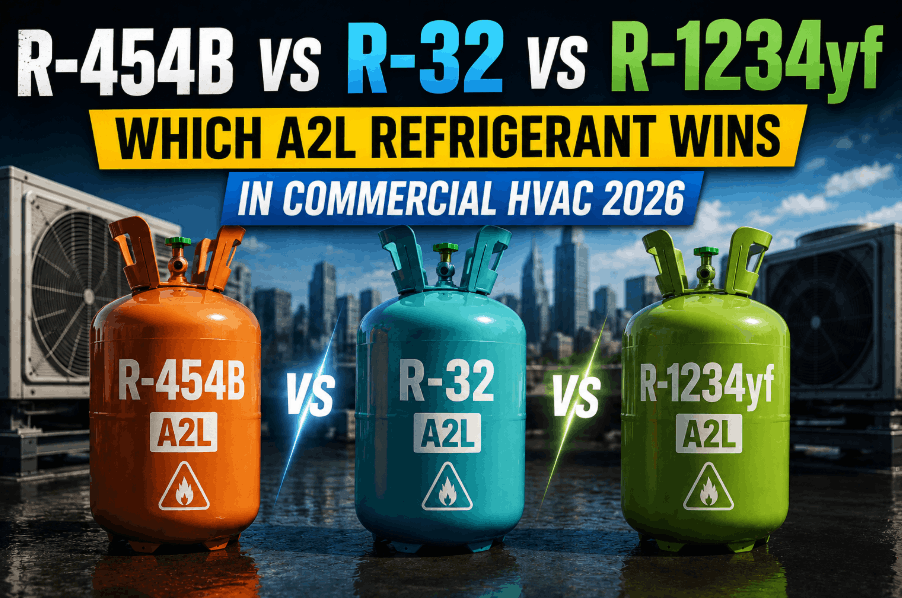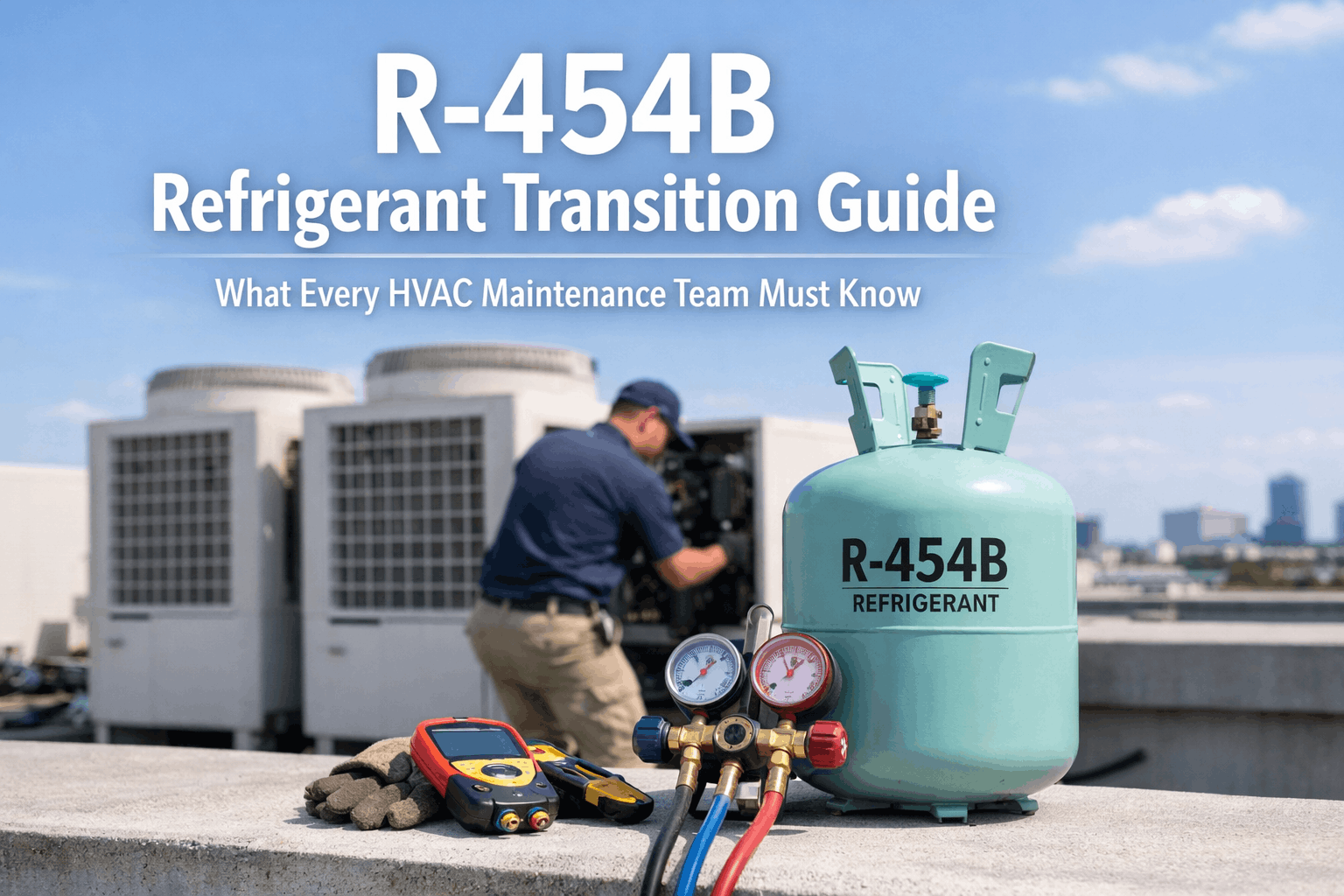
The HVAC industry is undergoing its most significant refrigerant transformation in decades. As of January 1, 2025, the EPA's AIM Act mandates that all new residential and light commercial air conditioning systems transition away from R-410A to low-GWP alternatives like R-454B. This isn't just a chemical swap—it's a complete operational shift that impacts every aspect of your maintenance workflow, from safety protocols to tool inventories. Whether you're managing a team of five technicians or fifty, understanding the R-454B transition is now essential for business continuity and regulatory compliance.
Understanding the R-410A Phase-Out Timeline
The transition to R-454B isn't happening overnight, but the deadlines are firm and non-negotiable. The EPA's technology transition rules under the AIM Act have created a clear roadmap that every maintenance team must follow. Sign up to keep your team compliant with automated deadline tracking.
January 1, 2025
Manufacturing of new R-410A residential and light commercial AC equipment prohibited. All new units must use A2L refrigerants like R-454B or R-32.
January 1, 2026
Installation deadline for R-410A equipment manufactured before 2025. After this date, only A2L systems can be installed.
January 1, 2028
Final sale deadline for pre-2025 manufactured R-410A products like window units and PTACs.
Final Phase-Down
EPA targets 85% reduction in HFC use from baseline levels, making R-410A virtually obsolete.
While R-410A remains available for servicing existing equipment, supply is already tightening with price increases exceeding 300% in some markets. Smart maintenance teams are preparing now to avoid the chaos of last-minute transitions. Book a demo to see how Oxmaint helps manage your refrigerant inventory across both legacy and new systems.
What Makes R-454B Different: The A2L Classification
R-454B represents a new class of refrigerants known as A2L—low toxicity, mildly flammable substances. Unlike R-410A's A1 classification (non-flammable), A2L refrigerants require specific handling protocols while offering significant environmental benefits with a GWP of just 466 compared to R-410A's 2,088.
The "mildly flammable" designation often causes concern, but understanding the science reveals manageable risks. A2L refrigerants require both a direct flame source AND high concentration to ignite. Even then, the flame propagates slower than walking speed and is difficult to sustain. This is vastly different from highly flammable A3 refrigerants like propane.
Essential Tool Upgrades for R-454B Compliance
Your existing R-410A tools won't disappear, but servicing A2L systems requires specific equipment modifications to ensure safety and prevent cross-contamination. The good news: not everything needs replacement.
Required A2L-Certified Tools
- Recovery Machine: Must be non-sparking with purge feature
- Leak Detector: A2L-compatible, calibrated to refrigerant-specific LFL
- Vacuum Pump: Non-sparking motor required
- Refrigerant Cylinders: Red-top identification, left-hand threads, pressure relief valves
- Charging Hoses: Separate dedicated sets for each refrigerant type
- Reverse Thread Adapters: Required for left-hand cylinder connections
Compatible Existing Tools
- Gauge Manifolds: No changes needed (update saturation tables)
- Scales: Continue using existing equipment
- Flare Tools: Standard tools remain compatible
- Pipe Cutters: No modifications required
- Fire Extinguishers: Dry chemical or CO2 types acceptable
Cylinder identification is critical for safety. A2L refrigerant cylinders feature red tops (instead of green-gray), left-hand threads (reverse of R-410A's right-hand), and pressure relief valves rather than rupture discs. These design changes prevent accidental mixing and ensure proper handling. Sign up to track your team's tool certifications and A2L readiness.
Updated Leak Detection Protocols
Leak detection for A2L refrigerants follows stricter standards under ASHRAE 15-2024 and UL 60335-2-40. Systems with more than 3.91 lbs of A2L refrigerant charge must include factory-installed leak detection and dissipation systems.
Detection Threshold
Sensors trigger at 20% of Lower Flammable Limit (LFL). For R-454B, this means detection begins well before dangerous concentrations develop.
Automatic Dissipation
Upon detection, systems automatically activate fans to minimum dissipation airflow (20% of nominal), diluting refrigerant concentration below flammability limits.
BMS Integration
Dissipation boards signal Building Management Systems to shut down compressors, electric heat, and gas heat while opening zoning dampers for maximum airflow.
5-Minute Safety Delay
After concentrations drop below 20% LFL, systems maintain dissipation mode for 5 minutes before returning to normal operation.
Field leak detection requires A2L-calibrated electronic detectors—never use halide torches or open flame methods. Bubble solutions and fluorescent agents remain acceptable, but avoid chlorine-based detergents that could react with refrigerant and corrode copper lines. Book a demo to see how Oxmaint automates leak detection scheduling and compliance documentation.
Mandatory Service Procedure Changes
Many procedures previously considered "best practices" are now mandatory requirements for A2L systems. Technicians must follow strict sequences to prevent ignition risks.
| Procedure | R-410A Status | R-454B Status |
|---|---|---|
| Purge circuit with inert gas (nitrogen) | Best Practice | Required |
| Evacuate system | Best Practice | Required |
| 5-minute nitrogen purge | Best Practice | Required |
| Secondary evacuation | Best Practice | Required |
| Pressure testing | Best Practice | Required |
| Leak testing | Best Practice | Required |
| Non-sparking tools | Not Required | Required |
The key difference: R-454B requires double-purge protocols. Technicians must purge with nitrogen, evacuate, purge again for 5 minutes, then evacuate once more before opening circuits. This ensures all refrigerant is removed before brazing or cutting operations that could create ignition sources.
Training and Certification Requirements
While existing EPA 608 certification remains valid for handling R-454B, A2L-specific safety training is strongly recommended and increasingly required by employers and jurisdictions. Understanding the nuances of mildly flammable refrigerants prevents accidents and liability.
EPA 608 Certification
Still required for all refrigerant handling. Universal certification covers R-454B, but A2L-specific knowledge is essential.
A2L Safety Training
4-hour hands-on courses covering flammability characteristics, handling protocols, and emergency procedures. NATE CEU credits available.
Manufacturer Training
Equipment-specific programs from Carrier, Trane, Daikin, and others covering system-specific dissipation controls and installation requirements.
State/Local Requirements
Some jurisdictions require additional certifications. Check with your local Authority Having Jurisdiction (AHJ) for specific mandates.
Training isn't just about compliance—it's about competitive advantage. Technicians certified in A2L handling can service both legacy R-410A systems and new R-454B installations, making them invaluable as the market transitions. Sign up to track your team's certifications and receive alerts when renewals are due.
Storage and Transportation Protocols
A2L refrigerants require updated storage and transportation procedures under IFC and NFPA standards. Maintenance facilities must adapt to accommodate mildly flammable materials.
Maximum Allowable Quantities
Storage limits apply based on building control areas. Exceeding thresholds requires hazardous materials permits and management plans.
Cylinder Requirements
Upright storage only, away from incompatible materials and ignition sources. Red-top cylinders must be clearly segregated from A1 refrigerants.
Transportation Rules
DOT regulations apply for A2L transport. Vehicles must display proper hazard markings and drivers may need HAZMAT endorsements for large quantities.
Documentation
SDS sheets must be on-site and accessible. Hazardous Material Inventory Statements required for facilities storing significant quantities.
System Design Changes You Need to Know
New R-454B equipment incorporates safety features that change installation and service requirements. Understanding these modifications prevents warranty issues and safety violations.
Indoor Unit Modifications
- Factory-installed leak detection sensors
- Active dissipation control boards
- Ignition source isolation on all wiring
- New metering devices for different pressures
- Straight liquid and vapor lines for brazing access
Outdoor Unit Modifications
- Redesigned compressors for A2L compatibility
- Non-sparking electrical components
- Protected contactor designs with flame arrestors
- Straight service valves for maintenance access
- Enclosed compressor plugs with isolation protection
Critical note: R-454B outdoor units require matching indoor coils with integrated dissipation systems. You cannot simply replace an outdoor R-410A unit with an R-454B unit while keeping the existing coil—the safety systems won't function properly.
Frequently Asked Questions
Can I still buy R-410A equipment in 2025?
No. Manufacturing of new R-410A residential and light commercial equipment stopped on January 1, 2025. Existing inventory manufactured before that date can be installed until January 1, 2026.
Do I need all new tools to work with R-454B?
No. Gauge manifolds, scales, and hand tools remain compatible. You need A2L-certified recovery machines, leak detectors, vacuum pumps, and dedicated charging hoses. The key is ensuring no cross-contamination between refrigerants.
Is R-454B more dangerous than R-410A?
R-454B is mildly flammable (A2L) while R-410A is non-flammable (A1). However, with proper handling protocols—nitrogen purging, non-sparking tools, leak detection—R-454B is safe to work with. The flammability risk requires awareness but not fear.
Can I retrofit existing R-410A systems to R-454B?
No. R-454B requires different oils, pressures, and safety systems. Attempting to retrofit voids warranties and creates safety hazards. Continue servicing R-410A systems with reclaimed refrigerant until replacement is necessary.
How long will R-410A be available for service?
R-410A will remain available for servicing existing equipment through reclaimed and recycled sources, but virgin production is phased down. Expect rising prices and potential shortages as supply tightens through 2036.
What's the difference between R-454B and R-32?
R-32 is a single-component refrigerant with GWP of 675, while R-454B is a blend (R-32 + R-1234yf) with GWP of 466. R-454B operates more similarly to R-410A, making it easier for manufacturers to adapt existing designs. Both are A2L classified.
Do technicians need new EPA certification for A2L refrigerants?
Existing EPA 608 certification covers R-454B handling. However, A2L-specific safety training is highly recommended and may be required by some employers or jurisdictions. Check with your local AHJ for specific requirements.
What happens if I mix R-454B and R-410A?
Never mix refrigerants. Cross-contamination creates unknown pressure and flammability characteristics, voids warranties, and can damage equipment. Use dedicated hoses and clearly label recovery cylinders to prevent mixing.
Preparing Your Maintenance Operation
The R-454B transition isn't just about individual technicians—it's about organizational readiness. Maintenance teams need systematic approaches to manage the coexistence of R-410A and R-454B systems for the next decade.
Start with inventory management. Separate storage areas for A1 and A2L refrigerants prevent cross-contamination. Color-coded tool organization ensures technicians grab the right equipment for each job. Digital tracking of which systems use which refrigerants prevents service errors.
Documentation becomes critical. Updated safety data sheets, installation manuals, and emergency procedures must be accessible in the field. Mobile-accessible documentation ensures technicians have current information regardless of job site location.
Finally, customer communication matters. Property managers and building owners need education about why their new systems use different refrigerants, what the safety features do, and why service costs may differ from legacy equipment. Transparent communication builds trust and justifies proper pricing for A2L-certified service.
The maintenance teams that thrive in this transition will be those that treat it as an opportunity rather than an obstacle. A2L certification differentiates your services, proper tooling increases efficiency, and early adoption positions you as an industry leader while competitors scramble to catch up.
Ready to Streamline Your Refrigerant Compliance?
Oxmaint provides the tools you need to manage the R-454B transition: certification tracking, equipment documentation, compliance alerts, and team training records—all in one centralized platform.