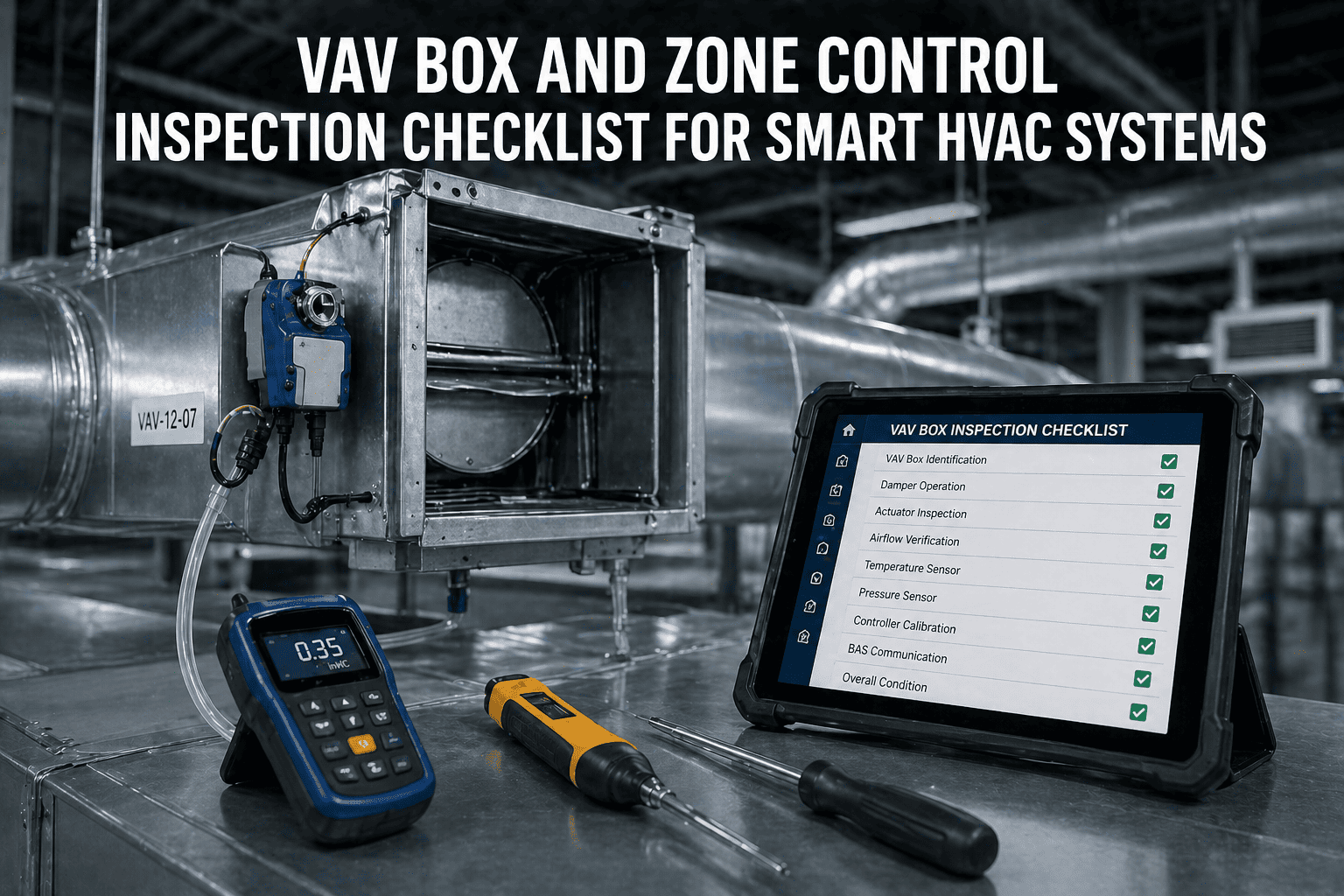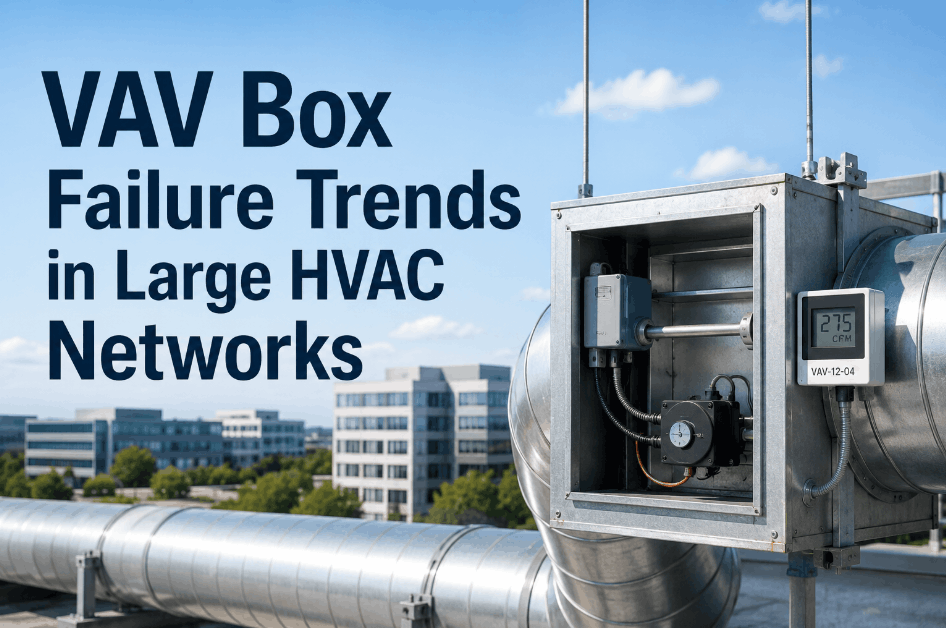
VAV box failures rarely occur in isolation — in large HVAC networks, a single stuck damper or drifting actuator sensor cascades into zone imbalance, pressure instability, and comfort complaints across multiple floors. Facility teams using Sign Up Free on OxMaint can map VAV fault patterns across their terminal unit inventory, correlate failure types to asset age and service history, and build structured maintenance plans before isolated failures become network-wide airflow problems. Understanding where VAV box failures originate and how they propagate is the foundation of reliable zone control in commercial and institutional buildings.
Why VAV Box Failures Spread Across Large HVAC Networks
In multi-zone air distribution systems, VAV terminal units share supply air from common AHUs and operate within interdependent pressure zones. When one box fails to modulate correctly, system static pressure shifts compensate — overdriving adjacent units and accelerating wear on damper actuators and reheat coils throughout the network. Book a Demo to see how OxMaint links terminal unit fault records to air handling equipment, enabling maintenance teams to diagnose network-wide failure patterns from a single platform.
Five Primary VAV Box Failure Modes in Large Networks
Diagnosing VAV failure trends requires categorizing fault types by their impact on zone control and air distribution. Sign Up Free to start logging VAV fault history in OxMaint and build the failure pattern baseline your maintenance planning requires.
Stuck Dampers — Open or Closed
Dampers stuck open overcool zones and rob supply air from adjacent terminals, depressing system static pressure. Dampers stuck closed eliminate airflow entirely, driving occupant complaints and HVAC energy waste as the BAS attempts compensation through other zones.
Airflow Sensor Drift and Calibration Error
Pitot tube sensors accumulate dust and debris over time, producing inaccurate CFM readings that cause the VAV controller to modulate incorrectly. Calibration drift across multiple units creates systematic airflow imbalance that standard comfort complaints rarely trace back to sensor error without fault history analysis.
Reheat Coil and Valve Failures
Electric reheat element burnout or hydronic reheat valve failure eliminates perimeter zone heating capacity during cooling-dominant seasons. In large networks, clustering of reheat failures by floor or wing often indicates shared electrical circuit aging or hydronic supply pressure problems rather than isolated unit defects.
Actuator Motor and Linkage Wear
Pneumatic and electronic actuators degrade with cycle count, not just age. High-traffic zones with frequent setpoint changes experience accelerated actuator wear. Tracking actuator replacement history by zone reveals which areas of the network are cycling most aggressively and may indicate setpoint scheduling problems upstream.
Control Board and Communication Failures
DDC controller board failures cause VAV boxes to default to minimum or maximum positions, creating sudden zone imbalance. Communication bus faults affecting multiple boxes simultaneously indicate network-level wiring or controller issues that require system-wide diagnostic response, not unit-by-unit replacement.
VAV Failure Risk by Network Zone Type
Failure frequency and impact severity vary significantly by zone location, occupancy pattern, and system design. Book a Demo to explore how OxMaint maps VAV asset records to floor plans and zone types, enabling maintenance teams to prioritize inspections where failure impact is highest.
| Zone Type | Dominant Failure Mode | Failure Impact | Risk Level | OxMaint PM Lever |
|---|---|---|---|---|
| Perimeter Offices | Reheat valve failure, actuator wear | Occupant discomfort, HR escalation | High | Quarterly actuator inspection WOs |
| Interior Core Zones | Sensor drift, damper sticking | Overcooling, energy waste | Medium–High | Annual sensor calibration tasks |
| Conference Rooms | Occupancy sensor mismatch, damper lag | Comfort complaints, CO2 accumulation | Medium | Demand-controlled vent audit WOs |
| Server / IT Rooms | Control board faults, damper failure | Equipment overheating, downtime risk | Critical | Monthly inspection + fault alerts |
| Lab / Cleanroom Zones | Pressure imbalance, airflow sensor error | Containment risk, regulatory non-compliance | Critical | Continuous monitoring linked to asset records |
How VAV Fault Patterns Drive Cascading Network Costs
Untracked VAV failures compound into HVAC system costs that extend well beyond the original terminal unit repair. Sign Up Free to connect your VAV fault data to OxMaint's asset management and work order system and build the failure trend visibility that prevents cascade events.
Using OxMaint to Track VAV Failure Trends at Scale
Register VAV Assets by Zone, Floor, and AHU Served
Create individual asset records for each VAV box in OxMaint, linked to the AHU system and building zone they serve. Hierarchical asset structure enables fault trend analysis by floor, wing, or system rather than unit-by-unit review.
Categorize Fault Types on Every Work Order
Log failure mode, component affected, and repair action on each VAV service work order in OxMaint. Consistent fault categorization builds the trend data needed to identify which failure modes are most prevalent by zone type and equipment generation.
Schedule Preventive Maintenance by Failure Risk Profile
Use fault frequency data to set PM intervals in OxMaint — high-failure zones receive more frequent actuator, sensor, and reheat inspections. Risk-based PM scheduling concentrates maintenance effort where failure probability and impact are highest.
Link VAV Fault Trends to AHU and System Performance Records
Connect terminal unit fault history to AHU service records and energy data in OxMaint. Cross-system correlation reveals when clusters of VAV failures are driving upstream equipment degradation or system energy anomalies that unit-level analysis would miss.
Generate Network-Level Failure Trend Reports for Capital Planning
Use OxMaint reporting dashboards to surface VAV failure frequency by age cohort, zone type, and fault category. Trend reports support capital replacement planning for terminal unit populations approaching end of reliable service life.
Frequently Asked Questions: VAV Box Failure Trends in Large HVAC Networks
What are the most common VAV box failure modes in commercial buildings?
Stuck dampers, airflow sensor drift, reheat coil failure, actuator wear, and DDC control board faults account for the majority of VAV service events. Tracking these by zone and asset age reveals which failure types dominate specific areas of the network.
How do VAV failures affect the rest of an HVAC network?
A malfunctioning VAV box alters system static pressure, forcing adjacent units to compensate and accelerating wear throughout the zone. Multiple simultaneous failures cause AHU overcompensation, elevated energy consumption, and widespread comfort complaints.
How does OxMaint help track VAV fault trends?
OxMaint links individual VAV asset records to work order fault history, enabling failure pattern analysis by zone, floor, and AHU system. PM schedules, repair trends, and escalation tasks are managed in the same platform.
How often should VAV boxes be inspected in large buildings?
High-risk zones such as server rooms, labs, and perimeter offices benefit from quarterly actuator and sensor inspections. Standard interior zones typically require semi-annual PM coverage, adjusted based on fault history data from OxMaint.
Can VAV failure trends inform capital replacement planning?
Yes — fault frequency by asset age cohort in OxMaint identifies terminal unit populations approaching end of reliable service life, supporting data-driven capital replacement decisions rather than reactive unit-by-unit replacement.