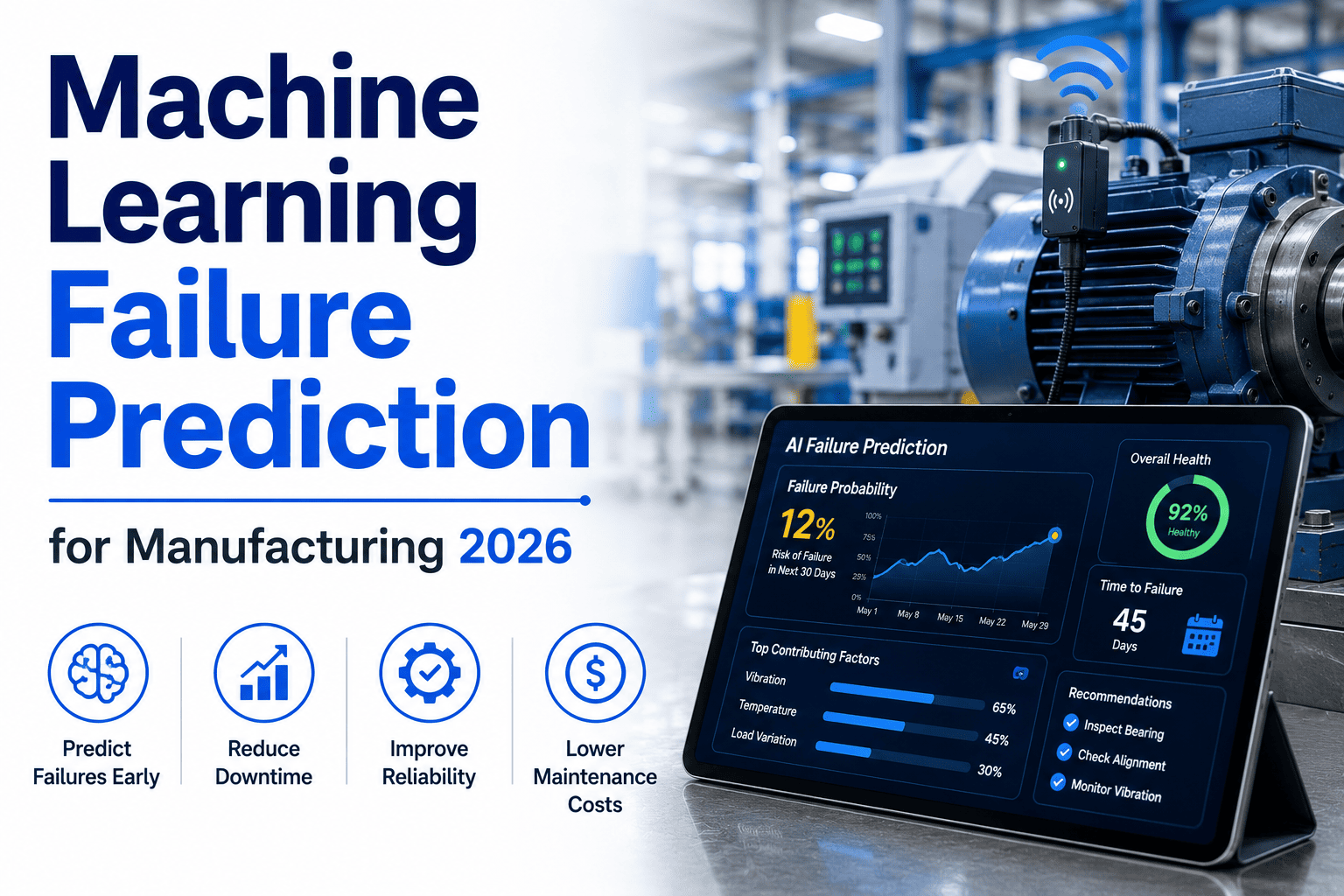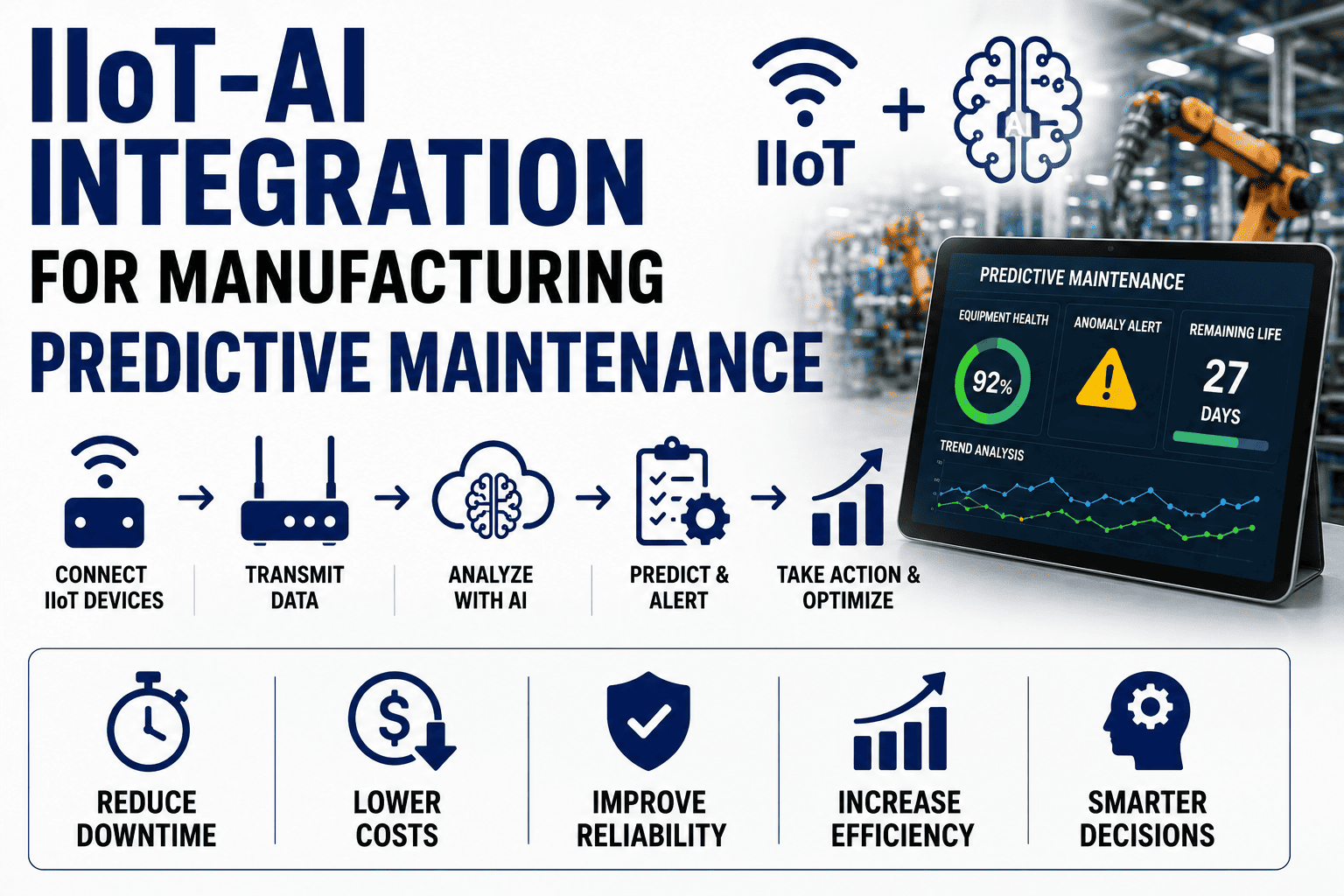
Integrating IIoT sensor data with AI models transforms manufacturing predictive maintenance from simple threshold alerts into true failure prediction, cutting unplanned downtime by up to 50% and reducing maintenance costs by 25-30%. This IIoT AI integration guide covers the end-to-end pipeline—from data preprocessing and historian-based model training to edge vs cloud deployment, model drift detection, and closing the loop from AI alert to automated CMMS work orders. By leveraging manufacturing AI IoT architectures, reliability teams can move beyond reactive firefighting and schedule interventions weeks before catastrophic equipment failure. Ready to modernize your maintenance strategy? You can Start Free Trial today or book a personalized demo to see the platform in action.
Is Your Plant Still Reacting to Failures Instead of Predicting Them?
Most manufacturing plants capture millions of data points daily but use less than 5% of it for maintenance decisions. AI-driven IIoT integration changes that—turning raw vibration, temperature, and pressure telemetry into precise, actionable failure forecasts that save $50K-$500K annually per line.
How to Build an IIoT AI Predictive Maintenance Pipeline
A robust manufacturing IIoT AI architecture requires five sequential stages. Skipping any stage—especially data preprocessing or drift monitoring—leads to false positives that erode technician trust and stall adoption.
Sensor Data Ingestion
Capture high-frequency telemetry (vibration, acoustic, thermal, current) from PLCs, SCADA, and edge gateways. Target a minimum 1kHz sampling rate for bearing fault detection.
Data Preprocessing & Cleansing
Apply time-series interpolation, remove outliers via Z-score filtering, and normalize datasets. Raw IIoT data is typically 20-30% noisy; uncleaned data corrupts machine learning training.
Feature Engineering & Model Training
Extract RMS, kurtosis, and FFT frequency features. Train supervised models (Random Forest, XGBoost) on historian failure data, or use unsupervised anomaly detection for assets lacking labeled failure logs.
Edge vs Cloud Deployment
Deploy low-latency inference at the edge for critical assets requiring <100ms response (safety shutoffs). Use cloud processing for fleet-wide analytics, model retraining, and predictive maintenance reporting.
CMMS Work Order Automation
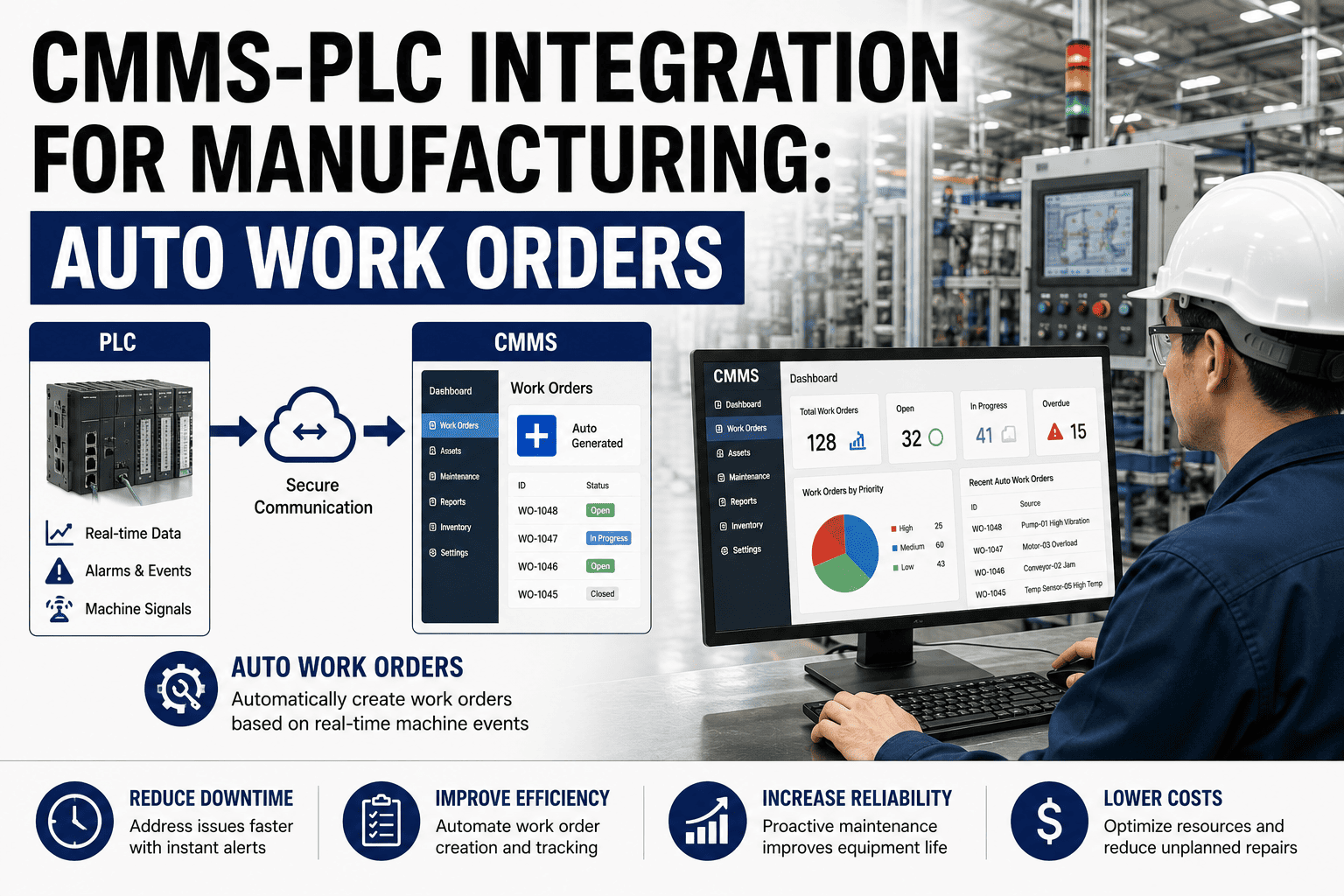
The final and most crucial step: AI alerts must trigger automated work orders in your CMMS. Without this closed loop, predictions remain academic and physical asset failures still occur.
Edge vs Cloud: Where to Deploy AI IIoT Models
Choosing the right compute layer impacts latency, cost, and scalability. A hybrid approach is standard for manufacturing AI IoT deployments—balancing immediate safety responses with deep fleet analytics.
| Criteria | Edge Computing | Cloud Computing |
|---|---|---|
| Latency | Ultra-low (<10ms) | Higher (100ms-2s) |
| Best For | Safety shutoffs, immediate fault detection | Model retraining, fleet-wide trend analysis |
| Bandwidth Usage | Minimal (filters data locally) | High (streams raw telemetry) |
| Cost Profile | High initial hardware cost per asset | Lower upfront, recurring compute costs |
| Scalability | Requires gateway deployment per line | Instantly scales to thousands of assets |
How to Monitor AI Model Drift in Manufacturing
An AI model's accuracy degrades over time as equipment wears, operating conditions shift, and sensor calibration drifts. Without active drift monitoring, false negatives spike and unexpected failures return.
When Asset Physics Change
Occurs when the relationship between sensor inputs and equipment health shifts—often due to a recent repair, modified load, or environmental change. Requires retraining the model on new historian data.
When Sensor Inputs Shift
Happens when the statistical properties of the input data change (e.g., a vibration sensor degrades or a new batch of raw materials alters machine stress). Monitor using Population Stability Index (PSI).
Track These KPIs
Monitor precision, recall, and F1-score weekly. If prediction confidence drops below 85%, or false positives exceed 15%, trigger an automated model retraining pipeline.
Close the Loop from AI Alert to Action
AI predictions are useless if they don't trigger maintenance action. See how OxMaint converts raw IIoT data into automated, priority-ranked CMMS work orders.
How OxMaint Connects IIoT AI to Maintenance Execution
OxMaint is an AI-powered CMMS and EAM platform built to ingest predictive alerts and translate them into immediate, trackable maintenance workflows—bridging the gap between data science and reliability execution.
Automated Alert-to-Work-Order
OxMaint automatically generates priority-ranked work orders when AI predictive models flag an asset. Eliminates manual entry delays and cuts incident response time by up to 60%.
Predictive & Preventive Sync
Dynamically adjusts preventive maintenance schedules based on real-time IIoT asset health, ensuring technicians only perform interventions when physics-based data justifies it.
Maintenance Analytics Dashboard
Visualize model accuracy, MTBF improvements, and downtime avoidance in one dashboard. Track exactly how much money your AI IIoT integration is saving the plant monthly.
Spare Parts Pre-Allocation
When the AI predicts a failure 14 days out, OxMaint automatically checks inventory and reserves required spare parts, preventing stockouts and reducing asset dwell time by 40%.
The Cost of Delaying AI IIoT Integration
Consider a 180-asset manufacturing plant spending $42K annually on reactive maintenance and unplanned downtime. Sticking to threshold-based monitoring means catching failures too late.
IIoT AI Predictive Maintenance FAQs
What is the difference between IIoT and AI in manufacturing maintenance?
IIoT (Industrial Internet of Things) refers to the network of physical sensors and edge devices that collect equipment telemetry like vibration and temperature. AI (Artificial Intelligence) is the machine learning layer that analyzes that data to predict failures. IIoT provides the eyes and ears; AI provides the brain. Integrating both via a CMMS executes the physical repair.
How much data is needed to train an AI predictive maintenance model?
Supervised models require at least 3-6 months of historical sensor data containing both normal operations and documented failure events. For assets lacking failure history, unsupervised anomaly detection models can be deployed with as little as 30 days of baseline normal operating data. You can connect your historian data to OxMaint to start training—Book a Demo to see how.
Can OxMaint integrate with existing plant sensors and SCADA systems?
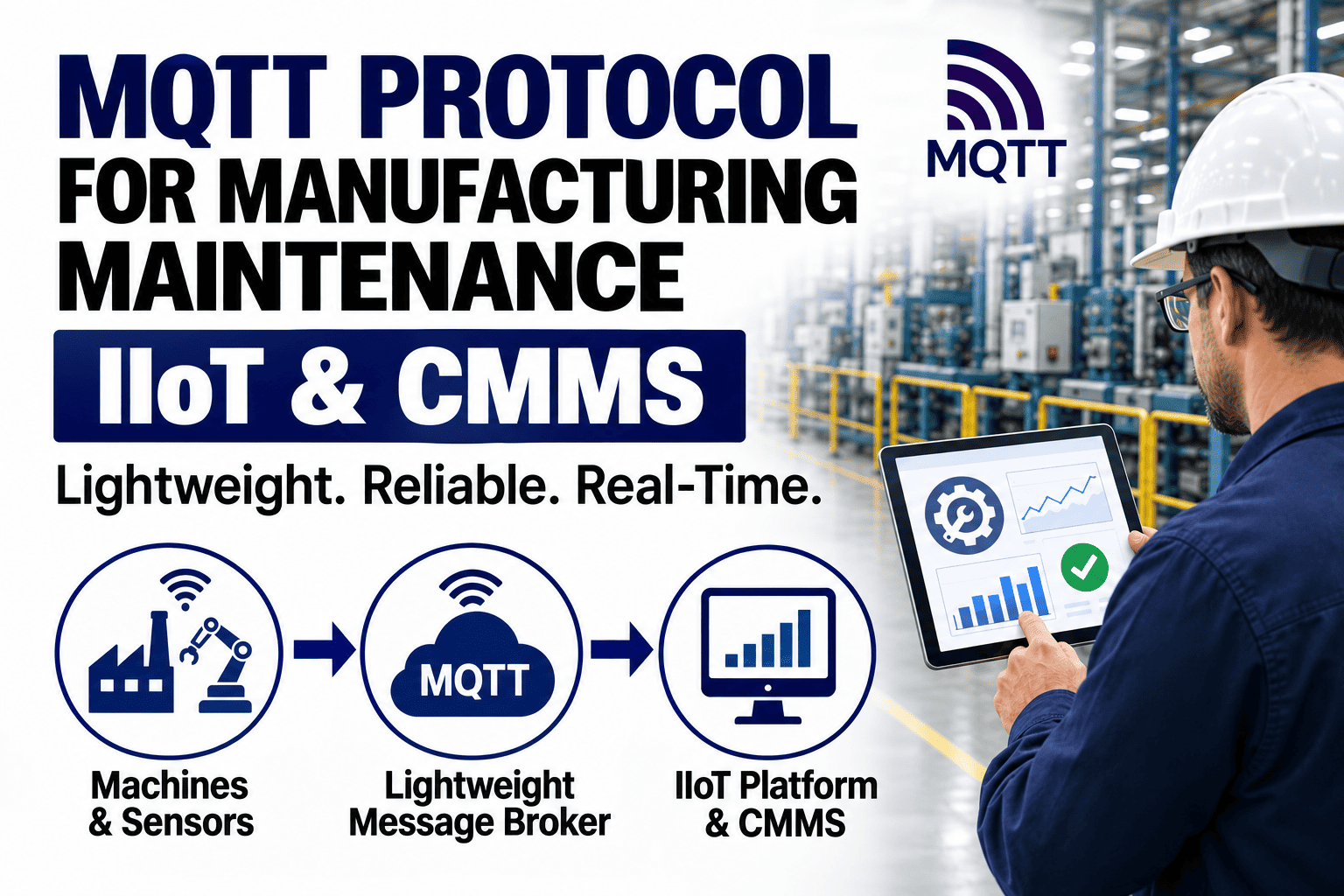
Yes. OxMaint is designed to connect via standard industrial protocols (OPC-UA, MQTT, REST APIs) to pull data from existing PLCs, SCADA gateways, and standalone IIoT sensors. This allows you to leverage your current hardware investments while upgrading the predictive analytics and CMMS execution layer.
How do you prevent false positives in AI predictive maintenance?
False positives are minimized through rigorous data preprocessing, feature engineering, and setting appropriate confidence thresholds (typically >85%). Continuous model drift monitoring and automated retraining pipelines ensure the algorithm adapts to changing equipment physics, maintaining technician trust over time.
What is the typical payback period for an AI IIoT CMMS integration?
Most mid-sized manufacturing plants see a payback period of 6 to 12 months. By reducing unplanned downtime (which costs an average of $260K per hour in heavy manufacturing) and optimizing spare parts inventory, the OxMaint platform pays for itself through a single avoided catastrophic failure.
Stop Reacting. Start Predicting.
Transform your raw sensor data into automated, cost-saving maintenance workflows with OxMaint's AI-powered CMMS.
Free 14-day trial · No credit card required