Every manufacturing plant runs on electricity — and every electrical system carries risks that can injure workers, halt production lines, and trigger costly OSHA penalties. In the United States alone, over 2,070 workplace fatalities were caused by electrical contact between 2011 and 2024, with manufacturing ranking among the hardest-hit sectors. Arc flash explosions reaching temperatures above 35,000 degrees Fahrenheit, electric shock from improperly de-energized equipment, and lockout/tagout failures continue to devastate facilities that lack structured safety programs. The good news: nearly all of these incidents are preventable with the right procedures, training, and digital tools. Want to see how leading plants prevent these incidents? Schedule a free demo and let our team walk you through how Oxmaint automates NFPA 70E compliance, LOTO documentation, and electrical safety workflows for your facility.
How Electrical Hazards Threaten Manufacturing Workers and Operations
Manufacturing facilities present a unique combination of high-voltage distribution systems, motor control centers, automated machinery, and production environments where moisture, dust, and heat can accelerate equipment degradation. Understanding the specific hazards your plant faces is the first step toward eliminating them.
Key Industry Data
5-10
Arc flash incidents occur daily across U.S. workplaces, causing over 400 fatalities and 30,000 events annually
$20.7M
Total OSHA lockout/tagout penalties in fiscal year 2023 — a 29% surge from the prior year
70%
Of workplace electrical deaths involve workers in non-electrical roles — machine operators, supervisors, cleaners
Shock Hazards
Contact
Direct contact with energized conductors during maintenance, troubleshooting, or panel inspections
Indirect
Current flowing through metal surfaces, tools, or conductive materials that are not properly grounded
Step Potential
Voltage differences in the ground near a fault, creating shock paths through workers' feet and legs
Arc Flash and Blast Hazards
Thermal
Temperatures exceeding 35,000 degrees F that cause severe burns, ignite clothing, and melt metal components
Pressure
Explosive blast waves that hurl workers, equipment, and molten metal debris across rooms
Acoustic
Sound levels exceeding 140 dB causing permanent hearing damage and disorientation
Are your electrical panels labeled, your LOTO procedures documented, and your team trained? Most OSHA citations come from gaps in basic compliance. Oxmaint automates every step so nothing falls through the cracks.
NFPA 70E Compliance Checklist for Plant Managers
NFPA 70E is the consensus standard for electrical safety in the workplace. Originally created at OSHA's request, it defines the risk assessment framework, safe work procedures, PPE requirements, and training standards that every manufacturing facility must follow. The 2024 edition introduced critical updates including the "point of work" safety concept, expanded DC system guidance, and stricter equipment labeling durability requirements. Here is the essential compliance checklist every plant manager needs.
NFPA 70E Manufacturing Compliance Essentials
01
Documented Electrical Safety Program
Facility-specific written program covering policies, procedures, risk controls, and clear assignment of safety responsibilities. Must be audited and updated at minimum every three years or whenever plant conditions change.
02
Arc Flash Hazard Analysis
IEEE 1584-based calculations determining incident energy levels, arc flash boundaries, and PPE category assignments for every electrical panel, switchgear, MCC, and transformer in your plant.
03
Equipment-Specific LOTO Procedures
Written lockout/tagout procedures for each piece of equipment — not generic templates. Must include energy source identification, isolation points, stored energy release steps, and verification methods.
04
Worker Qualification and Training Records
All employees classified as qualified or unqualified with documented role-specific training. NFPA 70E mandates retraining at minimum every three years, with additional sessions after equipment changes or incidents.
05
Arc Flash and Shock Hazard Labeling
Durable labels on all electrical equipment displaying voltage, arc flash boundary, incident energy level, and required PPE. The 2024 standard now requires labels to withstand the operating environment without fading.
06
Energized Electrical Work Permit Process
Formal documented permit required before any work on energized equipment. Must include justification, risk assessment, PPE requirements, shock and arc flash boundaries, and supervisor approval.
Step-by-Step Lockout/Tagout Procedure for Manufacturing Equipment
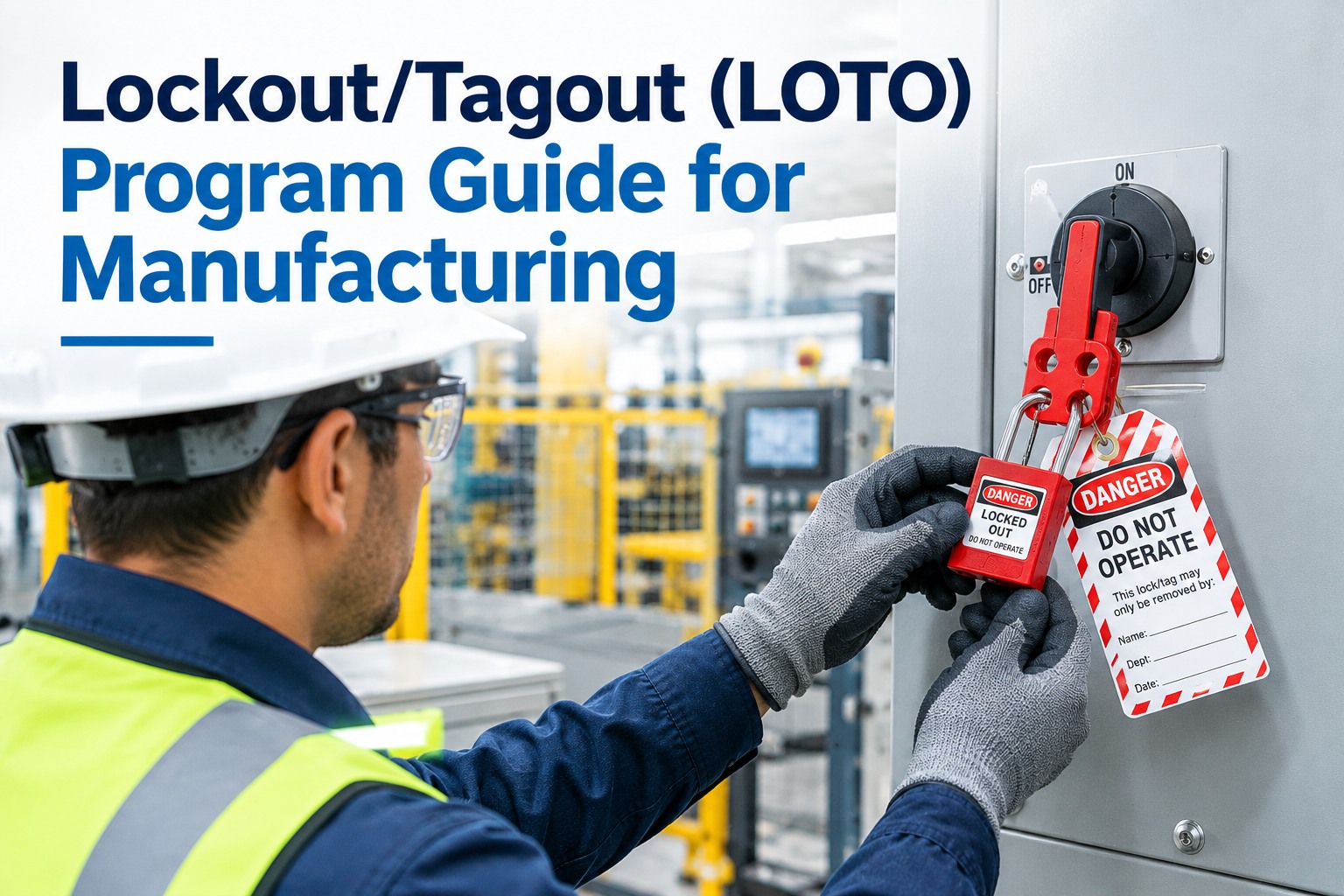
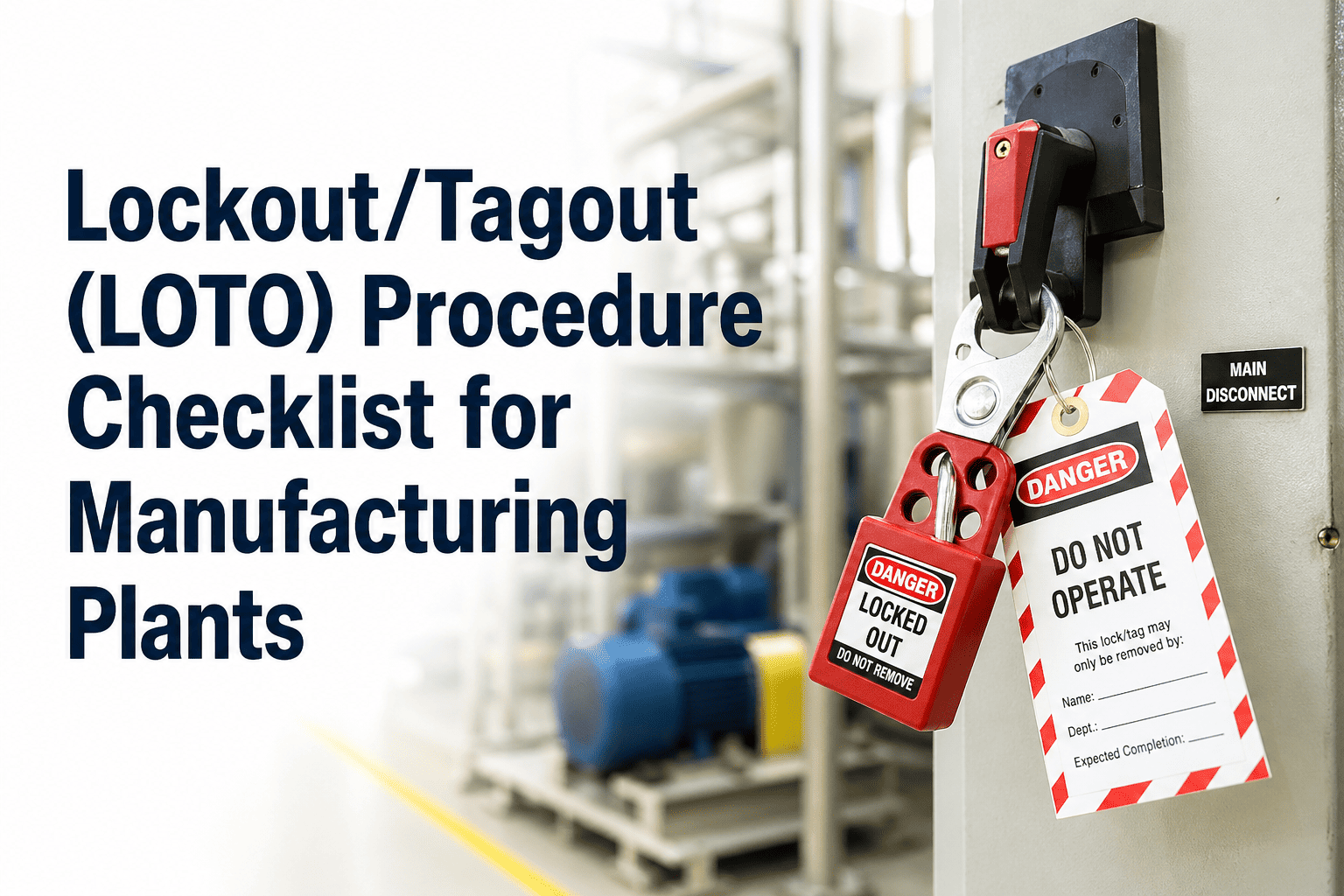
Lockout/tagout remains one of OSHA's top five most-cited violations year after year. In manufacturing, food processing, fabricated metals, and plastics industries lead in both LOTO citation counts and penalty amounts. A structured, verifiable LOTO process is not just a compliance requirement — it is the most effective way to prevent electrocution and unexpected equipment startup. Ready to eliminate LOTO paperwork and missed steps? Sign up for Oxmaint free and start building digital, mobile-accessible LOTO procedures that are timestamped, verified, and always audit-ready.
Establishing an Electrically Safe Work Condition (ESWC)
Following NFPA 70E Article 120.6 and OSHA 29 CFR 1910.147
Step 1
Identify All Energy Sources
Review up-to-date single-line diagrams and schematics. Identify every electrical supply to the equipment including backfeeds, secondary power supplies, UPS systems, and stored energy sources like capacitors and springs.
Step 2
Interrupt Load and Open Disconnects
Properly interrupt the load current, then open every disconnecting device for each identified source. The 2024 NFPA 70E edition permits operating an energized disconnect to achieve ESWC when a risk assessment finds no unacceptable risk.
Step 3
Visually Verify Open Position
Wherever physically possible, visually confirm that disconnect blades are fully open or that drawout-type circuit breakers are completely withdrawn from the enclosure.
Step 4
Apply Lockout/Tagout Devices
Each authorized worker applies their own individual lock and tag following the equipment-specific written procedure. Use multi-lock hasps when multiple workers are involved.
Step 5
Discharge All Stored Energy
Discharge capacitors, release springs, bleed hydraulic and pneumatic pressure, and block or restrain any energy that could cause re-energization. Verify that stored energy cannot re-accumulate.
Step 6
Verify Absence of Voltage
Use an adequately rated portable test instrument to confirm zero voltage on each phase conductor and circuit part. Test the instrument on a known energized source both before and after use to confirm proper operation.
Arc Flash Protection: PPE Categories and Selection Guide
Selecting the correct personal protective equipment requires matching PPE to the calculated incident energy at each work location. The PPE category method defined in NFPA 70E Table 130.7(C)(15)(a) provides a simplified approach for common equipment types when a detailed incident energy analysis has not been performed.
Arc Flash PPE Category Requirements
Track PPE inspections, manage arc flash label reviews, and automate retraining alerts from one platform. Oxmaint keeps your electrical safety program current without the spreadsheets.
Most Common OSHA Electrical Violations in Manufacturing Plants
Manufacturing plants face a disproportionate share of OSHA electrical safety citations. Food manufacturing alone received 384 LOTO citations totaling over 7.4 million dollars in penalties, while fabricated metal products accumulated 377 citations. Understanding the most frequently cited violations helps you prioritize your compliance efforts.
Top Manufacturing Electrical Safety Violations
#1
No Written Energy Control Program
OSHA 1910.147(c)(1)
Facilities operating without a documented, site-specific energy control program covering all machinery and equipment with potential for hazardous energy release.
Fix: Create equipment-specific LOTO procedures and store them digitally within a CMMS so they are accessible, auditable, and always current.
#2
Failure to Conduct Periodic LOTO Inspections
OSHA 1910.147(c)(6)
No annual audit of energy control procedures by an authorized employee other than the one using the procedure being inspected.
Fix: Schedule automated annual LOTO audits in your maintenance management platform with assigned reviewers and completion tracking.
#3
Inadequate or Missing Employee Training
OSHA 1910.147(c)(7) and NFPA 70E 110.6
Workers exposed to electrical hazards without role-specific training covering authorized, affected, and other employee classifications.
Fix: Track certifications and expiration dates centrally. Set up automatic alerts 90 days before retraining deadlines.
#4
Missing Machine-Specific Procedures
OSHA 1910.147(c)(4)
Using a single generic LOTO procedure across different equipment types instead of documenting the unique isolation steps for each machine.
Fix: Link equipment-specific procedures directly to asset records in your CMMS. Technicians access the right procedure on their mobile device before starting work.
#5
Failure to Verify Zero-Energy State
OSHA 1910.147(d)(6)
Workers skipping the critical voltage-testing step after applying locks and tags, proceeding with work on potentially energized equipment.
Fix: Require digital verification sign-off with photo evidence in your work order system before maintenance activity can proceed.
How a CMMS Eliminates Electrical Safety Compliance Gaps
Paper-based safety programs fail because they depend on memory, manual scheduling, and filing cabinets that nobody checks until an auditor arrives. A Computerized Maintenance Management System like Oxmaint replaces reactive compliance with proactive, automated safety workflows that protect workers and prepare your plant for any inspection. Stop waiting for an OSHA inspector to find what your spreadsheets missed — sign up for Oxmaint free and switch to automated safety management that catches compliance gaps before they become citations.
Digital Electrical Work Permits
Create, route, and approve energized work permits electronically. Require risk assessment completion, PPE verification, and supervisor sign-off before work starts — all with timestamped audit trails.
Automated Preventive Maintenance Scheduling
Schedule thermographic scans, insulation resistance tests, breaker exercising, and ground fault checks on recurring calendars. Receive alerts when inspections are due or overdue.
LOTO Procedure Library Linked to Assets
Store equipment-specific lockout procedures attached to each asset record. Technicians pull up the correct isolation steps on a mobile device before any work order begins.
Audit-Ready Compliance Reports
Generate complete compliance documentation — permit histories, inspection records, training logs, LOTO audit results — in minutes instead of days when OSHA arrives.
Training and Certification Tracking
Monitor NFPA 70E training status for every employee. Automatic alerts trigger 90 days before certifications expire, ensuring continuous compliance without manual tracking.
Incident Capture and Corrective Actions
Log near-misses and electrical incidents instantly from mobile devices. Attach photos, assign root cause investigations, and track corrective actions through to verified closure.
Electrical Safety Inspection Priorities for Manufacturing Facilities
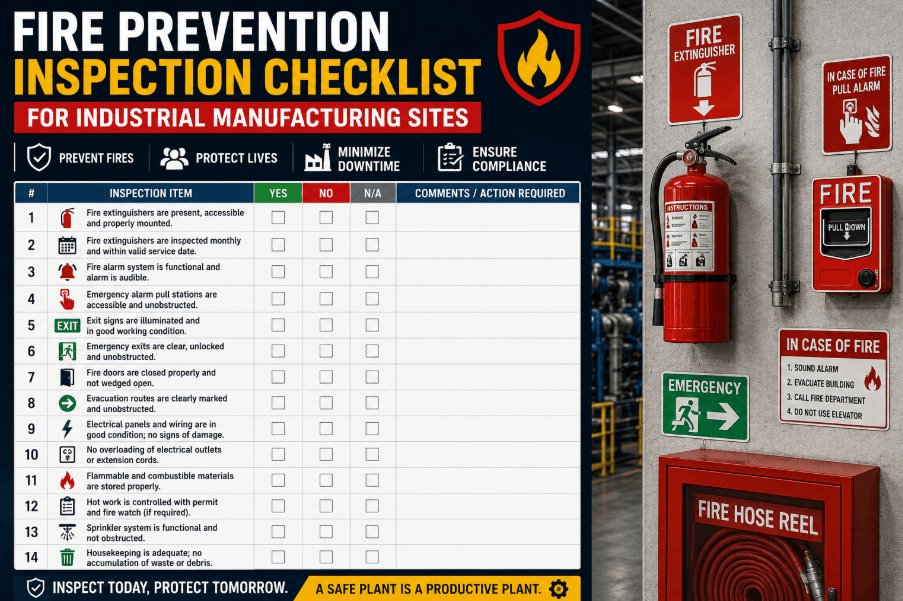
Consistent inspections catch degradation before it becomes a hazard. This schedule covers the areas that matter most for maintaining compliance and keeping workers safe. Want to see how automated inspection scheduling works in practice? Book a demo and we will show you how Oxmaint sends mobile reminders to the right technicians, tracks completion in real time, and keeps your inspection history audit-ready.
Recommended Electrical Safety Inspection Schedule
Build a Safer Manufacturing Plant with Oxmaint
Your electrical safety program should protect workers, not just check boxes. Oxmaint gives maintenance and safety teams digital work permits, automated LOTO procedures, real-time inspection tracking, training management, and audit-ready compliance reports — all from one platform purpose-built for manufacturing operations.
Frequently Asked Questions
Does NFPA 70E apply to all manufacturing plants?
Yes. NFPA 70E applies to any workplace where employees may be exposed to electrical hazards. While OSHA does not directly reference NFPA 70E in its regulations, the agency uses it as the accepted industry standard when evaluating compliance with the General Duty Clause. This means virtually every manufacturing facility with electrical equipment is expected to follow its requirements.
How frequently must workers receive NFPA 70E electrical safety training?
NFPA 70E requires retraining at least every three years for all employees exposed to electrical hazards. Additional training is required whenever job responsibilities change, new equipment is installed, a safety incident occurs, or a new edition of the standard is published. Never miss a retraining deadline again —
sign up for Oxmaint free to get automatic expiration alerts 90 days before certifications lapse and keep a centralized training record for every worker on your team.
What is the difference between an arc flash study and arc flash labeling?
An arc flash study is the engineering analysis — using IEEE 1584 calculations — that determines incident energy levels, arc flash boundaries, and PPE requirements at each piece of electrical equipment. Arc flash labeling is the physical result: durable labels placed on equipment displaying the study's findings so workers can identify hazards and select proper PPE at the point of work. Studies should be reviewed every five years or after any system modifications.
What penalties can a manufacturing plant face for electrical safety violations?
OSHA serious violation penalties can exceed 16,000 dollars per instance, while willful or repeated violations can top 160,000 dollars each. Lockout/tagout violations alone generated over 20 million dollars in manufacturing penalties in fiscal year 2023. Beyond monetary fines, violations can trigger production shutdowns, increased insurance premiums, and criminal prosecution when willful negligence causes worker death or serious injury. Protect your plant from six-figure penalties —
book a demo and see how Oxmaint's automated compliance tracking closes the gaps that lead to OSHA citations and costly shutdowns.
How does a CMMS improve electrical safety compliance in manufacturing?
A CMMS like Oxmaint centralizes safety procedures, automates PM and inspection schedules, manages digital work permits, tracks training certifications, and creates complete audit trails for every safety-related action. By replacing manual tracking with automated workflows, manufacturing plants eliminate the most common causes of OSHA citations: missed inspections, expired certifications, missing procedures, and undocumented safety activities.