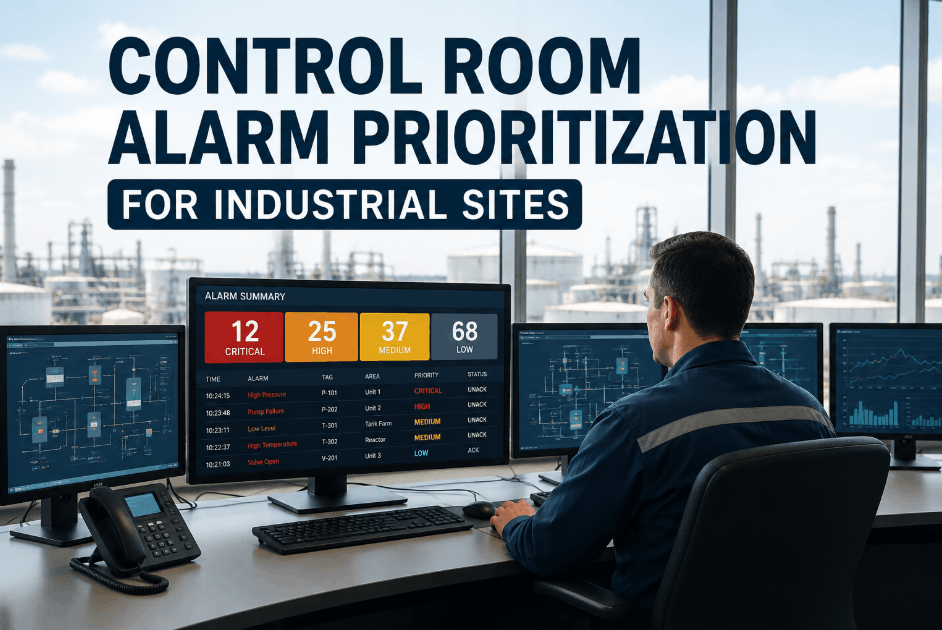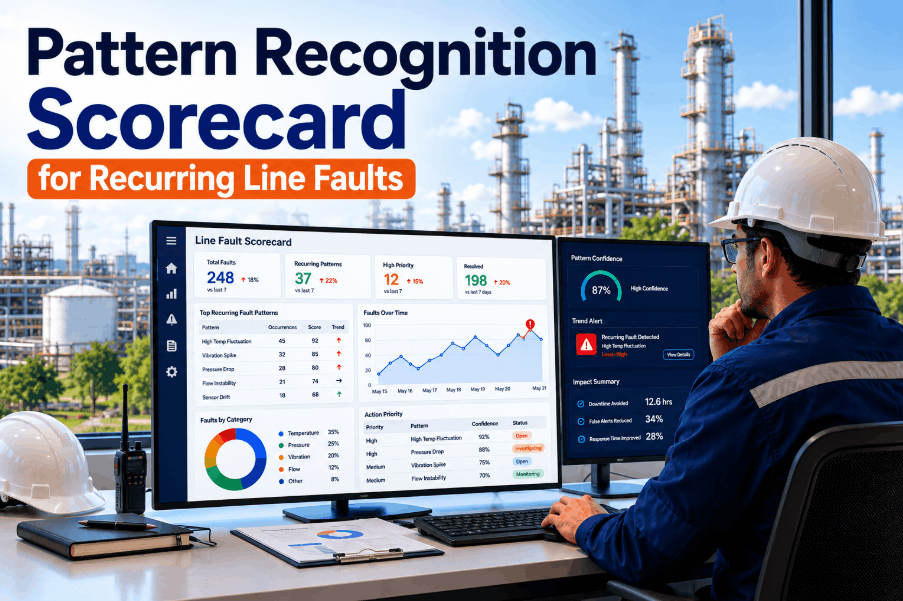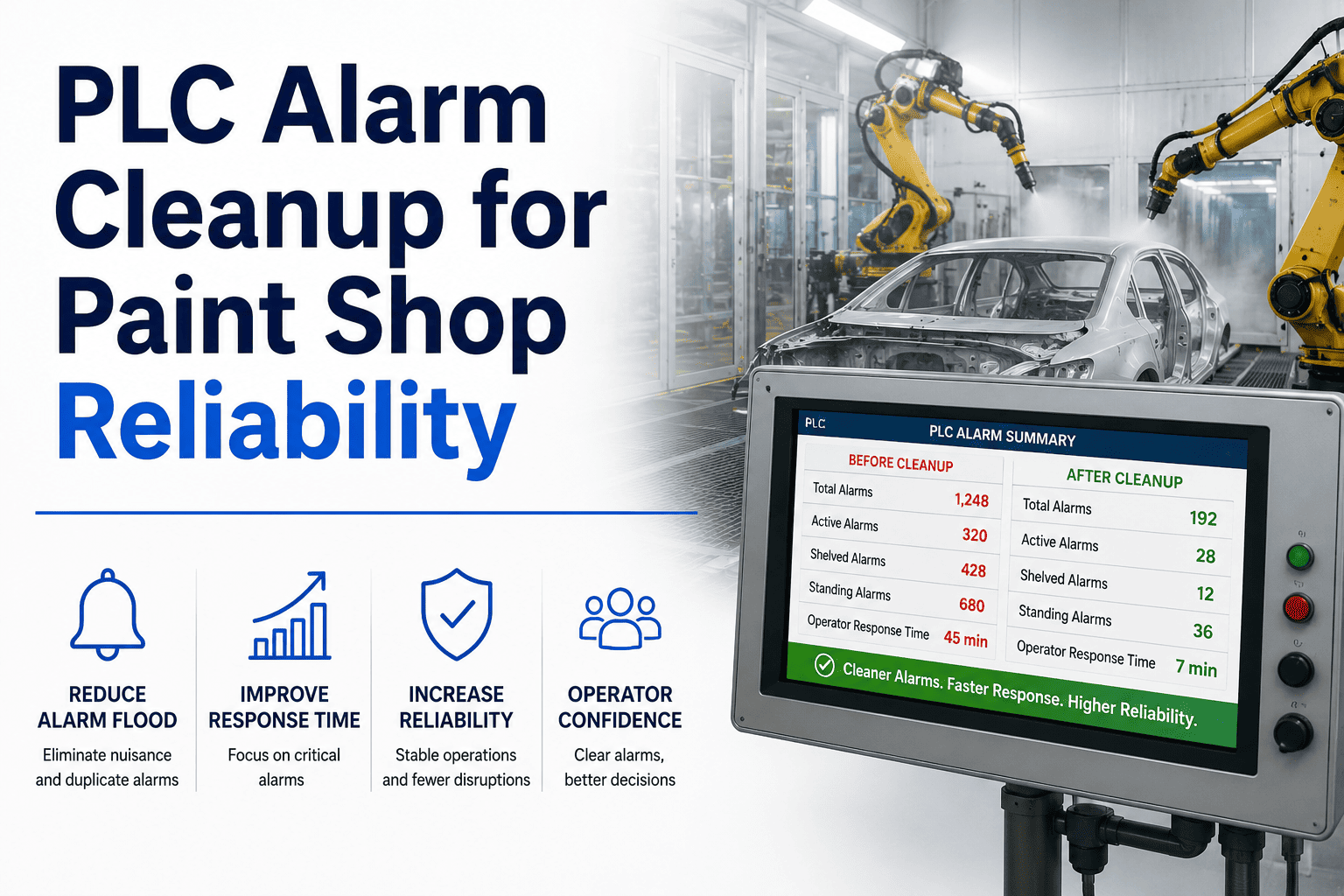
Paint shop control systems accumulate alarm configurations over years of process changes, line modifications, and workaround patches — until operators face hundreds of nuisance messages for every genuine fault. PLC alarm cleanup is the discipline of auditing alarm logic, eliminating redundant triggers, rationalising priority tiers, and restoring operator focus to the signals that actually require action. Without structured alarm governance, control room teams develop alert fatigue, real faults get buried in floods of low-priority messages, and response times on critical paint line events climb dangerously. Sign Up Free to start managing alarm rationalisation work orders with complete digital traceability. Oxmaint AI helps maintenance and controls teams schedule alarm audits, document cleanup actions, and track paint shop reliability improvements through structured work order management. Book a Demo to see how Oxmaint supports alarm governance programs across paint line assets.
Stop Burying Real Faults Under Alarm Noise
Oxmaint AI tracks alarm rationalisation work orders across paint shop control assets — capturing audit findings, cleanup actions, and reliability outcomes that prove your operators are responding to the right signals.
Why PLC Alarm Programs Degrade in Paint Shop Environments
Gap #1
Alarm Flood Accumulation
Every process change and workaround patch adds new alarm triggers without retiring obsolete ones — creating flood conditions where operators cannot distinguish genuine fault signals from background noise.
Gap #2
No Priority Rationalisation
Alarm priorities set at commissioning are never reviewed against actual process risk — leaving low-consequence events flagged as critical while real fault conditions compete for operator attention at the same level.
Gap #3
Nuisance Message Blindness
Operators learn to ignore high-frequency nuisance alarms — and in doing so, develop response patterns that miss genuine fault signals embedded in familiar alarm sequences.
Gap #4
No Cleanup Audit Trail
Alarm rationalisation actions are undocumented — making it impossible to trace which logic changes were made, by whom, and what reliability improvement resulted from each cleanup cycle.
Gap #5
Stale Setpoint Logic
Process setpoints shift with product mix, seasonal temperature changes, and line speed adjustments — but alarm thresholds are not updated in parallel, generating false triggers during normal production runs.
Gap #6
Response Time Degradation
As nuisance volume grows, mean time to acknowledge genuine alarms climbs — and the paint shop accumulates silent risk from fault conditions that operators notice too late to prevent defects or equipment damage.
How Oxmaint AI Supports Paint Shop Alarm Governance
01
Alarm Asset Register
Build a complete PLC and alarm asset register in Oxmaint with priority classifications, nuisance flags, and process-risk ratings for each paint line control point.
→
02
Audit Work Order Dispatch
Oxmaint generates alarm rationalisation work orders and delivers them to controls technicians via mobile — with review checklists, priority assessment fields, and setpoint verification tasks pre-loaded.
→
03
Cleanup Action Capture
Technicians document alarm deletions, priority changes, and threshold adjustments directly in Oxmaint — creating a timestamped, signed audit record of every rationalisation action taken.
→
04
Reliability Trend Reporting
Oxmaint aggregates alarm cleanup records to track nuisance reduction rates, operator response time improvements, and paint shop reliability gains across consecutive audit cycles.
What Oxmaint Captures Per Alarm Rationalisation Work Order
Alarm Audit Data
Nuisance alarm identification and classification per PLC
Priority rationalisation decisions recorded per alarm point
Setpoint adjustment actions captured with justification
Traceability Records
Technician digital signoff on every rationalisation record
Timestamp verified at point of each cleanup action
Alarm history linked to paint line asset record
Reliability Monitoring
Nuisance alarm rate tracked across rationalisation cycles
Operator response time improvement measured per audit
High-recurrence alarms flagged for root cause investigation
Operational Outcome
Alarm governance records exportable for compliance review
Genuine fault signals surfaced before production impact
Paint shop reliability improvements tracked automatically
40%
Of paint shop alarm activations are nuisance or standing alarms that carry no actionable fault signal
2.8×
Faster operator fault response after structured PLC alarm rationalisation programs are completed
48hrs
Typical Oxmaint deployment time from setup to first alarm governance work orders tracking in field
90days
Average time to measurable nuisance alarm reduction after Oxmaint alarm audit tracking is deployed
Oxmaint AI vs Standard CMMS for Paint Shop Alarm Governance
Standard CMMS — Limited Alarm Visibility
Work orders track equipment tasks but capture no alarm audit findings or rationalisation actions
No nuisance alarm classification or priority rationalisation fields in standard work order templates
Alarm cleanup actions undocumented — no traceability between logic changes and reliability outcomes
High-recurrence alarms treated identically to single-event fault signals
No operator response time tracking linked to alarm governance work orders
Audit trail gaps prevent verification of alarm rationalisation compliance during production reviews
Oxmaint AI — Alarm Governance Tracked in Real Time
Alarm audit findings and rationalisation actions captured in mobile app — Sign Up Free
Digital traceability maintained automatically — technician, timestamp, priority change rationale
Required alarm classification fields enforced before work order closure
High-recurrence nuisance alarms flagged for priority root cause investigation
Nuisance reduction rates tracked across consecutive rationalisation cycles
Alarm governance reports generated in one click for reliability or compliance review — Book a Demo
6 KPIs to Measure PLC Alarm Cleanup Effectiveness
These KPIs help paint shop controls and maintenance teams confirm that alarm rationalisation is reducing operator alert fatigue and improving fault response across the production line. Book a Demo to see how Oxmaint calculates all six automatically across your alarm asset register.
KPI 01
Nuisance Alarm Rate
Percentage of total alarm activations classified as nuisance or standing alarms. Declining nuisance rates confirm that rationalisation actions are reducing background noise for paint shop operators.
Alert Quality
KPI 02
Mean Time to Acknowledge
Average time between alarm activation and operator acknowledgement. Improving MTTA after rationalisation confirms operators are engaging more quickly with genuine fault signals.
Response Speed
KPI 03
Alarm Rationalisation Completion Rate
Percentage of scheduled alarm audit work orders completed on time. Low completion rates leave alarm governance gaps that allow nuisance accumulation to continue unchecked.
Audit Compliance
KPI 04
High-Priority Alarm Accuracy Rate
Percentage of alarms classified as high-priority that result in genuine fault actions. Low accuracy rates indicate priority rationalisation is incomplete and operator credibility in alarm tiers is degraded.
Priority Integrity
KPI 05
Repeat Alarm Recurrence Rate
Percentage of alarms that reactivate within a short window after acknowledgement. High recurrence rates identify standing alarms and stale setpoint conditions requiring root cause resolution.
Root Cause Signal
KPI 06
Alarm Record Completeness Rate
Percentage of rationalisation work orders with all required fields — nuisance classification, priority decision, technician signoff, and timestamp — completed before closure.
Record Integrity
Industries Using Oxmaint for Alarm Governance and Paint Line Reliability
Automotive Assembly
PLC Alarm Rationalisation for Paint Shop Lines
Automotive paint shops use Oxmaint to manage alarm audit schedules and rationalisation records for primer, basecoat, and clearcoat line PLCs — reducing nuisance floods and improving operator fault response on high-throughput paint lines. Sign Up Free for your paint shop team.
General Manufacturing
Control Room Alarm Governance for Production Lines
Manufacturing facilities use Oxmaint to schedule and document alarm cleanup cycles across production line PLCs — maintaining the alarm governance records required by lean operations and process reliability standards. Book a Demo for your controls program.
Surface Treatment
Alarm Control for Chemical Process Paint Systems
Surface treatment and coating facilities use Oxmaint to manage alarm rationalisation on chemical dosing, temperature control, and spray system PLCs — ensuring operators receive accurate fault signals on safety-critical process points.
Heavy Equipment OEM
Paint Line Reliability for High-Mix OEM Production
Heavy equipment manufacturers use Oxmaint to track alarm governance across multi-zone paint lines where frequent product changeovers generate stale setpoint conditions and accumulated nuisance alarm configurations.
Your Operators Can Only Respond to What They Can See.
Oxmaint AI helps paint shop controls teams manage alarm rationalisation schedules, document cleanup actions, and track the operator response improvements that structured alarm governance delivers. Book a Demo to see alarm governance tracking applied to your paint line PLC register.
Frequently Asked Questions
What is PLC alarm cleanup and why does it matter for paint shop reliability?
PLC alarm cleanup is the process of auditing alarm logic, removing nuisance triggers, and rationalising priority tiers so operators receive accurate fault signals. In paint shops, uncontrolled alarm floods cause alert fatigue and delayed responses that lead to defects, equipment damage, and line stoppages.
How does Oxmaint support alarm rationalisation work orders?
Oxmaint generates scheduled alarm audit work orders, captures nuisance classifications and priority decisions in the mobile app, and maintains a complete digital traceability record of every cleanup action taken by controls technicians.
Can Oxmaint track nuisance alarm reduction over time?
Yes. Oxmaint aggregates alarm audit records across consecutive rationalisation cycles and generates trend reports showing nuisance rate reduction, response time improvement, and paint shop reliability gains.
Does Oxmaint help identify high-recurrence alarms for root cause investigation?
Yes. Oxmaint flags alarms with high recurrence rates for priority review — enabling controls teams to investigate stale setpoints, process drift, or failing components before operator fatigue masks the underlying fault.
How quickly can Oxmaint be deployed for a paint shop alarm governance program?
Most facilities have Oxmaint live and tracking alarm governance work orders within 48 hours of setup. The PLC asset register can be populated from existing spreadsheets and technicians can begin capturing digital audit records immediately via the mobile app.
Know Your Alarms Are Trustworthy. Prove It When Your Line Stops.
Oxmaint AI tracks alarm rationalisation compliance, captures governance actions, and builds the digital records your paint shop reliability and operations teams require — across every PLC in your facility.