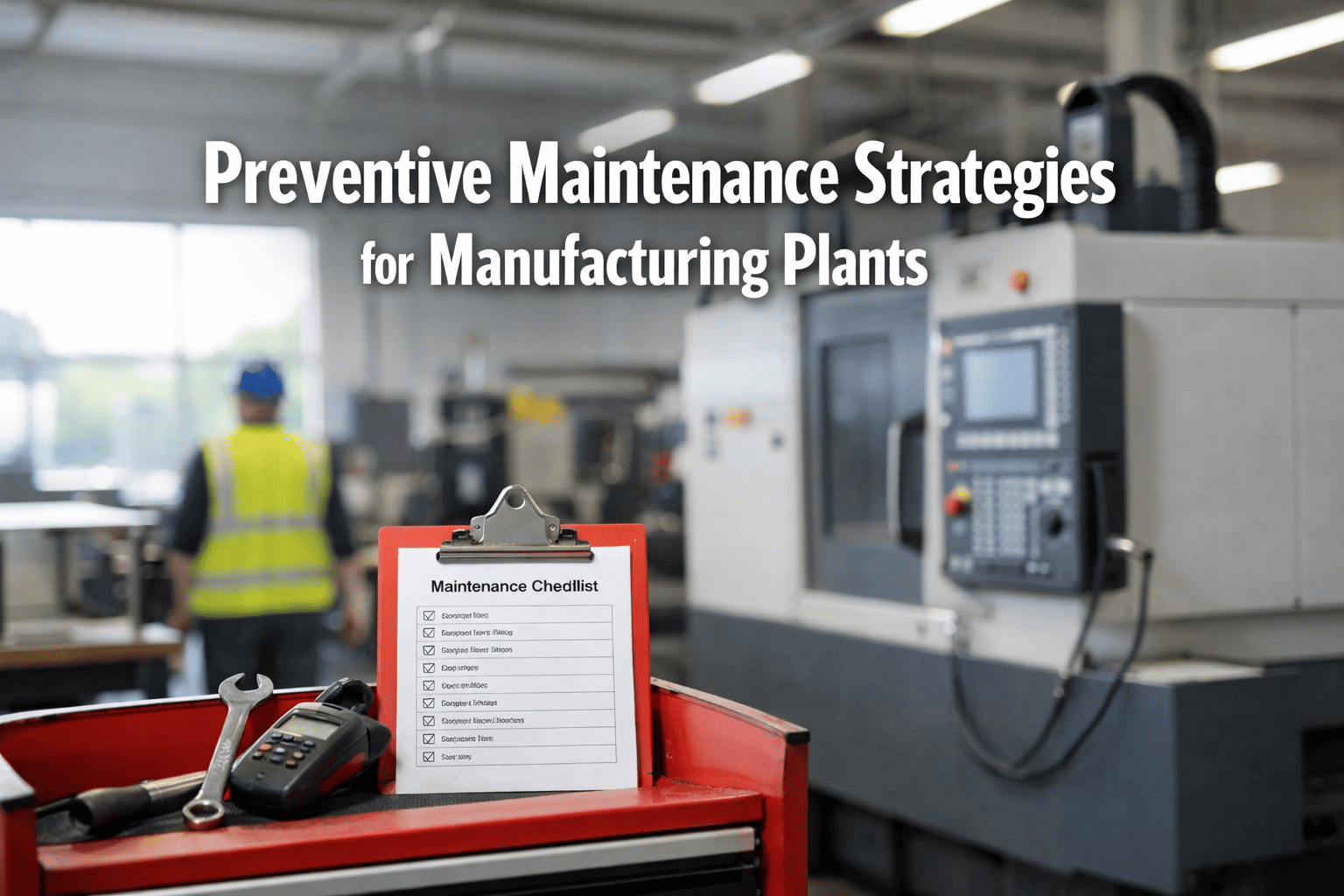
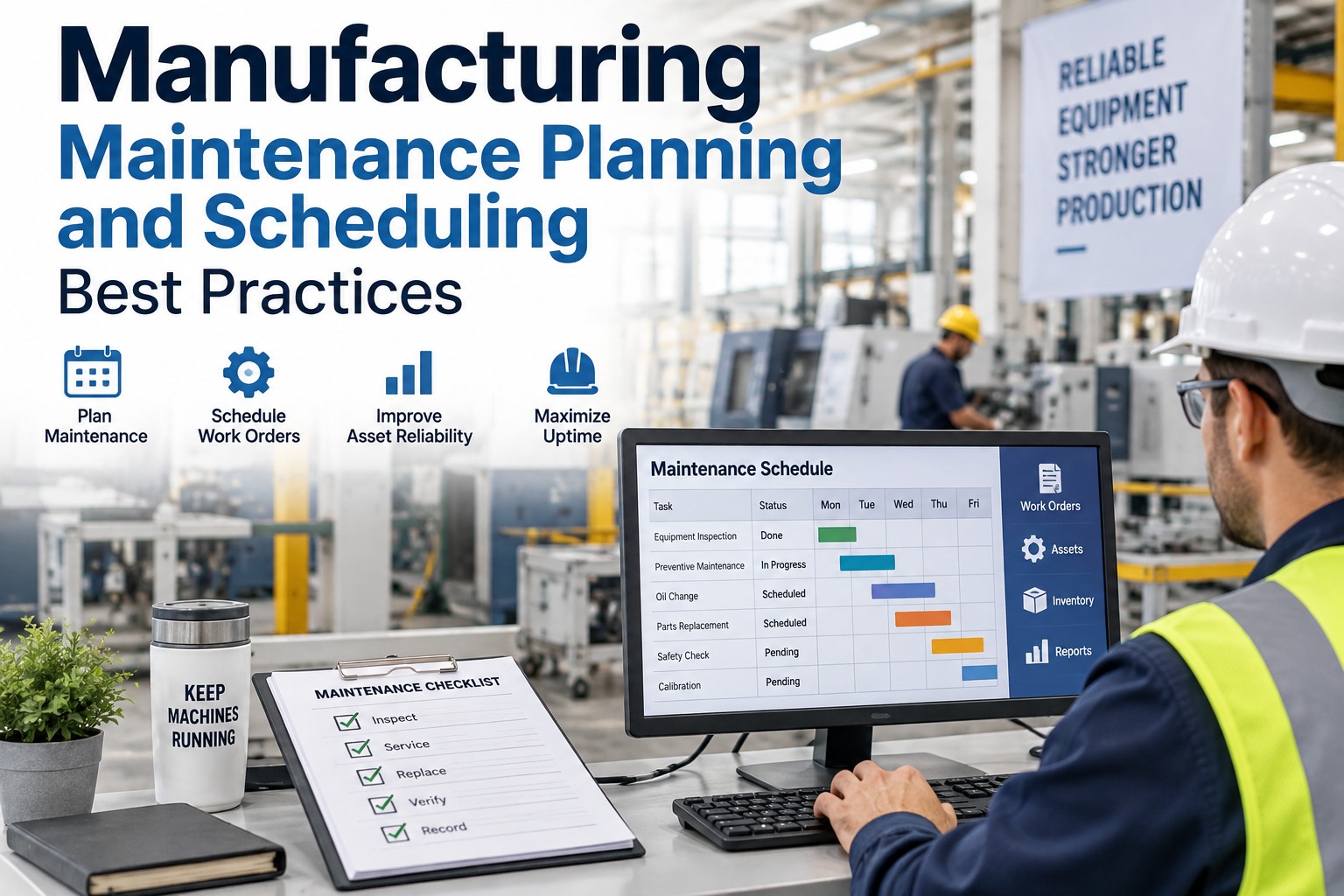
Preventive Maintenance Strategies for Manufacturing Plants
By oxmaint on March 9, 2026
Every hour of unplanned downtime on a manufacturing floor can cost thousands of dollars in lost production, wasted materials, and missed delivery deadlines. Preventive maintenance is the proven strategy that keeps equipment running, extends asset lifespans, and protects your bottom line. Whether you run a single production line or manage multiple facilities, a structured PM program powered by the right CMMS transforms maintenance from a reactive expense into a competitive advantage. Sign up for Oxmaint free to start building your PM program today.
How Preventive Maintenance Reduces Downtime in Manufacturing
Unplanned equipment failures are the single largest productivity killer in manufacturing. When a critical machine goes down without warning, the ripple effect hits production schedules, overtime budgets, customer commitments, and workforce morale. Preventive maintenance eliminates the element of surprise by catching problems during scheduled inspections — long before they escalate into full-blown breakdowns. Book a free demo to see how Oxmaint reduces unplanned downtime at plants like yours.
326 hrsAverage annual unplanned downtime per manufacturing facility
$2.8BYearly cost of unplanned downtime for average Fortune 500 manufacturers
70%Reduction in equipment failures with consistent PM programs
Tired of surprise breakdowns disrupting your production? Oxmaint automates preventive maintenance scheduling so your team stays ahead of every failure.
Types of Preventive Maintenance for Manufacturing Equipment
No single maintenance approach works for every asset. The most effective manufacturing plants combine multiple PM strategies — assigning each one based on the equipment's criticality, usage pattern, and failure history. Understanding these types is the first step to building a program that maximizes uptime without wasting resources on unnecessary servicing.
Time-Based
Calendar-Driven Scheduled Maintenance
Maintenance tasks are performed at fixed intervals — daily, weekly, monthly, or quarterly — regardless of the equipment's current condition. This is the most common starting point for PM programs and works well for assets with steady, predictable wear such as HVAC systems, lubrication points, and general plant infrastructure. OEM manuals typically provide the baseline intervals, which your team can refine over time using actual failure data tracked inside a CMMS.
Usage-Based
Runtime & Cycle-Count Triggers
Instead of the calendar, maintenance is triggered by actual machine usage — operating hours, production cycles, or mileage. This approach is ideal for CNC machines, hydraulic presses, forklifts, and any asset where wear correlates more closely with how much it runs than how long it has been since the last service. Usage-based PM prevents both over-servicing idle equipment and under-servicing heavily used machines.
Condition-Based
Real-Time Parameter Monitoring
Sensors continuously track equipment health indicators — vibration, temperature, oil quality, pressure — and maintenance is performed only when readings approach critical thresholds. This eliminates unnecessary servicing while catching degradation early. Condition-based maintenance requires IoT sensors and a CMMS that can process real-time alerts, but it delivers the highest efficiency by servicing assets exactly when needed.
Predictive
Data-Driven Failure Forecasting
Historical maintenance records, sensor data, and machine learning models are combined to predict when specific components will fail — often weeks or months in advance. Predictive maintenance identifies the optimal service window that minimizes both downtime and part waste. While it requires more data infrastructure upfront, plants using predictive approaches have achieved up to 40% reduction in maintenance costs.
Reliability-Centered
Risk-Prioritized Strategy Assignment
Each asset is analyzed for its function, potential failure modes, and the consequences of those failures. Based on this analysis, the most cost-effective maintenance type is assigned — critical assets may get predictive monitoring while low-risk items follow simple time-based schedules. This strategic approach ensures your maintenance budget delivers maximum return by focusing resources where they have the greatest impact on production reliability.
How to Create a Preventive Maintenance Schedule for Your Plant
A preventive maintenance schedule is only as effective as the planning behind it. Rushing into task assignments without a clear framework leads to missed inspections, technician overload, and wasted effort on low-priority equipment. Here is a practical, step-by-step approach that manufacturing plants of all sizes can follow to build a PM schedule that actually works.
1
Audit & Catalog Every Asset
Walk the plant floor and document every piece of equipment — make, model, serial number, installation date, condition, and current maintenance history. This asset register becomes the backbone of your PM program. Missing or incomplete asset data is the top reason PM programs fail in the first year.
2
Rank Assets by Criticality
Not every machine deserves the same level of attention. Score each asset based on production impact, safety risk, replacement cost, and historical failure frequency. Focus your most intensive PM schedules on the top 20% of assets that drive 80% of production value.
3
Define Tasks, Parts & Frequencies
For each critical asset, list every PM task — inspections, lubrication, filter changes, calibration, belt replacements — with the recommended interval. Cross-reference OEM manuals with your plant's actual operating conditions and failure history to set realistic frequencies.
Assign each work order to qualified technicians, track completion in real time, and review performance monthly. Adjust frequencies based on failure trends — if an asset keeps failing between scheduled PMs, shorten the interval. If it never shows issues, you may be over-maintaining it. Data-driven refinement is what separates good PM programs from great ones.
Build your PM schedule in minutes, not weeks. Oxmaint auto-generates work orders, assigns technicians, and sends reminders — so nothing slips through the cracks.
Preventive vs. Reactive Maintenance: What Costs More?
Many plant managers still default to a "run it till it breaks" mindset, assuming reactive maintenance saves money because you only pay when something fails. In reality, the total cost of reactive maintenance — including emergency labor, expedited parts, production losses, and safety incidents — far exceeds the predictable investment in a preventive approach.
Reactive (Fix When Broken)
DowntimeUnpredictable, often 3-10x longer than planned stops
Parts CostEmergency procurement with rush shipping premiums
LaborOvertime rates, pulled from other priorities
SafetyHigher accident risk from sudden equipment failures
Asset LifeShortened by repeated run-to-failure damage cycles
60-65%
Typical OEE at reactive plants
Preventive (Fix Before It Breaks)
DowntimePlanned, short windows during low-production periods
Parts CostPlanned procurement with bulk pricing & inventory control
LaborStandard hours, scheduled in advance, efficient routing
SafetyRegularly inspected equipment with documented compliance
Asset LifeExtended by consistent care and early issue detection
85%+
World-class OEE with strong PM programs
Preventive Maintenance Checklist for Common Manufacturing Assets
A well-defined checklist ensures that every technician performs the right tasks in the right order — regardless of experience level. Here are equipment-specific PM checklists that your team can use as a starting point and customize for your plant's unique operating conditions.
The Role of CMMS Software in Preventive Maintenance
Spreadsheets and paper logs worked when plants had a handful of assets to maintain. Modern manufacturing facilities with hundreds of machines, multiple shifts, and tight production schedules need a Computerized Maintenance Management System to keep preventive maintenance programs running effectively at scale.
Automated PM Scheduling
Set up time-based or usage-based triggers once, and the CMMS auto-generates work orders on schedule. No more forgotten tasks, no more manual calendar tracking. Every PM job gets created, assigned, and tracked without human intervention.
Digital Work Orders & Checklists
Technicians receive detailed work orders on their mobile devices with step-by-step checklists, required parts lists, and reference documents. Digital completion records create an auditable trail for compliance and continuous improvement.
Real-Time KPI Dashboards
Track PM completion rate, MTBF, MTTR, and work order backlog in real time across the entire plant. Managers get instant visibility into maintenance performance without waiting for monthly reports or manually compiling data.
Spare Parts & Inventory Control
Link PM tasks directly to required parts and set minimum stock levels with automatic reorder alerts. Your team never delays a scheduled PM because a filter or bearing was not in stock when they needed it.
Mobile-First for the Plant Floor
Scan QR codes on equipment to instantly access maintenance history, open work orders, PM schedules, and attached manuals. Technicians stay on the floor instead of walking back to the office for information.
Team Coordination & Accountability
Assign work orders to specific technicians or teams, set priority levels, and track who completed what and when. Built-in notifications ensure handoffs between shifts are seamless and nothing is duplicated or skipped.
See Oxmaint in action on your plant floor. Our team will walk you through automated PM scheduling, mobile work orders, and KPI dashboards built for manufacturing.
Measuring Preventive Maintenance Success: KPIs That Matter
You cannot improve what you do not measure. Tracking the right maintenance KPIs helps plant managers identify gaps in their PM program, justify budget requests, and demonstrate continuous improvement to leadership. Here are the metrics every manufacturing plant should monitor.
PM Completion Rate
Percentage of scheduled preventive tasks completed on time. Target: 90% or higher. This is the most commonly tracked maintenance KPI, used by 56% of facilities. A consistently low rate signals understaffing, poor scheduling, or missing parts.
90%+
Mean Time Between Failures (MTBF)
Average operating time between equipment breakdowns. An increasing MTBF trend confirms your PM program is improving equipment reliability over time. Track this per asset and per asset class to identify problem machines.
Trending Up
Planned vs. Unplanned Maintenance Ratio
The percentage of total maintenance hours spent on scheduled work versus emergency repairs. World-class plants target an 80:20 ratio or better. This single metric tells you whether your organization is truly proactive or still firefighting.
80:20
Overall Equipment Effectiveness (OEE)
Combines availability, performance, and quality into a single score. Most manufacturing plants operate between 60-65% OEE, while world-class facilities achieve 85% or higher. PM programs directly improve the availability component of OEE.
85%+
Mean Time to Repair (MTTR)
Average time required to restore equipment after a failure. A decreasing MTTR indicates better spare parts readiness, more skilled technicians, and effective troubleshooting procedures. Current industry average has risen to 81 minutes due to skills gaps.
Trending Down
Work Order Backlog
Number of open maintenance work orders waiting for execution. A healthy backlog is 2-4 weeks of work. A growing backlog means your team is falling behind on PM tasks and heading toward reactive territory. Tracked by 53% of facilities.
2-4 Weeks
Stop Guessing. Start Measuring.
Oxmaint gives your maintenance team automated KPI dashboards, PM completion tracking, asset reliability trends, and work order analytics — all in real time. Make data-driven decisions that reduce downtime and extend equipment life across your entire plant.
Overcoming Common Preventive Maintenance Challenges
Even the best-planned PM programs face obstacles. Recognizing these challenges early — and knowing the proven solutions — keeps your program on track and your team motivated. Here are the most frequent roadblocks manufacturing plants encounter and how top-performing teams overcome them.
PM Roadblocks & Proven Solutions
Challenge
Why It Happens
How to Solve It
Production refuses maintenance windows
Operations teams prioritize output over equipment care and resist any planned stoppages
Present downtime cost data showing unplanned stops cost 3-10x more than scheduled PM. Align PM windows with changeovers
Technician shortages and skills gaps
41% of manufacturers cite lack of resources as their biggest challenge; aging workforce retiring
Use digital checklists that guide less-experienced technicians step-by-step. Cross-train operators on basic PM tasks
PM tasks take longer than planned
Inaccurate time estimates, missing parts, or inadequate procedures
Track actual vs. estimated time in your CMMS. Refine task lists quarterly. Pre-kit parts for each PM job
Over-maintaining low-priority assets
Same PM frequency applied to all equipment regardless of criticality or failure history
Implement criticality rankings and adjust intervals based on actual failure data. Focus on high-impact assets first
No visibility into PM compliance
Paper-based or spreadsheet tracking makes it impossible to see real-time completion status
Schedules set once and never updated as equipment ages or conditions change
Review PM frequencies quarterly using failure data and KPI trends. Build continuous improvement into the process
Your Plant Deserves Maintenance That Prevents Problems
Every unplanned breakdown is a preventive maintenance task that was missed, delayed, or never scheduled. Oxmaint gives your team automated PM scheduling, mobile work orders, digital checklists, spare parts tracking, and real-time dashboards — everything needed to run a reliable, data-driven maintenance operation from one platform.
What is the best preventive maintenance frequency for manufacturing equipment?
There is no universal answer — the right frequency depends on the equipment type, OEM recommendations, operating intensity, and your plant's specific failure history. Start with manufacturer-recommended intervals and refine them over time using actual performance data from your CMMS. Critical, high-utilization machines typically need more frequent attention than backup or auxiliary equipment. Book a demo to see how Oxmaint optimizes PM intervals using your real maintenance data.
How does preventive maintenance differ from predictive maintenance?
Preventive maintenance follows predetermined schedules — either calendar-based or usage-based — and is performed regardless of the equipment's current condition. Predictive maintenance uses real-time sensor data and analytics to forecast when a specific failure is likely to occur, allowing maintenance exactly when needed. Most successful manufacturing plants use preventive maintenance as the foundation and layer predictive techniques on top for their most critical assets.
How quickly can a PM program show measurable results?
Most plants see a noticeable drop in unplanned breakdowns within the first 60 to 90 days of consistently executing scheduled PM tasks. Significant improvements in OEE, MTBF, and overall maintenance costs typically become clear within 6 to 12 months. The key is consistency — completing every scheduled task on time and using data to refine your program continuously. Sign up for Oxmaint free and start tracking your PM results from day one.
Do I really need CMMS software for preventive maintenance?
While small plants with very few assets can manage PM on spreadsheets, this approach breaks down quickly as your asset count grows. A CMMS automates scheduling, sends reminders, tracks completions, manages parts inventory, and generates KPI reports — all functions that are nearly impossible to sustain manually at scale. Facilities using CMMS software consistently achieve higher PM completion rates and significantly lower emergency repair costs compared to those relying on manual methods.
What makes Oxmaint different for manufacturing preventive maintenance?
Oxmaint is purpose-built for maintenance teams who need simplicity without sacrificing power. It offers automated PM scheduling, mobile-friendly work orders, digital checklists with photo capture, spare parts management with reorder alerts, asset QR code scanning, and real-time KPI dashboards. Your technicians can complete PM tasks from their phones on the plant floor, and managers get instant visibility into compliance across every asset and facility. Schedule a free demo to see Oxmaint running on a manufacturing plant like yours.