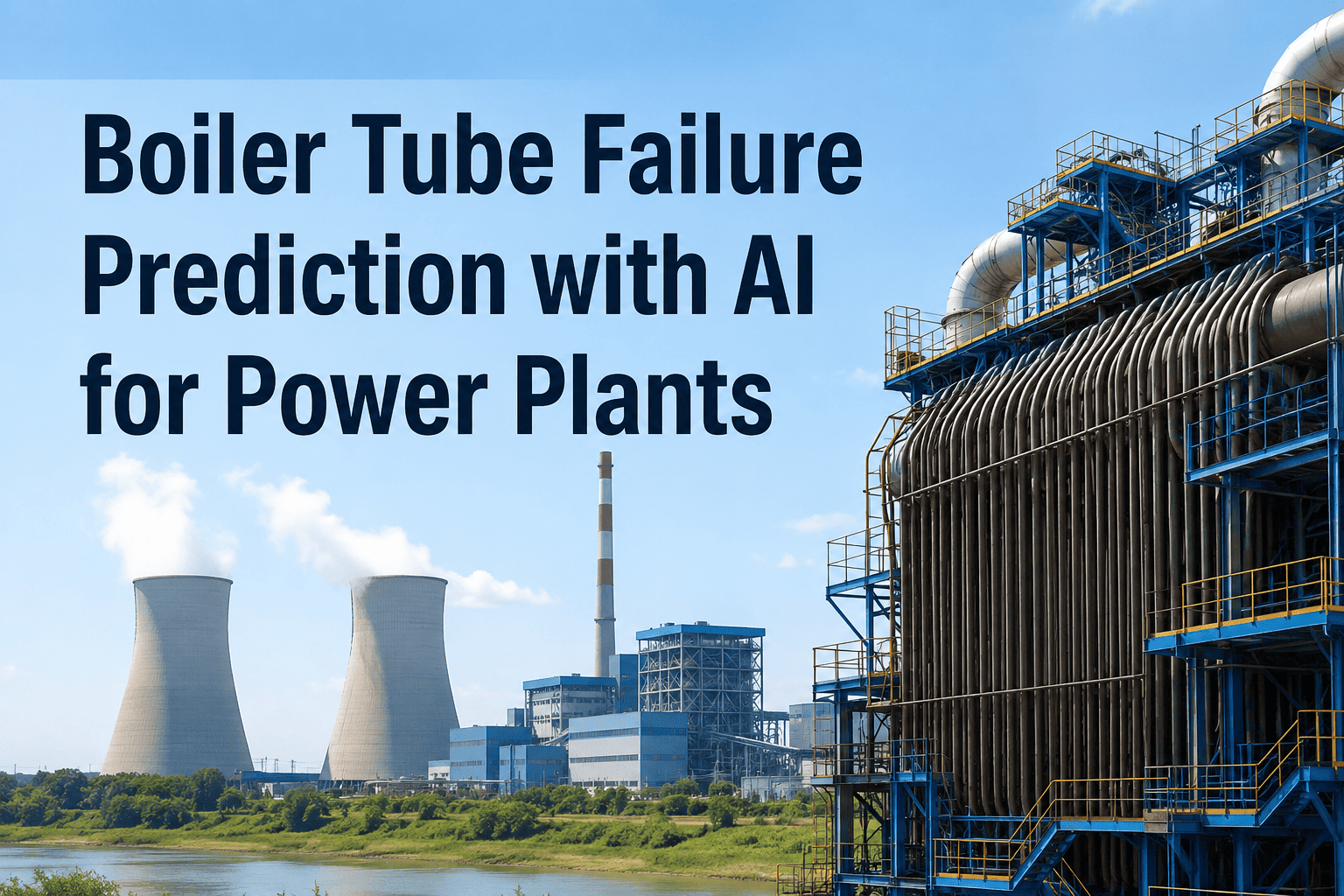
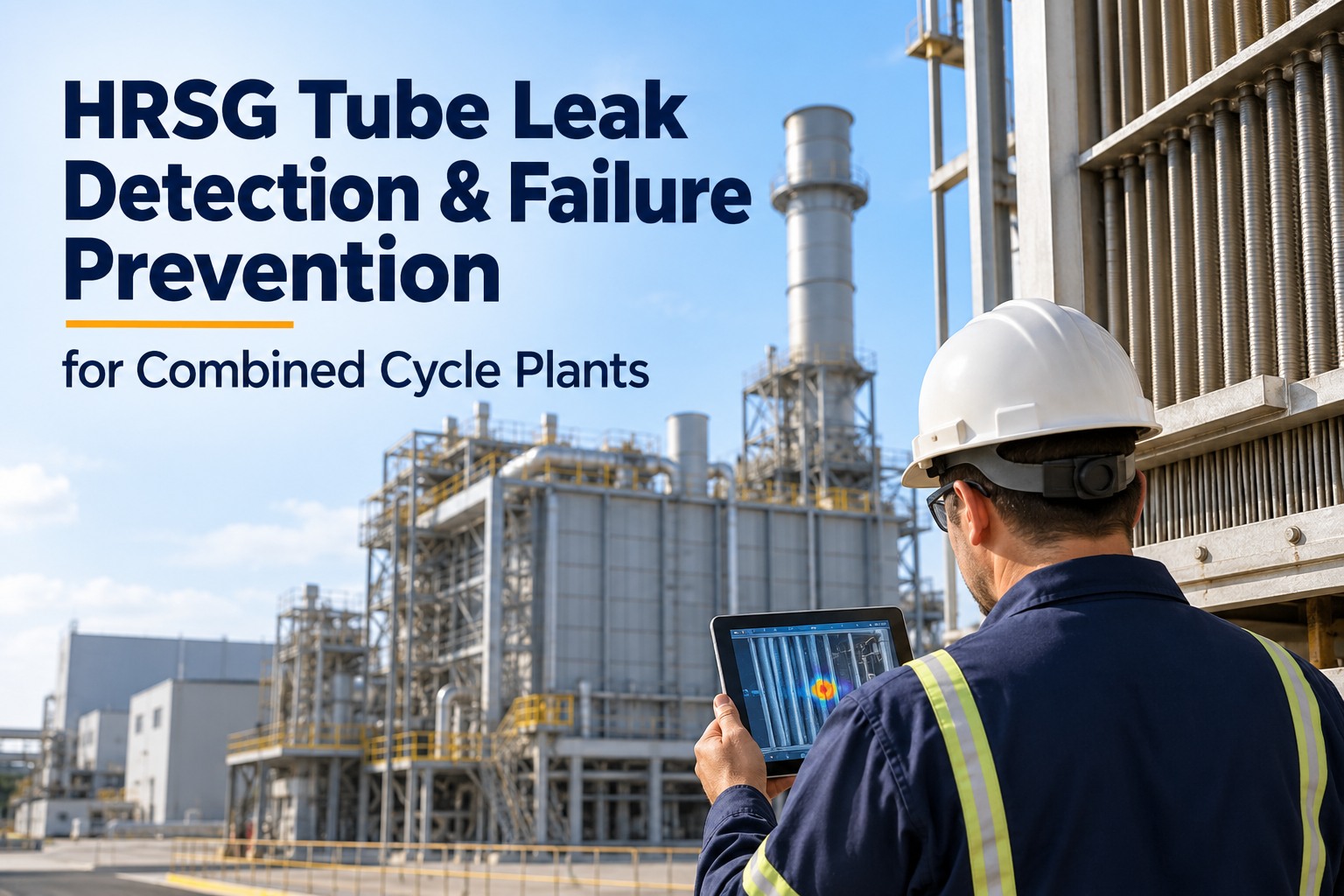
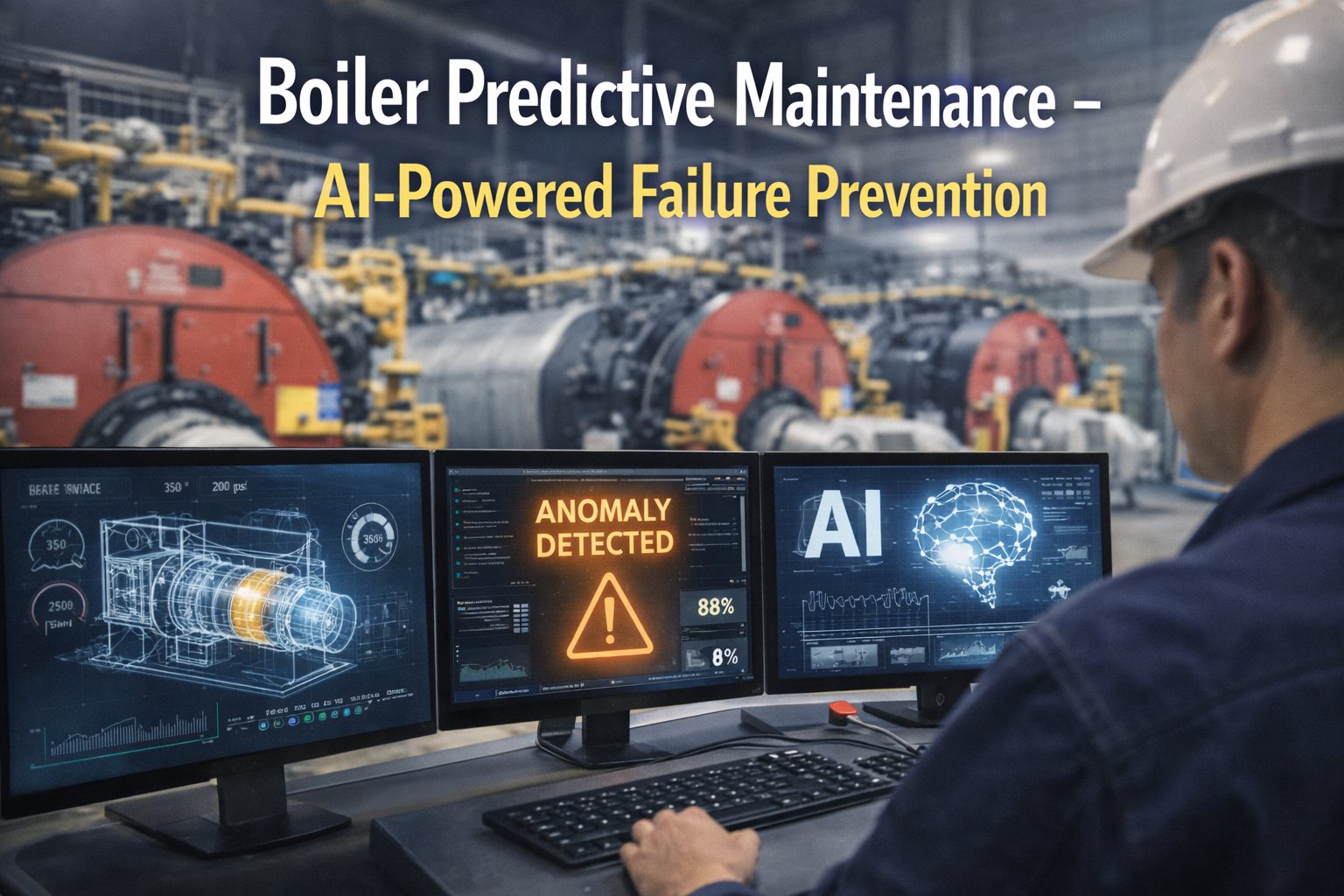
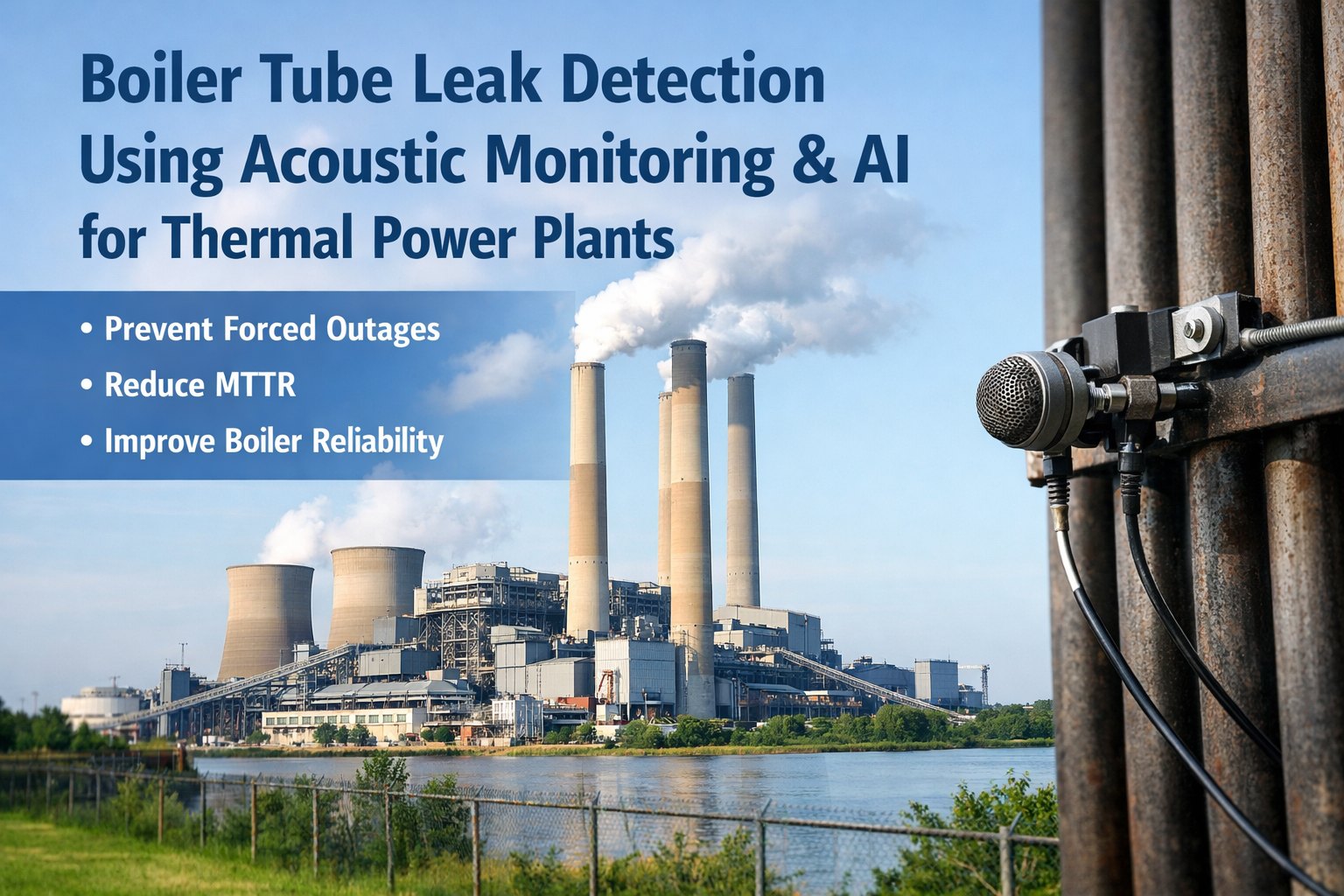
Boiler tube failures are the single largest cause of forced outages in thermal power plants — accounting for more than 50% of unplanned downtime in coal and gas-fired units worldwide. A single undetected tube leak can escalate from a minor efficiency loss to a full-unit trip within hours, with repair costs routinely exceeding $500,000 when secondary damage is factored in. Traditional inspection cycles catch failures after they happen. AI-powered predictive maintenance, integrated with your SCADA data and work order history, catches them weeks before they do. Explore OxMaint's predictive maintenance platform or book a 30-minute demo to see how AI boiler monitoring works in practice.
50%+
of forced outages caused by boiler tube failures
$500K+
average repair cost per major tube failure event
3–6 wks
advance warning window with AI thermal signal analysis
73%
reduction in unplanned boiler outages reported after AI-assisted inspection
Start Predicting Failures — Not Reacting to Them
Stop the Next Forced Outage Before It Starts
OxMaint's AI-powered predictive maintenance platform connects your SCADA trends, inspection records, and boiler work orders into one early-warning system. See the difference in 30 minutes.
Why Tubes Fail
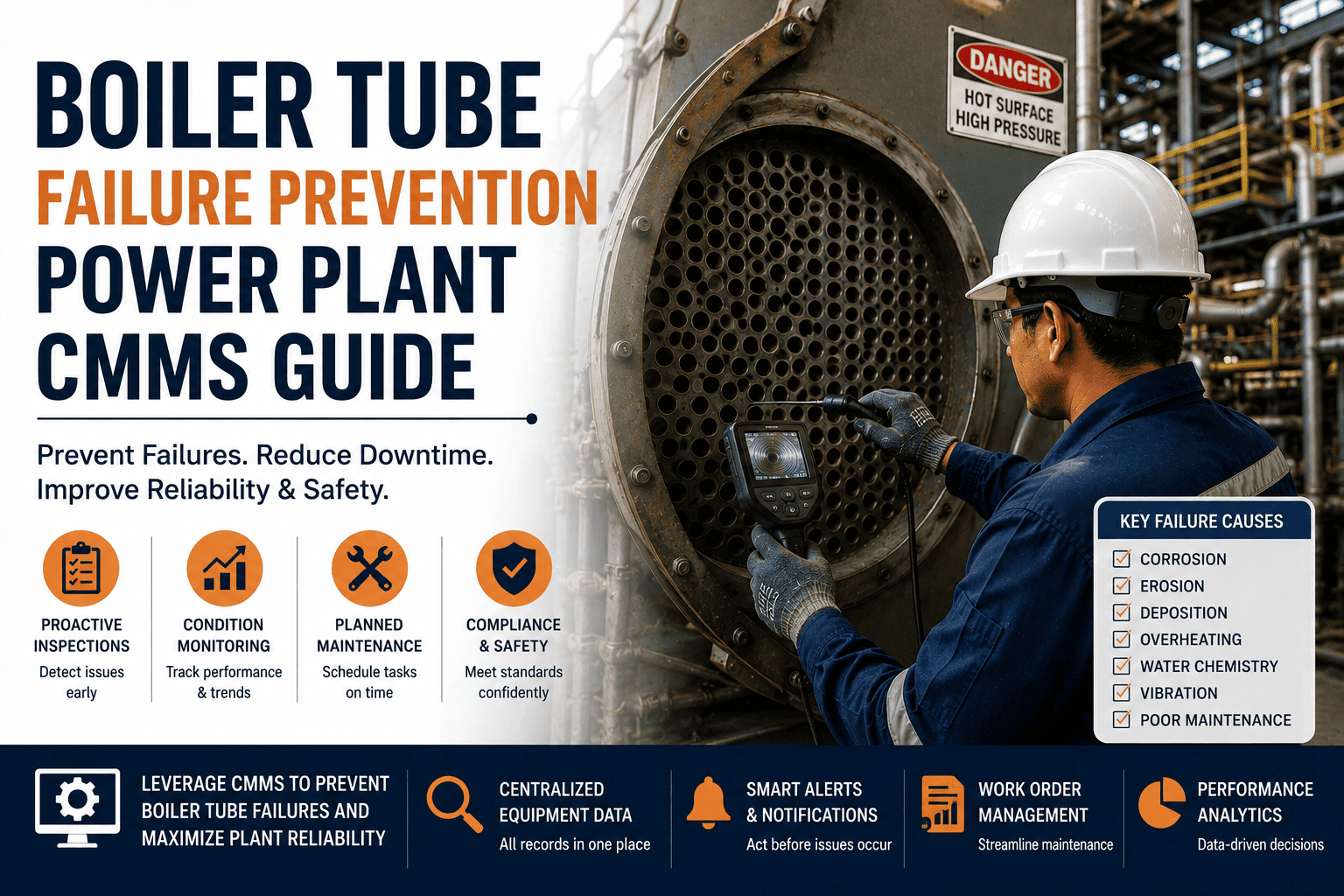
The 6 Root Causes Behind Most Boiler Tube Failures
Most tube failures don't happen randomly — they follow predictable patterns that AI models trained on operational data can identify long before a physical inspection could. Understanding the failure mode is the first step to predicting it.
01
Long-Term Overheating
Sustained metal temperatures above design limits cause creep damage. SCADA steam temperature trends rising 8–12°C above historical baseline over weeks are a reliable early indicator before physical deformation is visible.
02
Short-Term Overheating
Rapid temperature spikes during startups or load swings cause localized ductile failure. These events are logged by SCADA but rarely correlated with tube condition — AI bridges that gap.
03
Fireside Corrosion
Sulfur and alkali deposits accelerate wall thinning on waterwall and superheater tubes. Flue gas composition trends, fuel quality logs, and inspection thickness readings feed AI models trained to flag risk zones.
04
Waterside Scale and Deposits
Poor water chemistry leads to internal deposits that raise tube metal temperature independently of steam temperature. Water quality logs integrated with boiler operating hours predict deposit accumulation rates.
05
Erosion from Fly Ash or Steam
Localized wall thinning from particulate impingement or steam-cutting at bends. Thickness trend data from ultrasonic inspection rounds — when logged consistently in CMMS — allows ML models to project remaining wall life.
06
Fatigue from Thermal Cycling
Frequent start-stop cycles induce stress fatigue at tube bends and welds. Cycle count data from SCADA, combined with inspection crack records, enables fatigue life prediction by tube zone.
AI Signal Sources
What the AI Monitors to Predict Tube Failures Early
SCADA / DCS Data
Steam temperature trends
Flue gas O₂ & CO
Drum pressure deviation
Feedwater flow anomaly
→
OxMaint AI Engine
Anomaly detection & risk scoring
→
Work Order Trigger
Targeted inspection or repair task with priority score
Inspection Records (CMMS)
UT thickness readings
Visual damage logs
Weld inspection history
Prior repair records
→
Trend Modeling
Wall loss rate & remaining life projection
→
Outage Planning Alert
Estimated replacement window before failure threshold
Water Chemistry & Fuel Logs
pH & conductivity history
Sulfur content trends
Water treatment records
Cycle startup count
→
Corrosion & Fatigue Model
Deposit accumulation & cycle fatigue estimation
→
Risk Zone Map
Ranked tube zones by failure probability this cycle
How OxMaint Works
From Raw Data to Work Order in One Platform
1
Connect SCADA & Inspection Data
OxMaint ingests historical and live SCADA exports alongside inspection records already in your CMMS. No proprietary hardware required — standard CSV or API integration covers most DCS platforms used in thermal power.
2
AI Baseline & Anomaly Detection
The AI engine builds a normal operating envelope for each boiler zone using 6–12 months of historical data. Deviations outside that envelope — in temperature, pressure differential, or flue gas composition — are scored for failure risk automatically.
3
Risk-Ranked Tube Zone Dashboard
Maintenance managers see a ranked list of boiler tube zones by current failure risk — updated continuously. Each zone shows the contributing signals, trend direction, and estimated weeks to threshold breach at current trajectory.
4
Automatic Work Order Generation
When a zone crosses a configurable risk threshold, OxMaint generates a targeted inspection or replacement work order with pre-populated asset details, historical context, and suggested inspection method — routed to the right technician automatically.
5
Outage Window Optimization
For zones not yet at critical threshold, OxMaint projects the earliest safe outage window for planned repair. High-confidence replacements are batched into the next scheduled maintenance window to minimize total downtime cost.
Inspection Reference
Boiler Tube Inspection Methods and Recommended Intervals
| Boiler Zone |
Failure Mode |
Inspection Method |
Frequency |
AI Signal Used |
| Waterwall Tubes |
Fireside corrosion, erosion |
Ultrasonic thickness (UT) |
Each major outage |
Flue gas O₂, fuel sulfur trend |
| Superheater Tubes |
Creep, long-term overheating |
Visual + UT + metallographic replica |
Every 2 outages |
Steam temp delta, outlet spread |
| Reheater Tubes |
Short-term overheating, fatigue |
Visual + IR thermography |
Annual outage |
Temp spike frequency, cycle count |
| Economizer Tubes |
Waterside corrosion, pitting |
UT + water chemistry cross-ref |
Every 3 years |
pH history, feedwater conductivity |
| Header & Manifold Welds |
Fatigue cracking at welds |
TOFD / phased array UT |
Every 4–6 years |
Cycle count, pressure fluctuation log |
Frequently Asked Questions
Boiler Tube Failure Prediction: Common Questions
Does the AI work if we don't have a SCADA historian connected?
Yes. OxMaint can build predictive models from manually logged inspection data alone — UT thickness readings, visual ratings, and repair history logged in the CMMS are sufficient to generate wall-loss trend projections and remaining life estimates without any SCADA integration. SCADA data improves accuracy significantly when available.
Start a free trial to explore data input options.
How many months of historical data does the AI need to start producing useful predictions?
A minimum of 6 months of operational and inspection data produces reliable anomaly baselines for most boiler types. Twelve months or more — covering at least one full seasonal operating cycle — improves prediction accuracy for temperature-sensitive failure modes like creep and fatigue.
Book a demo to discuss your data availability.
Can OxMaint integrate with existing DCS platforms like ABB, Emerson, or Siemens?
OxMaint supports data ingestion via standard CSV export, REST API, and common historian formats compatible with major DCS platforms. Direct live integration varies by system version — the implementation team assesses compatibility during onboarding.
Book a demo to review your specific DCS setup.
How does predictive maintenance for boiler tubes differ from standard PM schedules?
Standard PM schedules inspect every tube zone at fixed calendar intervals regardless of actual condition. AI predictive maintenance directs inspection resources toward zones where data signals indicate elevated risk — reducing unnecessary inspection work while catching genuine failure precursors that calendar schedules miss.
Explore OxMaint's predictive maintenance templates.
Ready to Predict Instead of React?
Fuel Efficiency, Reliability, and Fewer Forced Outages — Starting Now
OxMaint connects your boiler operating data, inspection records, and SCADA signals into an AI system that tells your team which tubes need attention before they leak — and when to schedule the repair. Start free or see it live.