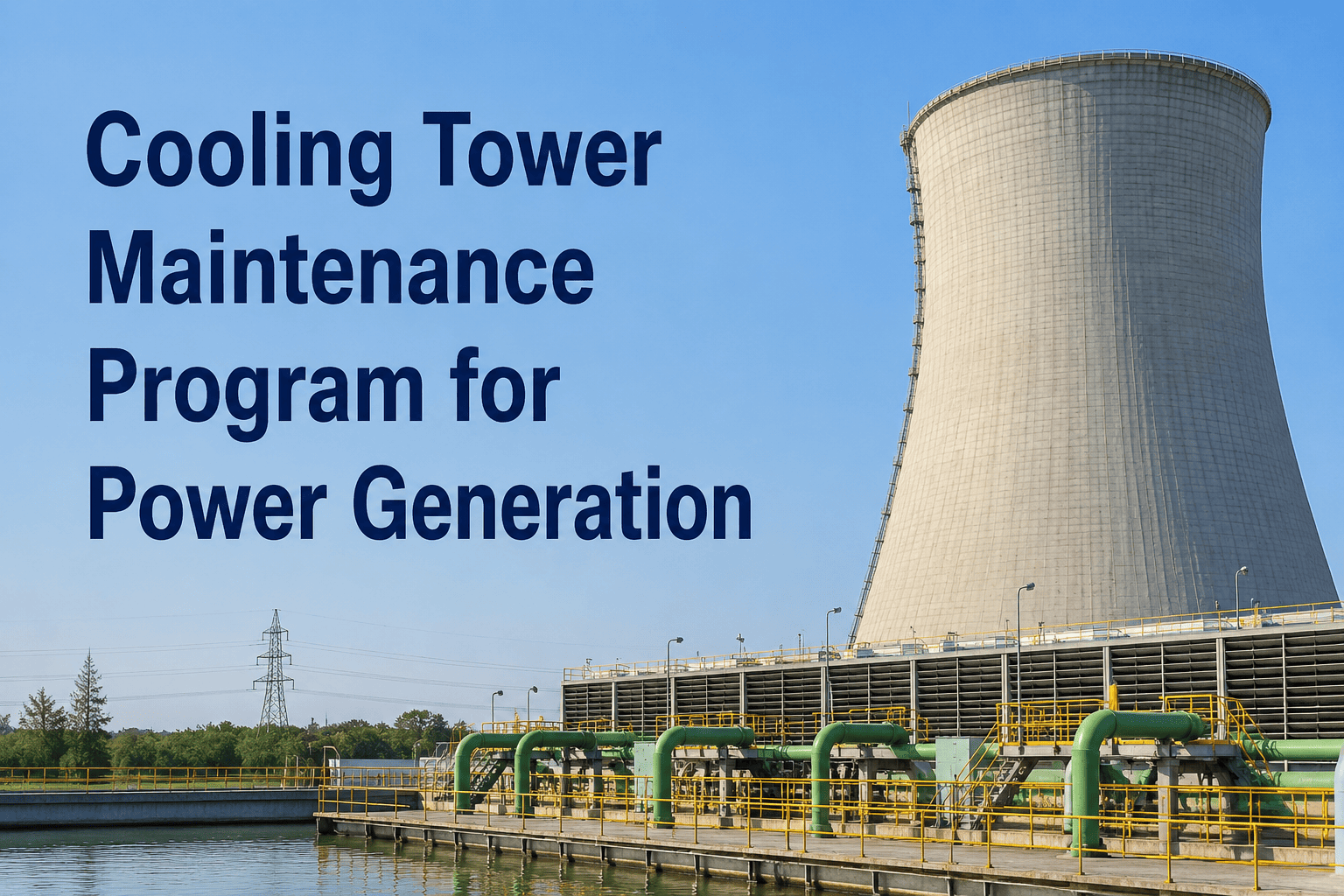
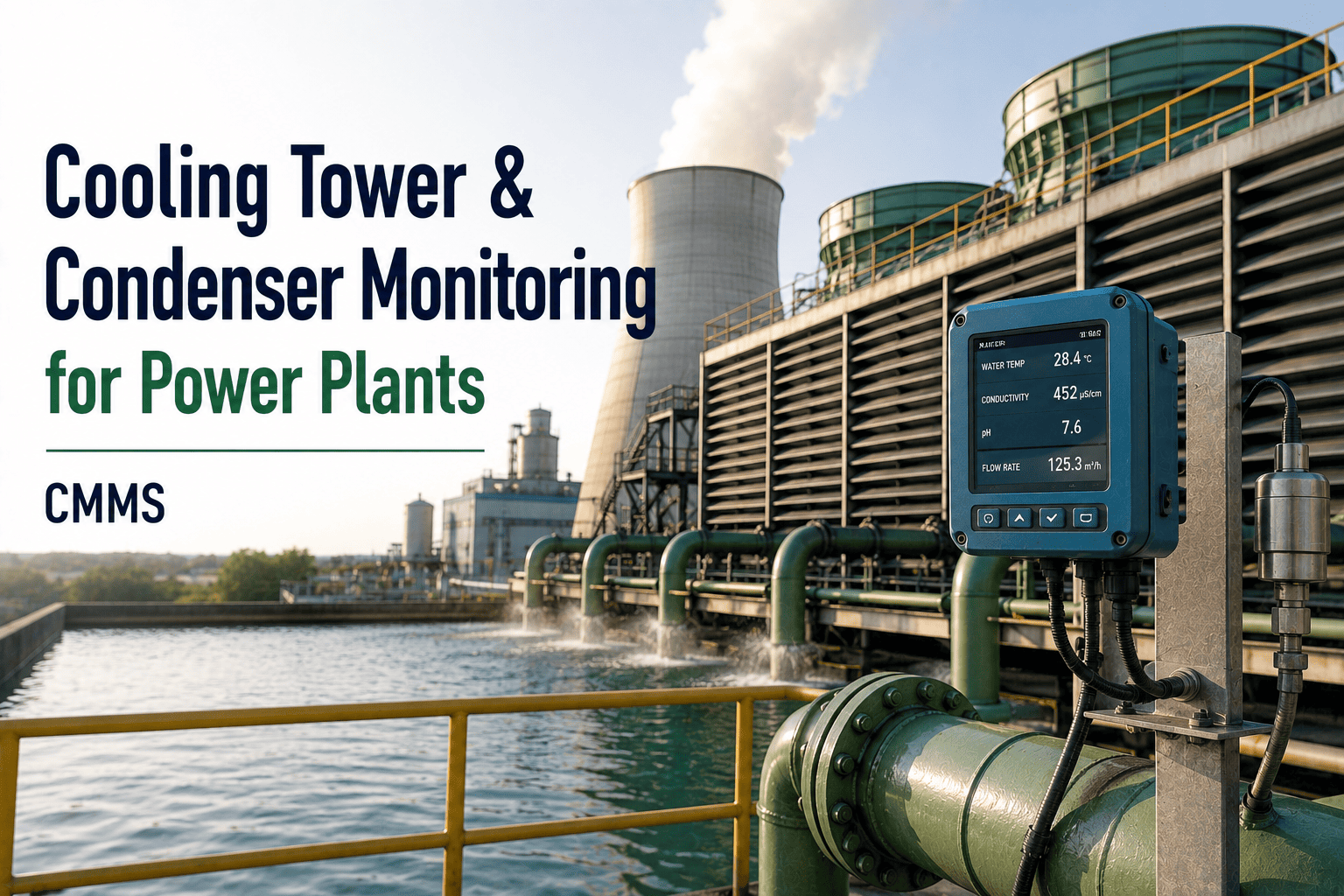
A cooling tower in a thermal power plant isn't background infrastructure — it is a critical heat rejection system whose performance directly limits unit output capacity. When cooling tower efficiency degrades by 10%, condenser backpressure rises, turbine heat rate worsens, and the plant burns more fuel per megawatt-hour generated. When it degrades further, operators face forced load reductions during peak demand periods — exactly when the grid needs generation most. Beyond output impact, cooling towers present two hazards that demand structured maintenance programs: Legionella colonization risk in recirculating water systems, and mechanical failures in large rotating fan assemblies. A well-structured preventive maintenance program addresses all three dimensions. Explore OxMaint's preventive maintenance templates for cooling systems or book a demo to see how cooling tower PM schedules are structured in the platform.
10%
efficiency drop raises condenser backpressure, cutting turbine output
$220K
estimated annual cost of degraded cooling performance at a 500 MW unit
68%
of cooling tower Legionella incidents occur in facilities without a documented water treatment log
3–5 yr
typical fill replacement cycle in high-load power generation cooling towers
Build a Program That Runs Before Problems Appear
Cooling Tower PM That Protects Output, People, and Compliance
OxMaint structures cooling tower inspection rounds, water treatment logs, fan vibration records, and Legionella control documentation into one platform — so nothing slips through the schedule. Start free or see a live walkthrough.
Maintenance Framework
The 5 Pillars of a Power Plant Cooling Tower Maintenance Program
01
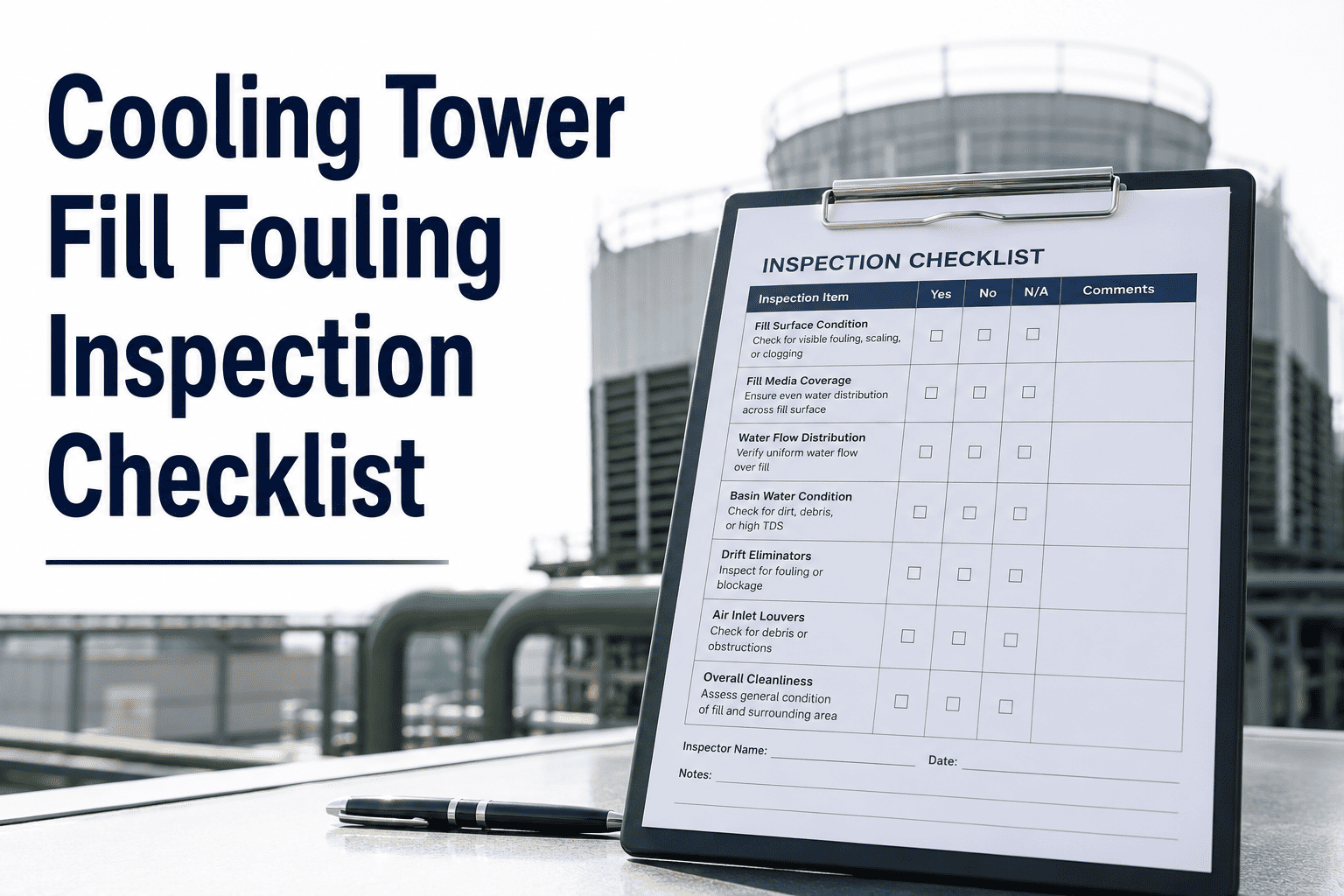
Fill Media Inspection
Cooling tower fill creates the air-water contact surface that drives evaporative cooling. Fouled, scaled, or collapsed fill dramatically reduces heat rejection capacity. Annual inspection with biennial replacement planning keeps performance at design specification.
Key checks: scaling deposits, biological fouling, physical collapse or breakage, flow channeling patterns
02
Fan & Mechanical Drive
Cooling tower fans are large, high-inertia machines operating in continuously humid, corrosive environments. Bearing failures and blade imbalance events in unmonitored towers cause catastrophic mechanical damage — gearbox destruction and fan stack collapse are the worst cases.
Key checks: vibration baseline trending, blade pitch and tip clearance, gearbox oil level and analysis, motor current draw, drive shaft coupling condition
03
Water Treatment Program
Recirculating water in a cooling tower concentrates dissolved solids, biological load, and corrosion products with every evaporation cycle. Scale deposits on heat transfer surfaces, microbiological fouling in fill, and corrosion in carbon steel basins are all controlled through active chemistry management.
Key parameters: cycles of concentration, pH (target 7.0–8.5), conductivity, biocide residual, inhibitor dosing records, blowdown rate
04
Basin Cleaning
Cold water basins accumulate silt, biological debris, and scale sediment that provide substrate for Legionella and sulfate-reducing bacteria. Annual basin cleaning combined with disinfection is a baseline requirement for any cooling water management program compliant with ASHRAE 188 or similar frameworks.
Key tasks: sediment removal, surface disinfection, nozzle inspection, distribution basin integrity check, drift eliminator cleaning
05
Legionella Risk Control
Legionella pneumophila colonizes cooling tower systems that operate in the 20–45°C temperature range with insufficient biocide residual. Power plant cooling towers are classified as high-risk Legionella sources under OSHA and EPA guidance. A documented Water Management Plan with routine sampling is both a regulatory expectation and a liability necessity.
Key requirements: monthly Legionella monitoring, quarterly system assessment, documented treatment response thresholds, emergency disinfection protocol
PM Schedule
Cooling Tower Preventive Maintenance: Task Frequency Reference
Visual inspection of basin water level and makeup valve operation
Blowdown rate verification against cycles of concentration target
Biocide dosing confirmation and residual test
Fan motor amp draw check at operating speed
Drift eliminator visual for ice or debris accumulation (seasonal)
Water chemistry full panel (pH, conductivity, hardness, TDS, inhibitor)
Legionella culture sample or ATP screening per Water Management Plan
Fan vibration measurement and bearing temperature log
Gearbox oil level and visual for leaks
Nozzle coverage pattern inspection for plugging
Full basin dewatering, cleaning, and disinfection
Fill media condition assessment — replacement decision
Fan blade pitch angle and tip clearance measurement
Drive shaft coupling inspection and greasing
Structural inspection of casing, louvers, and cold water basin
Gearbox oil sample analysis and oil change if required
Inspection Table
Cooling Tower Component Inspection Summary
| Component |
Failure Risk |
Inspection Method |
Interval |
Consequence if Missed |
| Fill media |
Fouling, scaling, collapse |
Visual during shutdown |
Annual |
10–30% cooling capacity loss |
| Fan blades |
Imbalance, erosion, crack |
Visual + pitch gauge |
Annual |
Catastrophic fan failure |
| Fan bearings |
Wear, contamination |
Vibration + temp monitoring |
Monthly trending |
Bearing seizure, gearbox damage |
| Gearbox |
Oil degradation, seal leak |
Oil analysis, visual |
Annual oil change |
Gearbox failure, fan trip |
| Spray nozzles |
Plugging, scaling |
Flow pattern visual |
Monthly |
Uneven fill wetting, hot spots |
| Basin & sump |
Silt, Legionella, corrosion |
Dewatered inspection + test |
Annual |
Biological risk, pump cavitation |
| Drift eliminators |
Plugging, damage |
Visual |
Quarterly |
Water carry-over, plume issues |
OxMaint Capabilities
How OxMaint Structures a Complete Cooling Tower PM Program
A
PM Schedule Templates by Component
Pre-built inspection templates for fan systems, water chemistry, basin cleaning, and fill inspection — each with the right data fields for the task. Assign frequencies, technician responsibilities, and escalation rules once during setup.
B
Water Chemistry Log with Trend Charts
Every water test result is logged against the asset and date. OxMaint displays conductivity, pH, biocide residual, and Legionella results as trend lines — so out-of-spec chemistry is visible before it causes equipment or compliance problems.
C
Fan Vibration Baseline and Alert Thresholds
Fan vibration readings entered during monthly rounds are plotted against the established baseline. When readings exceed configurable warning or alert thresholds, OxMaint generates an inspection work order automatically — catching bearing degradation before failure.
D
Legionella Control Documentation
Water Management Plan tasks, sampling results, and treatment response records are maintained in OxMaint as a dedicated compliance log — meeting ASHRAE 188, OSHA, and state health department documentation requirements in an exportable audit format.
Frequently Asked Questions
Cooling Tower Maintenance Programs: Common Questions
How often should fill media be replaced in a power plant cooling tower?
Fill replacement frequency depends on water quality, biological loading, and operating hours — but most high-load power generation cooling towers replace fill every 3–5 years. Annual visual inspections in OxMaint with standardized condition ratings allow your team to project replacement timing rather than reacting to performance loss.
Explore fill inspection templates in OxMaint.
What are the regulatory requirements for Legionella control in power plant cooling towers?
In the US, OSHA's General Duty Clause and ASHRAE Standard 188 establish the baseline framework requiring a documented Water Management Plan with risk assessment, control measures, and monitoring records. Several states have adopted mandatory registration and reporting for cooling towers. OxMaint's compliance logs meet these documentation requirements.
Book a demo to review Legionella compliance tracking.
Can vibration monitoring for cooling tower fans be done without dedicated sensors?
Yes. Technicians with handheld vibration meters logging readings into OxMaint during monthly rounds create a trend record sufficient to detect bearing degradation early. Dedicated continuous monitoring sensors improve response time but are not required to run an effective vibration-based PM program.
Explore vibration round templates in OxMaint.
How does OxMaint handle multiple cooling tower cells as separate assets?
Each cooling tower cell is configured as a separate asset under the cooling system hierarchy. PM schedules, inspection history, vibration trends, and water chemistry records are tracked per cell — allowing cross-cell comparison and per-cell replacement planning without mixing data.
Book a demo to see multi-cell asset configuration.
Protect Output. Control Legionella Risk. Stay Compliant.
A Cooling Tower PM Program That Runs on Schedule — Every Time
OxMaint brings every cooling tower inspection task, water chemistry record, fan vibration log, and Legionella control document into one structured system — so compliance and performance are both covered, without manual tracking. Start free or see it in a live demo.