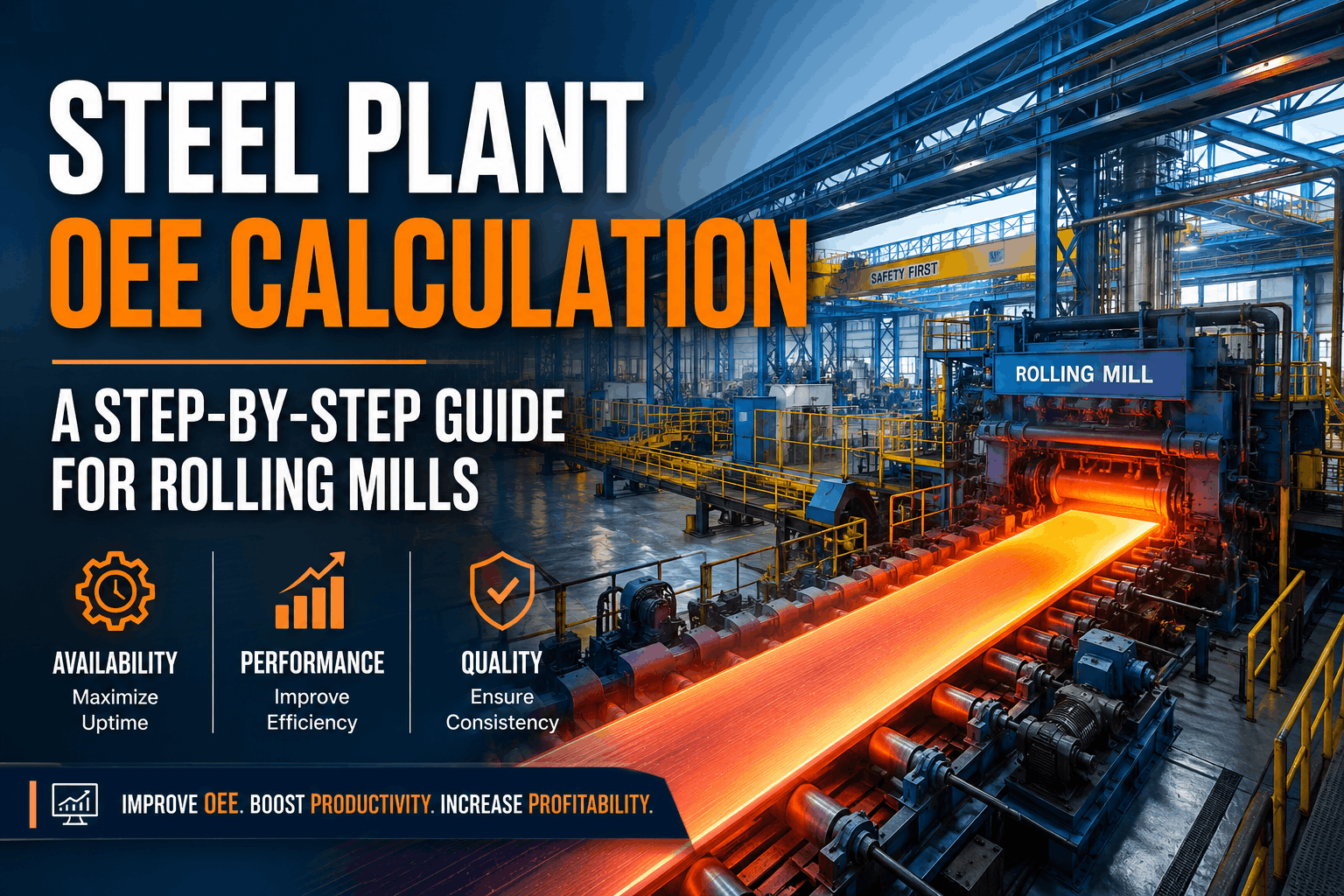
The slab emerged from the reheat furnace at 1,250°C and entered the roughing mill. Somewhere in the 47 seconds it took to become 25mm plate, a surface crack propagated—invisible to operators through the steam and scale, but catastrophic for the automotive customer who discovered it during stamping. That single coil rejection cost $180,000. The mill now runs AI vision at every critical stage—detecting cracks, scale patterns, width deviations, and surface defects in real-time at 15 meters per second. When that same crack type appeared last week, the system flagged it before the strip reached the coiler. That's the difference AI vision makes in hot rolling.
Hot rolling mills present some of the most challenging environments for quality inspection—extreme temperatures, steam, scale, vibration, and material moving at highway speeds. Traditional inspection methods catch defects too late, after the damage is done and the product is cooled. AI-powered vision systems change this equation entirely, detecting surface defects, dimensional deviations, and process anomalies in real-time while there's still opportunity for correction. Schedule a consultation to explore how AI vision can transform quality control at your hot rolling facility.
Why AI Vision for Hot Rolling
Hot rolling operations face unique inspection challenges that make AI vision not just beneficial but essential. The combination of extreme conditions, high speeds, and stringent quality requirements demands automated inspection systems that can see what humans cannot.
Hot Rolling Vision System Architecture
Modern AI vision systems for hot rolling combine specialized high-temperature cameras, ruggedized processing hardware, and neural networks trained specifically on steel surface defects to deliver real-time quality intelligence throughout the rolling process.
Defect Detection Capabilities
AI vision systems detect the full spectrum of hot-rolled steel defects—from surface cracks and scale patterns to dimensional variations and edge defects that indicate process issues requiring immediate attention.
Inspection Points in Hot Rolling
Strategic camera placement throughout the hot rolling line enables comprehensive quality monitoring from reheat furnace exit through coiling. Each inspection point serves specific quality and process control purposes.
| Location | Temperature | Primary Detection | Process Value |
|---|---|---|---|
| Reheat Furnace Exit | 1,200-1,280°C | Slab surface condition, scale thickness, temperature uniformity | Heating optimization, descaling preparation |
| After Primary Descaler | 1,150-1,200°C | Descaling effectiveness, residual scale patterns | Descaler pressure adjustment, nozzle maintenance |
| Roughing Mill Exit | 1,050-1,100°C | Transfer bar cracks, edge condition, width profile | Roll gap adjustment, edge trimming decisions |
| Finishing Mill Entry | 1,000-1,050°C | Temperature profile, scale condition, surface defects | Speed/temperature optimization, cooling control |
| Finishing Mill Exit | 850-920°C | Surface defects, flatness, thickness profile | Quality grading, downstream routing |
| Before Coiler | 550-650°C | Final surface quality, coiling temperature | Product certification, customer release |
Traditional vs. AI-Powered Inspection
Understanding the capabilities difference between traditional inspection methods and AI vision systems reveals why mills worldwide are transitioning to automated quality monitoring.
- Visual sampling of cooled coils
- Hours delay between production and detection
- 5-10% of surface area inspected
- Operator fatigue affects accuracy
- Subjective defect classification
- Real-time in-line detection
- Millisecond detection latency
- 100% surface coverage
- Consistent 24/7 performance
- Objective, repeatable classification
Product-Specific Applications
Different hot-rolled products have distinct quality requirements and defect profiles. AI vision systems adapt inspection parameters and detection algorithms to each product type's specific needs.
| Product | Critical Defects | Inspection Focus | Customer Requirements |
|---|---|---|---|
| Automotive Sheet | Surface inclusions, scratches, scale marks, edge cracks | High-resolution surface imaging, 100% coverage | Zero visible defects, certified surface quality |
| Structural Plate | Laminations, cracks, thickness variation | Thermal imaging for subsurface defects, dimensional accuracy | Mechanical property compliance, NDT certification |
| Pipe & Tube Skelp | Edge condition, slivers, longitudinal cracks | Edge inspection priority, through-thickness defects | Weld-zone integrity, formability assurance |
| HSLA Grades | Surface cracks, scale patterns, cooling marks | Temperature monitoring, crack detection at lower temps | Surface chemistry, coating adhesion readiness |
| Stainless Steel | Oxide patterns, surface roughness, contamination | Specialized lighting for reflective surfaces | Aesthetic appearance, corrosion resistance |
| Electrical Steel | Surface insulation defects, edge damage, flatness | Precision dimensional measurement, coating integrity | Magnetic property preservation, stacking factor |
ROI of AI Vision in Hot Rolling
AI vision investments in hot rolling mills deliver returns through reduced customer claims, decreased scrap, improved yield, and optimized maintenance scheduling. The financial impact accumulates across multiple value streams.
Technical Specifications
AI vision systems for hot rolling mills must meet demanding specifications for camera technology, processing capability, and environmental resilience to deliver reliable performance in continuous operation.
Implementation Approach
Successful AI vision deployment in hot rolling mills requires careful planning across equipment installation, model training, and integration with existing Level 2 systems. A phased approach minimizes production disruption while building operational confidence.
Integration Capabilities
AI vision systems integrate with existing mill automation and quality management infrastructure to enable closed-loop quality control and comprehensive data analytics.
| System | Integration Type | Data Exchange |
|---|---|---|
| Level 2 Automation | Real-time bidirectional | Defect triggers, process setpoints, coil tracking, automatic quality holds |
| Quality Management (QMS) | Database integration | Defect records, inspection images, statistical reports, certification data |
| MES/ERP Systems | Transaction-based | Product routing, grade assignment, customer release, inventory status |
| Roll Management | Event-driven | Roll mark detection, wear patterns, change recommendations, performance tracking |
| Historian/SCADA | Time-series data | Process correlation, trend analysis, root cause investigation support |
Common Challenges & Solutions
Hot rolling mills present unique challenges for vision system deployment. Understanding these challenges and proven solutions accelerates successful implementation.
| Challenge | Impact | Solution |
|---|---|---|
| Steam and water spray | Obscures camera view, causes false detections | Pressurized air purge systems, hydrophobic window coatings, strategic camera positioning |
| Scale and oxide buildup | Contaminates optical surfaces, degrades image quality | Automated cleaning systems, sacrificial windows, regular maintenance protocols |
| Extreme vibration | Blurs images, damages equipment | Vibration-isolated mounting, high-speed shutters, rigid support structures |
| Background heat radiation | Overwhelms visible light imaging | Bandpass filters, high-intensity LED illumination, thermal camera fusion |
| Product grade changes | Different defect patterns and thresholds required | Automatic model switching, grade-specific detection parameters, recipe management |