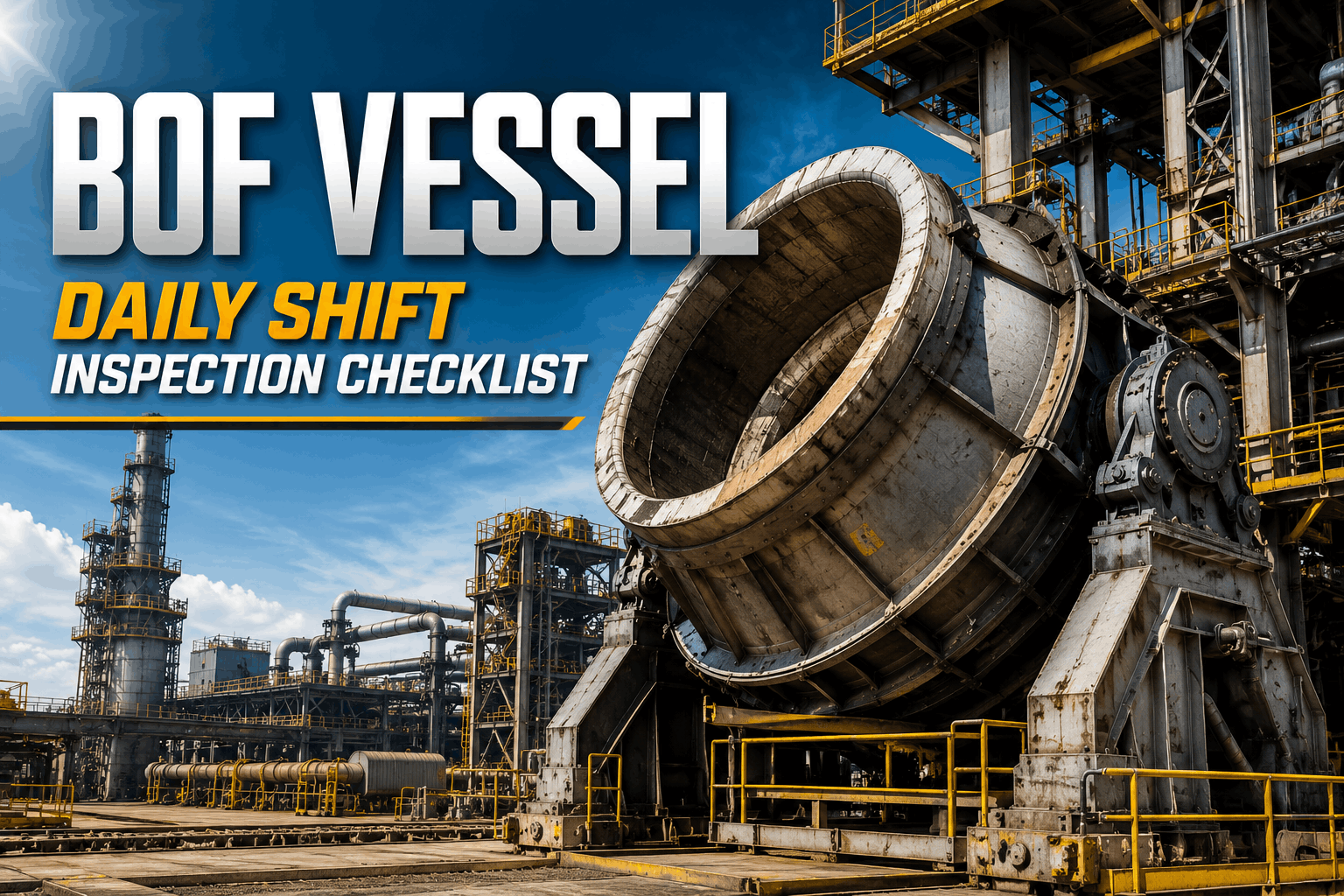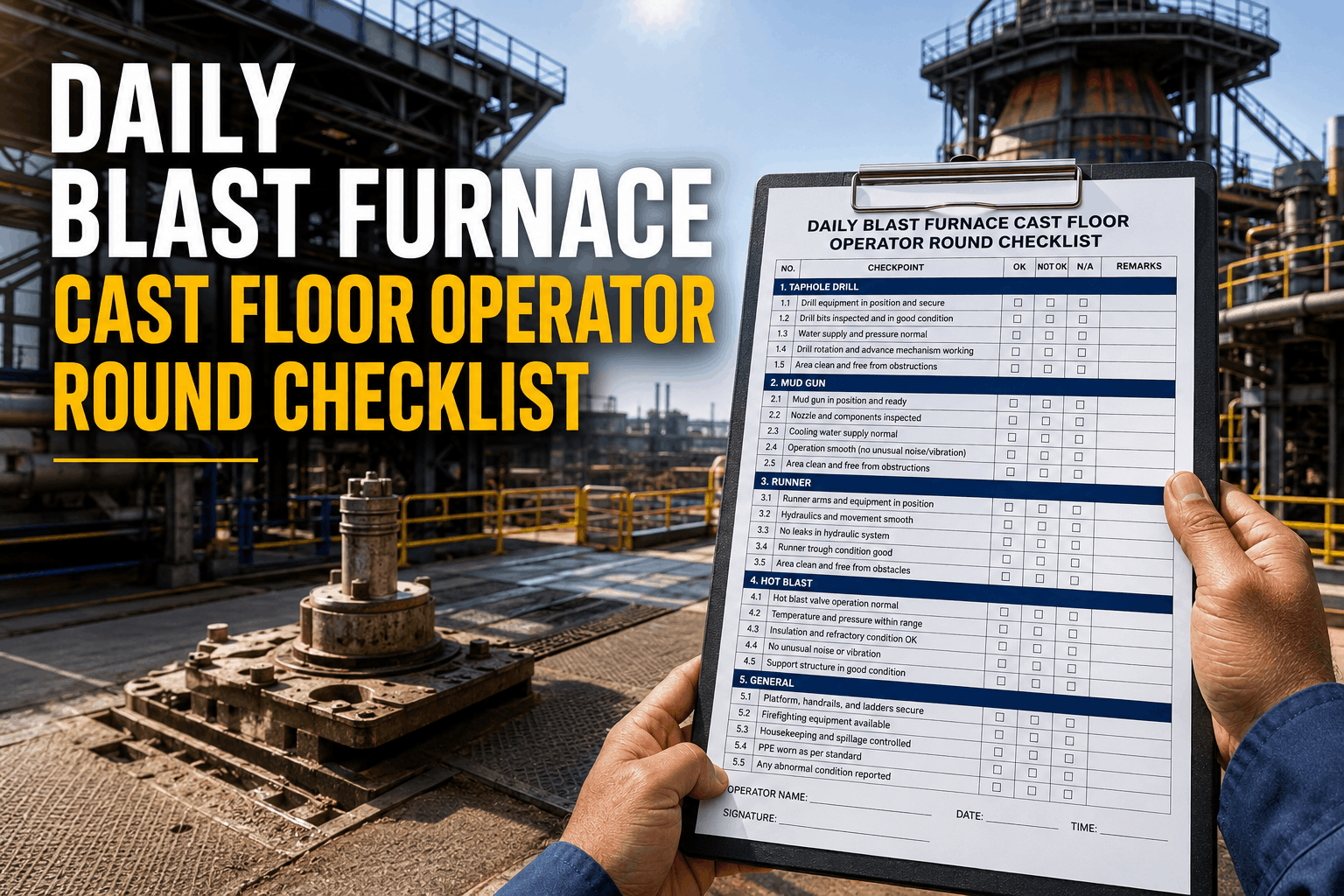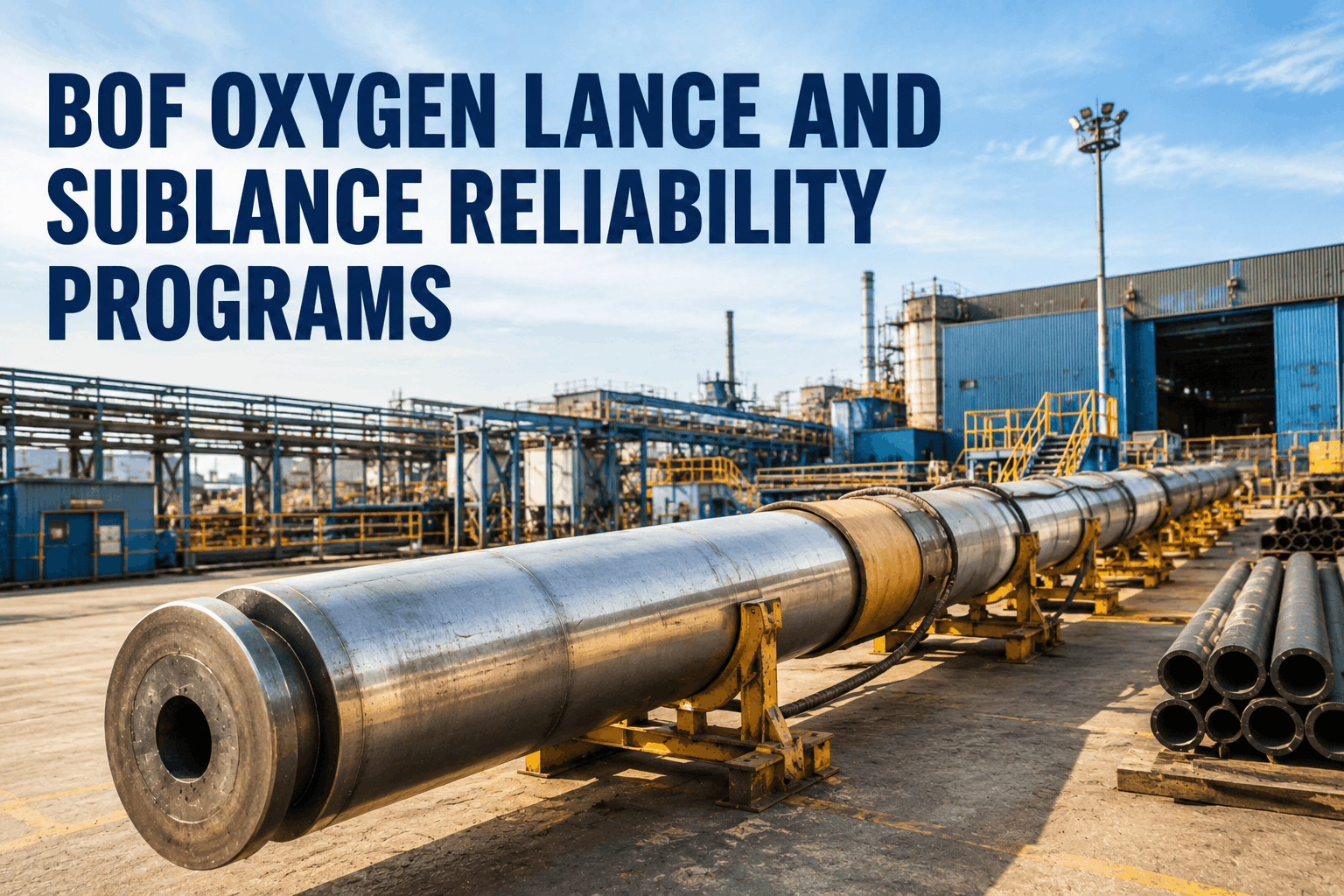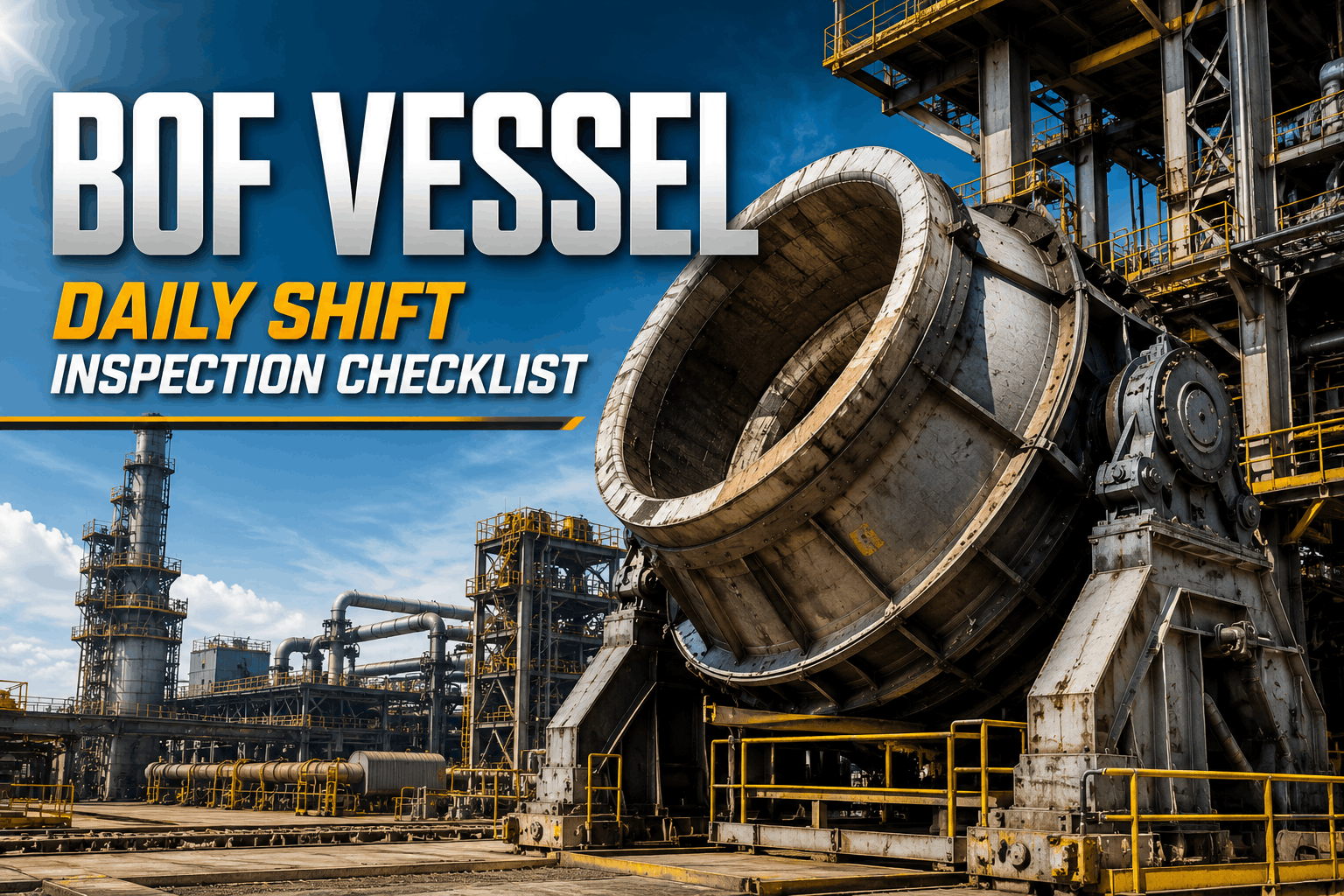
The Basic Oxygen Furnace (BOF) converter is a 250–360 tonne vessel that refines hot metal into liquid steel in 30–45 minutes per heat — subjecting its magnesite brick refractory lining to 1,650°C molten steel, violent oxygen blowing, and relentless thermal cycling. Every heat erodes 0.5–2.0 mm of refractory lining; without systematic inspection and documented trending, a BOF vessel campaign deteriorates invisibly until shell temperature creeps above 120°C in a zone designed for 80°C, indicating the lining has thinned to unsafe limits. When a BOF vessel goes unplanned for reline, the entire integrated steel plant loses $1.5–$4 million per day in lost production — a cost that dwarfs the investment in daily digital inspection. This checklist converts your BOF operator walk into a mobile-first inspection system integrated with OxMaint's CMMS, capturing lining condition, oxygen lance positioning, trunnion ring bearing health, and fume hood function with timestamped audit evidence that extends campaigns by hundreds of heats and hundreds of thousands of dollars.
BOF Vessel Daily Shift Inspection Checklist
Vessel lining profiling, oxygen lance condition, trunnion bearing monitoring, fume hood operation, and CMMS-tracked heat-by-heat inspections — structured for steelmaking shops operating 200–400 heats per week where early detection of refractory thinning extends campaigns by 500+ heats and $2–$5 million in deferred costs.
Lining Degradation Reality
A BOF campaign typically lasts 4,000–50,000 heats depending on practice. Shell temperature trending is the earliest non-intrusive indicator of lining loss. A 10°C rise above baseline indicates lining thickness approaching yellow-flag thresholds. A 20°C rise signals urgent inspection before structural risk develops.
Production Impact of Unplanned Reline
Unplanned reline: 15–25 days downtime, $1.5–$4M daily lost production, emergency capital spend $8–15M. Planned extension: schedule maintenance during planned campaign turnover, recover 200–400 additional heats, defer reline cost, zero production loss during work.
Vessel Lining and Shell Temperature Trending
The refractory lining is the furnace's only barrier between molten steel and the steel shell. Erosion from slag attack and oxygen blowing wear accelerates in specific zones — the taphole area, the bottom, and the slag line. Shell temperature trending via external thermocouple arrays and thermal imaging detects where lining thickness has fallen below safe operating levels, triggering targeted lining repair (gunning) before structural failure risk develops.
Critical Lining Health Indicators
Oxygen Lance and Gas Supply System
The oxygen lance delivers supersonic oxygen jets into the molten bath at 8–12 bar pressure, driving the violent exothermic reaction that refines iron to steel in 30–45 minutes. Lance tip wear, nozzle blockage, or water-cooling system leaks degrade blow pattern, extend blow time, reduce oxygen efficiency, and accelerate refractory erosion — creating a vicious cycle where a degraded lance accelerates the very lining wear it was supposed to help control.
Trunnion Ring and Vessel Tilting System
The trunnion ring suspends the BOF vessel and allows it to rotate for charging, blowing, sampling, and tapping. Bearings on the trunnion pins experience 1,200°C thermal cycling and sustained mechanical load — creating bearing wear that manifests as jerky vessel motion, increased tilt cycle time, or higher motor currents. Tilting mechanism failure with the vessel tilted creates a safety emergency requiring crane recovery.
Fume Hood and Gas Recovery System
The fume hood captures furnace exhaust gases (CO, CO₂, iron oxide fume, and entrained lime) — a high-volume, high-temperature gas stream that must be ducted to the gas cleaning plant. Hood seal leakage, cooling water loss, or panel damage allows uncontrolled fume escape onto the shop floor — creating immediate air quality hazard and potential personnel exposure above safe limits.
BOF Daily Inspection Frequency Matrix
| Inspection Element | Measurement Method | Target / Limit | Frequency |
|---|---|---|---|
| Shell Temperature Baseline | External thermocouple array | No zone >+10°C above baseline | Shift Start/End |
| Lance Tip Condition | Visual inspection after turndown | No nozzle blockage or wear | Per Heat |
| Lance Cooling Water Delta-T | Temperature differential measurement | 8–15°C inlet to outlet | Per Heat |
| Tilt Cycle Time | Stopwatch or PLC timer | 85–95 seconds vertical to turndown | Per Shift |
| Trunnion Bearing Temperature | Bearing housing thermocouple | No rise >+20°C from baseline | Per Shift |
| Laser Lining Profile | Laser contour measurement | <0.5 mm/100 heat wear rate | Every 200 Heats |
CMMS Sign-Off and Compliance Audit Trail
Digital inspection without audit trail is inspection theatre — a comfort that provides no compliance evidence when auditors or incident investigators arrive. Every heat inspection must be signed by the responsible operator in a CMMS that timestamps the entry, links it to the specific heat number and vessel asset record, and provides exportable evidence for regulatory compliance, insurance claims, or incident root cause investigation.
"Before OxMaint, we had shell temperature data sitting in a log book — we didn't see the trend until after the furnace blew down for emergency lining repair. Now our operators log shell temperature and lance data every heat into the mobile app. We caught a +15°C creep in zone 4 after 2,800 heats and scheduled gunning repairs. We extended that campaign to 3,200 heats instead of the usual 3,000. That single campaign extension saved us $1.2M in deferred reline costs and kept the shop running through our peak season."
Frequently Asked Questions
How does shell temperature trending predict refractory lining thinning without opening the vessel?
Shell temperature rises proportionally as interior lining thins — the steel shell conducts more heat through less insulating brick. A 10°C rise signals lining approaching yellow-flag thickness. A 20°C rise indicates urgent inspection is needed before catastrophic structural failure develops.
What is the typical refractory wear rate in a healthy BOF campaign?
Healthy wear rate is ≤0.5 mm per 100 heats measured via laser contour scan. Wear rate >1.0 mm/100 heats indicates accelerated erosion from slag chemistry or operating procedure changes requiring investigation and corrective action.
How often should oxygen lance cooling water be checked for blockage?
Water outlet temperature trending every heat — delta-T >20°C above normal indicates scale buildup restricting flow. Monthly descaling of lance cooling passages prevents catastrophic water leakage into the molten bath.
What does jerky tilt motion indicate, and how urgent is the repair?
Jerky motion = trunnion bearing wear or gearbox degradation. Repair urgency: high — tilting mechanism failure with vessel tilted creates emergency requiring crane recovery. Schedule bearing overhaul or girth gear replacement within one week of first observation.
How much does a BOF reline cost, and what's the production impact of unplanned downtime?
Reline cost: $8–15M plus 15–25 days downtime. Production loss from unplanned reline: $1.5–$4M per day = $22–100M total impact. Planning reline 200+ heats ahead costs zero in lost production.
Can OxMaint integrate BOF vessel inspection data with the blast furnace hot metal supply schedule?
Yes — OxMaint integrates with SCADA systems to pull heat number, iron temperature, and tapping time. Each BOF inspection record links to specific iron heat data, creating full traceability for chemistry and quality investigations.
What should happen if laser lining profile shows wear rate suddenly doubling?
Sudden wear rate jump indicates change in operating conditions (slag chemistry, oxygen pressure, or lance positioning). Immediate investigation with plant metallurgist required — adjust operating parameters and schedule accelerated lining profile scans until wear rate returns to normal.
How does daily shell temperature monitoring help schedule targeted gunning repairs without stopping the campaign?
Temperature data identifies which zones are thinning fastest. Targeted gunning repair during planned maintenance windows applies refractory material exactly where wear is concentrated — extending campaign life 200–400 additional heats at minimal cost versus full campaign termination.
Every Heat Inspected. Every Zone Profiled. Every Trend Visible.
OxMaint's daily BOF inspection app captures shell temperature, lance condition, lining wear rate, and trunnion bearing health with mobile timestamped sign-off — converting passive operator observations into predictive refractory management that extends campaigns by 300+ heats and saves $1–3M per extended campaign.