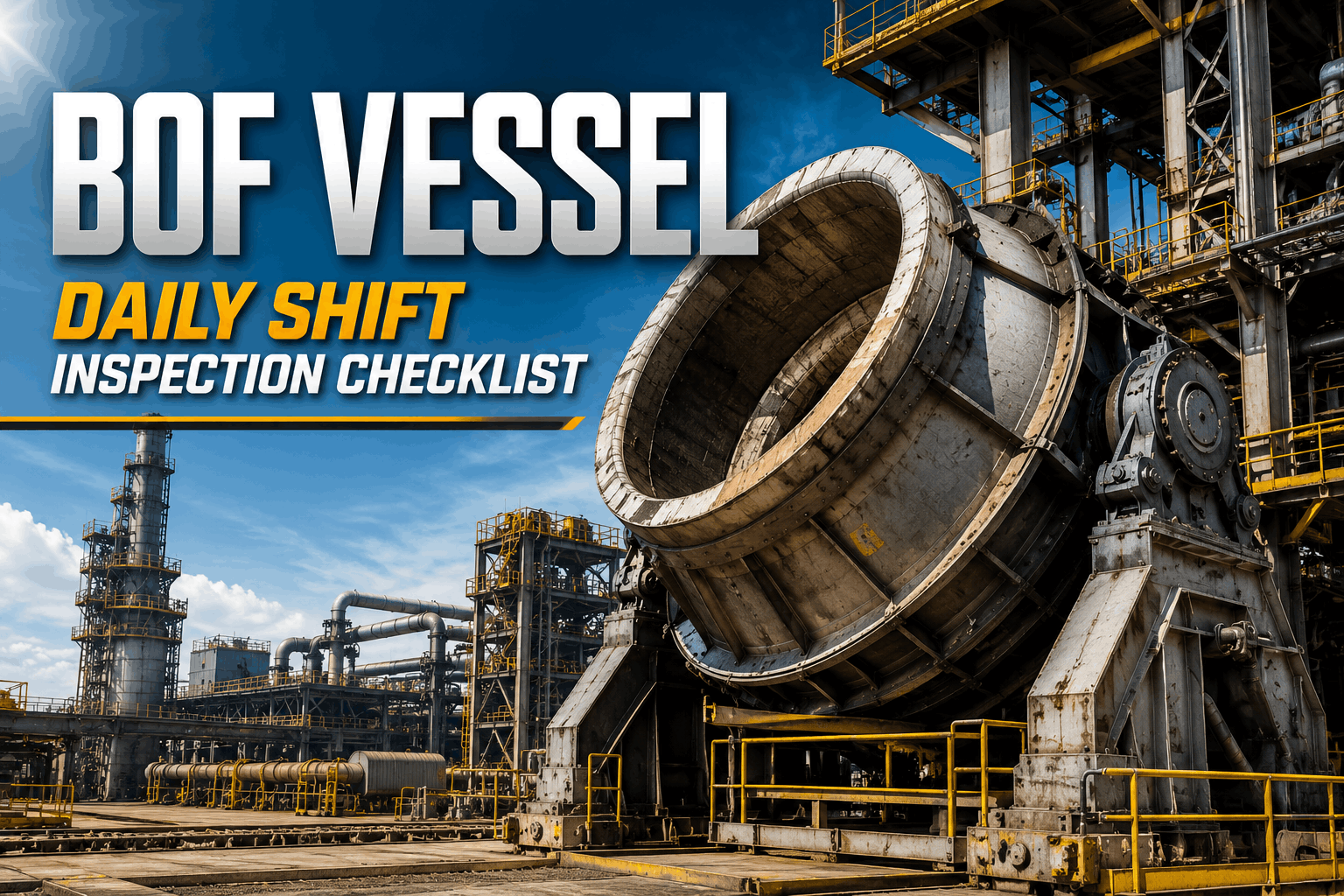
The cast floor is where molten iron from the blast furnace meets refractory-lined runners, taphole assemblies, and mudgun systems — a zone where every second of unscheduled downtime costs $15,000–$25,000 per hour and every rupture, breakthrough, or equipment failure creates immediate hazard to personnel within 50 metres. A cast floor operator's daily walk sheet that isn't digitally tracked, timestamped, and linked to CMMS work orders is not a maintenance tool — it is an incident report waiting to happen. This checklist gives your blast furnace casthouse team a mobile-first framework for taphole mud gun operations, runner condition, hot blast circuit integrity, and safety sign-off fields that live in OxMaint's integrated CMMS platform, converting daily operator observations into predictive maintenance intelligence before a tap hole rupture or mud gun failure stops your furnace cold.
Blast Furnace Cast Floor Daily Operator Round Checklist
Daily taphole and mud gun inspection, runner refractory health, hot blast pressure verification, and emergency procedures — structured for casthouse operators working in extreme temperature zones with real-time CMMS audit trail and mobile sign-off integration.
Why Daily Taphole Inspection Matters
Taphole mud gun failures are the leading cause of unplanned cast floor shutdowns. A single mud gun that fails to seal creates slag breakout risk — splashing 1,500°C slag and 1,400°C iron across the casthouse floor. Daily mud gun cycle verification, gun pressure trending, and clay ball condition checks catch deterioration 24–48 hours before failure, preventing the $8–12M campaign disruption of an emergency furnace blow-down.
Taphole and Mud Gun Assembly
The taphole is the furnace's only open access point during operation — a refractory-lined cavity subject to 1,500°C molten iron, slag attack, and mechanical stress from the mud gun apparatus. Mud gun clay ball deterioration, gun seal leakage, or refractory lining cracks in the taphole region create the cascading failure that ends in a catastrophic breakthrough.
Taphole Integrity Check
Visual inspection for cracks, clay loss, or thermal damage in refractory lining
Pressure Trending
Gun seal pressure must hold 2–4 bar; decay indicates seal failure
Cycle Trending
Track mud gun actuation count; >500 cycles per cast needs investigation
Main Iron Runner and Slag Runner
The runners are the refractory-lined channels that conduct molten iron from the furnace to the cast house floor. Runner refractory erosion from thermal cycling and slag chemistry attack reduces campaign life by months and can cause catastrophic runner failure where iron overflows the channel, creating a molten metal spill across the cast floor.
OxMaint's cast floor mobile app captures every tap-hole pressure reading, mud gun cycle count, and runner ultrasonic measurement with photo timestamped proof — automatically linked to maintenance work orders and visible to shift supervisors in real-time. Schedule a demo to see mobile rounds in action at your furnace.
Hot Blast and Tuyere Circuit
The hot blast system — delivering preheated air to the furnace tuyeres at 1,000°C and 3–4 bar pressure — is the furnace's thermal backbone. Tuyere blockage, air line leaks, or blast pressure instability cascades immediately into burden compaction, furnace pressure rise, and production slowdown. Daily blast circuit verification prevents the furnace stalling that can take 48 hours to recover.
Daily Cast Floor KPIs
| Metric | Measurement | Target | Frequency |
|---|---|---|---|
| Mud Gun Seal Pressure Stability | Pressure decay per hour (idle) | ≤0.3 bar/hour | Shift Start |
| Taphole Clay Ball Condition | Visual + photo evidence | No cracks or spalling | Hourly |
| Runner UT Wear Rate | mm/20 casts average | <0.5 mm per 20 casts | Per Cast |
| Hot Blast Pressure Stability | Deviation from baseline | ±0.2 bar tolerance | Continuous |
| Tuyere Flame Stability | Color and shape consistency | Bright, uniform, no flicker | Shift Start |
| Daily Mud Gun Cycle Count | Total cycles per cast | <400 cycles per cast | Per Cast |
Safety Protocols and Emergency Response
The cast floor operates at the boundary of extreme hazard — molten metal at 1,500°C, pressurized gas lines, and hot refractory surfaces. Daily safety walk-throughs verify emergency procedures, PPE readiness, and communication systems that protect personnel during routine operations and during crisis events like mud gun failure or runner rupture.
Frequently Asked Questions
What is the most common cause of mud gun failure on a blast furnace cast floor?
Clay ball deterioration from thermal cycling and slag chemistry exposure — causing seal leakage and loss of gun sealing capacity within 150–300 casts. Digital daily inspection with timestamped photos catches deterioration 24–48 hours before failure, preventing slag breakout.
How do you detect runner refractory wear before catastrophic failure occurs?
Ultrasonic thickness measurement every 20 casts combined with thermal imaging identifies wear rate progression. Triggering relining preparation when remaining lining thickness drops below design minimum prevents overflow and $8–12M campaign loss from emergency blow-down.
Why is tuyere peephole visual inspection important for daily operations?
Tuyere flame characteristics — color, shape, and stability — are the only visual indicator of combustion zone health during normal operation. Dull or flickering flame signals tuyere wear, carbon blockage, or coke quality issues requiring immediate investigation before burden compaction develops.
What happens if hot blast pressure deviates from baseline by more than 0.3 bar?
Pressure deviation cascades into burden compaction and furnace gas flow instability — triggering rising differential pressure readings and slowing descent rates. Immediate DCS investigation and corrective action (air line blockage clearing, stove switching verification) prevents the furnace stalling that can take 48+ hours to recover.
How does OxMaint's cast floor mobile app integrate with existing SCADA systems?
OxMaint connects to blast furnace DCS/SCADA via OPC-UA and API — pulling taphole temperature, blast pressure, and cast duration data automatically into the daily inspection checklist. Operator observations combine with process data to create complete condition records that feed predictive maintenance algorithms.
What is the correct mud gun seal pressure range, and how often should it be verified?
Mud gun seal pressure must maintain 2–4 bar during idle periods. Pressure decay exceeding 0.3 bar per hour indicates seal failure. Verification at shift start and after every 5 casts catches decay early — preventing mid-cast seal loss that creates slag breakout hazard.
How should cast floor operators respond if runner refractory shows signs of breaking through?
Any visible refractory deterioration, joint separation, or thermal hotspot >850°C triggers immediate escalation to casthouse manager. Digital CMMS work order auto-generated with priority status. No casting operations continue beyond 6 hours without qualified inspection — preventing iron overflow and personnel hazard.
Why is emergency divert gate weekly testing mandatory even during continuous operations?
Divert gate failure during an actual emergency (mud gun rupture, runner breakthrough) allows molten metal to spill uncontrolled across the cast floor — creating immediate burn hazard within 50 metres. Weekly 3-second response time verification ensures gate is functional when lives depend on it.
"We were losing 12–15 hours per month to unscheduled mud gun failures before going digital with OxMaint. Now our casthouse team logs clay ball condition and gun pressure every shift — and we've cut mud gun-related outages by 68% in 6 months. The combination of daily digital inspection with SCADA pressure trending has completely changed how we manage the cast floor. What used to be reactive firefighting is now predictive maintenance."
Every Mud Gun Cycle Logged. Every Runner Reading Verified. Every Emergency Response Ready.
OxMaint converts your cast floor daily walk into a mobile-first inspection platform with automated pressure logging, thermal image capture, and CMMS-integrated work order generation — giving your casthouse team the tools to prevent mud gun failures, runner ruptures, and the unplanned blow-downs that cost millions.