The color coating line stopped mid-run at 6:15 AM on a Monday—peak production window. A coater roll bearing had been vibrating above threshold for three weeks, each reading dutifully recorded on a paper checklist that sat in the line supervisor's drawer. No escalation. No replacement order. When the bearing seized, it gouged the applicator roll surface, sending 1,200 meters of pre-painted coil through with uneven coating thickness before quality caught it. The entire batch was downgraded from premium architectural grade to secondary industrial stock. The bearing cost $2,800. The roll resurfacing cost $18,000. The product downgrade and lost production time: $340,000 in a single shift. Three customer orders shipped late. One key account requested a formal corrective action report before releasing their next purchase order.
Average annual cost of unplanned downtime for a single color coating line, including lost production, product downgrades, customer penalties, and emergency repairs across coaters, curing ovens, accumulators, and tension systems
Of all color-coated product quality rejections trace directly to equipment maintenance gaps—not raw material defects or operator error—including coating thickness variation, surface defects, and cure failures
$6,500/hr
Line Stoppage Cost
Average cost per hour when a color coating line goes down during a production campaign, factoring in lost output, paint waste, oven restart energy, and downstream scheduling disruption
The Pattern Quality Auditors See
Customer quality auditors and ISO certification bodies don't fail coating lines for having older equipment—they fail them for missing process control documentation. No proof of coater roll condition monitoring. No oven temperature calibration records. No evidence that tension systems were verified within required intervals. The coated product might look perfect. Without records proving process parameters were controlled throughout the run, auditors assume they weren't—and your quality certifications, customer approvals, and premium pricing authority are at risk.
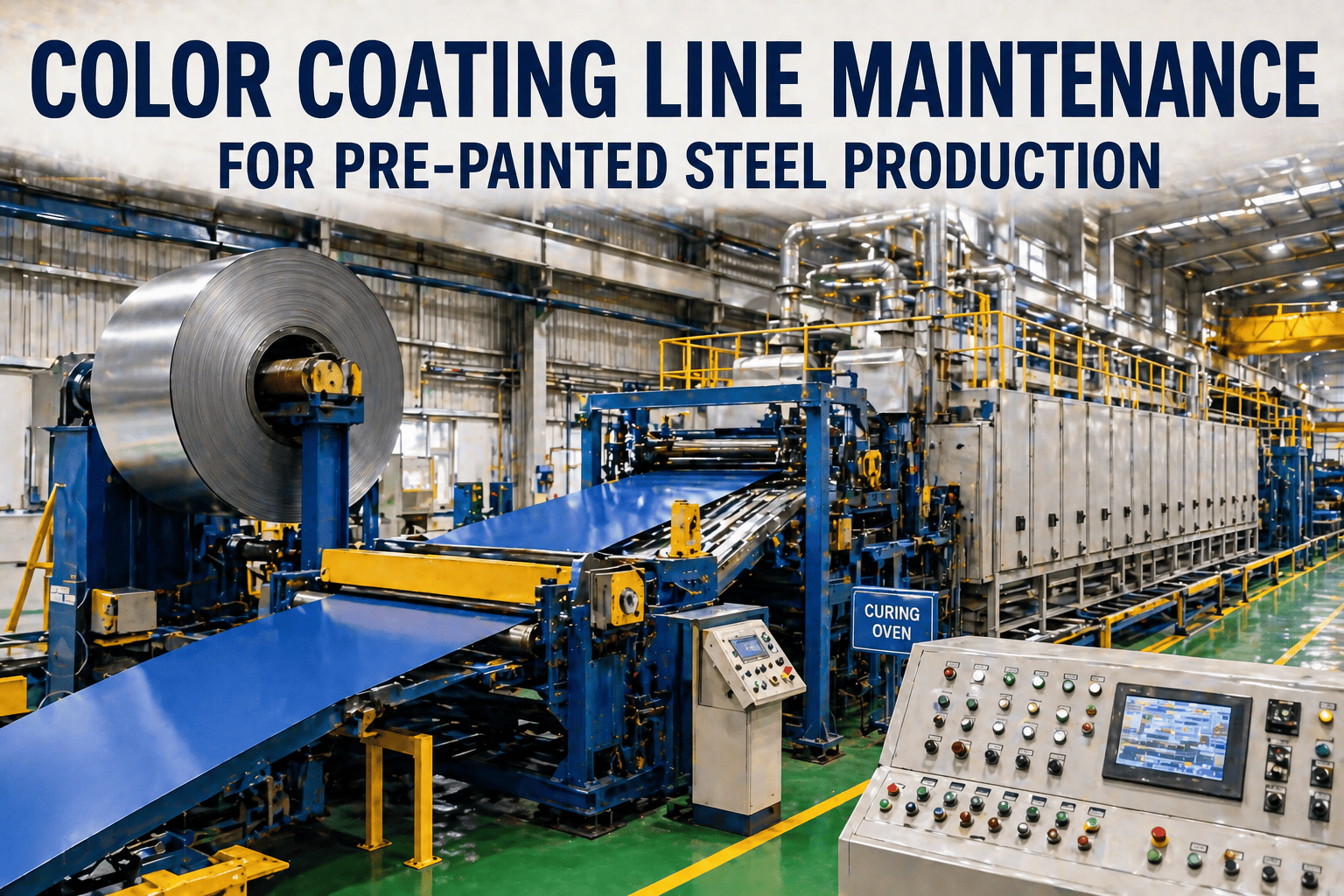
Color coating lines and finishing lines are where raw steel becomes a premium product. These are the final value-addition stages—where galvanized or cold-rolled coil receives primer, topcoat, and backing coat through precision roller application, passes through curing ovens at exact temperature profiles, and emerges as architectural-grade, appliance-grade, or industrial-grade pre-painted steel. Every micron of coating thickness, every degree of oven temperature, and every newton of strip tension matters. When any component in this chain drifts out of specification, the result isn't just downtime—it's product that can't be sold at full value. Plants that start tracking CCL and finishing line maintenance digitally aren't just preventing breakdowns—they're protecting coating quality, customer certifications, and the premium margins that justify the entire finishing operation.
Why CCL & Finishing Line Reliability Defines Product Value
In integrated and downstream steel operations, the color coating line is the highest value-per-meter stage in the entire production chain. A ton of hot-rolled coil might sell for $600. That same ton, after cold rolling, galvanizing, and color coating, can command $1,200-$1,800 depending on quality grade and end-use certification. But that premium only holds if coating quality is consistent, traceable, and certified. A single equipment-related quality excursion can downgrade an entire production campaign from premium architectural to secondary industrial—erasing 30-50% of the product's value in minutes. Equipment reliability isn't a maintenance department metric; it's the single biggest lever on finishing line profitability.
First-Pass Yield Separates Premium Lines from Average Operations
Top-performing color coating lines achieve 98.5%+ first-pass quality yield through rigorous equipment maintenance. Lines operating below 95% yield lose an average of $1.2M annually in product downgrades alone—before accounting for customer penalties, rework costs, and the reputational damage that erodes premium pricing authority with key accounts.
30-50%
Product value loss when coating quality forces downgrade from architectural to industrial grade
$85K
Average cost of a single coater roll replacement including resurfacing, alignment, and lost production
72%
Of premium customers require documented equipment maintenance records for supplier qualification
$120-350
per ton margin erosion when CCL uptime falls below 88%
7,500+
operating hours per year for a continuously running color coating line
5.1x
higher customer complaint rate from lines without documented PM programs
The Preventive Maintenance Schedule That Keeps Every Micron Consistent
Color coating lines operate under exacting quality standards—ISO 9001, ISO 14001, IATF 16949 for automotive, and customer-specific coating specifications that dictate tolerance bands measured in microns. Quality auditors, certification bodies, and premium customers all expect specific equipment checks at specific intervals with documented proof. The lines that consistently pass audits and retain premium certifications aren't running better paint—they're proving that every mechanical and process variable was controlled throughout every production run. When your team can see how digital scheduling works for coating line equipment, audit anxiety becomes a thing of the past.
| Frequency |
Required Tasks |
Documentation Needed |
Failure Consequence |
| Every Shift |
Coater roll surface visual inspection, oven zone temperature verification, strip tension reading, paint viscosity check, accumulator loop level confirmation, entry/exit strip inspection |
Operator checklist with process parameter readings and timestamp |
Immediate line hold, quality quarantine of affected coils |
| Weekly |
Coater roll runout measurement, backup roll condition check, oven burner flame pattern inspection, quench system flow rate verification, chemical pretreatment concentration test, bridle roll alignment check |
Inspection log with measurement values, deviation flags, and corrective notes |
Product quality drift, customer specification non-conformance |
| Monthly |
Coater roll bearing vibration analysis, oven conveyor chain tension and wear measurement, paint circulation pump performance test, strip edge guide calibration, exhaust system and RTO efficiency check, drive motor current analysis |
Maintenance records with trend data, vibration spectra, and technician sign-off |
Formal quality hold, customer audit escalation |
| Quarterly |
Complete coater head assembly inspection, oven refractory and insulation integrity check, full accumulator mechanical inspection, tension leveler roll condition assessment, chemical pretreatment system overhaul, full electrical thermography scan |
Professional inspection reports, calibration certificates, engineering review sign-off |
ISO certification non-conformance, customer qualification suspension |
| Annual |
Full line shutdown inspection—all rolls, ovens, drives, accumulators, and coating systems; oven structural integrity and emission testing; complete drive system alignment; control system calibration audit; safety interlock full function test |
Comprehensive inspection certificate, OEM compliance report, capital maintenance plan, environmental compliance records |
Operating permit risk, ISO decertification, loss of customer approvals |
Swipe to see full table
Color coating lines require process parameter documentation beyond standard equipment PM—every quality audit links equipment condition to product conformance, making maintenance records a quality system requirement
Can Your Quality Team Produce Equipment Maintenance Records During a Customer Audit?
Premium customers and ISO auditors expect it in minutes, not days. See how coating line operations are building audit-ready documentation systems that protect certifications and premium pricing.
Root Cause Analysis: Why Color Coating & Finishing Lines Fail
CCL and finishing line failures follow patterns unique to precision coating operations—where thermal control, surface condition, and mechanical precision interact in ways that make root cause isolation challenging without systematic data. Unlike heavy steel processing equipment, coating line failures often manifest as gradual quality degradation before they become outright breakdowns. Understanding these failure modes is the foundation of a maintenance program that protects both uptime and product quality.
01
Coater Roll Degradation
31%
Roll surface wear, crown profile loss, bearing vibration, and runout deviation on applicator and backup rolls. Even 0.01mm of roll surface irregularity creates visible coating thickness variation that fails quality specifications for premium products.
Prevention: Weekly runout measurement, monthly vibration analysis, crown profile tracking per campaign, proactive roll change scheduling based on meters coated rather than calendar time
02
Oven & Curing System Failures
24%
Burner degradation causing temperature zone inconsistency, conveyor chain elongation altering strip dwell time, insulation deterioration increasing energy costs, and RTO (Regenerative Thermal Oxidizer) malfunction creating environmental compliance risk.
Prevention: Weekly burner flame inspection, monthly zone temperature uniformity survey, quarterly chain wear measurement, annual oven structural and emissions audit
03
Tension & Strip Handling Issues
18%
Bridle roll slip causing tension fluctuation, accumulator mechanical faults creating line speed variation, edge guide misalignment leading to strip wander, and uncoiler/recoiler tension control drift producing telescoping or coating defects at coil edges.
Prevention: Daily tension reading verification, weekly bridle roll surface check, monthly accumulator carriage inspection, quarterly drive system calibration
04
Paint Supply & Application System Faults
13%
Paint circulation pump wear causing flow inconsistency, filter clogging creating particulate contamination, viscosity control drift, pan contamination from dried paint buildup, and paint line blockages from inadequate flushing during color changes.
Prevention: Shift-level viscosity verification, weekly pump pressure trending, monthly filter change scheduling, standardized color change flushing protocols with documented verification
05
Chemical Pretreatment Failures
9%
Chromate/non-chromate conversion coating concentration drift, rinse water contamination, spray nozzle blockage creating uneven surface preparation, and chemical bath temperature variation—all producing adhesion failures that only manifest weeks later in the field.
Prevention: Every-shift chemical concentration testing, weekly spray pattern verification, monthly nozzle cleaning/replacement schedule, quarterly full pretreatment system audit
06
Drive & Electrical Control Failures
5%
VFD faults causing line speed variation, encoder drift affecting coating weight calculations, PLC communication errors between coating stations, and power quality issues creating motor torque fluctuations that manifest as coating defects.
Prevention: Monthly drive system diagnostics, quarterly encoder calibration, bi-annual control system backup and verification, power quality monitoring with automated alerts
Paper Logs vs. Digital Systems: The Transformation That Protects Premium Quality
Quality managers using paper-based systems across coating operations describe the same nightmare: binders of daily check sheets that can't be cross-referenced with production data, uncertainty about whether the oven temperature drift last Tuesday affected the customer order that shipped Thursday, and the dread of a premium customer's quality auditor requesting six months of coater roll condition records while your team searches through filing cabinets. After switching to digital systems, the same compliance and traceability tasks take minutes instead of days. Lines ready to make the switch can create a free account and experience the difference on their next production campaign.
Paper-Based System
Traceability query:
Hours to days
Missed PM risk:
High
Customer audit prep:
Days of scrambling
Digital CMMS
Traceability query:
Instant
Missed PM risk:
Auto-alerts
Customer audit prep:
Always audit-ready
93%
reduction in quality documentation and traceability response time
64%
fewer equipment-related quality rejections with predictive maintenance
100%
coil-to-equipment traceability for customer complaint resolution
Expert Perspective: What Separates Premium Coating Operations from the Rest
"The color coating lines that retain premium customer approvals year after year aren't running better paint or newer equipment—they're proving process control. When I audit a CCL operation, I want to see the coater roll condition at the time a specific coil was produced. I want oven zone temperatures linked to that production run. I want proof that the pretreatment chemistry was within specification when that strip passed through. Digital maintenance systems that tie equipment condition to production data give me confidence in the product. Paper binders with weekly check marks don't."
— Coated Steel Products Quality & Certification Consultant
Production-Linked Maintenance Records
Every maintenance action and equipment reading is linked to the coils produced during that period. When a customer complaint arrives, trace it back to exact equipment conditions in seconds—not days of detective work through paper files.
Campaign-Based PM Scheduling
Roll changes scheduled by meters coated, not calendar days. Oven maintenance timed to color change windows. Pretreatment overhauls aligned with planned shutdowns. The system optimizes PM timing against production reality, not arbitrary schedules.
Quality Trend Integration
Coating thickness drift, gloss variation, and adhesion test results correlated with equipment condition data. Spot the relationship between roll wear and coating inconsistency before it becomes a customer complaint or a batch downgrade.
The real cost of CCL and finishing line equipment failures isn't the spare part on the shelf—it's the architectural-grade coil downgraded to industrial pricing, the premium customer who received out-of-spec product and is now auditing your facility, the ISO assessor who found gaps between your quality manual and your actual maintenance records, and the margin erosion that happens invisibly when first-pass yield drops from 98% to 94%. Operations that schedule a walkthrough of digital coating line maintenance management discover that equipment reliability and product quality aren't separate goals—they're the same dashboard, updated in real time, visible to maintenance, quality, and production teams simultaneously.
Your Next Customer Audit Is Already Being Planned
You just haven't received the notification yet. Premium building products manufacturers, automotive OEMs, appliance companies, and their quality teams audit coating line suppliers on annual or semi-annual cycles. ISO surveillance audits happen every year. The coating operations that retain their certifications and customer approvals consistently aren't luckier than those that lose them. They made a decision to stop managing precision coating equipment with paper check sheets and tribal knowledge. That decision starts with understanding what your current documentation can actually prove about the condition of every coater roll, oven zone, pretreatment stage, and tension system—and what it will look like when the auditor from your largest customer walks onto the coating line floor and starts asking questions.
Protect Every Micron, Pass Every Quality Audit
Oxmaint gives coating line operations instant access to every equipment maintenance record, automated PM scheduling linked to production campaigns, coil-to-equipment traceability for complaint resolution, and the quality confidence that comes from knowing your line is always audit-ready and your product is always on specification.
Frequently Asked Questions
How often should color coating line rolls be inspected and replaced?
Coater rolls require visual surface inspection every shift, runout measurement weekly, and vibration analysis monthly. Roll replacement timing should be based on meters coated rather than calendar intervals—typically every 500,000-1,500,000 meters depending on paint type, substrate, and quality requirements. Backup rolls follow a similar schedule but typically last 2-3x longer. Crown profile should be measured quarterly and tracked against OEM specifications. Premium operations maintain spare roll sets that are pre-ground and ready to swap during scheduled color changes, minimizing changeover time. All roll condition data should be linked to production records for traceability.
What are the most common causes of coating quality defects from equipment issues?
The leading cause is coater roll degradation (31% of quality incidents), including surface wear, runout, and bearing vibration that create coating thickness variation visible to the naked eye on premium products. Oven and curing system failures account for 24%—temperature zone inconsistency causing under-cure (adhesion failure) or over-cure (color shift and brittleness). Tension and strip handling issues cause 18% of defects through coating weight variation and edge defects. Paint supply system faults at 13% create particulate contamination and flow inconsistency. Chemical pretreatment failures (9%) produce adhesion problems that only appear weeks later in field exposure. Most quality failures trace to gradual equipment degradation that systematic condition monitoring would have caught before it affected product.
What does color coating line maintenance cost annually?
Annual preventive maintenance for a color coating line typically runs $350,000-$700,000 covering coater systems, curing ovens, accumulators, tension systems, pretreatment, and associated controls. However, the true cost picture includes product downgrades from equipment-related quality excursions ($85,000+ per incident for a premium-to-secondary downgrade), customer penalty chargebacks, quality claim investigations, emergency roll replacements at 2-3x standard cost, and the revenue impact of lost customer approvals. Lines with documented predictive maintenance programs typically reduce total quality-related costs by 40-55% while improving first-pass yield from 94% to 98.5%+, which alone can represent $1-2M in annual margin recovery.
How does CMMS improve color coating line quality and uptime?
Digital CMMS platforms track every coating line component individually—coater rolls by serial number and meters coated, oven zones by temperature history, pretreatment systems by chemical concentration trends. Automated scheduling triggers PM tasks based on production volume (meters coated) rather than calendar time, ensuring maintenance aligns with actual equipment wear. When a quality deviation occurs, the system links the affected coils to exact equipment conditions at the time of production, enabling root cause analysis in minutes rather than days. Over time, the data reveals correlations—which roll surface conditions produce thickness drift, which oven parameters cause cure variation, which pretreatment concentration ranges produce field adhesion failures. This capability reduces quality-related rejections by 64% on average while maintaining 100% coil-to-equipment traceability for customer complaint resolution.
What certifications require documented coating line maintenance records?
ISO 9001 quality management requires documented evidence of equipment maintenance and calibration. ISO 14001 environmental management requires oven emission monitoring and RTO maintenance records. IATF 16949 (automotive) demands equipment capability studies linked to maintenance records. Major building products certifications (FM Approvals, UL listings, Qualicoat, Qualisteelcoat) require evidence of process control including equipment condition documentation. Most premium customers—including automotive OEMs, major appliance manufacturers, and architectural panel fabricators—require supplier quality audits that specifically verify coating line equipment maintenance programs as a condition of approved supplier status. Without digital records that link equipment condition to production data, passing these audits requires weeks of preparation and carries significant risk of non-conformance findings.
How long do critical CCL components last before replacement?
Component lifespans on color coating lines vary significantly by application intensity and quality requirements. Coater applicator rolls typically last 500,000-1,500,000 meters between regrinds, with 3-5 regrinds before full replacement. Oven conveyor chains last 2-4 years depending on peak temperature and loading. Curing oven burners require replacement every 18-36 months. Pretreatment spray nozzles need replacement every 3-6 months due to chemical erosion. Accumulator carriage wheels and bearings last 2-3 years. Paint circulation pumps last 3-5 years with regular seal replacement. The challenge is that these lifespans depend heavily on production mix—a line running mostly dark colors at high film builds will wear rolls faster than one running light colors. Digital tracking based on actual meters coated, paint types processed, and condition measurements provides far more accurate replacement timing than fixed calendar schedules.