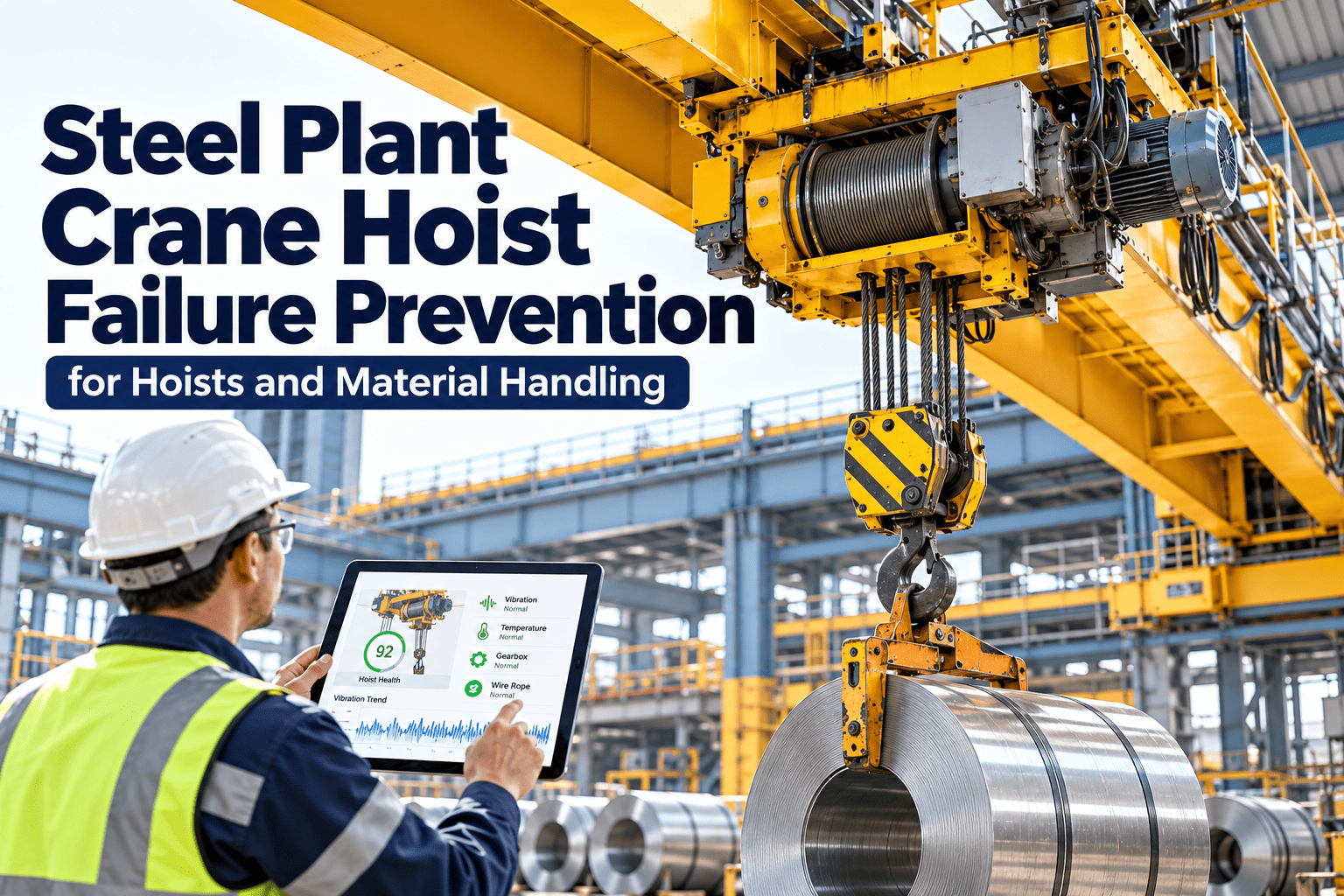
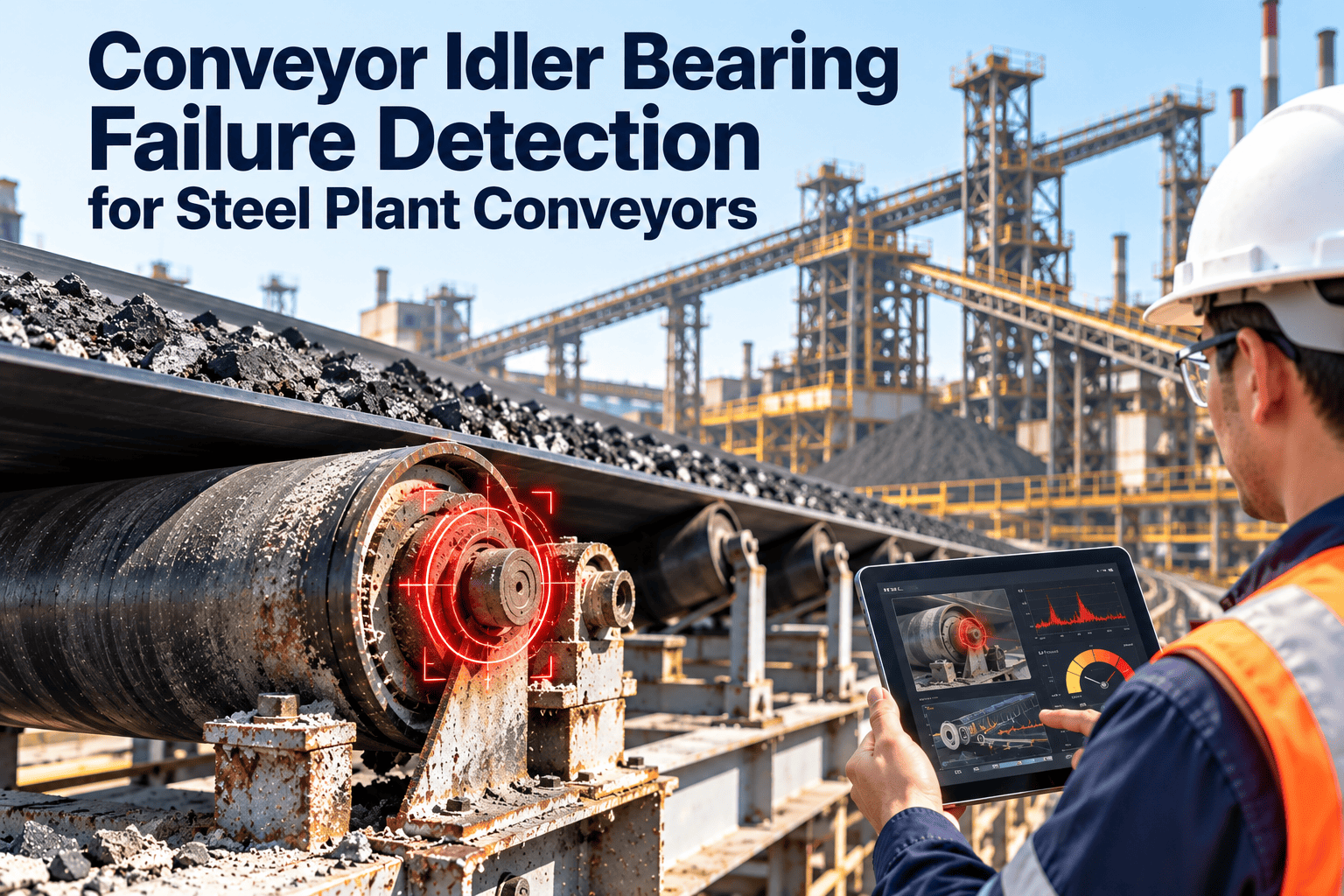
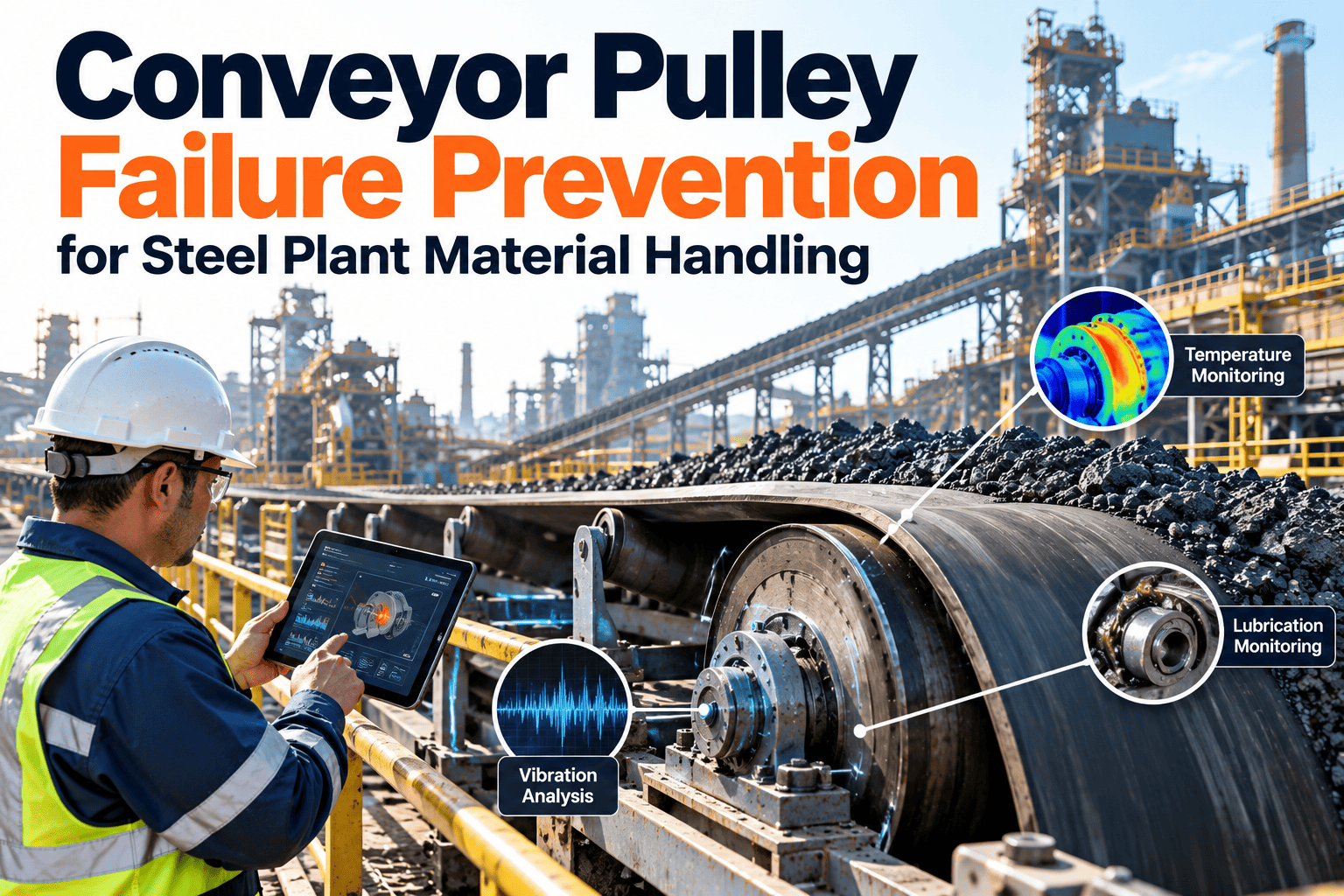
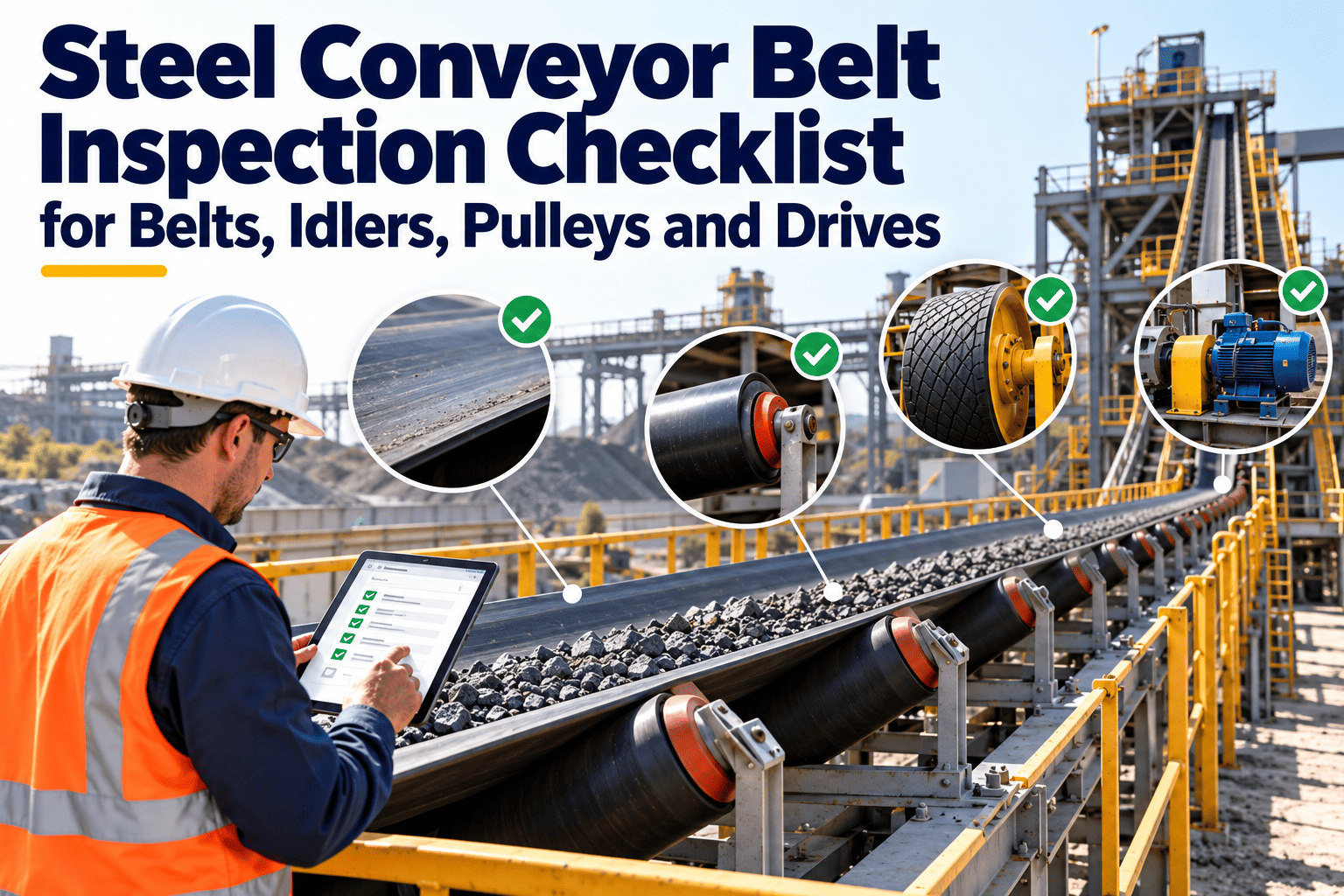
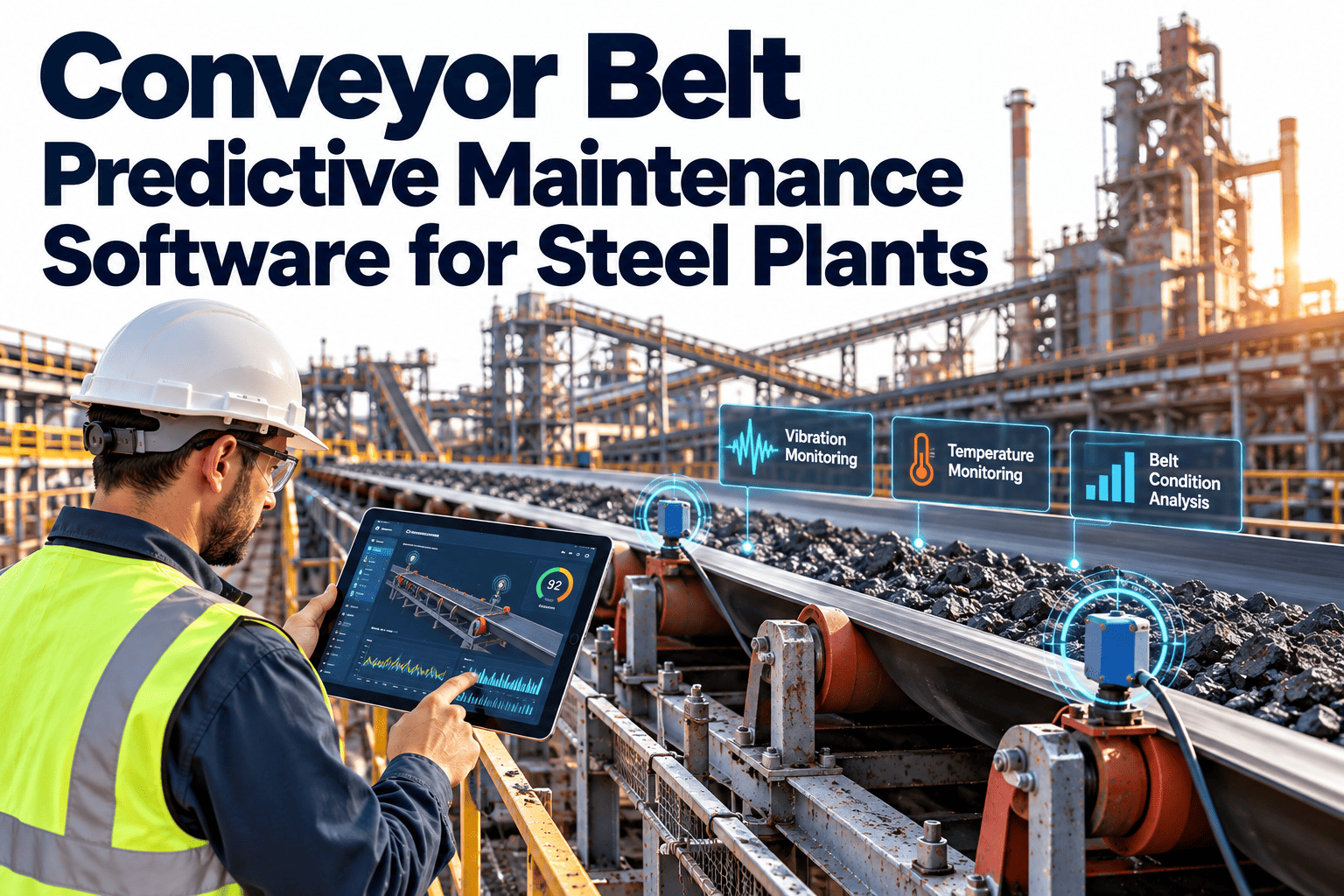
Steel plant conveyor belts carry thousands of tons of raw material, ore, and slag every single day — and a single undetected belt tear, roller failure, or misalignment event can halt the entire material flow chain within minutes. OxMaint.ai's AI Vision Inspection platform continuously scans conveyor belts using computer vision and multi-sensor fusion to catch misalignment, surface tears, spillage, and roller degradation before they escalate into costly stoppages — keeping your steel plant's material handling running without interruption.
Industry Challenge
01
Belt Tear During High Load
Longitudinal rips propagate undetected along ore conveyor belts, growing from 2cm to 2m in under 4 minutes at full speed, requiring complete belt replacement and 48-hour shutdowns.
02
Roller Failure & Seizure
Seized idler rollers create friction hotspots that carbonize the belt underside within 90 seconds. Steel plants average 1,200 rollers per km of conveyor — manual inspection is impossible at scale.
03
Material Spillage & Misalignment
Belt tracking errors cause material spillage that damages structure, creates fire risk from fine coal dust, and triggers regulatory compliance violations on environmental grounds.
What AI Vision Detects
Belt Tears
96% accuracy
Misalignment
94% accuracy
Roller Failure
91% accuracy
Spillage
93% accuracy
Hotspots
97% accuracy
Belt Wear
89% accuracy
Live Conveyor Monitor — Steel Plant
C-Belt 04 · Ore Yard to Sinter
CRITICAL
DefectLongitudinal tear — 340mm
Speed2.8 m/s
Detected48 sec ago
ActionEmergency stop triggered
C-Belt 09 · Coke Plant Feed
WARNING
DefectBelt drift 62mm left
Roller R-44Temp 118°C
Detected3 min ago
ActionWork order auto-created
C-Belt 02 · Raw Material Intake
HEALTHY
Belt TensionNormal
TrackingCentered ±4mm
Last Scan12 sec ago
OEE Score96.4%
Measured Results — Integrated Steel Plant
| Metric | Before OxMaint AI | After OxMaint AI | Improvement |
|---|---|---|---|
| Belt-related downtime / month | 68 hours | 20 hours | 71% reduction |
| Belt replacement cost / year | $920,000 | $310,000 | 66% savings |
| Mean defect detection time | Manual: 4–6 hrs | AI: 6 seconds | 3,600× faster |
| Roller failures per quarter | 34 events | 9 events | 74% reduction |
| Material spillage incidents | 22 / month | 4 / month | 82% reduction |
| OEE — Material Handling | 71.4% | 93.1% | +21.7 points |
See AI Vision Catch a Belt Tear Live
Watch OxMaint detect misalignment, tears, and roller failure in real time — in your plant's context.
Performance Comparison — Detection Method
Manual Inspection
Detection Speed4–6 hrs
Coverage30%
False AlarmsHigh
Night MonitoringNone
Sensor-Only CMMS
Detection Speed15–45 min
Coverage61%
False AlarmsMedium
Night MonitoringPartial
OxMaint AI Vision
Detection Speed6 seconds
Coverage100%
False AlarmsLow
Night Monitoring24/7
Expert Review
PV
Pradeep Verma
Sr. Maintenance Head · Long Products Steel Division · 18 yrs
"Our conveyor network spans 14km across three plants. Before OxMaint, we were running completely blind between scheduled inspections — a belt tear on C-Belt 04 cost us $680,000 in one incident alone. After deploying OxMaint AI Vision across 22 conveyor lines, our defect detection went from hours to seconds. The system paid for itself in the first two months. The AI doesn't just detect problems — it understands the context of each belt's load, speed, and wear history, which makes the alerts genuinely actionable."
$680K
Incident prevented
2 months
Full ROI payback
22 lines
Monitored 24/7
AI Detection Event Flow
Camera + Sensor Scan
Every 6 seconds across full belt width
AI Anomaly Score
Vision model classifies defect type & severity
Instant Alert
Push notification + dashboard flag
Auto Work Order
Assigned to nearest available technician
Resolution Log
Outcome stored for AI model improvement
Frequently Asked Questions
How does OxMaint AI Vision handle dust and low-light conditions in steel plants?
OxMaint AI Vision uses industrial-grade cameras with IR illumination and dust-rated enclosures (IP67), specifically designed for steel plant environments with fine ore dust, coal fines, and steam. The AI model is trained on datasets collected in real steel plant conditions, including night shifts and high-particulate zones. The system maintains above 90% defect detection accuracy even at PM10 levels above 500 µg/m³. Book a demo to see the system in action.
Can OxMaint detect internal belt damage not visible on the surface?
Yes. OxMaint combines visual inspection with embedded magnetic flux leakage (MFL) sensors for steel-cord conveyor belts, detecting internal wire breaks and core fatigue that are not visible externally. This dual-layer approach catches delamination and cord corrosion 3–8 weeks before they cause surface failure. The platform correlates MFL readings with historical load data to predict structural life remaining. Visit app.oxmaint.ai for technical specifications.
How many conveyor lines can OxMaint monitor simultaneously?
OxMaint's architecture is designed for large-scale industrial deployments. Single plant installations monitoring 50+ conveyor lines simultaneously are fully supported, with central dashboard aggregation across all belts. The system uses edge computing nodes at each conveyor zone to process vision data locally and transmit only anomaly events to the central server, keeping bandwidth requirements minimal even for sprawling steel plant layouts spanning multiple kilometers.
What is the typical installation time for AI vision on a steel plant conveyor network?
A standard deployment covering 10–15 conveyor lines takes 3–5 weeks from hardware mounting to full AI model calibration. OxMaint provides a dedicated implementation team familiar with steel plant safety protocols and confined space requirements. The system requires no belt modification or stoppage for camera and sensor installation — most hardware is mounted on existing conveyor structure using clamp brackets. Speak to our team to plan your deployment.
Does OxMaint help with regulatory compliance for material spillage in steel plants?
OxMaint's spillage detection and auto-alerting system generates timestamped incident logs that are directly usable in regulatory compliance reporting for environmental authorities. Spillage events, response times, and resolution actions are all documented automatically. Steel plants using OxMaint have reported a 60–80% reduction in regulatory spillage incidents, reducing the risk of environmental fines that can reach $50,000–$200,000 per incident depending on jurisdiction.
Your Conveyors Never Stop. Your Monitoring Shouldn't Either.
OxMaint AI Vision watches every belt, every roller, every shift — so you don't have to.