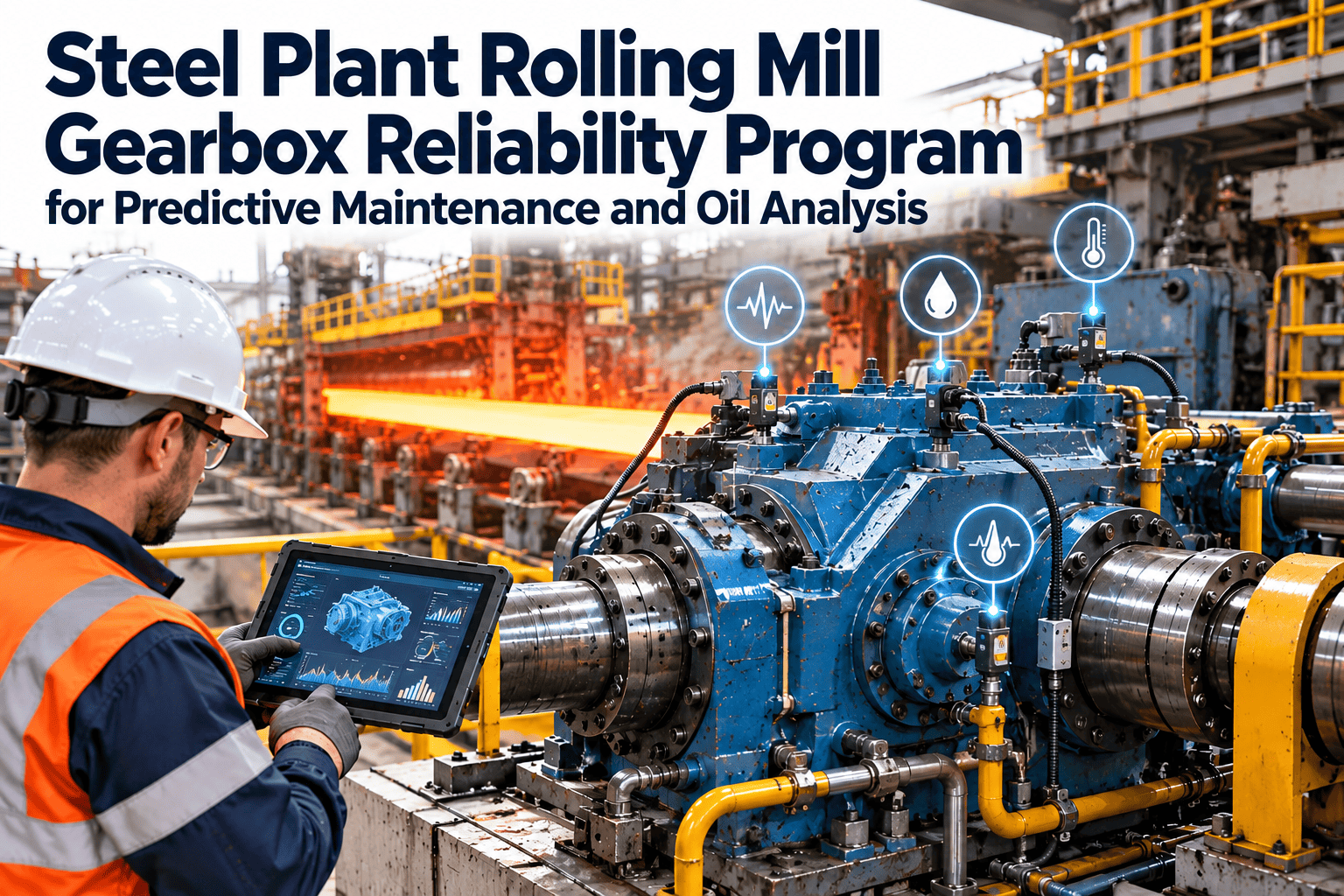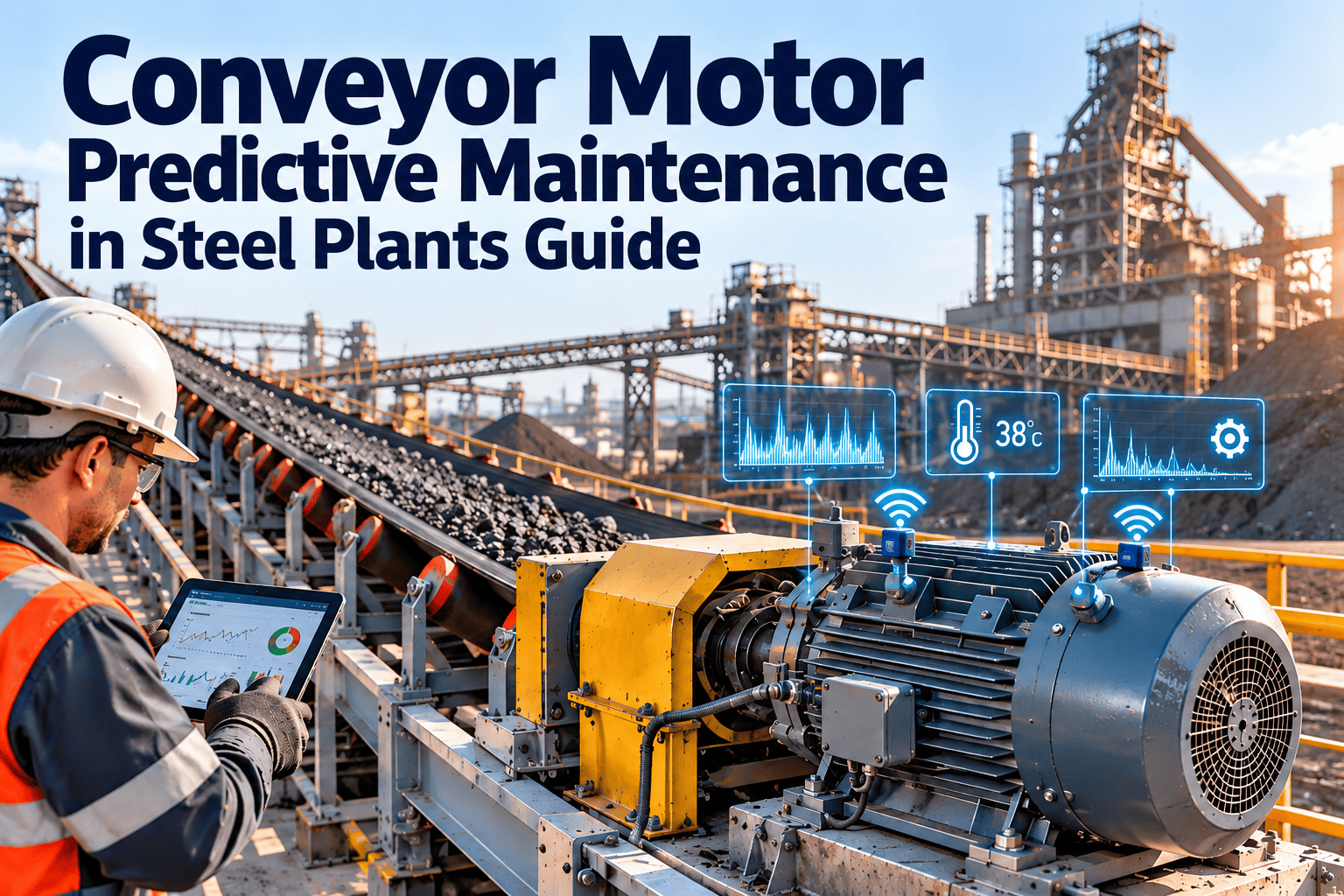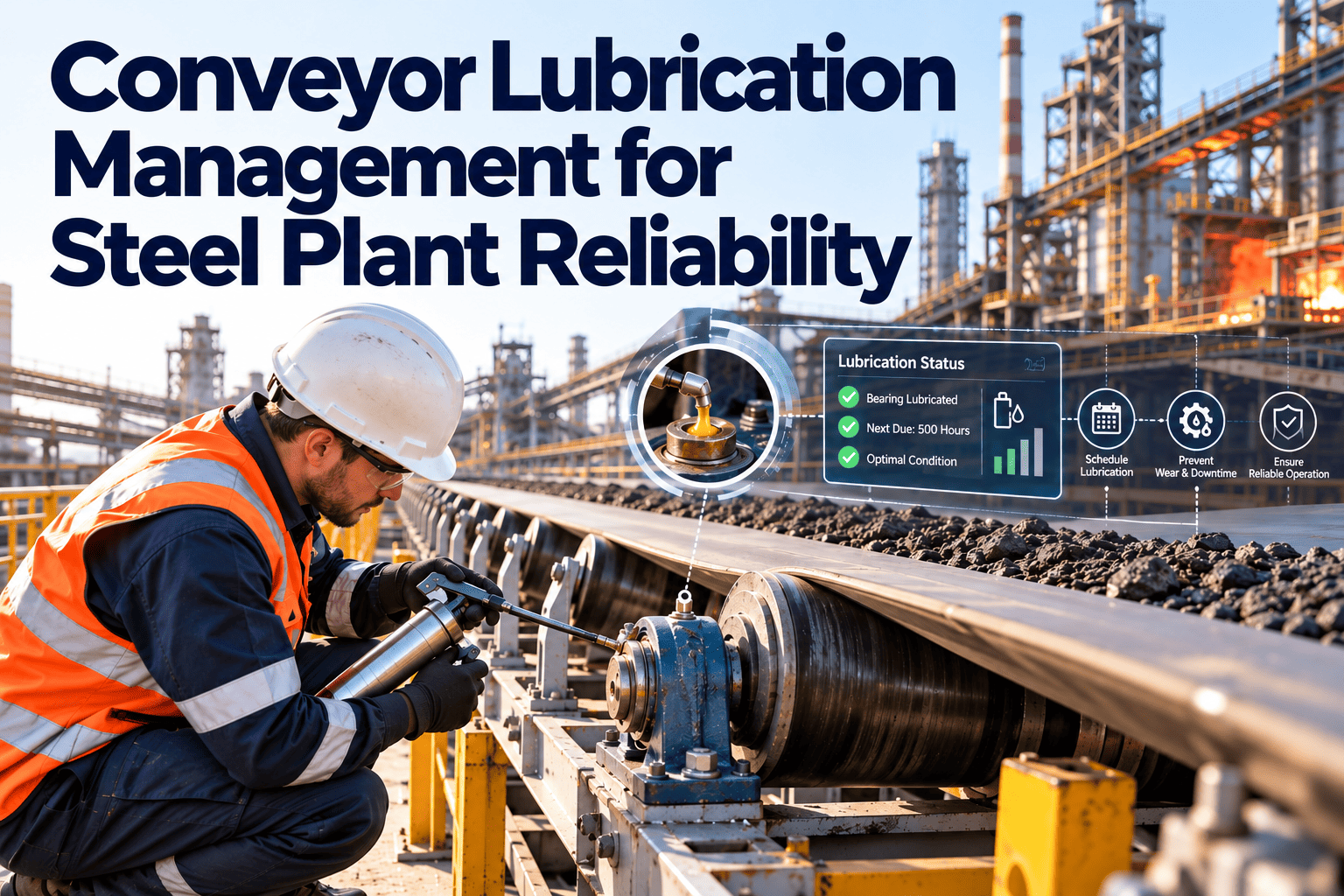
Conveyors move iron ore, coke, sinter, limestone, scrap and finished products through a steel plant around the clock, and most of their failures begin at a lubrication point. Dust, heat, water and scale attack bearings, gearboxes and drive components every shift. When greasing depends on memory and paper rounds, intervals drift and contamination goes unnoticed. This guide explains how to standardize conveyor lubrication in harsh steel environments, and how a steel plant CMMS keeps every lube route, interval and condition check on record.
Conveyor Lubrication Management for Steel Plant Reliability
Standardize lubrication intervals and condition checks for conveyor bearings, gearboxes and drive components, so contamination is caught before it becomes a belt stoppage.
Why Conveyor Lubrication Fails in Steel Plants
Conveyor lubrication in a steel plant is harder than in most industries. The conditions that make lubricants necessary are the same conditions that destroy them.
- Abrasive dust everywhere. Ore fines, coke breeze and sinter dust settle on seals, grease nipples and breathers, then get pushed into the lubricant during greasing.
- Heat from the process. Conveyors near furnaces, sinter coolers and hot product lines run warm. Heat thins oil and oxidizes grease faster.
- Water and washdown. Rain, quenching spray, dust suppression and cleaning water enter housings through worn seals and leave bearings poorly protected.
- Difficult access. Long galleries, elevated transfer towers and tail pulleys behind guarding are easy to skip when crews are stretched.
- Short shutdown windows. Conveyors that feed continuous processes rarely stop, so lubrication is squeezed into brief planned outages or done while running.
The result is familiar to most maintenance teams: too little grease on some bearings, too much on others, and little evidence of which is which.
What Is Actually Being Lubricated
Conveyor lubrication points by component
| Component | Typical lubricant | Main failure driver | Condition check |
|---|---|---|---|
| Head and tail pulley bearings | Grease | Over-greasing, dust ingress | Temperature, noise, grease condition |
| Idler bearings | Sealed or greased | Seal wear, water entry | Seized or noisy roller count |
| Gearbox reducers | Gear oil | Water, particles, overheating | Oil level, color, breather, sample |
| Couplings | Grease or oil fill | Missed intervals, misalignment | Leakage, wear debris |
| Take-up and snub pulleys | Grease | Slow rotation, poor access | Free rotation, lube evidence |
| Drive motor bearings | Grease | Wrong quantity, mixed greases | Temperature, vibration |
Exact grease type, quantity and interval should always come from the equipment manufacturer and your lubrication engineer. A CMMS stores and enforces those decisions rather than replacing them.
From Guesswork to a Standard Lubrication Cycle
Reliable lubrication is a repeating cycle, not a single task. Each stage should leave a record.
Identify
List every lube point per conveyor, with lubricant type, quantity and method.Set intervals
Base them on OEM guidance, load, temperature and contamination exposure.Execute
Assign routes to named technicians with clear lubricant and tool instructions.Inspect
Record leaks, heat, noise, seal damage and breather condition at each stop.Analyze
Review oil samples, repeat findings and recurring exceptions.Improve
Adjust intervals, sealing and storage based on what the data shows.Setting Lubrication Intervals That Hold Up
A fixed calendar interval is a starting point. In steel plants, the right interval depends on operating context.
- Start with the manufacturer's recommendation for each bearing and gearbox.
- Shorten intervals for conveyors exposed to heavy dust, moisture or high temperature.
- Use run hours or tonnage where a conveyor runs unevenly, instead of days alone.
- Specify the quantity of grease, not just the frequency, to prevent over-greasing.
- Review intervals after every bearing failure or repeated contamination finding.
- Keep a single approved lubricant per application to avoid incompatible mixing.
Over-greasing is as damaging as under-greasing. Excess grease raises bearing temperature and can blow out seals, which then lets contamination in.
Contamination Control: Before and After
Reactive practice
- Open grease guns carried between dusty locations
- Nipples greased without wiping off dirt
- Breathers left clogged or missing
- Gearbox oil changed only after failure
- Findings written on paper and filed
Managed practice
- Sealed, labeled dispensers per lubricant type
- Nipples cleaned before every shot
- Breathers inspected as a route task
- Oil sampled and trended on a schedule
- Exceptions raised as work orders on the spot
Put Every Conveyor Lube Route in One Place
See how routes, intervals and condition findings can be managed from a single maintenance platform.
Risk Ranking: Where Lubrication Failures Hurt Most
Not every conveyor deserves the same attention. Rank assets by consequence and likelihood, then concentrate lubrication effort accordingly.
| Conveyor type | Consequence of stoppage | Lubrication exposure | Suggested priority |
|---|---|---|---|
| Raw material feed to blast furnace | Severe, affects charging | Dust, heat | Highest |
| Sinter plant conveyors | High | Heat, fine dust | High |
| Coke handling | High | Abrasive dust | High |
| Stockyard reclaim and stacking | Medium, buffered by stock | Weather, water | Medium |
| Slag and by-product handling | Medium | Moisture, heat | Medium |
Criticality ratings should reflect your own plant layout, buffer capacity and downstream dependencies.
Condition Checks Between Greasing Rounds
Lubrication is only half the picture. Condition monitoring tells you whether the lubrication program is actually working.
Temperature
Handheld or fixed readings flag friction from poor lubrication or blocked seals.Vibration
Trending shows bearing wear stages before noise becomes obvious.Ultrasound
Helps technicians confirm correct grease quantity on bearings in service.Oil analysis
Detects water, particle counts and wear metals in gearbox oil.Visual inspection
Leaks, discolored oil, damaged breathers and failed seals are caught on rounds.Belt and idler checks
Seized idlers and belt tracking issues often trace back to bearing condition.Combining these methods supports a conveyor predictive maintenance approach, where findings trigger work before a breakdown rather than after it.
Gearbox Lubrication: A Closer Look
Conveyor gearboxes are among the most expensive components on the line, and oil condition is the best early indicator of their health.
How Oxmaint Supports Conveyor Lubrication Management
Oxmaint is a maintenance management platform that turns lubrication practice into scheduled, traceable work.
Condition data from external monitoring tools can inform when to schedule work, giving teams a practical path toward condition-based maintenance.
KPIs That Show Whether Lubrication Is Working
Route compliance
Share of scheduled lubrication tasks completed on time.Bearing failures
Count of conveyor bearing failures attributed to lubrication or contamination.Oil analysis alerts
Gearboxes flagged for water or particles, and time to corrective action.Unplanned stoppages
Conveyor downtime events linked to drive or bearing issues.Lubricant consumption
Usage per conveyor, useful for spotting over-greasing and leaks.Set your own baselines first. Improvement is measured against your plant's history, not an industry average.
Implementation Checklist for Maintenance Leaders
- Survey every conveyor and tag all lubrication points.
- Confirm approved lubricants and quantities with OEM data.
- Rank conveyors by criticality and contamination exposure.
- Build routes that match shutdown windows and access limits.
- Train technicians on cleanliness, quantity control and recording findings.
- Introduce oil sampling on critical gearboxes first.
- Review route compliance and failure history monthly.
Frequently Asked Questions
How often should steel plant conveyor bearings be greased?
It depends on bearing size, load, speed and environment. Start from OEM guidance and shorten intervals where dust or heat is severe.What causes most conveyor gearbox lubrication problems?
Water ingress, particle contamination, overheating and missed oil changes are the usual causes. Regular sampling reveals them early.Can a CMMS schedule lubrication by run hours?
Yes, where meter data is available. You can sign up to set up meter-based or calendar-based lube tasks.How does lubrication support conveyor predictive maintenance?
Oil, temperature and vibration findings show wear trends so work can be planned before failure.Can Oxmaint be tailored to our plant's conveyor layout?
Asset hierarchies and routes can follow your areas. Book a demo to walk through your setup.Make Conveyor Lubrication a Managed Process
Give your steel plant team scheduled routes, clear condition records and faster follow-up on every lubrication finding.