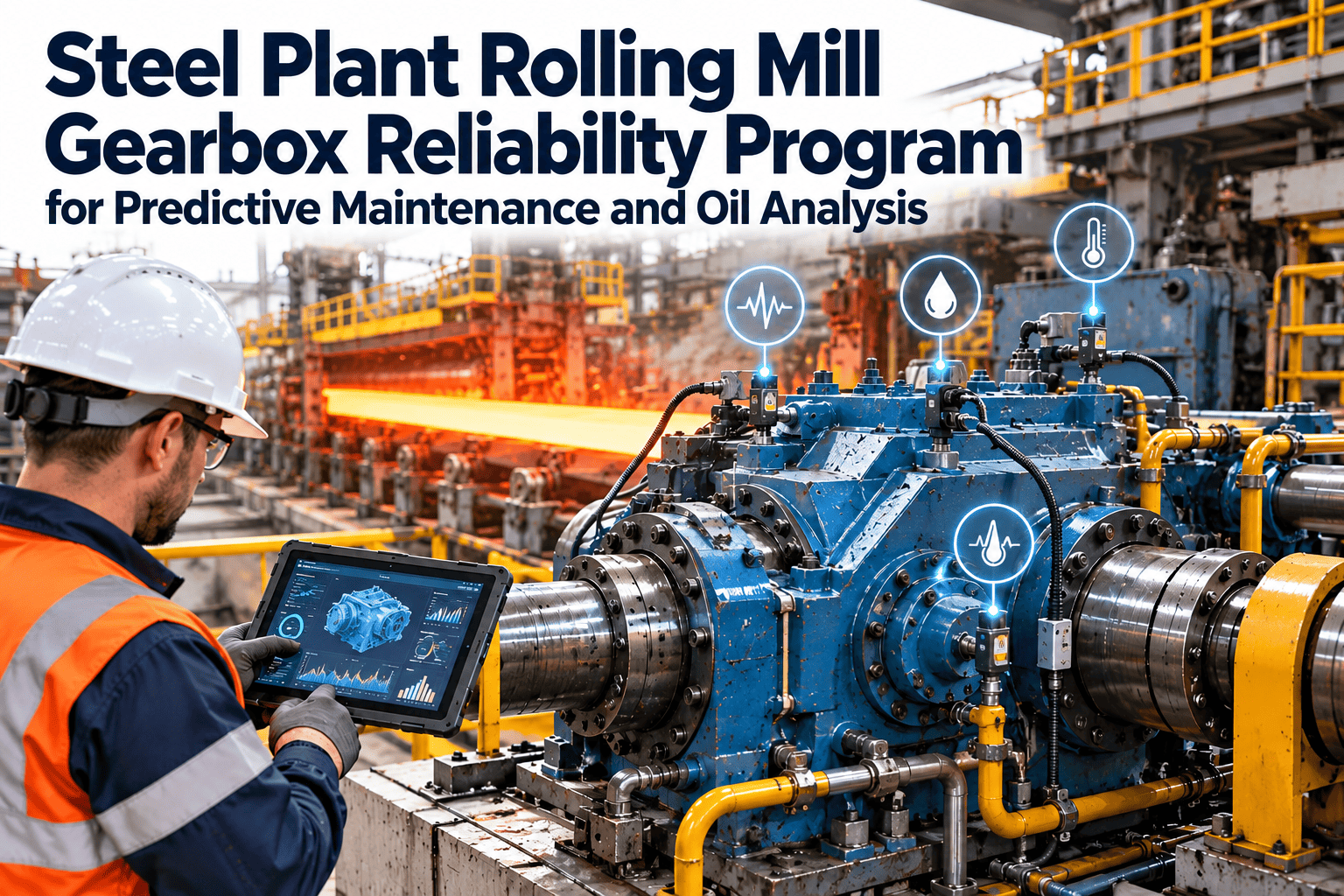
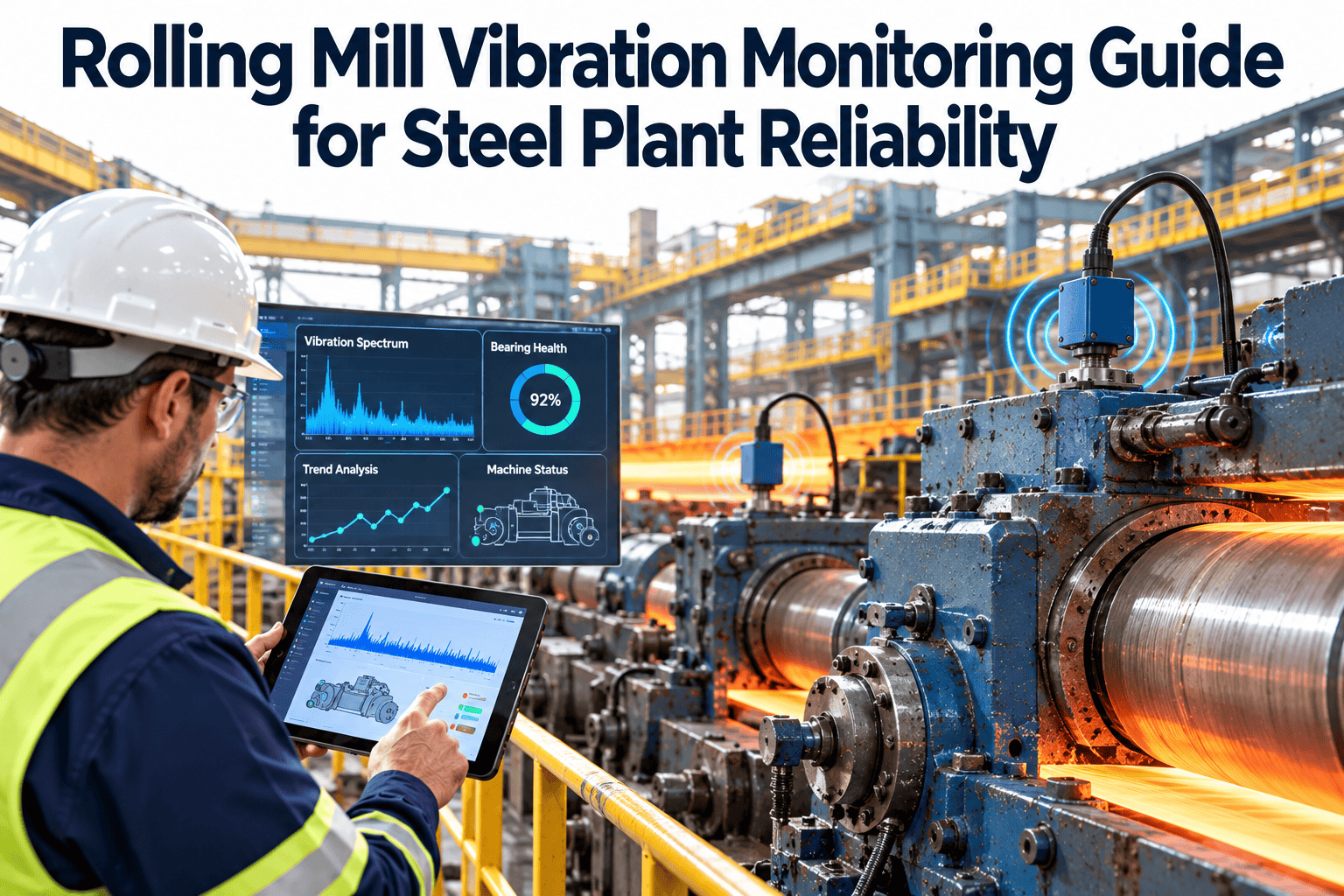
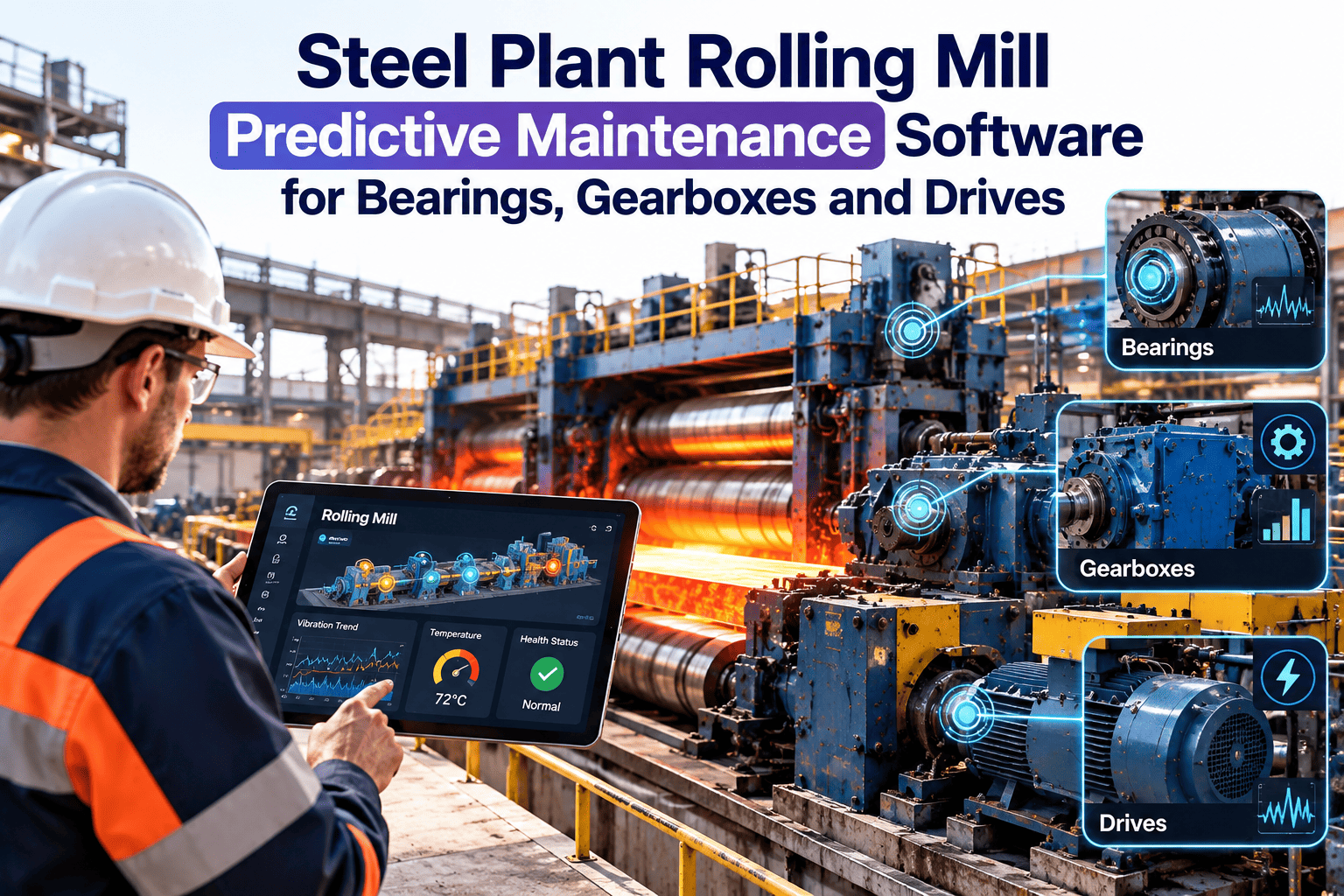
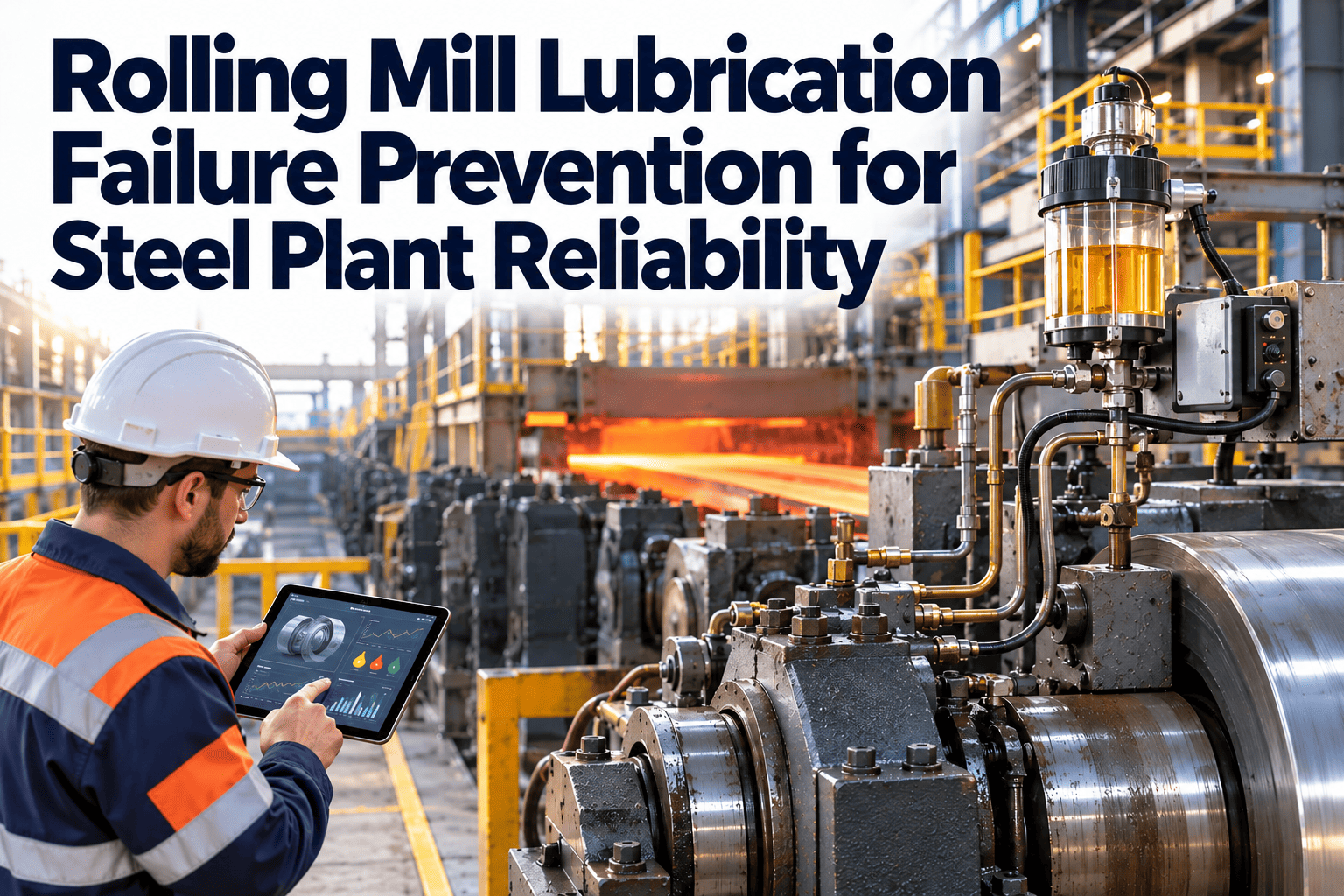
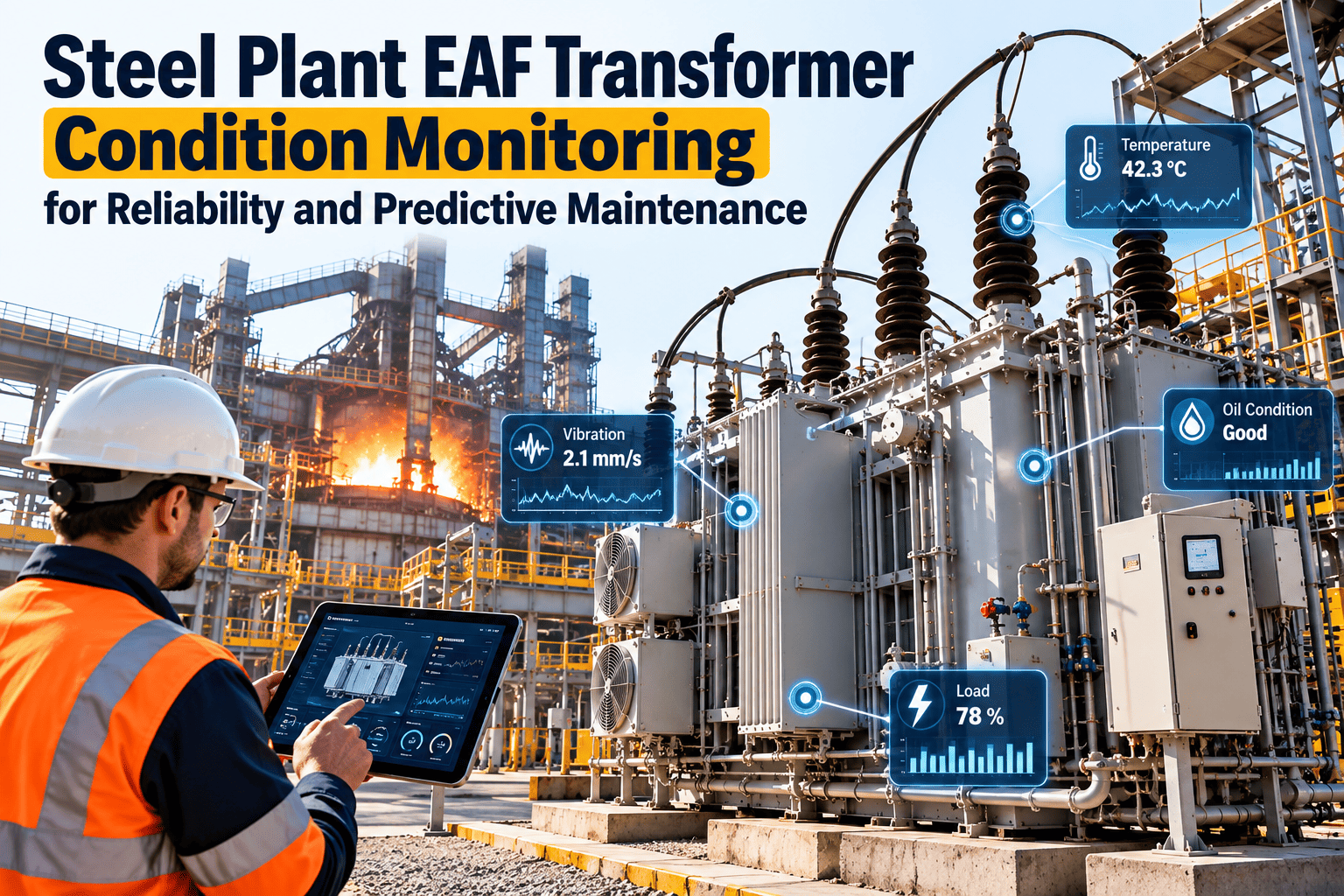
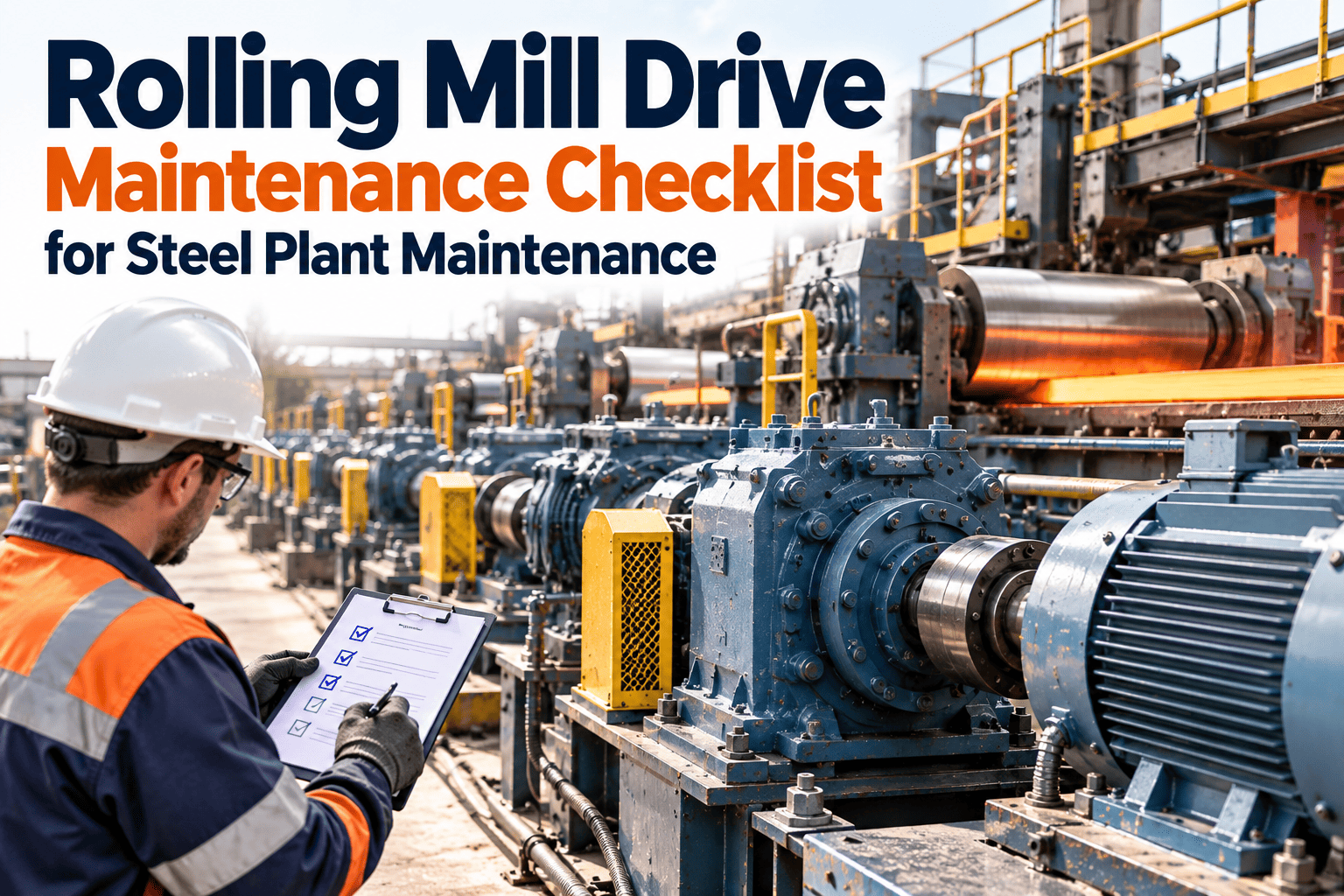
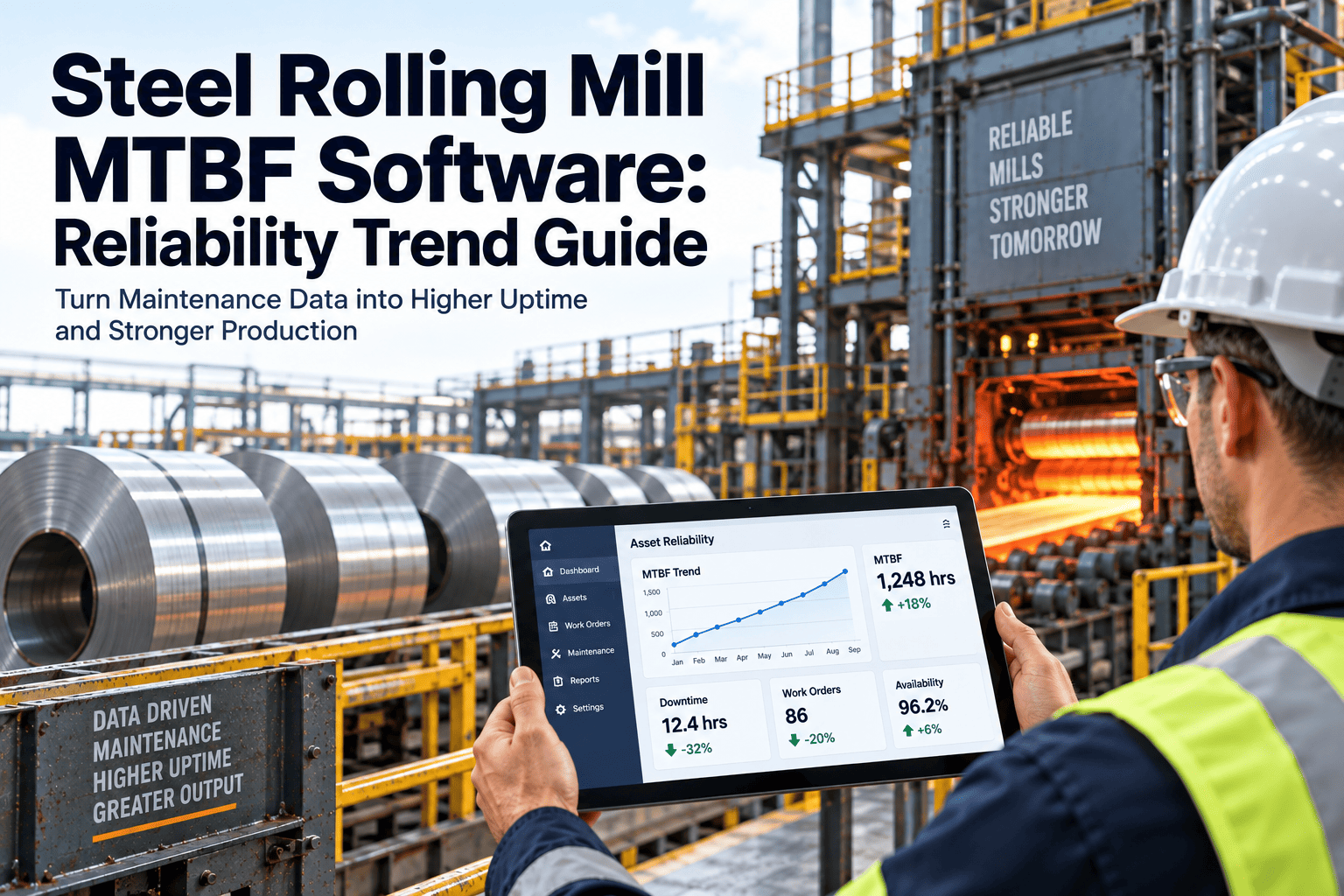
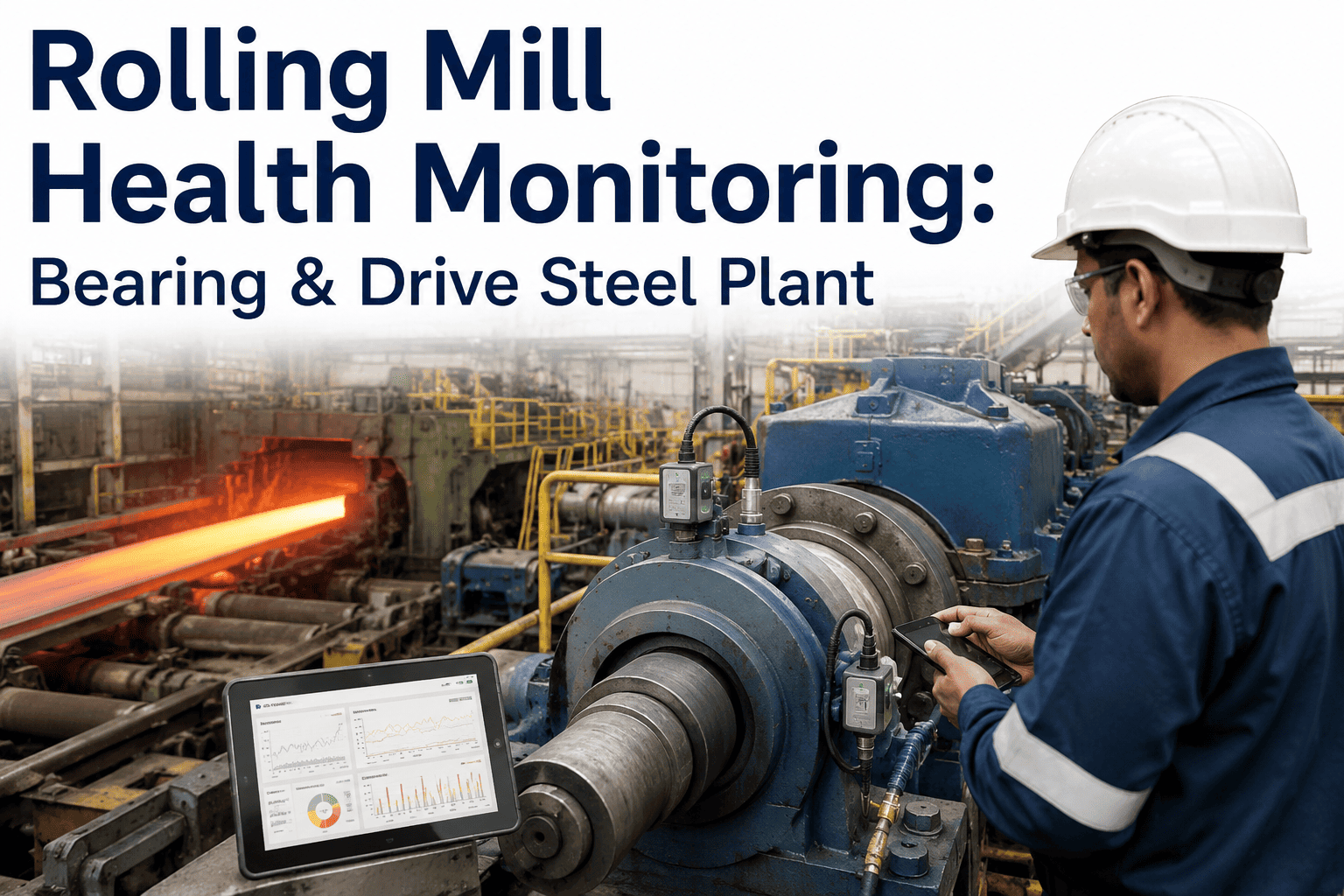
A single work roll failure in a hot strip mill can halt production for 10+ hours and cost hundreds of thousands of dollars in lost output, emergency repairs, and scrapped material. With finishing stands operating at temperatures exceeding 900 degrees Celsius and universal spindles transmitting massive torque loads through cross bearings bent at up to 15-degree angles, the question is never if something will fail—but when. Traditional scheduled maintenance catches only a fraction of developing faults, leaving mills blind to the rapid-onset bearing degradation, spindle wear, and drive misalignment that cause the most damaging unplanned stoppages. AI-powered roll and drive monitoring changes this equation entirely by analyzing vibration signatures, torque patterns, and thermal data in real time—detecting the subtle anomalies that precede catastrophic failures days or weeks before they happen.
The Anatomy of Hot Strip Mill Failures
A hot strip mill is a tightly integrated chain of equipment—reheat furnaces, roughing stands, finishing stands, run-out tables, and coilers—where a failure at any point ripples through the entire production line. Understanding where and why failures occur is the first step toward preventing them. Research shows that bearing degradation, spindle wear, and drive system faults account for the majority of unplanned stoppages, with rolling contact fatigue and water ingress being leading root causes.
Roughing Mill
Heavy reduction passes create extreme torque loads on drive spindles and work roll bearings. Shock loading during workpiece entry can generate torques up to 260% of rated motor capacity.
Finishing Stands (F1-F7)
Precision thickness control demands perfect alignment. Universal spindle cross bearings are especially vulnerable—water ingress through damaged seals causes pitting corrosion that accelerates rolling contact fatigue.
Coiler & Pinch Rolls
Pinch roll bearings at coil boxes operate under high contact stress. Misalignment-induced rolling contact fatigue is a documented leading cause of premature bearing failure in hot strip mills.
Drive Systems & Motors
High-power mill motors and variable frequency drives operate under extreme electrical and mechanical stress. Insulation degradation, rotor bar cracks, and coupling wear develop gradually before sudden failure.
AI Monitoring: What Gets Measured at Each Stage
AI predictive maintenance deploys a network of sensors across the hot strip mill, with each monitoring technique matched to the specific failure modes of that equipment. Unlike traditional condition monitoring—where extreme heat and water make sensor placement on the assets themselves nearly impossible—modern approaches use motor current signature analysis (MCSA), non-contact thermal imaging, and acoustic sensors mounted safely away from harsh zones.
| Equipment | Sensor Type | What AI Detects | Lead Time |
|---|---|---|---|
| Work Rolls | Vibration + Acoustic | Surface spalling, bearing wear, eccentricity | 7-14 days |
| Backup Rolls | Vibration + Load | Bearing fatigue, chock wear, lubrication degradation | 14-30 days |
| Universal Spindles | Torque + Vibration | Cross bearing wear, seal failure, angular backlash | 5-21 days |
| Mill Motors | MCSA + Thermal | Insulation degradation, rotor bar cracks, overload | 14-60 days |
| Gearboxes | Vibration + Oil | Gear tooth wear, bearing pitting, oil contamination | 21-45 days |
| Pinch Rolls | Vibration + MCSA | Bearing fatigue, misalignment, coupling play | 7-21 days |
| Coiler Mandrel | Torque + Vibration | Coupling degradation, bearing failure, motor faults | 10-30 days |
How AI Transforms Raw Data Into Prevented Failures
The real power of AI predictive maintenance is not just collecting data—it is making sense of millions of data points per day across dozens of interconnected assets and turning that information into actionable maintenance decisions. Here is how the intelligence pipeline works for a typical hot strip mill.
Signal Acquisition
Vibration accelerometers, current transformers, torque sensors, and thermal cameras continuously stream data. Edge computing devices pre-process signals locally, filtering noise and extracting key frequency components before sending compressed data to the cloud.
Pattern Recognition
Deep learning models trained on thousands of historical failure events identify degradation signatures unique to each failure mode. The AI distinguishes between normal rolling vibrations and developing faults like bearing spalling or spindle backlash with high accuracy.
Remaining Life Estimation
State-space models track health indicators over time, estimating the probabilistic distribution of remaining useful life (RUL) for each component. The system considers both fine-grained rolling batch data and coarse-grained maintenance history for accurate predictions.
Automated Work Orders
When degradation crosses threshold levels, the CMMS platform automatically generates prioritized work orders with specific diagnosis, recommended actions, parts lists, and optimal scheduling windows aligned to planned maintenance stops.
Monitor Every Roll, Spindle, and Drive in Your Hot Strip Mill
OxMaint's AI-powered CMMS integrates with your existing sensors and control systems to deliver predictive insights that prevent the failures costing you the most.
Measurable Results: What AI Monitoring Delivers
The business case for AI-powered roll and drive monitoring is built on hard numbers from steel plants that have already made the transition. These results span vibration-based monitoring, motor current analysis, thermal imaging, and integrated CMMS platforms working together.
Roll Shop Optimization
Drive System Savings
Implementation Roadmap for Hot Strip Mills
The most effective implementations follow a phased approach, starting with the highest-impact assets and expanding as the AI models learn your specific mill's operating patterns. Here is the proven path from initial assessment to full-scale predictive monitoring.
Assessment & Pilot Design
Audit critical assets, review maintenance history, identify top failure modes. Select 8-12 highest-impact assets for pilot—typically finishing stand bearings, main drive motors, and coiler gearboxes.
Sensor Deployment & Integration
Install vibration sensors, current transformers, and thermal cameras. Connect to OxMaint CMMS via standard industrial protocols. Configure data collection and edge processing.
Baseline Learning & Calibration
AI models learn normal operating patterns for each asset across different product mixes and rolling schedules. Alert thresholds are calibrated to minimize false positives while catching genuine degradation.
Validate & Scale
Measure prevented failures, downtime reduction, and cost savings from pilot assets. Use documented ROI to justify expansion across all mill stands, drive systems, and auxiliary equipment.
Protect Your Hot Strip Mill's Most Critical Assets
From work rolls to drive spindles, OxMaint's AI-powered CMMS delivers the predictive intelligence your maintenance team needs to eliminate unplanned stoppages and maximize mill availability.