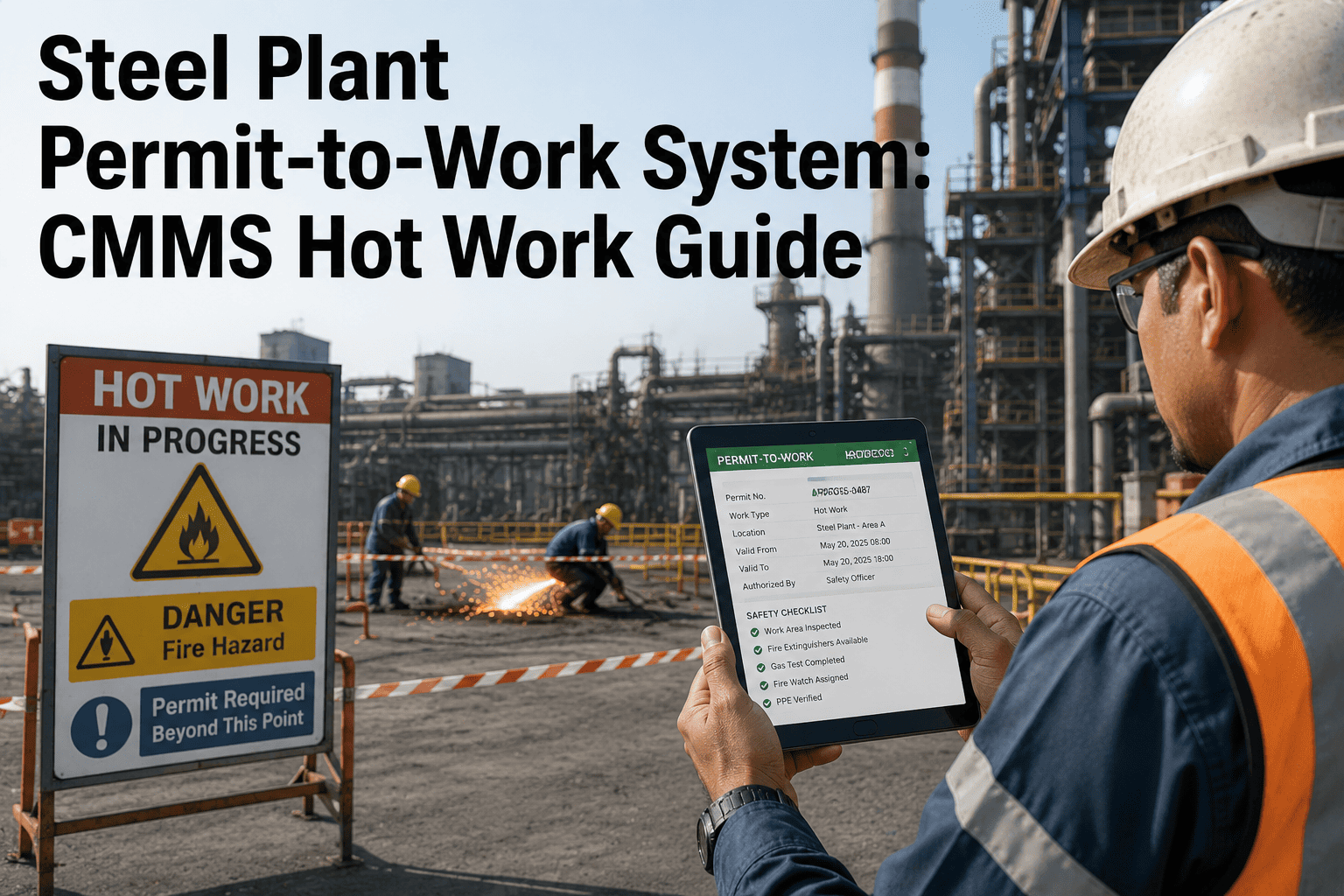
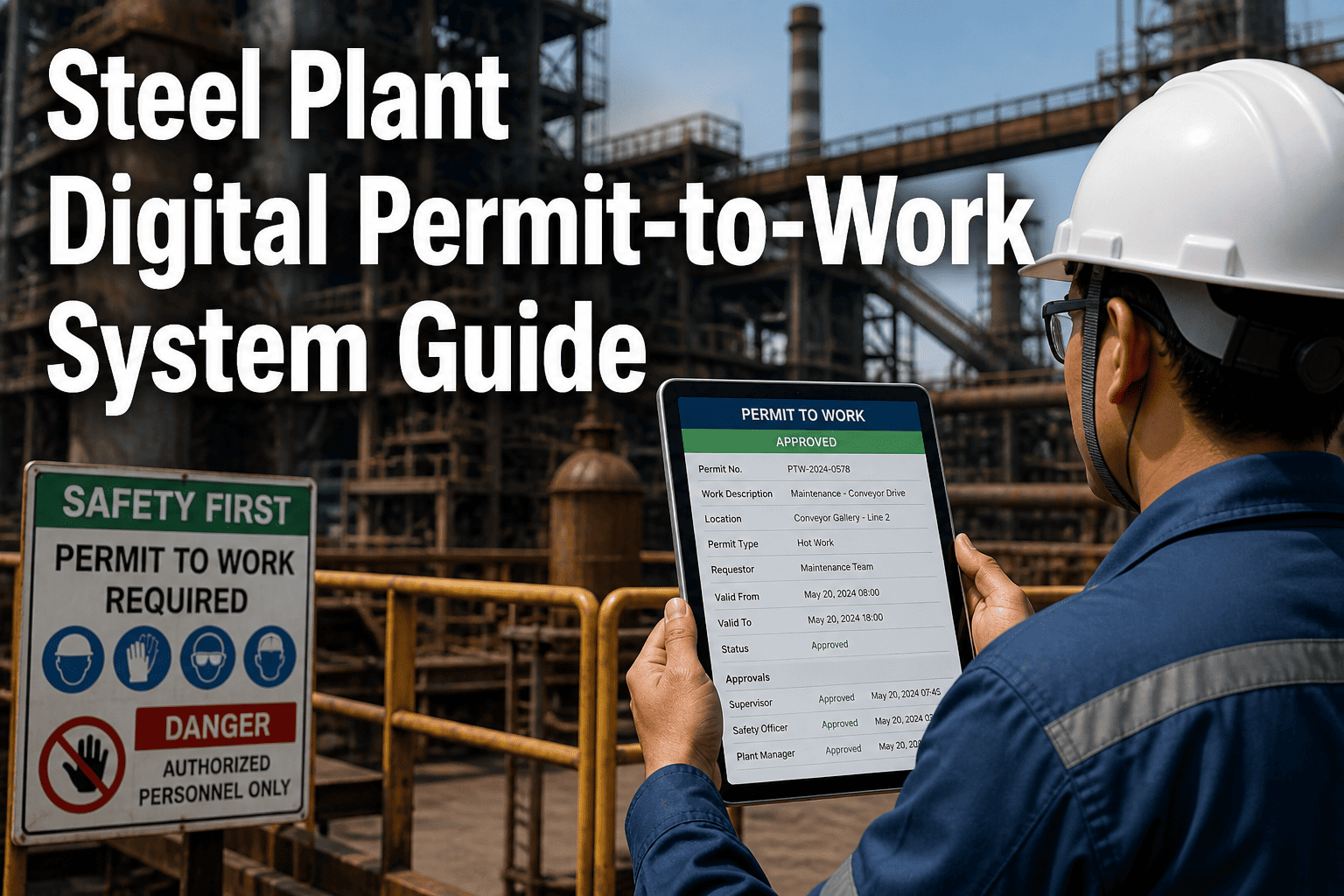
Hot Work Permit System for Steel Manufacturing Operations
By John Mark on March 13, 2026
Every year, hot work ignites fires and explosions in steel plants that were considered well-managed, with experienced workers, in facilities that had safety programs on paper. The difference between those plants and the ones that operate without incident is almost never the quality of their welders or the fire extinguisher placement—it is the integrity of the hot work permit system that controls every cutting, grinding, welding, and open-flame operation before the first spark flies. In steel manufacturing, where combustible gases, flammable coatings, hydraulic oils, and residual process materials exist within meters of constant hot work activity, a permit system that exists only on paper is a liability waiting to trigger. Schedule a free hot work permit program review with our team and find out exactly where your current system has gaps before an incident does.
Why Hot Work Is the Highest-Frequency High-Risk Activity in Steel Plants
Maintenance, construction, and production support in steel manufacturing generate more hot work events per shift than almost any other industrial sector. Welding repairs on conveyor structures, cutting on scrap handling equipment, grinding on mill rolls, torch work on piping systems—these happen simultaneously across the plant every operating day. The volume alone makes rigorous permit control both more difficult and more critical than in facilities where hot work is occasional.
18%
of all industrial fires are attributed to hot work—the leading single cause across manufacturing sectors
3 hrs
minimum post-work fire watch period required after hot work near combustible materials per NFPA 51B
35 ft
minimum clearance radius from combustibles required before hot work begins without additional controls
$2.4M
average property loss per hot work fire incident in industrial facilities based on insurance industry data
The 30-Minute Rule That Most Permits Miss
NFPA 51B data shows that nearly half of all hot work fires ignite more than 30 minutes after the work is completed—often after the worker has left the area. Fire watch requirements are not bureaucratic formalities. They are the last line of defense against the delayed ignition scenarios that paper-based permit systems routinely fail to enforce because no one tracks whether the watch was actually maintained.
The Complete Hot Work Permit Process: Step by Step
A robust hot work permit system is not a single document—it is a governed process with defined roles, sequential checkpoints, and verified completion at every stage. Each step in the process exists because a specific failure mode has caused fires, injuries, or fatalities in industrial settings.
01
Work Order Receipt and Hot Work Classification
Role: Maintenance Supervisor
Before any permit is issued, the incoming work order must be evaluated to determine whether it requires a hot work permit. Any activity that produces sparks, flame, or heat sufficient to ignite combustibles qualifies—this includes welding, cutting, grinding, brazing, soldering, open-flame heating, and powder-actuated tools. The location of the work, not just the task type, determines the permit classification and precaution level.
Outputs Required:
Work classification decisionLocation hazard pre-checkPermit level determination
↓
02
Pre-Work Area Inspection and Hazard Assessment
Role: Permit Issuer / Area Owner
The permit issuer physically inspects the work area before the permit is written. This inspection covers a 35-foot radius minimum around the hot work location, identifying combustible materials, flammable liquids and gases, hidden voids where sparks could travel, overhead and below-floor pathways, and adjacent operations that may introduce ignition sources or combustibles during the work window. In steel plants, this inspection must account for hydraulic lines, lubrication systems, coatings, and process gas piping that may not be visible without opening panels or floor grates.
Outputs Required:
Completed area inspection checklistHazard identification recordAdjacent operations notification
↓
03
Gas Testing and Atmospheric Verification
Role: Safety Officer / Qualified Tester
In steel manufacturing environments where blast furnace gas, coke oven gas, natural gas, and process gases share the same plant infrastructure, atmospheric testing before hot work is non-negotiable. Testing must confirm oxygen levels between 19.5% and 23.5%, combustible gas concentration below 10% of the lower explosive limit, and the absence of toxic gases above action levels. Test results must be recorded on the permit with the instrument used, calibration date, tester identification, and time of measurement. Retesting is required after any process change, extended break, or shift change.
Outputs Required:
Gas test results with timestampsInstrument ID and calibration recordTester signature and certification
↓
04
Precaution Implementation and Verification
Role: Permit Issuer + Worker
Every hazard identified in the area inspection must be controlled before the permit is authorized. Combustibles are relocated or shielded. Hot work blankets are placed over flammable surfaces. Drains and floor openings within the spark travel zone are covered. Adjacent equipment is isolated or shut down if required. Fire suppression equipment is positioned. Isolation from connected systems—gas lines, hydraulics, steam—is verified through the lockout/tagout process if the work involves opening or disturbing those systems. Each precaution is checked and signed off on the permit form.
Outputs Required:
Signed precaution checklistLOTO verification if applicableFire equipment placement record
↓
05
Permit Authorization and Issuance
Role: Authorized Permit Issuer
The permit is authorized only after all inspection items and precautions have been verified. The authorization records the specific work to be performed, the exact location, the authorized workers by name, the time window of validity, the fire watch requirements, and any special conditions or restrictions. Permits are time-limited—typically to one shift or eight hours—and cannot be verbally extended. A new permit requires a new inspection if work continues across a shift boundary or after any significant break.
Outputs Required:
Signed and dated permitTime window clearly definedFire watch assignment confirmed
↓
06
Fire Watch Execution and Post-Work Monitoring
Role: Designated Fire Watch
The fire watch begins when hot work starts and continues for the duration required after completion—a minimum of 30 minutes per NFPA 51B, and up to three hours when combustible materials are present or when work was performed on or near heat-conducting materials such as steel beams and pipe. The fire watch person must have no other duties, must have fire suppression equipment immediately available, and must know how to activate the facility fire alarm. In steel plants where hot work is performed on elevated structures, fire watch coverage must extend to areas below the work level where sparks could travel.
Outputs Required:
Fire watch log with check-in timesPost-work area clearance sign-offPermit closure confirmation
↓
07
Permit Closure, Filing, and Trend Analysis
Role: Safety Department
Completed permits must be retained for the period required by applicable regulations and insurer requirements—typically one year minimum, though three years is recommended for insurance audit purposes. Beyond filing, permit data should be analyzed monthly for trends: which areas generate the most hot work activity, which permit issuers are completing the most permits, which precaution items are most frequently flagged, and which locations have had near misses or condition findings during fire watch. This data drives the proactive risk reduction that prevents future incidents.
Outputs Required:
Permit archived with work orderMonthly trend report generatedHot work risk map updated
Digitize Your Permit Process
Replace paper permits with a system that enforces every step automatically
Oxmaint's digital permit workflow guides issuers through every checkpoint, captures gas test data, assigns fire watch roles, and automatically archives completed permits—with no paper to lose and no steps to skip.
Steel Plant Zones Requiring Elevated Hot Work Controls
Not all locations in a steel plant carry the same hot work risk. Zone classification ensures that permit requirements scale with actual hazard level—so that the highest-risk areas receive maximum precaution without applying the same burden to low-risk work areas where it adds delay without proportional safety benefit.
Zone A — Prohibited
Hot work not permitted without engineering authorization and plant manager approval
Gas holder areas and blast furnace gas network zones
Coke oven battery top and gas collection headers
Hydrogen generation and storage areas
Active process gas piping without confirmed isolation and purge
Requirement: Hot work only after full gas purge verification, two-person gas testing, engineering written authorization, and plant manager co-signature on permit
Zone B — High Precaution
Full permit required with enhanced gas testing, dedicated fire watch, and safety officer sign-off
Melt shop and EAF transformer areas
Hydraulic system rooms and lubrication stations
Sub-floor cable trays and conduit vaults
Continuous caster areas with accumulated lubricant residues
Requirement: Standard permit plus pre-work gas test, 60-minute fire watch minimum, safety officer field verification before authorization
Zone C — Standard Permit
Full hot work permit required with standard fire watch and area inspection
Rolling mill process areas during maintenance windows
Conveyor and material handling structures
Crane structures and runway maintenance areas
General maintenance bays and fabrication shops
Requirement: Standard hot work permit with area inspection, 35-foot radius clearance verified, 30-minute minimum fire watch
What a Complete Hot Work Permit Must Document
The content of a hot work permit is not discretionary. Each field exists because its absence has allowed fires, injuries, or regulatory violations to go unaddressed. A permit that is missing critical data fields is not a partial permit—it is a document that provides false assurance of control.
Hot Work Permit — Required Data Fields
All fields mandatory. Incomplete permits are invalid and must be voided and reissued.
Work Identification
Permit Number
Unique sequential ID for tracking and audit
Work Order Number
Links permit to maintenance management system
Work Description
Specific task type — welding, cutting, grinding, etc.
Exact Work Location
Building, level, equipment ID, grid reference
Personnel Authorization
Authorized Workers (Name + ID)
All personnel performing hot work must be named
Permit Issuer Name + Signature
Qualified issuer who conducted the area inspection
Fire Watch Name + Certification
Dedicated watch person — no other duties during watch
Area Owner / Supervisor Approval
Department responsible for the work area
Atmospheric Test Results
Oxygen Level (%)
Acceptable range: 19.5% – 23.5%
Combustible Gas (% LEL)
Must be below 10% LEL before work begins
CO / Toxic Gas Reading
Species tested, reading, PEL comparison
Test Time, Instrument, Calibration Date
Required for audit trail and equipment verification
Precautions Verified
☐Combustibles removed or shielded within 35-foot radius
☐Floor drains and openings covered in spark travel zone
☐Fire suppression equipment positioned and serviceable
☐Sprinkler system operational or alternative suppression in place
☐Adjacent operations notified and controlled
☐LOTO applied where required for system isolation
☐Fire alarm pull station location confirmed by worker
☐Work area below checked for spark travel hazards
Time Control and Closure
Permit Valid From
Date and time work may commence
Permit Expires At
Maximum 8 hours / one shift — no verbal extension
Fire Watch Duration Required
30 minutes minimum; up to 3 hours per conditions
Permit Closed By + Time
Confirmed area clear and fire watch completed
Digital Permits. Zero Paper.
Every field required. Every signature captured. Every permit searchable instantly.
Oxmaint's hot work permit module enforces completion of every mandatory field, routes permits for approval based on zone classification, tracks active permits in real time, and archives completed permits automatically with full audit trails.
Most hot work fires in manufacturing do not happen because workers are reckless. They happen because the permit system has a specific, repeatable failure mode that went undetected until the ignition event revealed it. These are the failures that appear most consistently in post-incident investigations across the steel industry.
01
Permits Issued Without Physical Area Inspection
Permit issuers sign off based on familiarity with the area rather than current conditions. Process materials, temporary hoses, and contractor-placed combustibles change the hazard profile between visits. Only a physical inspection immediately before the permit window reveals current conditions.
Consequence: Fires ignite from combustibles that would have been found and removed by a proper inspection.
02
Fire Watch Abandoned Before Time Requirement Is Met
The fire watch walks away after 10 minutes because nothing visible is happening. The smoldering ignition in the insulation behind the wall panel activates 40 minutes later. Post-work fire watch requirements exist precisely because delayed ignition is the dominant failure mode in hot work fires.
Consequence: Fire develops after the work crew and watch have left the area, with no suppression response until alarm activation.
03
Permit Scope Does Not Match Actual Work Performed
A permit issued for grinding on a structural beam does not cover the cutting operation that the supervisor decides to add on site. The additional task introduces a different spark profile and travel pattern that the original inspection did not account for. Scope creep on permitted work is a well-documented cause of hot work incidents.
Consequence: Work outside the permit scope proceeds without hazard assessment or precaution verification for the actual task.
04
Expired Permits Not Voided — Work Continues Past Validity
An eight-hour permit issued at the start of a shift is still being used 10 hours later when conditions have changed and the fire watch person has rotated out. There is no system to alert anyone that the permit expired two hours ago. In paper systems, permit expiration is enforced only by the honor of the workers holding it.
Consequence: Hot work proceeds without a valid permit, fire watch, or current area condition assessment during a period of changed hazard conditions.
05
No Visibility Into Concurrent Permits Across the Plant
Three separate hot work permits are active in adjacent areas of the melt shop basement simultaneously, issued by three different supervisors who are unaware of each other. The combined activity creates a risk profile that none of the individual permit issuers assessed. Paper permit systems have no mechanism to show the safety team the current active permit map.
Consequence: Cumulative risk from concurrent hot work operations is invisible to safety management until an incident reveals the pattern.
06
Contractor Hot Work Not Integrated Into Plant Permit System
Contractors bring their own company permit forms, which are completed in their trailer and signed by their own supervisors. The plant safety team has no visibility into contractor hot work activity, no record of what inspections were conducted, and no way to verify that plant-specific hazards—process gases, hydraulic systems, gas piping—were included in the contractor's assessment.
Consequence: Hot work fires started by contractors in areas with plant-specific hazards that the contractor's generic permit system failed to identify.
Stop Hot Work Fires Before They Start
See every active permit. Track every fire watch. Close every permit properly.
Oxmaint gives your safety team a live plant-wide view of every active hot work permit, automatic expiration alerts, fire watch check-in tracking, and a complete searchable permit archive—from any device, on any shift.
Regulatory and Insurance Requirements for Hot Work Permits
Hot work permit requirements are not only internal safety policy—they are mandated by OSHA regulations, NFPA standards, and increasingly by the terms of property insurance policies that cover industrial facilities. Understanding which requirements apply and how they interact is essential for any steel plant safety program.
OSHA 29 CFR 1910.252
Federal Regulation
Welding, Cutting, and Brazing Standard
Requires employers to designate a responsible individual to authorize hot work, establish fire prevention and protection procedures, and ensure fire watch is provided where required. Violations are citable with penalties up to $16,550 per serious violation. Citation history in steel is documented and pattern-based.
Key Requirement: Written authorization from responsible individual before hot work begins in hazardous locations
NFPA 51B — 2021 Edition
Industry Standard
Standard for Fire Prevention During Welding, Cutting, and Other Hot Work
The primary technical standard governing hot work fire prevention. Defines the area inspection requirements, combustible clearance distances, fire watch duration requirements, permit content, and training standards for permit issuers and fire watch personnel. Many state OSHA plans adopt NFPA 51B by reference, making it effectively regulatory in those jurisdictions.
Key Requirement: Minimum 30-minute fire watch after completion; up to 3 hours with combustibles present
FM Global / Insurance Requirements
Insurer Mandate
Property Insurance Hot Work Program Requirements
Major industrial property insurers require formal hot work permit programs as a condition of coverage, with FM Global and other carriers including permit program audits in their loss prevention surveys. A hot work fire that occurs without a valid, properly executed permit can void coverage or result in coverage denial for that loss—transforming what would be an insured loss into a direct balance-sheet event.
Key Requirement: Written hot work program, permit documentation, and fire watch log retention for insurer audit purposes
Hot Work Permit KPIs for Steel Plant Safety Programs
A hot work permit program that is not measured is not managed. These metrics give safety managers the data needed to evaluate permit program effectiveness, identify trends before they become incidents, and demonstrate program compliance to regulators and insurers.
100%
Permit Completion Rate
All required fields completed before work authorization. Any gap is a citation and incident risk.
100%
Fire Watch Compliance
Percentage of permits with documented fire watch log entries covering full required duration.
<2%
Permit Rejection Rate
Permits voided due to failed inspection or unsafe conditions. Low rate may indicate insufficient inspection rigor.
Zero
Expired Permits in Use
Any work performed under an expired permit is unpermitted work and a regulatory violation.
Monthly
Permit Trend Review
Frequency of data analysis for hot spots, issuer patterns, and recurring precaution flags.
100%
Issuer Training Currency
All permit issuers current on hot work authorization training. Expired certification voids their permits.
Built for Steel Plant Safety Operations
From Paper Permits to Plant-Wide Hot Work Control
Oxmaint gives steel plant safety teams a complete digital hot work permit system—zone-aware permit routing, mandatory field enforcement, real-time active permit visibility, fire watch tracking, automatic expiration alerts, and a permanent searchable archive. When your insurer or OSHA inspector asks for your permit records, you pull them up in seconds—not hours.
What is a hot work permit and when is it required in steel manufacturing?
A hot work permit is a written authorization that documents the hazard assessment, precautions implemented, and personnel authorized for any task that produces sparks, flame, or sufficient heat to ignite combustibles. In steel manufacturing, hot work permits are required for welding, cutting, grinding, brazing, soldering, open-flame heating, and powder-actuated tools performed anywhere outside a permanently designated and equipped welding shop. Given the process gases, hydraulic systems, and flammable materials present throughout steel plant infrastructure, virtually all field hot work requires a permit.
How long must hot work permits be retained?
OSHA does not specify a minimum retention period specifically for hot work permits, but NFPA 51B and FM Global both recommend retaining completed permits for at least one year. For insurance audit purposes, three years of permit records is the recommended minimum. After a hot work fire, permits serve as critical evidence in both regulatory investigations and insurance claims—lost or incomplete permit records significantly complicate both processes and can result in adverse findings regardless of what actually occurred in the field.
Who is authorized to issue hot work permits in a steel plant?
Hot work permits must be issued by individuals who have received documented training in hot work hazard assessment, area inspection procedures, gas testing interpretation, fire prevention requirements, and permit completion. This is typically a safety officer, a trained maintenance supervisor, or a designated permit authority—not the worker performing the hot work. The permit issuer and the person performing the work should generally be different individuals. The issuer's training records must be current and available for inspection, as an expired issuer qualification renders any permit they issue questionable under regulatory review.
What are the fire watch requirements under NFPA 51B?
NFPA 51B requires that fire watch be maintained during hot work operations and for a minimum of 30 minutes after work is completed in all cases where the standard requires fire watch. When hot work is performed on or adjacent to combustible materials, near heat-conducting materials such as metal beams and piping that can transmit heat to remote locations, or in areas where combustibles cannot be fully removed, the fire watch period should extend to a minimum of 60 minutes and may require up to three hours based on conditions. The fire watch person must have no other duties, must have immediate access to fire suppression equipment, and must know how to activate the fire alarm system.
How does a digital permit system improve hot work safety over paper permits?
Digital hot work permit systems prevent the specific failure modes that paper systems cannot address: mandatory field enforcement ensures no permit can be authorized with incomplete data; automatic expiration alerts notify safety supervisors when permits approach their time limit; real-time active permit dashboards show all ongoing hot work across the plant simultaneously; fire watch check-in tracking creates a time-stamped record of watch compliance; and automatic archiving ensures every permit is retained and searchable for regulatory and insurance purposes. The cumulative effect is a system where every procedural requirement is verified and documented, not assumed.
Can contractors use their own hot work permits in our steel plant?
No. Contractors working on your site must operate under your facility's hot work permit system, not their own company forms. Under OSHA's multi-employer citation policy, the host employer is responsible for ensuring that permit-required work performed by contractors meets the host facility's safety requirements. Contractor-issued permits that do not include your site-specific hazards—process gas locations, hydraulic system routing, blast furnace gas zones—cannot adequately assess the actual risks. Your permit system, your issuer training requirements, and your fire watch standards must apply to all hot work performed on your property by any party.