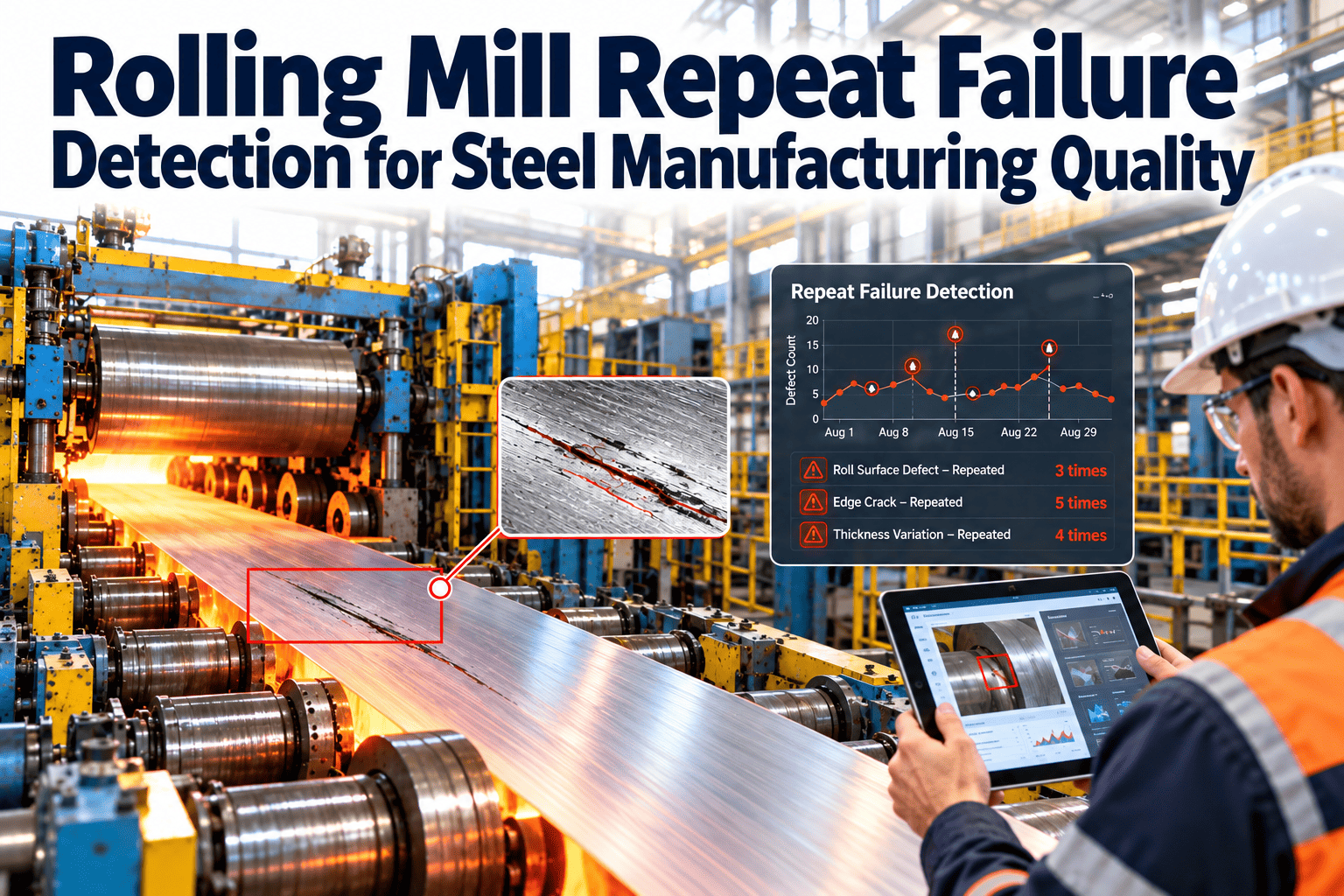
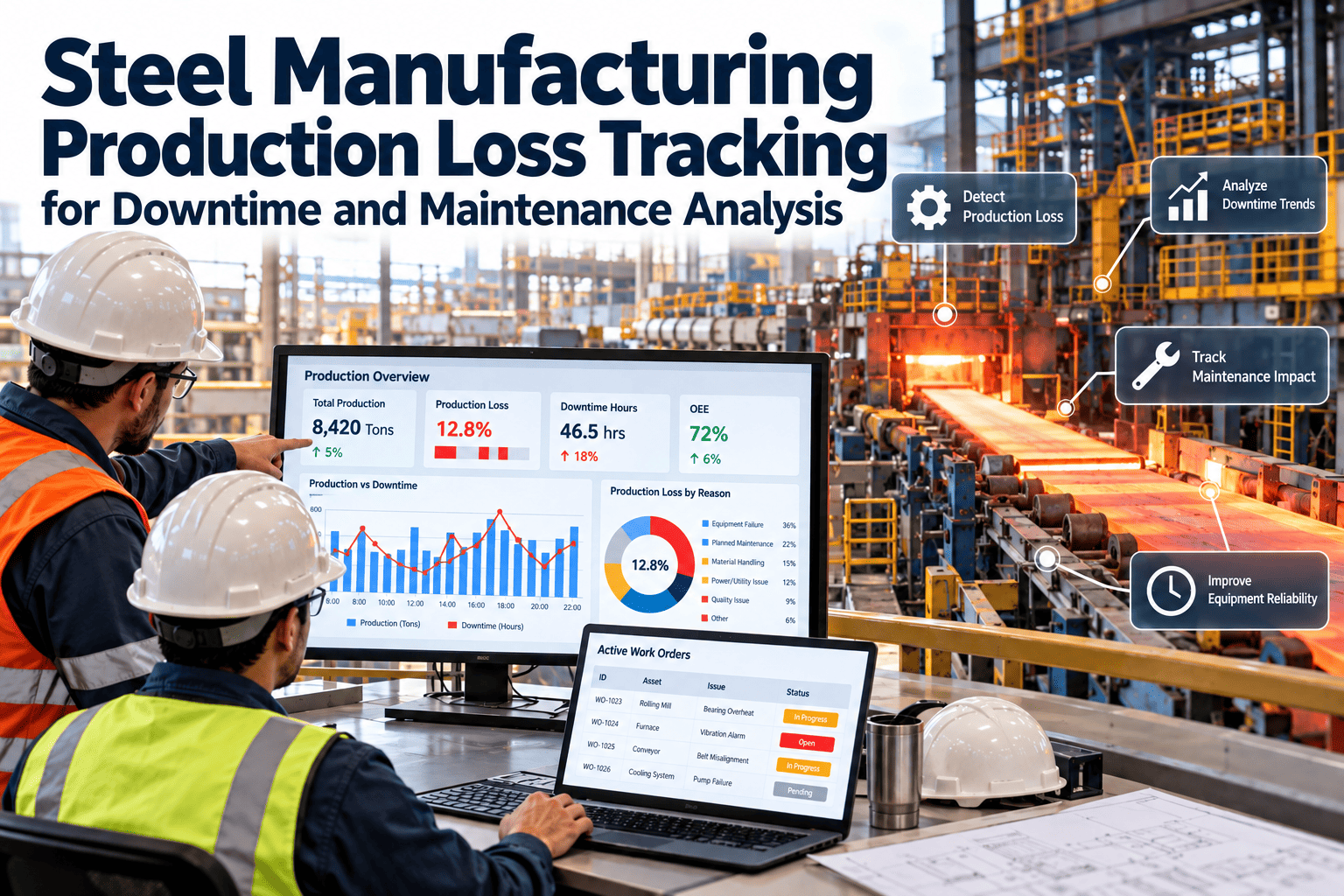
This comprehensive guide explains everything you need to know about OEE calculation—from the fundamental formula to advanced optimization strategies used by world-class manufacturers.
The Three Pillars of OEE
Availability
Measures actual run time vs. planned production time
Performance
Measures actual speed vs. maximum possible speed
Quality
Measures good units vs. total units produced
The OEE Formula
World-class OEE is considered 85% or higher. Most manufacturers operate between 40-60% OEE, meaning significant improvement opportunities exist.
Understanding Availability
Availability measures how much of your planned production time the equipment is actually running. It accounts for all events that stop planned production long enough to track—typically anything longer than a few minutes.
Availability Calculation
Tracking downtime losses | Unplanned stops | Planned stops | Changeovers
The Formula
Availability Losses Include
Unplanned Stops
- Equipment failures
- Unplanned maintenance
- Material shortages
- Operator unavailability
Planned Stops
- Changeovers/setups
- Tool changes
- Planned maintenance
- Inspection stoppages
Example Calculation
Understanding Performance
Performance measures how fast the equipment runs compared to its designed speed—the Ideal Cycle Time. It accounts for anything that causes production to run slower than the maximum possible speed.
Performance Calculation
Speed losses | Micro-stops | Reduced speed | Operator efficiency
The Formula
Performance Losses Include
Micro-Stops
- Jams and obstructions
- Sensor trips
- Misfeeds
- Quick clearing stops
Slow Cycles
- Worn equipment
- Poor materials
- Operator inefficiency
- Environmental factors
Example Calculation
Understanding Quality
Quality measures how many of the produced parts meet quality standards. It accounts for manufactured parts that do not meet quality standards, including parts that need to be reworked.
Quality Calculation
First pass yield | Rejects | Rework | Startup scrap
The Formula
Quality Losses Include
Production Rejects
- In-process defects
- Dimensional failures
- Cosmetic defects
- Functional failures
Startup Rejects
- Warmup parts
- Post-changeover scrap
- Parameter adjustment parts
- First article rejects
Example Calculation
Complete OEE Calculation Example
Bringing all three components together from our examples above:
What Does 69.8% OEE Mean?
This equipment is producing good parts only 69.8% of the time it was scheduled to run. Said another way, 30.2% of productive capacity is being lost—split across availability losses (10.4%), performance losses (20.3%), and quality losses (2.2%).
OEE Benchmarks by Industry
Understanding where your OEE stands relative to industry standards helps set realistic improvement targets. Get a personalized benchmark demo for your operation.
Calculate Your True OEE Automatically
Stop guessing. Oxmaint's automated OEE tracking captures every micro-stop, speed loss, and quality event—giving you accurate data to drive real improvements.
The Six Big Losses
OEE is designed to identify and categorize the "Six Big Losses"—the most common causes of equipment-based productivity loss in manufacturing.
Equipment Failure
Unplanned stops due to breakdowns, tooling failures, and unscheduled maintenance.
Setup & Adjustments
Changeovers, material changes, major adjustments, and warmup time.
Idling & Minor Stops
Jams, obstructions, sensor blocks, and other quick-clearing stoppages.
Reduced Speed
Running slower than ideal speed due to wear, material issues, or operator decisions.
Process Defects
Scrap and rework during steady-state production.
Startup Losses
Scrap and rework from startup until stable production is reached.
Common OEE Calculation Mistakes
Accurate OEE requires careful attention to definitions and data collection. Avoid these common pitfalls that lead to misleading results.
Using Inflated Cycle Times
Setting "ideal" cycle time to what you typically achieve rather than what's technically possible. This hides true performance losses and gives artificially high OEE.
Excluding Planned Downtime
Removing changeovers, maintenance, or meetings from planned production time to make availability look better. OEE should drive reduction of ALL losses.
Missing Micro-Stops
Not capturing stops under 5 minutes because they seem trivial. These often account for 10-30% of performance losses and are invisible in manual tracking.
Quality Data Delays
Using quality data from inspection reports that arrive days later, disconnecting it from the production conditions that caused defects.
Averaging Across Equipment
Calculating plant-wide OEE by averaging individual equipment scores. This masks your true bottleneck and constraint performance.
No Loss Categorization
Knowing OEE is 65% but not knowing why. Without categorizing losses by the Six Big Losses, you can't prioritize improvement efforts.
OEE vs. Related Metrics
OEE is part of a family of equipment effectiveness metrics. Understanding the differences helps you choose the right metric for your goals.
OEE
Overall Equipment EffectivenessMeasures: Effectiveness during scheduled production time
Baseline: Planned production time
Use for: Identifying and reducing losses during scheduled operations
TEEP
Total Effective Equipment PerformanceMeasures: Effectiveness against total calendar time (24/7/365)
Baseline: All available time
Use for: Capacity planning and asset utilization decisions
OOE
Overall Operations EffectivenessMeasures: Effectiveness during operating time (excludes unscheduled time)
Baseline: Operating time only
Use for: Evaluating operations when schedule varies significantly
Implementing OEE: Getting Started
Successful OEE implementation follows a proven path. Oxmaint's implementation team guides you through each stage.
Define & Prepare
Collect & Validate
Analyze & Improve
Scale & Sustain
ROI of OEE Tracking
Proper OEE tracking and improvement typically delivers significant returns within months. Get a customized ROI projection for your operation.
Start Tracking Your True OEE Today
Join manufacturers worldwide who have uncovered hidden losses and achieved breakthrough productivity improvements with automated OEE tracking.
Frequently Asked Questions
What is a good OEE score?
85% is considered world-class for discrete manufacturing. However, "good" depends on your starting point and industry. A plant improving from 45% to 60% OEE has made tremendous progress. Focus on the trend and the specific losses you're eliminating rather than hitting arbitrary benchmarks. The goal is continuous improvement, not a specific number.
How do I determine ideal cycle time?
Use the fastest sustainable cycle time your equipment can achieve—typically the nameplate speed or design specification. If that's unknown, use the fastest actual cycle time you've consistently achieved. Never use average performance, as this builds losses into your baseline and hides improvement opportunities. Document your assumptions and be consistent.
Should breaks and lunches be included in planned production time?
It depends on whether equipment is expected to run during those times. If the line stops for operator breaks, exclude that time from planned production time—it's not a loss, it's by design. If equipment should run while operators rotate for breaks, include that time. The key is consistency: define your rules and apply them the same way every time.
How often should OEE be calculated?
For maximum impact, calculate OEE continuously in real-time with automated systems. At minimum, calculate after every shift to enable timely response to losses. Daily and weekly rollups help identify trends. Monthly and quarterly views support strategic planning. The more frequently you calculate, the faster you can respond to losses—ideally within the same shift they occur.
Can OEE exceed 100%?
If your OEE exceeds 100%, your ideal cycle time is wrong. This means your equipment is regularly running faster than what you defined as the maximum speed. Review and correct your ideal cycle time based on actual capability. OEE should never mathematically exceed 100%—if it does, it indicates a calculation or data collection error that needs correction.
What's the difference between OEE and machine utilization?
Utilization measures only whether equipment is running—it doesn't account for speed or quality. Equipment running at half speed producing 50% scrap would show high utilization but terrible OEE. OEE is a complete picture that includes availability (running), performance (speed), and quality (yield). Utilization is one input to OEE, not a replacement for it.