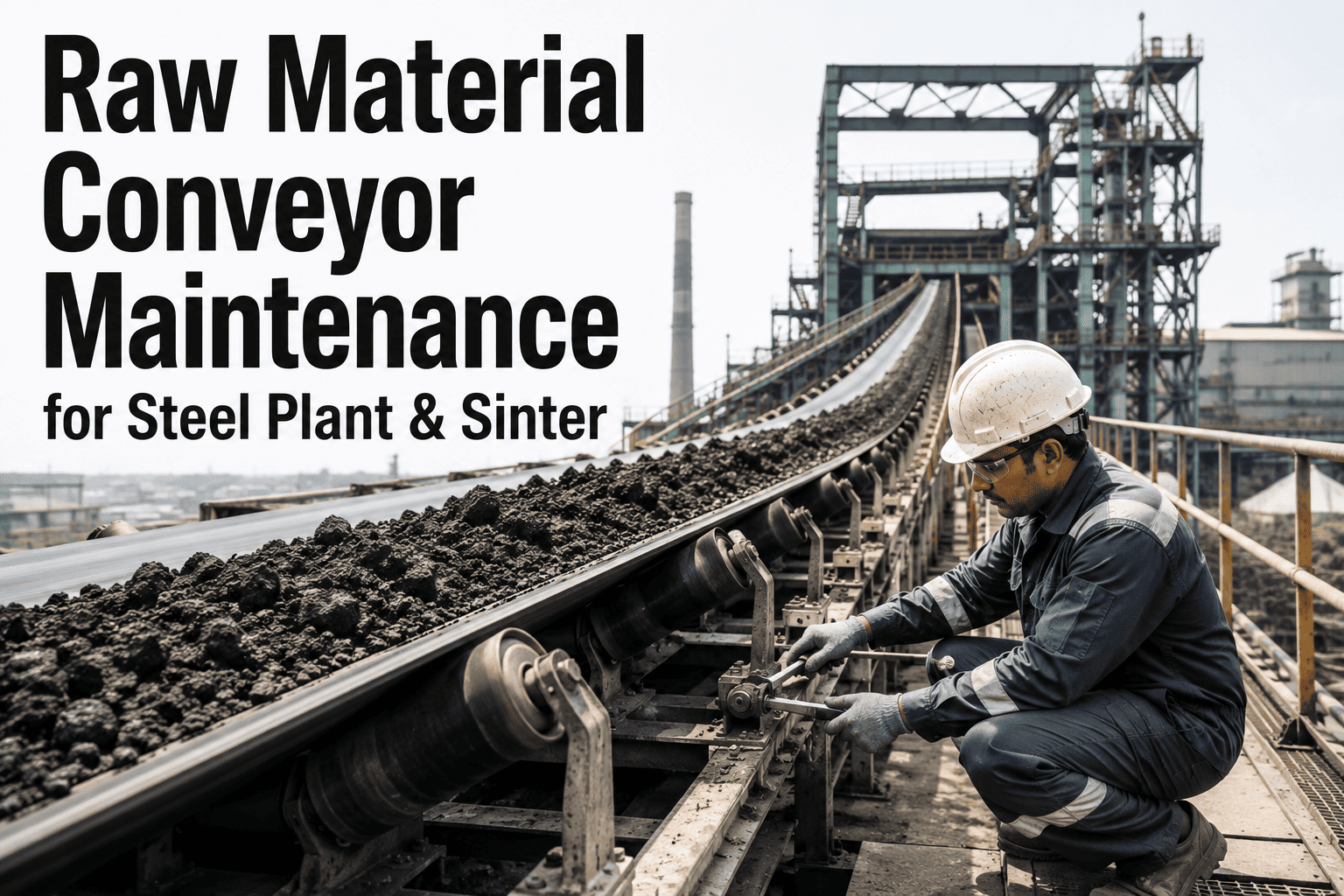
Raw material conveyor maintenance for steel plants and sinter operations is the backbone of uninterrupted blast furnace productivity — when an ore conveyor belt stops, the entire steelmaking value chain grinds to a halt within hours. Effective iron ore conveyor maintenance and sinter conveyor upkeep require rigorous inspection schedules, predictive belt splice tracking, and proactive ore feeder maintenance to prevent catastrophic failures that can cost upwards of $50,000 per hour in lost production. By transitioning from reactive firefighting to a digital CMMS, maintenance and reliability teams can eliminate paper work orders, predict equipment failures before they happen, and cut unplanned downtime by 30–50%. See how OxMaint transforms raw material handling steel operations when you Start Free Trial today.
Is a Single Conveyor Belt Failure Costing Your Steel Plant $50K Per Hour?
Raw material conveyors carry the lifeblood of your steel and sinter operations. Unplanned downtime on ore handling systems doesn't just halt production — it starves blast furnaces, idles operators, and cascades into million-dollar losses. OxMaint's AI-powered CMMS predicts belt and feeder failures before they happen, keeping iron ore flowing.
- Belt splice integrity & tracking alignment
- Iron ore feeder chute blockage sensors
- Pulley bearing vibration & thermal limits
- Sinter conveyor belt heat degradation scan
The Real Cost of Conveyor Downtime in Steel Material Handling
A medium-sized steel plant operating 15 raw material belt conveyors typically loses between $2.1M and $4.8M annually to unplanned downtime, emergency parts expedited freight, and blast furnace reline delays caused by ore starvation.
Example: 22 stops × 6.5 hrs × $50,000/hr = $7,150,000 exposure per year on critical ore conveyors alone.
A 30% reduction in unplanned ore conveyor stops on the example above returns $2,145,000 in saved production time — dwarfing CMMS software costs.
Raw Material Conveyor Maintenance Checklist for Steel & Sinter Plants
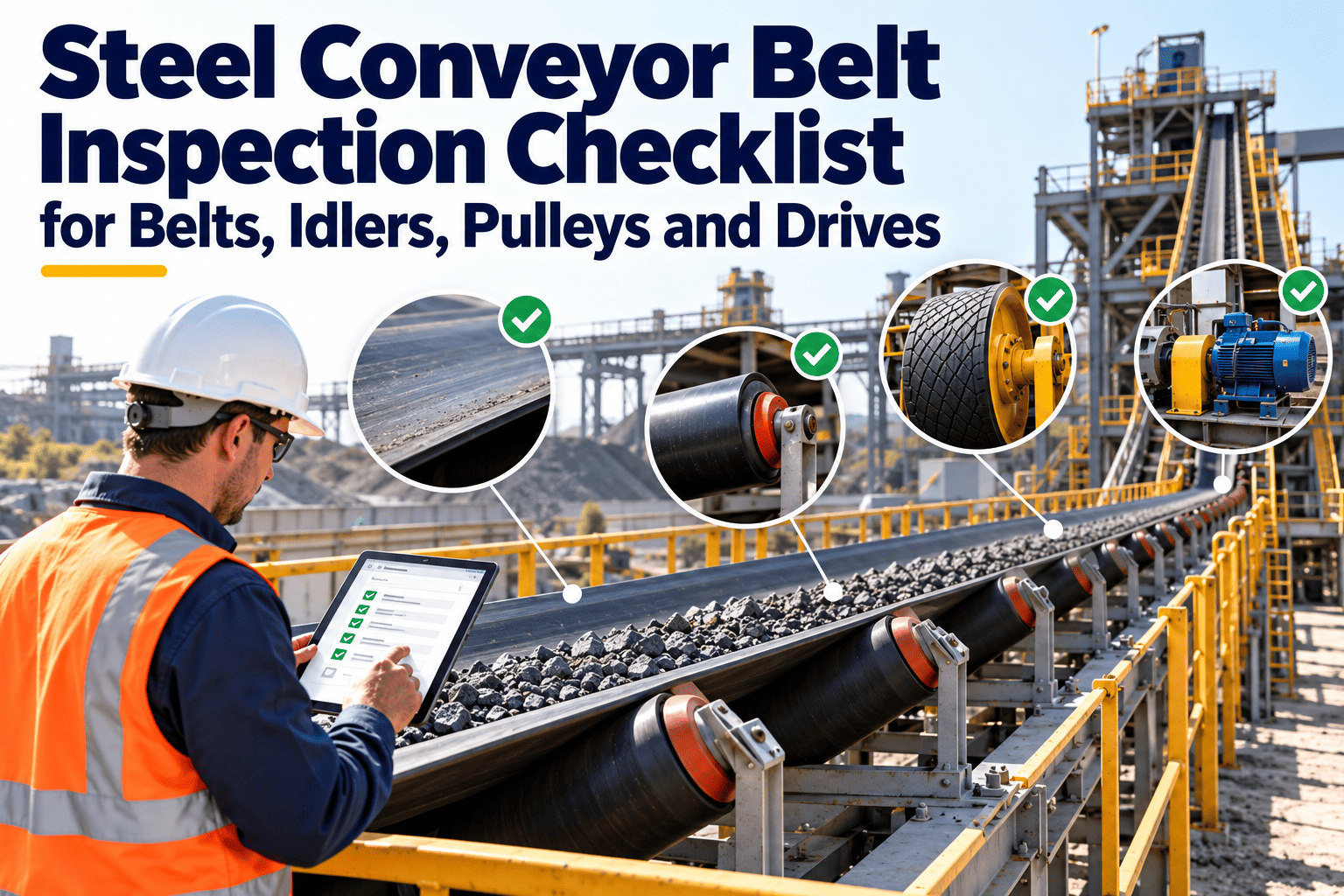
Structured inspection tiers eliminate the guesswork from ore handling maintenance. Follow these frequency-based task grids to catch 90% of failures before they escalate into unplanned outages.
Shift Inspection Tasks
- Visual belt splice tracking & alignment check across all carry idlers
- Inspect ore feeder chutes for material buildup & flow obstruction
- Listen for abnormal pulley bearing noise on head and tail drives
- Verify conveyor belt scraper tension and material carryback levels
- Check emergency pull-cord and stop-switch functionality on all conveyors
Preventive Maintenance Tasks
- Lubricate conveyor pulley bearings per OEM grease specifications
- Measure belt tension and adjust take-up winch on iron ore conveyors
- Inspect sinter conveyor belts for heat cracking and hardening degradation
- Torque-check drive motor mounting bolts and gearbox mounting flanges
- Clean photo-eye sensors and belt-scale weighing components
Predictive & Condition Tasks
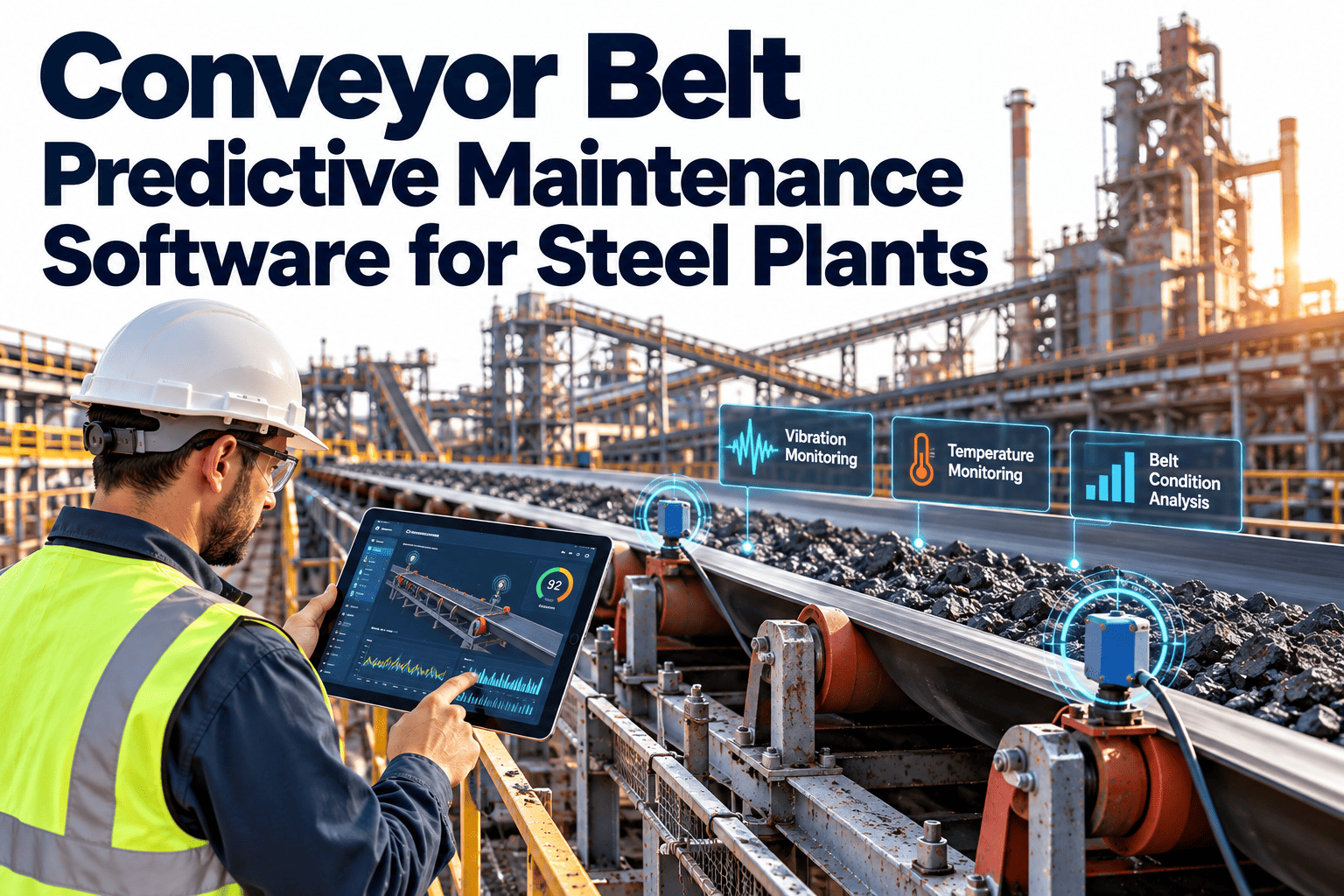
- Vibration analysis on all conveyor drive motors and gearbox assemblies
- Thermographic scan of sinter conveyor belt and hot-material transfer points
- Ultrasonic thickness testing on chute liners and transfer station wear plates
- Oil analysis on heavy-duty gearbox units feeding raw material belts
- Belt splice ultrasonic inspection for core separation and cover delamination
| Conveyor Component | Failure Mode | Inspection Method | Frequency | Risk if Ignored |
|---|---|---|---|---|
| Belt Splice | Tensile fatigue / separation | Visual + ultrasonic | Weekly / Monthly | Belt break, 8–14 hr outage |
| Pulley Bearings | Lubrication starvation | Vibration + acoustic | Weekly / Monthly | Seized pulley, fire risk |
| Ore Feeder Chute | Blockage / liner wear | Visual + thickness test | Daily / Monthly | Flow stoppage, belt overload |
| Drive Gearbox | Gear pitting / oil degradation | Oil analysis + thermography | Monthly | $25K–$80K gearbox failure |
| Sinter Belt | Heat hardening / cracking | Thermography + durometer | Weekly | Belt rupture, hot material spill |
| Take-Up Winch | Tension drift / rope fray | Visual + tension gauge | Weekly | Belt slip, accelerated wear |
How to Transition Ore Conveyor Maintenance from Reactive to Predictive
Moving from clipboard-based reactive maintenance to AI-driven predictive scheduling takes 60–90 days when sequenced correctly. Here is the timeline reliability teams use to modernize raw material handling steel operations.
Asset Register & Work Order Migration
Catalog every ore conveyor, feeder, pulley, and drive into OxMaint's asset hierarchy. Import 12–24 months of historical work order data to establish baseline failure rates and identify your worst-offending assets first.
PM Automation & Spare Parts Linking
Build automated preventive maintenance triggers for belt splice inspections, gearbox lubrication, and ore feeder clearing. Link BOMs and spare-parts inventory so technicians never wait on belting or bearings during scheduled outages.
AI Failure Prediction & Analytics
Activate OxMaint's AI engine to analyze vibration, thermal, and oil data trends. The platform flags developing failures 7–21 days in advance, converting unplanned ore conveyor outages into scheduled corrective actions during planned maintenance windows.
Case Snapshot: 180-Asset Steel Plant Cuts Ore Conveyor Downtime 38%
A mid-sized integrated steel plant operating 180 raw material handling assets — including 24 iron ore conveyors, 12 sinter conveyors, and 36 ore feeders — was spending $42,000 annually on emergency conveyor repairs and losing 180 production hours per year to unplanned belt and feeder failures.
The reliability team deployed OxMaint CMMS to digitize 100% of conveyor work orders, automate weekly belt splice tracking inspections, and link spare-parts inventory to PM triggers. Within 90 days, AI-driven vibration analytics flagged 4 failing pulley bearings before catastrophic seizure.
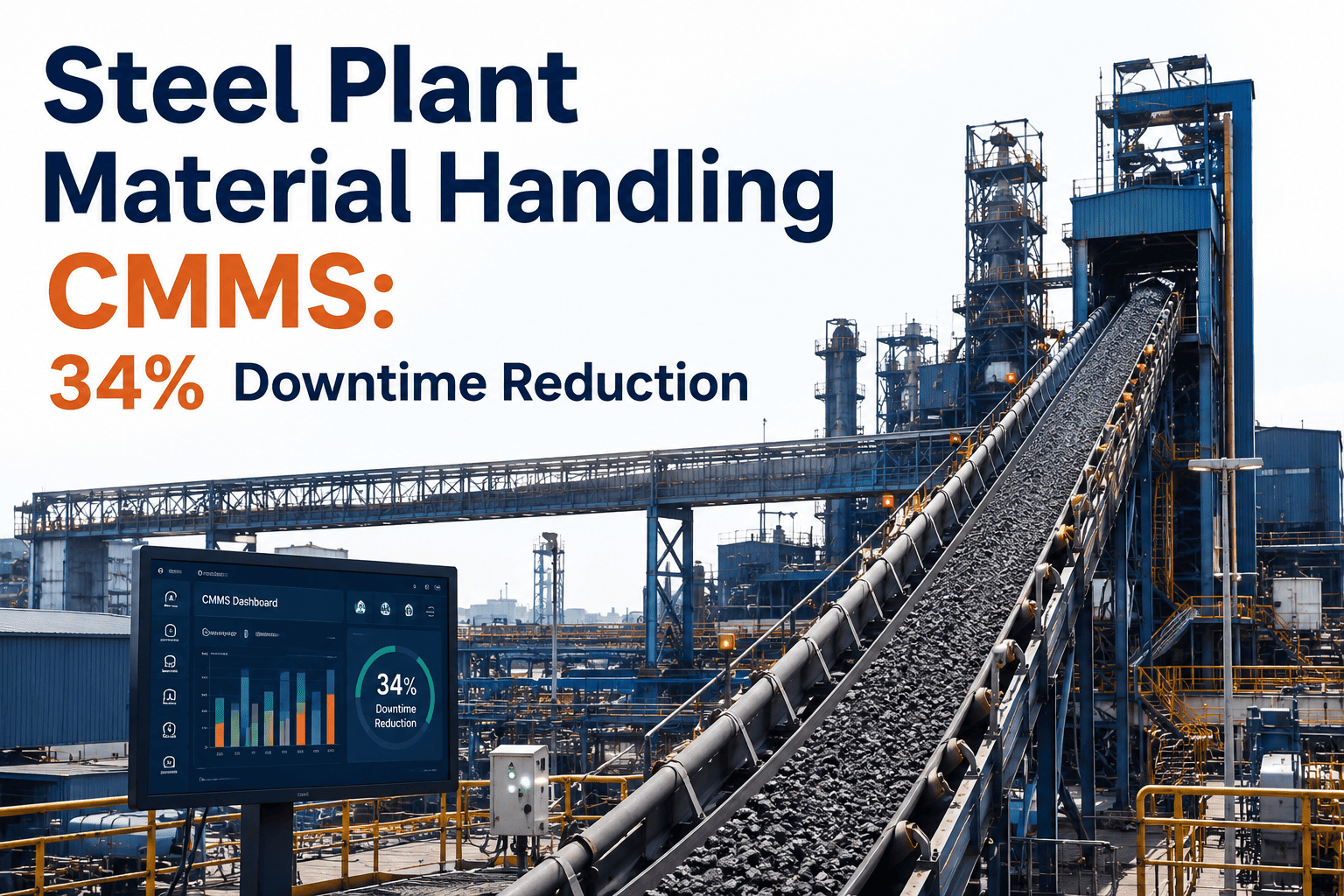
Unplanned ore conveyor downtime dropped 38% in year one. Emergency parts freight spend fell from $42K to $11K. The plant recovered 68 production hours — translating to $3.4M in avoided blast furnace starvation costs. Full CMMS payback achieved in under 5 months.
How OxMaint Solves Raw Material Conveyor Maintenance for Steel Plants
OxMaint is an AI-powered CMMS and EAM platform built for the realities of heavy industry. Here is how its core capabilities map directly to the conveyor maintenance challenges steel and sinter plants face every day.
AI-Powered Failure Prediction
OxMaint analyzes vibration, thermal, and operational data from conveyor drives and pulleys to flag developing failures 7–21 days before they cause unplanned downtime — turning emergency ore conveyor repairs into scheduled fixes.
Outcome: Cut unplanned downtime 30–50%Digital Work Order Automation
Eliminate paper work orders and clipboard inspections. OxMaint auto-generates PM tasks for belt splice tracking, ore feeder clearing, and gearbox lubrication — assigning them to technicians with checklists, photos, and digital sign-off on mobile devices.
Outcome: Eliminate 100% of paper work ordersSpare-Parts Inventory Linking
Every conveyor PM and work order is linked to its BOM and required spare parts — belting, bearings, idlers, and gearbox oil. OxMaint tracks stock levels in real time and auto-generates reorder alerts so you never wait 14 days for emergency belting again.
Outcome: Cut parts wait time by 60%Maintenance Analytics & KPIs
Track MTBF, MTTR, OEE, and downtime cost per conveyor line in real-time dashboards. OxMaint's analytics engine identifies your worst-performing ore conveyors and quantifies the ROI of every maintenance intervention — audit-ready for ISO 55000 compliance.
Outcome: Audit-ready compliance in minutesSee OxMaint on Your Conveyors — Book a 30-Minute Demo
Watch how OxMaint digitizes ore conveyor inspections, predicts pulley bearing failures, and links spare parts to every work order. Your 30-minute personalized demo shows the exact ROI for your steel plant's raw material handling assets.
Raw Material Conveyor Maintenance Questions Answered
How often should steel plants inspect ore conveyor belt splices?
Ore conveyor belt splices should undergo visual inspection weekly and ultrasonic or X-ray inspection monthly. High-tension splices on main raw material belts carrying iron ore warrant daily shift checks for tracking drift, edge wear, or separation signs. Using a CMMS like OxMaint automates these inspection schedules and logs results for trend analysis.
What is the most common cause of conveyor failure in sinter plants?
Heat degradation of sinter conveyor belts is the leading failure cause, followed by belt splice separation and pulley bearing seizure. Sinter material can exceed 600°C, causing belt covers to harden, crack, and ultimately rupture. Weekly thermographic scans and durometer hardness testing catch degradation early — see how OxMaint automates these triggers when you Book a Demo.
How does a CMMS improve iron ore conveyor maintenance?
A CMMS replaces paper work orders and reactive firefighting with automated PM scheduling, digital checklists, and predictive analytics. It links spare parts to work orders, tracks asset history, and uses AI to flag failures 7–21 days before they occur — typically cutting unplanned downtime 30–50% and reducing emergency parts spend by 60% or more.
How much does conveyor downtime cost a steel plant per hour?
Unplanned raw material conveyor downtime in an integrated steel plant costs between $30,000 and $80,000 per hour depending on furnace size and production rate. A single 8-hour belt failure on a critical ore feed conveyor can exceed $500,000 in lost production — making preventive and predictive maintenance ROI overwhelmingly positive.
Can OxMaint integrate with existing conveyor condition monitoring sensors?
Yes. OxMaint integrates with vibration sensors, thermal cameras, belt-scale systems, and SCADA platforms commonly deployed on steel plant conveyors. This sensor data feeds the AI prediction engine, which converts raw condition readings into actionable work orders — so your team responds to developing failures, not raw data streams.
Stop Losing $50K Per Hour to Conveyor Failures
Join the steel plants using OxMaint to predict ore conveyor failures, automate PM scheduling, and keep blast furnaces fed. Start your free trial or book a personalized demo to see OxMaint on your assets in 30 minutes.
Free 14-day trial · No credit card