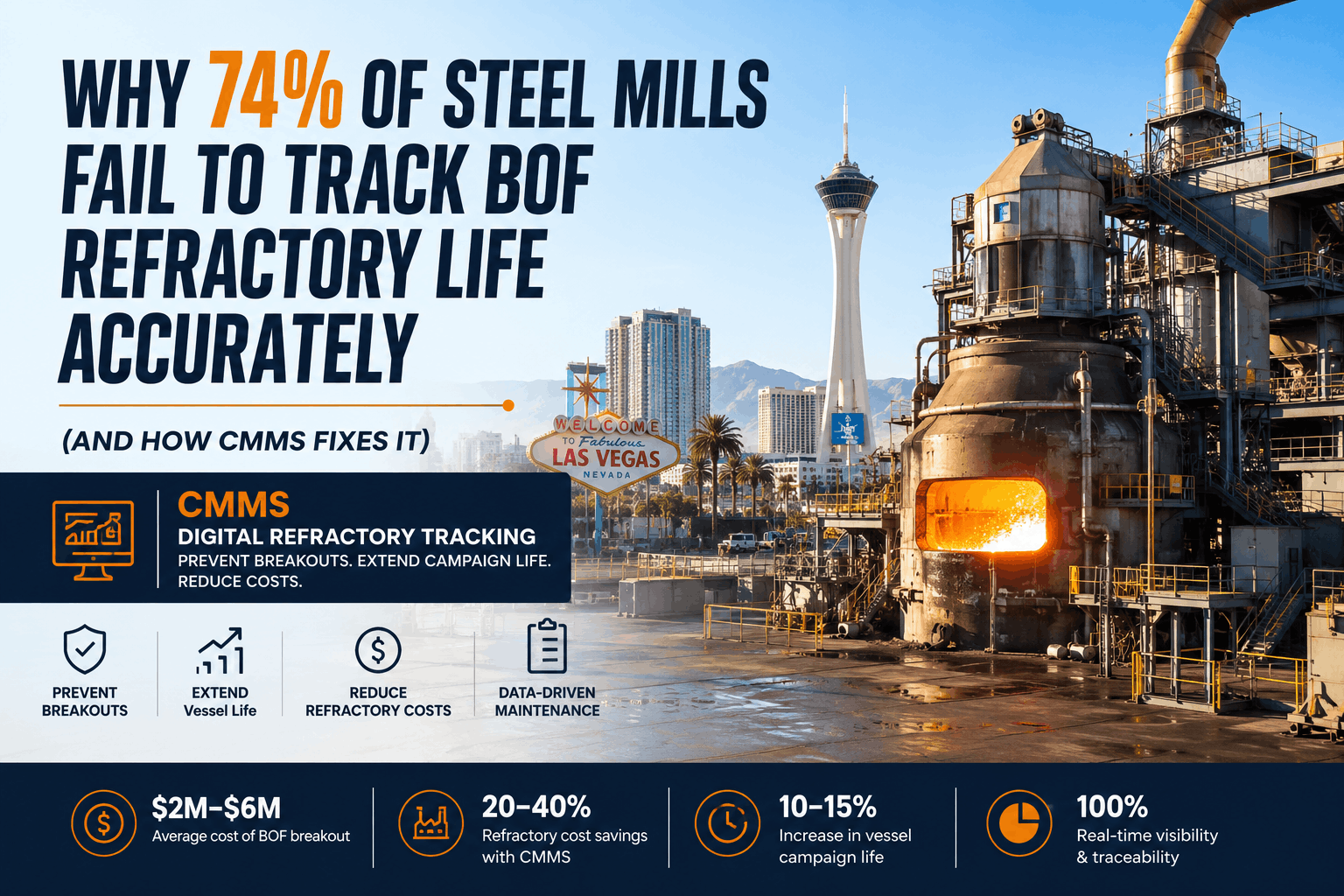
A 300-tonne BOF vessel enters its 4,800th heat with no digital record of zone-by-zone lining thickness from the last measurement campaign. The tap side and charge pad zones — the two areas that accumulate wear at three times the rate of the barrel — have not been individually tracked since the last relining 900 heats ago. The crew discovers the problem when the shell thermocouple on the charge side spikes. The heat is aborted, the converter is taken offline for emergency gunning, and the caster sits idle waiting for the next heat that will not arrive for six hours. The identical vessel in the bay next door has been in Oxmaint since its last relining: every zone measured, every heat counted, a pre-scheduled maintenance window already booked for heat 5,200. Oxmaint tracks refractory campaign life across every vessel type in the steelmaking route — BOF, EAF, ladle, and tundish — in a single platform with per-zone wear data, heat-count triggers, and campaign planning that converts emergency relinings into scheduled outage windows. Book a demo to see multi-vessel refractory dashboard configured for your plant.
Three Ways Fragmented Refractory Tracking Destroys Campaign Value
Refractory fails by zone, not by vessel. The tap hole area of a BOF wears at a rate five times greater than the barrel. The lower barrel of an EAF accumulates heel damage independently of the roof. A ladle's slag zone degrades faster on calcium-treated grades than on plain carbon. When tracking treats every vessel as a single heat counter rather than a multi-zone asset with independent wear rates, the plant systematically leaves campaign life on the table — or runs past safe limits into emergency territory.
A whiteboard or spreadsheet heat counter treats the entire vessel lining as one homogeneous component. The tap zone reaches critical thickness at heat 4,600. The barrel still has 800 heats of life remaining. Without zone-level tracking, the choice is binary: reline the whole vessel early and waste barrel life, or run the tap zone to failure. Sign up for Oxmaint to activate per-zone tracking across all vessel types.
BOF, EAF, ladle, and tundish campaigns are managed by separate teams with separate records. When a converter relining is scheduled for the same production window as a ladle fleet campaign change, the conflict surfaces only when the caster bay is trying to plan the next sequence — not three weeks earlier when both windows could have been aligned to a single coordinated outage. Book a demo to see cross-vessel campaign planning in Oxmaint.
Maintenance gunning and hot repairs extend campaign life by 10 to 25% when targeted at zones approaching their minimum thickness. When gunning decisions are based on visual inspection alone — without a measurement history showing wear rate per zone — gunning material is applied uniformly rather than where it extends campaign life most efficiently. Gunning costs the same whether or not it extends the campaign. Sign up for Oxmaint to link gunning records to zone measurement data.
BOF Converter Refractory: Campaign Tracking and Wear Zone Management
A basic oxygen furnace lining degrades in a predictable pattern driven by the combination of chemical attack from slag, thermal cycling, and mechanical abrasion from charging. The tap hole, tap pad, and charge impact zone wear at three to five times the barrel rate. Effective campaign management requires measuring and tracking each zone independently, applying gunning and patching material based on zone-specific thickness data, and planning the relining window based on the zone that will reach minimum thickness first — not the average across the vessel.
In Oxmaint, each converter carries a permanent asset record with: total campaign heat count, zone-by-zone lining thickness measurements from each survey, wear rate calculation per zone derived from consecutive measurements, gunning and patching event history with material volume applied per zone, and a campaign end prediction based on the fastest-wearing zone's current rate. When the tap zone is projected to reach minimum thickness at heat 4,850, a relining work order is scheduled automatically for the planned outage window before that point — not after a shell thermocouple spike forces an emergency shutdown.
Highest wear area from molten steel and slag exiting through the taphole. Requires individual measurement tracking and targeted gunning every 200–400 heats to maintain campaign length. Thickness below minimum triggers automatic hold flag in Oxmaint before next heat is accepted.
Mechanical abrasion from scrap and hot metal charging. Wear rate varies with scrap quality and charging practice. Oxmaint tracks wear acceleration from charge composition changes and adjusts campaign projection accordingly when heavier scrap grades are introduced.
Lower wear rate but largest area of lining mass. Gunning the barrel when tap zone drives relining wastes material. Oxmaint calculates remaining barrel life at projected relining date to determine whether partial relining of critical zones or full reline delivers better cost-per-heat value.
Chemical attack from slag, accelerated by basicity excursions and high iron oxide content. Oxmaint cross-references slag chemistry logs from the process system against measured slag zone wear rates to identify process practices that are consuming lining life at above-baseline rates.
EAF Refractory: Sidewall, Roof, and Hot Spot Management
Electric arc furnace refractory management differs from BOF tracking in two important ways: the roof lining and the electrode delta zone experience electrical and thermal attack in addition to chemical wear, and the introduction of post-combustion practices and oxy-fuel burners creates localised hot spots on the sidewall that develop faster than the surrounding lining. EAF refractory management requires tracking each panel — delta zone panels, door jamb panels, and burner port panels — with the same zone-level granularity applied to BOF converter vessels.
Oxmaint tracks EAF refractory at the panel and zone level with power-on hours as the primary wear driver, supplemented by scrap metallics charged and oxygen blown. When a delta zone panel approaches its minimum thickness, a targeted panel replacement work order is generated and scheduled for the next planned tap delay — typically an eight to twelve minute window — rather than waiting for a full shell cutout event. Panel replacement in a planned window costs a fraction of the emergency repair that follows a hot spot breakthrough. Book a demo to see EAF panel tracking configured for your furnace type and operational practice.
Each EAF sidewall and roof panel records accumulated power-on hours as the primary life consumption metric, with secondary tracking of oxygen lance exposure and post-combustion practice hours. Campaign end prediction updates in real time as each heat completes, allowing the refractory engineer to see remaining panel life in hours and heats simultaneously.
When the furnace shell infrared monitoring system identifies a temperature anomaly on a panel — indicating accelerated localised wear — Oxmaint creates a hot spot inspection work order automatically via BMS integration. The work order carries the panel location, current thermal reading, and historical thickness data for that zone, enabling the refractory team to assess urgency and schedule the repair in the minimum available window before the anomaly becomes a breakthrough. Sign up for Oxmaint to connect shell monitoring data to automatic hot spot work orders.
The roof refractory at the delta zone — where the three electrode columns penetrate the roof — experiences combined electrical, thermal, and chemical attack. This zone typically reaches replacement threshold at 40 to 60 percent of the general roof panel life. Oxmaint tracks delta zone panels on a separate campaign counter from the rest of the roof, scheduling targeted replacements without requiring a full roof change at each delta zone threshold. Book a demo to see EAF roof campaign planning in Oxmaint.
Ladle and Tundish Refractory: Fleet-Level Campaign Management
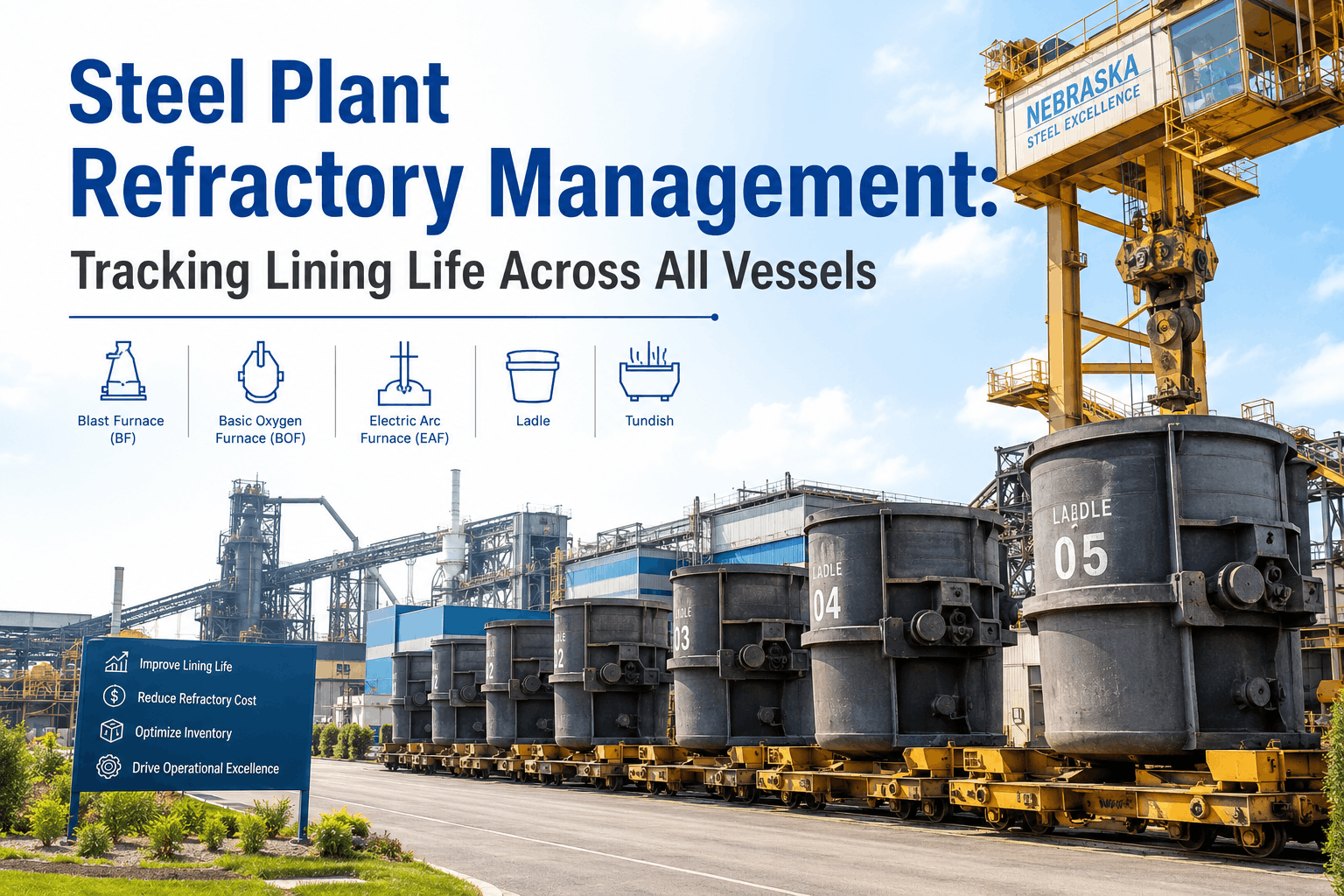
Ladle and tundish refractory management presents a fleet management problem that single-vessel tracking cannot solve. A 300-tonne steel plant typically operates eight to twelve ladles in rotation and four to six tundish units across multiple caster strands. When any ladle or tundish in the fleet reaches its campaign limit, the relining must be coordinated against the availability of the remaining fleet — without creating a situation where two units are offline simultaneously and the caster runs short of vessels.
Oxmaint's multi-vessel refractory dashboard shows the current campaign status of every ladle and tundish in the fleet simultaneously — heat count, percentage of campaign life consumed, days since last measurement, and projected campaign end date. Production planners see the entire fleet picture rather than receiving individual unit alerts. When two ladles are projected to reach their campaign limits within the same four-day window, the maintenance schedule can be adjusted in advance to stagger the relinings and maintain continuous caster operation. Sign up for Oxmaint to activate fleet-level refractory visibility for your ladle and tundish operations.
Per-ladle heat counter with zone-specific tracking for bottom, lower barrel, upper barrel, and slag zone. Grade-adjusted campaign limits automatically applied for calcium-treated and stainless grades. Pre-campaign inspection work order generated at 80% of limit. Campaign end prediction updated on each heat. Sign up for Oxmaint to configure ladle campaign tracking for your fleet.
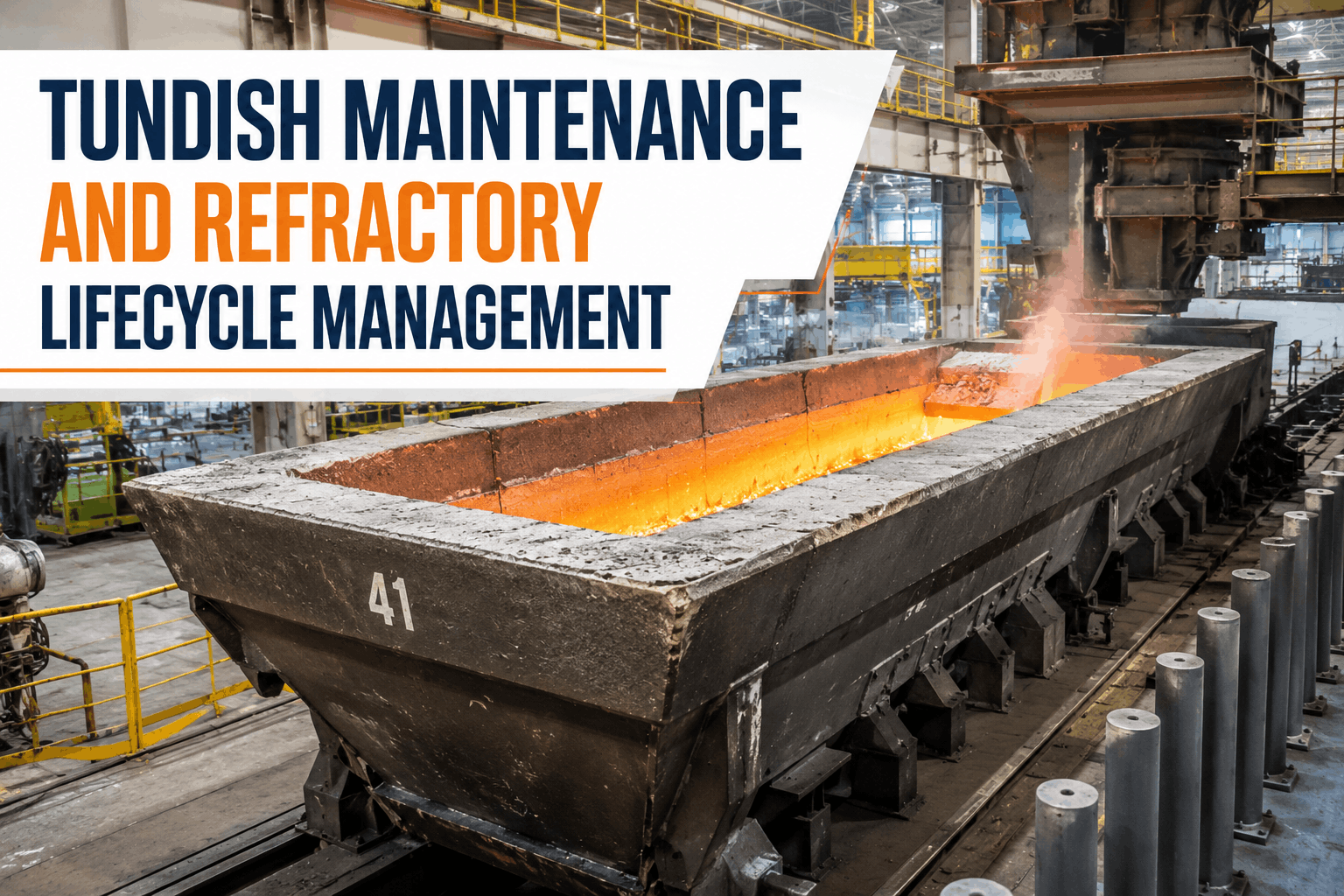
Tundish campaign management includes working lining heat count, preheating cycle records, and open-eye measurement data. Tundish swap timing coordinates with ladle fleet status and caster sequence plan. Lining temperature and preheating duration records track against casing performance data to optimise preheat time and reduce skull and clogging incidents. Book a demo to see tundish campaign planning in Oxmaint.
Behind the working lining, safety and permanent lining layers require inspection at defined intervals — typically at every third or fourth working lining relining. Oxmaint triggers safety lining inspection work orders automatically based on relining count rather than requiring manual decision-making from the refractory team. Safety lining condition data is recorded and stored against the shell asset permanently. Sign up for Oxmaint to configure safety lining inspection intervals.
Every relining event records brick quantities consumed by type and zone — magnesia-carbon grades by quality tier, gunning mix volumes, coating materials applied. Oxmaint aggregates brick consumption across the fleet to produce cost-per-heat data per vessel type, enabling the refractory purchasing team to negotiate supplier contracts against actual consumption data and identify vessels with above-average brick consumption rates. Book a demo to see brick cost tracking configured for your material grades.
Paper-Based Tracking vs Oxmaint Multi-Vessel Refractory Dashboard
The operational gap between paper-based campaign tracking and a connected refractory CMMS is not a matter of record-keeping convenience — it is the gap between campaign length optimised by data and campaign length governed by the lowest tolerance for risk in the absence of data.
What Steel Plants Measure After Unified Refractory Tracking Deployment
The improvement pattern after deploying Oxmaint for multi-vessel refractory management is consistent across facility sizes and steelmaking routes. The most immediate impact is a reduction in emergency refractory events as digital heat counting replaces whiteboard tallies and campaign limits are automatically enforced. Campaign length improvements follow as zone-specific data enables targeted maintenance rather than full-vessel precautionary relinings.
We had eight ladles in the fleet, four people who tracked campaign data differently, and no single view of where every ladle stood. We were doing precautionary relinings at 85% of the campaign limit because we could not be certain of the actual heat count. After Oxmaint we run confidently to 96% and use zone data to decide whether to gun or reline. The refractory cost reduction paid for the platform in the first quarter.
Frequently Asked Questions
Every Vessel in Your Steelmaking Route Should Know Its Zone Thickness Before the Next Heat.
BOF campaign tracking. EAF panel and hot spot management. Ladle and tundish fleet coordination. Zone-level wear data. Brick cost-per-heat analytics. Live in two weeks.