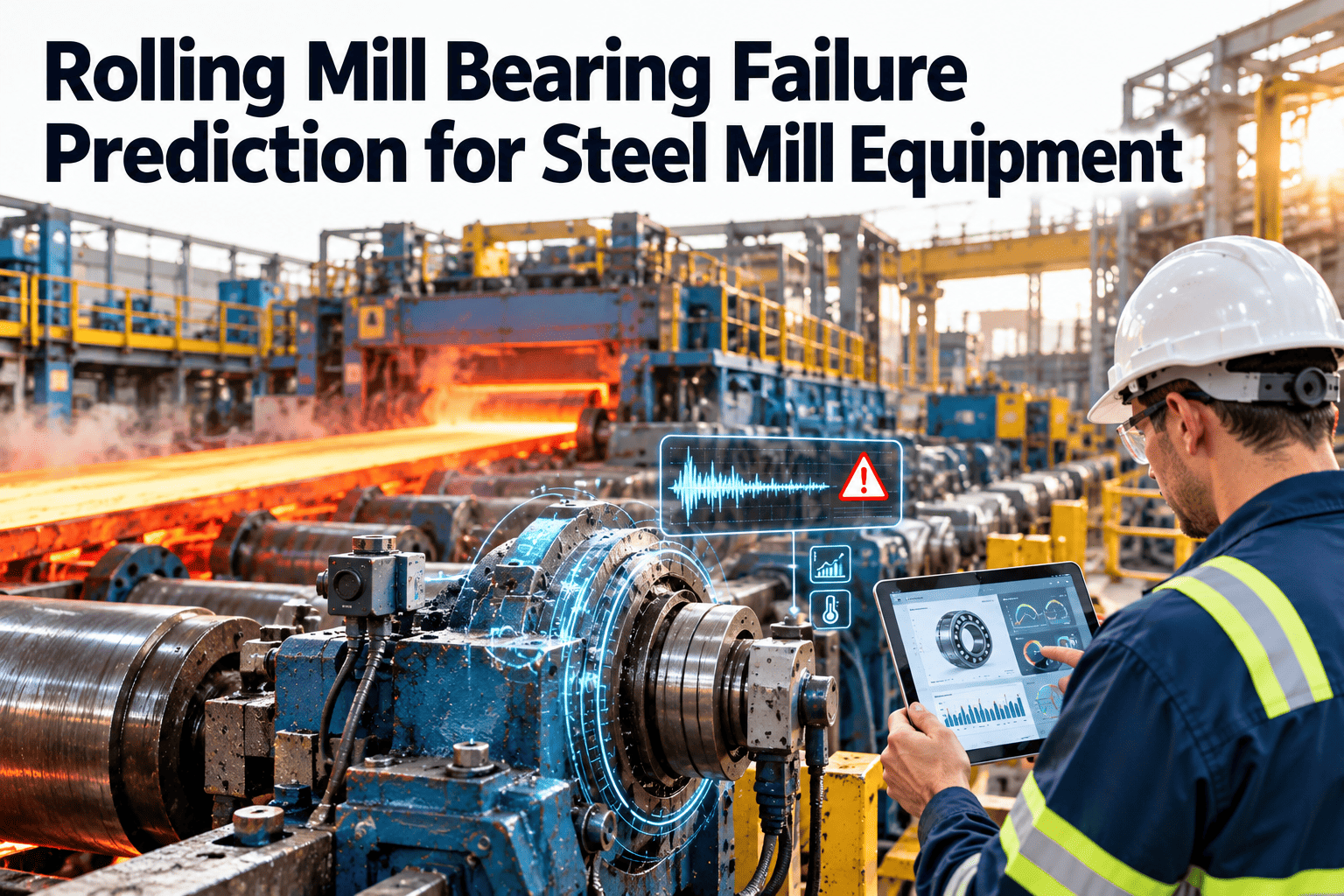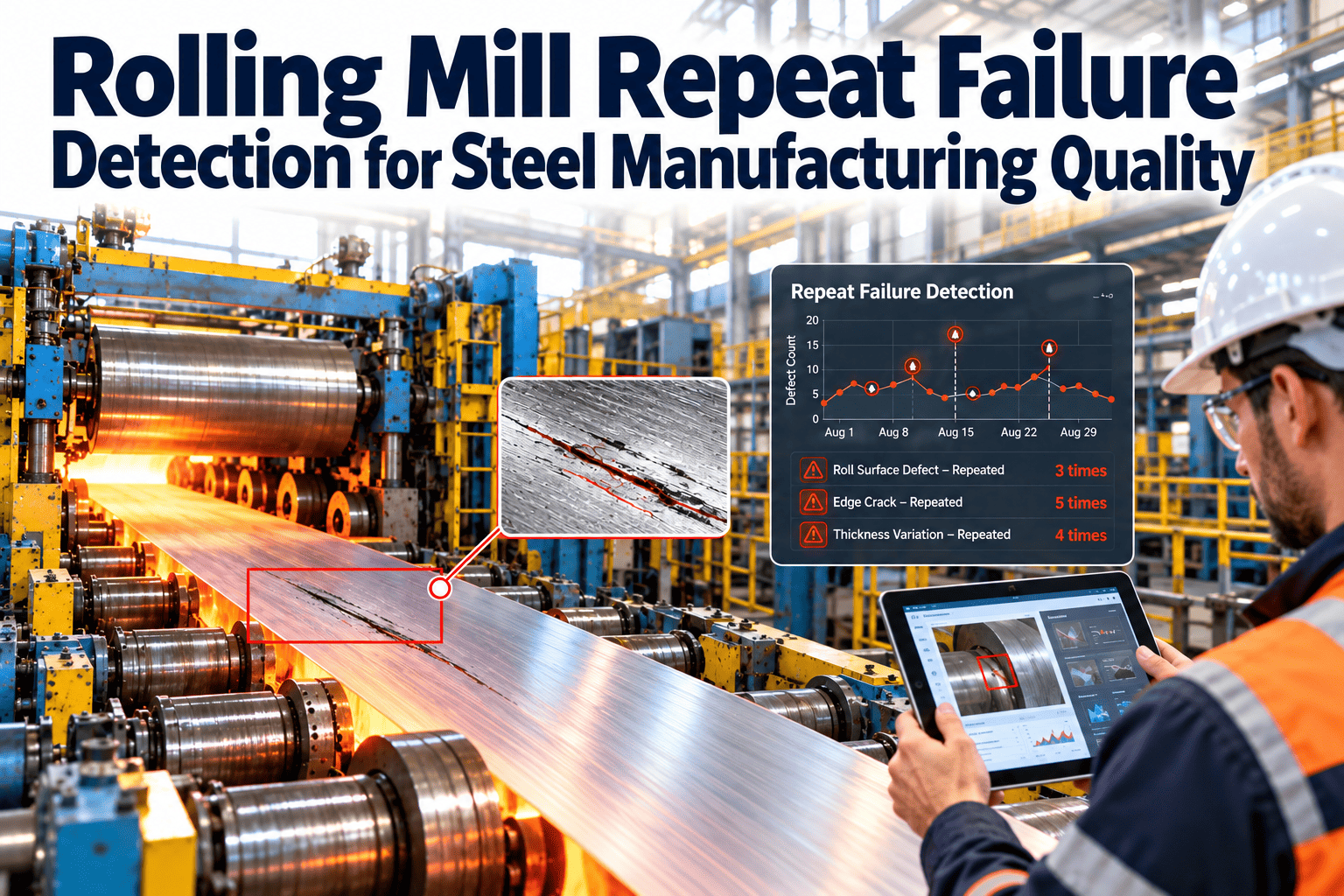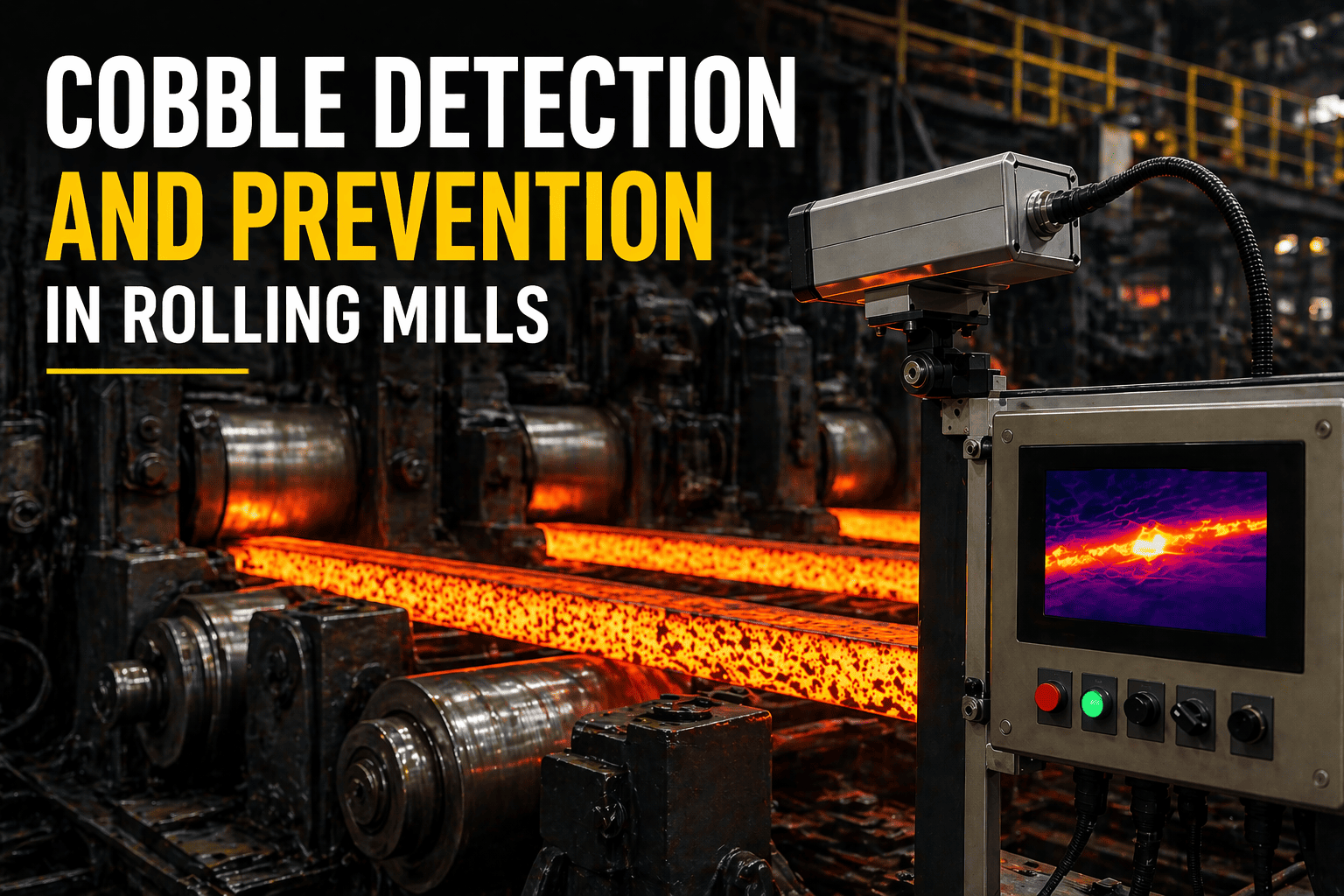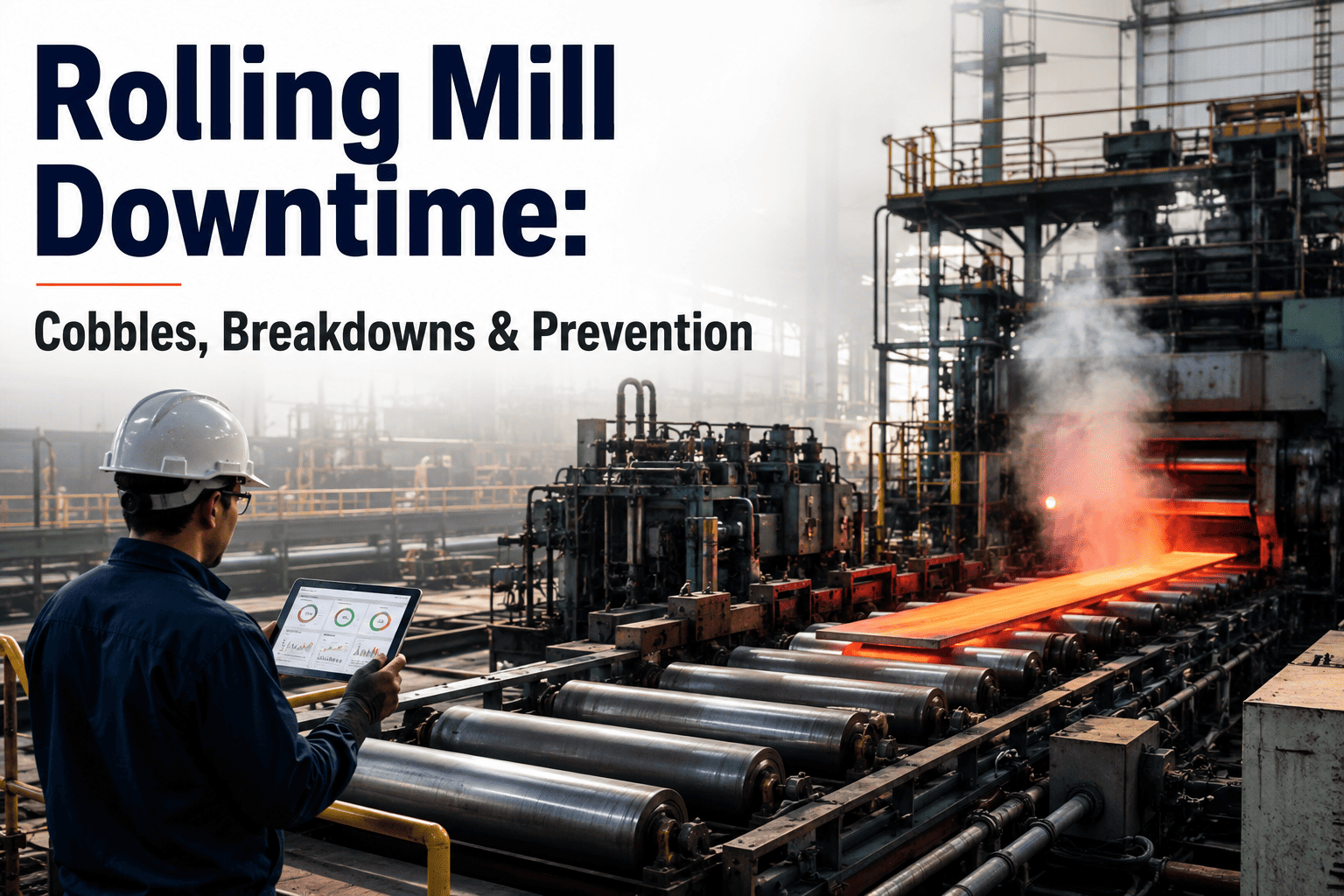
Rolling mill cobbles and mechanical breakdowns concentrate an entire day's downtime into a handful of violent minutes — and in almost every case, the warning signs were sitting in a vibration reading or an alignment log no one reviewed. A tangled cobble can halt a hot mill in seconds, while a seized roll neck bearing or a hydraulic AGC fault can take a stand down for hours. Both failure types share the same short list of root causes: guide misalignment, roll and bearing wear, drive and coupling issues, and hydraulic screwdown faults. This guide walks through what actually triggers rolling mill downtime, how far in advance each failure mode can be caught, and how a CMMS-driven inspection program turns those signals into scheduled repairs instead of mill-floor emergencies.
Cobbles And Breakdowns Don't Happen Without Warning
A single rolling mill stoppage can cost tens of thousands of dollars per minute in lost output, and most cobble events are preceded by detectable signs seconds to weeks in advance. This guide shows what actually drives rolling mill downtime and how to catch it before the mill floor does.
Two Downtime Patterns, One Maintenance Fix
Rolling mill downtime rarely looks the same twice, but nearly every event fits one of two patterns below. Recognizing which pattern you're fighting shapes where your maintenance program should focus first.
A tangled bar can bird-nest a stand in seconds. Triggered by guide misalignment, inter-stand tension instability, or billet temperature variation forcing the bar off its pass-line.
Detectable 1-5 seconds to weeks ahead via guide drift and tension signaturesRoll neck bearing seizure, drive coupling failure, or hydraulic screwdown faults build up over shifts or weeks before finally stopping the stand.
Detectable days to weeks ahead via vibration and temperature trendingWhat's Actually Driving Rolling Mill Downtime
Not every cause carries equal weight. The ranked list below reflects how often each root cause shows up behind cobble events and unplanned stoppages across hot and long product mills.
Of mill vibration problems trace back to guide misalignment — the single leading cobble trigger across entry and delivery guides.
Of all unplanned stoppages come from tapered roller bearing failure, most often accelerated by contamination or lubrication starvation.
Of product quality rejections stem from roll pass misalignment and groove wear, which also drives premature bearing loading.
Of remaining stoppages trace to spindle coupling wear and hydraulic screwdown or AGC faults, often missed without dedicated PM tasks.
The Five Highest-Risk Components To Watch Daily
With a lean maintenance team, prioritization beats blanket inspection. These five components account for the bulk of high-cost rolling mill failures and deserve a dedicated, non-negotiable check every shift.
| Component | Primary Failure Mode | Early Warning Signal | Monitoring Method |
|---|---|---|---|
| Roll Neck Bearings | Contamination, lube starvation | Rising temperature, vibration shift | Infrared + vibration per ISO 10816-3 |
| Spindle Couplings | Fatigue wear, misalignment | Vibration harmonics, backlash | Vibration analysis, visual checks |
| Hydraulic Screwdown | Seal wear, pressure drift | Gap deviation, AGC instability | Pressure trending, gap logging |
| Cooling Headers | Nozzle clogging, flow loss | Uneven roll temperature | Flow rate and temperature checks |
| Gear Reducers | Tooth wear, oil degradation | Noise change, particle count rise | Oil analysis, vibration trending |
Stop Reacting To Cobbles — Start Predicting Them
Oxmaint links guide PM status, bearing condition data, and pass campaign history in one system — so a drifting guide becomes a scheduled task instead of a mill-floor emergency.
A Four-Part Program To Cut Downtime
Mills that systematically reduce cobbles and breakdowns tend to run the same four disciplines in parallel rather than treating each failure mode separately.
Inspect and, where needed, replace entry and delivery guides at every pass change, with quarterly laser alignment checks to catch foundation and thermal drift early.
Track roll neck bearings and gear reducers against ISO 10816-3 alert and action thresholds, flagging deviations days before failure.
Fix frequency and contamination control rather than volume — water ingress of just 1% can cut bearing life by 90%.
Log every cobble against guide PM status and pass campaign data in your CMMS to expose recurring patterns instead of clearing each event in isolation.
What A Structured Program Is Worth
Frequently Asked Questions
Turn Guide Drift Into A Work Order, Not A Cobble
Oxmaint tracks every guide, bearing, coupling, and hydraulic system across your rolling mill — flagging deviations early and routing the right repair to the right shift before the mill floor pays for it.