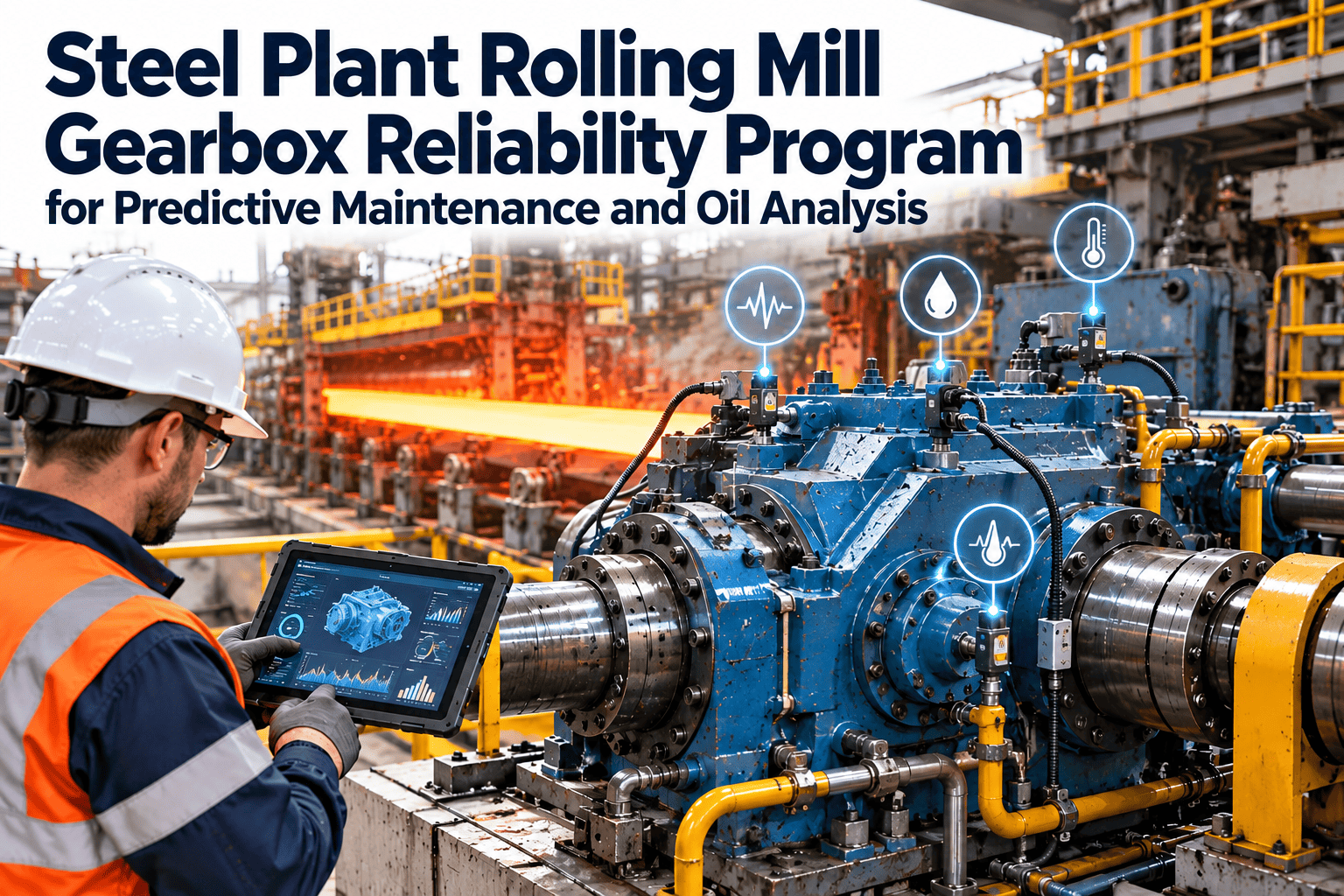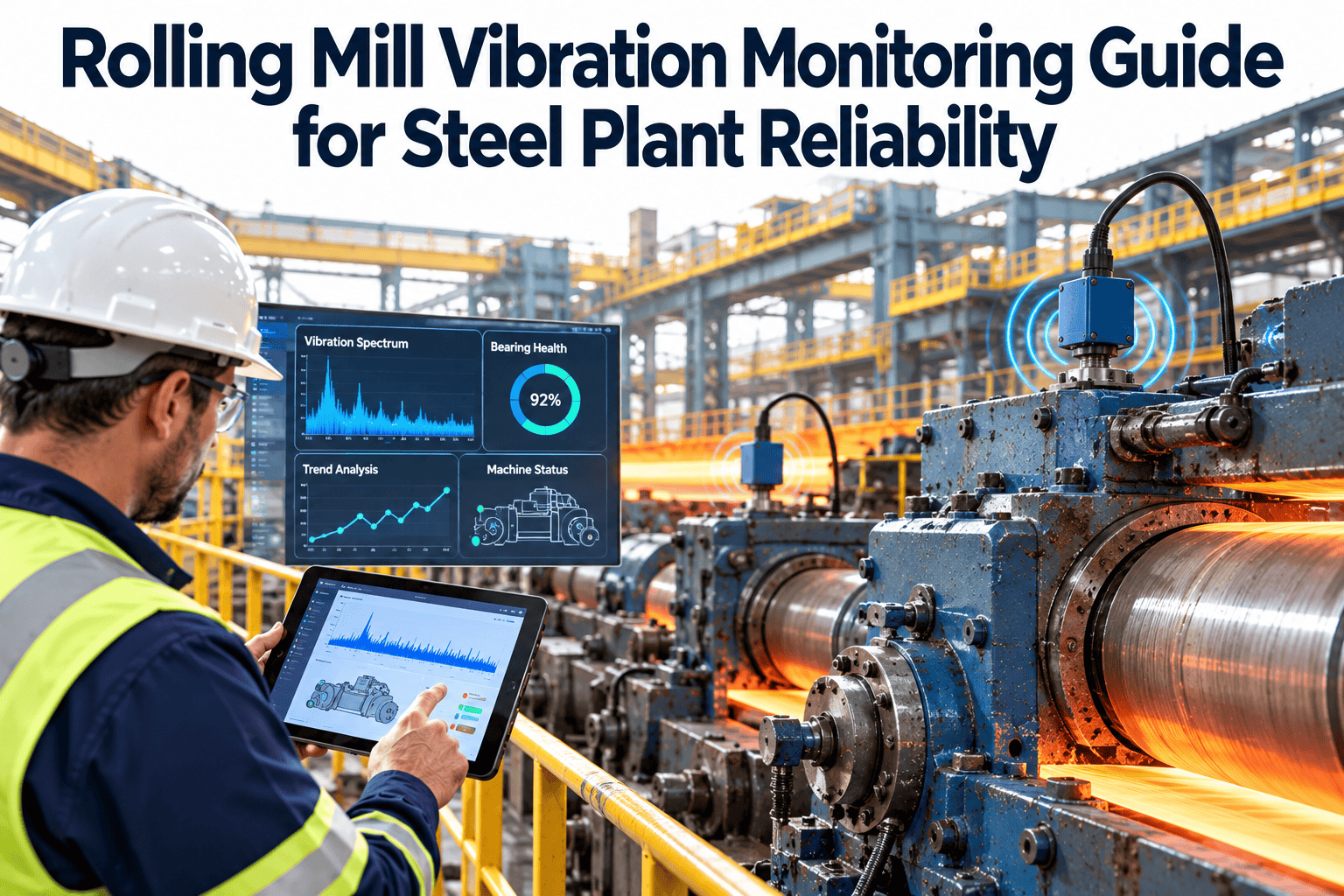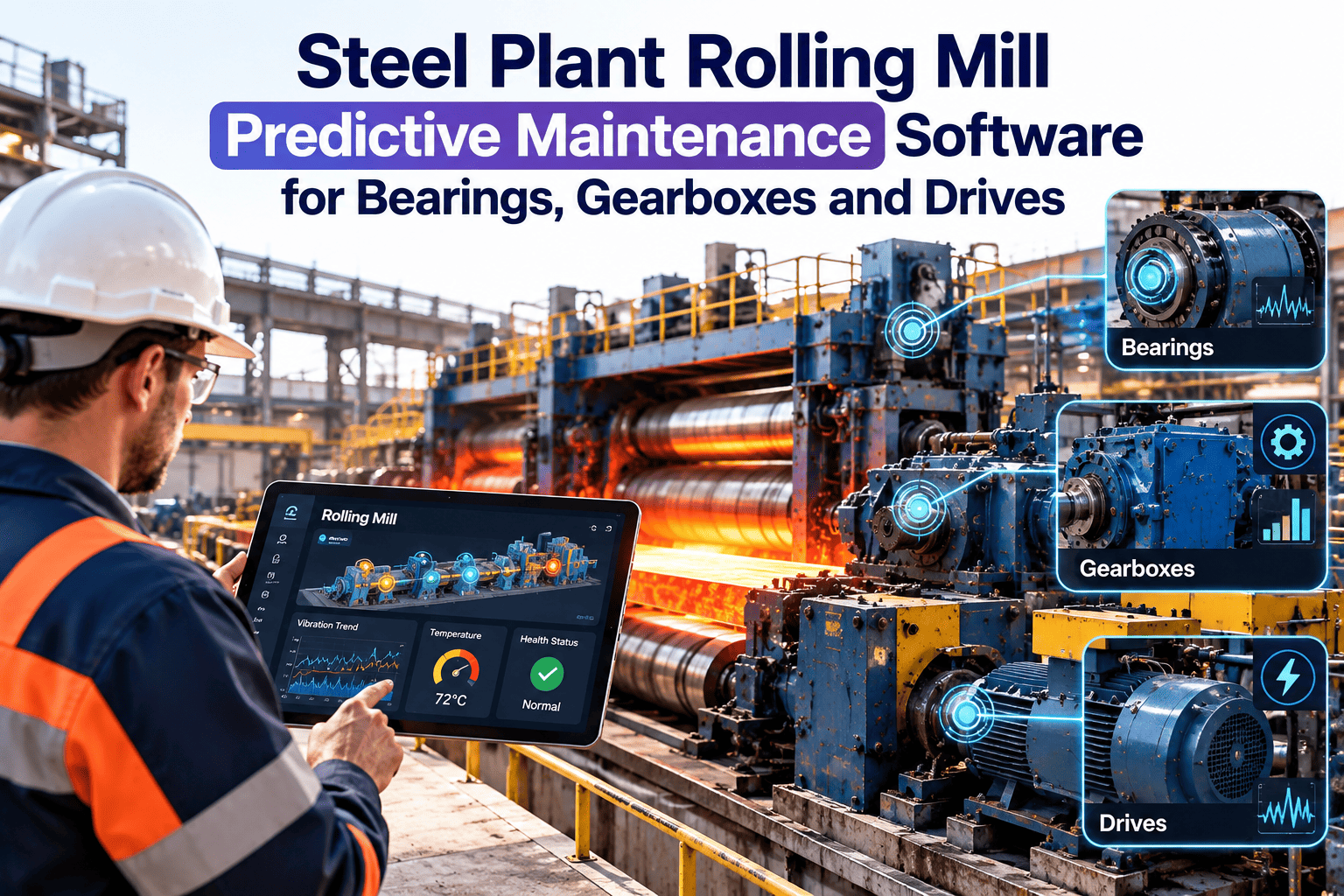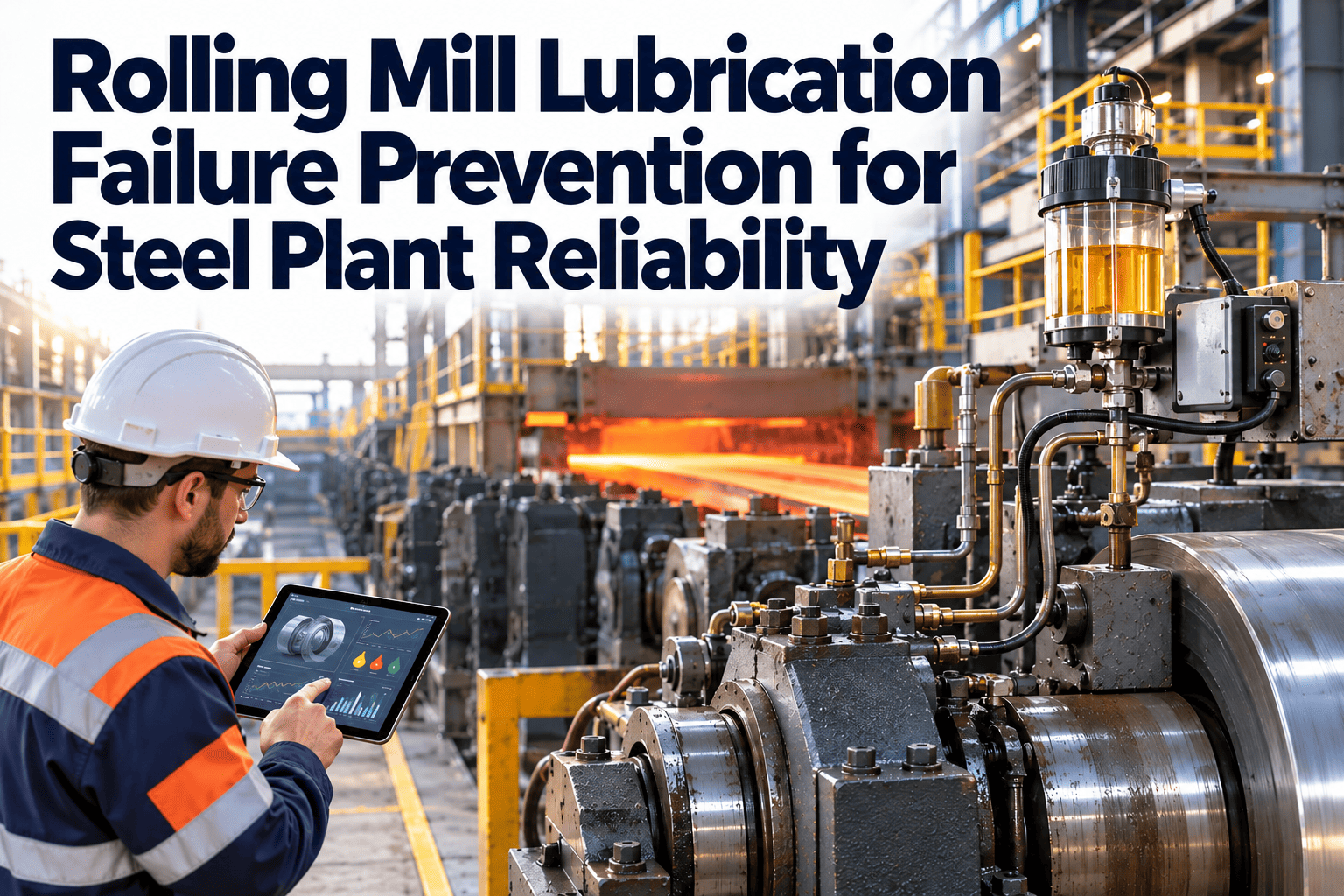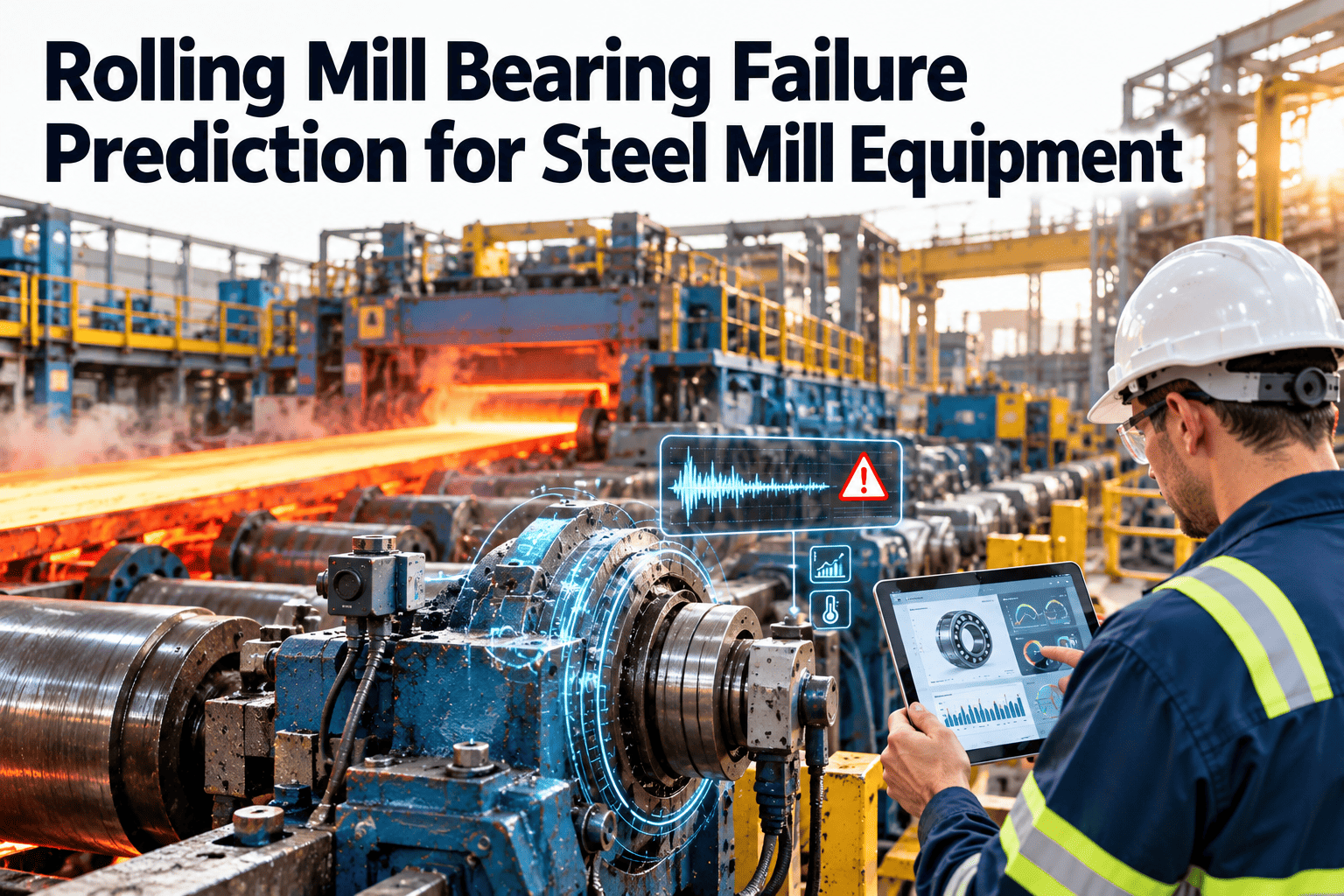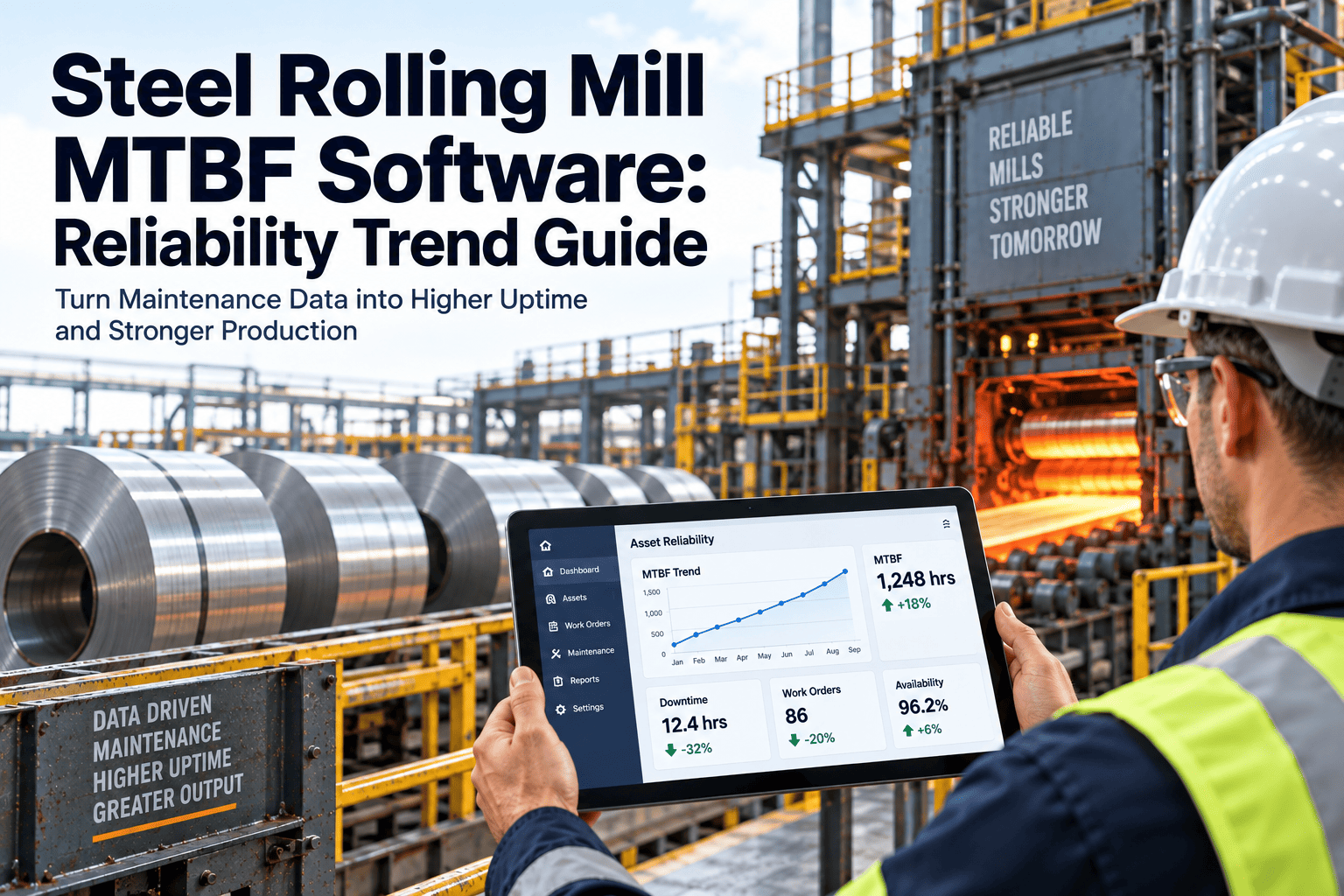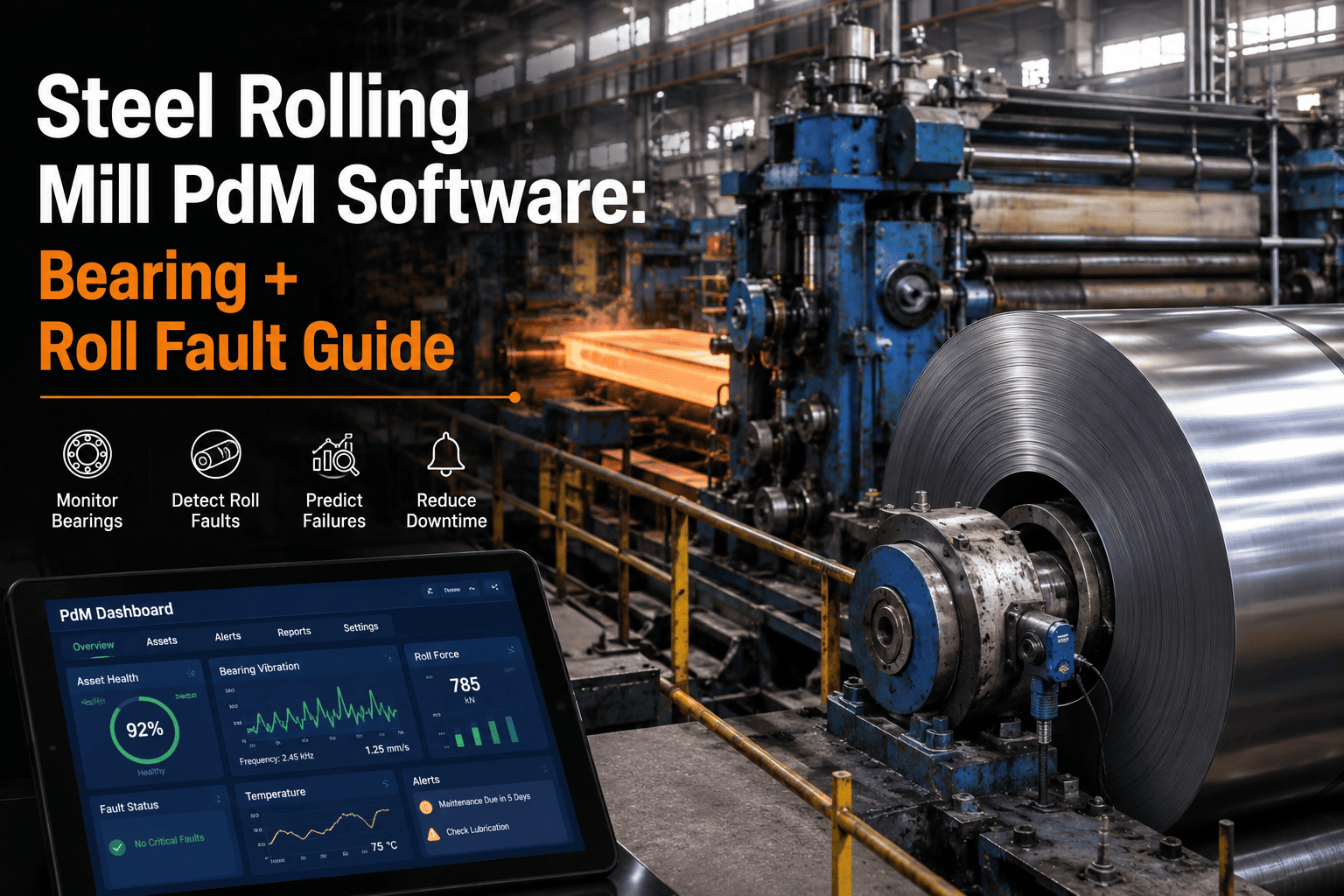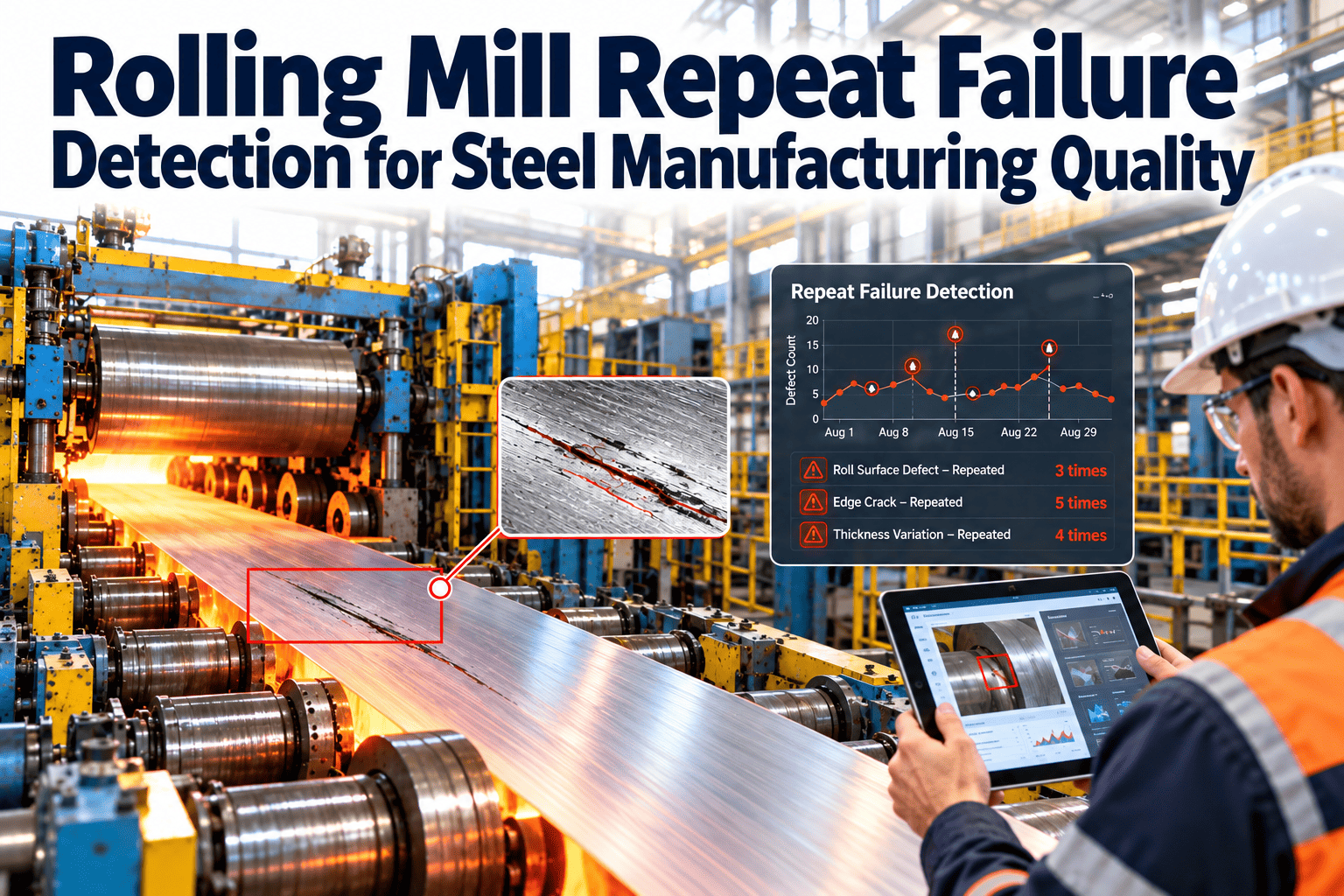
A hot strip mill can log the same gearbox trip, the same intermediate-stand bearing seizure, or the same coupling failure three or four times in a single year without anyone in the maintenance department ever connecting the dots. Each event gets its own work order, its own emergency parts pull, and its own postmortem — but because the failures are scattered across shifts, technicians, and loosely worded notes, the pattern never surfaces. Repeat failure detection closes that gap by tying every breakdown to an exact stand position, a standardized failure code, the interval since the last repair on that same position, and the production load the mill was carrying at the time. Once those four data points sit side by side, a rolling mill's chronic problems stop looking random and start looking exactly like what they are — the same root cause, recurring on a schedule. Structured failure logging inside a CMMS such as OxMaint is what makes that pattern visible before the fifth repeat costs a full shift of production.
Find the Failures That Keep Coming Back — Before They Come Back Again
Match every rolling mill breakdown to its stand position, failure code, repair interval, and production load so recurring problems surface in weeks, not years.
The Same Failure Looks New Every Time It's Logged
Reliability engineers at integrated mills have documented that rolling mill and caster bearings reach their calculated design life in only a small fraction of cases — the overwhelming majority fail early, and a large share of those early failures are repeats of a prior event on the same asset. The reason repeats go undetected has less to do with the equipment and more to do with how the failure gets recorded.
Repeat Detection Starts With Knowing Exactly Where the Mill Failed
A rolling mill is not one asset — it is a train of stands, each with a different duty cycle, a different reduction ratio, and a different failure signature. Repeat failure detection is only as good as the position ID attached to the work order.
Every stand needs its own position ID in the asset register — not a generic "mill bearing" tag — so that a failure logged against Stand 3 East today can be matched against a failure logged on the identical position eleven months earlier without anyone having to remember the connection.
Standard Codes Turn Free-Text Notes Into Searchable Patterns
A short, mandatory failure code list — entered on every corrective work order regardless of how obvious the cause seems in the moment — is what makes cross-referencing possible months later. The table below shows a starting taxonomy mapped to the position families above.
| Position Family | Failure Code | Typical Root Cause | Median Repeat Window |
|---|---|---|---|
| Roughing Stand | BRG-SPALL | Shock-load spalling, misalignment under bite-in torque | 4–7 months |
| Roughing Stand | CPL-FATIGUE | Spindle/coupling fatigue from repeated torque reversal | 8–14 months |
| Intermediate Stand | BRG-CONTAM | Seal breach allowing scale and coolant ingress | 3–6 months |
| Intermediate Stand | GBX-TOOTH | Gear tooth wear from sustained duty above design rating | 10–18 months |
| Finishing Stand | BRG-THERMAL | Lubrication breakdown at high surface speed | 2–5 months |
| Finishing Stand | VIB-LOOSE | Chock or housing looseness driving progressive vibration | 5–9 months |
When the same code reappears on the same position family inside its median repeat window, that work order should route automatically to a reliability engineer for review rather than closing as a routine repair.
Stop Logging the Same Failure as if It Were New
OxMaint applies mandatory failure coding and position-level asset IDs to every rolling mill work order, then flags any code that recurs on the same position inside its typical repeat window — turning scattered repair history into an active reliability backlog.
Mean Time Between Failures Is the Number That Exposes a Repeat
A single repair date means little on its own. What exposes a chronic problem is the interval trend — how the time between failures on one specific position is changing over successive repairs.
Reliability teams that calculate this per position, not per mill, catch the decline three to five repairs earlier than teams that only look at plant-wide breakdown counts. A CMMS that timestamps every work order against operating hours can generate this trend automatically instead of requiring a spreadsheet reconstruction after the fact.
The Same Failure Code at a Higher Load Is a Different Problem
A coupling failure logged at 60% of rated throughput and the identical failure code logged at 105% of rated throughput are not the same event, even though the work order text may look nearly identical. Load context turns a repeat failure investigation into a targeted one.
This is an illustrative relative-risk pattern, not a fixed industry figure — every mill's own failure history should be plotted against its own load data. Once a mill logs production rate at the moment of each stop, this correlation becomes a simple filter: pull every occurrence of a given failure code, sort by load, and see whether the repeats cluster above a specific throughput threshold.
How Repeat Detection Runs Inside a CMMS
Building a Repeat Failure Detection Program From Scratch
- Assign a permanent position ID to every stand, chock, spindle, and gearbox — retire any generic "mill bearing" asset tags
- Publish a failure code list limited to the modes that actually occur on your mill, reviewed and updated annually
- Make failure code entry a required field before a corrective work order can be closed
- Log production rate or line speed at the time of every unplanned stop, not just at scheduled intervals
- Set a rolling MTBF calculation per position and alert when it drops more than roughly 15% across two intervals
- Review flagged repeats in the weekly reliability meeting before scheduling the next routine repair on that position
Frequently Asked Questions
How is a repeat failure different from a bad actor asset?
What is a reasonable repeat window to flag?
Can OxMaint retroactively find repeats in existing work order history?
Does production load data need a separate system to capture?
Does this replace formal root cause analysis?
Why Good Technicians Still Miss the Pattern
Repeat failure detection is not primarily a technology problem. Most mills already have a CMMS, and most technicians are perfectly capable of diagnosing a bearing failure correctly on the spot. The pattern still gets missed because of how work is organized around a breakdown, not because anyone lacks skill.
A rougher stand bearing that seizes at 3 a.m. gets a technician pulled from whatever else they were doing, a spare pulled from the crib, and a work order closed as fast as possible so the mill can restart. Nobody in that moment is thinking about whether this is the third seizure on that exact chock this year — they are thinking about getting hot metal moving again. The connection between this failure and the one four months ago exists only in whichever technician's memory happened to work both jobs, and shift rotations mean that overlap is far from guaranteed.
This is precisely why the position ID and failure code have to be mandatory fields rather than optional notes. A technician under pressure at 3 a.m. will not volunteer a careful narrative of prior history — but they will fill in a required dropdown, and that dropdown is what lets the system make the connection the human memory chain could not.
How a Repeat Would Have Surfaced Sooner
Consider a finishing stand bearing that seized in January, was replaced under a generic "bearing failure — replaced" work order, and seized again in June with a similarly brief note. Without a shared position ID and failure code, these look like two unconnected events to anyone reviewing the maintenance log, six months apart and handled by different crews.
With position-level tagging and a mandatory failure code, both events would carry the same stand ID and the same BRG-THERMAL code. A system comparing new work orders against history would flag the June event immediately — two occurrences of the same code on the same position inside a nine-month window is well inside the code's typical repeat range for that position family. That flag routes the work order to a reliability engineer instead of a routine parts swap, prompting a look at lubrication schedule, seal condition, and whether production load had crept upward between the two failures. The third seizure, the expensive one that would have happened around November, gets caught and corrected instead.
The Real Cost of an Undetected Repeat
Every repeat failure carries a hidden multiplier that a single-event view never captures. The direct cost of one bearing, one coupling, or one gearbox repair is straightforward to estimate — parts, labor, and the downtime for that single event. The cost of the same failure recurring three or four times before anyone investigates the root cause is a different order of magnitude, because each recurrence adds its own downtime window, its own emergency parts pull at a rush premium, and its own overtime labor bill on top of the original repair cost that never should have needed repeating.
A mill that catches a chronic problem on its second occurrence instead of its fourth or fifth is not just saving two extra repair events — it is protecting the production schedule around those events, avoiding the scrap that comes from an unplanned mid-sequence stop, and freeing the reliability team to work on genuinely new problems instead of refighting the same one on a loop. That is the return that justifies the discipline of mandatory failure coding and position tagging, even when it feels like extra paperwork in the moment a technician is racing to get the mill back up.
Every Repeat Failure Is a Root Cause You Haven't Fixed Yet
Position-level asset IDs, mandatory failure coding, load-linked stoppage records, and automatic repeat-window flagging — all inside one CMMS built to turn rolling mill repair history into a reliability program.