A mid-sized bar mill kept logging backup roll chock failures every 14 months, always mid-campaign instead of at startup, and nobody could explain the pattern. Oil analysis found the real cause: cooling water and rolling emulsion were creeping past worn seals, pushing oil cleanliness from a target ISO 18/16/14 out to 24/23/20, the range typical of untracked steel mill lube systems. Once drop-leg water checks and oil sample results were logged against a maintenance schedule instead of a memory, the same chock ran three full campaigns without an unplanned pull. Rolling mill lubrication is the single highest-leverage maintenance program in a steel plant, because bearing life, roll surface quality, and unplanned downtime all trace back to it. This guide covers the checkpoints that keep an oil film bearing running its full service life.
Rolling Mill Lubrication / Bearing Reliability / Steel Plant Guide
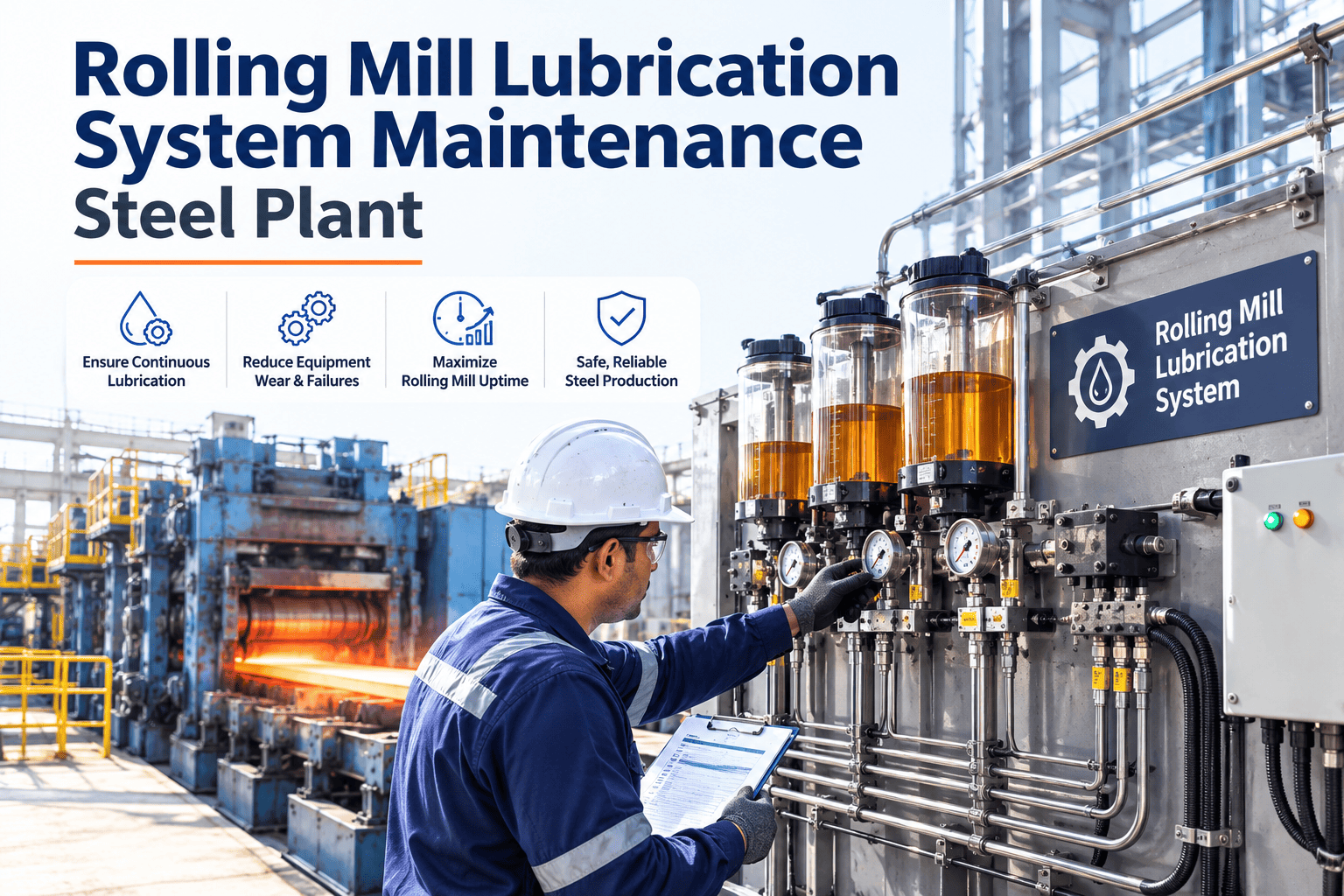
Rolling Mill Lubrication System Maintenance That Actually Protects Bearing Life
Oil film bearings, roll neck lubrication, and grease circuits all fail for the same three reasons — water contamination, particulate ingress, and missed PM windows. Here is what a structured lubrication program looks like inside a working steel mill.
18/16/14
Target ISO cleanliness code for oil film bearing circuits
24/23/20
Typical ISO code found in mills without a tracked lube program
60%
Of mill gearbox failures trace back to contamination, not the gearbox itself
18-36 mo
Oil film bearing life under a properly maintained lubrication circuit
Lubrication PM Built Around Your Mill
Turn Oil Sampling, Drop-Leg Checks, and Grease Rounds Into One Tracked Schedule
Oxmaint schedules every lubrication point in the mill, flags oil analysis results the moment they drift outside your limits, and gives reliability teams one place to see bearing health across every stand.
Why Rolling Mills Lose Bearings to Lubrication, Not Load
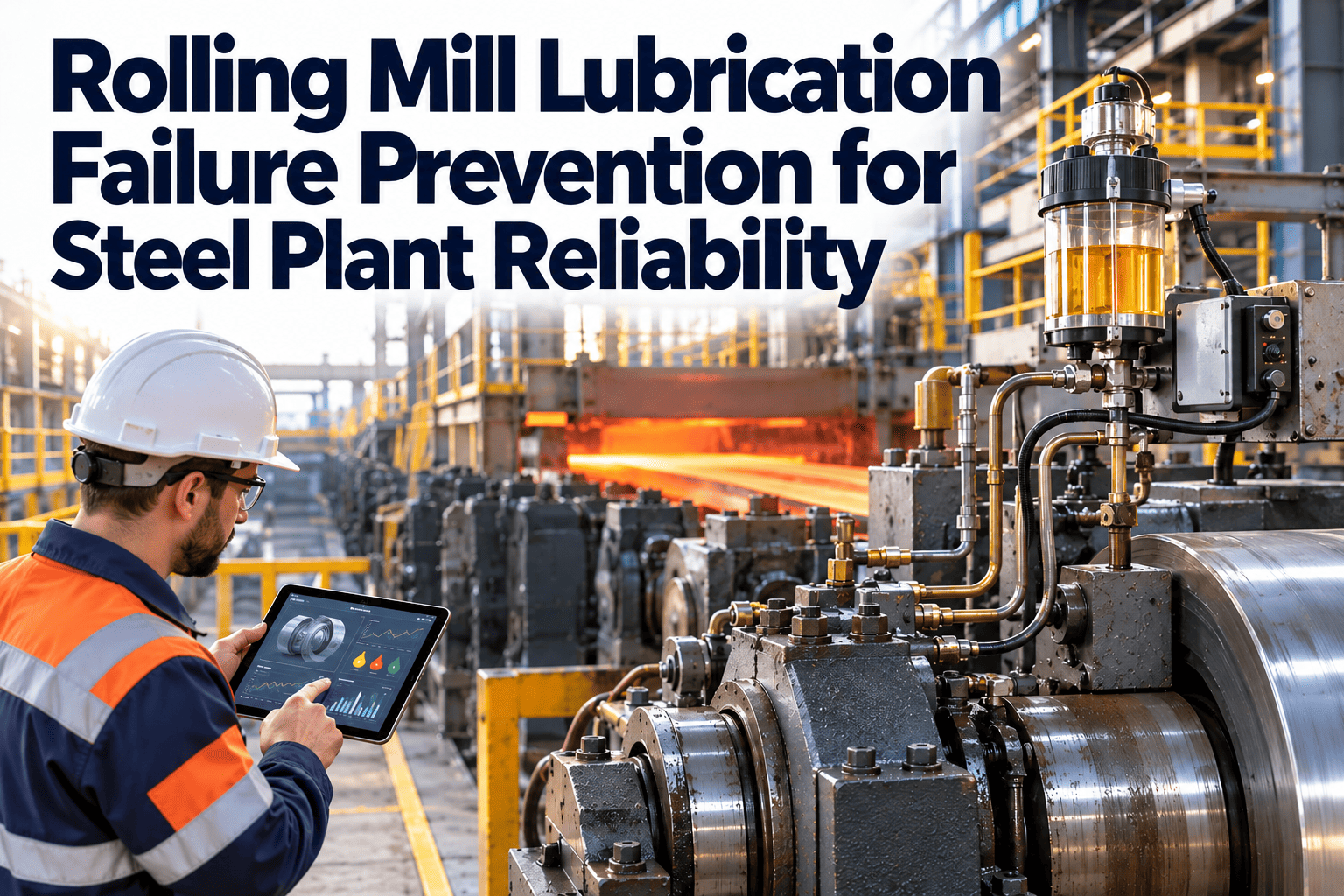
Backup and work roll oil film bearings are engineered to run for years under enormous radial load — the failures that show up 18 months early almost never come from the load itself. They come from what gets into the oil. Cooling water and rolling emulsion are under constant pressure right next to the seal, particulate from scale and roll wear circulates with the return oil, and viscosity breaks down under sustained heat. Any one of these compromises the oil film between the roll neck and bushing, and once metal touches metal the bearing is already on a shortened clock.
Four Ways a Rolling Mill Lubrication Circuit Fails
01
Water Ingress Past Worn Seals
Cooling water and rolling solution sit right at the seal under pressure. Once seals wear, water emulsifies into the oil and the film that separates roll neck from bushing turns thin and unreliable.
02
Particulate From Scale and Wear
Mill scale, roll surface wear, and dust from the shop floor circulate with the return oil. Without filtration checks, particulate counts climb quietly until they are already scoring bearing surfaces.
03
Viscosity Breakdown Under Heat
Sustained bearing temperature thins the oil faster than a fixed change interval accounts for. Thin film raises heat further, which thins the oil more — a spiral that starts weeks before a failure.
04
Grease Points Skipped on the Round
Roll neck grease points and chock fittings that are hard to reach get skipped when a lubrication round runs long. A missed point looks identical to a completed one until the bearing runs dry.
Oil Film Bearing Circuit vs Untracked Lube Program vs Scheduled Lube Program
The gap between a mill that loses bearings early and one that runs full campaign after campaign usually is not the equipment. It is whether the lubrication checkpoints below are actually tracked.
| Checkpoint |
No Tracked Program |
Manual Log Sheet |
Scheduled Lube Program |
| Oil cleanliness (ISO code) |
Rarely sampled, drifts to 24/23/20 |
Sampled but reviewed late |
Held near 18/16/14 with flagged drift |
| Water content in oil |
Unknown until bearing damage appears |
Checked inconsistently by shift |
Drop-leg checks logged and trended |
| Grease round completion |
Points skipped under time pressure |
Paper checklist, no proof of visit |
Every point time-stamped and verified |
| Bearing life achieved |
6-12 months, frequent surprise pulls |
12-20 months, uneven across stands |
18-36 months, consistent by design |
The Five-Point Rolling Mill Lubrication PM Routine
01
Sample Oil on a Fixed Interval
Pull oil samples from each circuit on a duty-cycle-based schedule and compare every result against your ISO cleanliness baseline, not just against a pass or fail limit.
02
Check Drop Legs for Water
Inspect return line drop legs every shift. Water above roughly two percent signals a seal problem starting at a specific bearing, not a system-wide issue.
03
Verify Filtration and Heat Exchanger Performance
A rising filter differential or a heat exchanger losing efficiency both let contaminated, overheated oil reach the bearing before anyone notices a smell or a sound.
04
Complete Every Grease Point, Every Round
Roll neck and chock grease points need a verified visit, not an assumed one. A completed round should be provable, not just claimed on a paper sheet.
05
Inspect Seals and Bearing Clearance at Roll Change
Every roll change is a free inspection window. Check seal condition and bearing clearance while the chock is already open instead of waiting for the next scheduled outage.
From Paper Log Sheets to Verified Lube Rounds
See Every Oil Sample, Drop-Leg Check, and Grease Point in One Dashboard
Oxmaint schedules oil sampling by duty cycle, flags cleanliness drift automatically, and time-stamps every grease point on the round so a completed check means what it says.
How Oxmaint Runs the Lubrication Program for You
01
Duty-Cycle Oil Sampling Schedules
Sampling intervals are set by how hard each circuit actually runs, not a generic calendar date, so high-duty stands get checked more often than intermittent ones.
Sampling matched to real bearing load
02
Automatic Cleanliness Drift Alerts
Log an oil analysis result and Oxmaint compares it to your configured ISO cleanliness limit instantly, flagging drift before it becomes a bearing repair.
Contamination caught while it is still cheap
03
Verified Grease Round Completion
Technicians sign off each grease point on their device, so a completed round is a timestamped record, not a guess written at the end of a shift.
Proof a point was actually greased
04
Bearing History Tied to Every Roll Change
Seal condition and clearance readings logged at each roll change build a bearing history that shows exactly when degradation started, not just when it failed.
One record per bearing, not scattered notes
What Changes Once the Lubrication Program Is Actually Tracked
| Outcome |
Before Scheduling |
After Scheduling |
| Bearing failures per year |
Frequent, clustered mid-campaign |
Rare, mostly condition-based pulls |
| Time to spot oil contamination |
Weeks, found after damage begins |
Same shift, flagged automatically |
| Grease round accountability |
Paper sheet, unverifiable |
Time-stamped completion by point |
| Unplanned mill downtime |
High, tied to surprise bearing pulls |
Reduced, pulls scheduled at roll change |
Why Lubrication Discipline Pays for Itself Fast
2x
Longer bearing life reported when oil cleanliness is held near target
The difference between 24/23/20 and 18/16/14 shows up directly in service life
85%
Downtime reduction seen in mills running structured lube programs
Scheduled oil analysis and contamination control drive most of the gain
2%
Water content ceiling maintenance teams hold circuits below
Above this line, emulsification risk to bearings rises sharply
1 shift
Time it takes a scheduled program to flag a contamination trend
Compared to weeks under an untracked, paper-based routine
A single oil film bearing replacement costs far more than a full year of scheduled oil sampling and grease rounds across an entire mill. Lubrication discipline is the cheapest reliability lever a rolling mill has, because it fixes the contamination and drift that cause failures instead of just reacting once a bearing is already damaged.
Frequently Asked Questions
What ISO cleanliness code should a rolling mill oil film bearing circuit target?+
How much water contamination is too much for bearing oil?+
Maintenance teams typically hold water content below roughly two percent. Above that, emulsification risk and thin-film bearing damage rise sharply, especially near seals under water pressure.
How often should oil film bearings be inspected or replaced?+
Replacement should be condition-based, not purely time-based. Bearings typically run 18-36 months under good lubrication, but every roll change is a chance to check clearance and seal condition.
Why do grease rounds get missed even with a paper checklist?+
Hard-to-reach chock points get skipped under time pressure, and a paper sheet cannot prove a point was actually greased. A completed round should be verifiable, not just claimed.
Can Oxmaint fit a lubrication program onto our existing rolling mill schedule?+
Yes, Oxmaint layers oil sampling schedules, drift alerts, and verified grease rounds onto your current PM plan.
Book a demo to see it mapped to your mill.
Rolling Mill Lubrication Maintenance — Oxmaint
Every Oil Sample Tracked. Every Grease Point Verified. Every Bearing Protected.
Duty-cycle sampling schedules, automatic cleanliness drift alerts, and time-stamped grease rounds built around the way your mill actually runs — so bearing life stops being a surprise and starts being a number you control.
18/16/14
Target ISO cleanliness code for bearing circuits
85%
Downtime reduction with a structured lube program
2x
Bearing life gained by holding cleanliness near target
1 shift
Time to flag a contamination trend before it damages a bearing