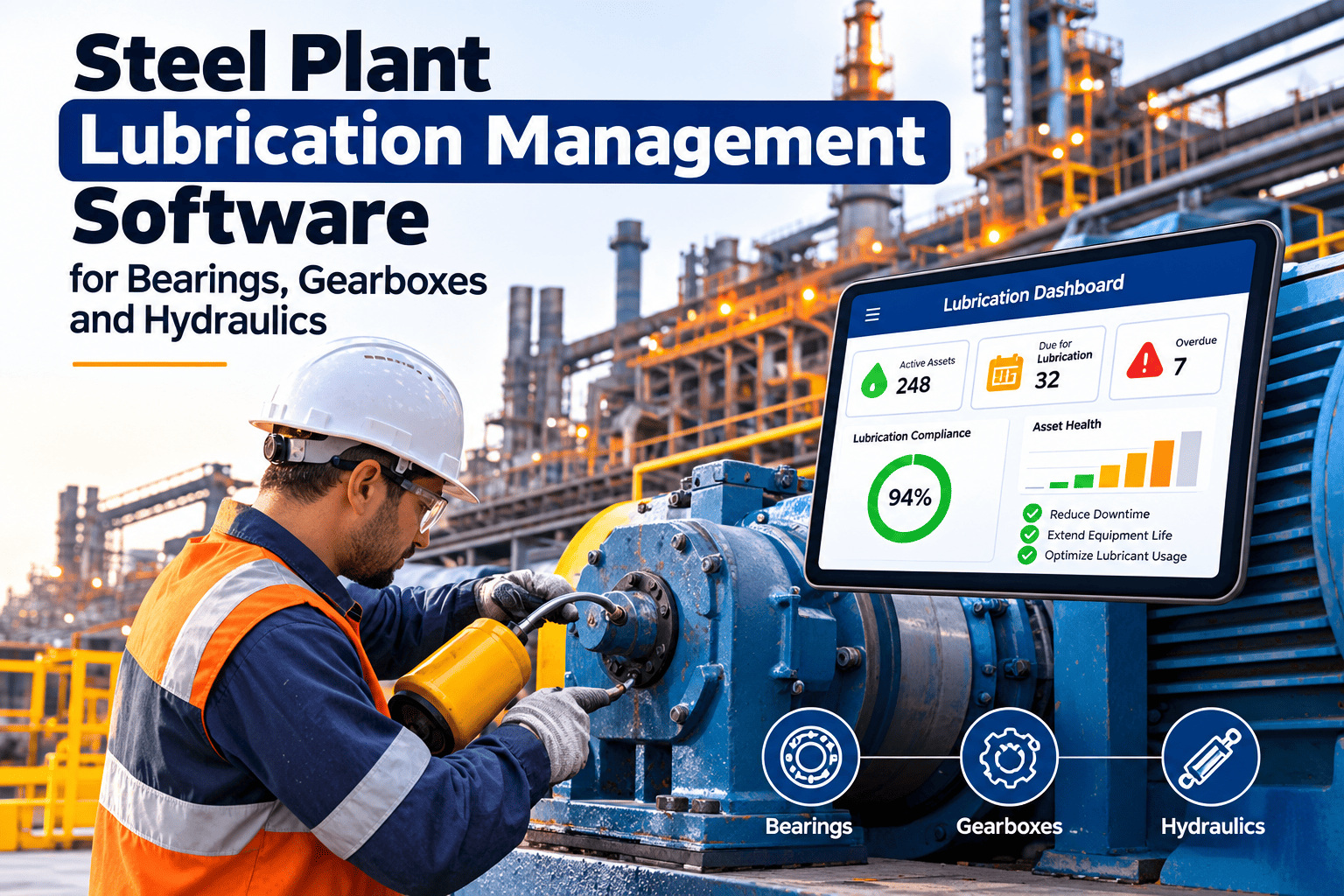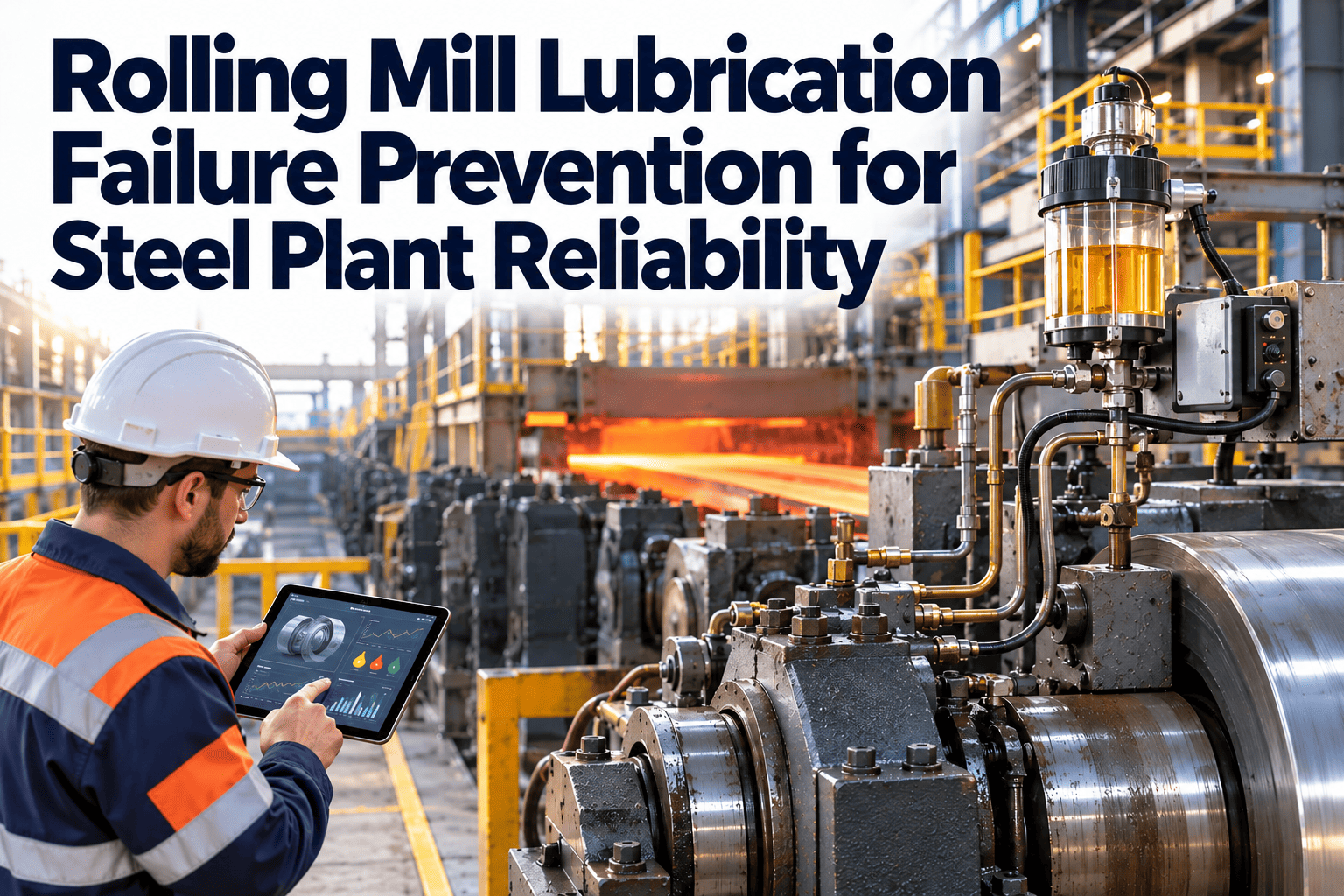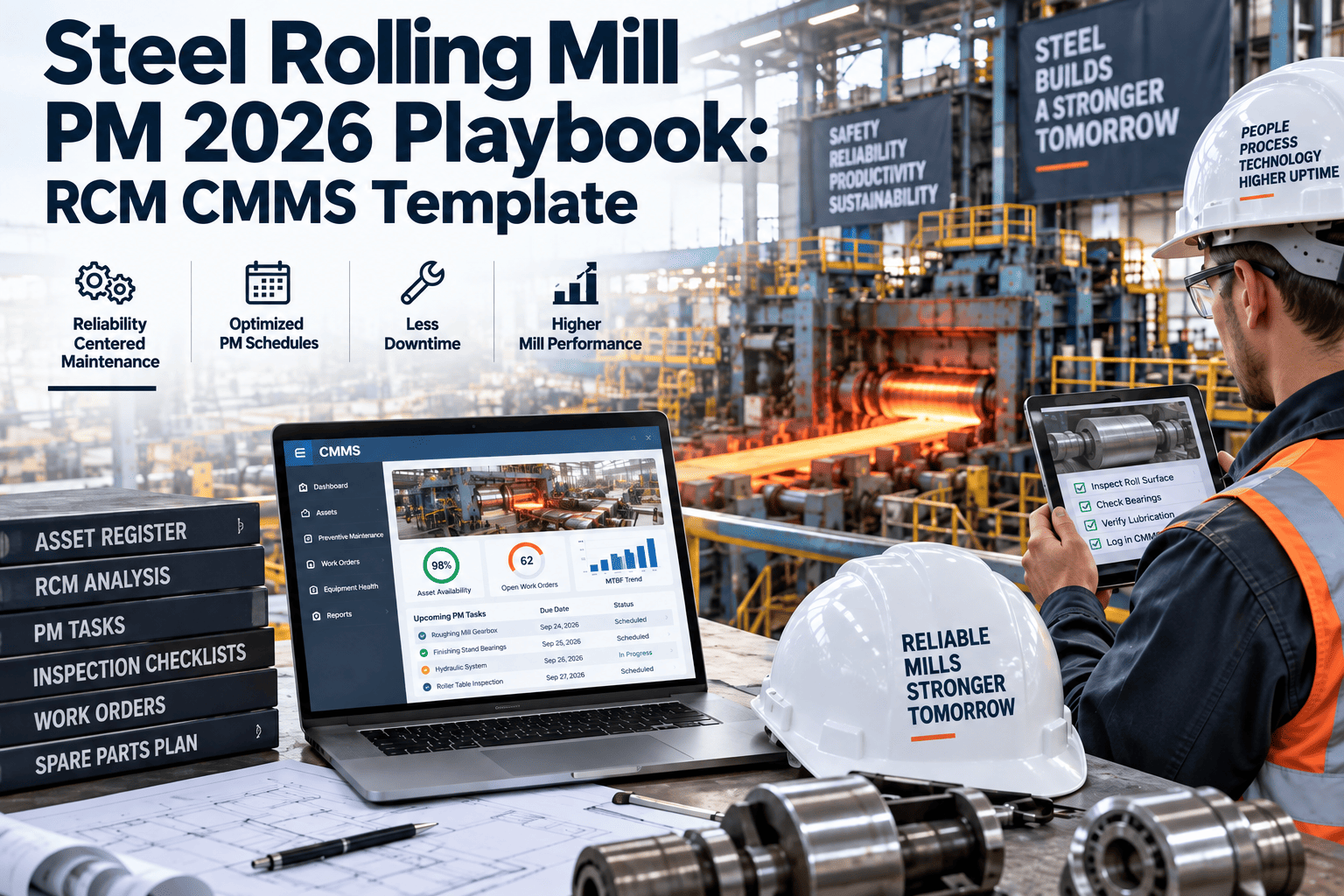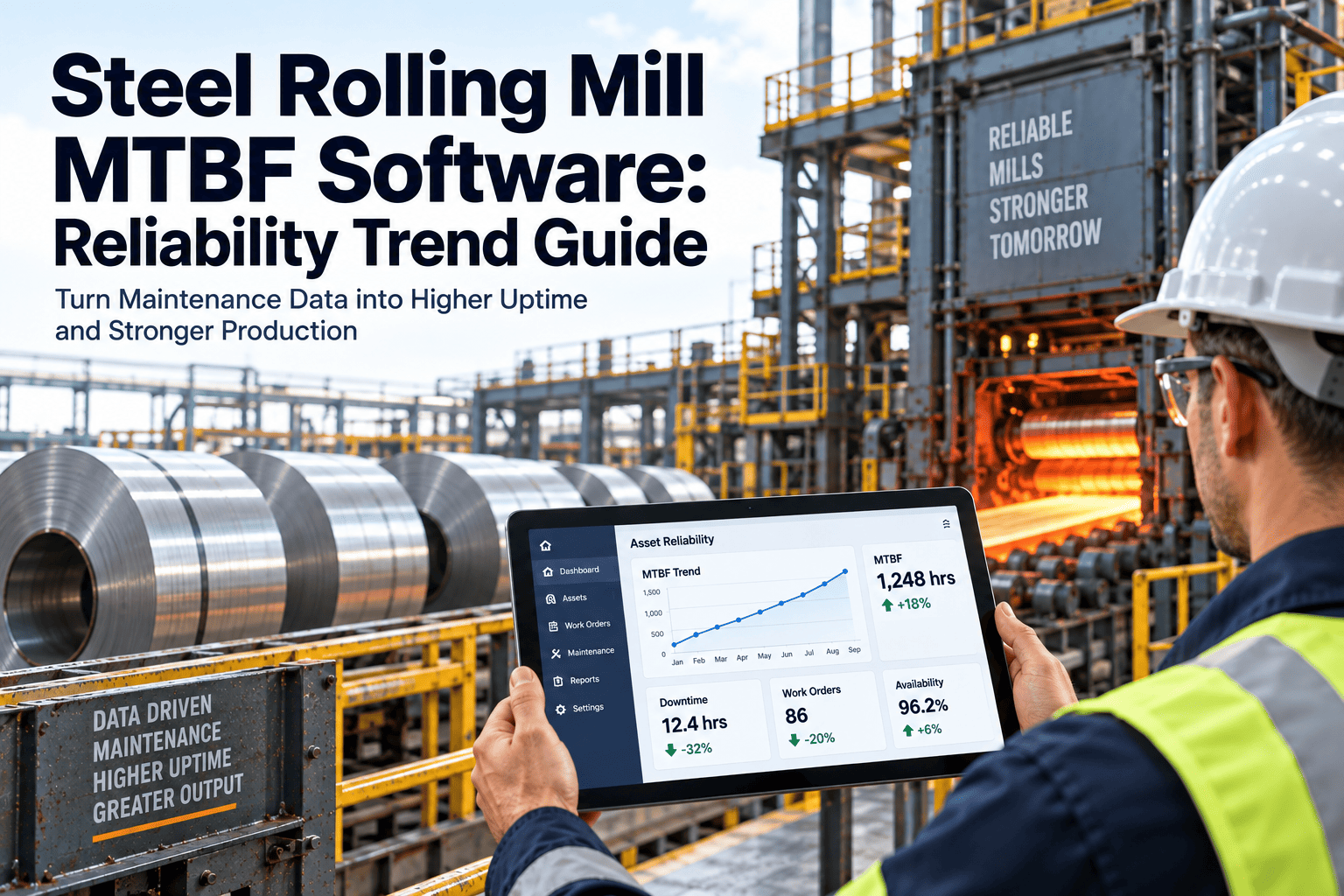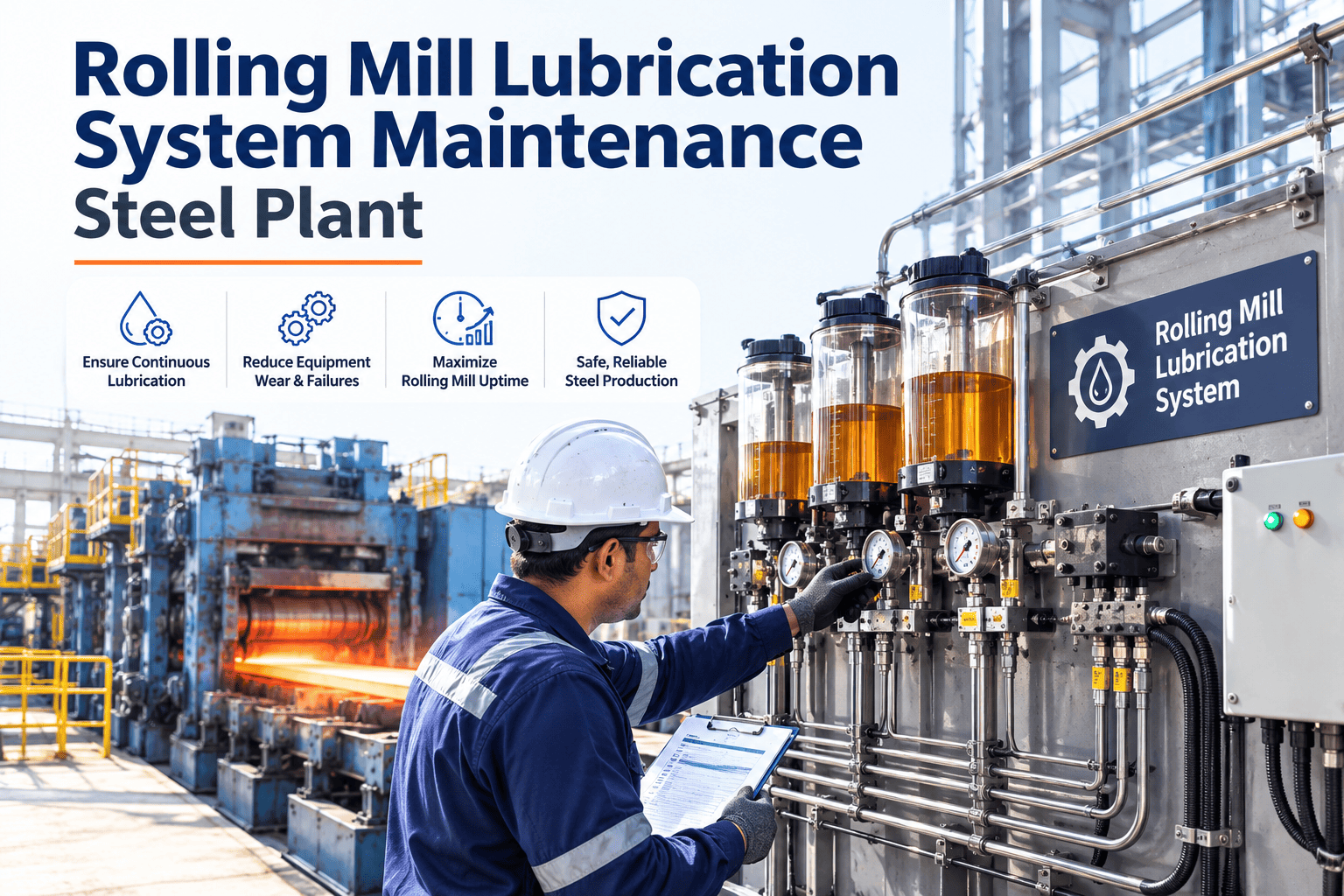
Rolling mill lubrication looks simple from the outside — oil goes in, oil comes out — but every bearing, gearbox, and hydraulic loop on a rolling mill is running under loads and speeds that punish even small deviations in pressure, temperature, or contamination. A slow drop in header pressure can starve a work roll chock bearing for hours before anyone notices. Particle count creeping upward silently accelerates wear on gearbox teeth long before vibration readings show anything unusual. Most plants still rely on fixed-interval oil changes and manual gauge checks that catch problems only after damage has already started. A structured lubrication monitoring system changes that by tracking pressure, temperature, viscosity, and particle count against each loop's actual condition. Start a free OxMaint trial to build your first rolling mill lubrication monitoring workflow, or book a 30-minute demo with a specialist.
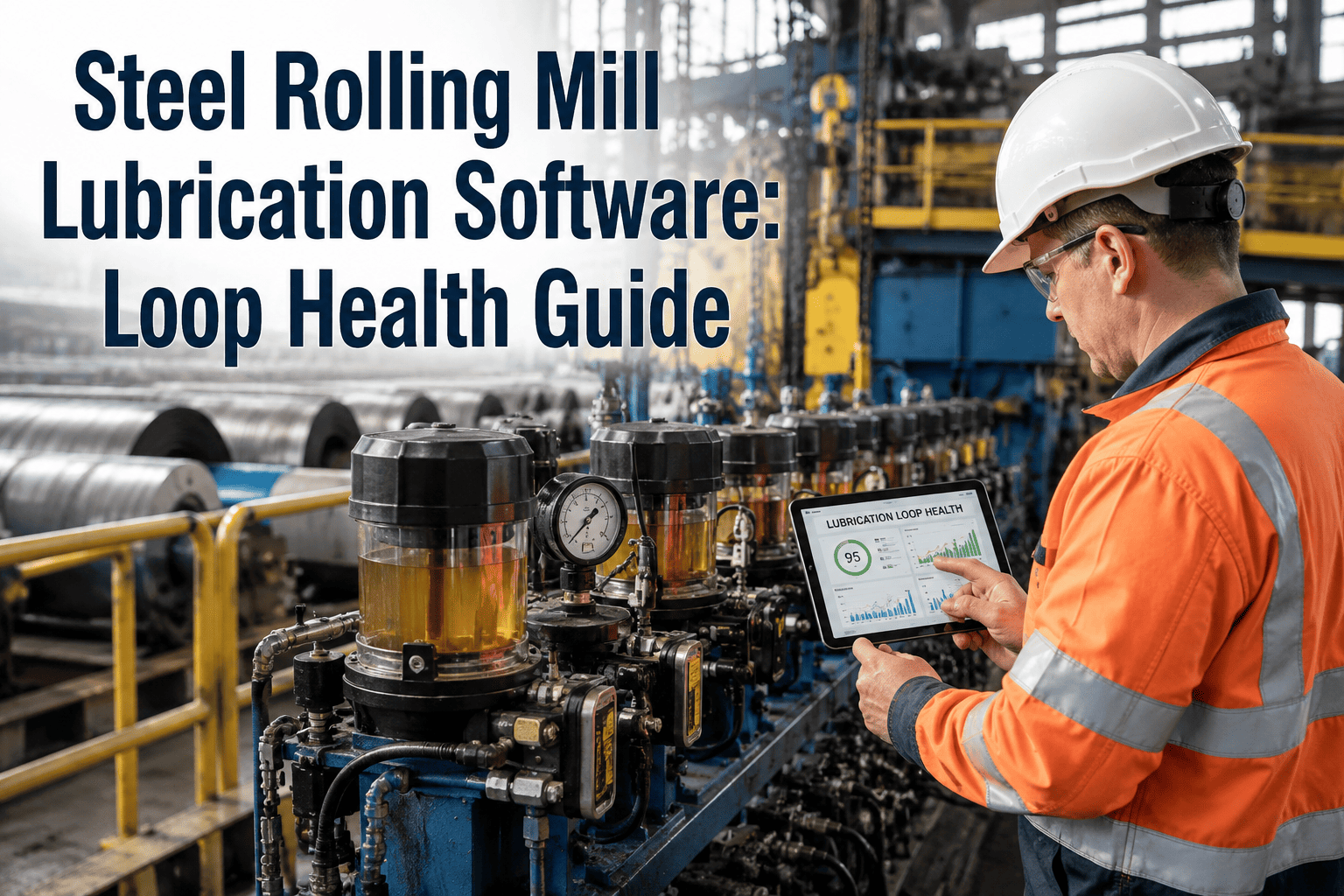
Steel Rolling Mill Lubrication Software
Track pressure, temperature, viscosity, and particle count across every gearbox and bearing loop — before a silent contamination trend becomes a bearing failure.
The Four Stages of a Rolling Mill Lubrication Loop
A lubrication loop is not one thing to monitor — it is a chain of stages, and a failure at any one stage shows up as damage somewhere else downstream. OxMaint tracks each stage of the loop independently so a problem gets caught at its source rather than at the bearing it eventually destroys.
What Normal Looks Like — and When to Act
Every lubrication parameter needs a defined normal range and an alarm trigger, not just a single number technicians eyeball on a gauge. OxMaint lets each loop carry its own thresholds based on the equipment it feeds and the duty it runs.
| Parameter | Normal Range | Alarm Trigger | Sampling Frequency | Failure Risk if Ignored |
|---|---|---|---|---|
| Header Pressure | Within OEM band per loop | 10% drop sustained over 15 min | Continuous | Bearing starvation, seizure |
| Oil Temperature | Below viscosity breakdown point | Sustained rise above setpoint | Continuous | Film breakdown, scoring |
| Particle Count (ISO) | Per loop cleanliness code | Two-code jump from baseline | Weekly to monthly | Accelerated gear and bearing wear |
| Viscosity | Within grade tolerance | Outside 10% of rated grade | Monthly lab sample | Inadequate film thickness |
| Moisture Content | Below 200 ppm typical | Above supplier limit | Monthly lab sample | Corrosion, additive depletion |
OxMaint logs pressure and temperature readings against each loop continuously, schedules particle count and viscosity sampling automatically, and flags any parameter drifting toward its alarm threshold before damage starts.
How OxMaint Tracks Rolling Mill Lubrication Loop Health
Rolling mills run multiple lubrication loops feeding roll chocks, gearboxes, and hydraulic systems, each with its own duty and failure pattern. OxMaint treats each loop as an individually monitored asset rather than one plant-wide checklist.
Pressure, temperature, and cleanliness limits are set independently for each loop, matching the actual duty of the equipment it feeds rather than a plant-wide default.
Particle count and viscosity sampling work orders generate automatically on a rolling schedule, with lab results logged directly against the loop's history.
A gradual pressure drop or a rising particle count trend triggers an alert well before it crosses the hard alarm threshold, giving technicians time to intervene.
Every lubrication loop is mapped to the bearings and gearboxes it feeds, so a flagged parameter points directly to the equipment at risk instead of a generic loop ID.
Technicians record gauge readings and visual checks on mobile during rounds, replacing paper logs with a searchable history for every loop on the mill.
Maintenance leads see the health status of every lubrication loop in the plant on one dashboard, with overdue samples and active alerts surfaced first.
Frequently Asked Questions
Can OxMaint set different alarm thresholds for different lubrication loops on the same mill?
How does OxMaint schedule particle count and viscosity sampling?
Does OxMaint alert on a slow pressure drift or only a hard alarm breach?
Can technicians log lubrication rounds without a laptop at the mill floor?
How many lubrication loops can be tracked across a rolling mill in one OxMaint instance?
A Bearing Failure Is Rarely Sudden. The Warning Was Already in the Oil.
OxMaint gives rolling mill maintenance teams per-loop threshold monitoring, automated sampling schedules, trend-based alerts, and mobile round logging — in one system that catches contamination and wear long before a bearing seizes.