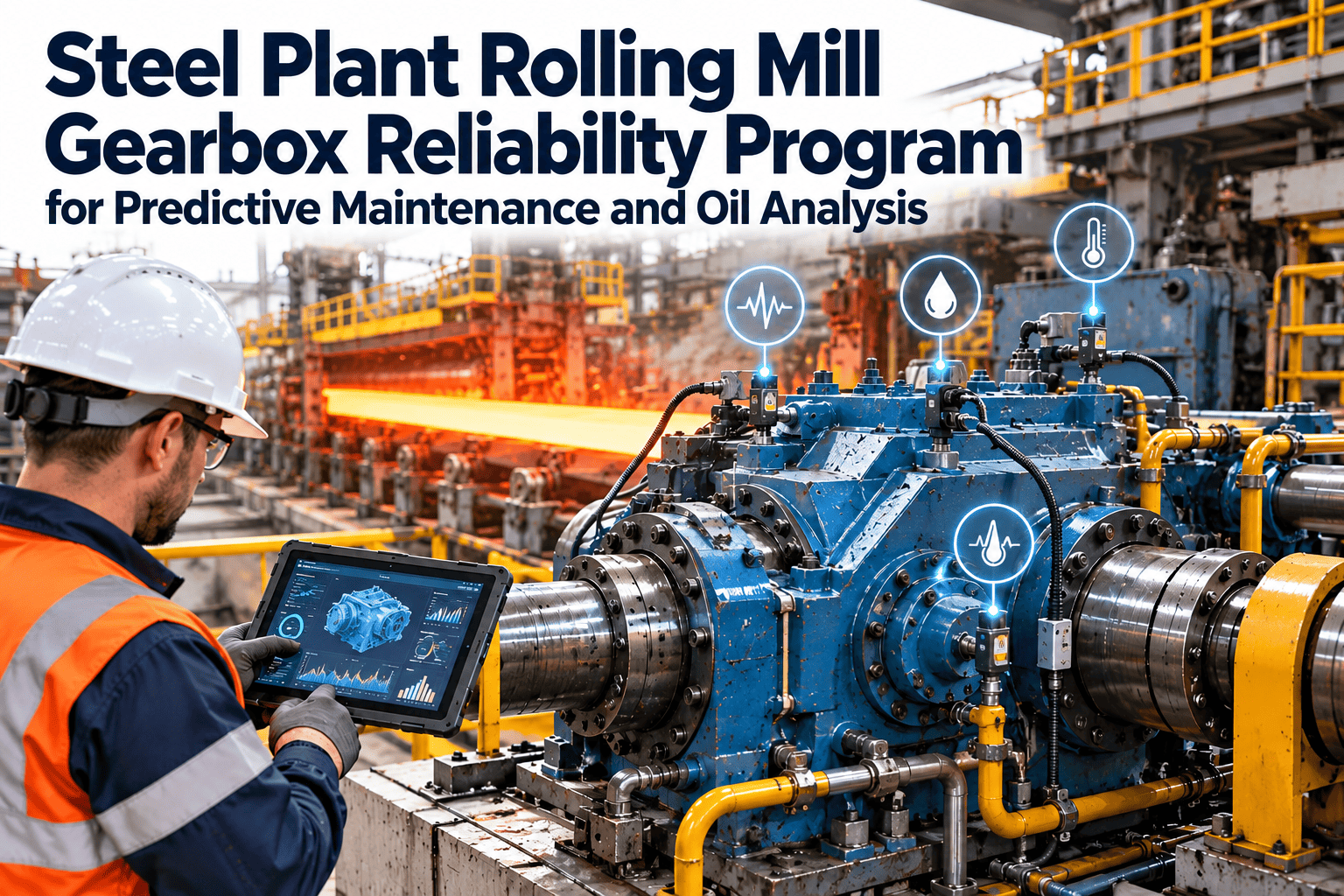
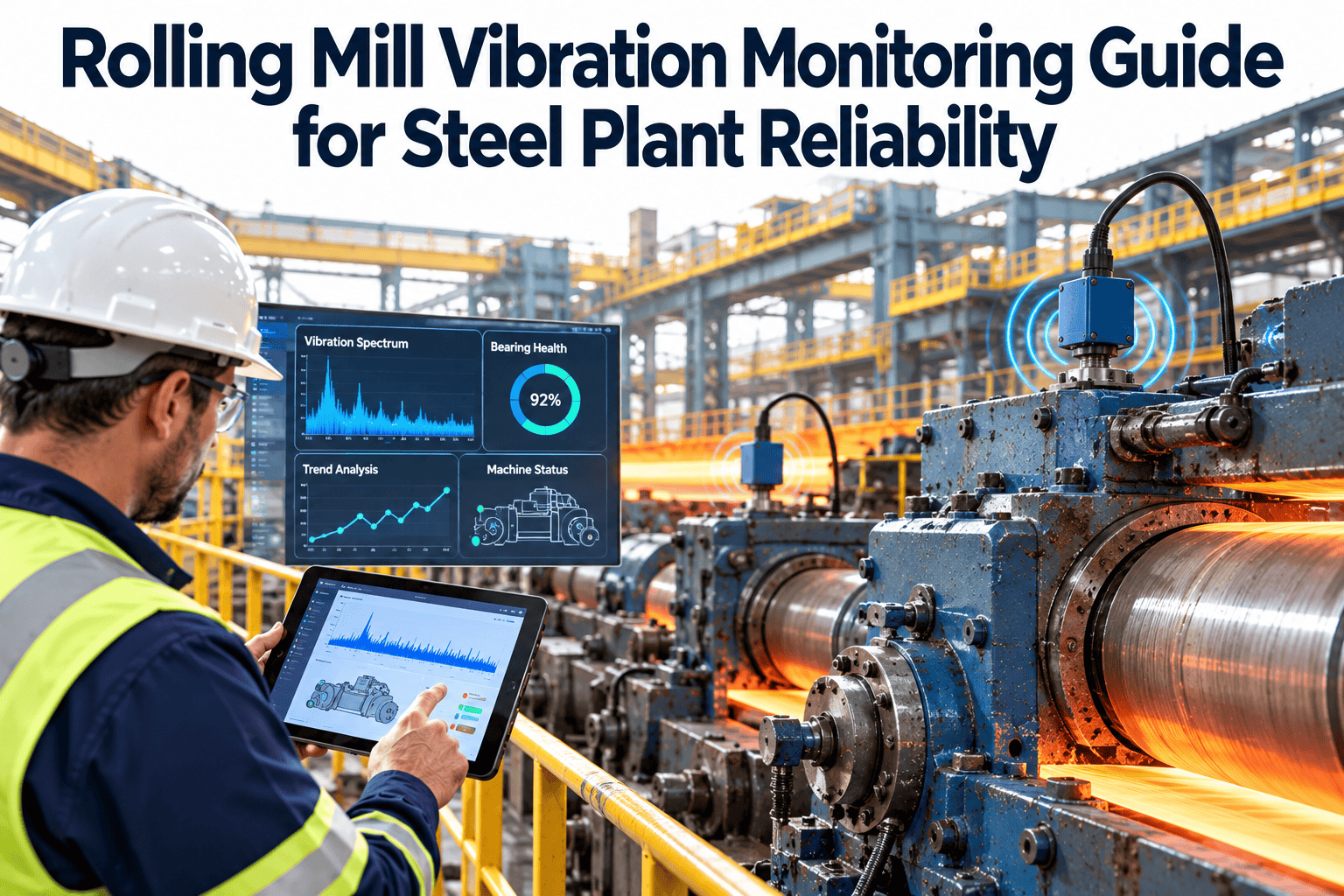
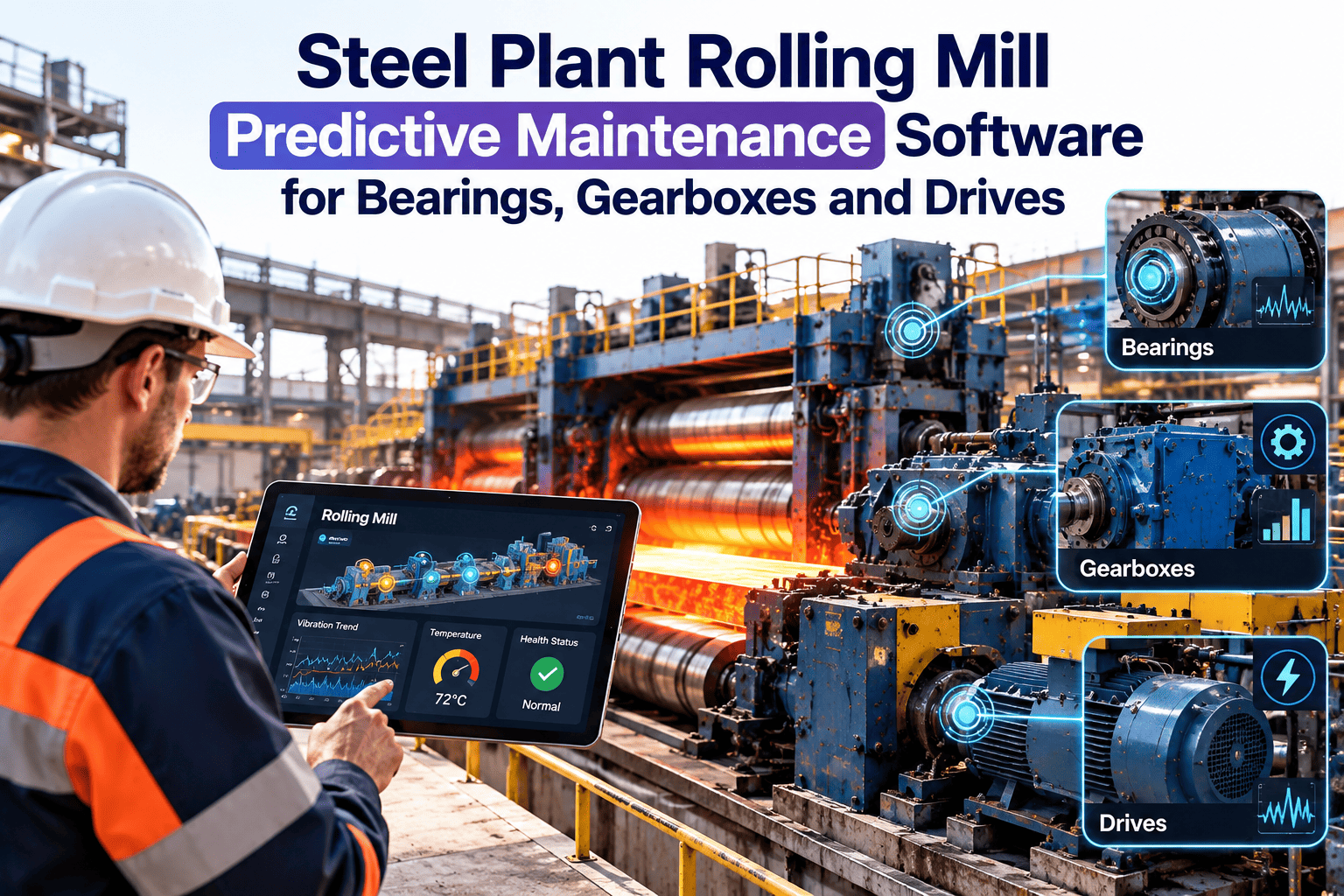
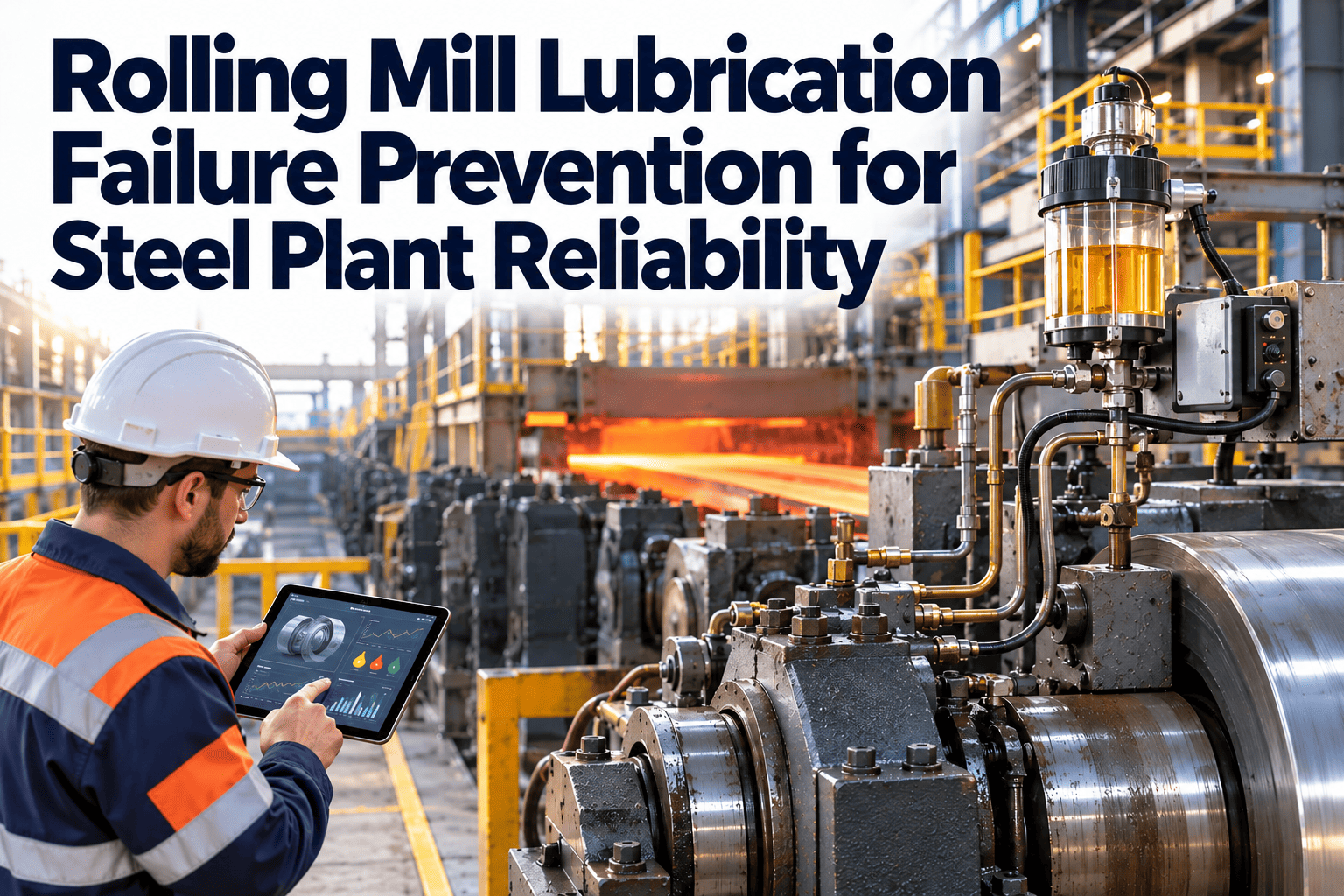
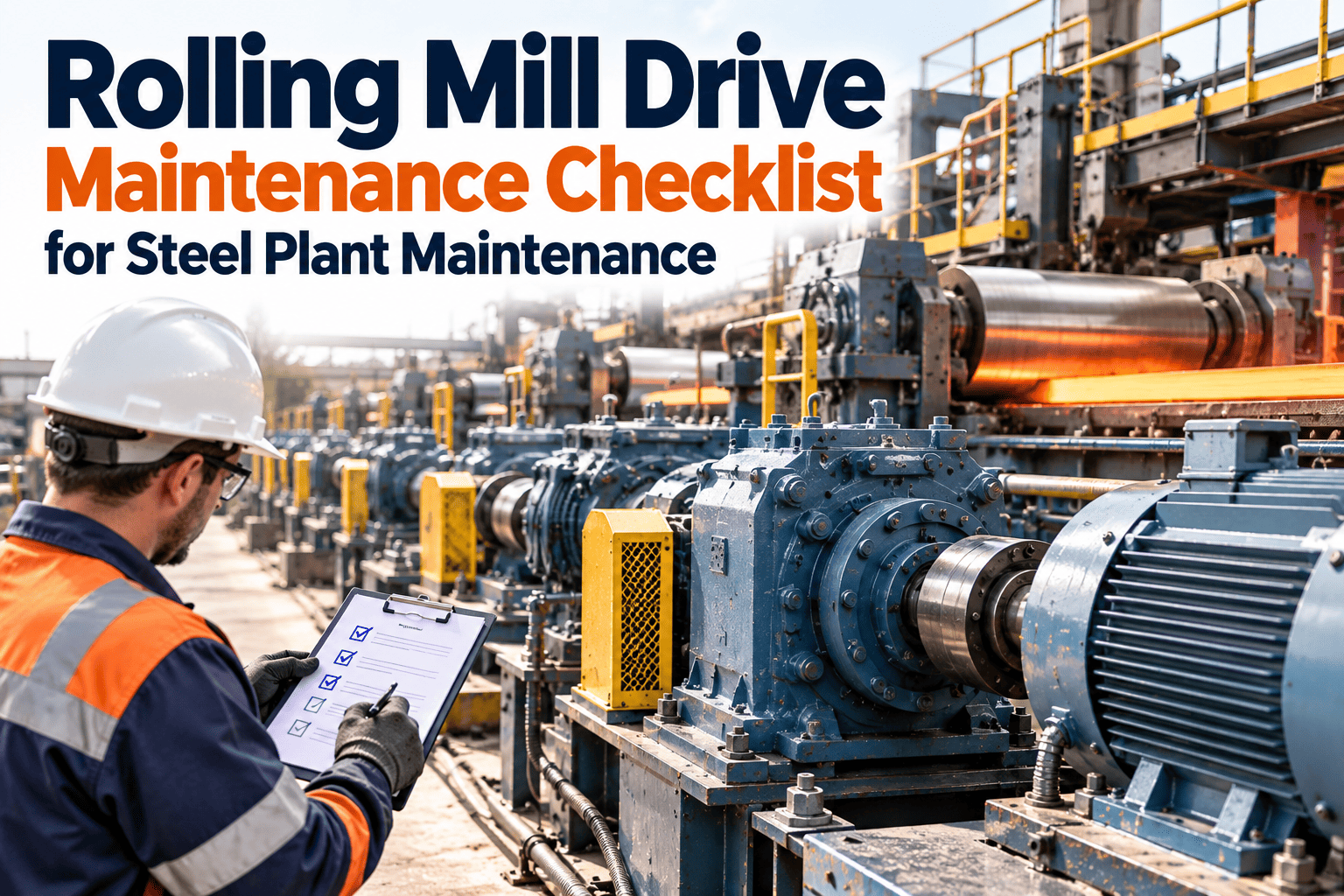
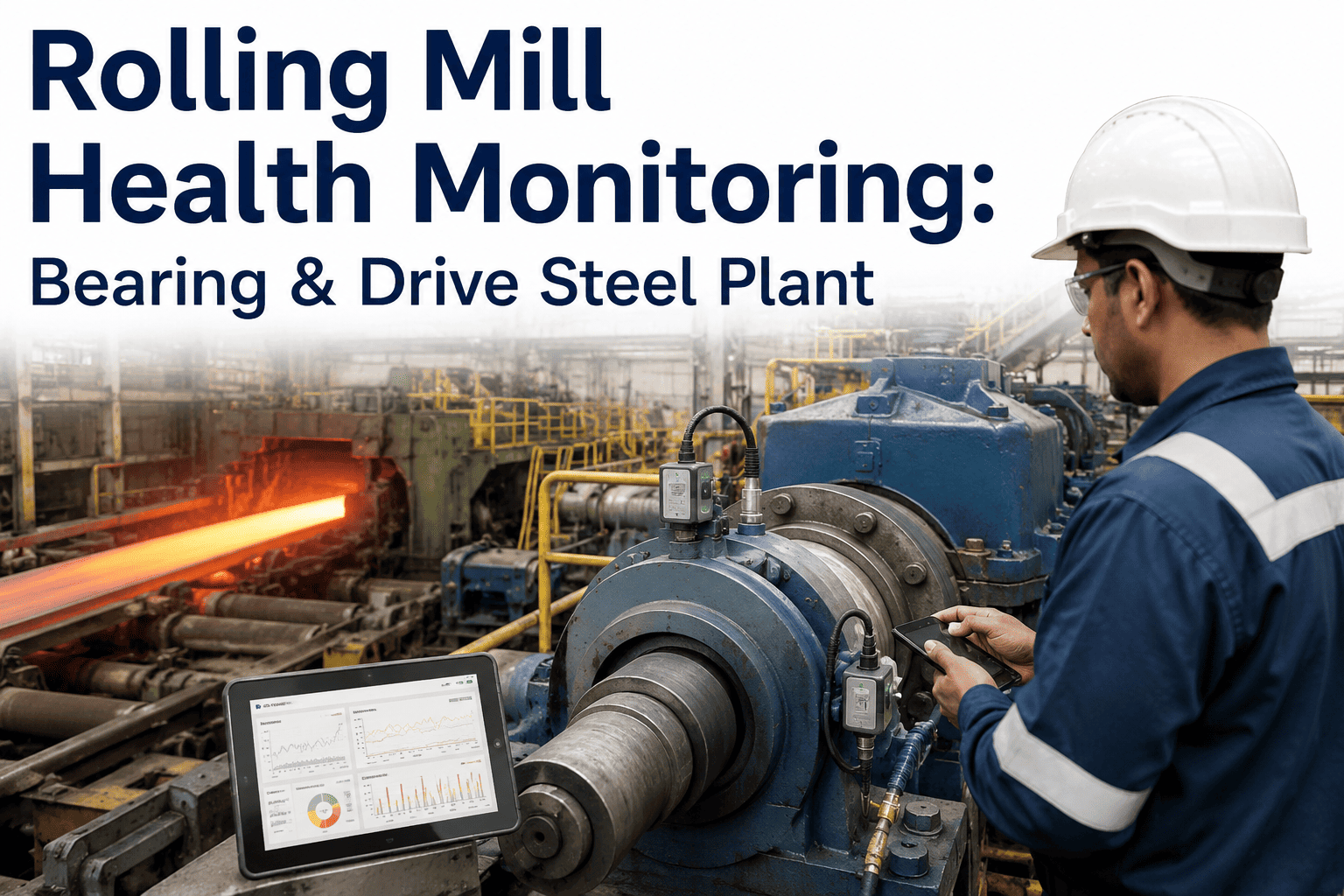
A tandem cold rolling mill in central Europe lost 11 hours of production during a peak order cycle when the main drive gearbox on stand 4 experienced catastrophic bearing failure. The gearbox had completed its scheduled inspection six weeks prior — on paper. The oil sample taken at that inspection showed a ferrous particle count of 340 parts per million, nearly four times the action threshold for the gear oil specification in use. The sample result sat in a paper log at the maintenance office. Nobody had plotted the trend. Nobody had connected the reading to the inspection interval. The drive was not pulled for internal inspection until it failed mid-schedule. Total cost: €1.2 million in emergency parts, crane time, and lost production. Sign in to OxMaint to implement digital motor and drive maintenance tracking with oil analysis trending, vibration alert management, and VFD diagnostics across your rolling mill drive systems. Book a demo to see how OxMaint connects oil sample data, vibration readings, and work order history into a single drive reliability platform.
Rolling mill drive failures are not random events. They are the compounding result of untrended data, deferred diagnostics, and maintenance decisions made without the information that was already in the system.
VFD thermal management. Gearbox oil analysis trending. Coupling alignment records. Motor insulation testing. DC motor commutator condition. Every drive system diagnostic your rolling mill generates tells you something. OxMaint connects these signals into a predictive reliability picture that prevents the failures your current system is already warning you about.
Rolling mill reliability depends on five interconnected drive system domains. Each domain has distinct failure signatures, diagnostic parameters, and maintenance intervals. OxMaint tracks all five simultaneously — connecting oil sample results, vibration readings, insulation test data, and VFD fault logs into a unified drive health picture that maintenance engineers can act on rather than archive. Sign in to OxMaint to configure drive system monitoring across all five domains for your mill.
VFD failures on rolling mill main drives cause immediate production stops and can damage motor windings, connecting cables, and downstream mechanical components when thermal or overcurrent protection functions fail to trip cleanly. VFD health monitoring requires tracking beyond the fault log — thermal baseline trending, harmonic distortion measurement, DC bus voltage stability, and cooling system performance are the leading indicators that predict drive failure weeks before a fault code appears. Book a demo to see OxMaint's VFD diagnostic tracking for rolling mill drive systems.
Rolling mill gearboxes operate under extreme load cycling — reversing torque in reversing mills, high sustained torque in tandem mills, and shock loading from cobble events. These operating conditions accelerate gear surface fatigue, bearing wear, and seal degradation at rates that scheduled inspection intervals alone cannot reliably detect. Oil analysis is the highest-value gearbox diagnostic available — ferrous particle count, wear metal spectrometry, viscosity, and water content collectively reveal internal condition without opening the gearbox. OxMaint records every oil sample result against the gearbox asset record, plots trends automatically, and generates action alerts when particle counts, wear metals, or viscosity readings cross configured thresholds. Sign in to OxMaint to activate oil analysis trending for rolling mill gearboxes.
Misaligned couplings on rolling mill drive trains generate vibration signatures that accelerate bearing wear, cause gear tooth loading imbalance, and transmit destructive forces through connected shafts and housings. Spindle couplings on rolling mills are exposed to particularly severe duty — high torque, angular misalignment from roll gap changes, and impact loading from strip entry and cobbles. Alignment verification after every roll change, after any maintenance intervention on connected equipment, and at defined interval is the minimum standard for maintaining coupling condition. OxMaint tracks alignment records, coupling inspection findings, and vibration measurements by coupling asset — enabling maintenance engineers to identify couplings that are generating recurring alignment faults from base distortion or bearing housing wear. Book a demo to see OxMaint's coupling alignment record management.
AC motor failures on rolling mill drives typically manifest as winding insulation breakdown — caused by thermal cycling, moisture ingress, vibration-induced conductor abrasion, or contaminant ingress. Insulation resistance testing (Megger testing) is the standard diagnostic for detecting degradation before failure, but its value is entirely dependent on trending the result over time rather than comparing a single reading against a pass/fail threshold. A motor that measures 200 MΩ today but measured 2,000 MΩ at the previous test is more at risk than one that measures 500 MΩ consistently. OxMaint records every insulation resistance test result against the motor asset record and generates trend alerts when the polarisation index or insulation resistance value shows a declining pattern across consecutive tests. Sign in to OxMaint to activate motor insulation test trending for your rolling mill drive motors.
Many reversing rolling mills and older tandem lines retain DC main drive motors — particularly in roughing stands where controllability and torque density at low speed are required. DC motors on rolling mills are uniquely demanding to maintain: commutator and brush gear condition degrades rapidly under high-current reversing duty, field winding insulation is vulnerable to thermal stress from cyclic loading, and armature condition determines both efficiency and reliability. Commutator inspection — measuring brush track wear, commutator surface condition, and mica depth — is the highest-value DC motor maintenance activity and must be performed at intervals calibrated to the motor's actual duty cycle rather than fixed calendar intervals. Book a demo to see OxMaint's DC motor maintenance tracking and commutator inspection record management for rolling mill drives.
| Drive System | Weekly | Monthly | Quarterly | Annual / Major Outage | OxMaint Tracking |
|---|---|---|---|---|---|
| VFD System | Fault log review, heatsink temperature | Cooling fan current, filter condition | DC bus voltage, harmonic distortion THDi | IGBT check, capacitor ESR measurement, full thermal survey | Automated alerts |
| Gearbox | Oil level, temperature, audible survey | Vibration spot check at input/output bearings | Oil sample — FPC, spectrometry, viscosity, water | Internal inspection, gear and bearing visual, seal replacement | Oil trend + vibration |
| Couplings | Temperature check at coupling housing | Vibration 1× amplitude at coupling | Alignment verification — laser measurement | Disassembly, element wear inspection, hub dimensional check | Alignment records |
| AC Drive Motors | Temperature at DE/NDE bearings, frame | Vibration — DE and NDE bearing spectrum | Insulation resistance (IR) Megger test, PI calculation | Winding inspection, bearing replacement, terminal box check | IR trend + vibration |
| DC Drive Motors | Brush and commutator visual, sparking | Brush length, spring pressure, commutator grading | Field winding IR, armature bar-to-bar voltage | Full armature inspection, commutator skim/undercut if required | Commutator log |
| Drive Spindles | Visual — cracks, mechanical damage | Lubrication — grease replenishment per specification | Dimensional check on spline engagement and clearance | Full spindle NDT, spline wear measurement, balance check | NDT history |
These outcomes are drawn from published case studies, industry research, and rolling mill operational data from facilities implementing condition-based monitoring programs for motor and drive systems. Results vary by baseline condition, fleet complexity, and implementation depth.
Every oil sample result — ferrous particle count, wear metal spectrometry, viscosity, water content, TAN — is recorded against the specific gearbox asset in OxMaint and plotted as a trend across consecutive samples. Configurable threshold alerts are generated when any parameter crosses a defined action level, and trend alerts are generated when a parameter shows a consistent upward direction across three or more consecutive samples even before it crosses the threshold. This dual alert logic is what catches the slow-developing gearbox failure that a single threshold check misses. Sign in to OxMaint to activate oil analysis trending and threshold alert management for rolling mill gearboxes.
OxMaint records every insulation resistance test result and polarisation index calculation against the individual motor asset — maintaining the test history that makes IR trending meaningful. When the platform detects a declining PI trend across consecutive tests, it generates a maintenance alert with the trend data, recommended action, and lead time before the motor should be taken out of service. This converts insulation testing from a periodic compliance exercise into a genuine early-warning system for winding degradation. Book a demo to see motor insulation test trending and PI management in OxMaint.
OxMaint establishes a vibration baseline for each drive system asset at commissioning or from the first recorded measurement — and tracks all subsequent readings against that specific asset's baseline rather than a generic ISO 10816 envelope. When a drive end bearing on a specific motor shows a 1× amplitude increase of 35% from its own baseline, OxMaint generates an alert regardless of whether the absolute level exceeds the ISO limit. This asset-specific comparison is significantly more sensitive to real degradation than threshold-only monitoring. Sign in to OxMaint to configure vibration baseline management for rolling mill drive motors and gearboxes.
Every work order completed on a rolling mill drive asset automatically updates its cost history — labour hours, parts consumed, downtime duration — enabling maintenance engineers to identify which assets are consuming disproportionate maintenance spend, which gearboxes have entered a recurring-fault cycle that indicates end-of-life condition, and which drive systems generate the most production impact per maintenance event. This cost analytics layer transforms maintenance records from a historical archive into a capital planning tool that identifies replacement investments before the next unplanned failure makes them urgent. Book a demo to see OxMaint's drive system cost analytics for rolling mill capital planning.
We had been taking oil samples on the stand 2 gearbox every quarter for three years. Every sample result was written in the maintenance log and filed. Nobody had ever plotted them. When we loaded the historical data into OxMaint, the platform generated an alert within 24 hours showing that the ferrous particle count had been trending upward for six consecutive quarters — from 40 ppm to 280 ppm. We pulled the gearbox for internal inspection at the next planned outage and found advanced pitting on the intermediate shaft gear set. If we had run it another quarter, we would have had a catastrophic failure during the summer campaign. The cost difference between a planned inspection and an unplanned replacement on that gearbox was approximately €800,000.
Frequently Asked Questions — Rolling Mill Motor & Drive Maintenance
The oil sample that warns of your next gearbox failure has already been taken. The vibration reading that identifies bearing degradation is already in your system. OxMaint converts those data points into the actions that prevent the failure before it costs you production.
Oil analysis trending. VFD thermal and fault tracking. Motor insulation PI trending. Coupling alignment records. Vibration baseline management. DC motor commutator logs. All connected in one drive reliability platform.