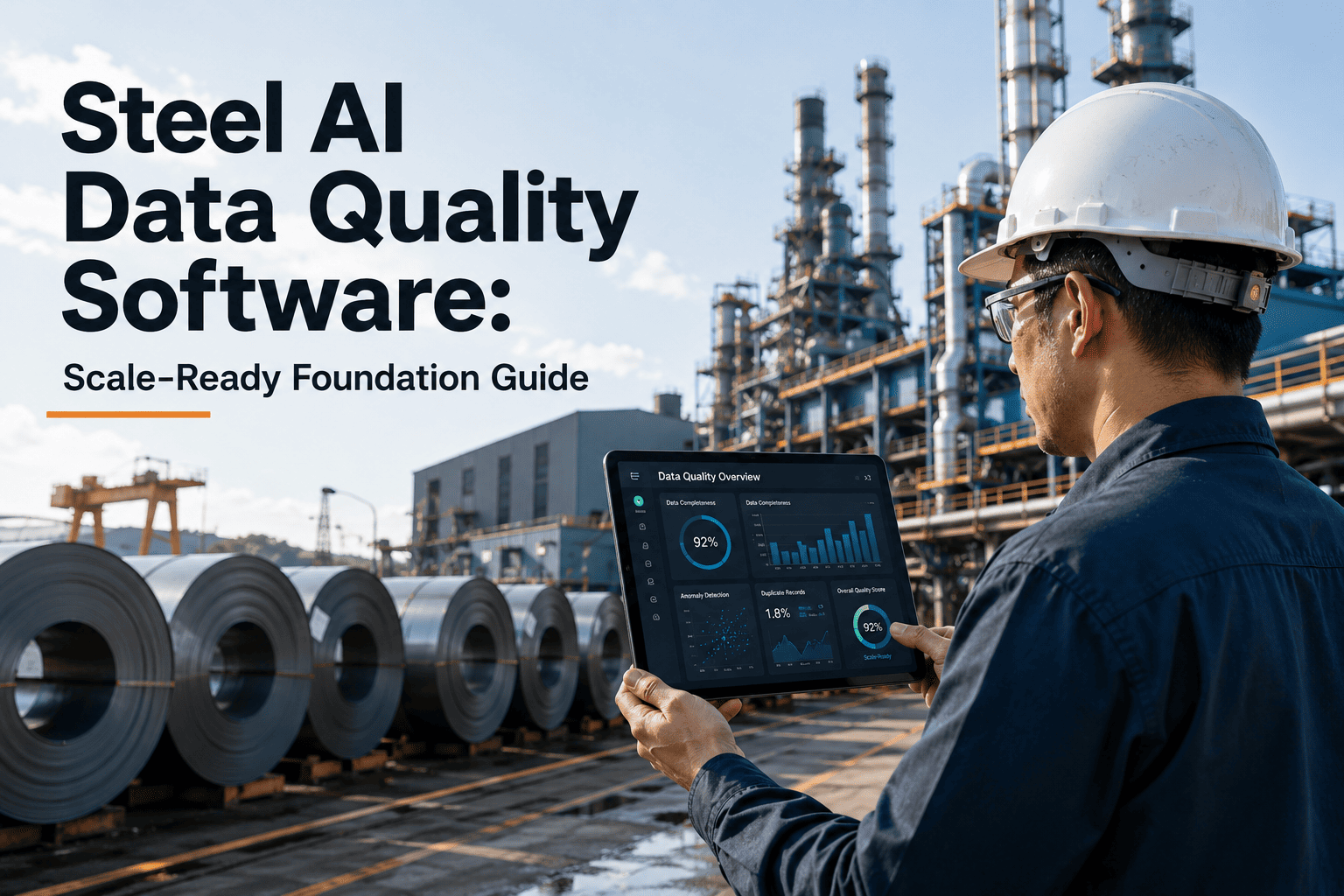
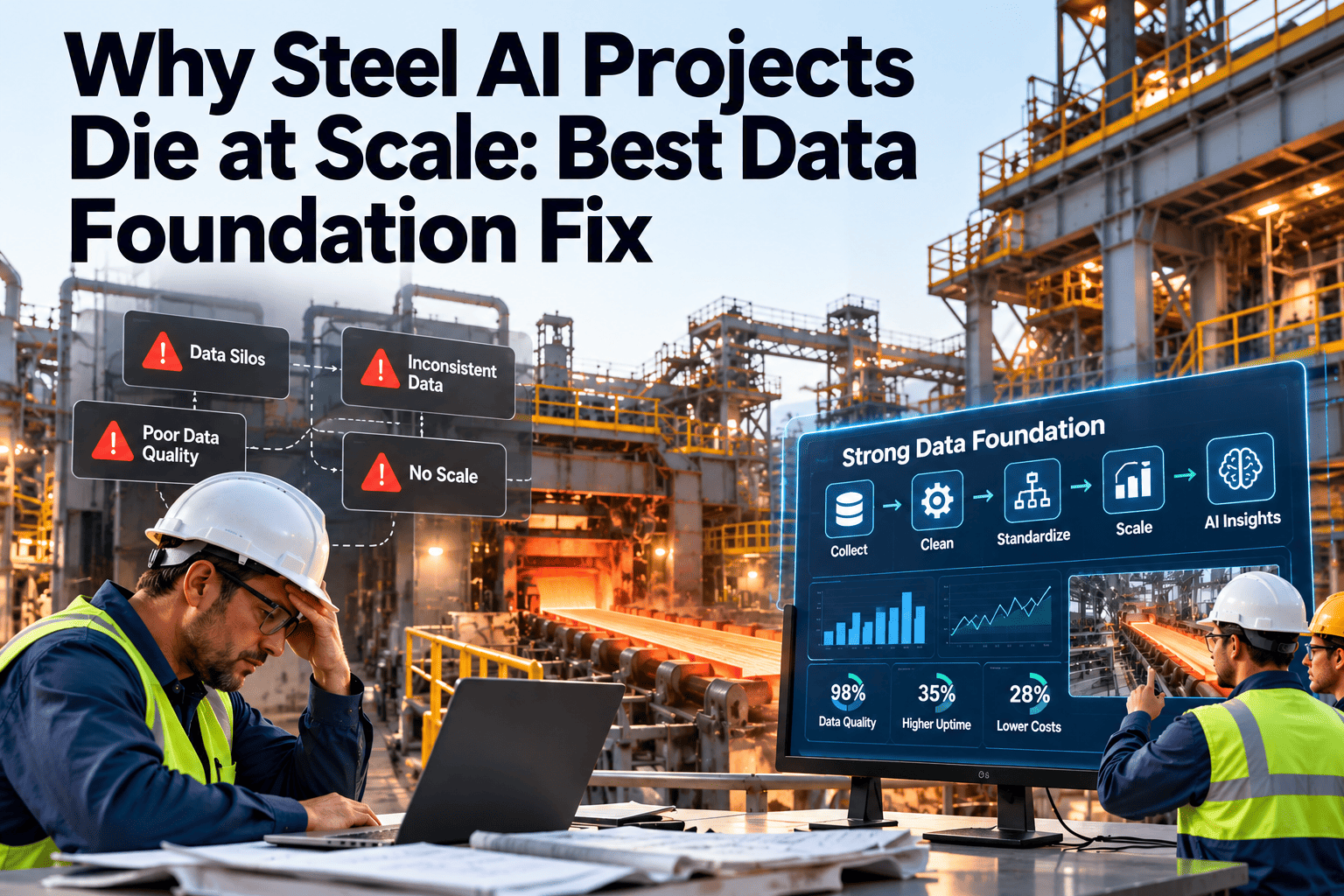
Most steel plants don't fail at AI because the algorithms are wrong. They fail because the data feeding those algorithms was never clean enough to trust in the first place — duplicate asset records, inconsistent failure codes, work orders closed with no notes, sensor feeds that were never mapped back to the actual equipment. A predictive model trained on that mess produces confident-looking predictions that nobody on the floor believes, and the pilot quietly dies after six months. The plants that scale AI past a single pilot line all share one unglamorous trait: someone fixed the data foundation before the models ever got built. OxMaint gives steel plants that clean, connected asset and maintenance data layer so the next AI pilot has something solid to stand on.
AI Doesn't Fail on Algorithms. It Fails on Data.
Clean asset records, consistent failure codes, and connected work order history — the foundation every AI pilot needs before it can scale past one line.
3–6 months
of clean historical failure data typically needed before a predictive model becomes genuinely useful.
35–40%
false-positive rate from AI models trained on incomplete or single-source data, versus under 8% with clean, multi-source data.
1 line → plant-wide
is the jump that stalls most often — and it almost always stalls on data, not model performance.
Why Most AI Pilots Never Leave the Pilot Line
A pilot works because someone hand-cleaned the data for one line, one asset class, one narrow use case. The moment the same model gets pointed at a second line, it breaks — different failure code conventions, gaps in the work order history, sensor tags nobody documented. Scaling AI is really a data engineering problem wearing an AI costume, and most plants only discover this after the pilot has already burned budget and credibility.
Stage 1
Paper & Spreadsheet Chaos
Work orders on paper or scattered spreadsheets. No consistent asset naming. AI is not possible yet — there is nothing to train a model on.
Stage 2
Digitized but Disconnected
A CMMS exists, but asset hierarchies are incomplete, failure codes vary by technician, and sensor data lives in a separate system nobody cross-references.
Stage 3
Clean, Consistent Foundation
Standardized asset registry, consistent failure taxonomy, and work orders tied to the right equipment every time. This is the stage most AI pilots quietly require but nobody names out loud.
Stage 4
Connected & Model-Ready
CMMS, sensor, and production data flow into one place with shared asset IDs. Models trained here transfer from one line to the next without a full data rebuild.
Stage 5
Scaled AI Across the Plant
Predictive models run across furnaces, casters, and rolling mills on a shared data backbone, with new lines onboarding in weeks instead of months.
AI Data Foundation — OxMaint
Get From Stage 2 to Stage 4 Without a Full Rebuild
Most plants complete the foundation phase in about three months when the CMMS itself enforces clean asset records and consistent failure codes from day one.
The Five Pillars of AI-Ready Maintenance Data
"Data quality" sounds abstract until you break it into the specific things a model actually needs to see. These five pillars are what separate data an AI model can learn from and data that just looks like data.
Clean
No duplicate asset entries, no orphaned equipment records, no work orders logged against the wrong machine. Duplicate or mismatched records are the single most common reason a model's predictions don't match what technicians see on the floor.
Consistent
The same failure gets the same code every time, regardless of which technician or which shift logs it. Inconsistent taxonomy is invisible in a spreadsheet but fatal to a model trying to learn failure patterns.
Complete
Work orders closed with real notes, not "fixed" typed into a required field. Gaps in the history mean the model never sees the full lead-up to a failure, so it can't learn to predict one.
Connected
Sensor readings, work orders, and production data all reference the same asset ID. Without this link, a vibration spike and the resulting repair live in two systems that never talk to each other.
Current
Asset hierarchies updated when equipment is replaced, moved, or decommissioned. A model trained against a stale asset list starts drifting the moment the plant floor changes and nobody updates the record.
What Each Data Source Needs to Look Like Before AI Can Use It
Every AI use case in a steel plant pulls from the same handful of data sources. Here's the bar each one has to clear before a model can be trained on it with any confidence.
Building the Foundation — A Practical Sequence
Plants that get this right don't try to fix everything at once. They work through the same rough sequence, prioritizing the highest-value equipment first.
1
Audit the Asset Registry
Identify duplicate, orphaned, or misnamed asset records across every plant system before touching anything downstream.
2
Standardize Failure Codes
Replace free-text failure descriptions with a shared taxonomy technicians actually use, enforced at the point of entry.
3
Map Sensors to Asset IDs
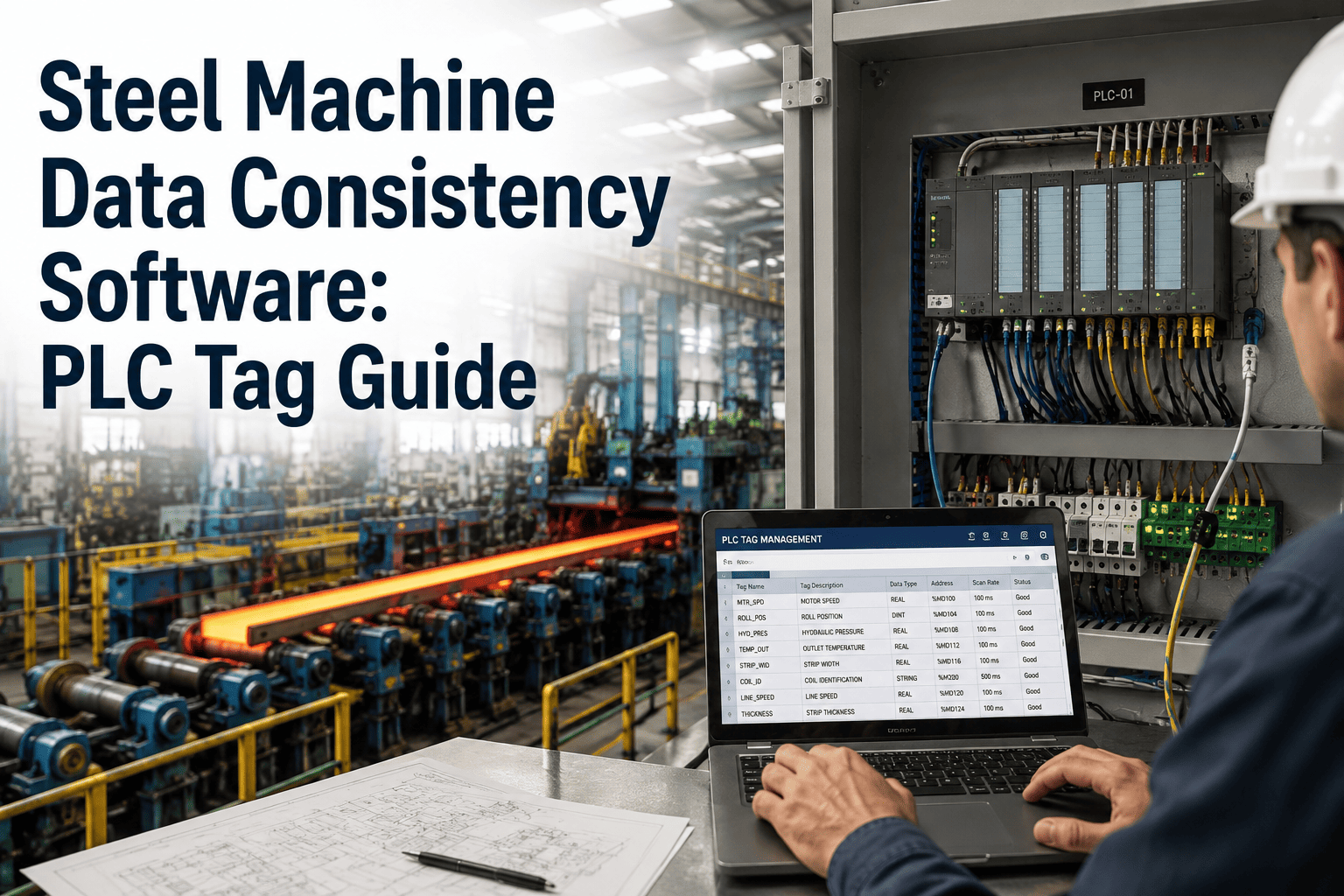
Every temperature, vibration, or flow sensor gets tied to the exact registry asset it monitors, closing the gap between telemetry and work orders.
4
Backfill Critical History
Reconstruct three to six months of clean failure history for the highest-criticality assets, since this is the minimum most models need to start learning real patterns.
5
Connect Production Context
Link maintenance events to the production conditions running at the time, so the model can separate normal wear from load-driven stress.
6
Pilot on One Line, Scale by Design
Run the first model on data built to the same standard every future line will use, so scaling means onboarding a new asset set, not rebuilding the pipeline.
The Cost of Building AI on a Bad Foundation
Rebuilding a data foundation after a failed pilot costs far more than getting it right the first time — in wasted budget, in credibility with plant leadership, and in the months lost before AI delivers anything real.
Pilot Built on Clean Data
Time to first useful prediction6–10 weeks
False-positive alert rateUnder 8%
Time to onboard a second line2–4 weeks
Plant leadership confidenceHigh — adopted plant-wide
Pilot Built on Messy Data
Time to first useful prediction4–6 months, if ever
False-positive alert rate35–40%
Time to onboard a second lineFull data rebuild required
Plant leadership confidenceLow — pilot quietly shelved
We ran a vibration-monitoring pilot on one caster line and it looked great in the demo. The moment we tried to roll it out plant-wide, it fell apart — different technicians had been logging the same failure three different ways for years, and half our sensor tags didn't match anything in the asset register. We had to stop and fix the foundation before touching the model again. Once OxMaint gave us a clean, consistent asset and work order layer, the second and third line rollout took weeks instead of the six months the first one cost us.
— Digital Reliability Lead, Integrated Steel Producer
What to Look For in an AI Data Foundation Platform
Plenty of software promises "AI-ready data." These four things separate a platform that actually delivers it from one that just adds another disconnected system to the pile.
Enforces Standards at Entry, Not After
Clean data has to be the easy path for a technician logging a work order, not a cleanup project someone does months later.
Single Asset ID Across Systems
The CMMS, sensor platform, and production system all need to reference the same equipment identity, or every integration becomes a manual reconciliation exercise.
Exportable, Model-Ready Structure
Data needs to leave the system in a structure a data science team can actually use, not locked into proprietary reports nobody can query.
Scales Without Re-Cleaning
Adding a second or third line should mean applying the same standard to new assets, not repeating the entire cleanup project from scratch.
Frequently Asked Questions — AI Data Quality for Steel Plants
How much historical data does an AI model actually need?
For assets with documented failure history, three to six months of clean, high-frequency data is typically enough to train a useful model. Assets without failure history need a longer baseline period before predictions become reliable.
Why does a pilot that worked on one line fail on a second line?
Do we need new sensors before starting an AI data foundation project?
Usually not. Most plants start with a sensor audit against existing equipment before adding anything new — the bigger gap is almost always that existing sensor tags were never mapped to the asset registry.
How long does it take to build a clean data foundation?
Most plants complete the foundation phase for their highest-priority assets within about three months, with measurable AI results starting to show before month six.
Can a CMMS itself improve data quality, or is that a separate project?
A CMMS that enforces standardized failure codes and asset linkage at the point of entry prevents most data quality problems before they start.
Book a demo to see how that works against your own asset list.
AI Data Foundation — OxMaint
Build the Foundation Before You Build the Model
3 monthsto a clean, model-ready data foundation
Under 8%false-positive rate on clean, connected data
Weeks, not monthsto onboard each new line once the foundation is set