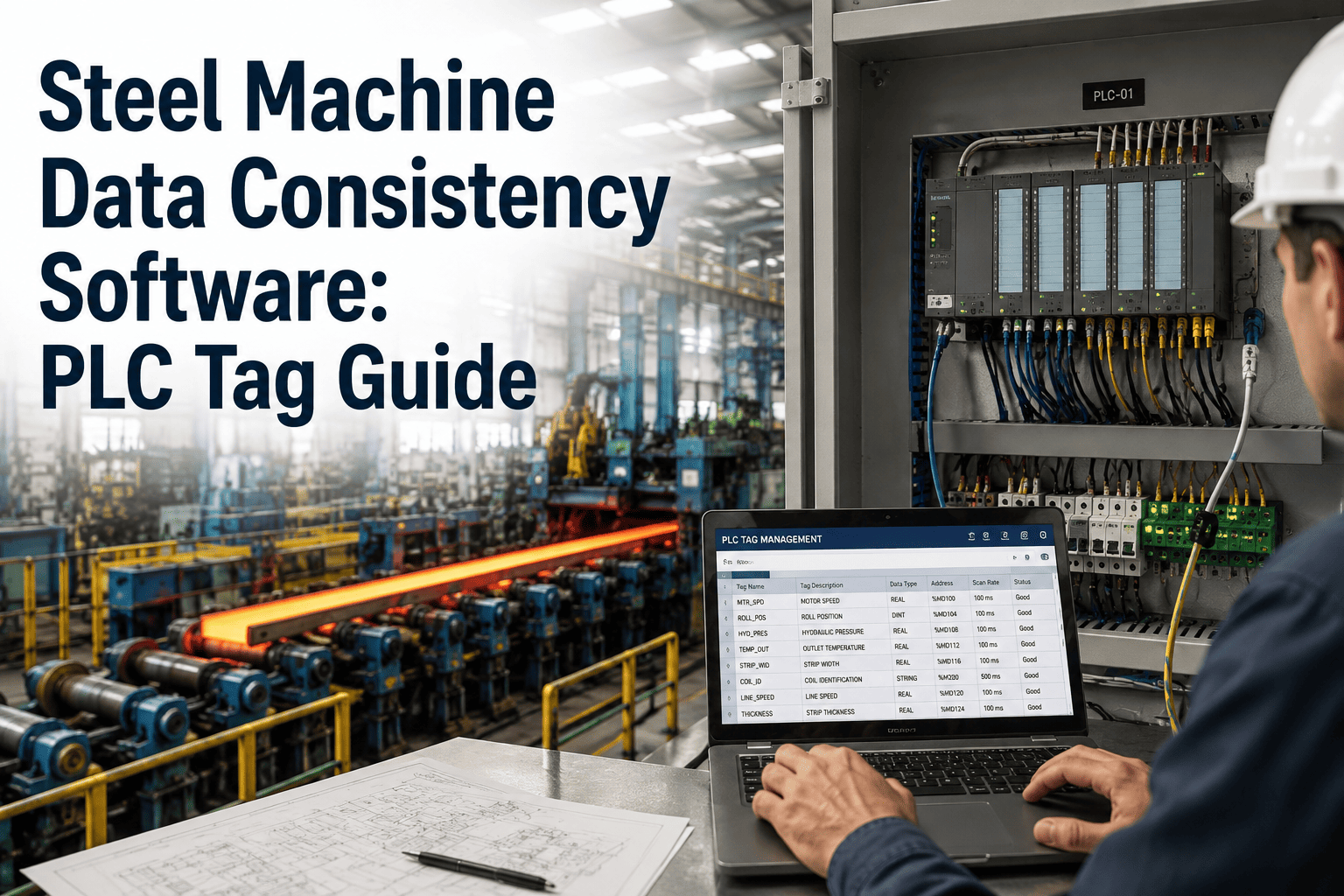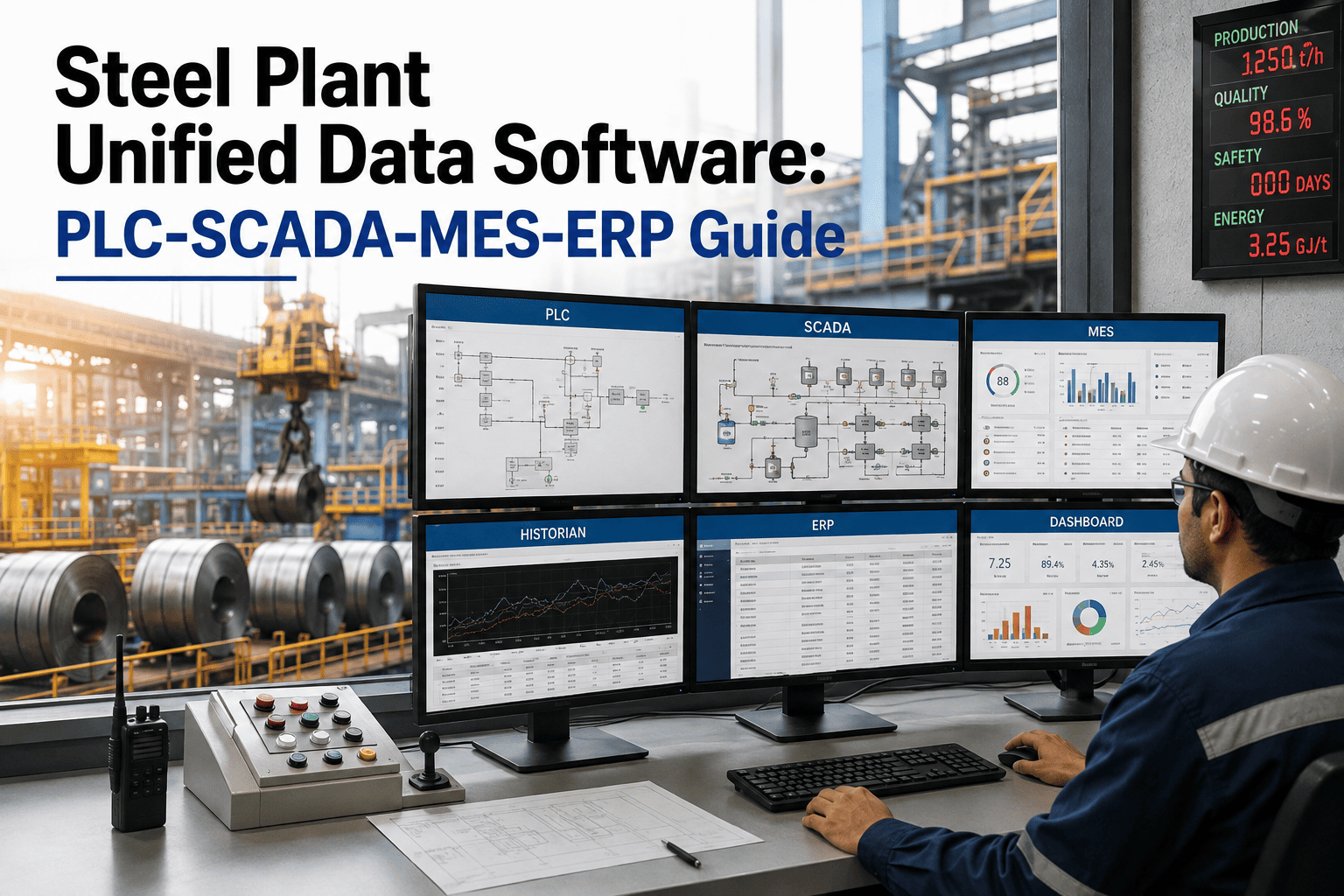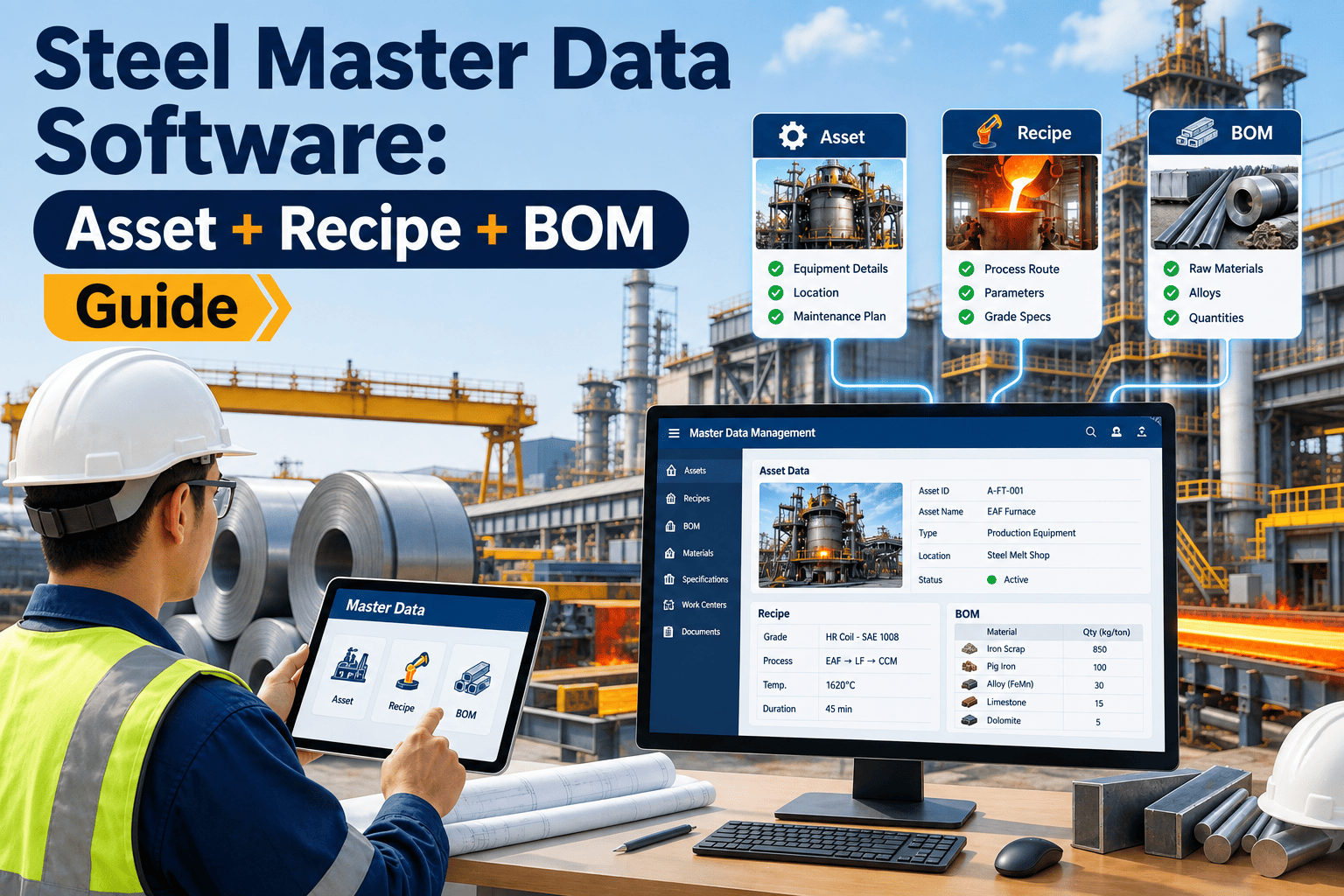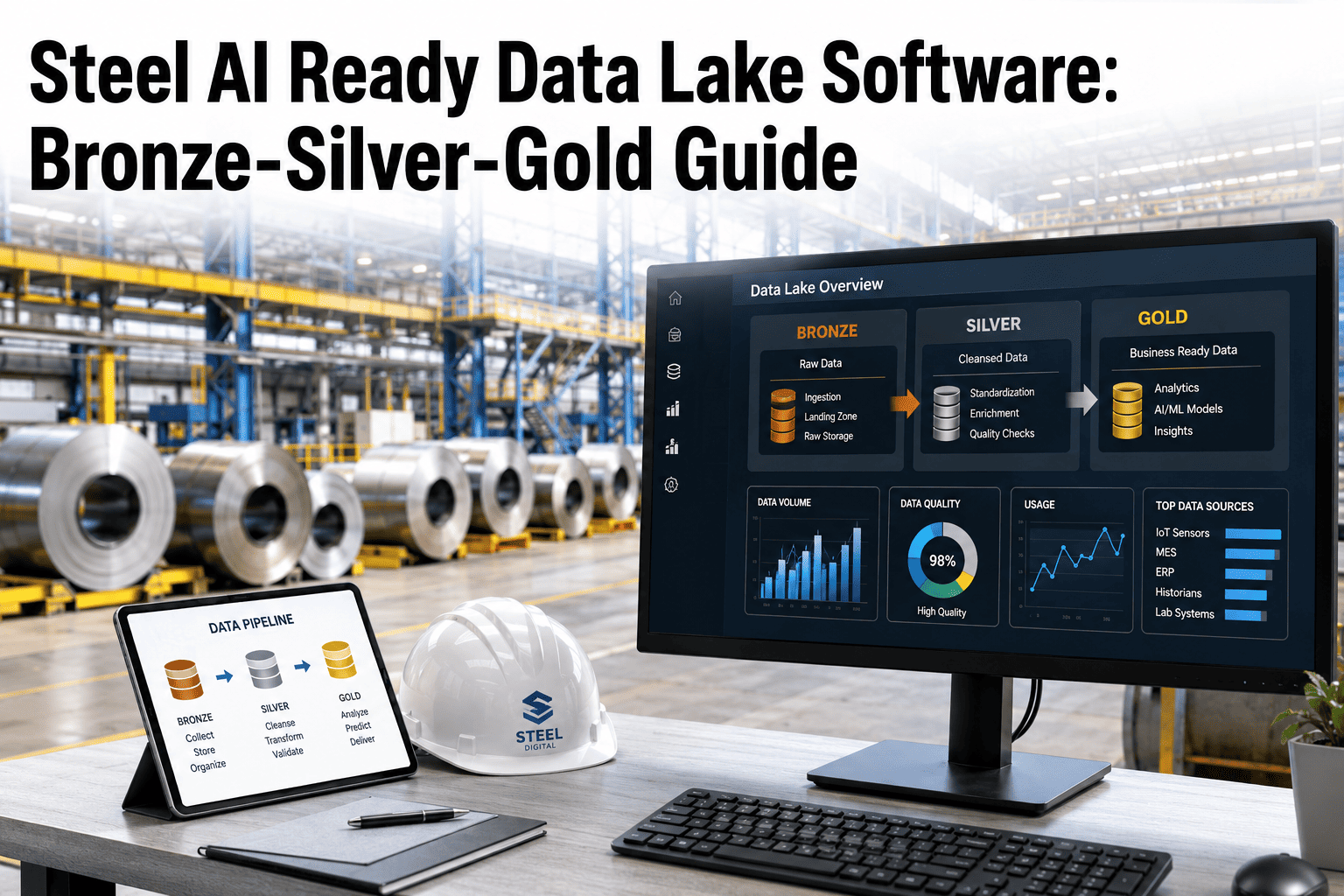
Every steel plant generates a flood of data — DCS tags, LIMS quality results, CMMS work orders, energy meters, vision-system frames — and most of it sits in scattered historians that no AI model can use directly. Before any predictive model, quality classifier, or optimisation agent can be trained on plant data, that data has to pass through a structured refinement pipeline: raw ingestion, validation and cleaning, then a business-ready layer built for analytics. This bronze-silver-gold pattern, borrowed from the modern data lakehouse world, is now the blueprint steel producers use to make plant data genuinely AI-ready instead of just stored. Plants that skip straight from raw tags to a model usually find the model is only as reliable as the messiest sensor feeding it, which is why teams evaluating their own data foundation book a 30-minute demo before scoping a build.
Bronze, Silver, Gold: Making Steel Plant Data Ready for AI
A practical guide to structuring DCS tags, CMMS records, LIMS results, and energy data into a medallion data lake — the architecture AI and analytics teams standardise on before a single model gets trained.
What Actually Changes as Data Moves From Bronze to Gold
Each layer is not a copy of the last — it is a different level of trust. Bronze preserves exactly what the sensor or system said. Silver checks it. Gold shapes it into something a model or dashboard can consume without a data scientist rewriting the query every time.
Raw and Untouched
- DCS/PLC historian tags landed exactly as captured
- CMMS work order text, timestamps, and failure codes
- No deduplication, no unit conversion, no joins yet
- Schema-on-read — structure is applied later, not here
Cleaned and Conformed
- Duplicate readings removed, timestamps aligned to one clock
- Units standardised across sensors and systems
- Work orders joined to the correct asset ID and location
- Bad-value and out-of-range readings flagged, not deleted
Business and Model Ready
- Per-asset, per-heat, or per-shift feature tables
- Aggregated views built for BI dashboards
- Versioned training datasets for ML pipelines
- One trusted number per metric, not five conflicting ones
Where Steel Plant Data Actually Originates
A bronze layer is only as complete as the systems feeding it. Most steel plants already generate the data an AI-ready lake needs — it is just scattered across six or more systems that were never designed to talk to each other.
DCS / PLC Tags
Temperature, pressure, flow, and speed readings streamed continuously from process control systems.
CMMS Work Orders
Failure codes, repair notes, downtime duration, and parts consumption tied to specific assets.
LIMS Quality Results
Chemistry, hardness, and dimensional test results linked back to a heat or coil identifier.
Energy Meters
kWh and GJ consumption per asset, area, and shift, usually on a separate metering network.
Vision and Quality Cameras
Surface defect frames and classification outputs from inline inspection systems.
ERP Production Records
Order quantities, grades produced, and inventory movement across the plant.
Turn Scattered Plant Systems Into One AI-Ready Data Lake
Oxmaint connects CMMS work orders, asset history, and maintenance records directly into your bronze layer through standard connectors — no manual export, no spreadsheet hand-off, no rebuilding the join logic every quarter.
Data Lake Build Schedule — From Ingestion to Model-Ready
Building a medallion data lake is not a one-time project — each layer has its own refresh cadence and owner. The schedule below reflects how steel plants typically operate each stage once the pipeline is live.
| Layer / Task | Refresh Cadence | Owner | Automation Role |
|---|---|---|---|
| Raw tag ingestion (bronze) | Continuous / streaming | Data engineer | Automated connector ingestion |
| Schema validation and deduplication (silver) | Daily batch | Data engineer | Scheduled validation job |
| Cross-system joins — asset, work order, sensor (silver) | Daily | Reliability engineer | Join key mapping via asset ID |
| Feature table generation (gold) | Weekly | ML engineer | Feature store population |
| Model training dataset refresh (gold) | Per model cycle | Data scientist | Versioned dataset snapshot |
| Dashboard and BI view refresh (gold) | Daily | BI analyst | Scheduled view refresh |
| Data quality audit — all layers | Monthly | Data governance lead | Automated quality score report |
The Four Stages Every Data Point Passes Through
Order matters here — each stage depends on the one before it. Skipping a stage is how plants end up with a gold layer that looks clean but is quietly built on unvalidated numbers.
Ingest
Land raw data from every source system untouched, with the original timestamp and source ID preserved.
Validate
Remove duplicates, standardise units, align time zones, and flag readings outside expected ranges.
Enrich
Join across systems and engineer the features a model or report actually needs to answer a question.
Serve
Expose gold tables to BI dashboards and ML pipelines through one consistent, versioned interface.
Expert Perspective
Most steel plants I have worked with already have every data source a medallion lake needs — the DCS historian, the CMMS, the LIMS, the meters. What they are missing is the discipline to keep bronze raw, keep silver strictly validated, and never let a model or dashboard read directly from an unvalidated table. The plants that get this right spend far less time debugging why two dashboards show different numbers for the same asset.
Frequently Asked Questions
Stop Rebuilding the Same Data Joins Every Quarter
Oxmaint feeds validated CMMS and asset data straight into your bronze and silver layers, so your AI and analytics teams start from clean, trusted tables instead of another spreadsheet export.